
After enjoying a few days in Beaulieu Sur Mer, we continued our journey along the French Riviera. With a light southerly wind we had a relatively slow but very calm sail along the coast, dodging many boats anchored around Cannes.

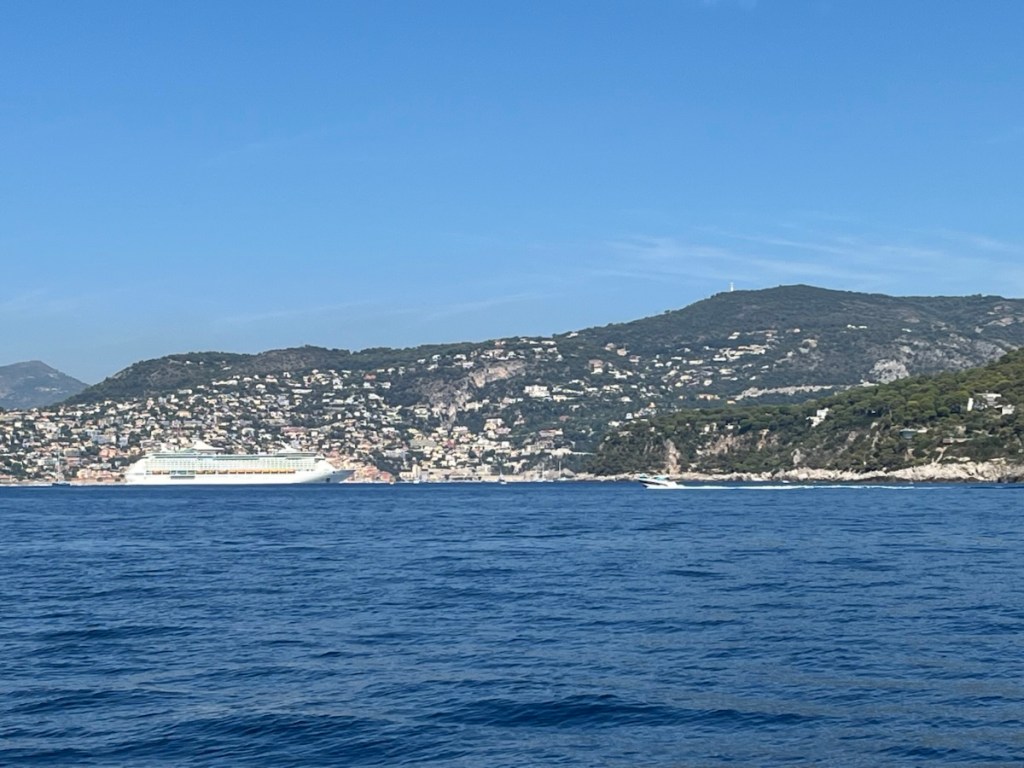
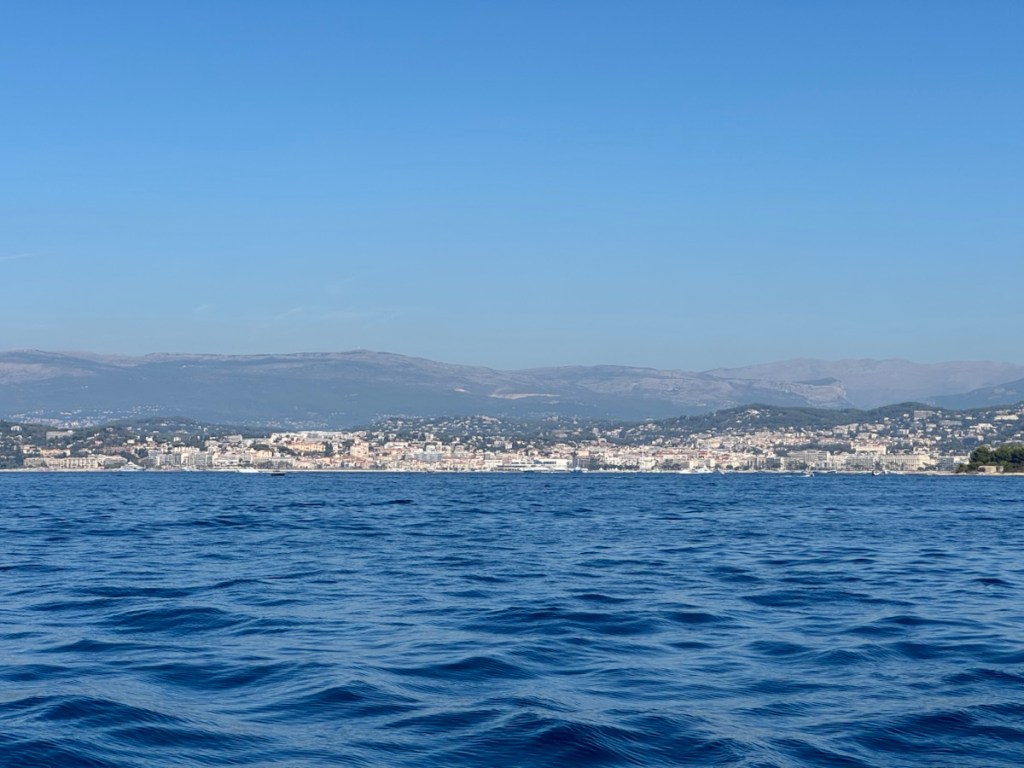

We headed for the tranquil Îles de Lèrin, two small islands facing the bay of Cannes and the Estérel mountains.


The anchorage between the two islands was busy when we arrived but we managed to find a good sandy spot where we dropped the anchor in clear water.
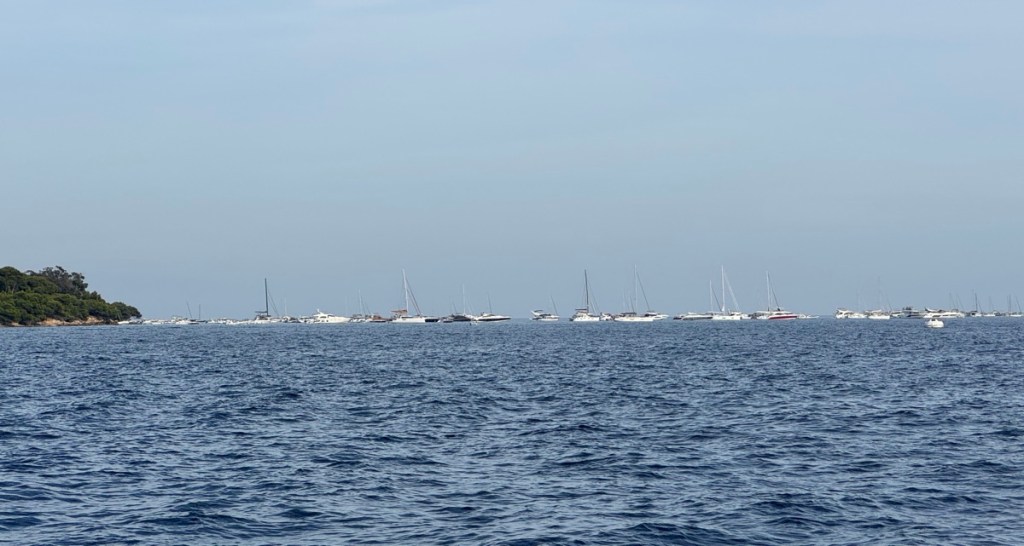
Apart from many boats anchored here, there were also burger, pizza and cocktail boats which you could dinghy over to, or call for deliveries.

Île Ste-Marguerite, the island situated closest to Cannes, has a 17th-century, clifftop Fort Royal, where Dumas’ ‘Man in the Iron Mask’ was imprisoned in the state prison from 1687 to 1698.

There is an underwater ecomuseum 100 metres off the south coast of Île Ste-Marguerite, a large protected area where boats were not allowed. It features six statues of moulded faces submerged in the water.
At 2m tall and weighing around 10 tons each, the museum’s six statues are made from environmentally friendly marine material, placed there to create artificial reefs, giving a refuge for underwater species, where flora and fauna can flourish. Designed to evolve over time and be covered in seaweed, shellfish corals and fauna to become an integral part of the local marine ecosystem.
The sculptures were created by artist Jason DeCaires Taylor at the request of the Mayor of Cannes who wanted to create the first French underwater ecomuseum. The artist designed the unique pieces inspired by masks to conjure images of the mysterious ‘Man in the Iron Mask’ and pay tribute to cinema, of which Cannes is known as the European capital with the Cannes Film Festival.

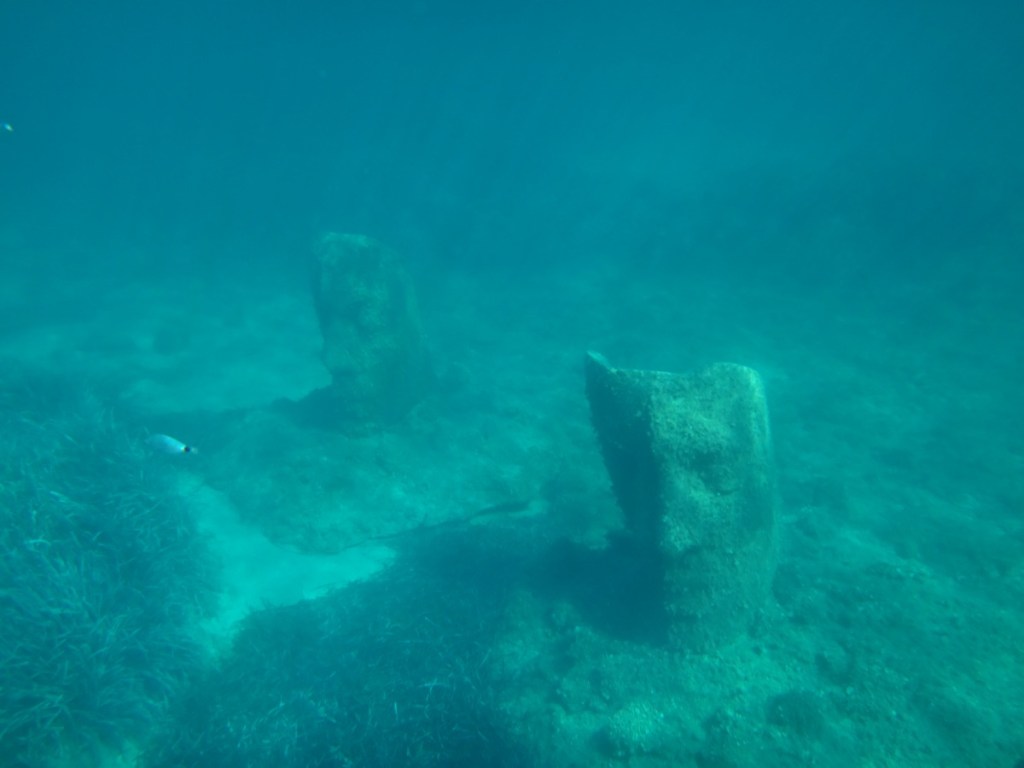


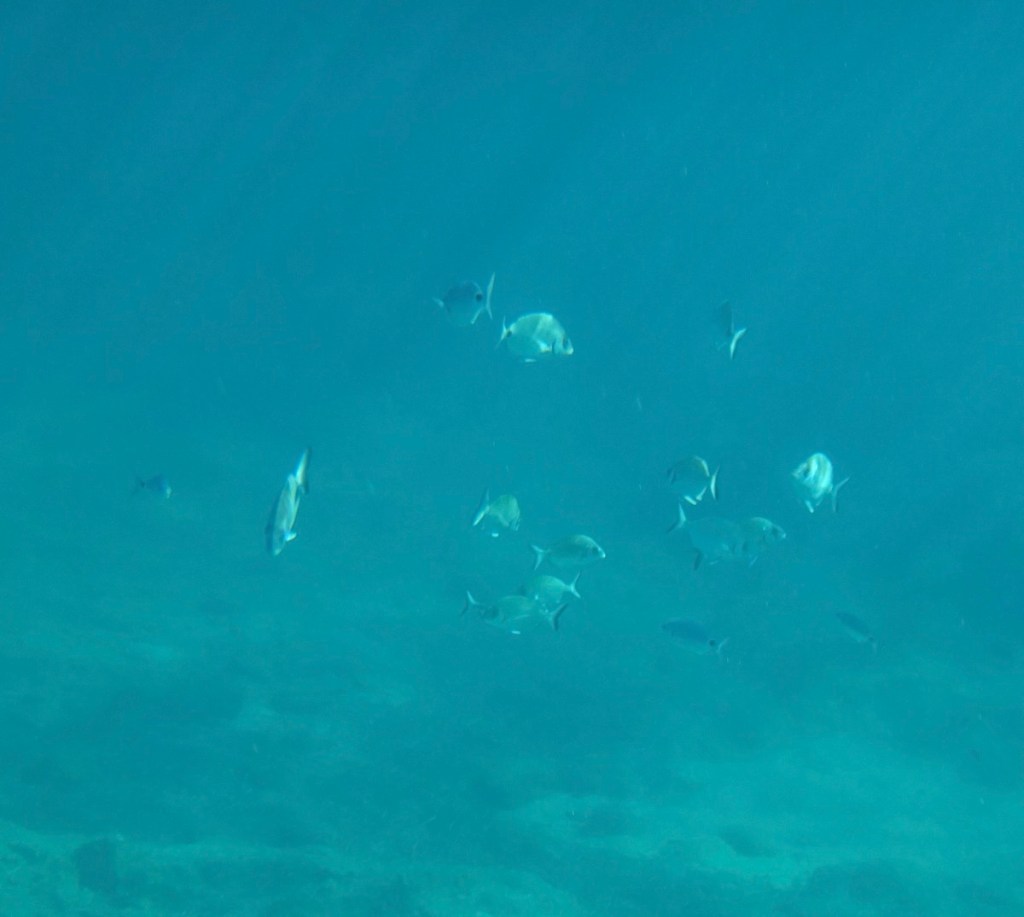
In 2018, 45 casts of the faces of volunteers from Cannes were made, from these, the artist selected six models which range from a 78 year old fisherman to a 7 year old school girl, representing the diversity of Cannes’ population.
The statues linking land, sea, man and nature, were submerged in January 2021. Being just 3.5 metres deep they are easy to see, as you swim around them you come you come face to face (literally) with the moulded faces of real Cannes residents, although after four years in the water they had already started to evolve and it was difficult to make out the differences.
We had a calm evening here watching the sunset which left behind a red sky.

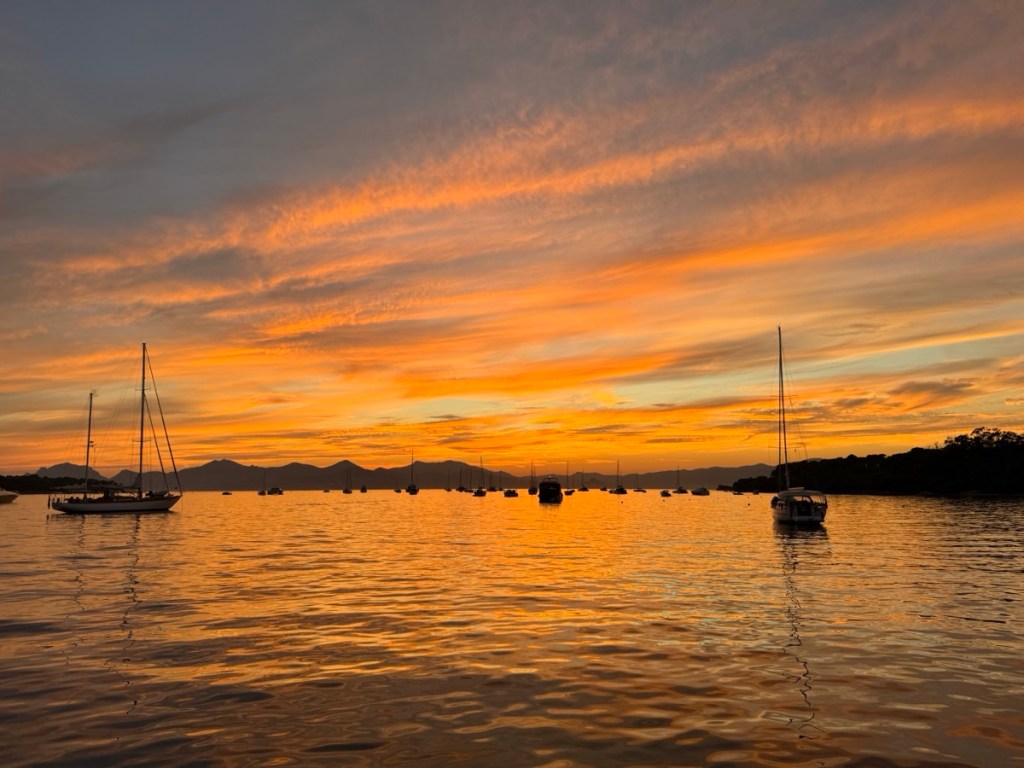
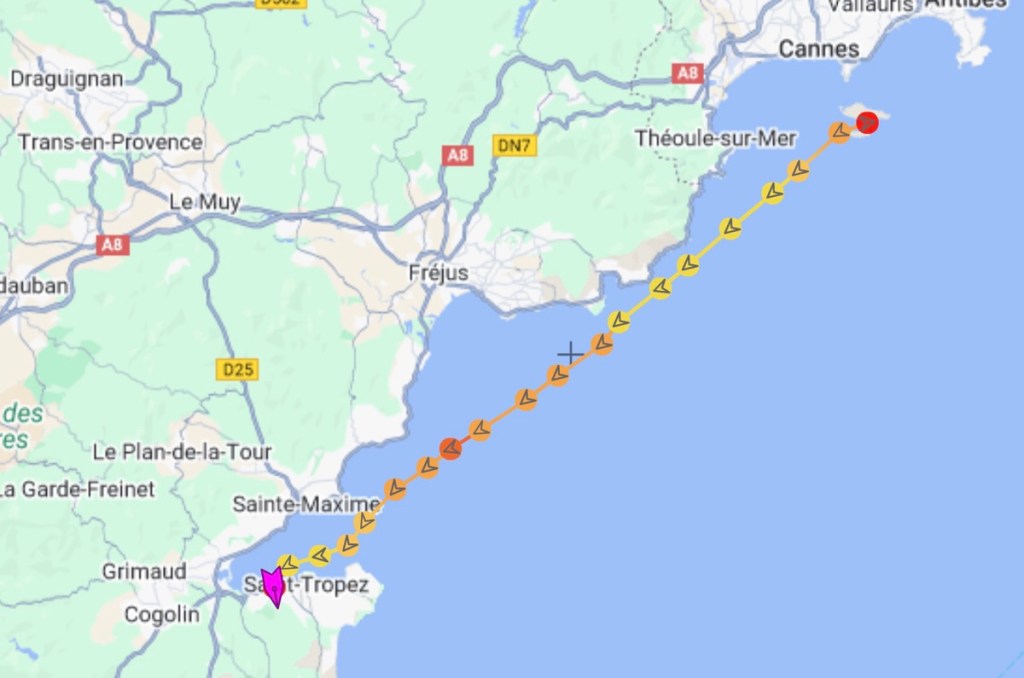
Our next stop was just 23 nm further along the coast, the changing landscapes along the journey were interesting with busy built up areas followed by remote red sand rocky cliffs.

We arrived in the large bay of St Tropez which has several coves to anchor. We found a nice protected area just past the town. There was one other boat anchored within the buoyed area (who left just after we arrived), strong winds were forecast through the night and it was quite deep, so as we had plenty of space, we let out 80 metres of chain.
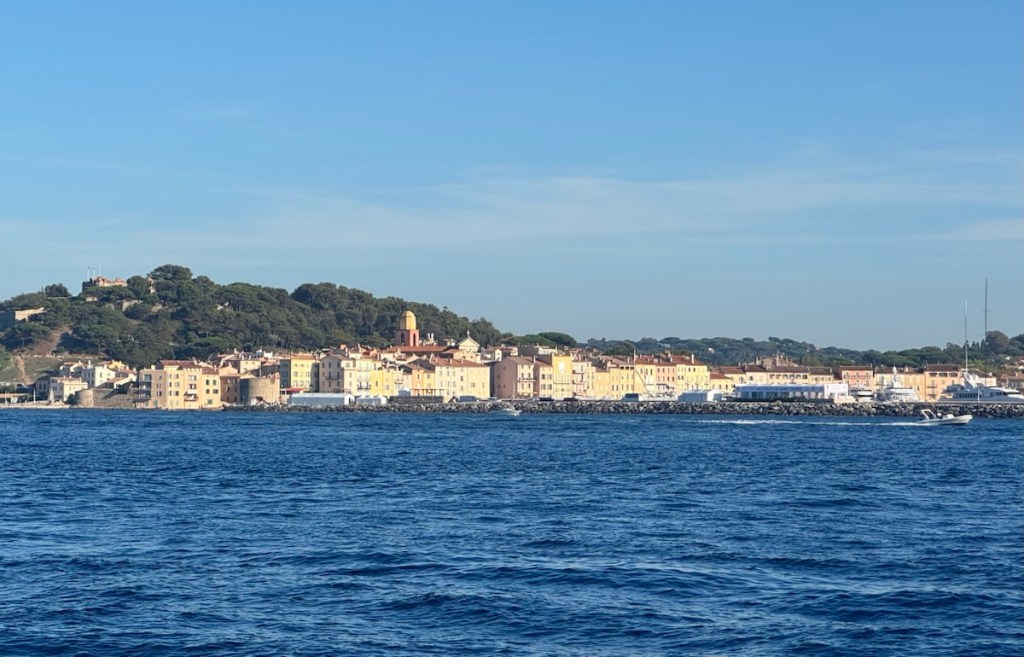
There were plenty of interesting boats around the bay, Paul took a particular liking to a large sailing boat.
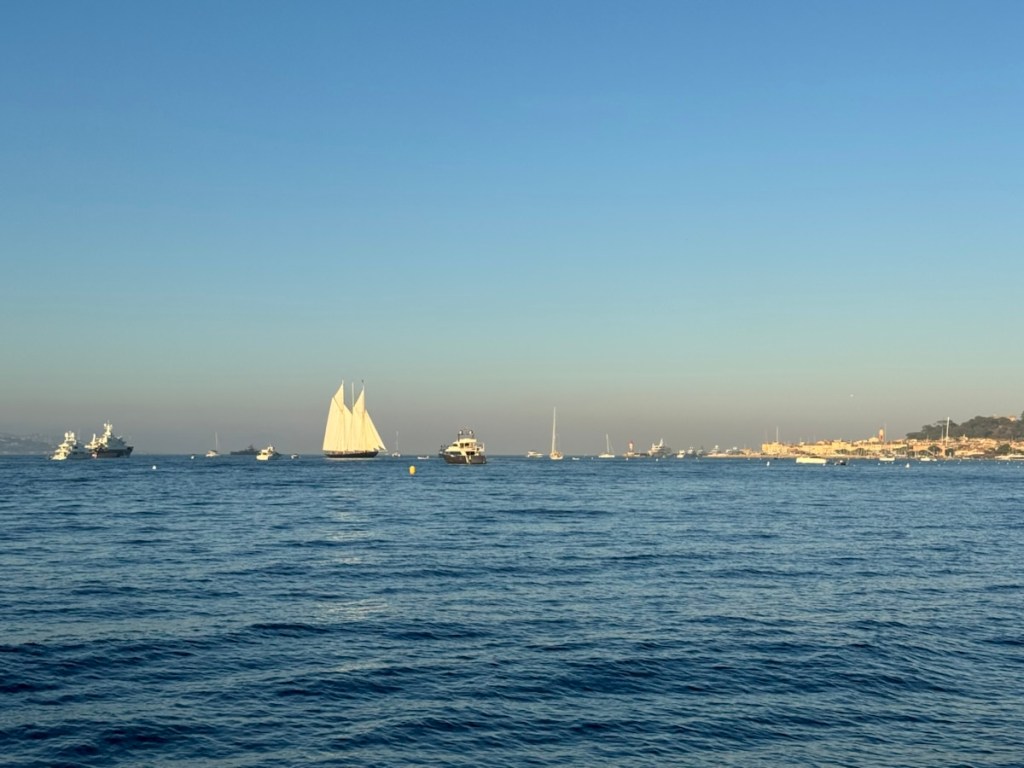

Later we read conflicting information about our ‘anchorage’, some said it was permitted for boats under 20 m, others said that anchoring was prohibited. Not sure which to believe, and not wanting to receive a fine, we left early the next morning under black clouds.
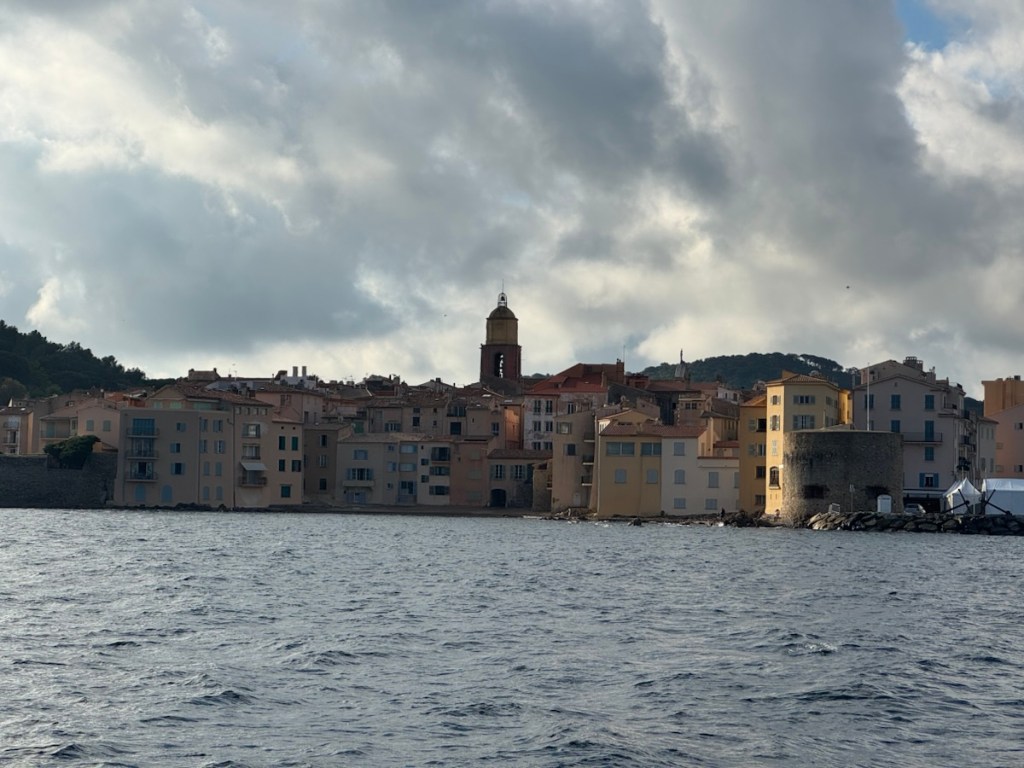
There was a force 3-4 northeasterly so we had a good downwind sail to La Lavandou. There was another storm on its way so we booked into Port Lavandou marina for a couple of days.
Le Lavandou is a seaside town, it derives its name from the flower lavender that is prevalent in the area, although some say it is from lavoir, a public place for washing clothes which were popular in many French villages. However, lavender seems to be the favoured option with it appearing on many items around the tourist shops.
The town is quite smart with tree lined streets and promenade along a nice sandy beach.
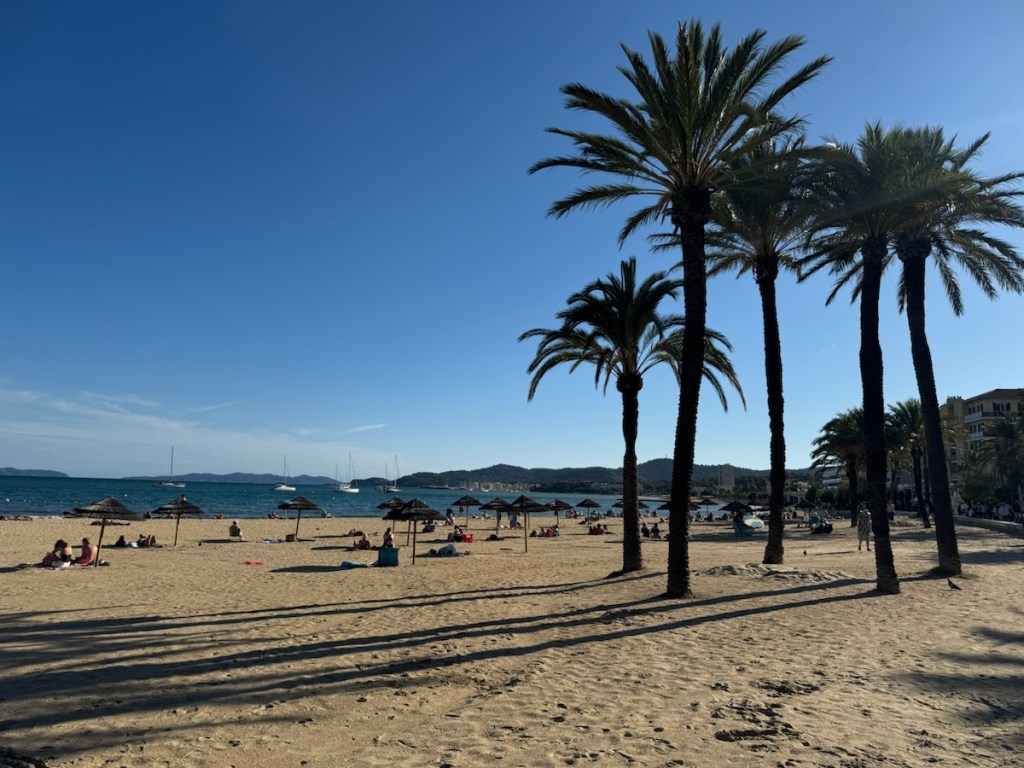

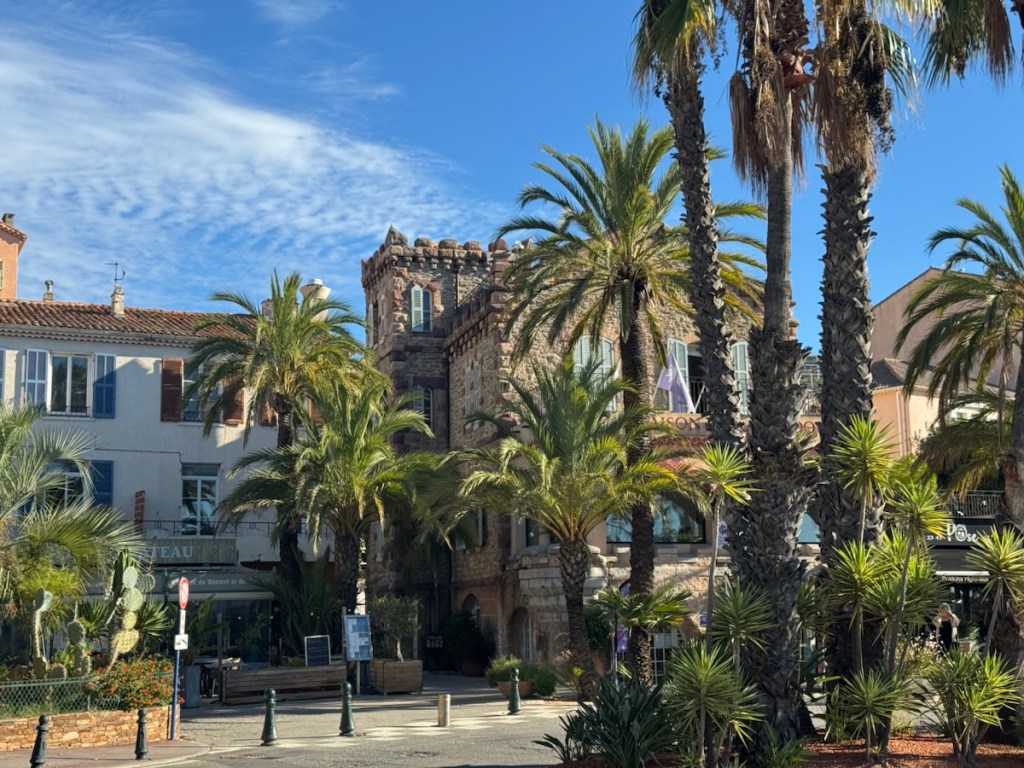
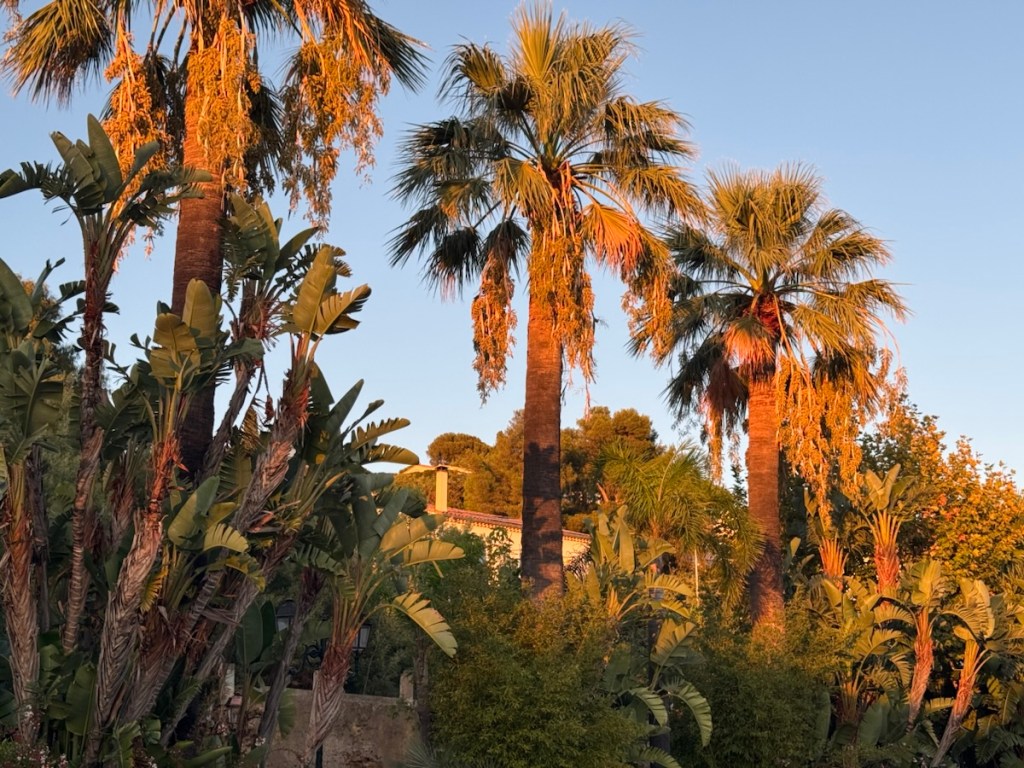
Cactus plants and trees were growing everywhere!


We were also on a hunt for camping gas and were told at the marina office to go to the large supermarket, but unfortunately they had sold out. Luckily, on our way back we passed a gas shop with shelves full of exactly what we needed, but unfortunately it was closed for the day. We went back the next morning only to be told ‘no not possible’ combined with a classic gallic shrug. It was clear that no further explanation was going to be provided so we returned to Ziggy empty handed again.
A big storm arrived in the evening with constant lightening flashes illuminating the dark sky. The map shows all the storms approaching the area.


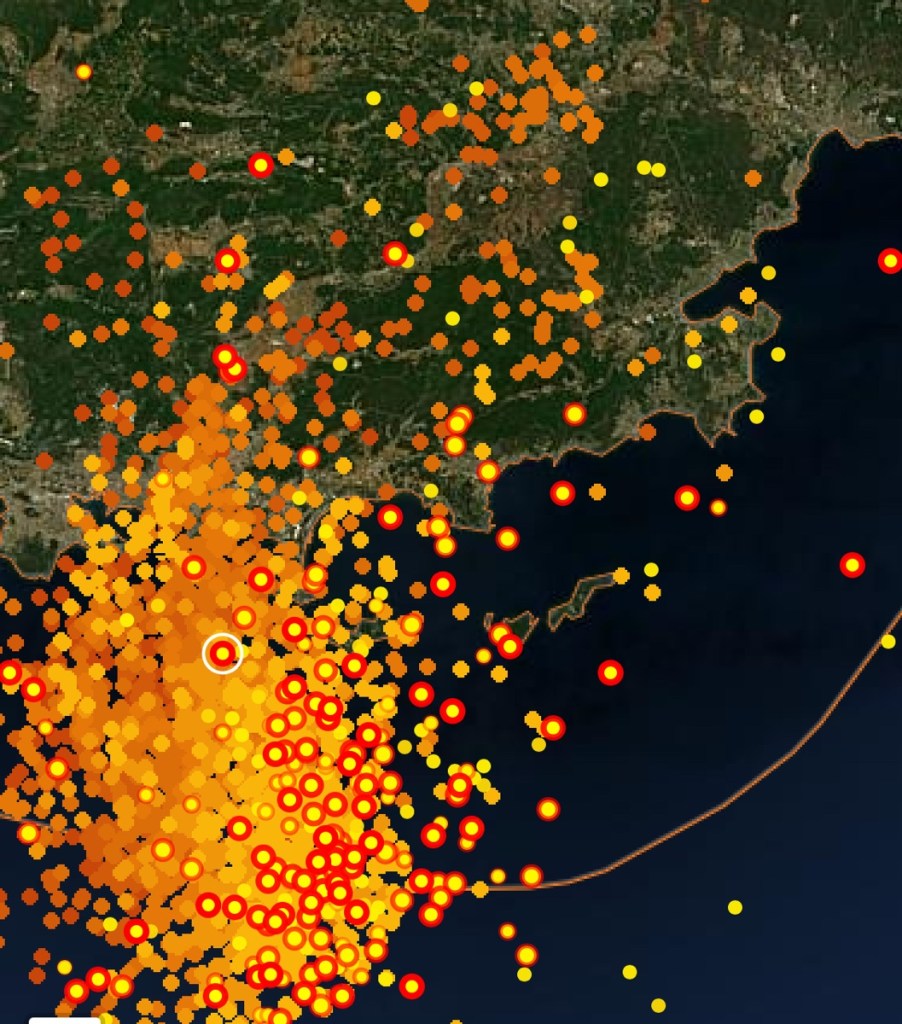
After the stormy weather had blown through, we left the marina and anchored in the bay just in front of the beach. Continuing our quest for gas we visited a local chandlery and were in luck, however, we were told to return the next day with our old rusty canister, which we did and successfully bought a shiny new bottle full of gas.

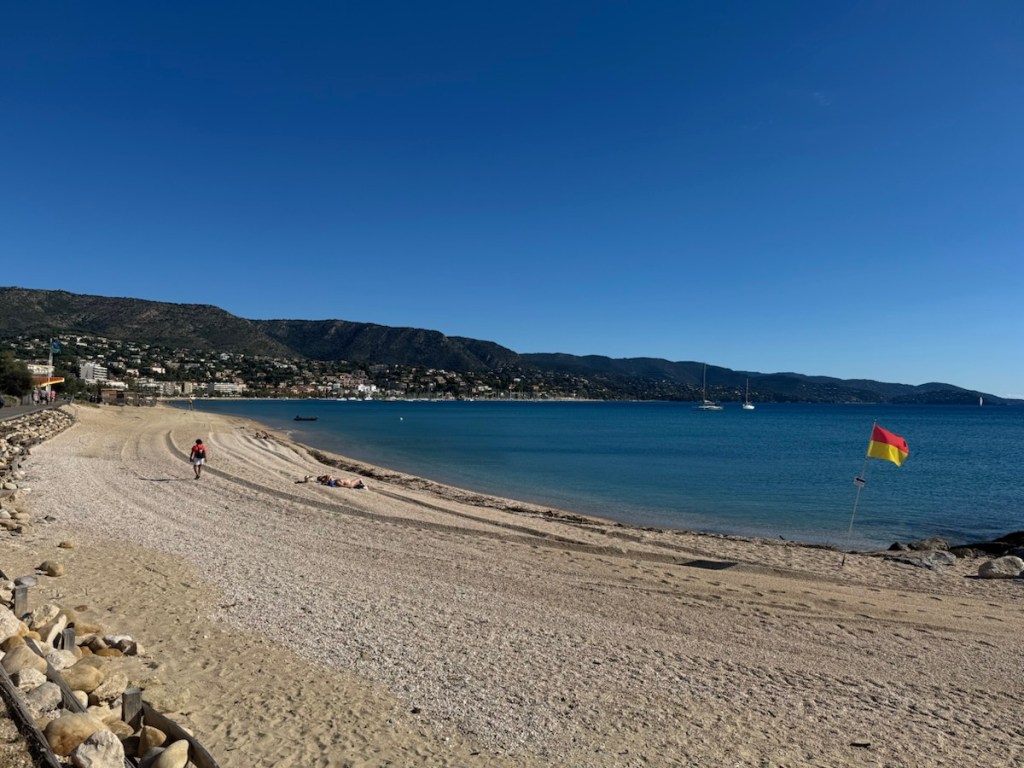
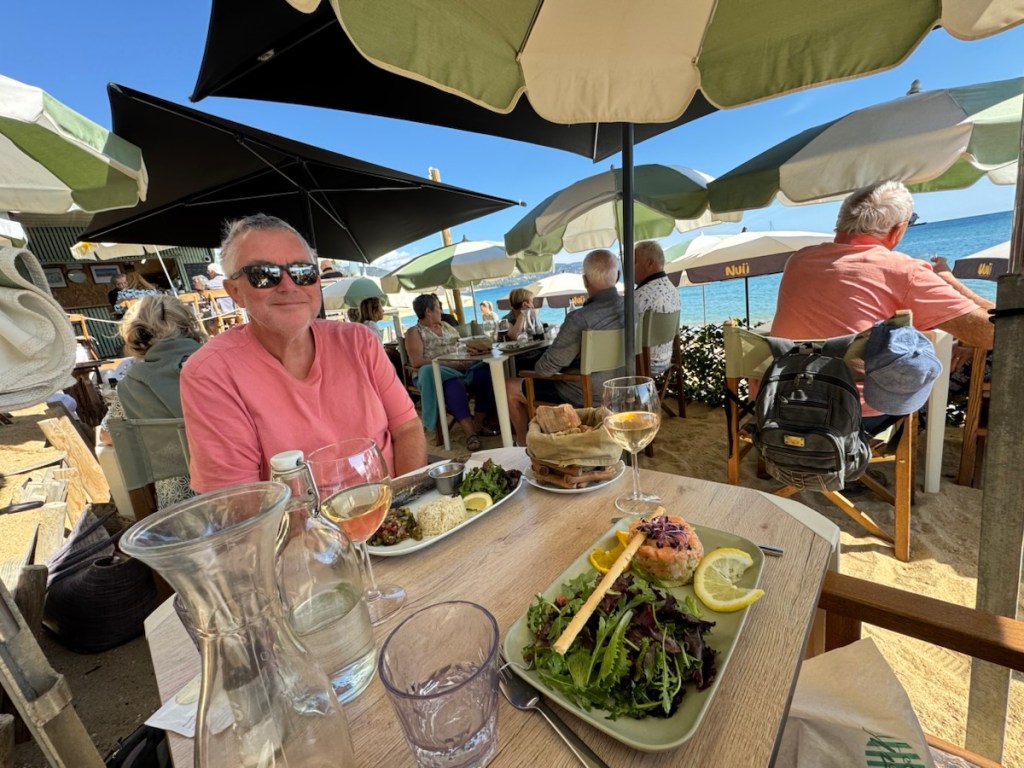
To celebrate our small victory we treated ourselves to lunch in a very nice beach restaurant looking out at Ziggy in the sparkling sea.



After a few days at anchor, we continued on to La Badine, another nice protected bay with beaches and trees. This was to be our last stop in France as we prepared Ziggy for our next passage.
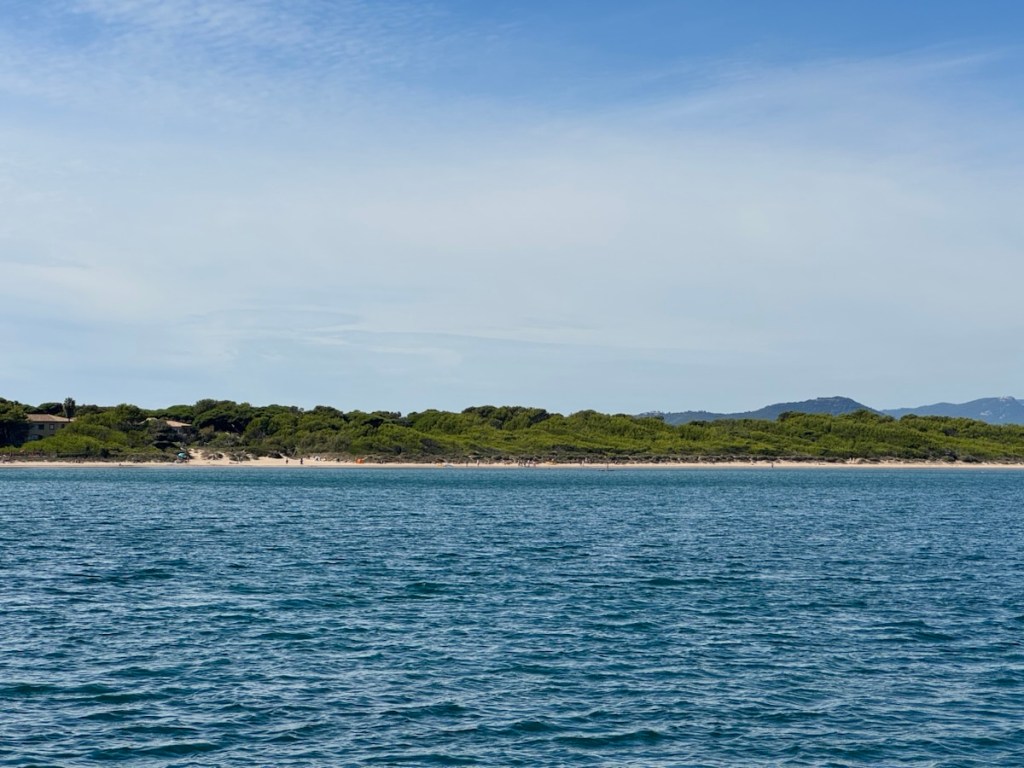
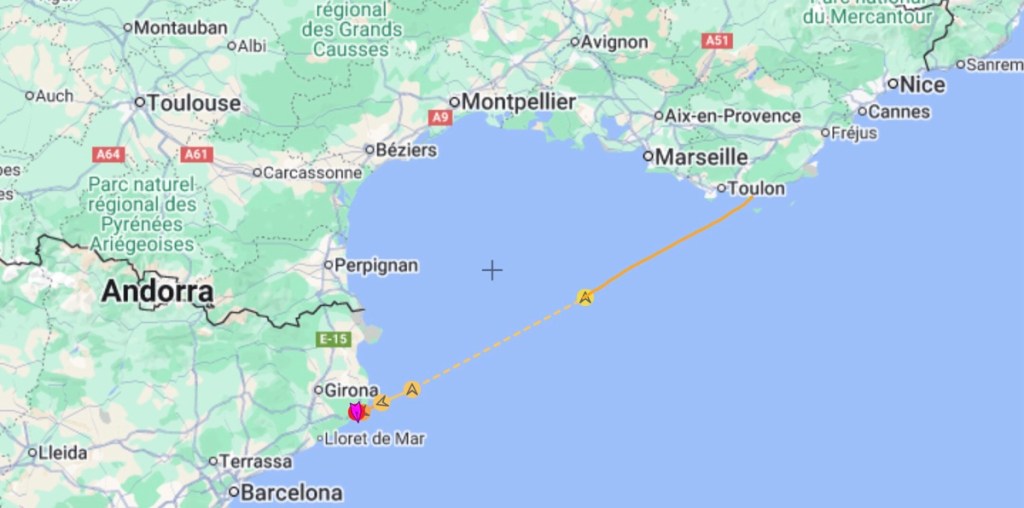
At 4am we lifted the anchor, set our course to travel 154 nm to Spain, and with a bright starlit sky and calm sea, motored out of the anchorage. The northeasterly wind picked up as the sun started to rise, so with the Genoa out, we had a good downwind sail.
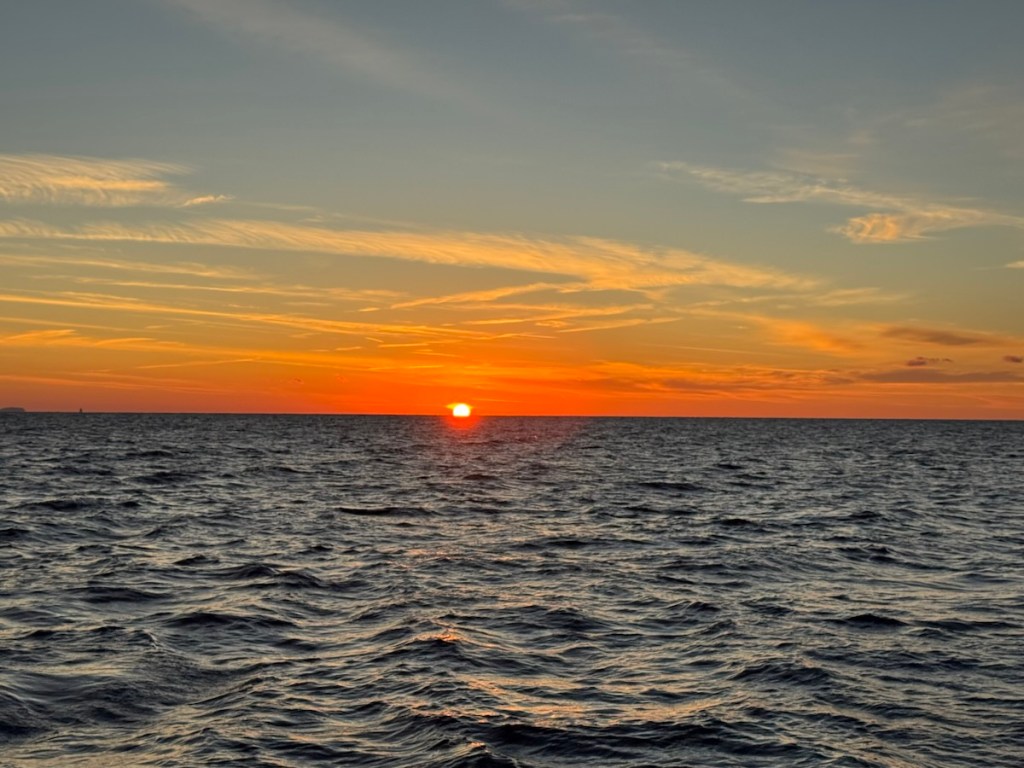
The afternoon wind turned more to the east so the main came out too, in perfect sailing conditions we had good speed over the flat sea.
Later it clouded over and as the sun set, it took the wind with it. The sails were flapping so they had to come down and we had to motor through the night. It was a very dark, quiet night with only one other ship seen.
Eventually, the wind picked up in the early hours so the sails were hoisted again. Another beautiful sun rise as we crossed the border into Spain and sailed on to our destination.

Our Spanish flag was flying as we arrived at Palamós and anchored in the bay. After 32 hours at sea, we were ready for a rest before exploring a new country.

 Sailing ZigZag
2 replies on “Underwater Community”
Just off to get my eyes checked as I was wondering what a garlic shrug was? Thinking a rather smelly drink, or tasty dish of food. Having re-read it all, I am back in the real world 🙂
That does look a lovely part of the world to live, and you two clearly fit in.
After how many years of doing this blog, I think you have taken the best photo of Ziggy ever. Beautiful shot all round. As were those sunset and night sky ones. wonderfully atmospheric (pun intended).
Great to see you both looking so well.
Safe onward sailing.
LikeLiked by 1 person
If Carlsberg did lunches after finding the camping-gaz ………
That looks a wonderful and fully appropriate way to celebrate – the small victories in life are so important!
The underwater museum looks mesmerising, reminiscent of Antony Gormley’s “Another Place” on Crosby Beach but significantly warmer.
Great photos as always, the storm looks very “atmospheric” and our weekly dose of Mediterranean delight and education is always appreciated.
Thank you!
LikeLiked by 1 person