
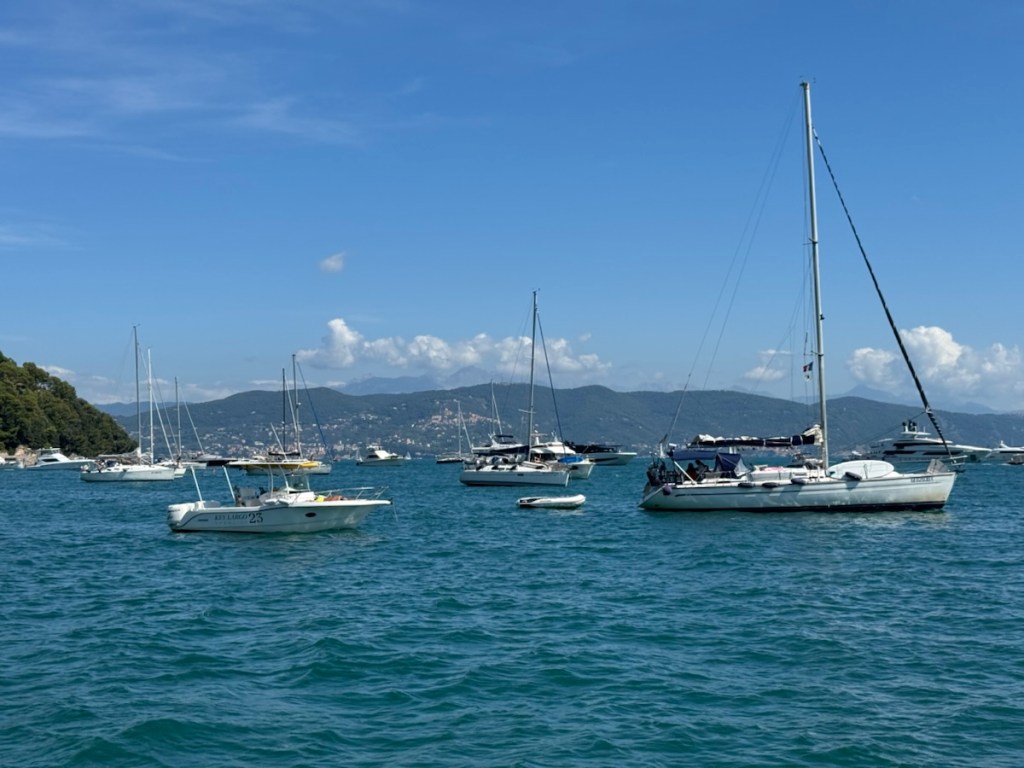
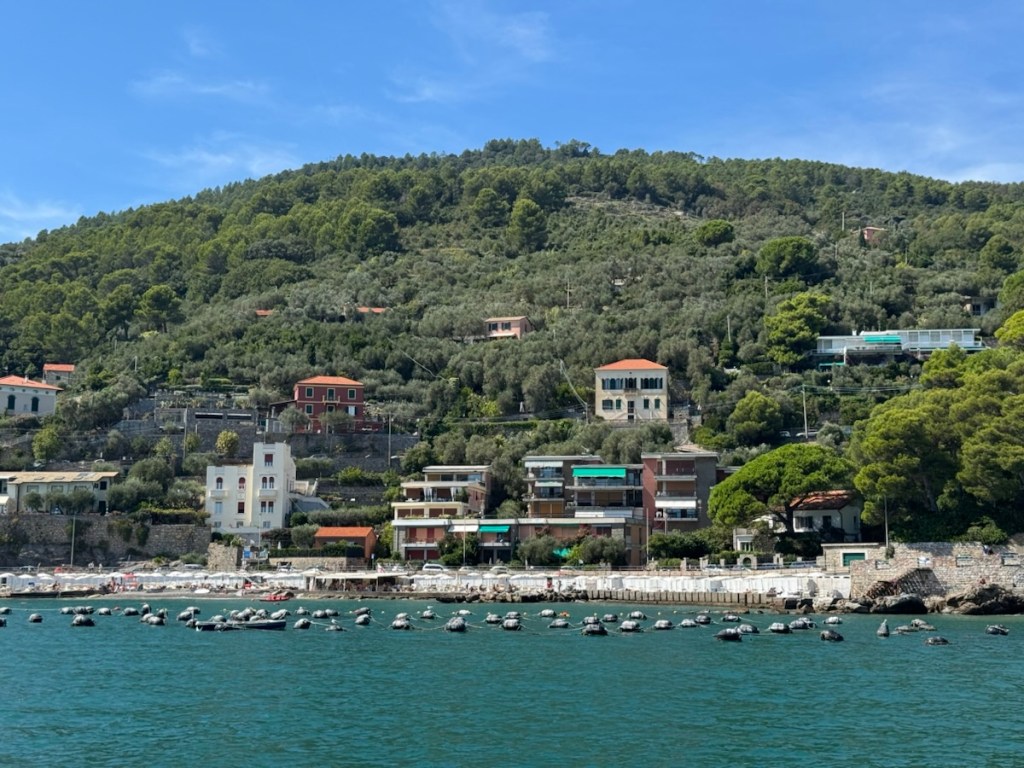
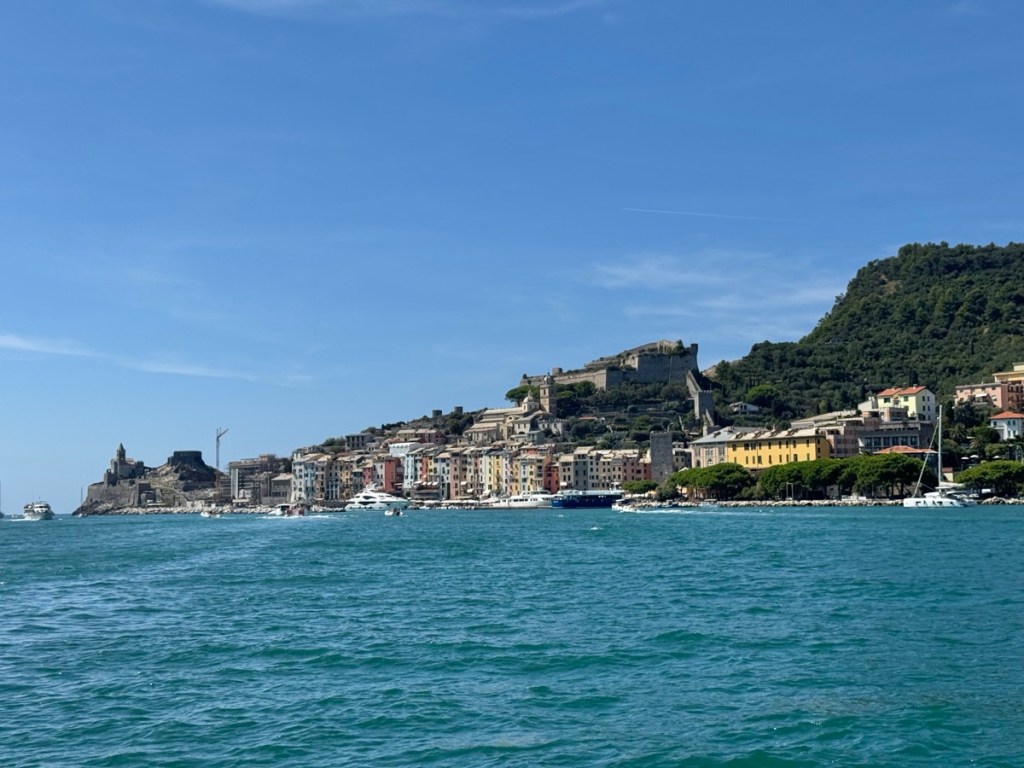
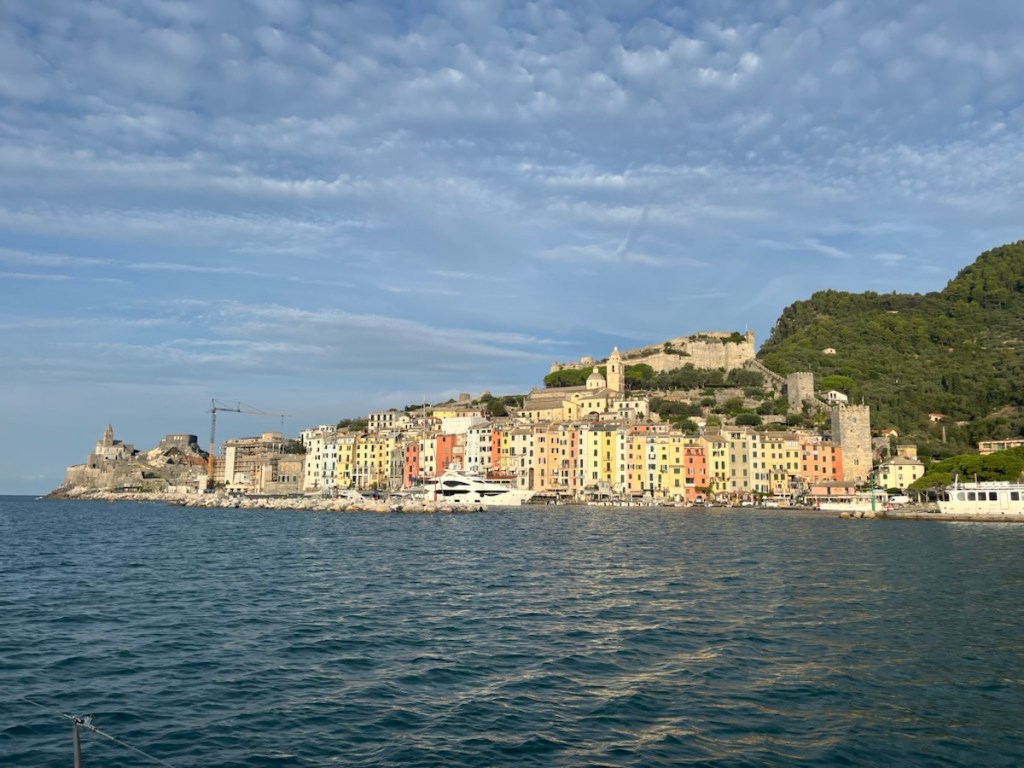
We continued a few miles along the Italian coast after leaving the marina in La Spezia bay, and spent a couple of days at Porto Venere, where we anchored in the busy bay next to mussel farms, and a pretty village with colourful houses, a fort and a tower.
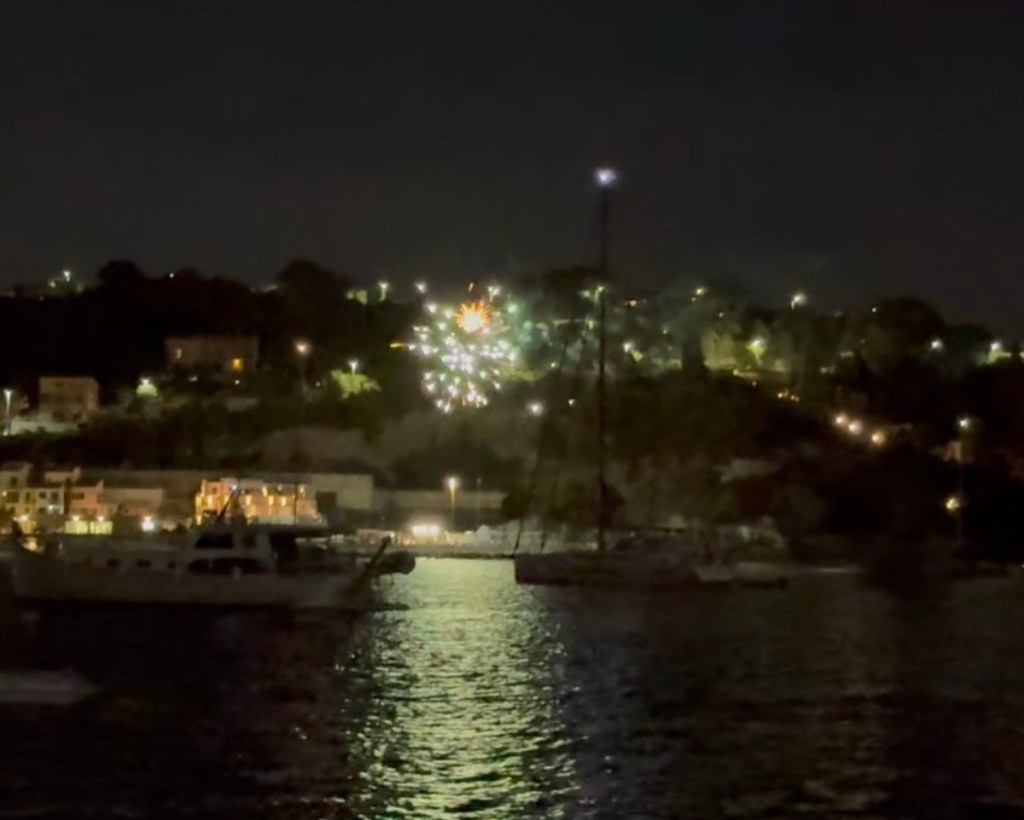
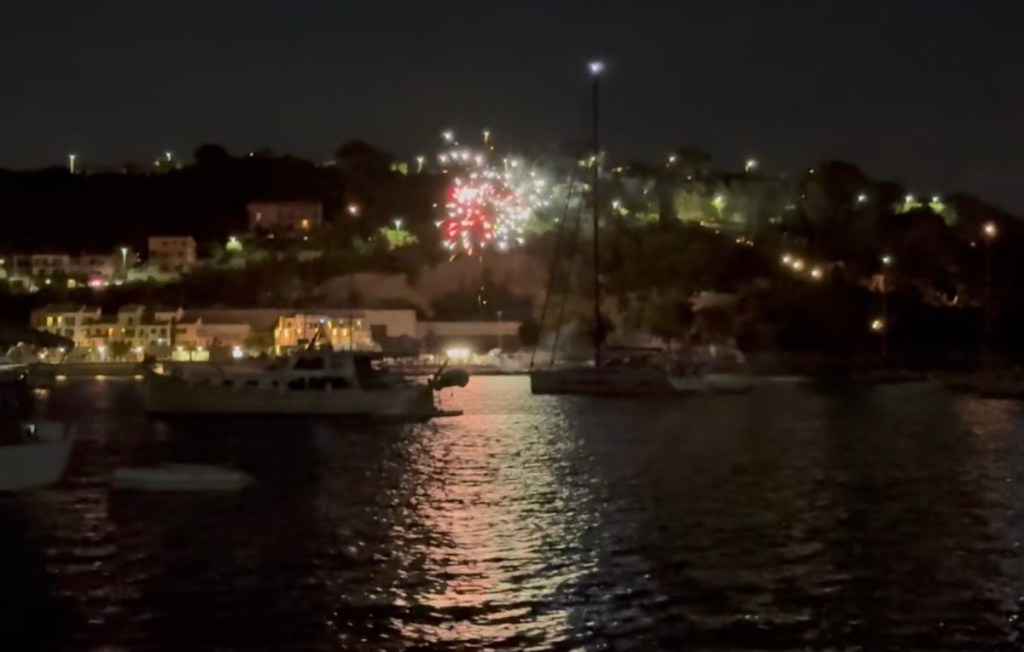
Fireworks entertained us in the evening, although the display couldn’t compete with those seen previously in Malta.
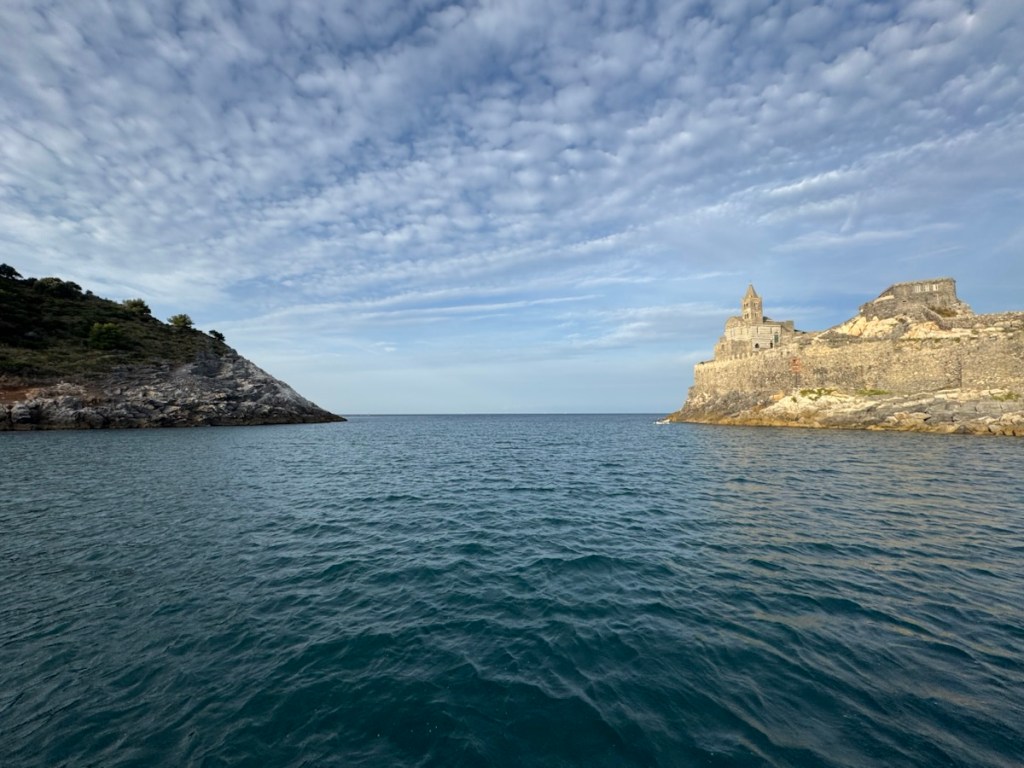
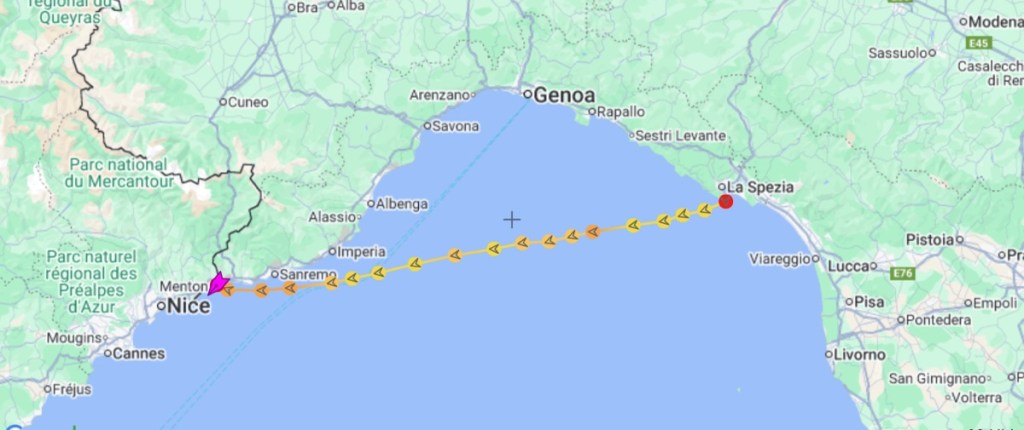
This was to be our last port of call in Italy as we planned our next passage across to the French Riviera. With a marina berth booked at Menton, we set off at sunrise passing the town, through a narrow channel and started our 100 nm journey.
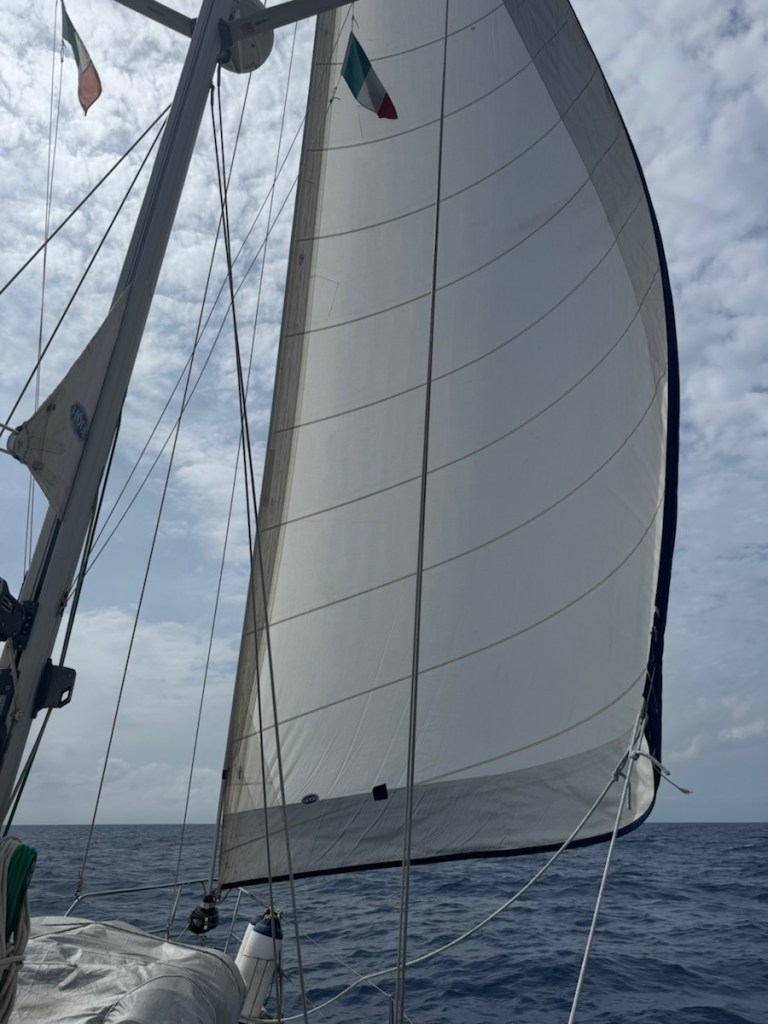
After a couple of hours motoring to charge the batteries, we had 8-10 kts of wind from the southeast, just enough to fill the Genoa for a calm downwind sail, although fairly slowly at 3-4 kts, at least we were going in the right direction. This continued most of the day, until the sun went down and there was no wind so we ended up motoring through the night.
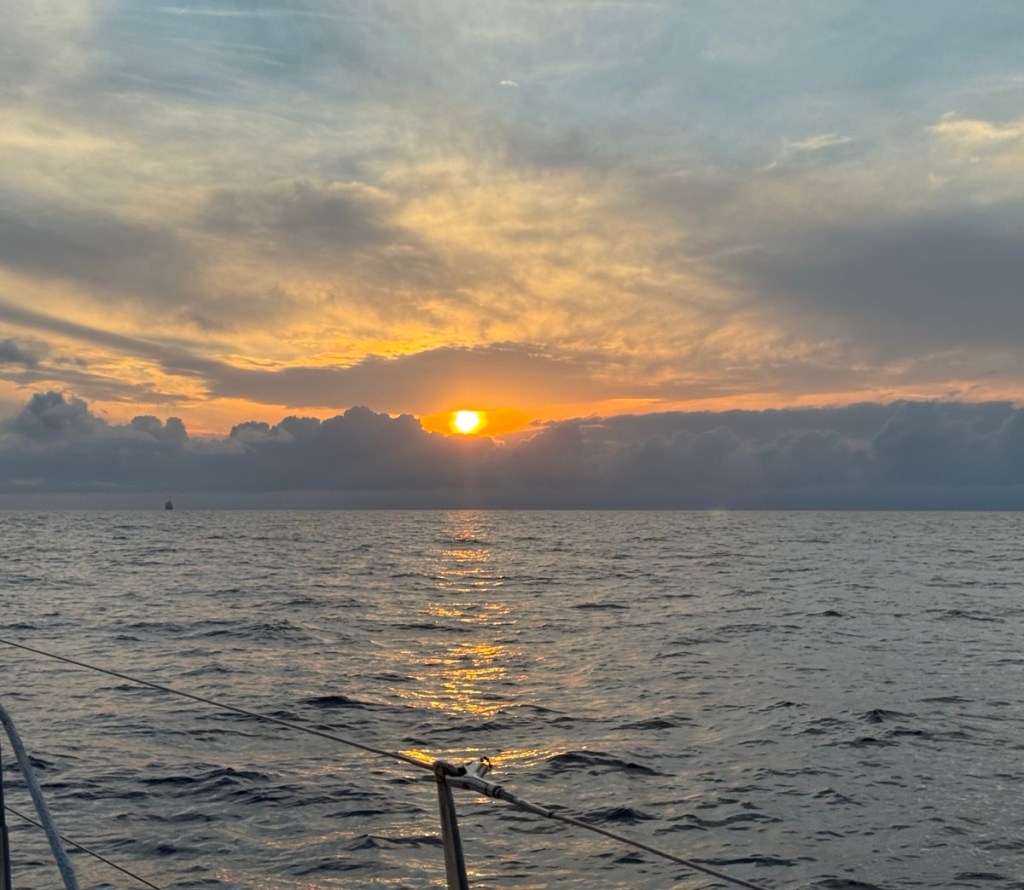
We continued on relatively slowly at 4 kts as we didn’t want to arrive too early. It was a peaceful night with a full bright moon, flat sea and no other ships around.
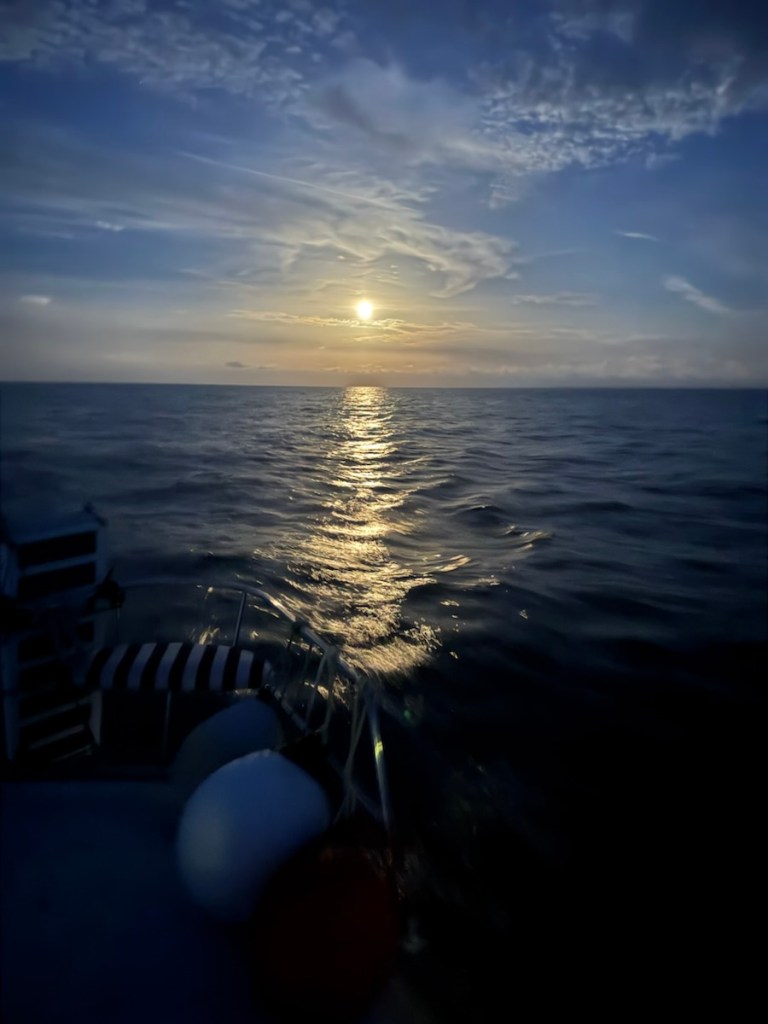
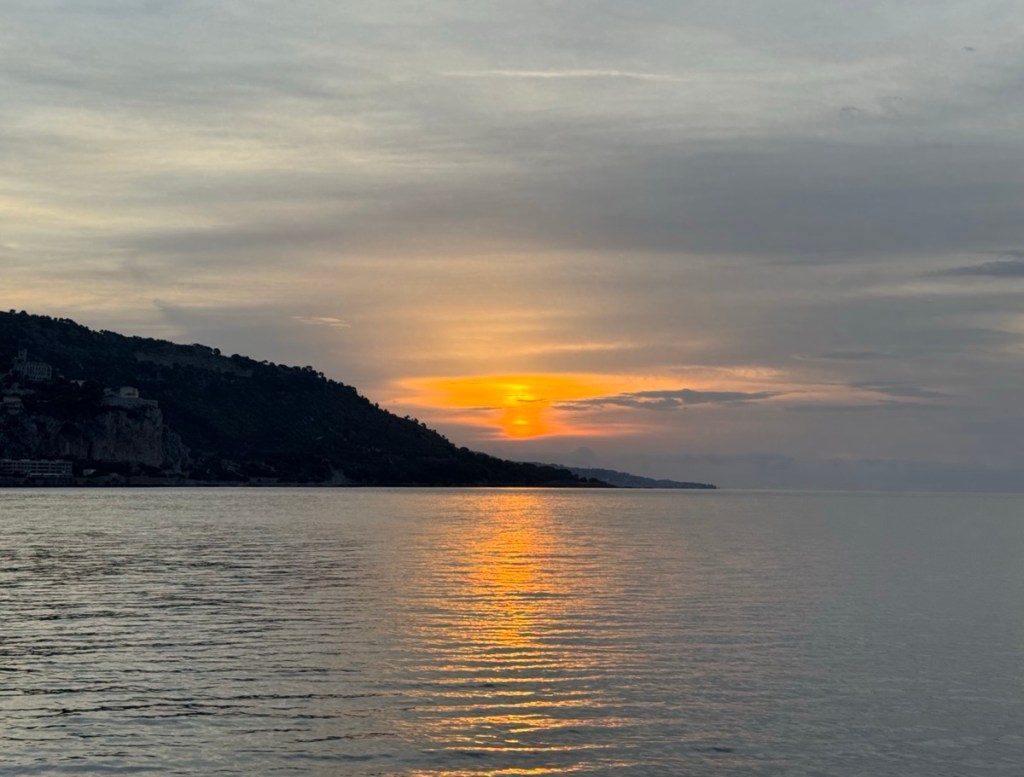
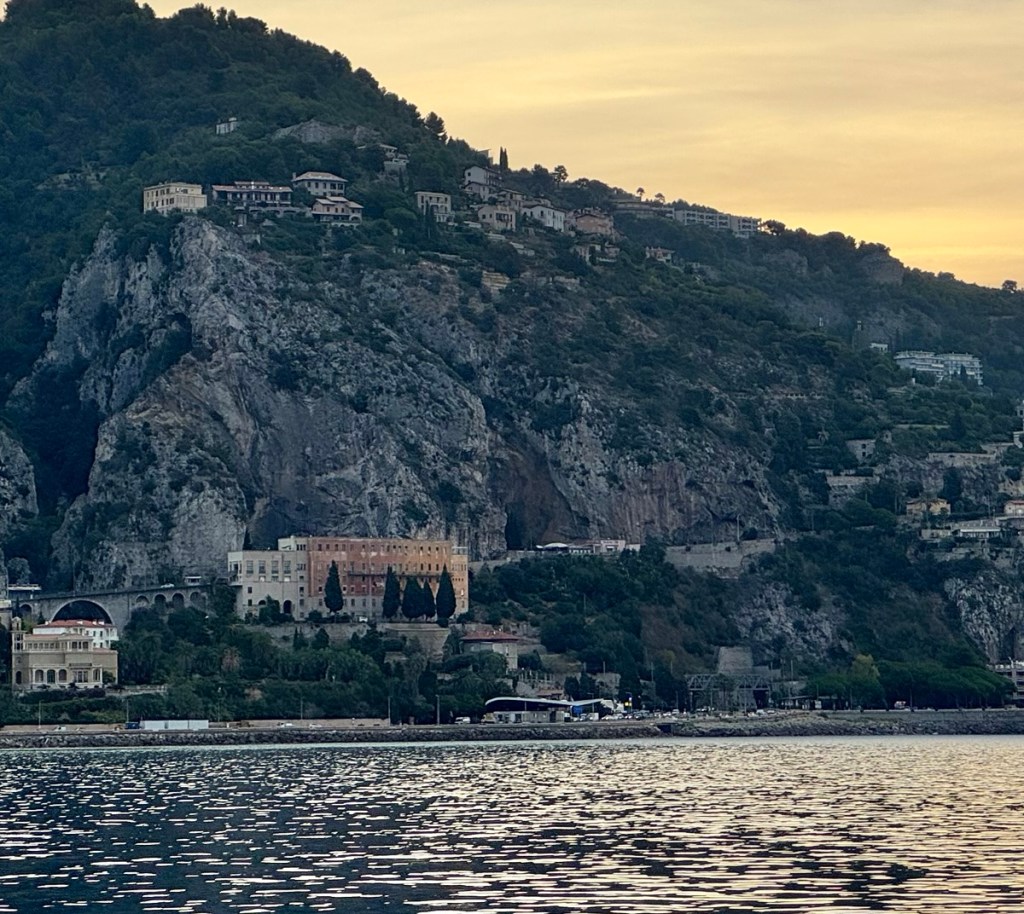
We arrived in Menton as the sun was just rising through the clouds, it was too early to go into the marina, so we anchored in front of another pretty town for a couple of hours and caught up on some sleep.
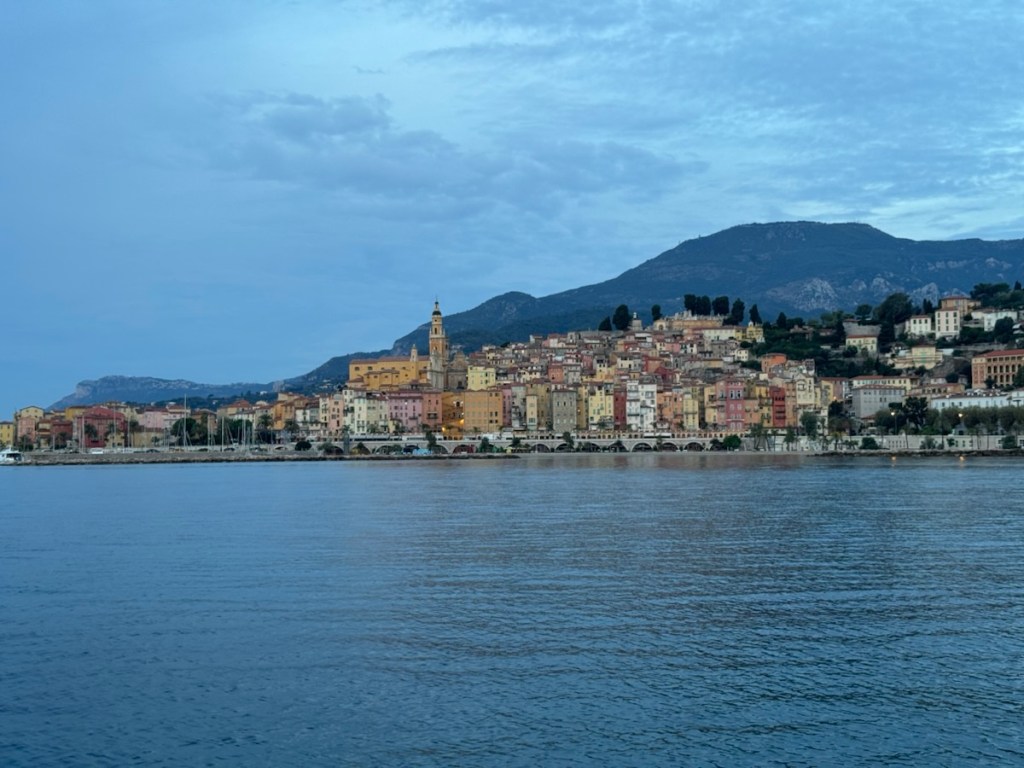
Menton, nicknamed the ‘Pearl of France’, is known for its beaches and a medieval old town. It is situated close to the border of Italy, and does have a very Italian feel. The border crossing point between Menton and Ventimiglia in Italy was visible as we entered the marina.
In the 12th century, Menton belonged to the Genoese family of Vento, and the republic of Genoa. The city was then bought by Carlo Grimaldi, lord of Monaco, in 1346, and was an exclave of the principality of Monaco. Menton only officially became part of France, rather reluctantly through annexation, in 1861.
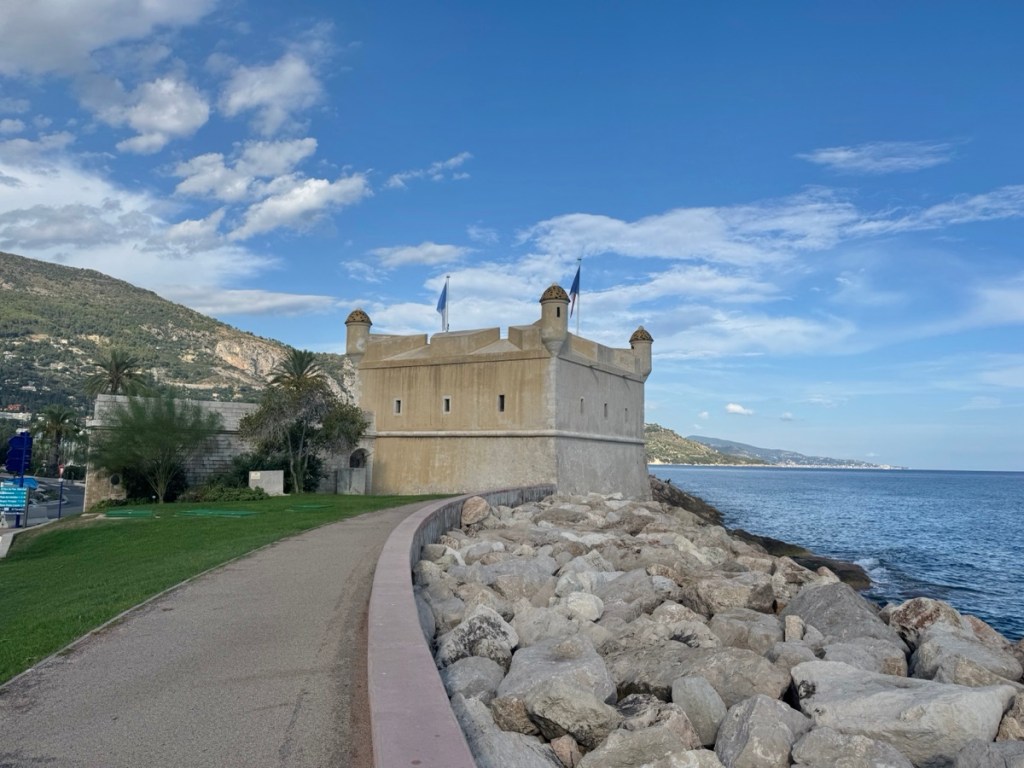
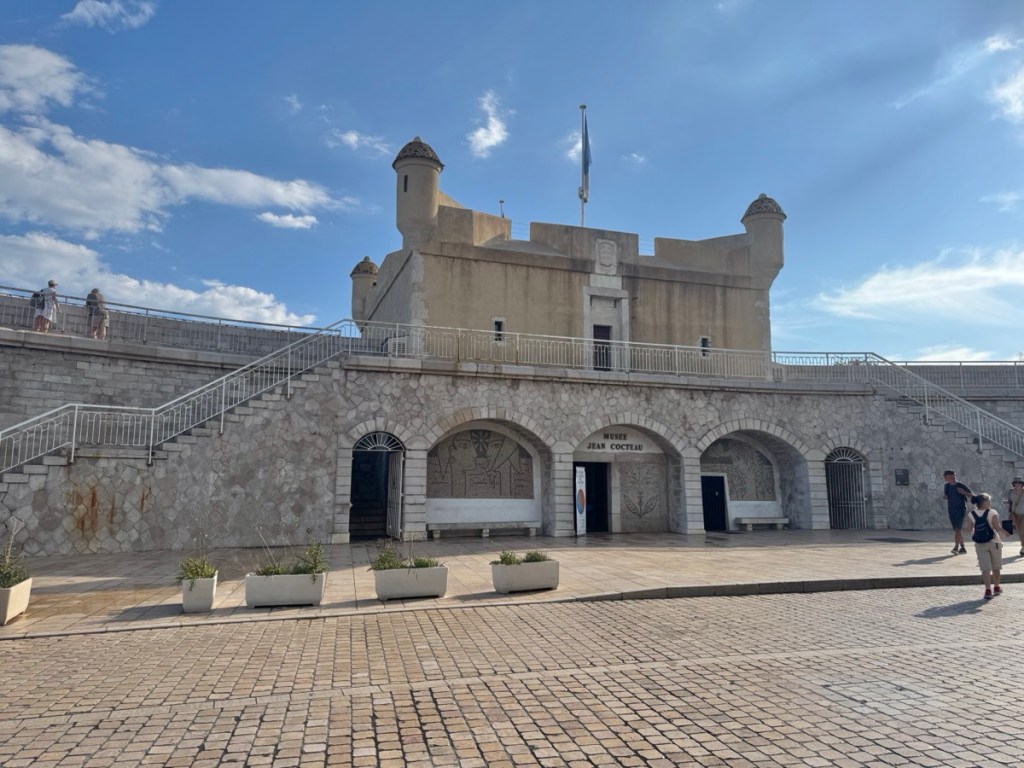
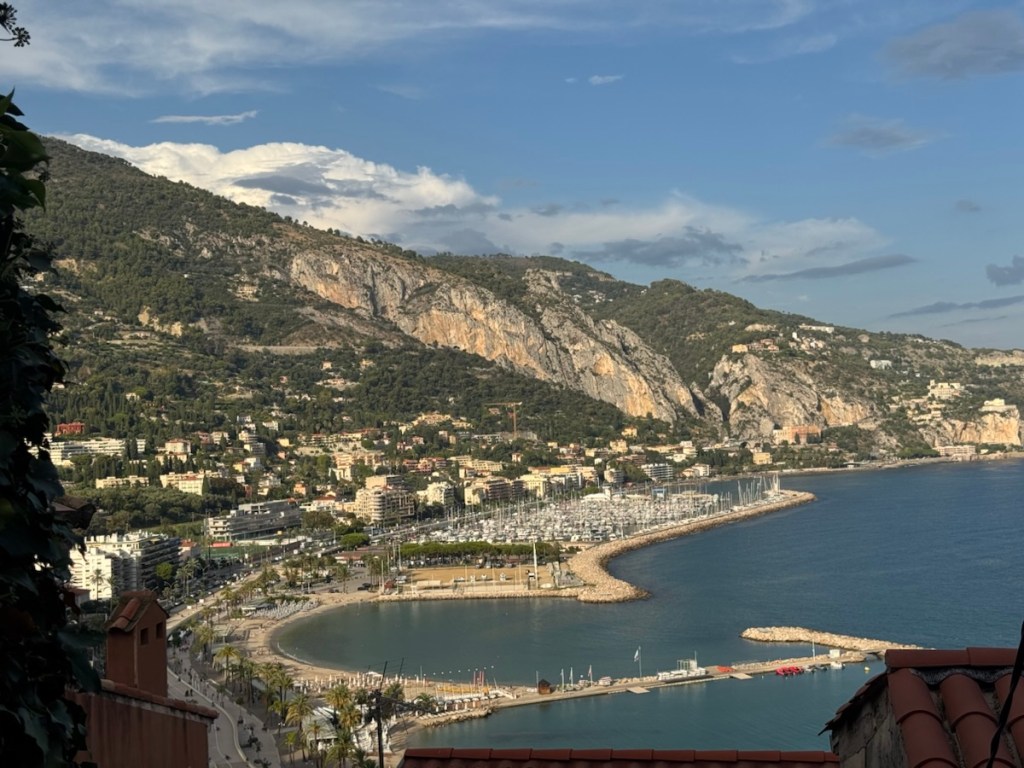
We walked around the crescent shaped beachfront to the port. In 1636, the princes of Monaco built a fortification on the shoreline at the old harbour as an advance defence for the port, this now houses a small art gallery.
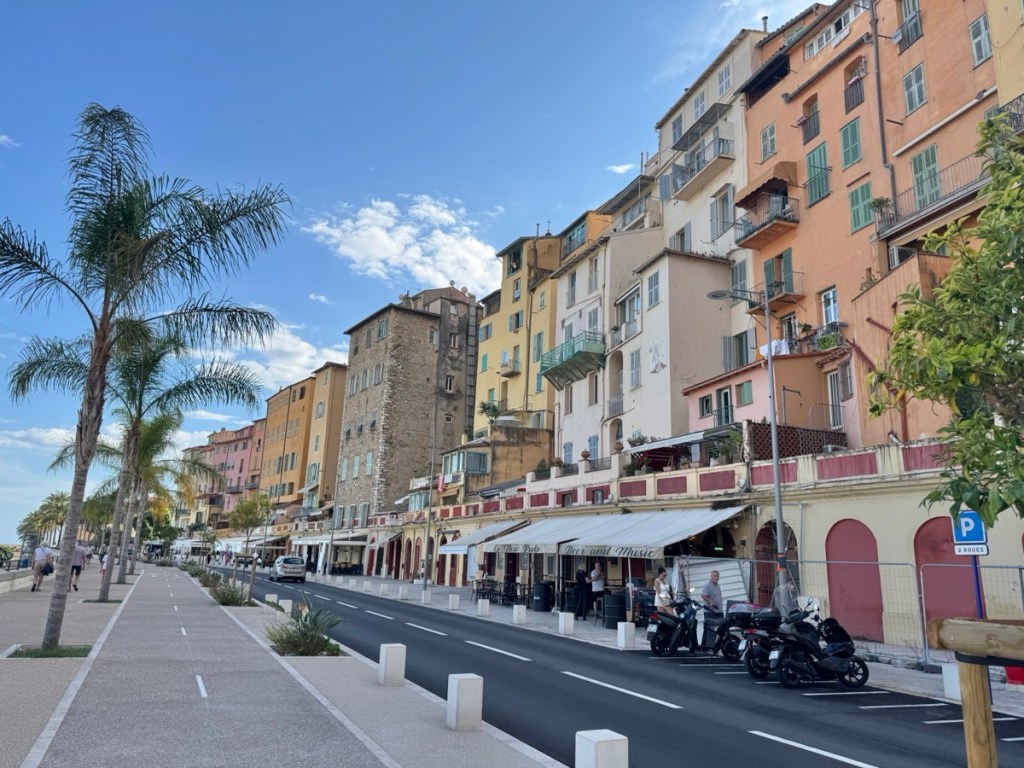
Set on two levels, the smart seaside promenade, Esplanade des Sablettes, has been recently modernised, lined with palm trees, fountains, benches, cafes and pergolas, some of which were spraying cold water mist. I imagine that the area was much busier during the high season.
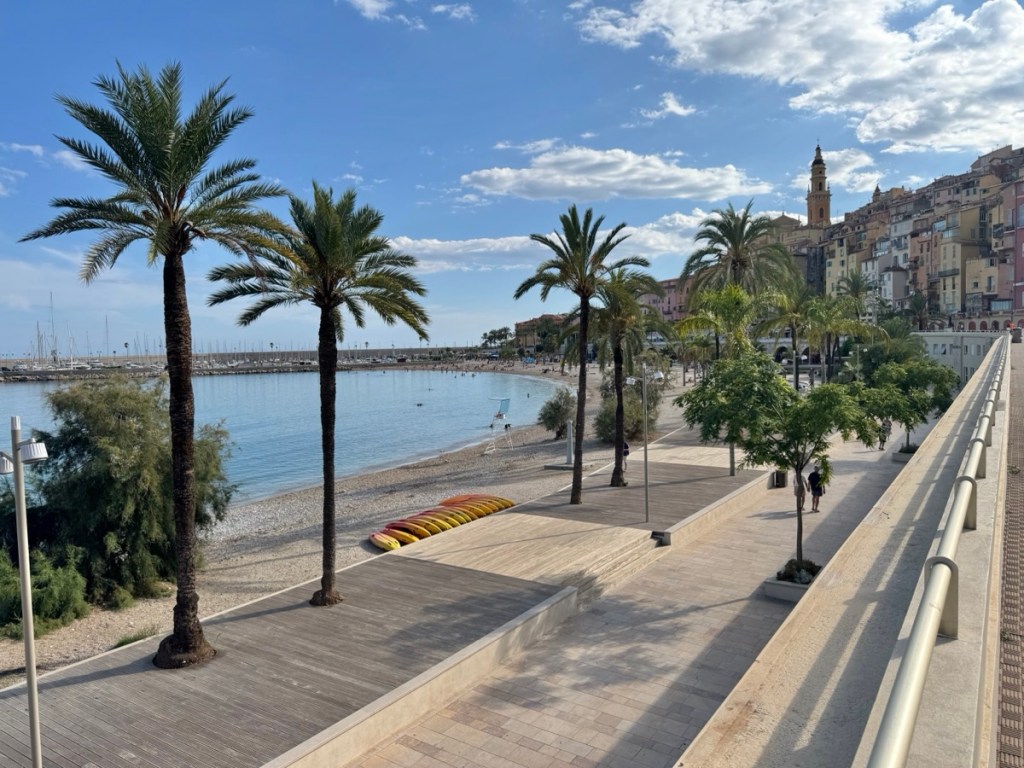
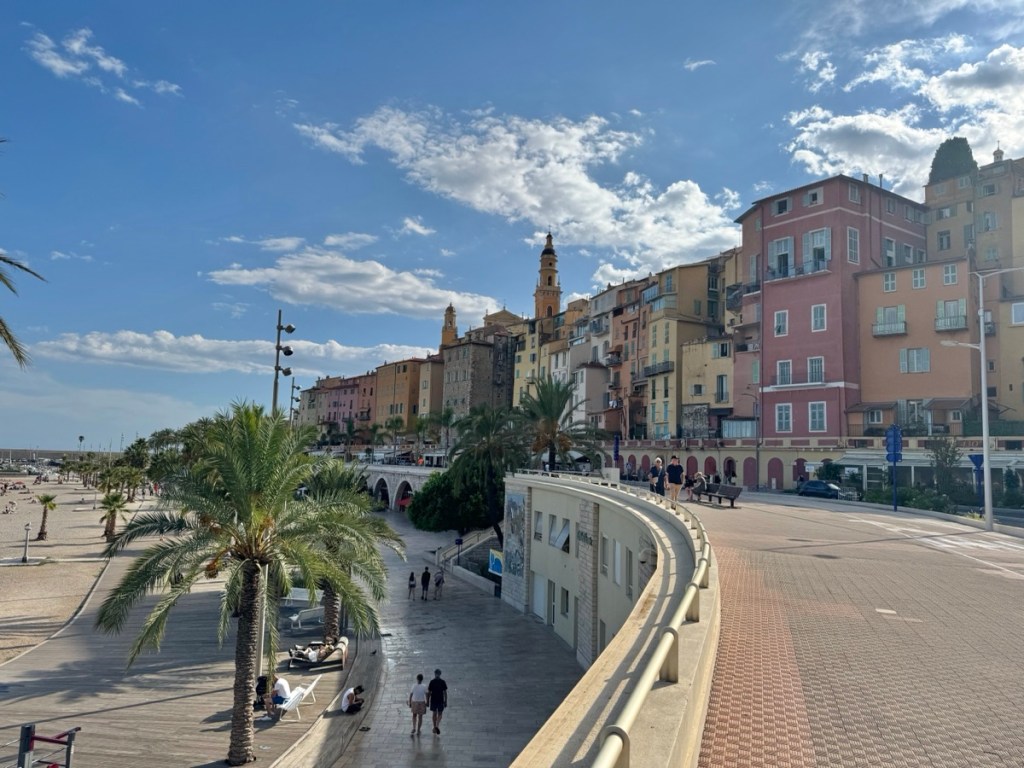
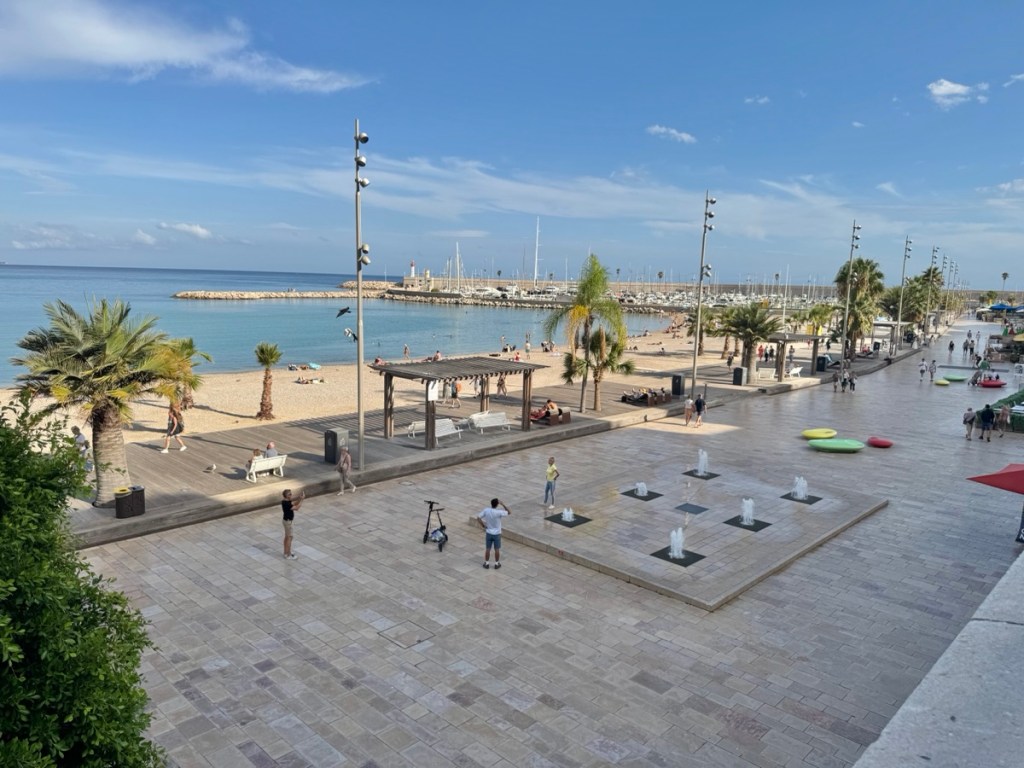
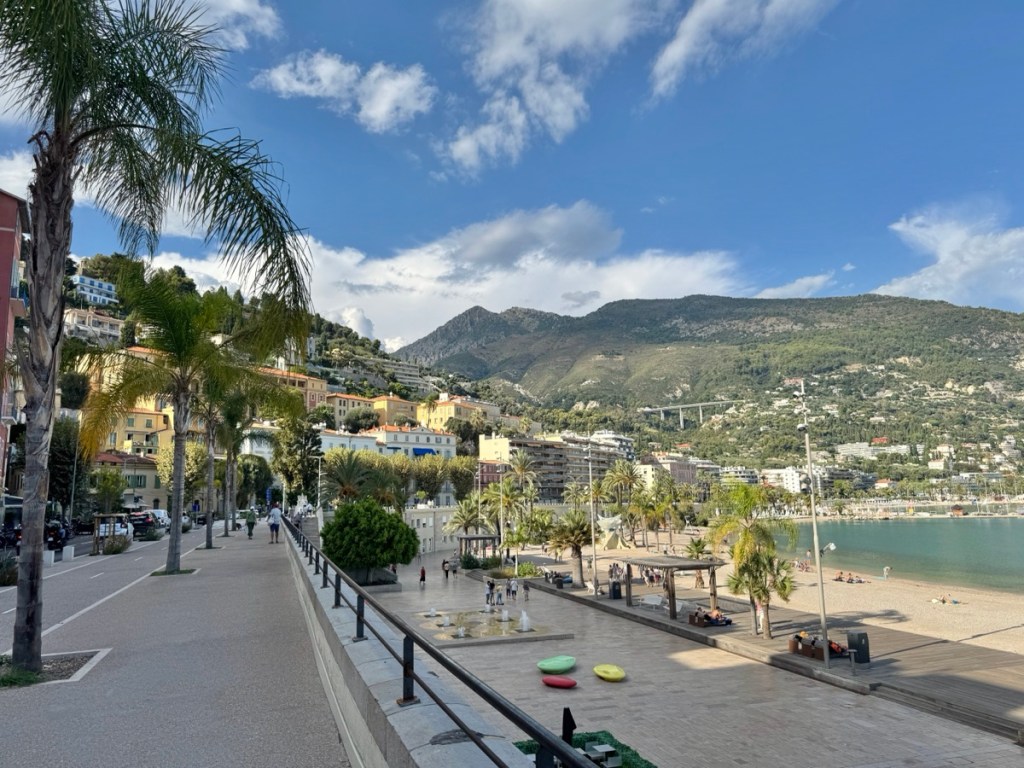
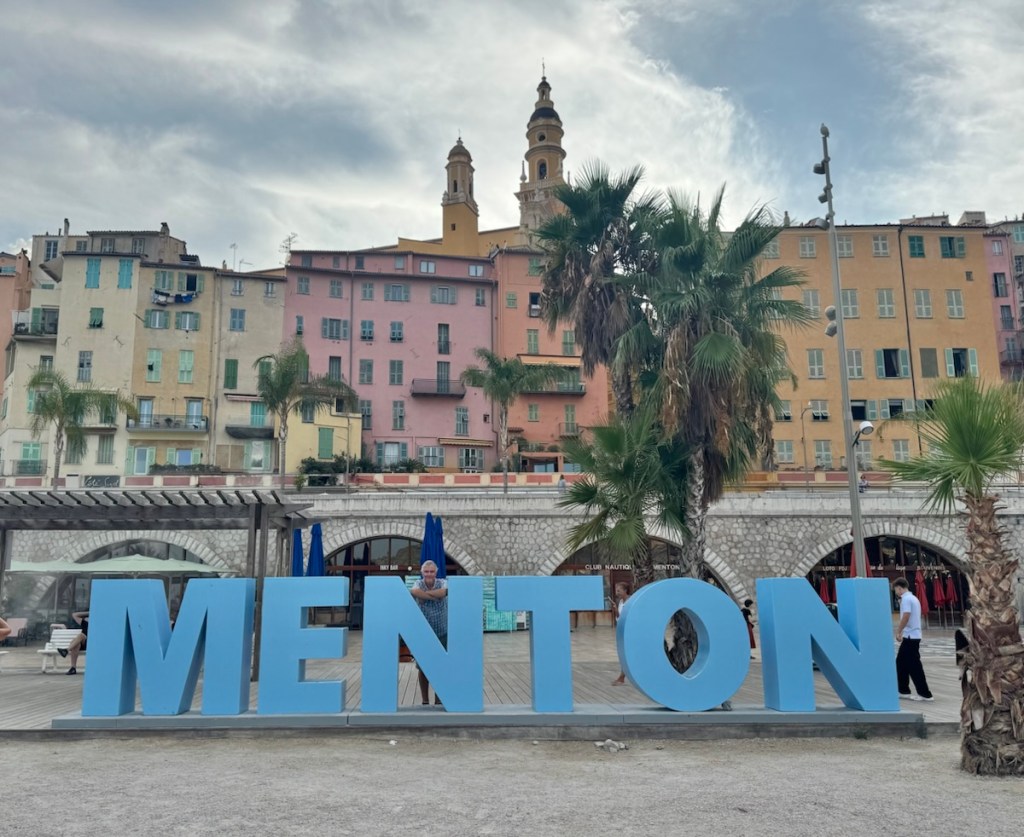
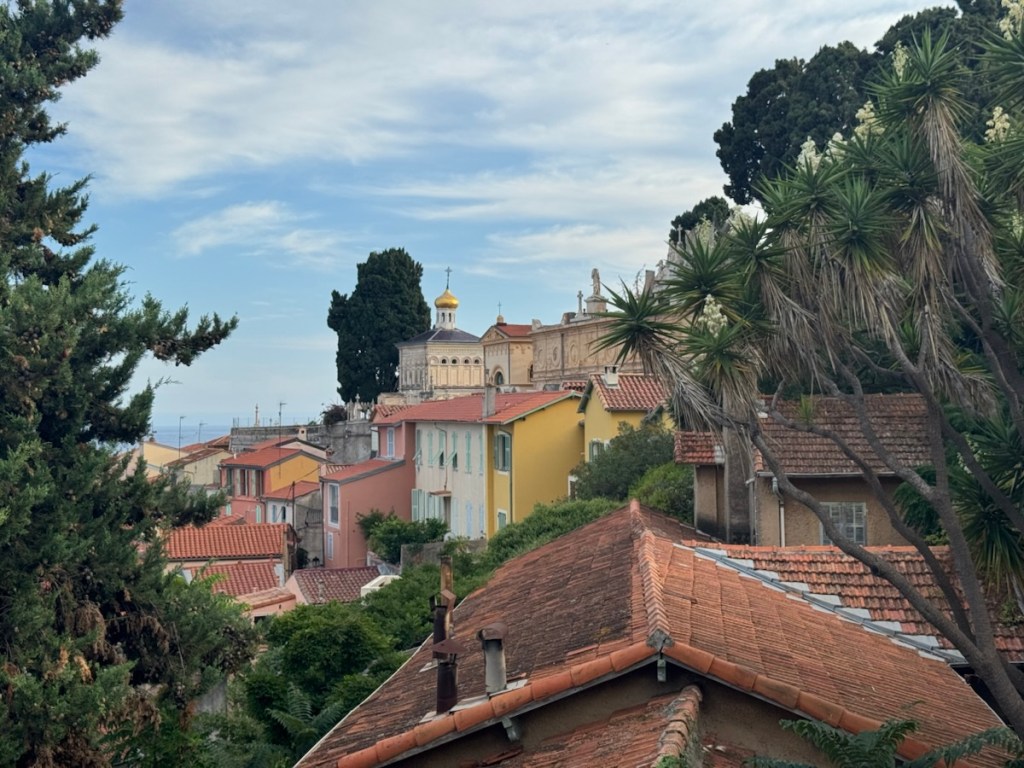
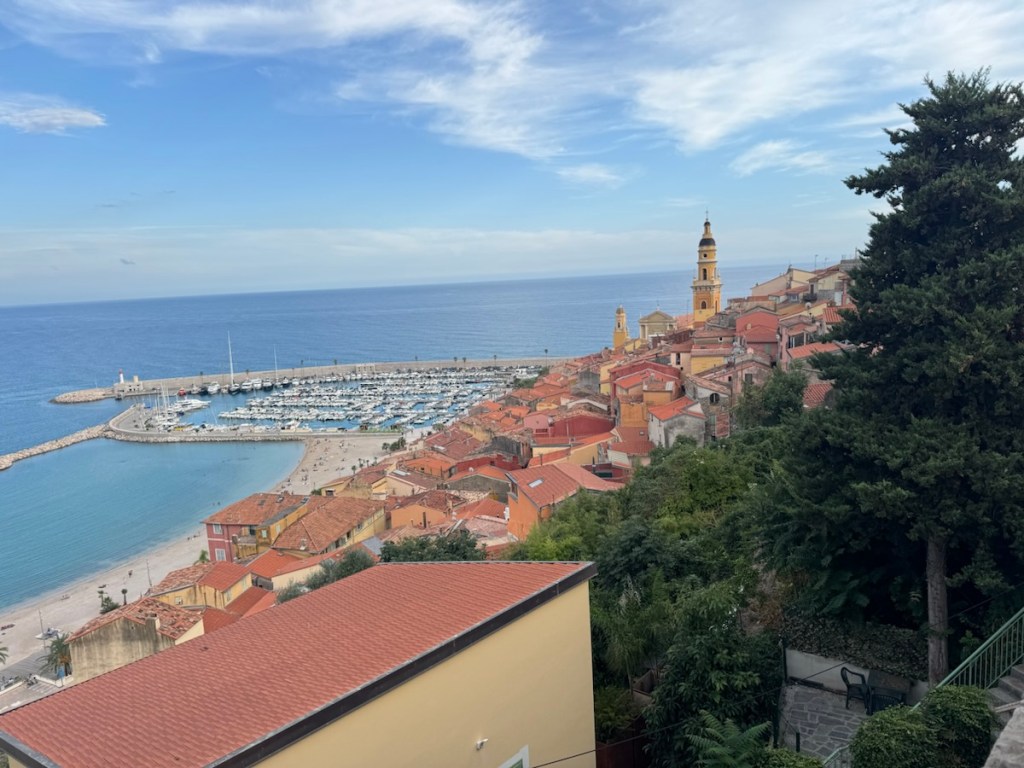
The tall colourful houses overlook the sea with the medieval town rising up the steep hill behind.
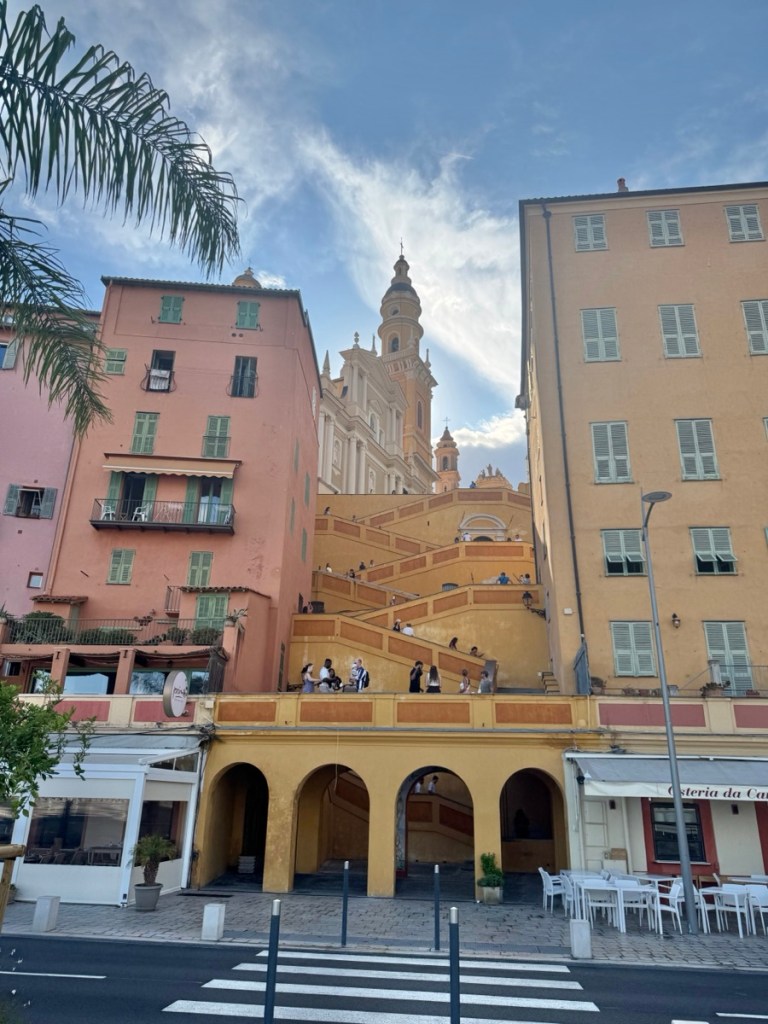
A grand staircase, Les Rampes Saint Michel, takes you up to a cobbled churchyard and the baroque Basilica of Saint Michel Archange with its 17th century bell tower which stands 53 metres high.
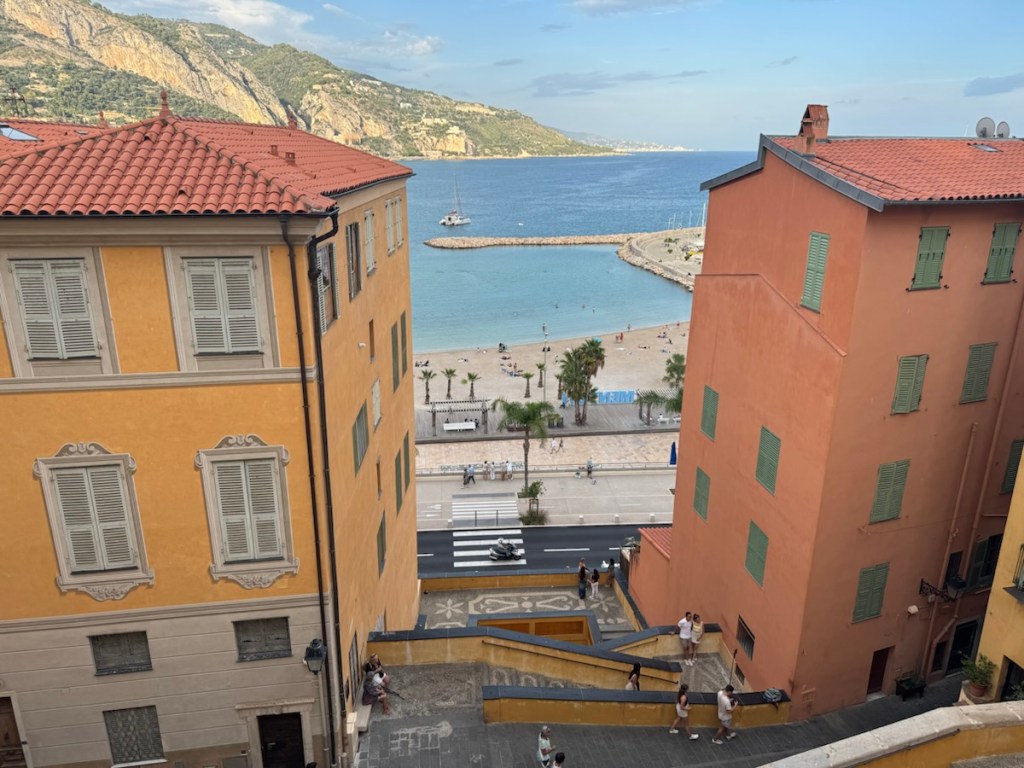
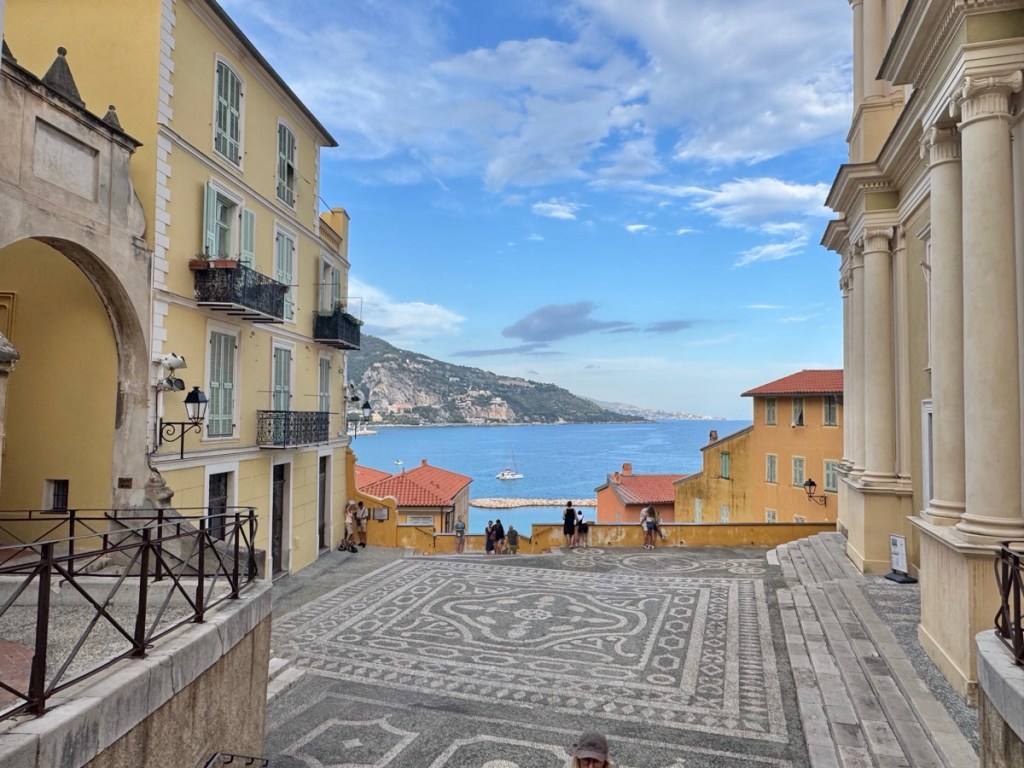
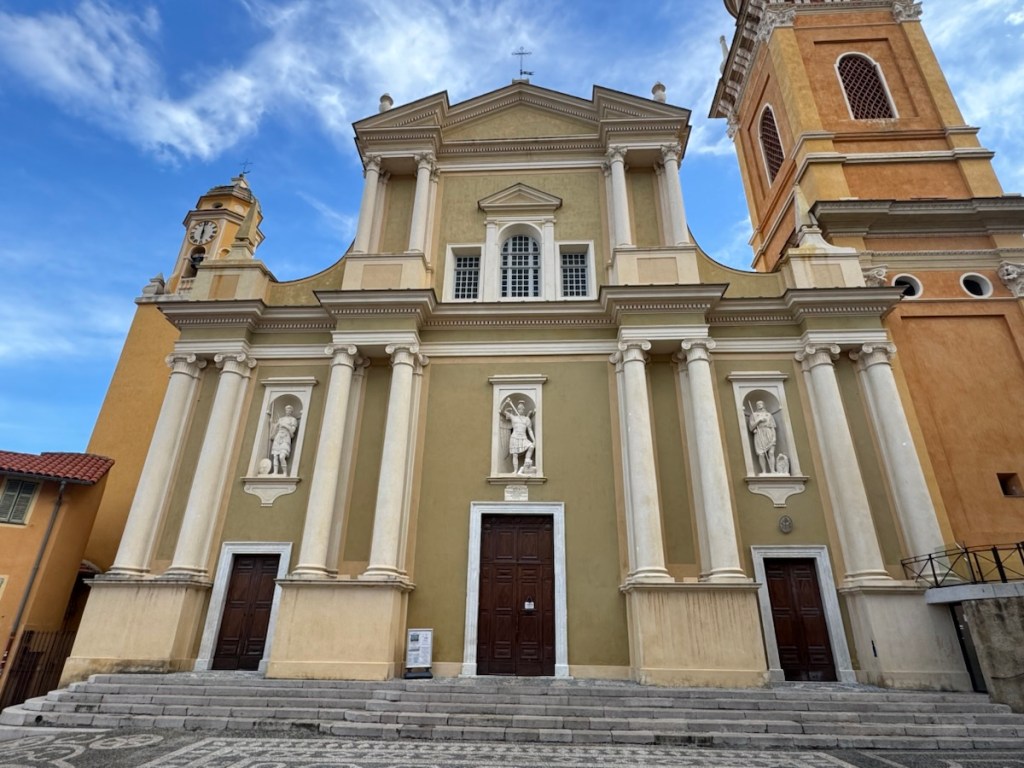
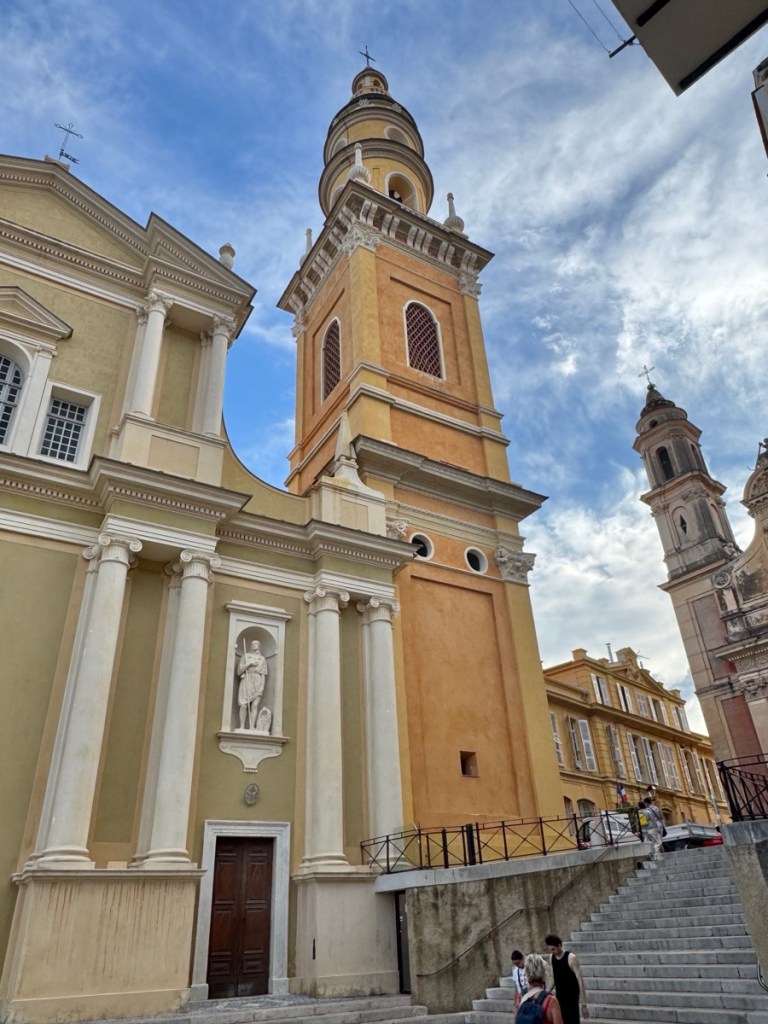
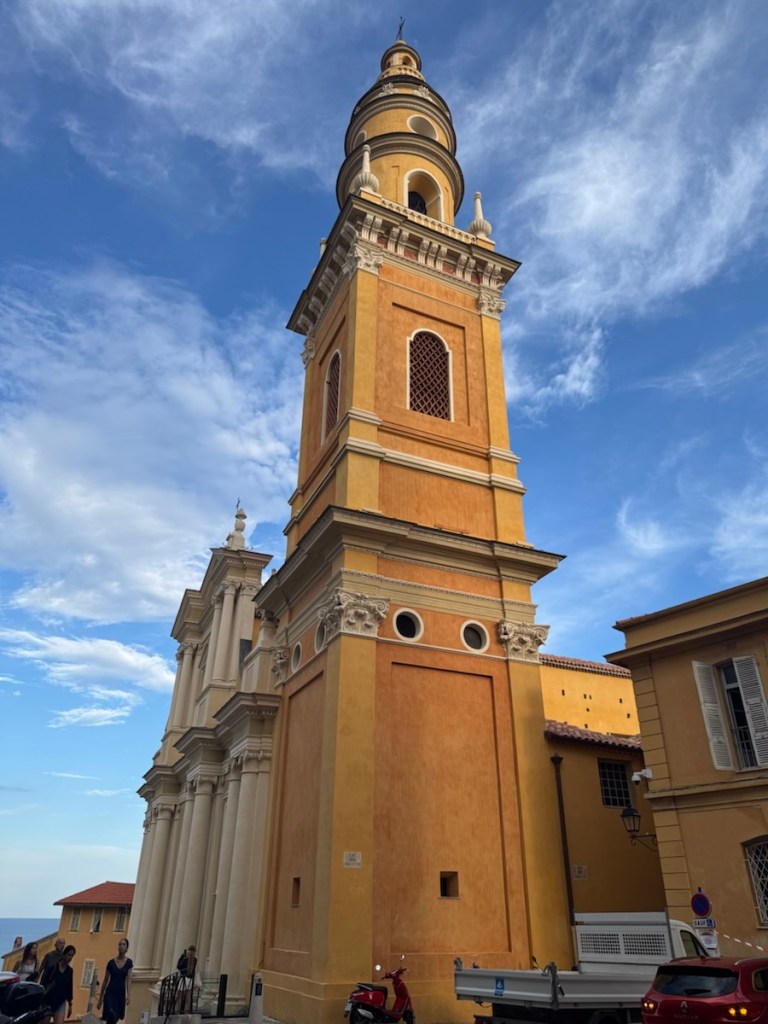
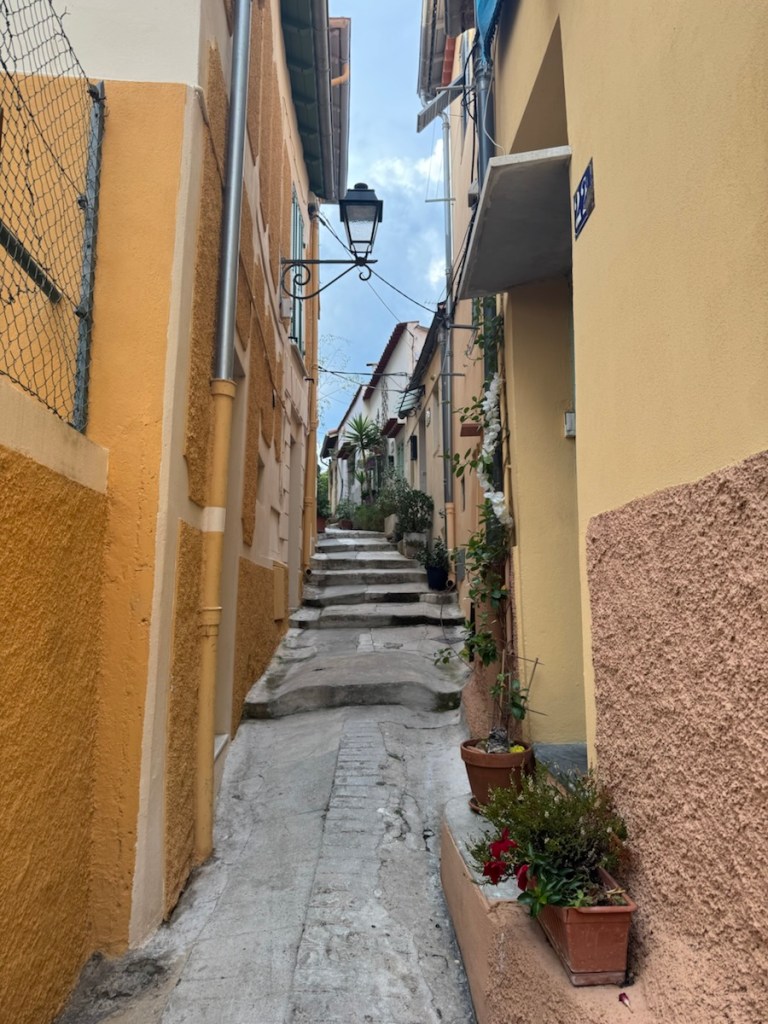
We wandered around the network of narrow lanes, and then continued up the path/steps towards the cemetery of the old castle.
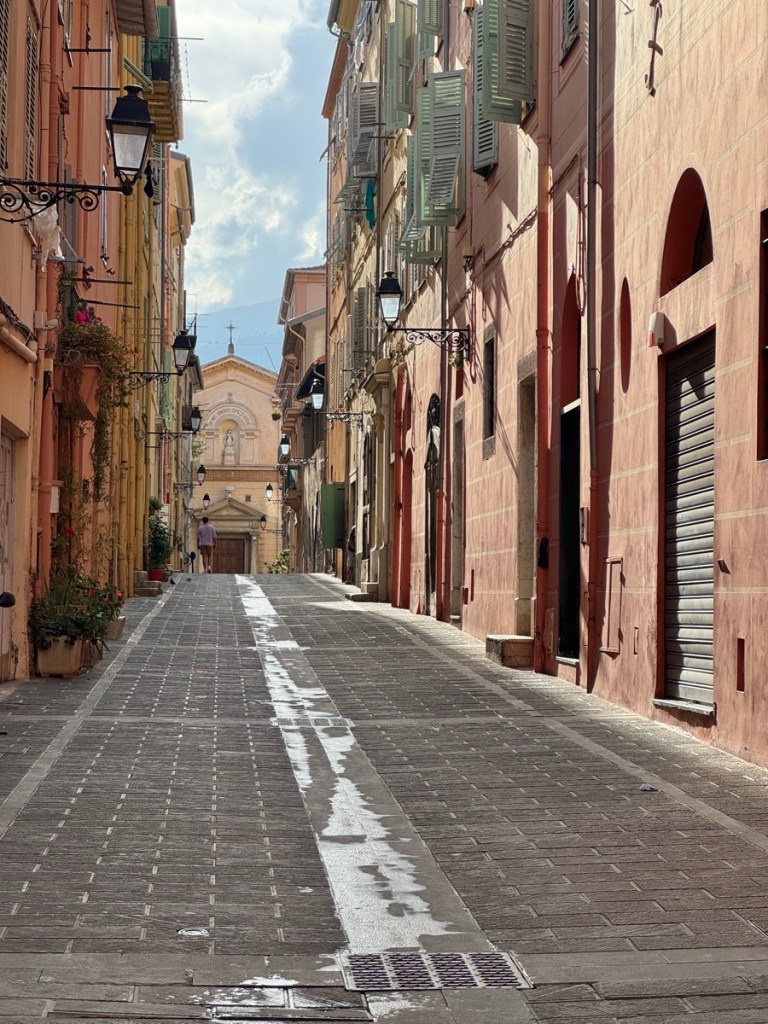
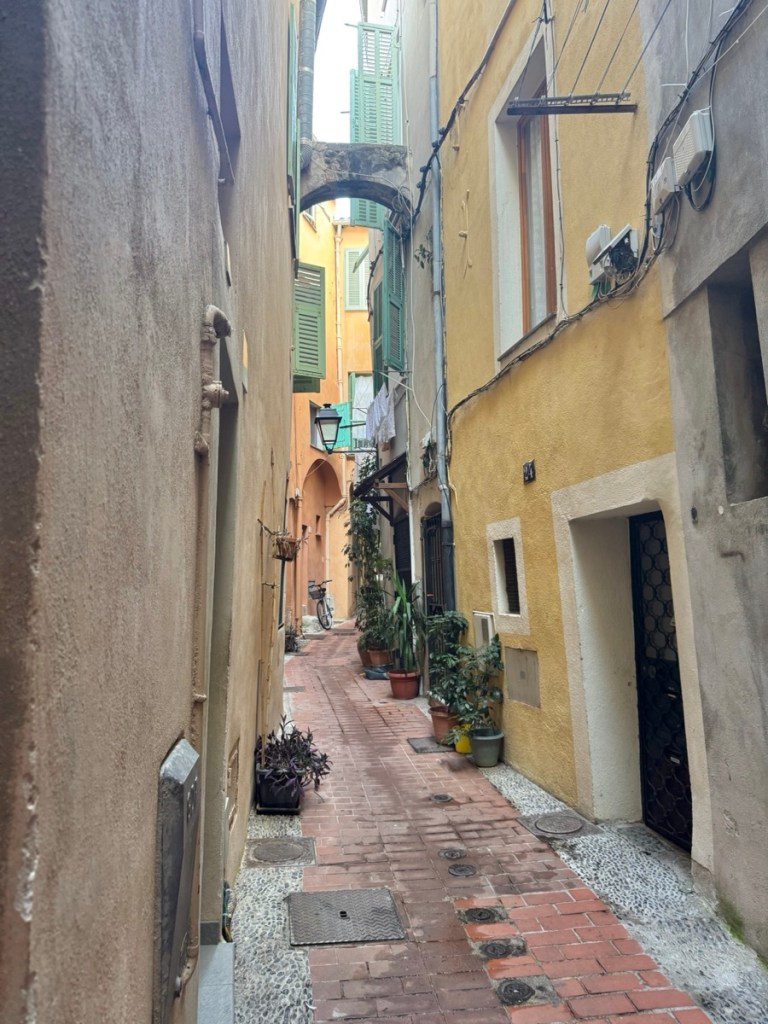
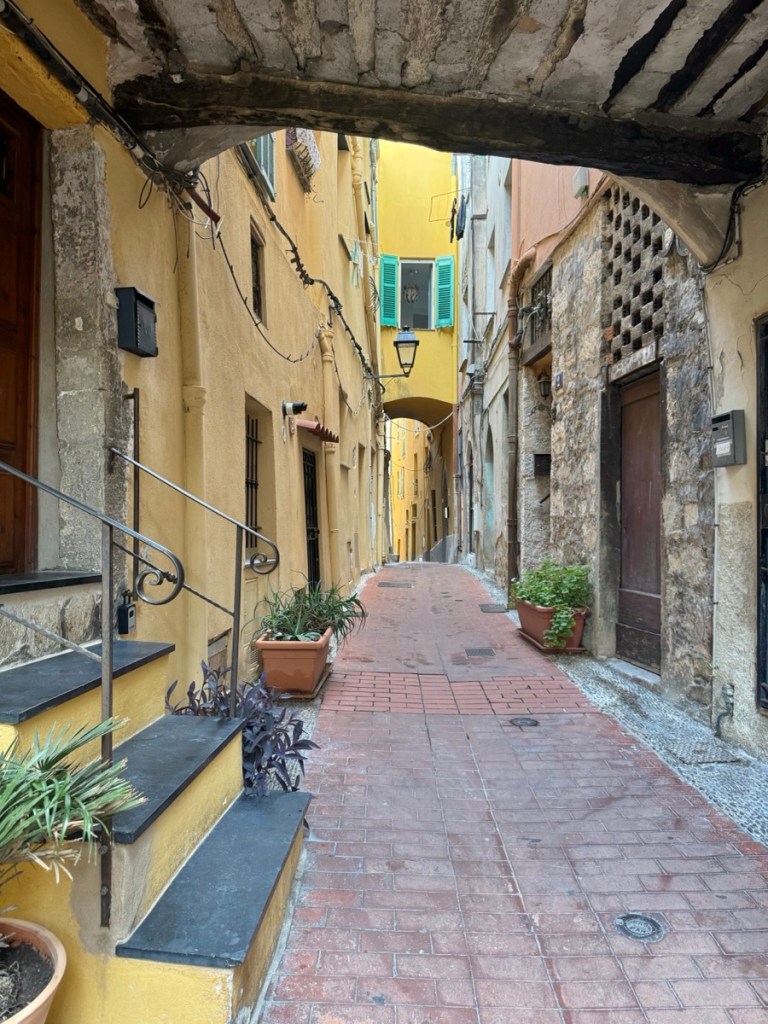
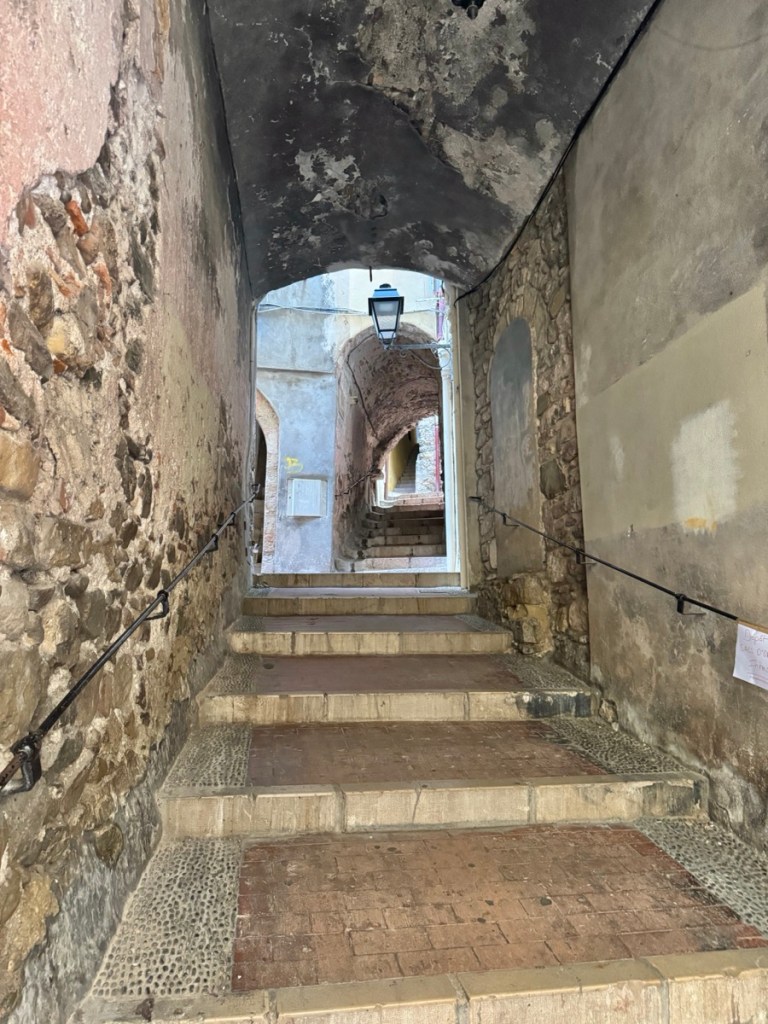
Eventually arriving at the viewpoint of the old castle ‘Le château de Menton’ we had panoramic views over the town, the marina and old harbour.
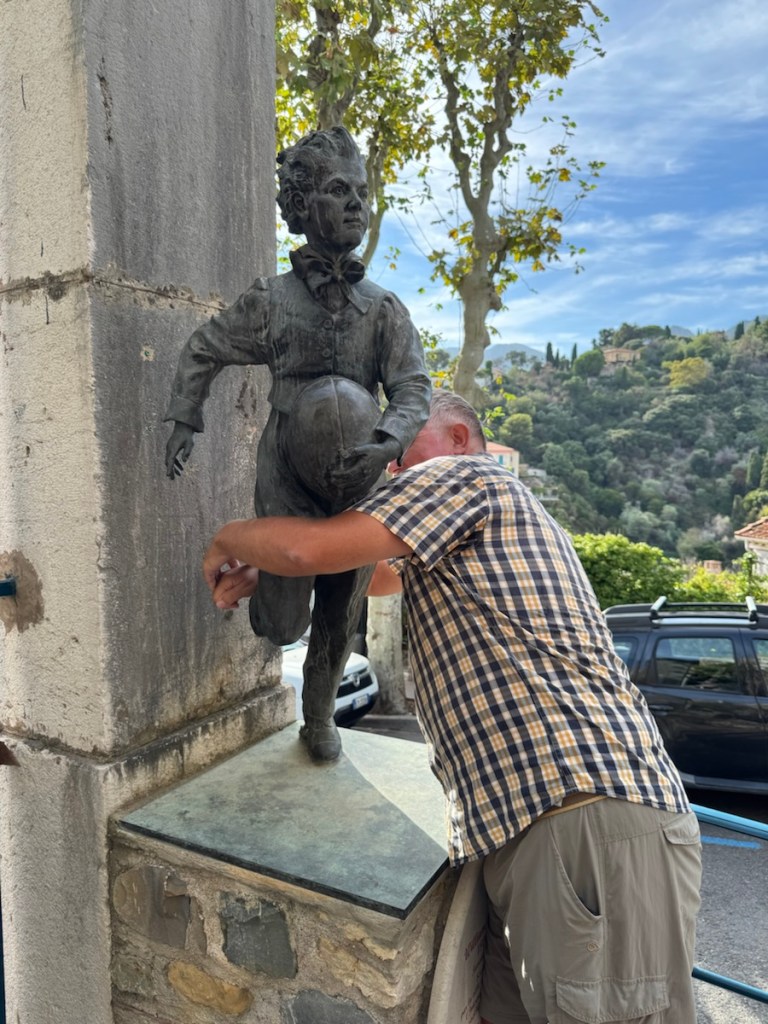
At the entrance of the cemetery, there was an unexpected statue of William Webb Ellis, the inventor of rugby. It turns out he lived in Menton at the end of his life and is buried in the old cemetery. William Webb Ellis (1806–1872), was an English Anglican clergyman who was credited as the inventor of rugby football while a pupil at Rugby School.
According to legend, during a school football match in 1823, he picked up the ball and ran with it creating the ‘rugby’ style of play. Although the story has become firmly entrenched in the sport’s history, there is no supporting evidence, and is discounted by some rugby historians as a myth. Paul just says, if you’re not a believer then you need to come up with a better story.
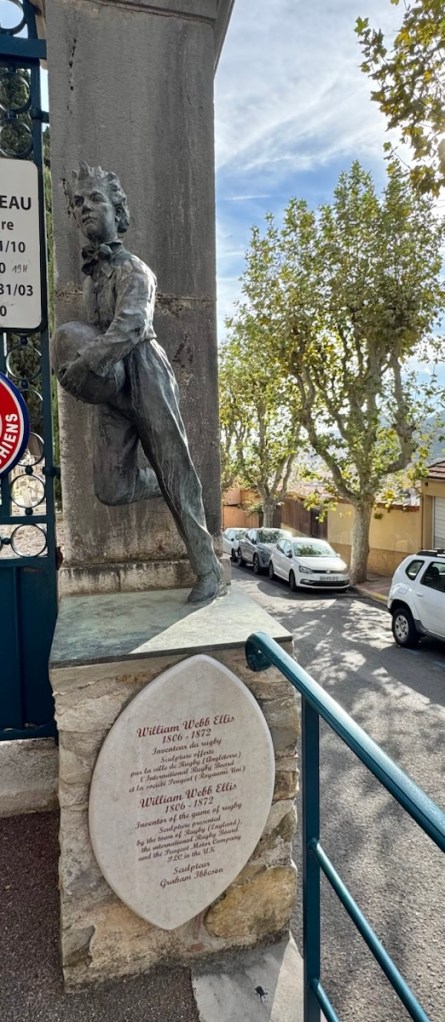
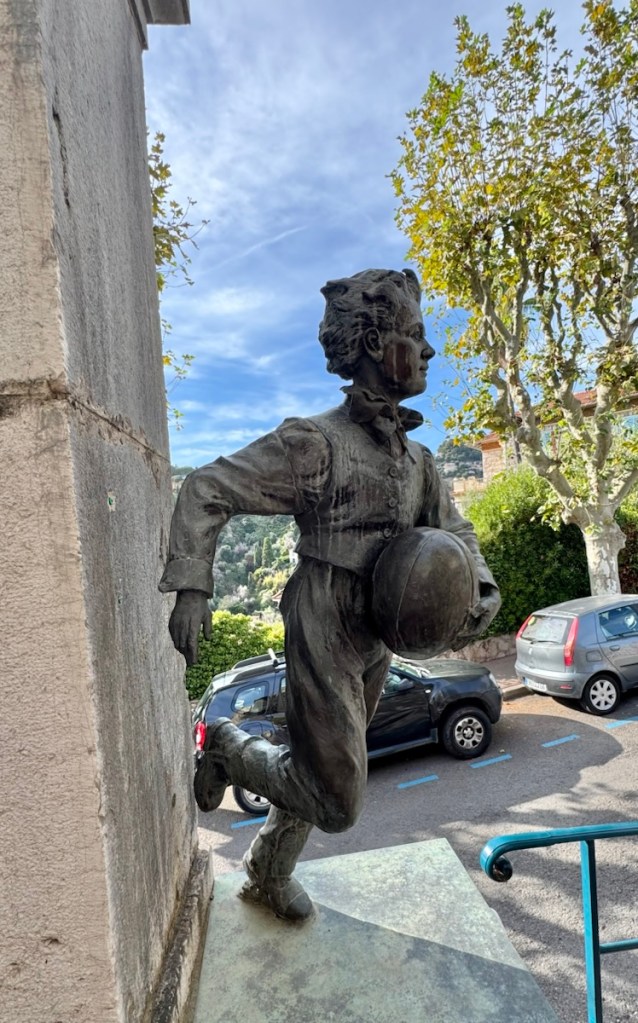
Paul tried to tackle the poor little boy!
We looked around the terraces of the cemetery to find his grave but unfortunately some areas were cordoned off due to renovation work of the chapel, so we weren’t allowed access. I did try to climb over the barriers but just ended up in the gravel with cuts and bruises, I guess there’s a lesson to be learnt there somewhere!
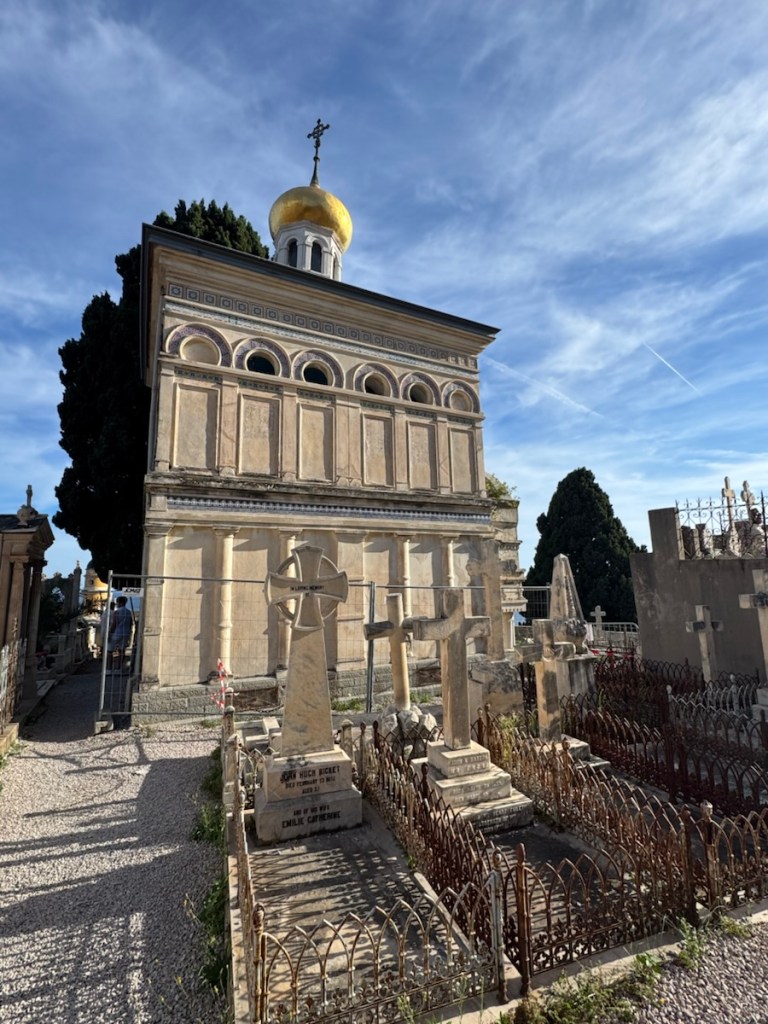
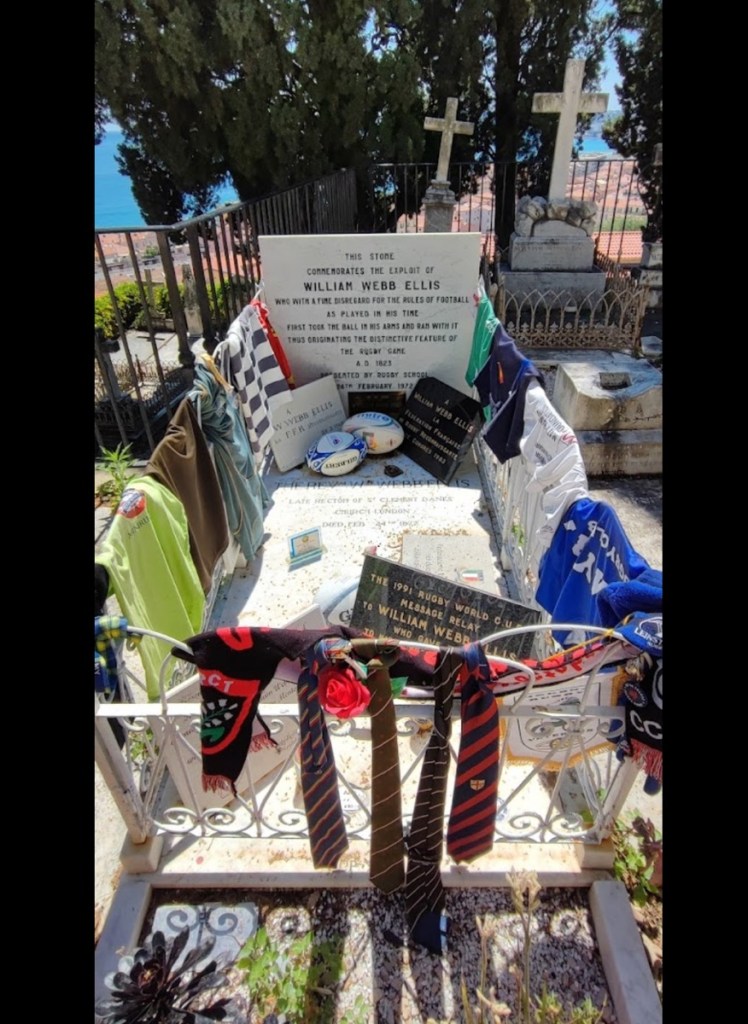
Apparently, when it is accessible, supporters decorate the tomb, this is a picture that I have ‘borrowed’ from the Internet.
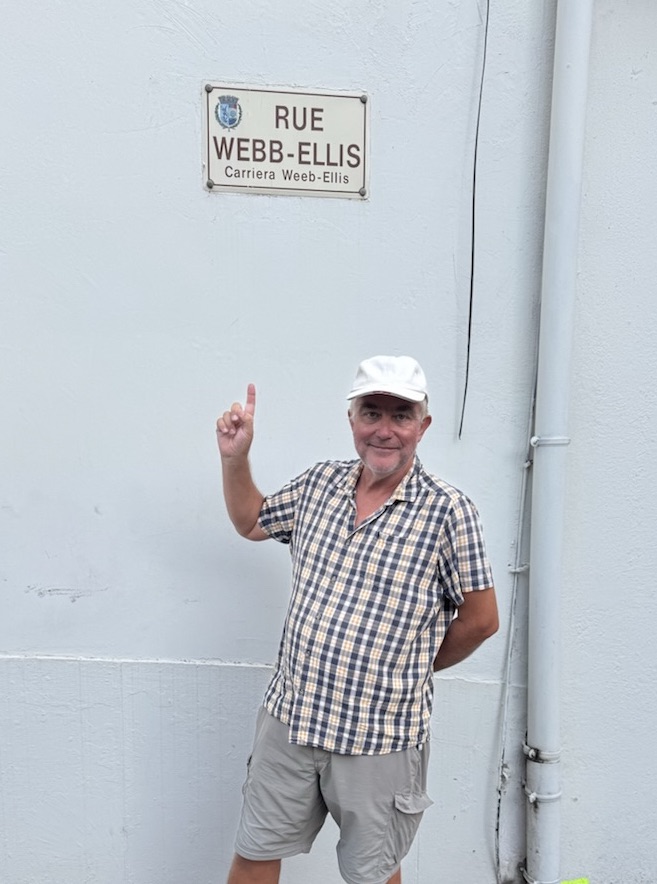
As we walked back down we came to a street named in his honour.
Menton is also famous for producing lemons. With plenty of sunshine, an exceptionally mild climate in winter and protection from harsh winds, its land is very fertile and lemon trees flourish. Lemons are the emblem of Menton and the lemon motif is found on many items in souvenir shops, including, tea towels, bags, jewellery and pottery. This was also very reminiscent of Italy, and particularly Sicily.
It’s obviously serious business in Menton and they celebrate with an annual lemon festival ‘Fête du Citron’ held in Menton between February and March, in honour of the lemon. It features elaborate sculptures and floats made entirely of real lemons. It uses almost 15 tons of citrus fruit and thousands of hours to make some of the displays, some of which stand as high as 10 metres.
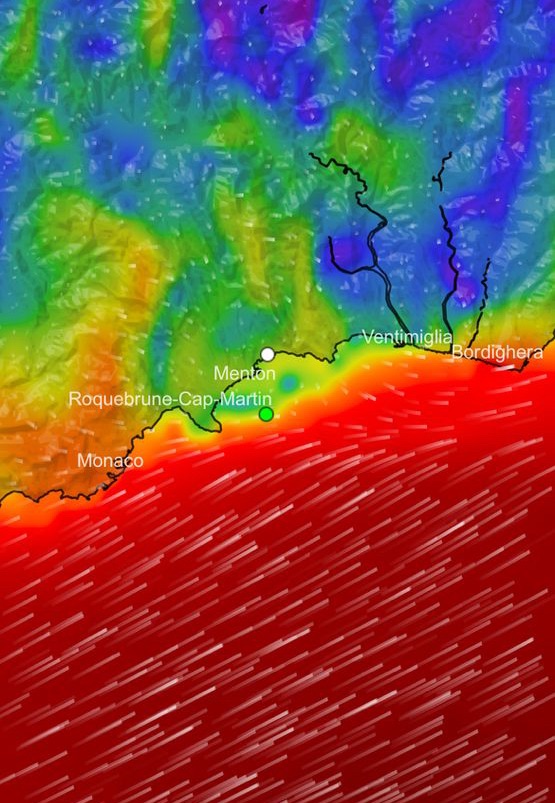
There were strong winds forecast out to sea so we decided to stay a few more days and explore further afield.
 Sailing ZigZag
3 replies on “The Pearl of France”
Lovely little spot you have found there, and as it turns out, well sheltered from the high winds.
It’s always brilliant to learn something from your weekly updates, and this weeks little snippet about William Webb-Ellis is a gem I will log for future use.
If I squint I can see Lemon in the name Menton 🙂 but that might be just a sign that I need glasses…
There are some lovely alley shots this week – very artistically done.
Rather strangely, after Storm Amy here, we have had no rain, and none forecast here for another week. Go figure.
Safe onward exploring by the sounds of it this week.
LikeLiked by 1 person
How did Paul resist liberating William Webb-Ellis and fixing him as a figurehead on Ziggy? 😉
LikeLiked by 1 person
I’m putting this on my ‘places to go’ list, it looks amazing. Good choice to stay a few more days, way too much red weather out there.
LikeLiked by 1 person