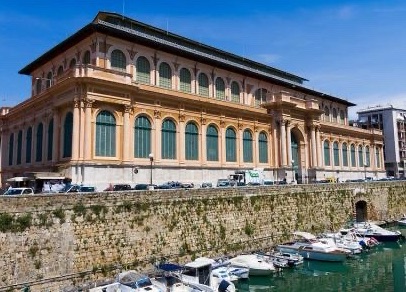
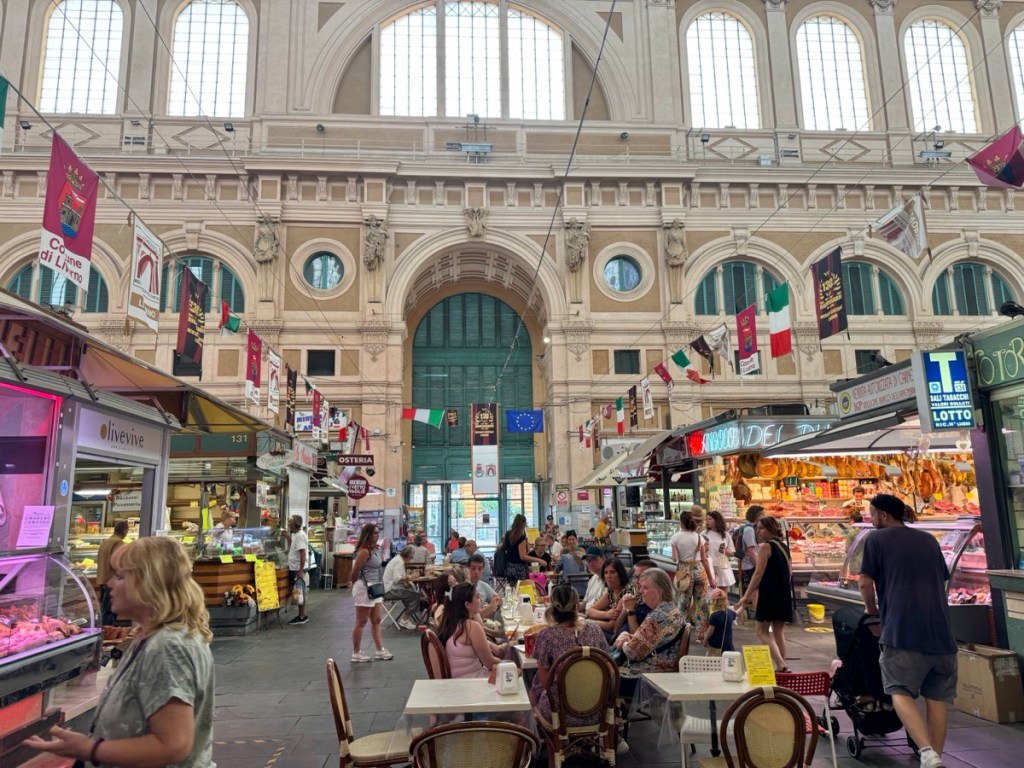
Having been in Livorno for some time this summer, we had definitely made full use of the free dock. With our VIP guest now safely back in the UK, it was time to move on, but first we needed to provision. We visited the huge market ‘Mercato Centrale’, apparently the second largest indoor market in Europe, second only to the Boqueria in Barcelona.
The grand building, although crumbling and looking a little scruffy, is located on the canal banks, and houses approximately 200 stalls stocking everything you could possibly need. Extra stalls also spilled out onto the streets.


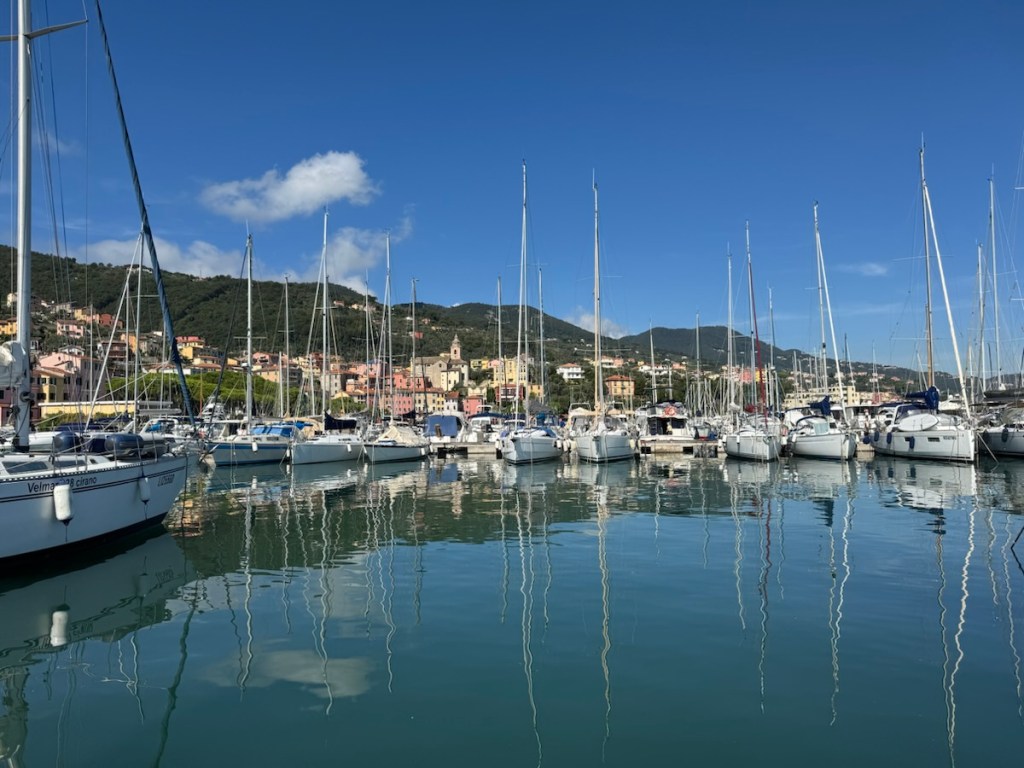
We finally left the dock at Livorno and headed 40 nm north towards La Spezia. As we were approaching, the mountains along the coast looked like they were covered with snow. The region is known for its marble quarries, and these mountains, part of the Apuan Alps, are characterised by rock containing rich deposits of white marble.

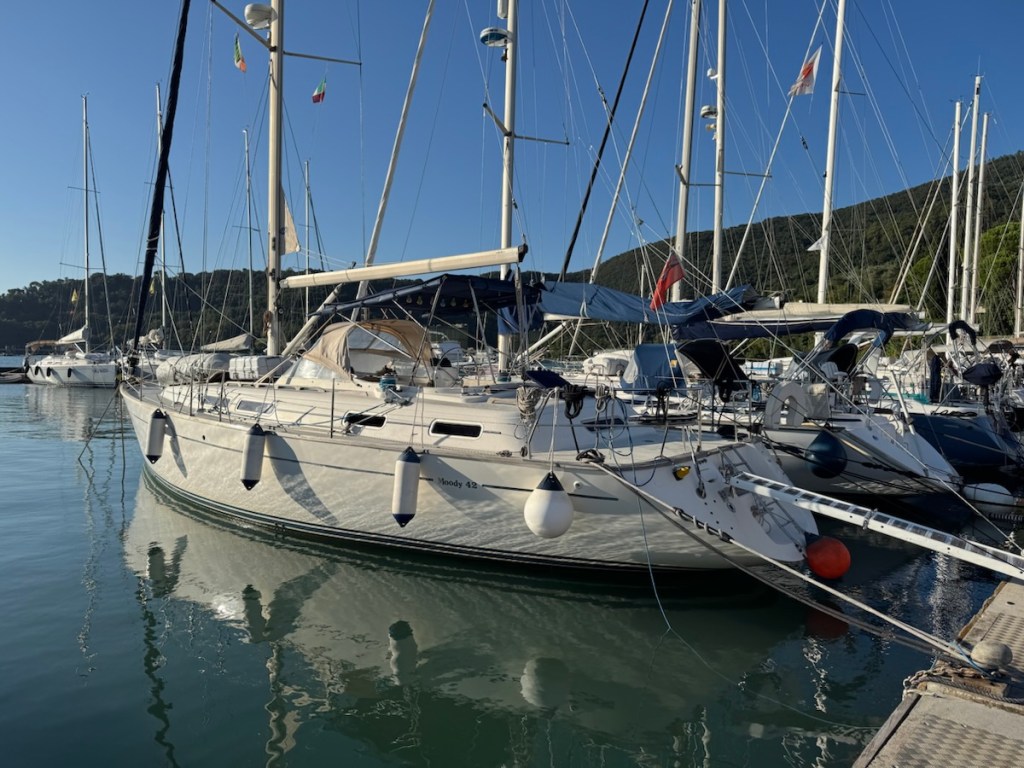
We moored in the marina which was protected by hills, we wanted to ensure that Ziggy was safe while we went off to explore the area.
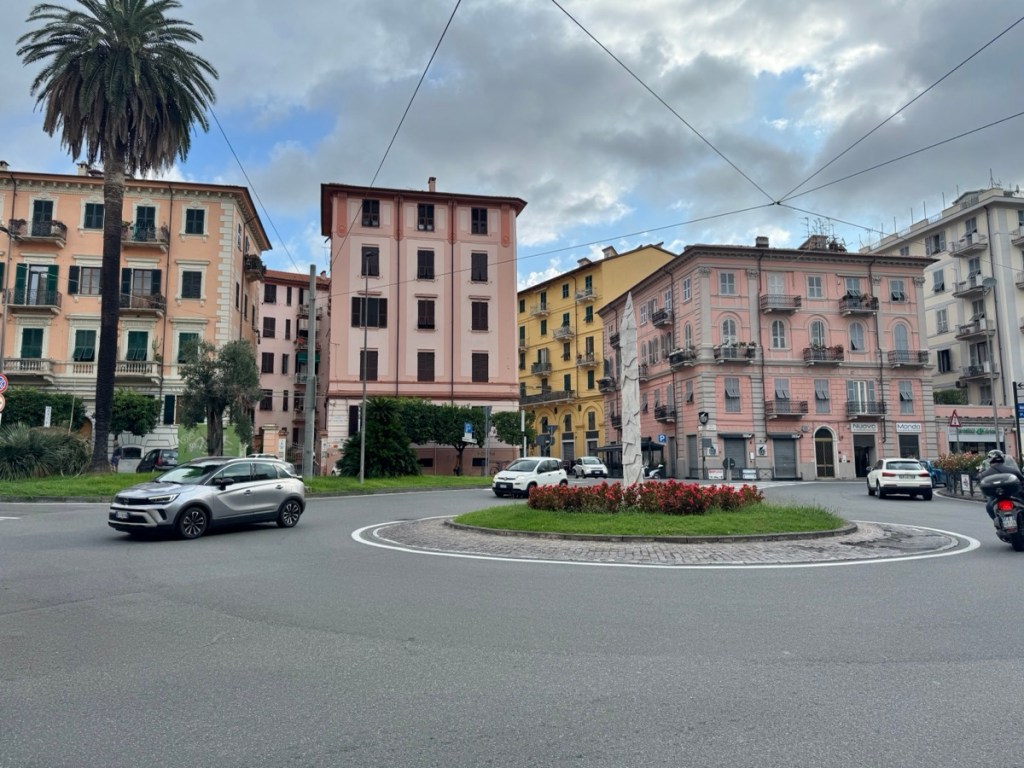
The next day we set off early, with grey clouds and thankfully cooler weather, and caught the bus to La Spezia city centre as we planned to visit some of the five villages along the Cinque Terre Coastline. There is a train service that links these villages, so we walked through the city to the station. The streets were very busy with early morning shoppers at the market stalls which were set up between the huge historic buildings and trees along the roadside. Although there is a blend of historic and modern buildings, the city centre seems to have survived remarkably well during the war considering it is an important Port city hosting a large Naval Dockyard.


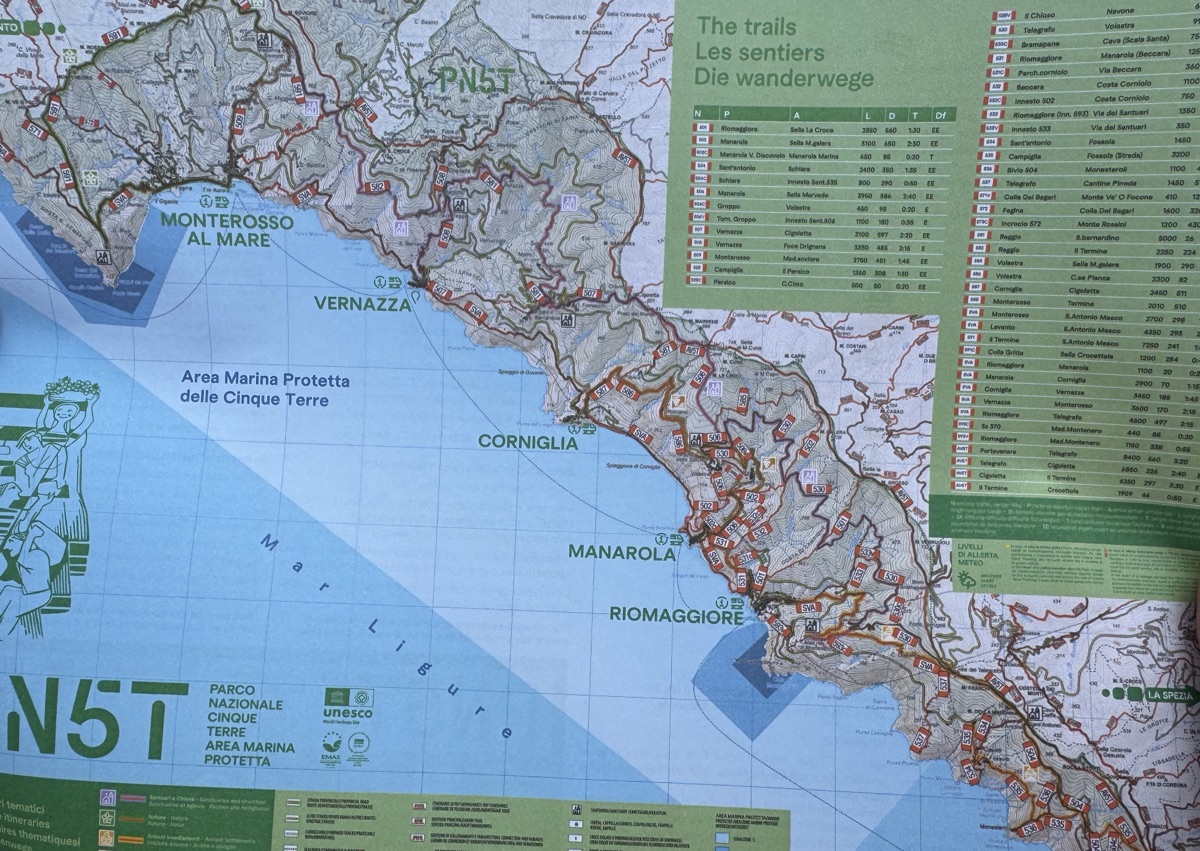
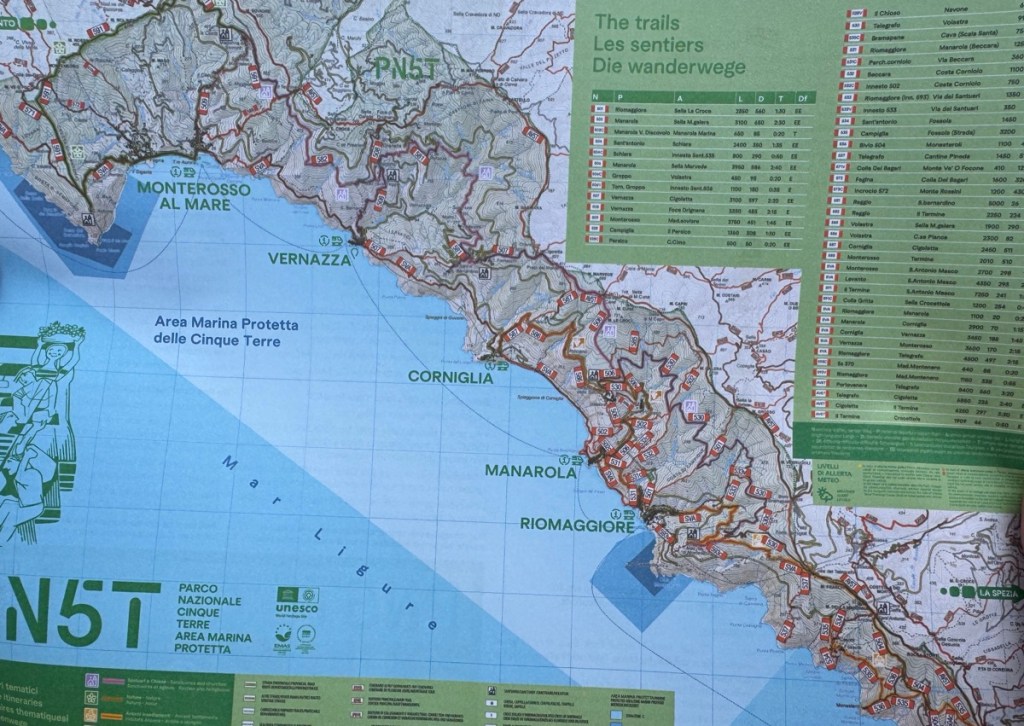
The rugged Cinque Terre coast is a scenic section of the Italian Riviera, characterized by five ancient fishing villages with colourful houses, narrow streets and picturesque harbours; Riomaggiore, Manarola, Corniglia, Vernazza and Monterosso, all overlooking the Ligurian Sea. The entire Cinque Terre area, including the villages, coastline, and surrounding hillsides, is part of the Cinque Terre National Park, which is a UNESCO World Heritage Site.
After buying our all day passes for the area we first took the ‘Cinque Terre Express train’ to Corniglia, and sat on the top deck of the smart train hoping for good views. But all we could see for most of the journey was darkness as we were passing through long tunnels cut into the rocks, with just a few seconds view of the sea in between, at the stations.
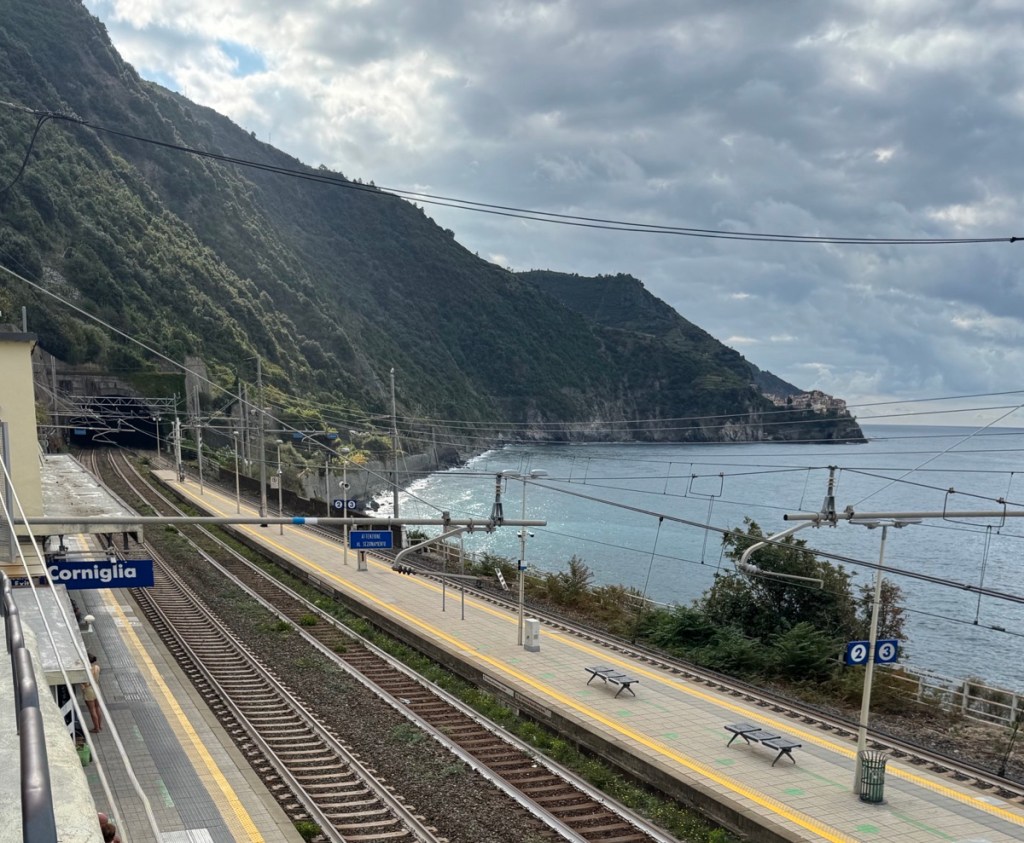
Corniglia is the third village along the Cinque Terre National Park. It is the only village which is not built directly on the sea, but on a cliff 100 metres above sea level, surrounded by vineyards and olive groves, it is the smallest of the five villages. From the station you have to climb 382 steps up the Lardarina staircase, to reach the village, or you can take the shuttle bus. We took the bus, well it was waiting outside the station when we arrived!
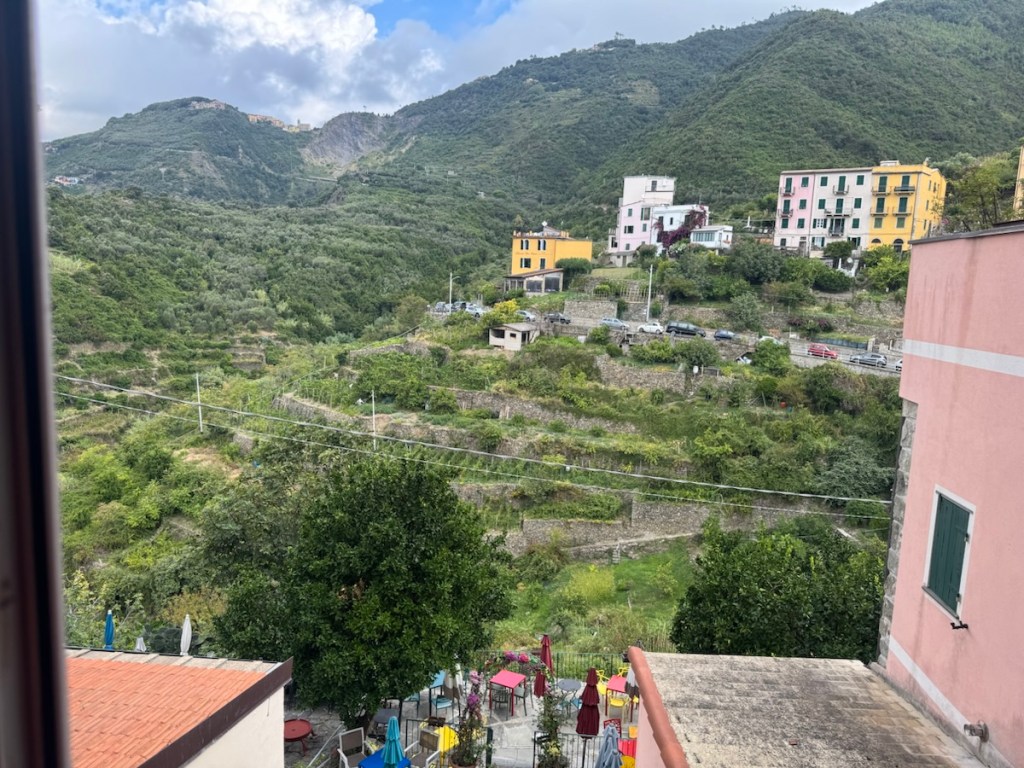
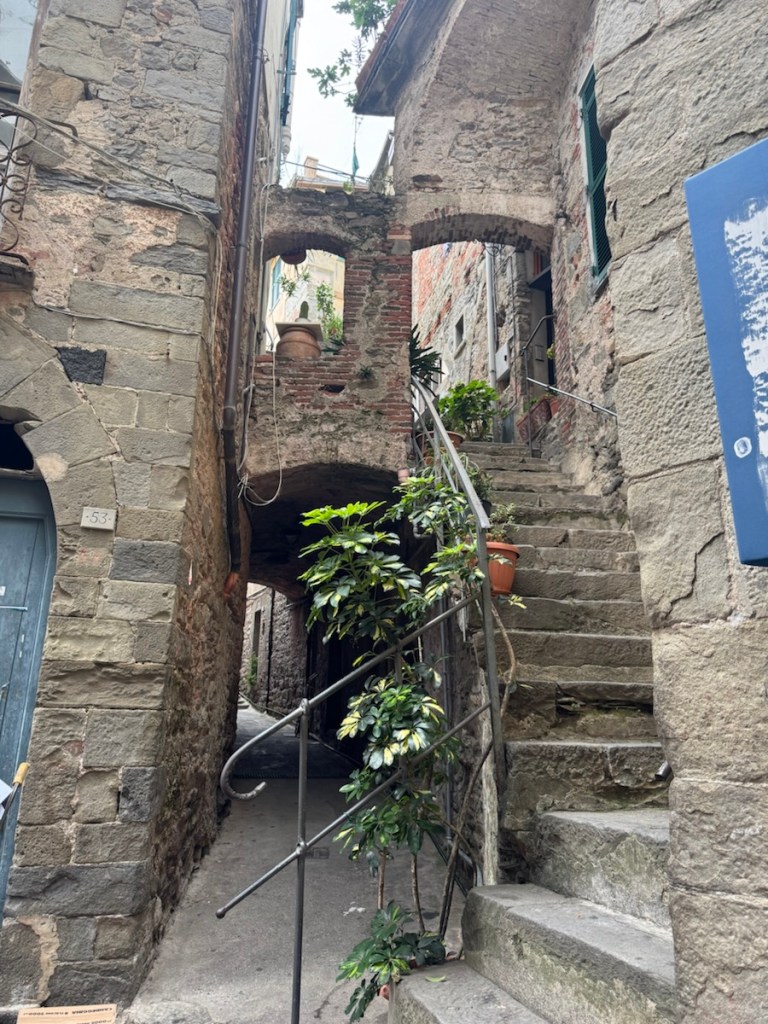
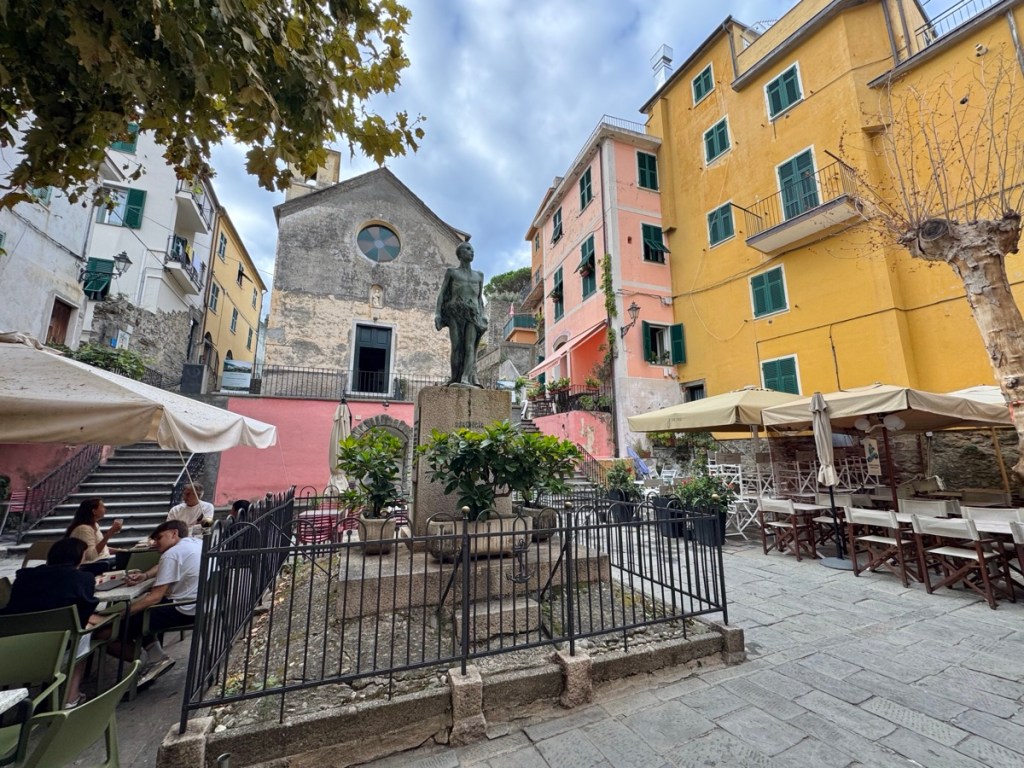
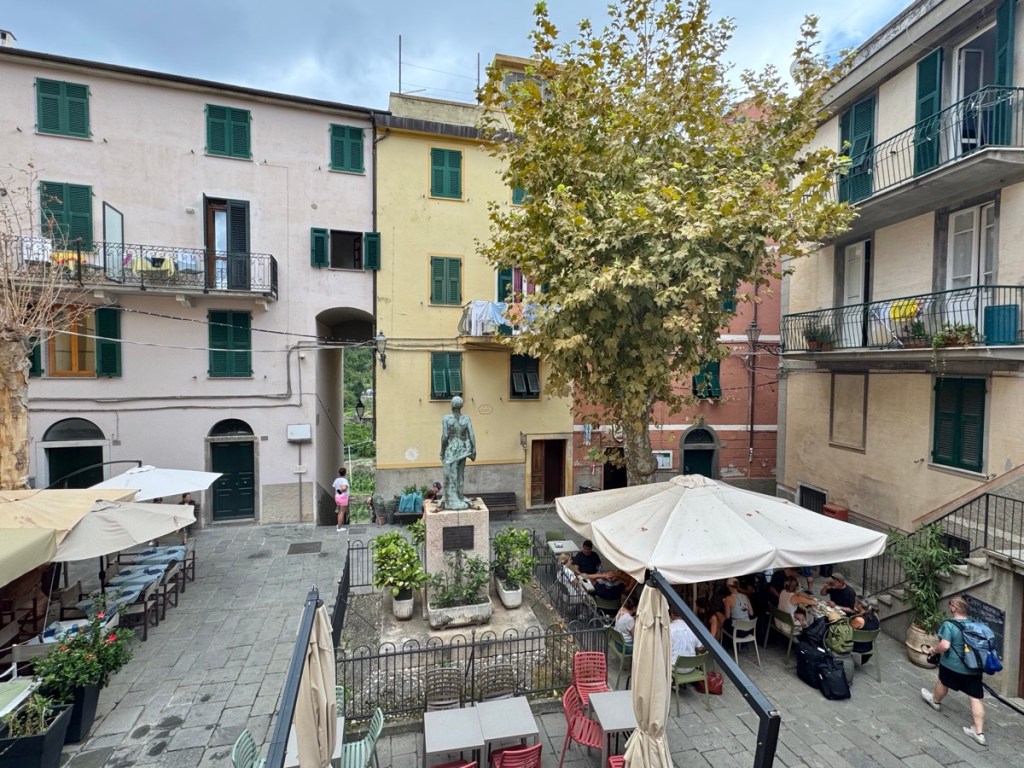
Corniglia is probably the most peaceful and authentic village of the five. Due to its size and being the least accessible, fewer tourists stay here so there is more of a local feel.
We walked up the narrow cobblestone streets and alleyways and found a nice cafe in a small square for a breakfast croissant before starting on a hike.


The tiny villages were originally only linked by mule tracks or accessible by water. Nowadays they are not only connected by train, but there is also a well maintained hiking trail between each one. We decided that our legs needed some exercise so set off on the trail to Vernazza, the fourth village along the coast.
The trail was only 3.5 km long, described as being relatively easy and should take around 1.5 hours, doesn’t sound too bad!
As it’s a national park, you even need your Cinque Terre Pass to be allowed on the trail, we showed it at the checkpoint and were on our way leaving the village behind.

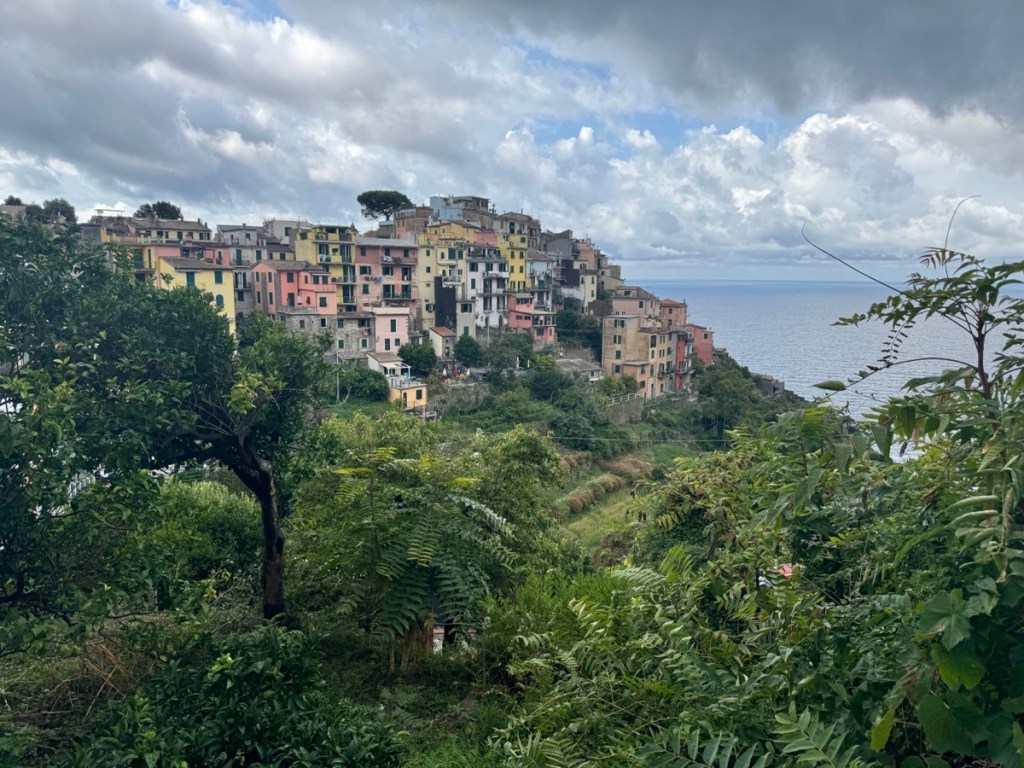
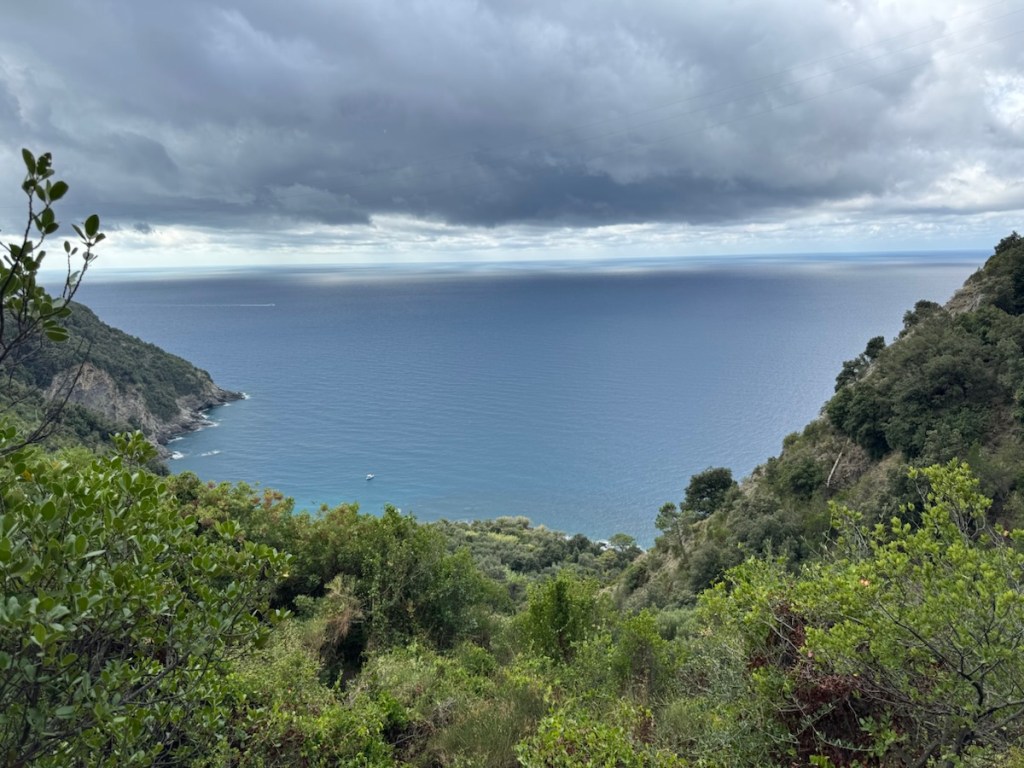
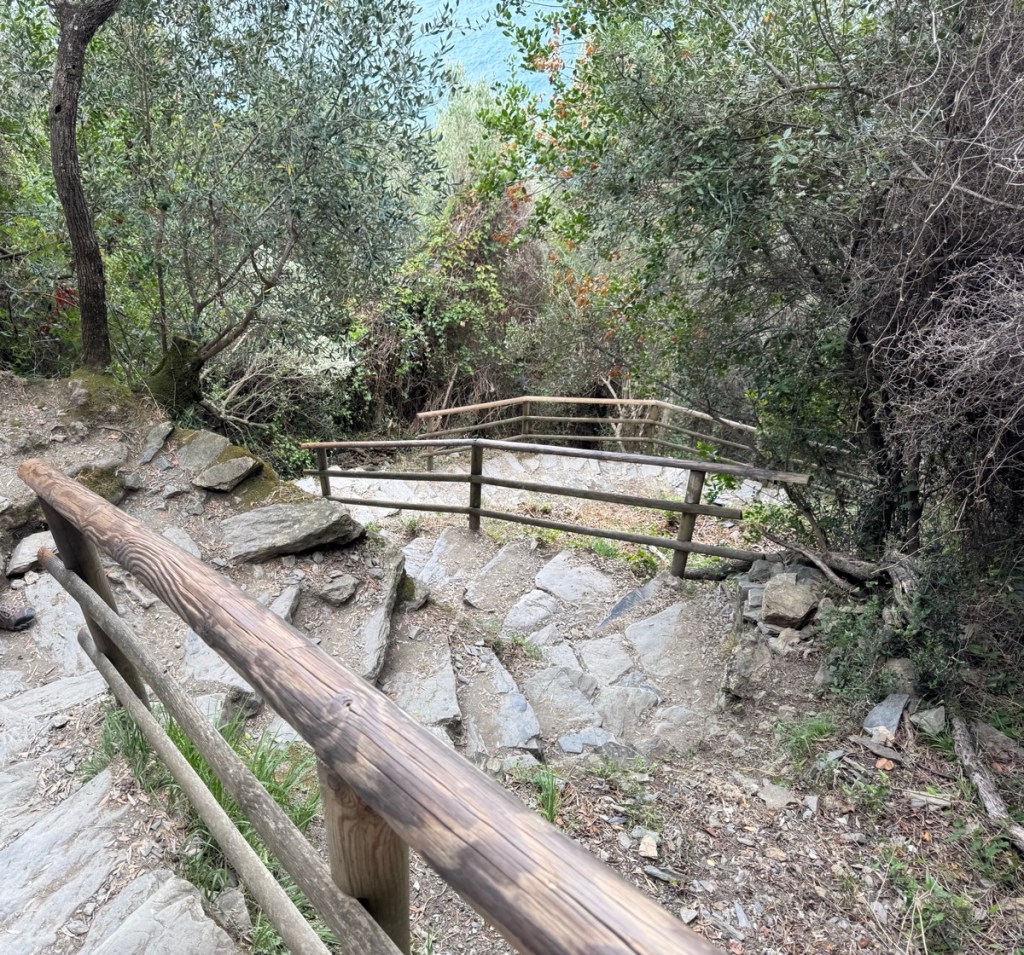
We read ‘the route is relatively flat with wonderful views descending towards Vernazza’. There were certainly wonderful views of the countryside, sea and you could see the villages along the coast, but it definitely wasn’t flat. The footpath to follow was mainly made up of steps and it felt like they were all going upwards.
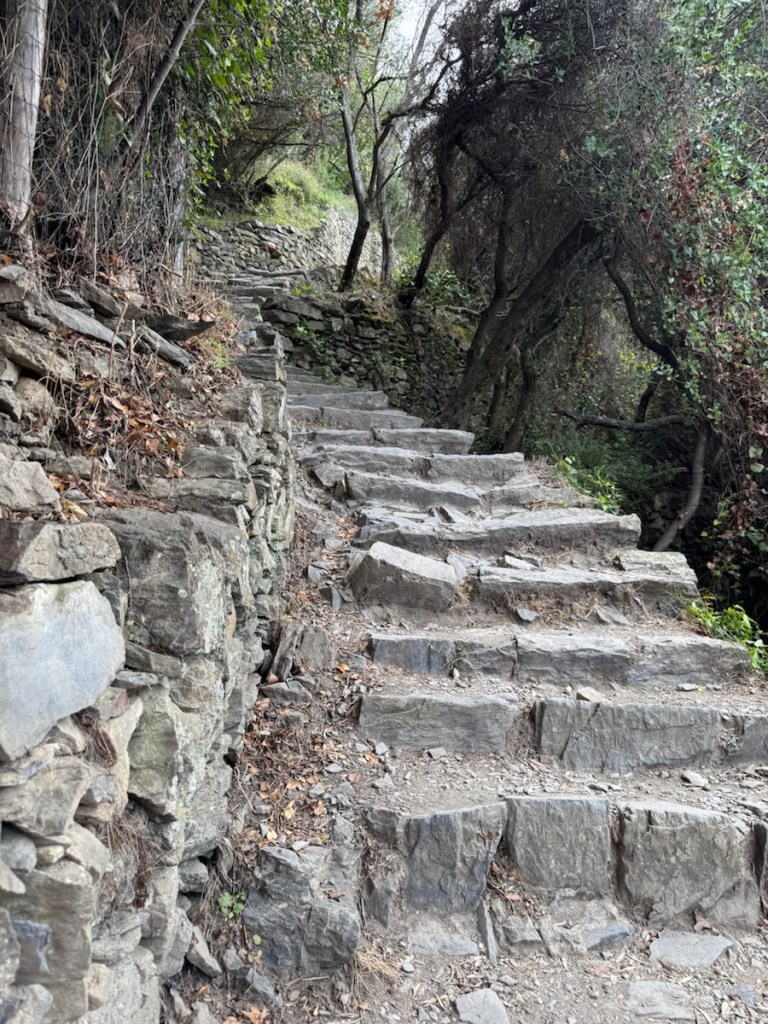


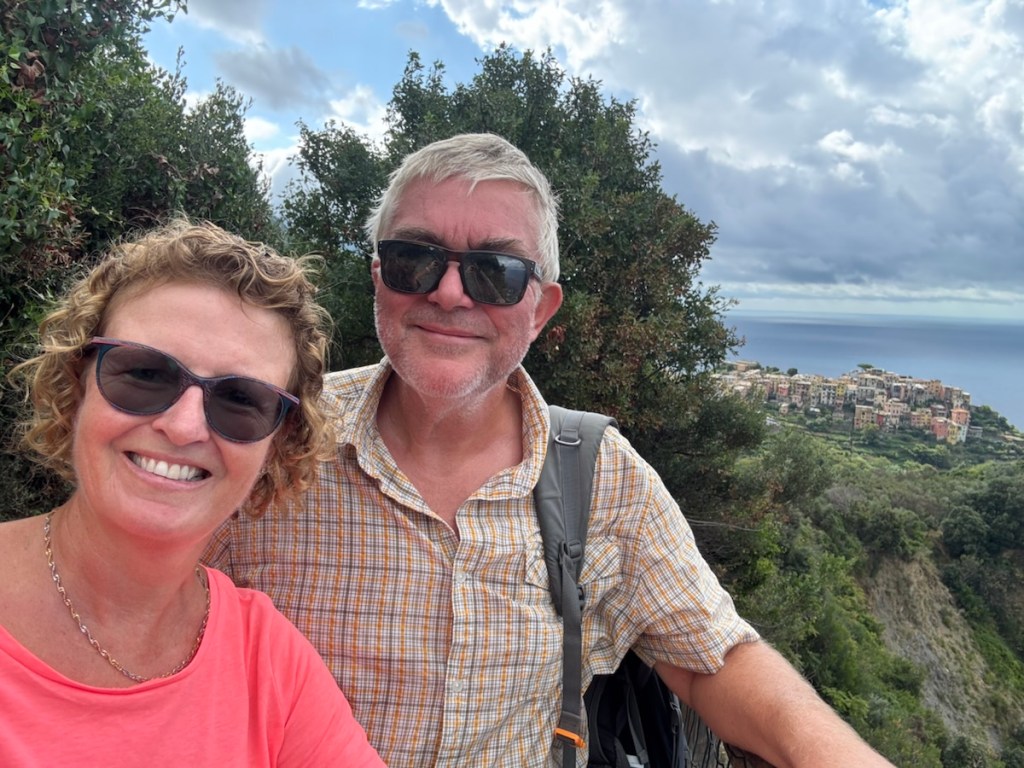
We could hear music in the distance as we climbed and eventually came to a small clearing where uplifting music and singing cheered us on our way.

After being caught out on previous walks, I had made sure that we had plenty of water, however, at the halfway point, we came to a juice bar, 208 metres above sea level, with fantastic sea views.

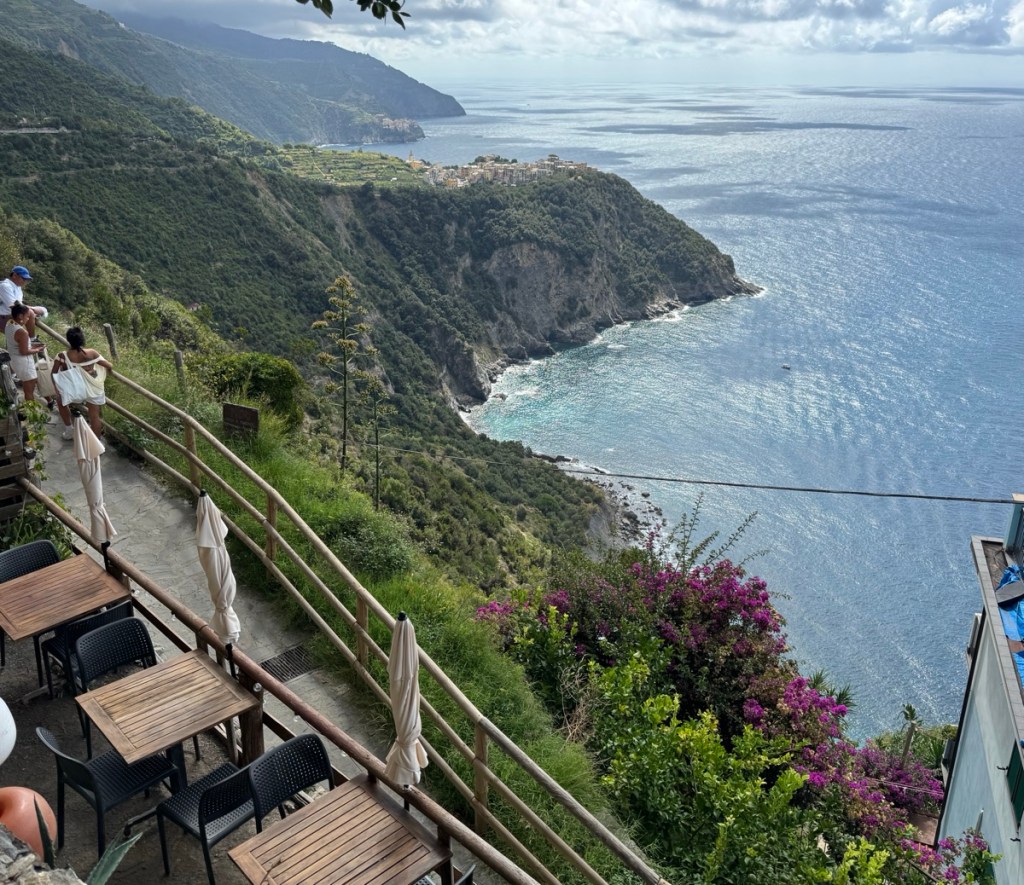
After a drink and cool down, we continued on, having now done most of the climb up the hill, it was a little flatter, after a while we could see Vernazza below, before a rather steep descent into the village. It turns out that we had indeed chosen the easier direction to walk the trail.
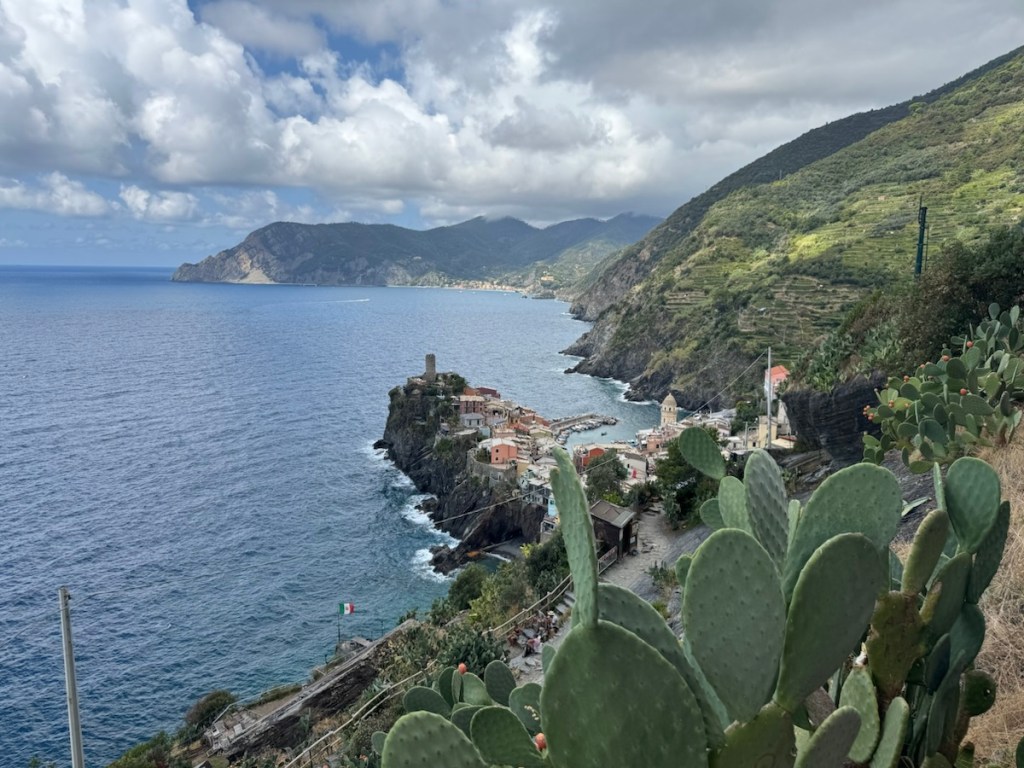
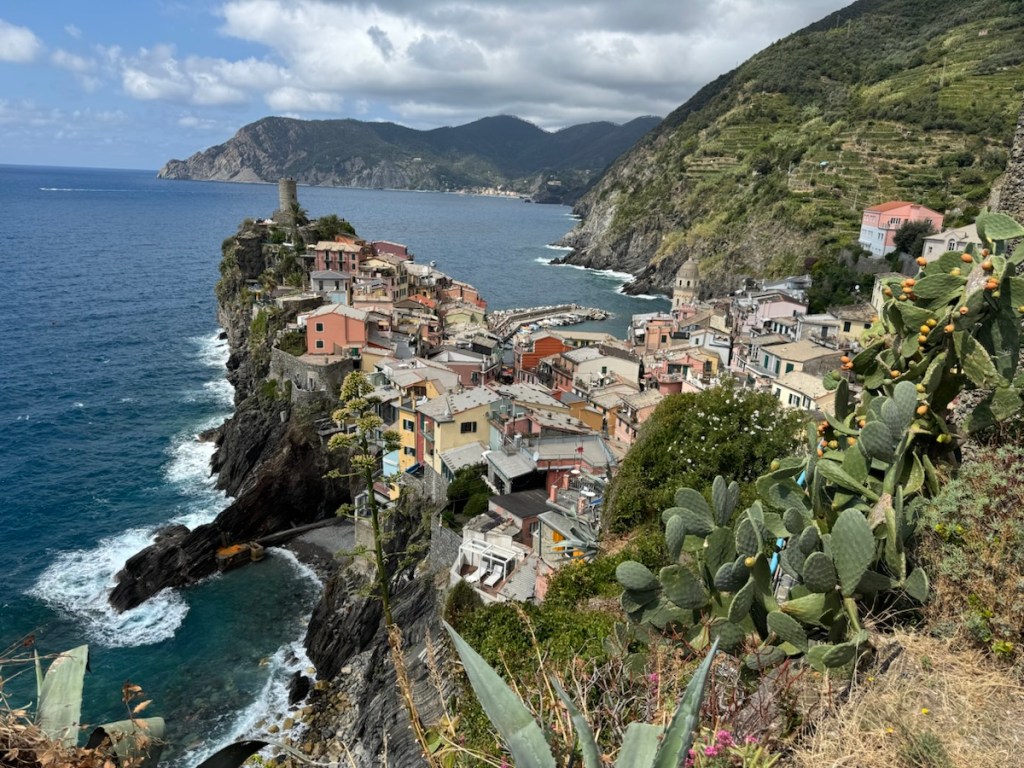

Vernazza is considered to be the most picturesque of the villages and is named as one of the most beautiful villages in Italy with its multicoloured houses, cobbled streets and a small natural harbour. The village is surrounded by very steeply terraced olive groves which are said to produce among the finest olive oil in the country.
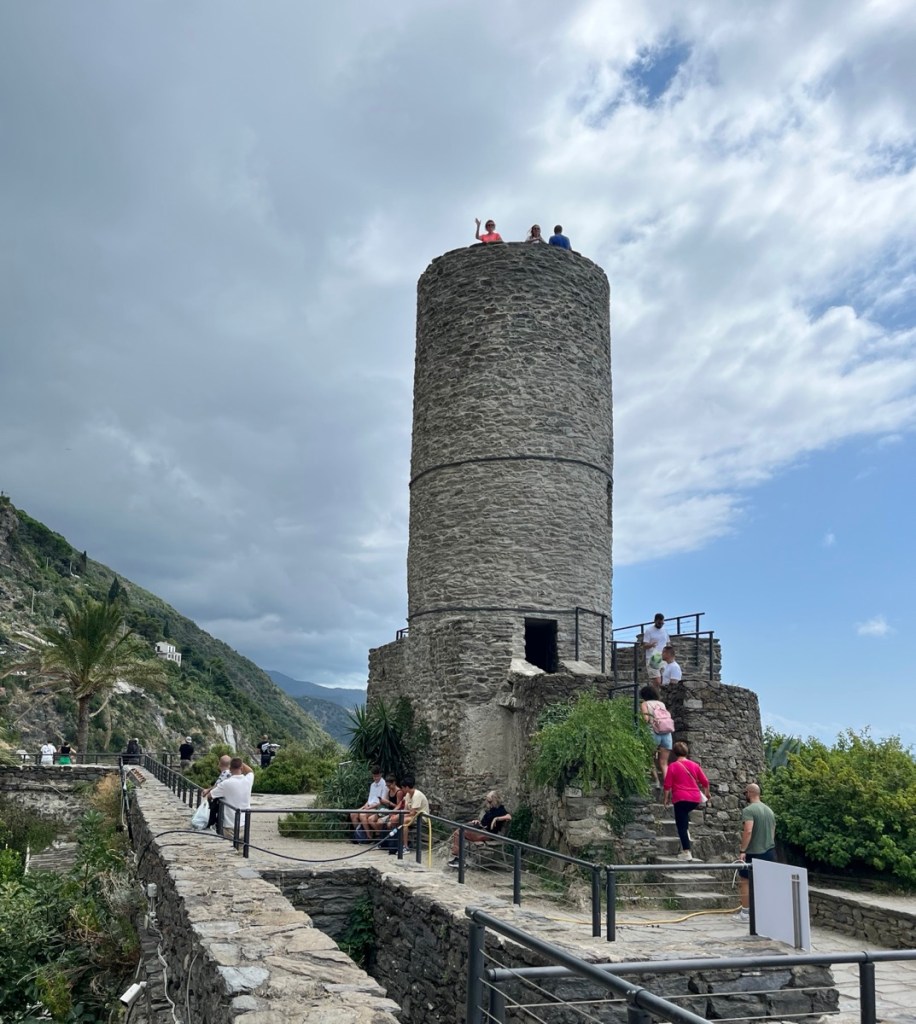
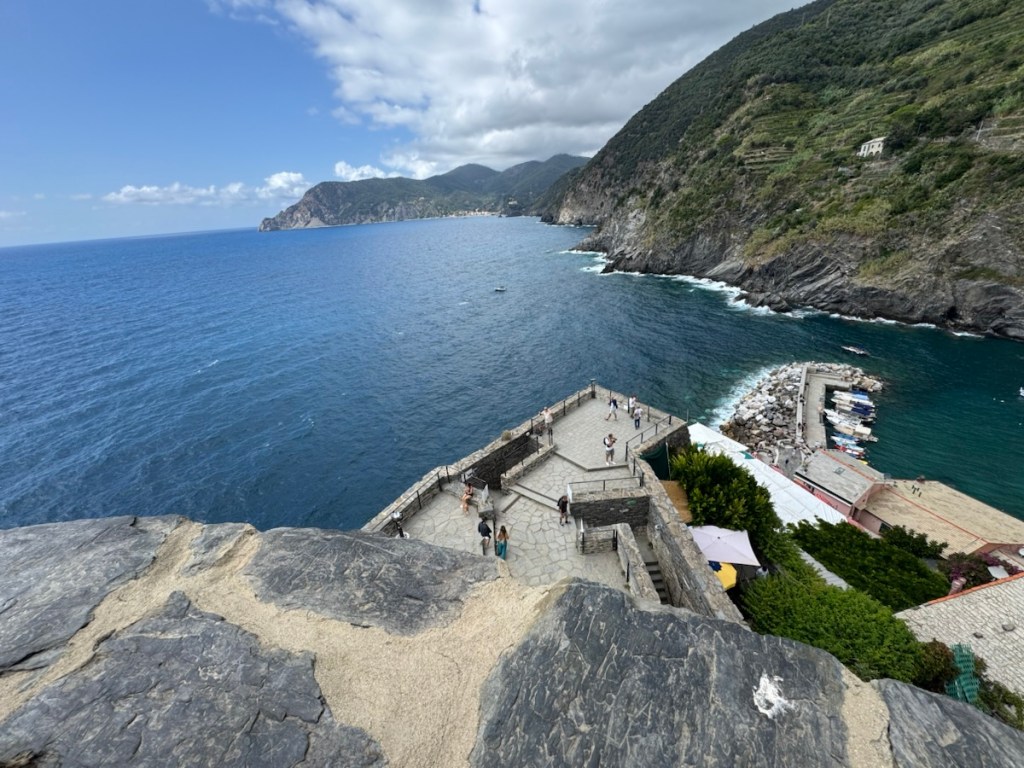
Vernazza was founded around 1000 A.D. when the first fortress was built on a rocky ridge of the town stretching out towards the sea at more than seventy meters high. This original fortress underwent many changes and additions over the centuries. The defence tower of Castello Doria, was built in the 15th century and used as a lookout fortress to protect the village from pirates.
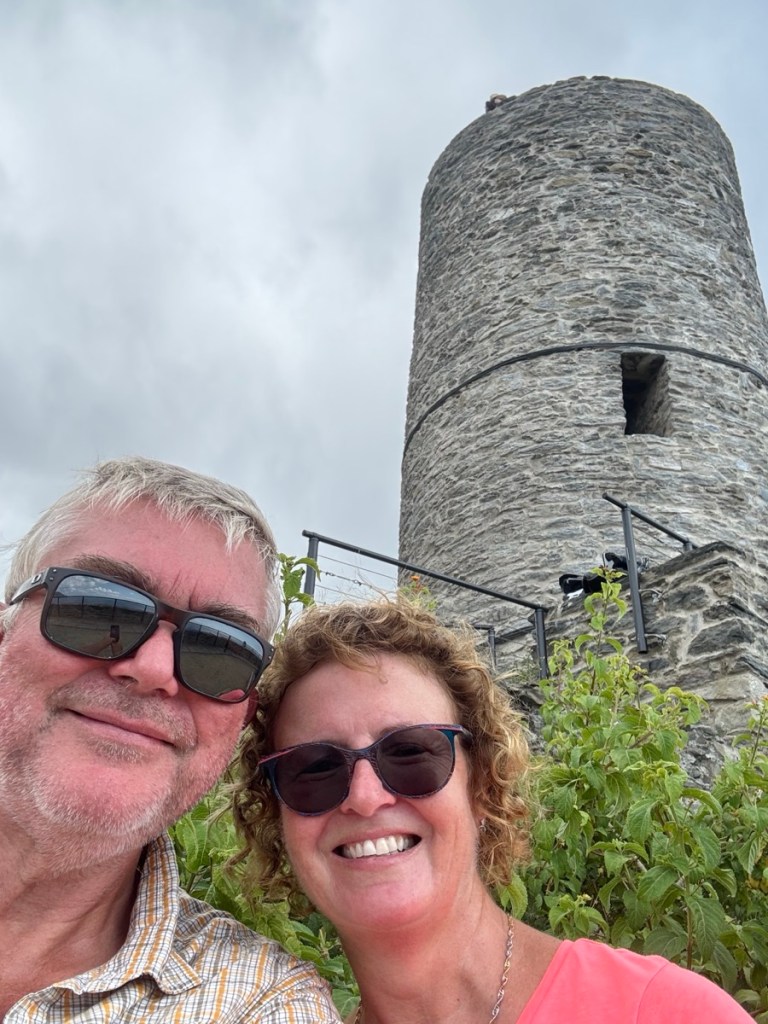
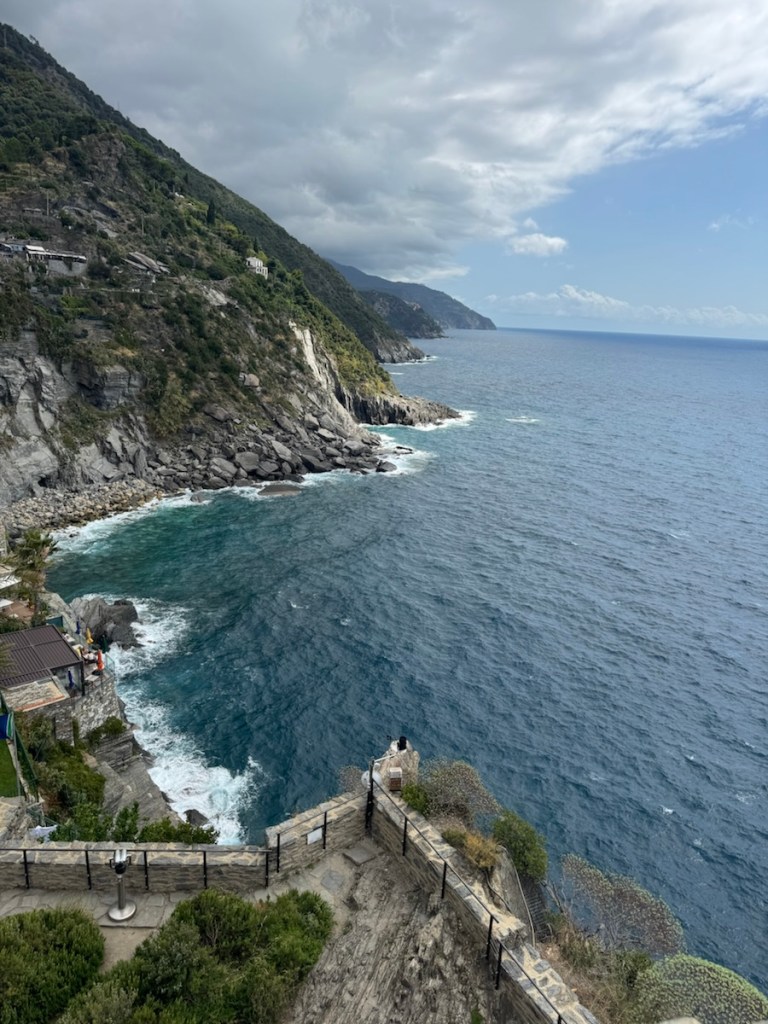
The high cylindrical tower stands in the center of the esplanade, the oldest part of the fortification, and was restored in the twentieth century. Inside, there is a very narrow spiral staircase to the top, where you have great views of the village, harbour and out to sea. It was quite busy and very cosy trying to pass people on the staircase.


There is a busy Main Street and a pretty piazza lined with restaurants and bars. A perfect place to stop for some lunch overlooking the sandy beach.


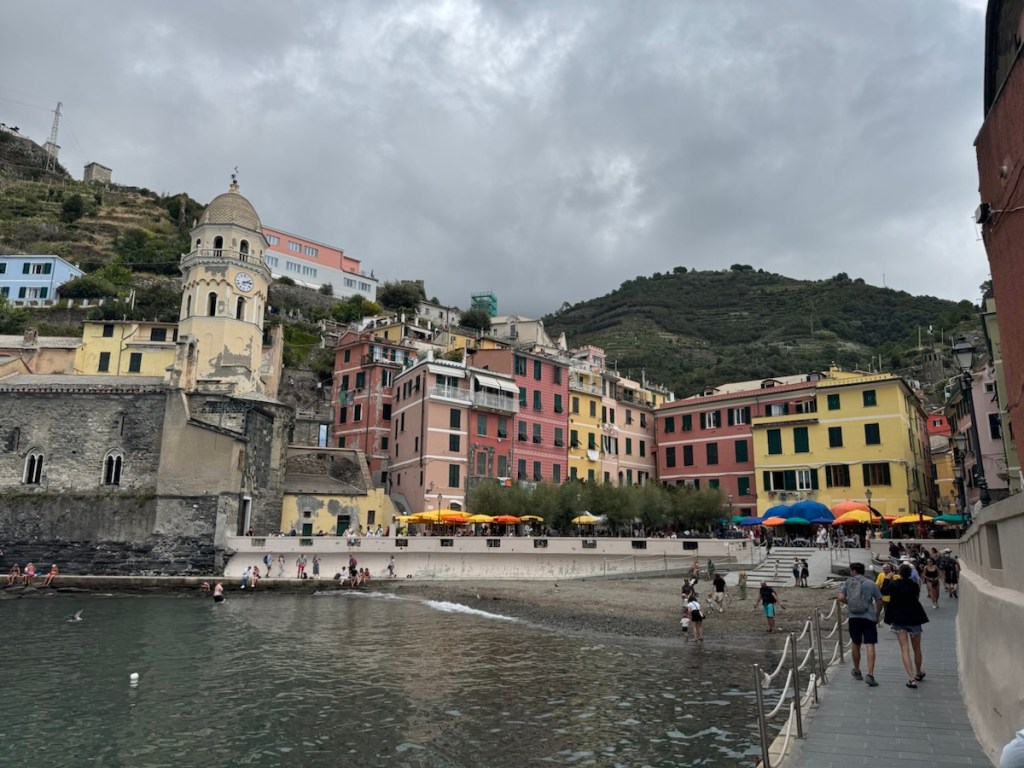
Unfortunately as the day was moving on, we didn’t have time to visit Monterosso, the fifth village along the coast. This village is the largest of the five and popular as a beach holiday resort. Instead, we decided to get the train back through the cliffs to Manarola (the second village on our route).
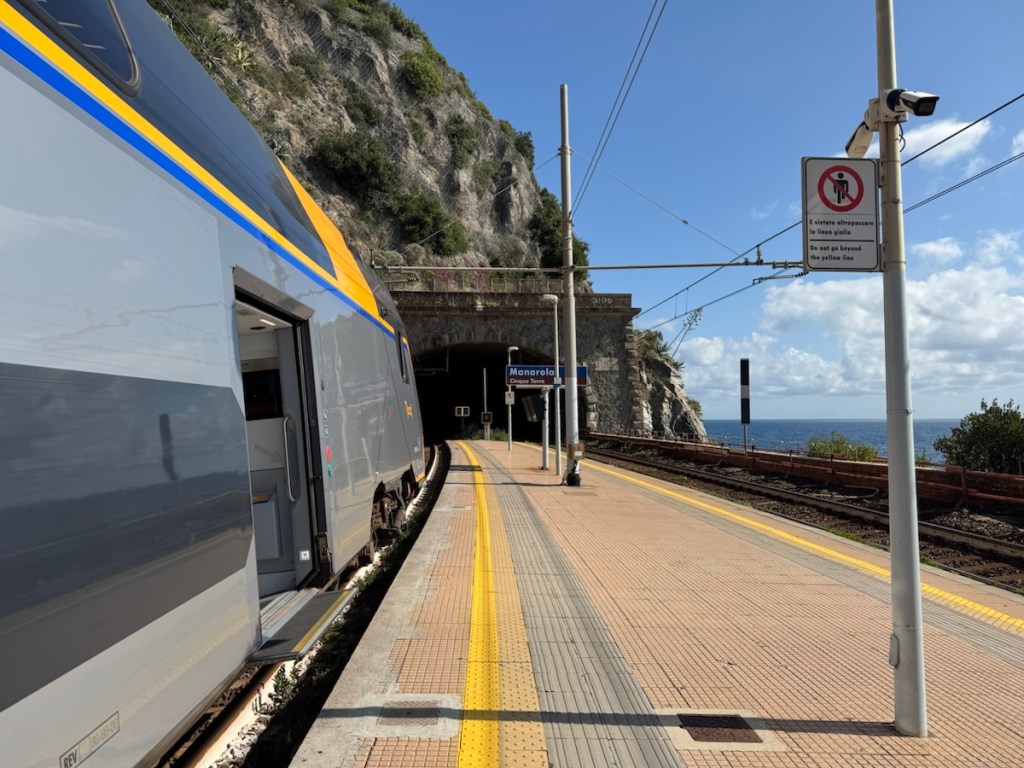
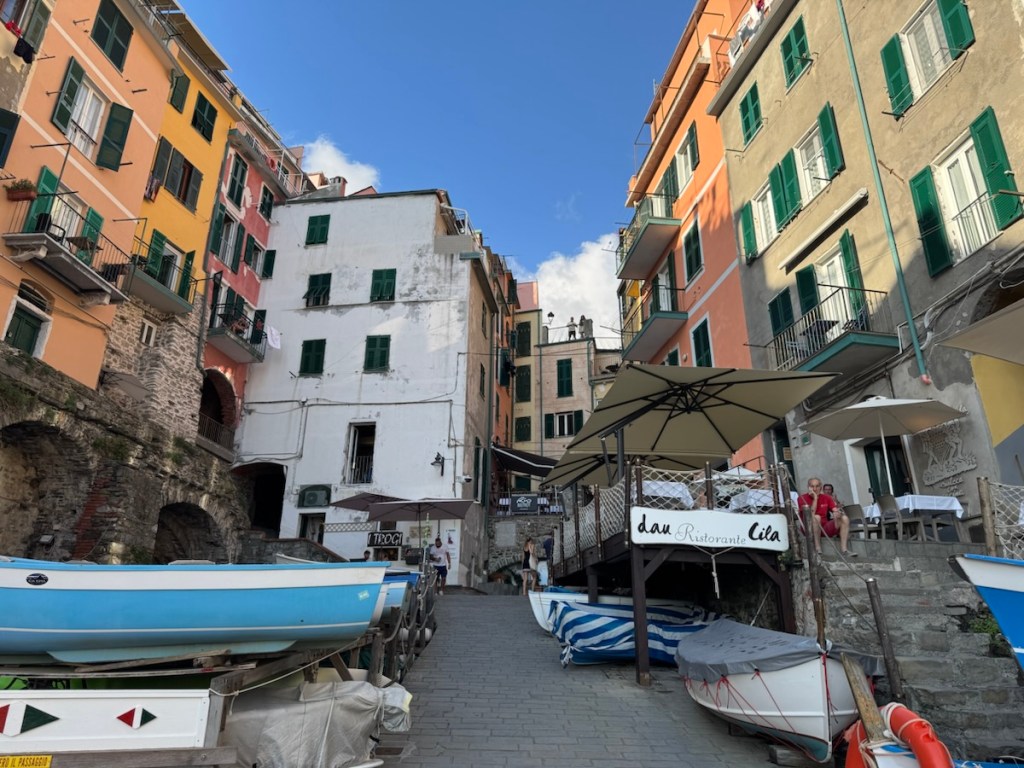
Manarola is known as the most charming and romantic of the Cinque Terre villages and famous for winemaking. There is tiny rugged harbour, a small piazza with fish restaurants and picturesque pastel coloured houses facing the sea. Many small boats had been pulled up out of the water into the streets.


There is no beach here but people were swimming in the clear water, cliff jumping and sunbathing on the rocks which had been used to form a rather treacherous looking harbour.


Running between Manarola and Riomaggiore, (the first and most southerly village along our route), is the famous Via dell’Amore or ‘lovers lane’. This walk is described as 1 km, flat and easy, thankfully they were right this time, no steps in sight.
The path is excavated in hard rock, and winds along the coast with rocks overhanging the sea. The history of the Via dell’Amore is connected to the construction of the railway between Genoa and La Spezia (1926-28). In order to construct a tunnel between Riomaggiore and Manarola two paths on rocks overhanging the sea were necessary. The path had been closed since 2012 due to a landslide, but luckily reopened last year.
It seems its romantic name is linked to a fortunate by product of its original construction, in that it suddenly enabled the young occupants of both villages to easily meet up for an evening stroll.


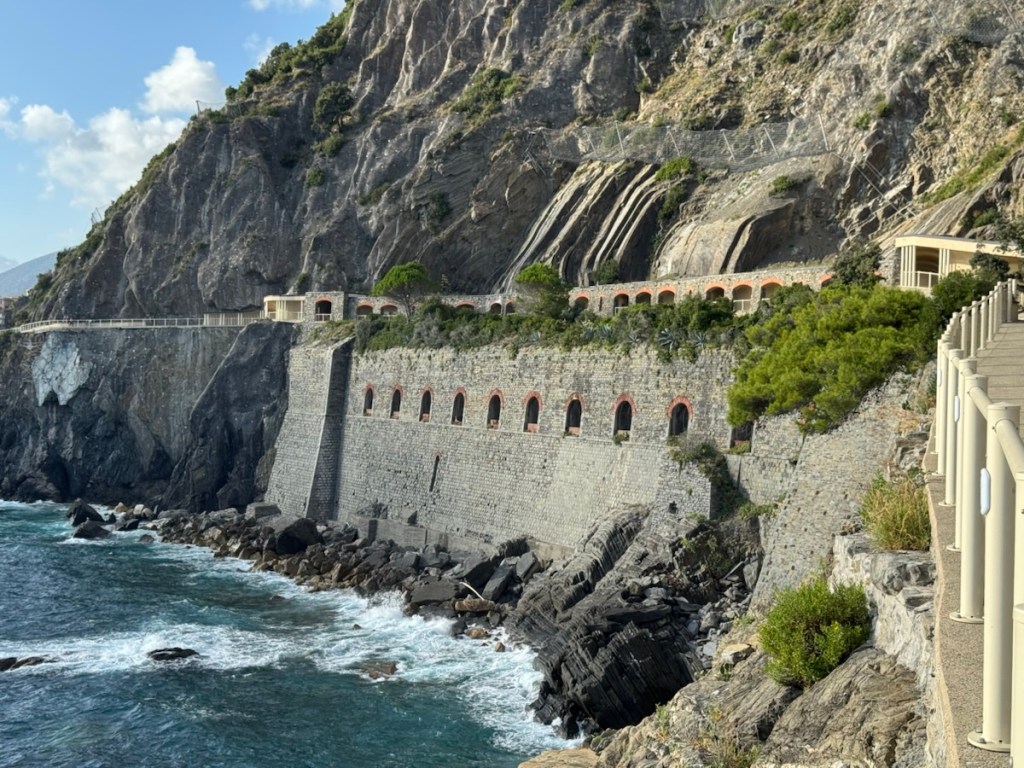
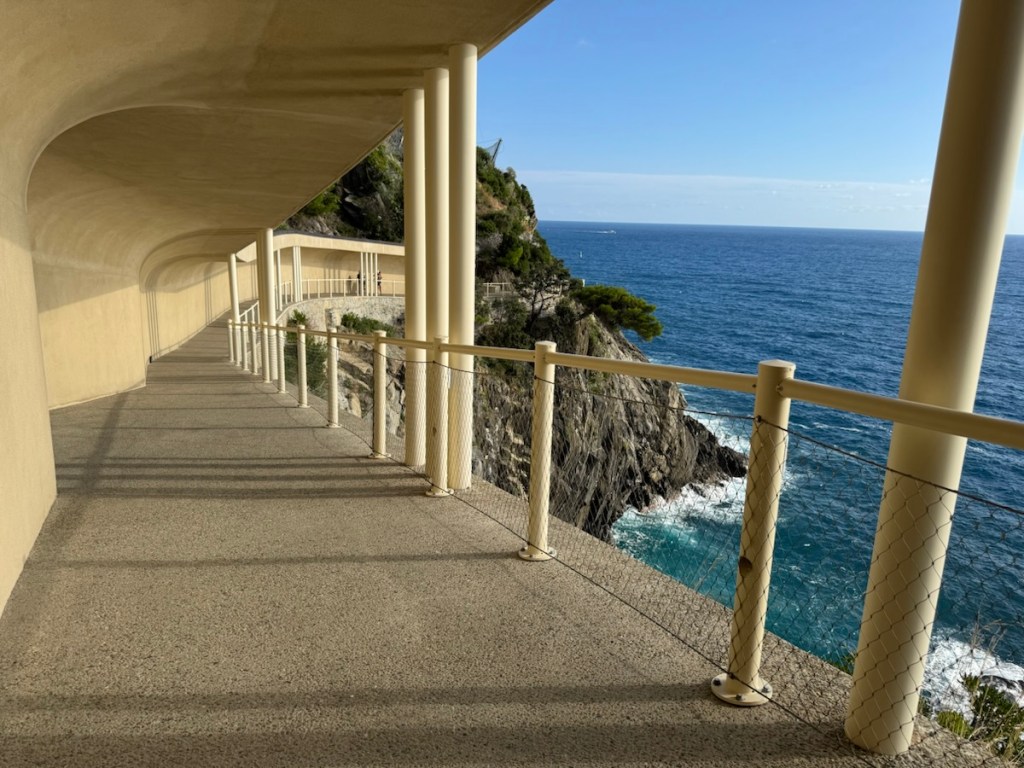
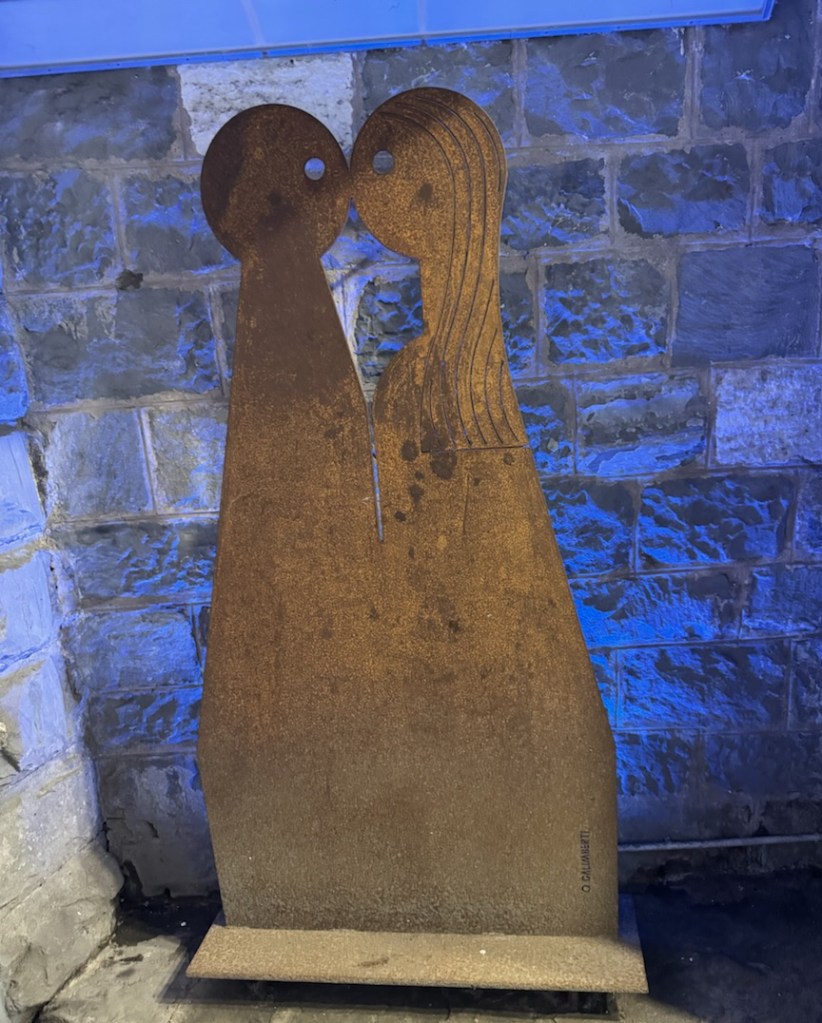
After our own easy stroll, we soon arrived at Riomaggiore, considered also to be the most romantic of the Cinque Terre villages! The village is a cascade of coloured houses in the typical Ligurian style, all tightly clustered around a tiny natural harbour carved out in between the rocks.

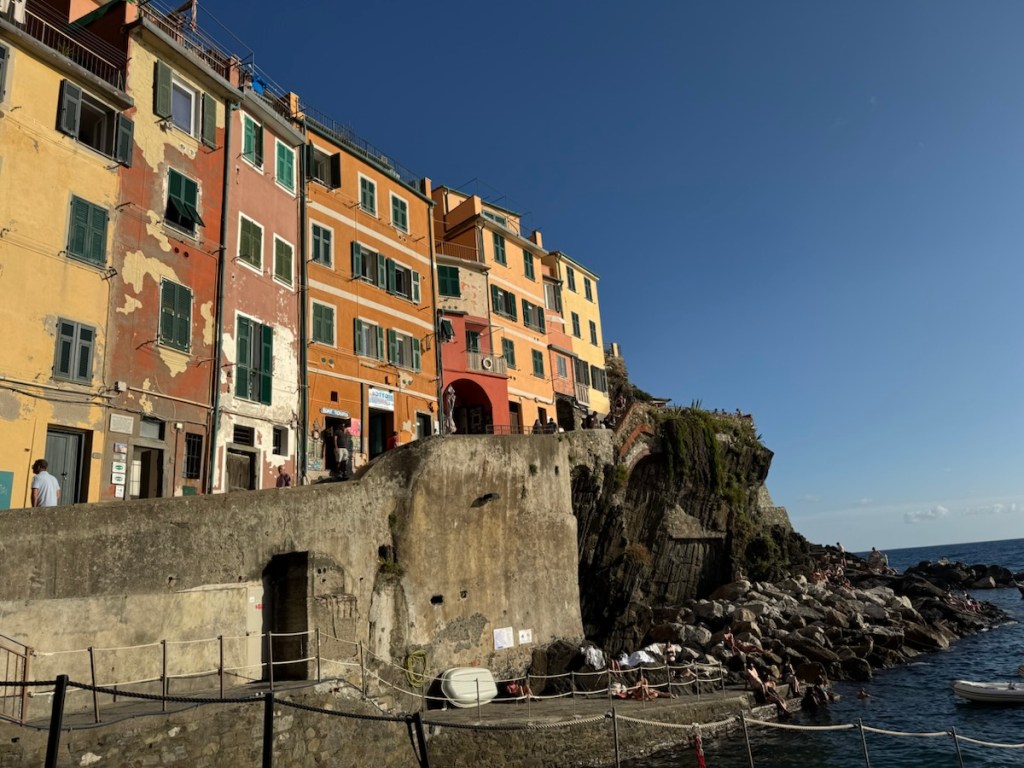

The harbour, has a boat ramp and was popular with swimmers and sunbathers. The area in front of the harbour was also full of boats which had been pulled up out of the water.

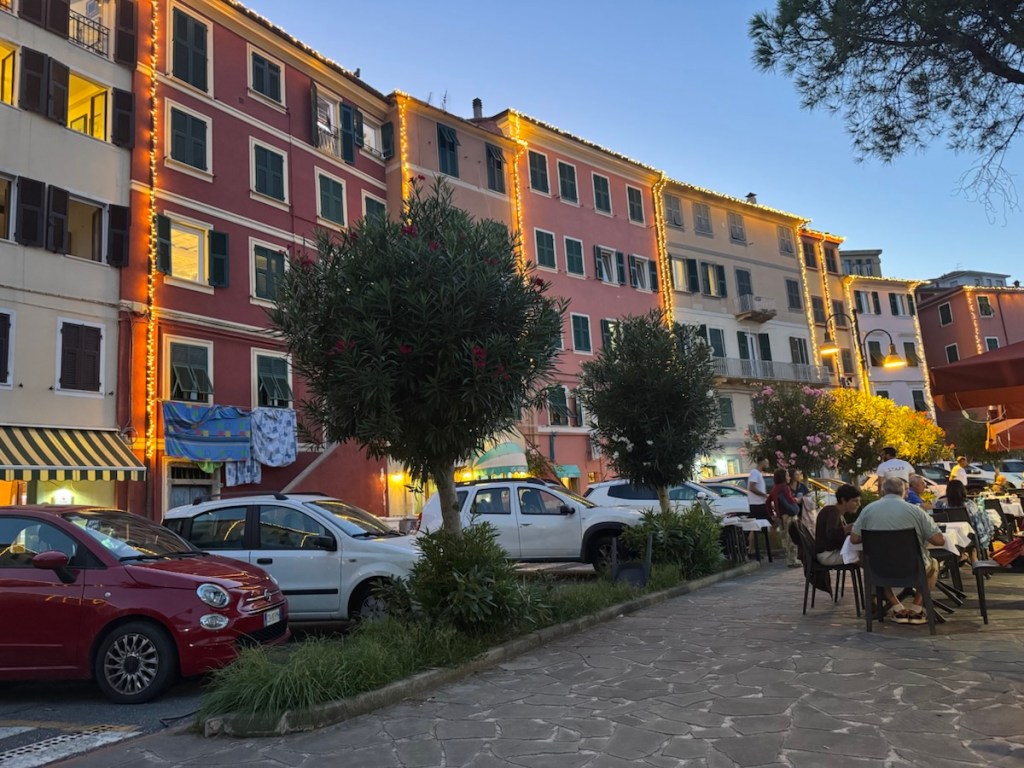
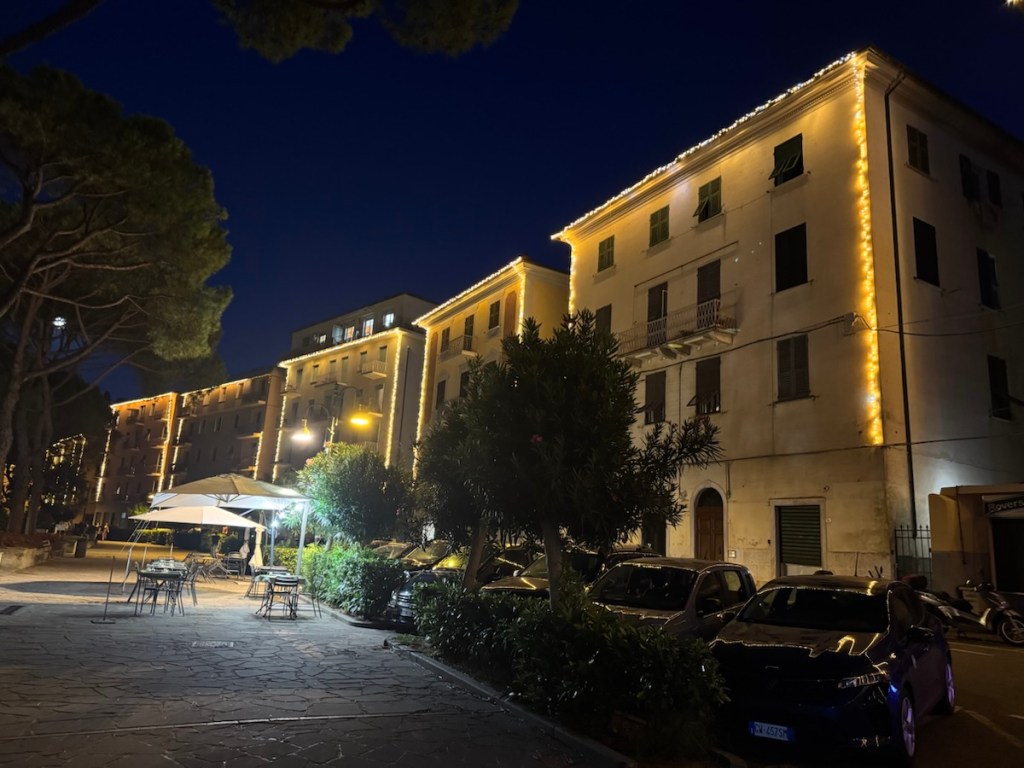
With tired legs we returned to the station to get the train back to La Spezia and arrived back at the marina in time for a quick sundowner surrounded by grand buildings which all illuminated as darkness fell.

The Cinque Terra coast and the villages were very beautiful, quite reminiscent of coastal villages in Cornwall. They were built up on the hills, and all very ‘up and down’ with steep narrow alleys leading to the sea. I’m not sure how many steps we climbed but it felt like thousands, we definitely slept well after a very enjoyable and tiring day.
 Sailing ZigZag
2 replies on “The Cinque Terre Coast”
What a great day out!
This weeks post continues the rich vein of top notch content that has been the hallmark of this year.
Lovely to see a close up of Ziggy nestling in her dock, and looking fabulous darling 🙂 As are you two beauties. Thought a little disappointed that there was not a pic of you embracing (literally) the spirit of romantic pathway.
It does look like a gorgeous spot to spend some time, as long as your legs hold out…
I bet that juice bar was a welcome sight. Lovely photos again this week, which really brought to life that part of the world, and gives a sense of how rugged that coastline is. Not an easy place to start living originally I would think.
I love that photo towards the end with the red umbrellas. I can imagine you enjoyed a well earned libation sitting there watching the world.
Take care and safe onward sailing.
LikeLiked by 2 people
How special the Cinque Terre look, and great to see Sue emulating The Statue of Liberty.
Not sure that Dover or any of England’s Cinq Ports have a “Via dell’Amore” but at least Margate has Tracy Emin.
Lovely photos as always, and think that Michael Portillo did one of his Railways Journeys through the Cinq Terre – but you did it better!
LikeLiked by 1 person