
After a few days in Mazara del Vallo and a couple of trips up the river, it was time to move on. We lifted the anchor and motored out of the bay heading north towards the Aegadian islands.
The Aegadian islands (also known as the Egadis) are a group of five small mountainous islands situated just off the northwestern coast of Sicily. The archipelago covers an area of 37.45 square kilometres. The lesser known and unspoilt islands were established as a Marine Protected Area in 1991, currently the largest in Europe. The sea in this area is said to be among the cleanest and clearest in the Mediterranean, thanks to the massive presence of Posidonia seagrass covering the seabeds, providing an ideal habitat for the reproduction of numerous fish species.
There was a very light northerly wind as we set off, unfortunately not enough to fill the sails so we had the engine on all morning, but at least the batteries and the water tank were topped up. After 22nm, we arrived at Favignana.
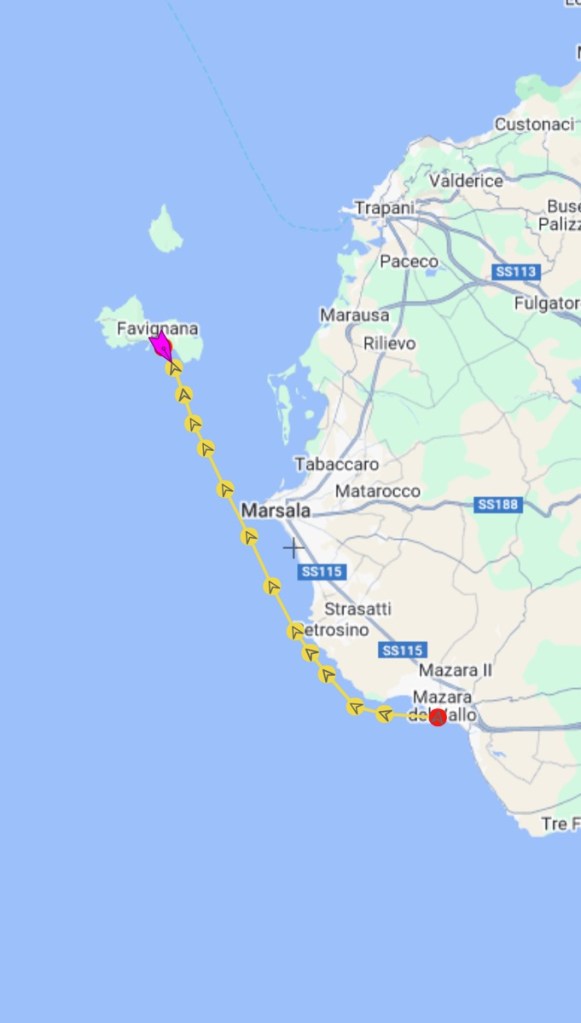
Favignana is the largest in the archipelago, although still rather small at 19 sq km. It has a distinctive silhouette that has given it the nickname of ‘La Fardella’ or ‘the butterfly’ amongst the local people.
We anchored in Lido Burrone, a large bay on the south side of the island. There were a few boats already in the anchorage, but still plenty of space for us to find a good sandy patch, in amongst the seagrass, to drop our anchor in the crystal clear turquoise water.
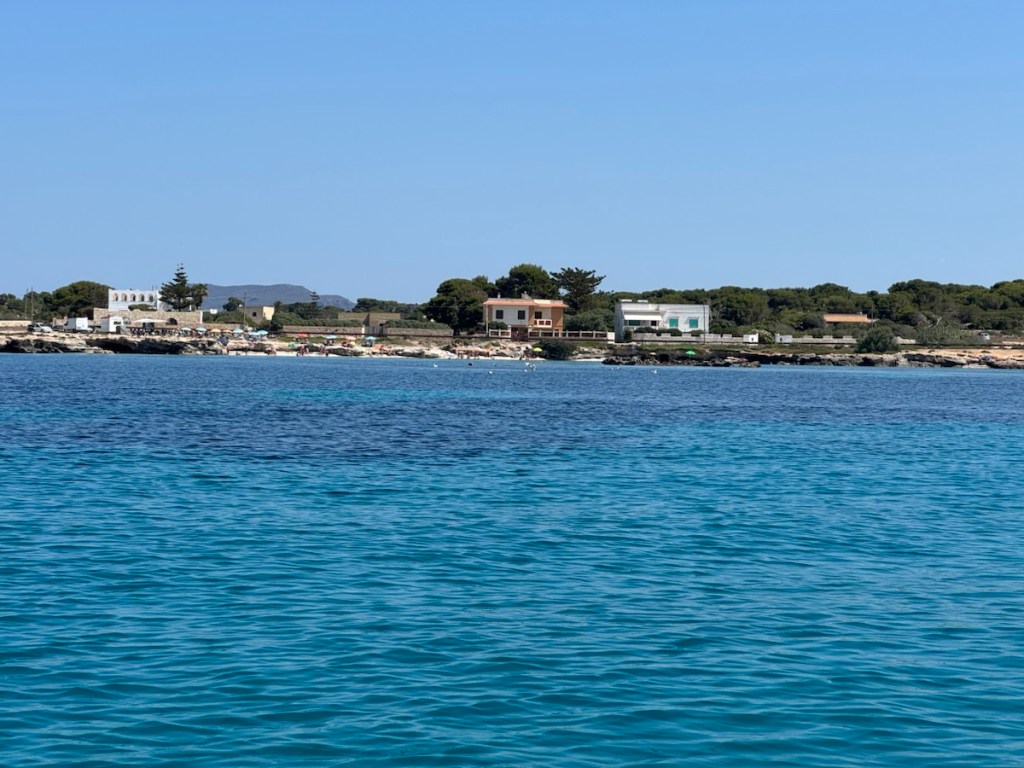

As it is a protected area, there are all sorts of rules to abide by, including not to damage the seagrass with your anchor and where you are allowed to use your dinghy. There is a small harbour where we were able to tie up Fred and Ed next to a cafe which you are expected to visit. We stopped for coffee and croissants before taking a walk across the island to the town, of course making sure that we were laden with plenty of drinking water before we left.

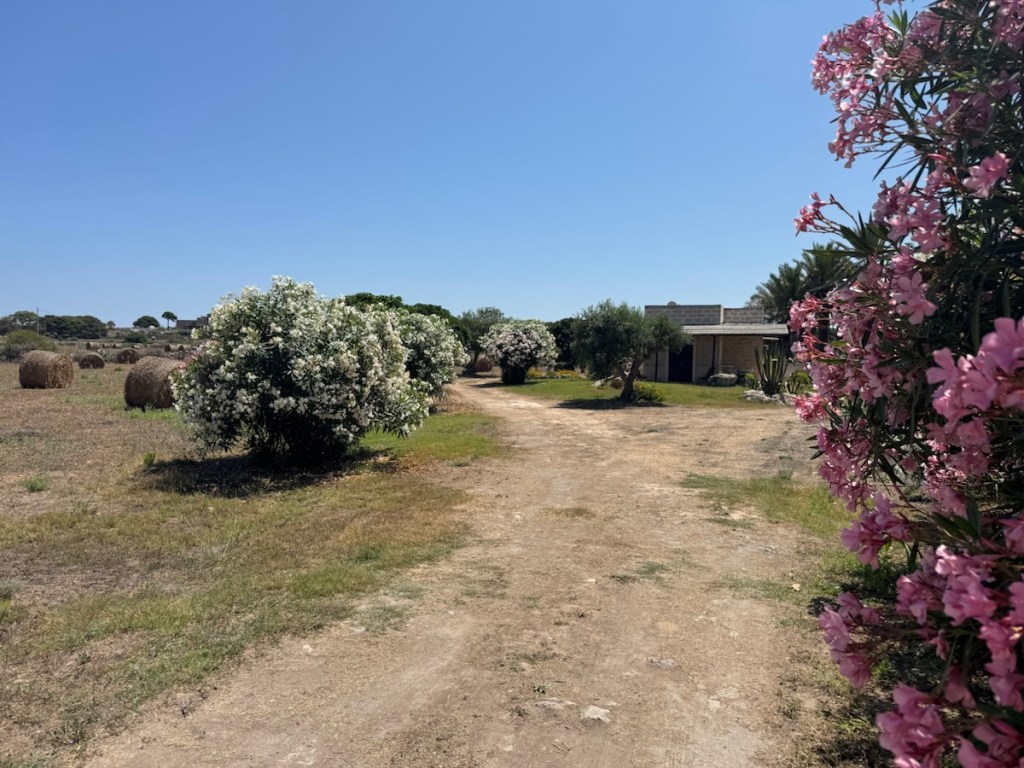
For centuries, the main occupation of the islanders has been tuna fishing, which has marked the social and economic identity of the whole island. The small town is dominated by the largest tuna fishery in Sicily, the former ‘Floria factory of the Tonnare di Favignana’.

Favignana experienced a period of great development in the hands of the Florio family. Ignazio Florio bought the tuna plant in 1878 and immediately commissioned renovation work. Within a few years, it became one of the largest food industrial complexes in the world for the conservation and canning of tuna, bringing well-being and prosperity to the island’s inhabitants.
The Florio family were very important at this time, they had a huge house, known as Palazzo Florio, across the bay overlooking the factory. The house now hosts council offices and archeological finds discovered in the sea around the Egadi islands.


As we see everywhere, through the decades, overfishing ruined it all and tuna began to dwindle in the Mediterranean. Gradually the crisis of the Florio family started and in 1937 the tonnara was sold to the Genoese family of Parodi. However, by the 70s, the plant closed permanently, it was no longer possible to stay competitive in the market. It remained unused for 20 years until the Region decided to acquire the Tonnara to return it to the community as a museum. Restoration work began and in 2009, the Tonnara of Favignana was opened as a museum, which has become the largest Sea Museum in Europe, telling the story of the recent past of Favignana and the Egadi islands.
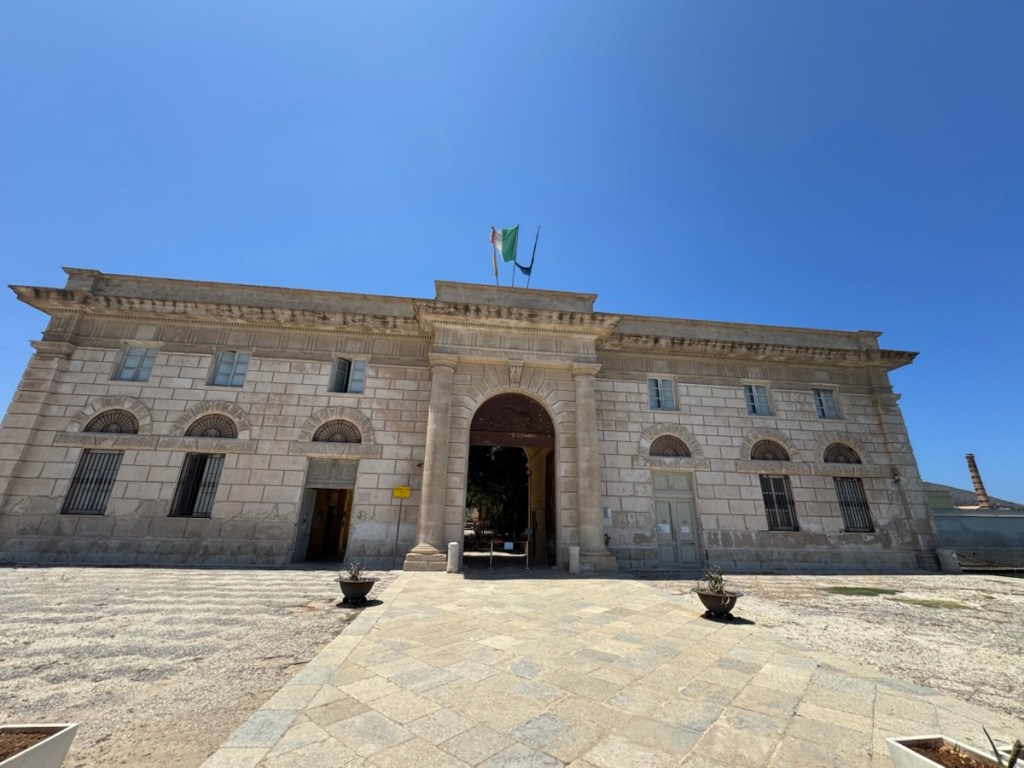
Inside the gates is a pretty courtyard with boat shelters and rooms displaying ancient tools, workshops, changing rooms for men and women and demonstrations of the tuna catching rituals.

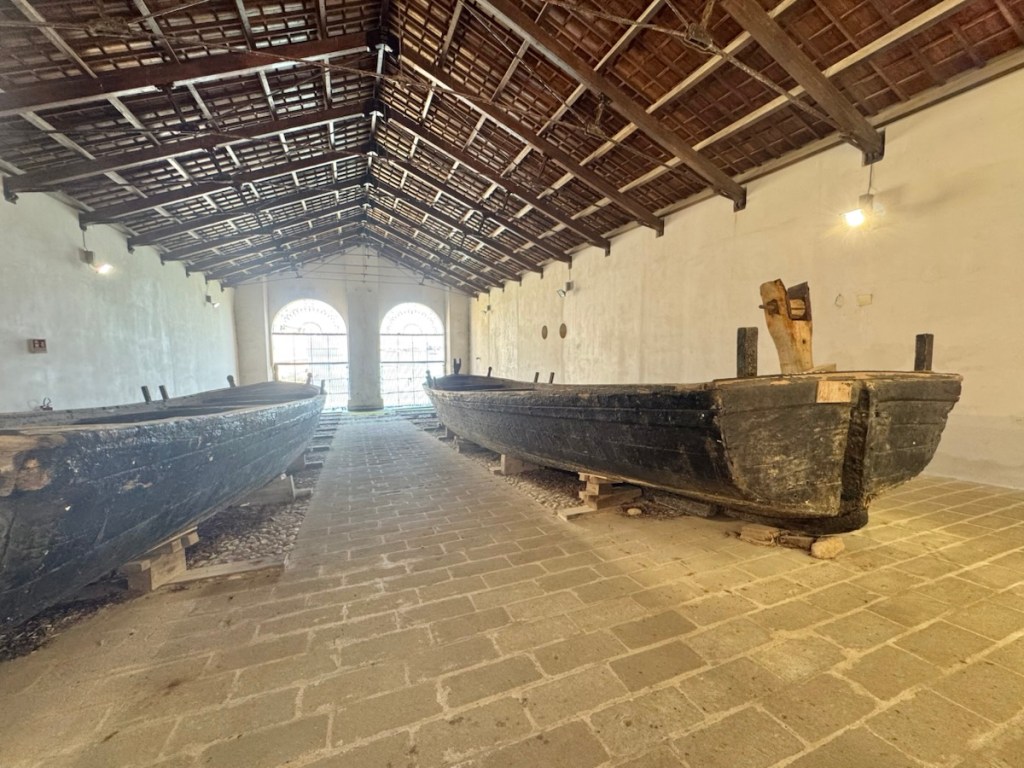


1000’s of tinned tuna cans were on display in the canning room.
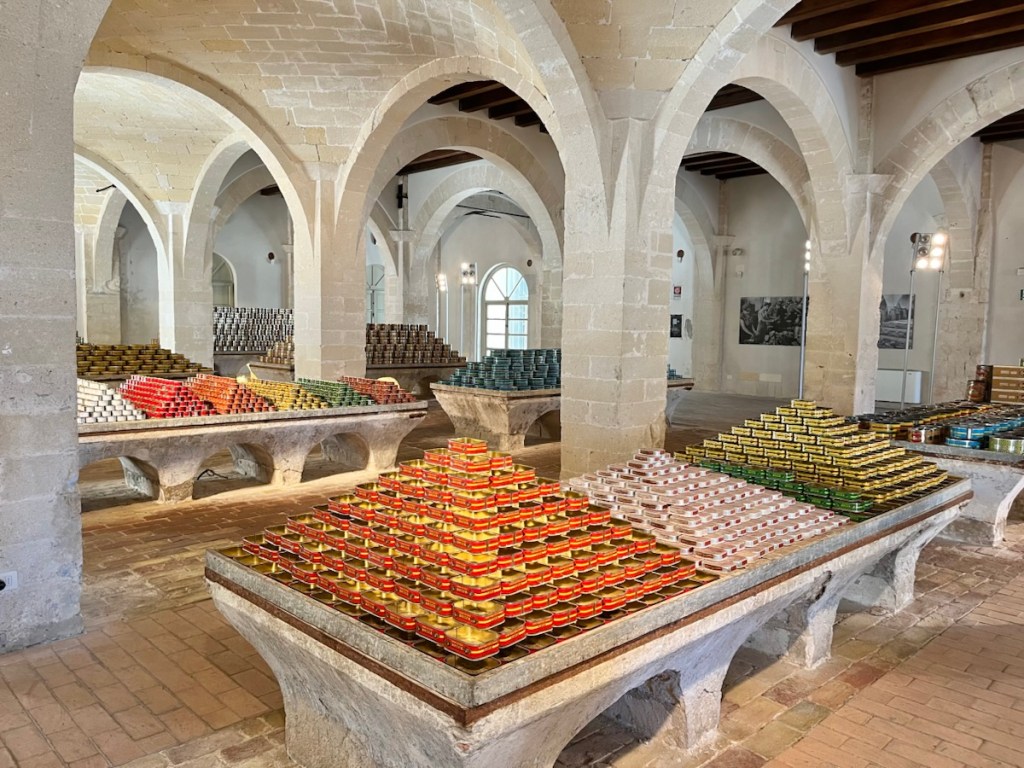
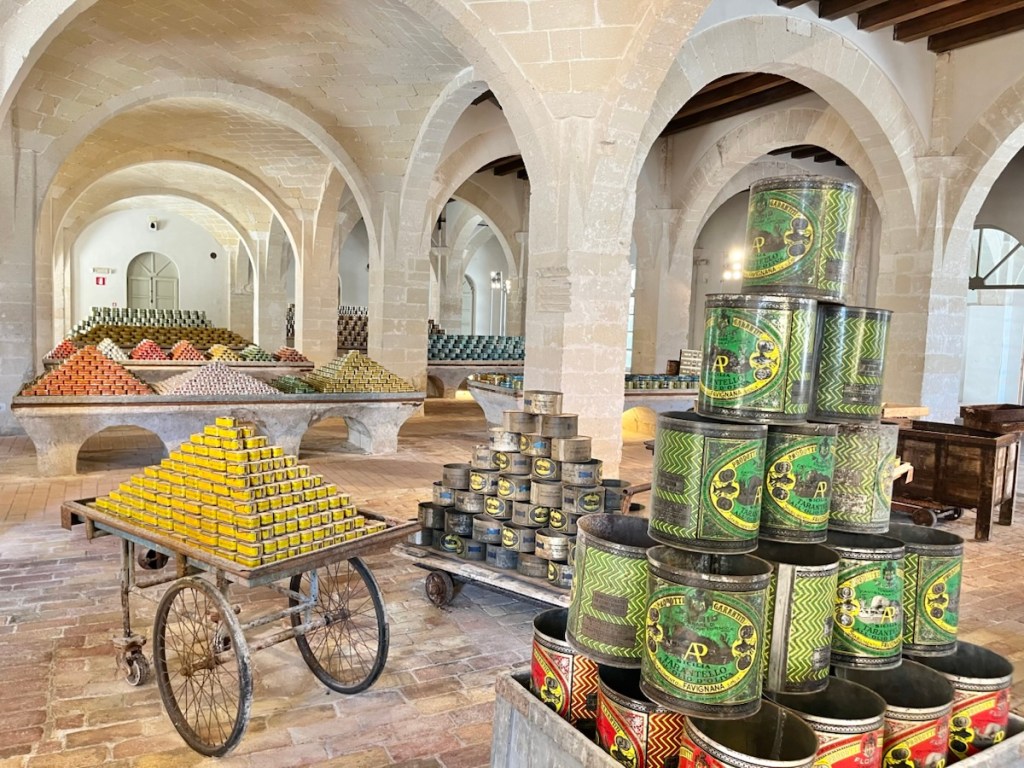
The style of the Tonnara has some similarities to cathedrals, with majestic arches and high ceilings, highlighting the importance of the building. Tuna fishing and the work of the men and women was considered sacred.
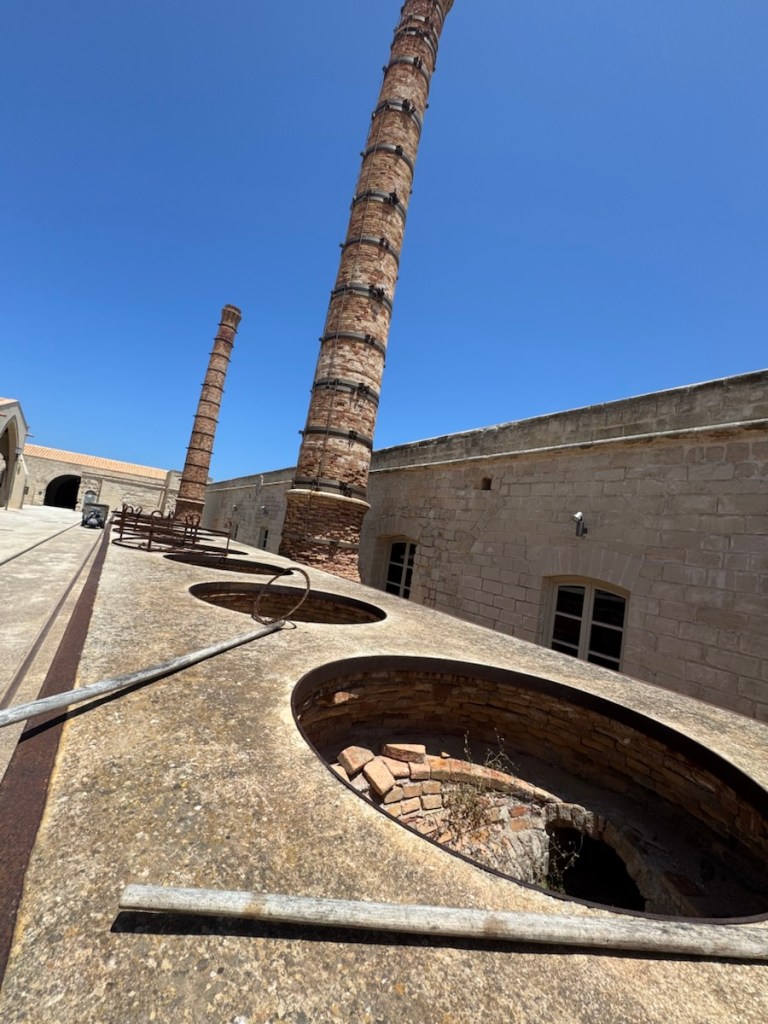
Outside, there is a long terrace overlooking the sea with a row of ovens and brick chimneys which were used to cook the huge tuna, some of which are reported to have weighed over 600kg.


After a full tour of the factory, we walked along the beach to a small beach hut, where we stopped for lunch.
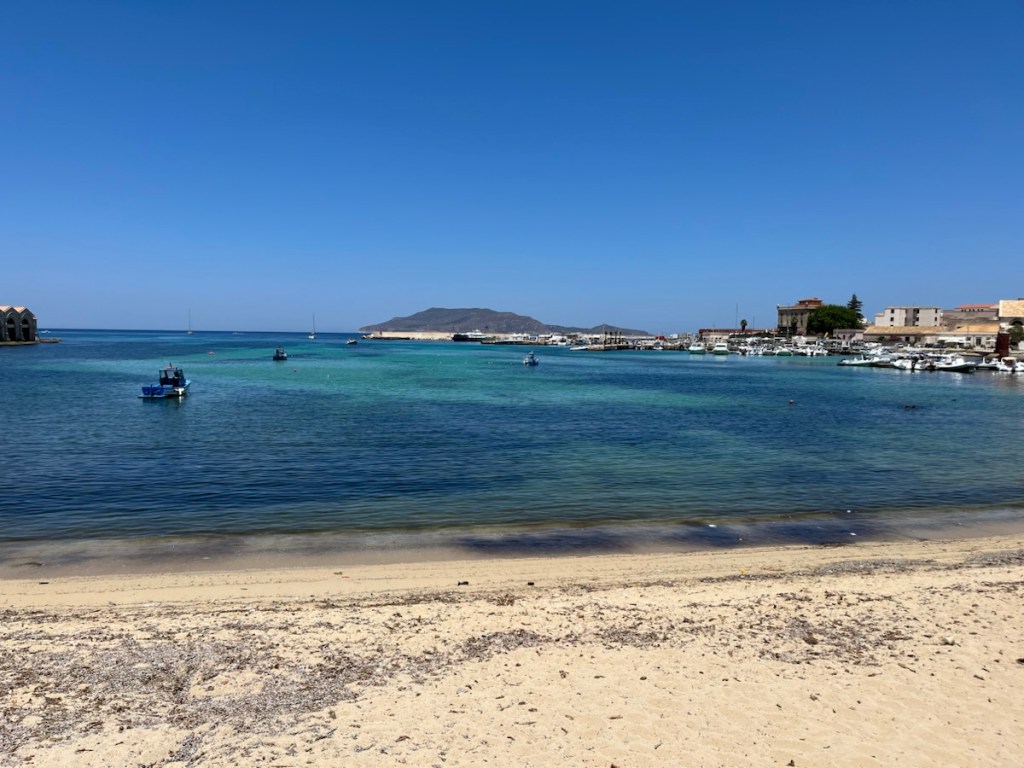
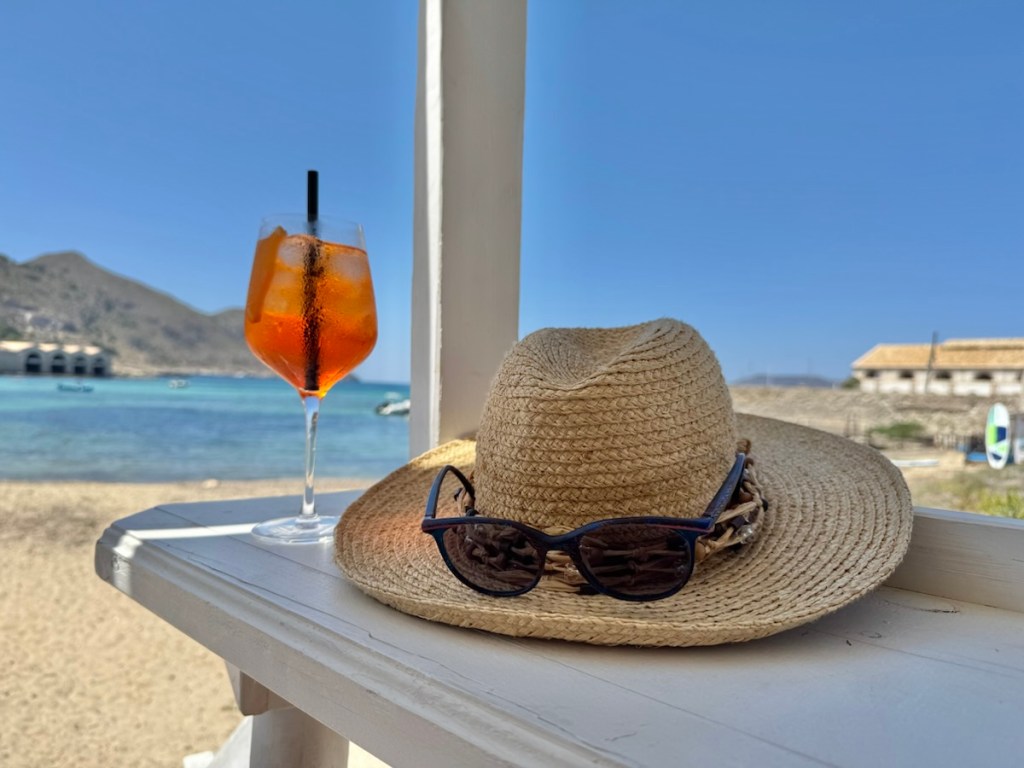
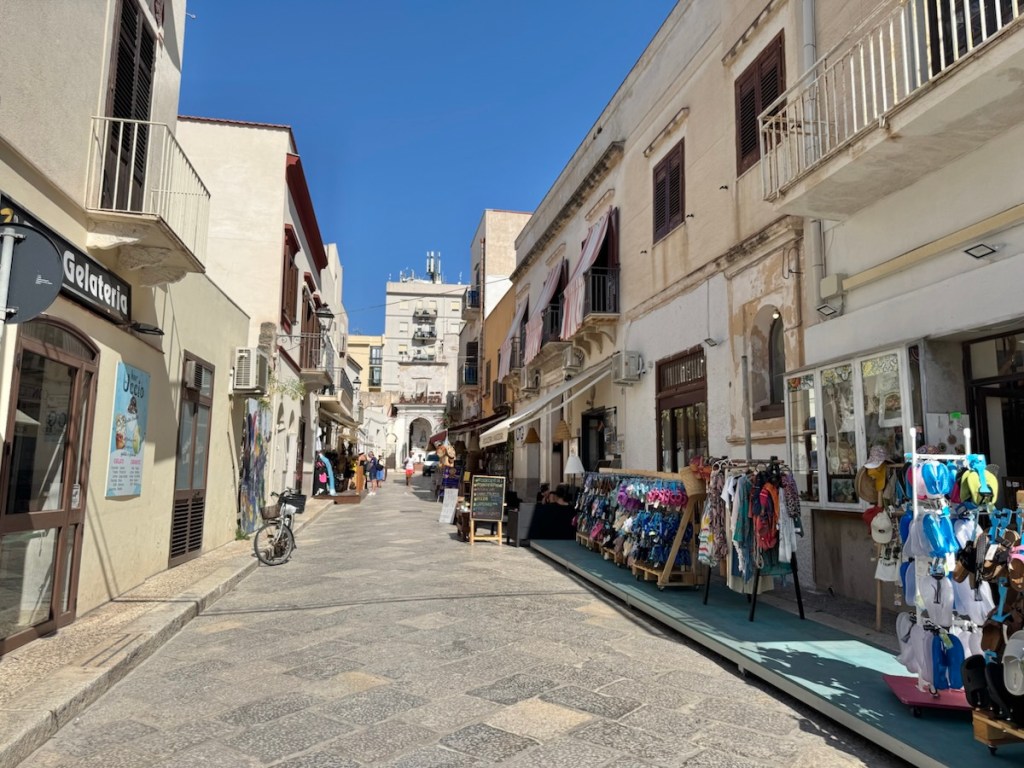
The small town was quite smart with a few cafes, restaurants and shops.
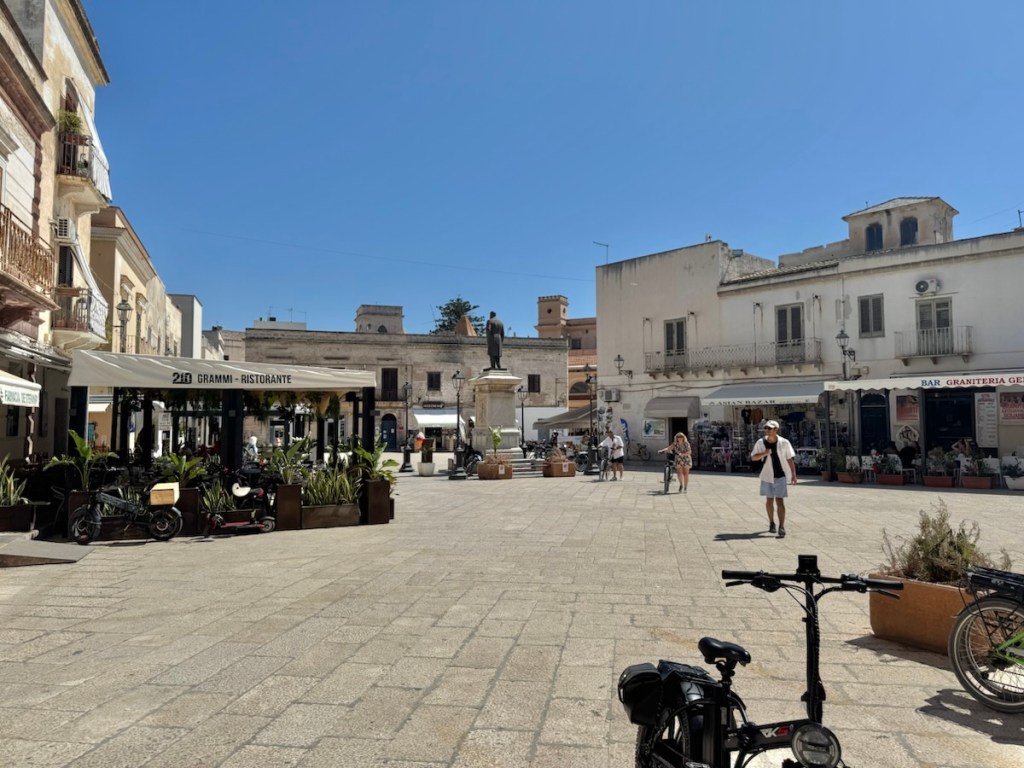

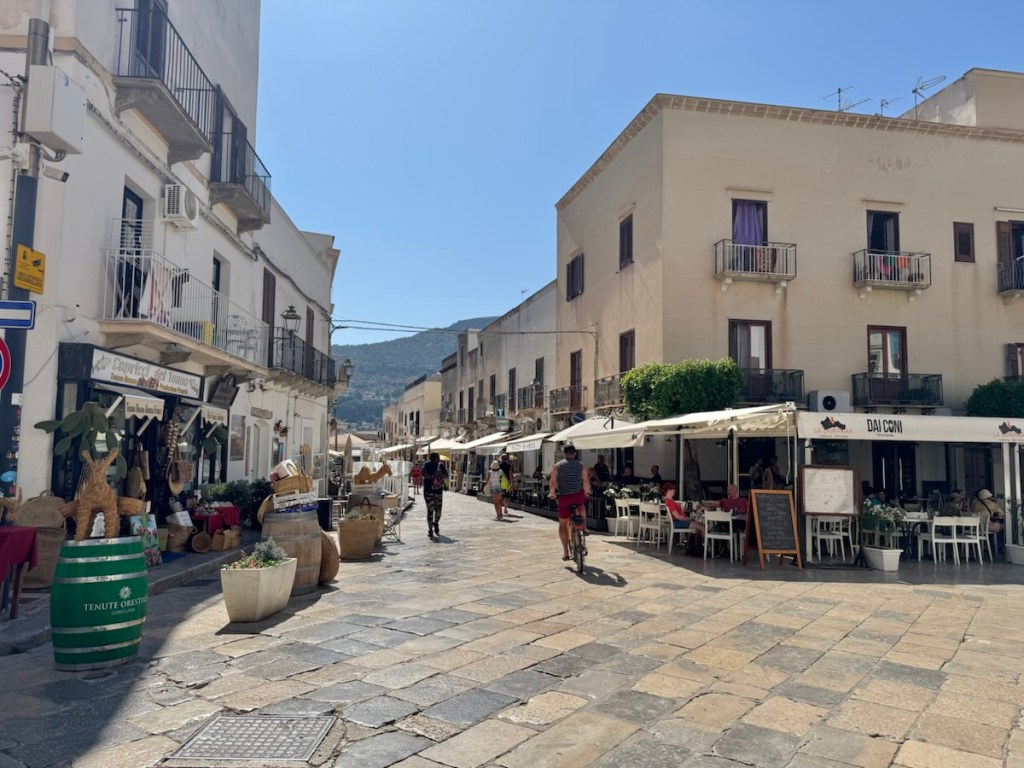
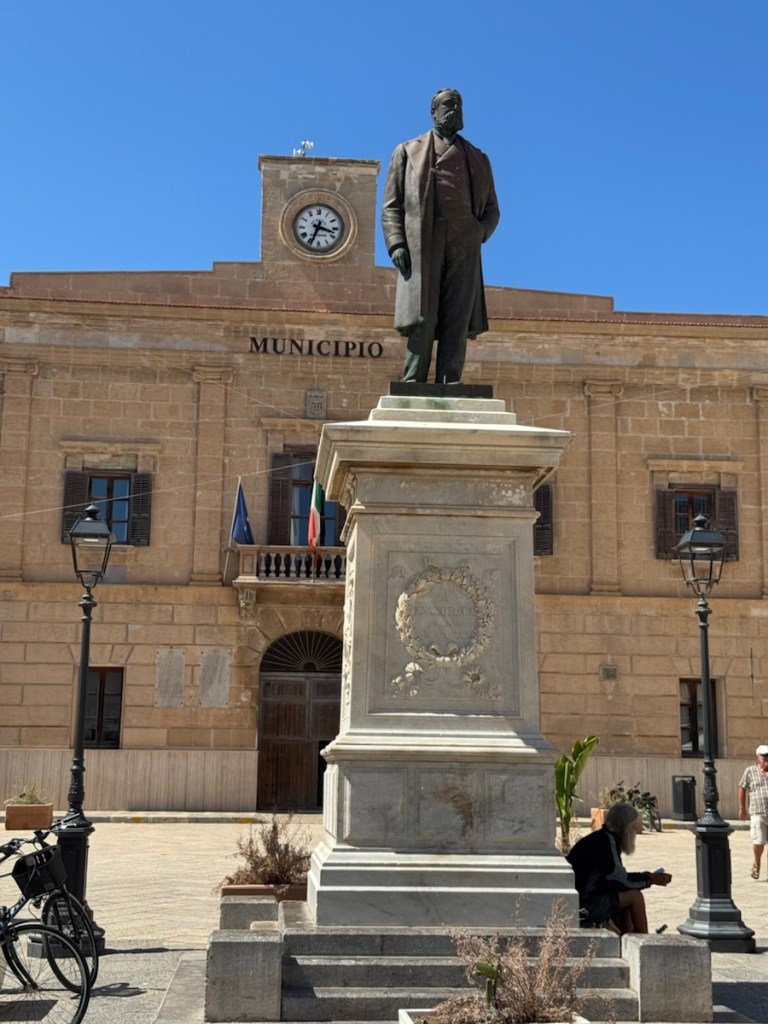
A large statue of Ignazio Florio stands in the square in honour of the great commitment he offered to the Egadian people.
We walked back to the anchorage and thought it would be rude not to stop again at the harbour cafe for refreshments before returning to Ziggy in the bay.

 Sailing ZigZag
4 replies on “The Aegadian Islands”
As I write this we are hunkered down and sheltering from the high winds and rain accompanying the latest named storm, so it’s lovely to see more stunning photos of clear blue water and golden sand. Favignana looks fabulous with magnificent buildings and chic town square. I realise that I’m quite sad, but am a huge fan of a stone vaulted ceiling and the ones in the Tonnara are superb. I share Neil’s liking for the composition of the cool hat and shades accompanied by colourful ice cold beverage. To use one of Neil’s favourite words from bad in the day, its marvellous.
LikeLiked by 2 people
A little late to this weeks’ post, but all the better for reading it. Another example of a lovely and important place I have never heard of 🙂
Fancy having to dust all those tins of tuna!
I think this weeks’ post contains my new favourite picture – the artistic hat and glasses one. Brilliant and captures beautifully the essence of the place.
Thank you for sharing and safe onward passage.
LikeLiked by 2 people
Crystal clear turquoise water is all you need to hear to imagine you are there! I like tuna but th
LikeLiked by 2 people
When Tuna was king!
Florio looks like the fish canning equivalent of Arkwright and the weaving mills in Derbyshire.
Those ovens are very imposing and it must have been quite a sight when it was running at full tilt.
Every week is an education, Hope you have more wind in your sails soon and look forward to the next episode.
LikeLiked by 1 person