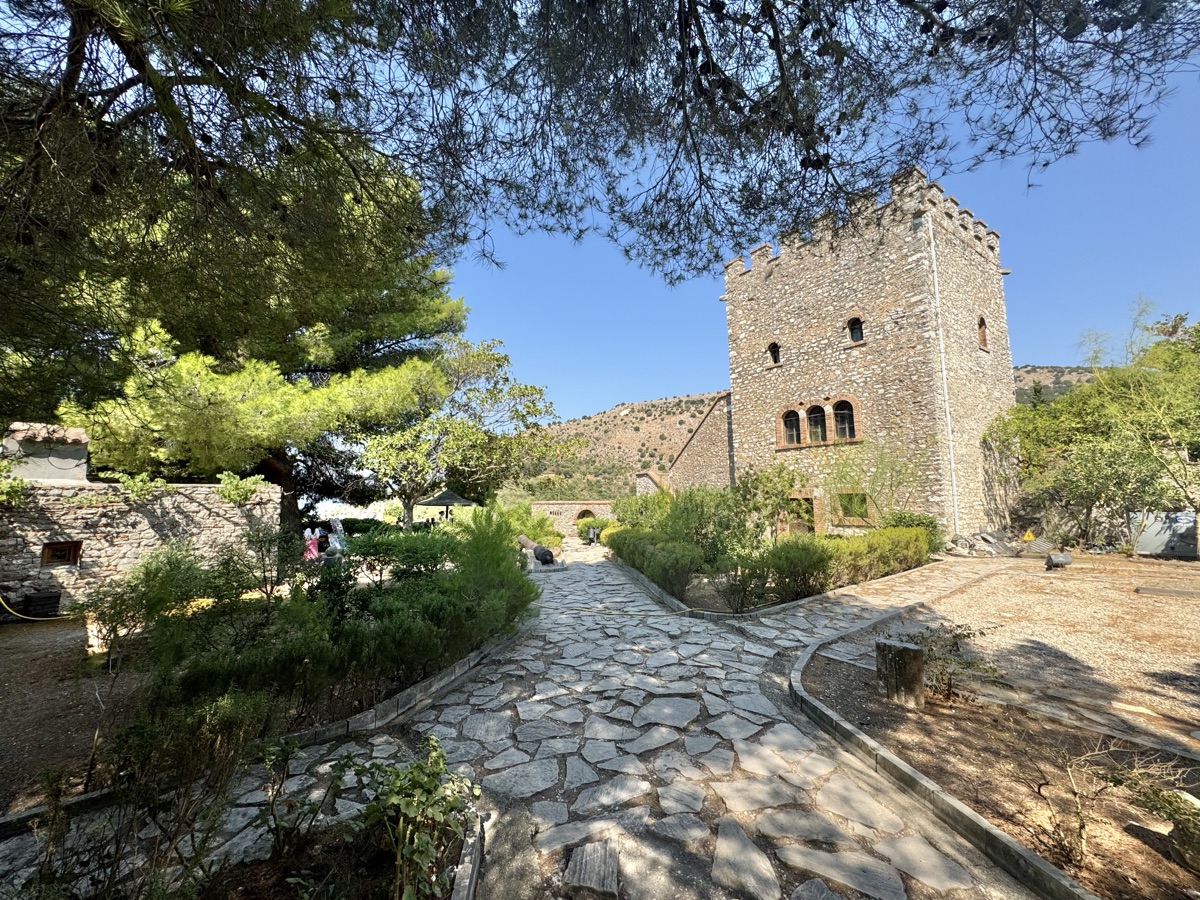
We were beginning to get used to the busy activities and party music in Sarandë bay. However, on the waterfront, a stage was being constructed and we heard about a music festival arranged for the weekend. The pirate ships would also act as a stage for bands to play into the early hours of the morning. We decided it was time for a break and headed south to a small bay almost on the border of Greece, with Corfu town just across the water.

The bay was very quiet, surrounded by hills with a sandy beach. Several small day boats visited during the day, but by the evening, we were all alone, heaven. Welcome to Albania away from the main towns.

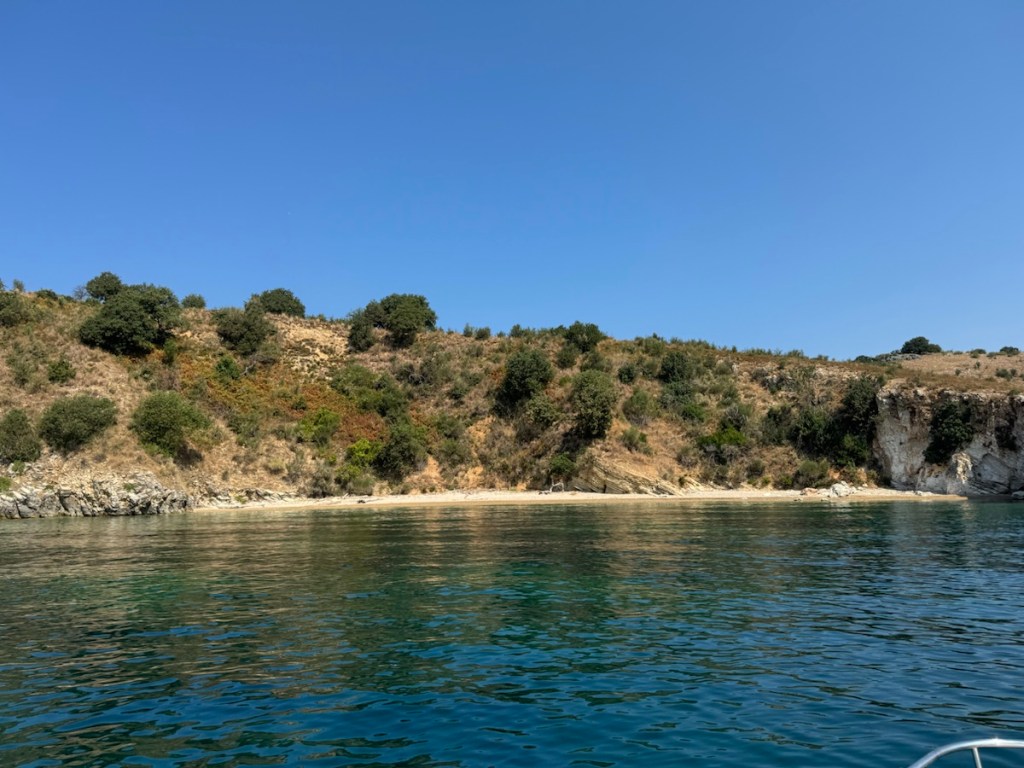
We stayed in this tranquil bay for almost a week, it was very calm and protected, the water was clear and once the day trippers had gone home, we had our own private beach.
Provisions were getting low so we eventually lifted the anchor and returned the short distance back to Sarandë, this time we anchored slightly further away from the party boats. On our way, we had passed the Butrint National Archeological Park. It is just a short bus trip from Sarandë so we had to go and explore.
The following morning we got up early to catch the first bus because we had been told that they get very busy during the day. This took us directly to the site, arriving just before the gates opened. We watched the small chain ferry going back and forth across the water while we waited.

Butrint National Archeological Park is another UNESCO World Heritage Site which covers 29 square kilometres. Its history dates back to the 8th century BC. The old city has been occupied by Hellenistic, Roman, Byzantine, Venetian and Ottoman cultures and civilisations, each leaving behind their own ruins.
By the 16th century AD, the city was abandoned after marshes formed in the area. It became overgrown by forest and lost for centuries, Butrint was frozen in time until excavations in the 1920’s uncovered its layers of history.
It was lovely walking around the trails under the shade of large trees.


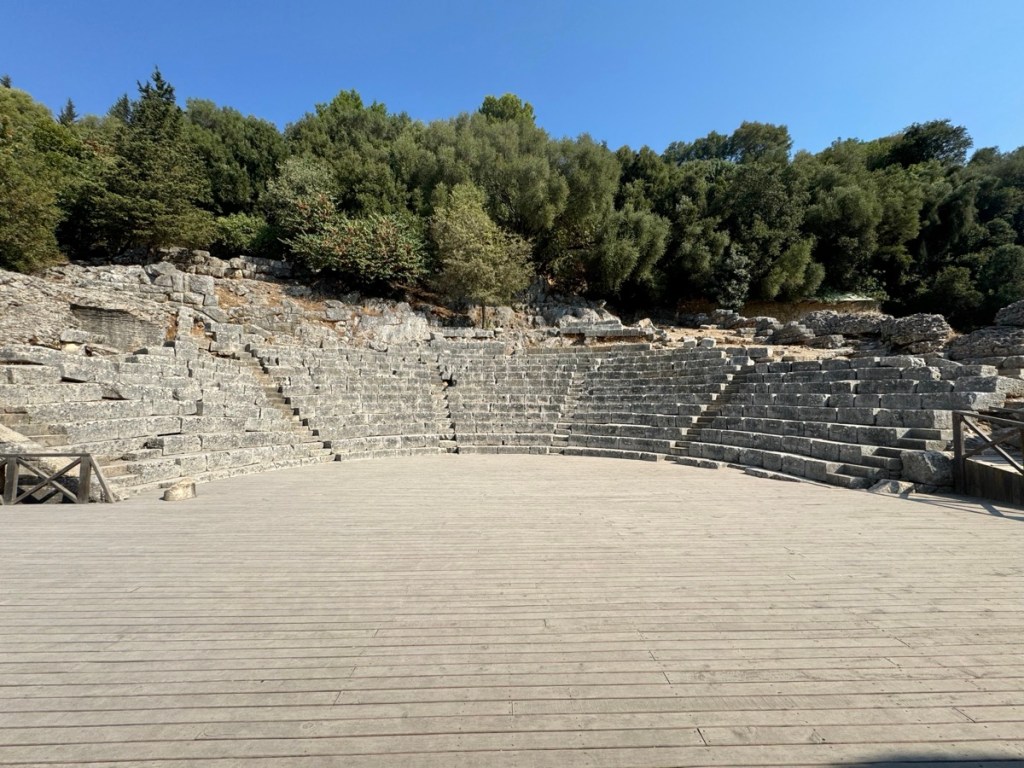
It is thought that the first community developed in the 8th century BC. According to classical mythology, the ancient city (originally known as Buthrotum), was founded by exiles from the fall of Troy. By the 4th century BC, Butrint had grown in importance and included a theatre, a sanctuary and an agora.
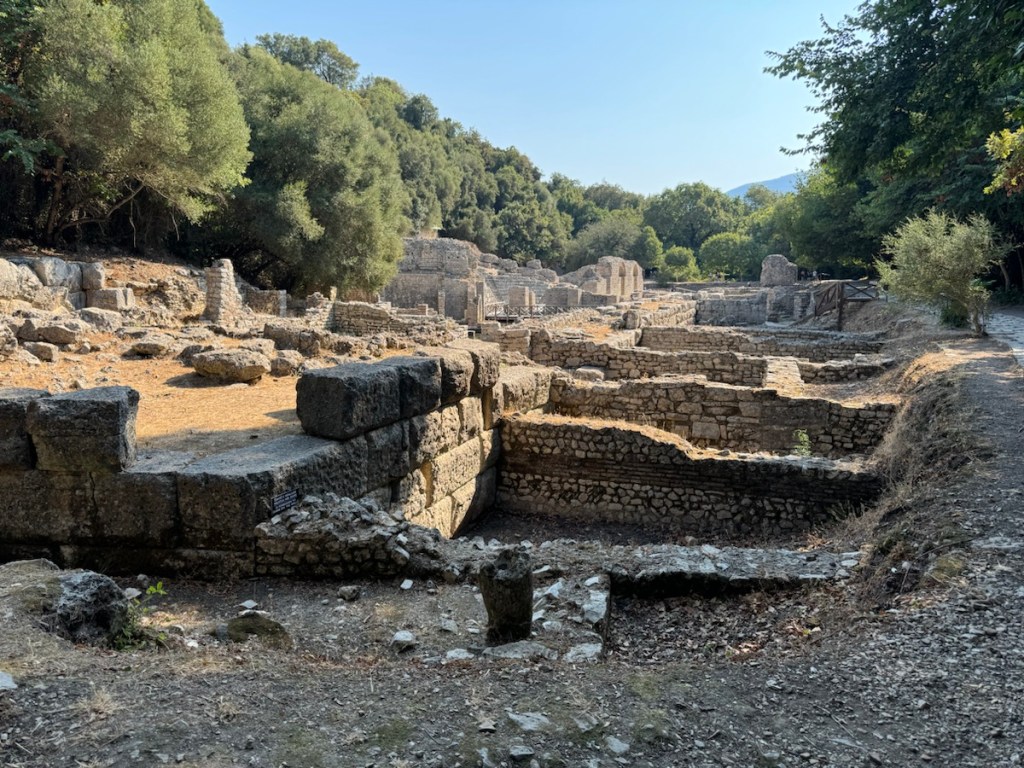
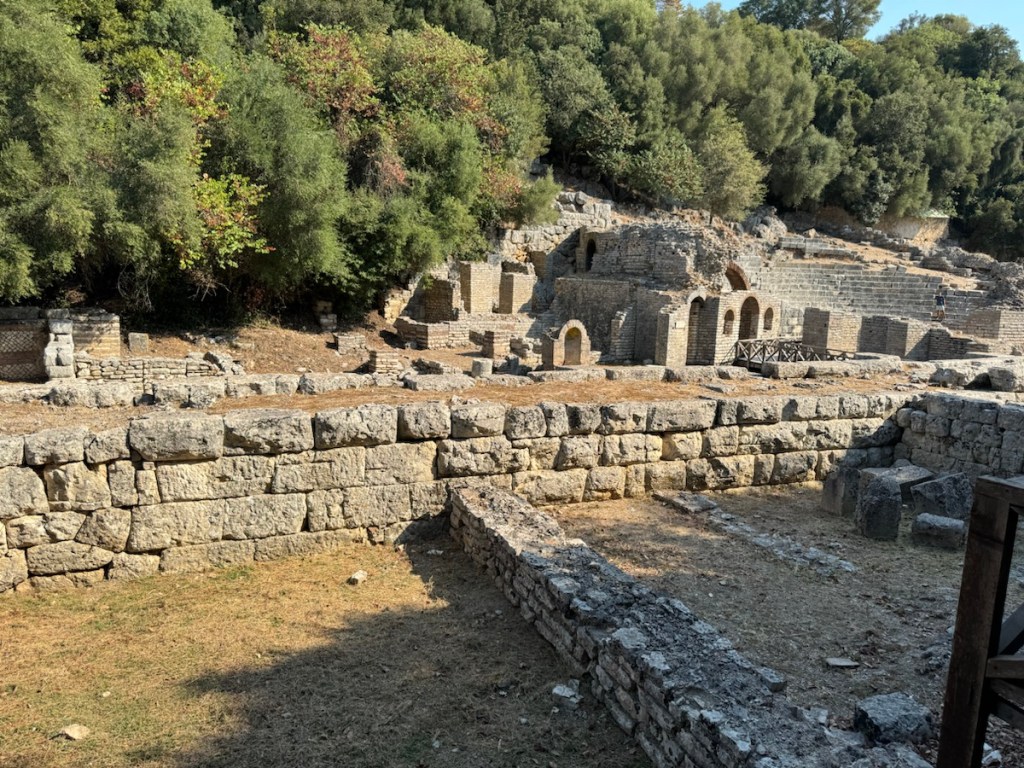
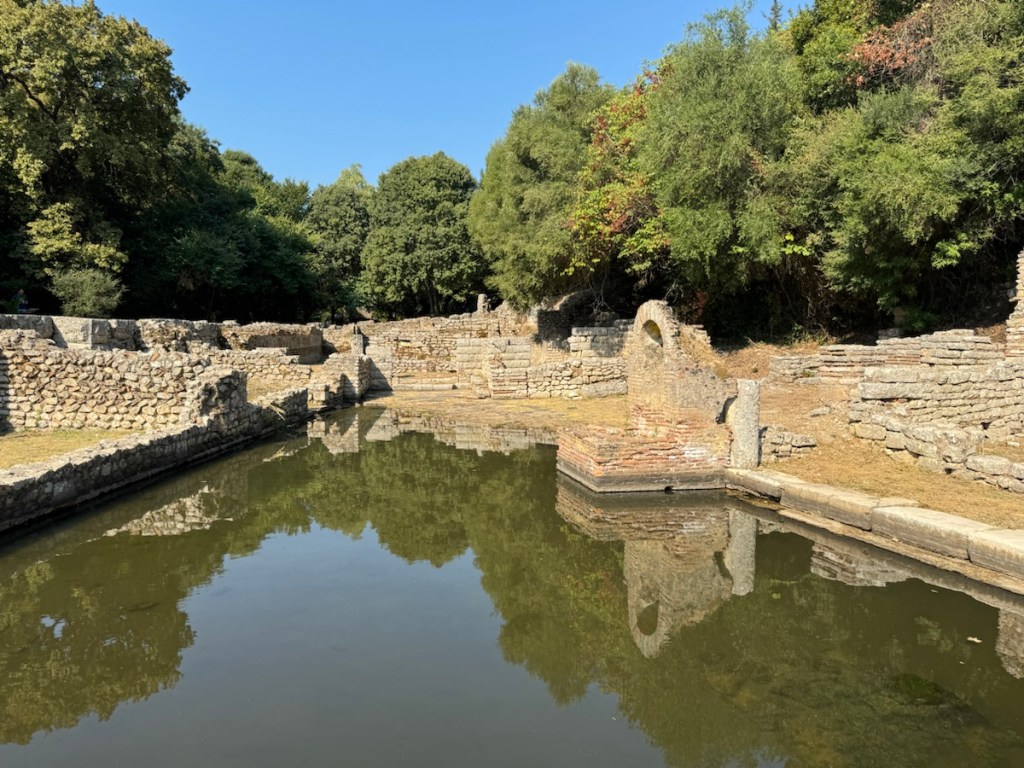
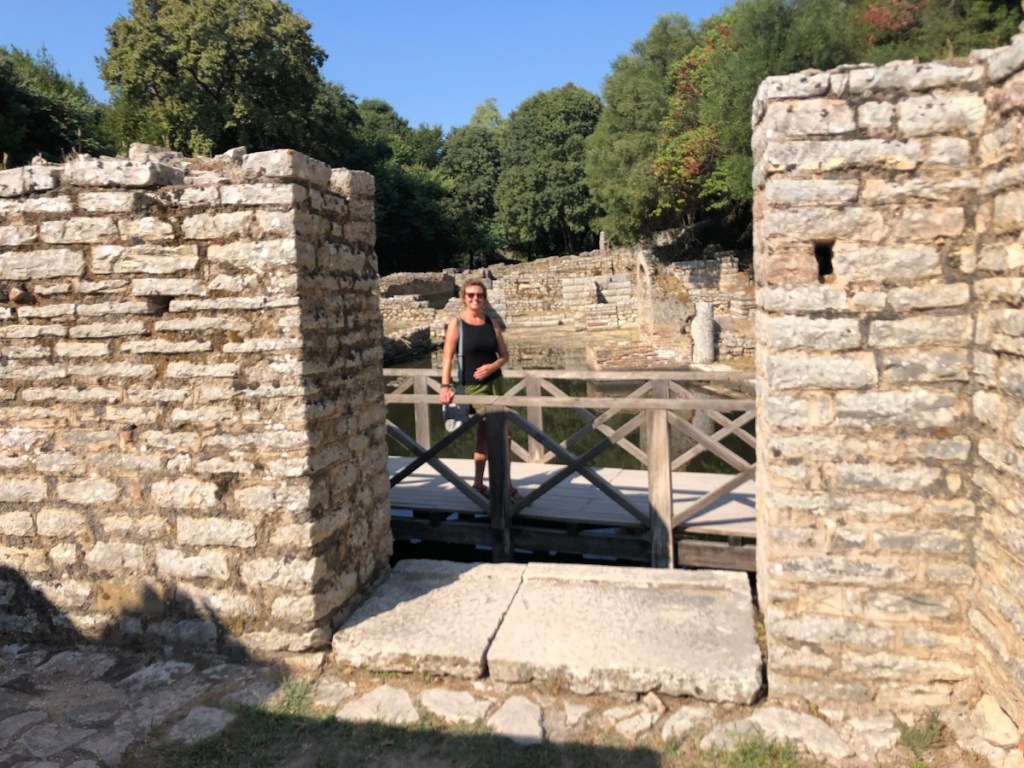

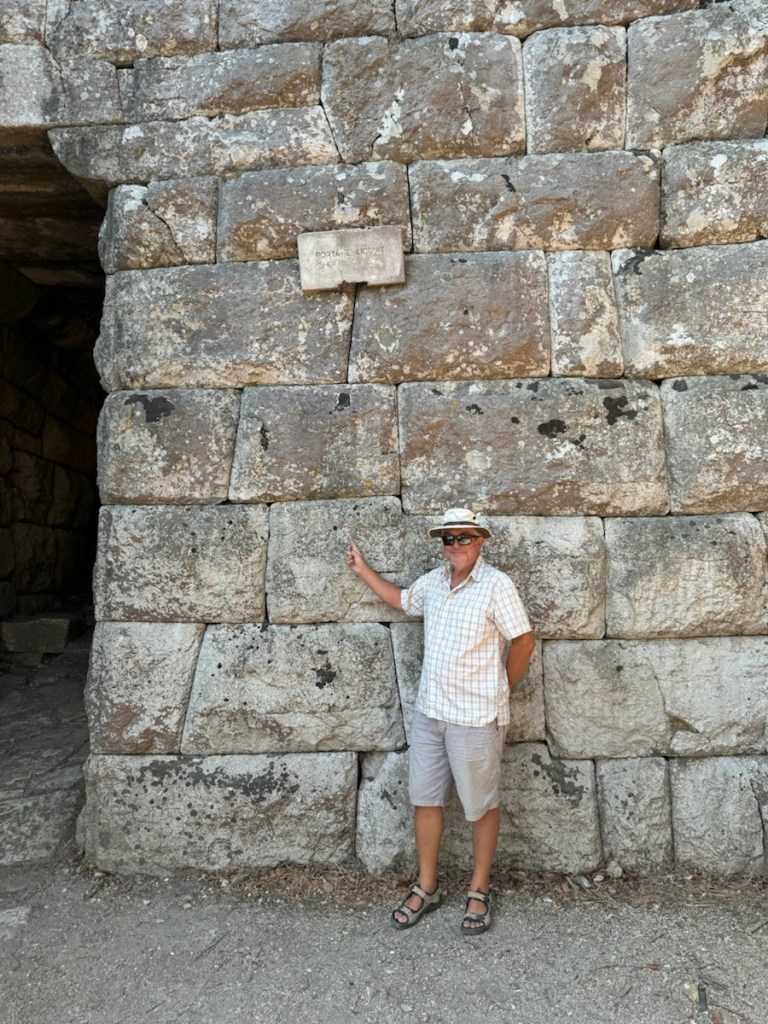
The Acropolis was erected on a hill on the bank of lake Butrint and was protected by defensive walls. One of the main gates was known as ‘Lion gate’ due to the relief above the entrance of a lion devouring the head of a bull.

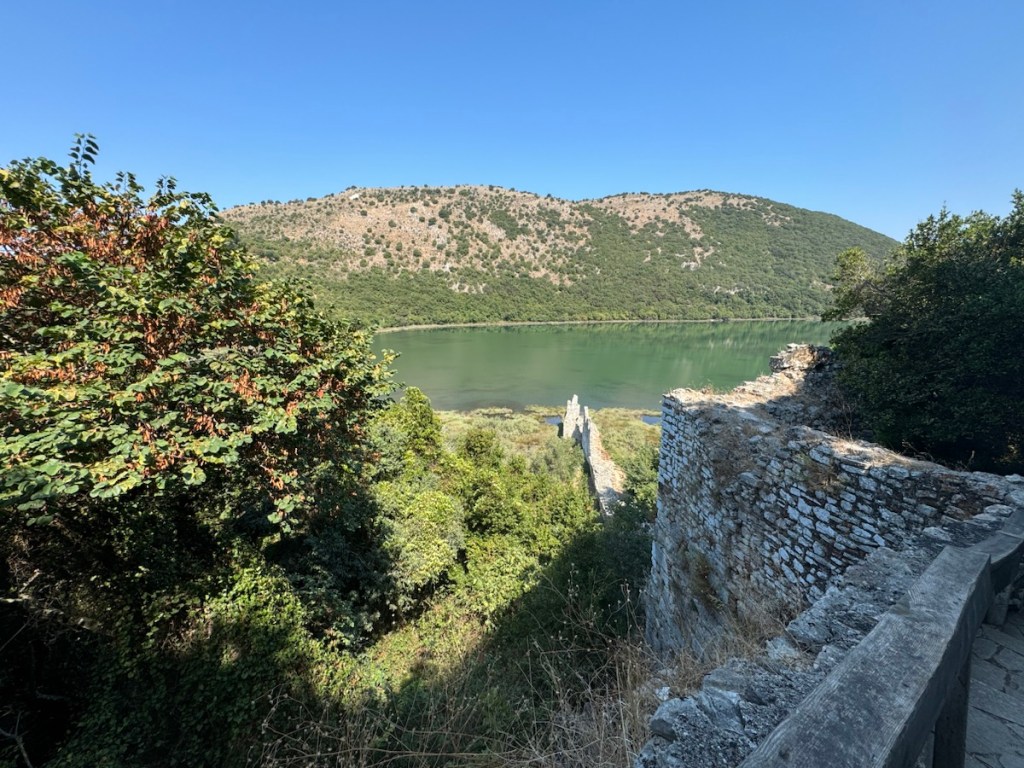

Butrint fell under Roman rule in the 1st century BC, this was the time of its greatest development. New residents expanded the city and the construction included an aqueduct, a Roman bath, temples, villas, a forum complex and fountains, the Greek theatre was enlarged and rebuilt to Roman style. During that era the size of the town doubled.
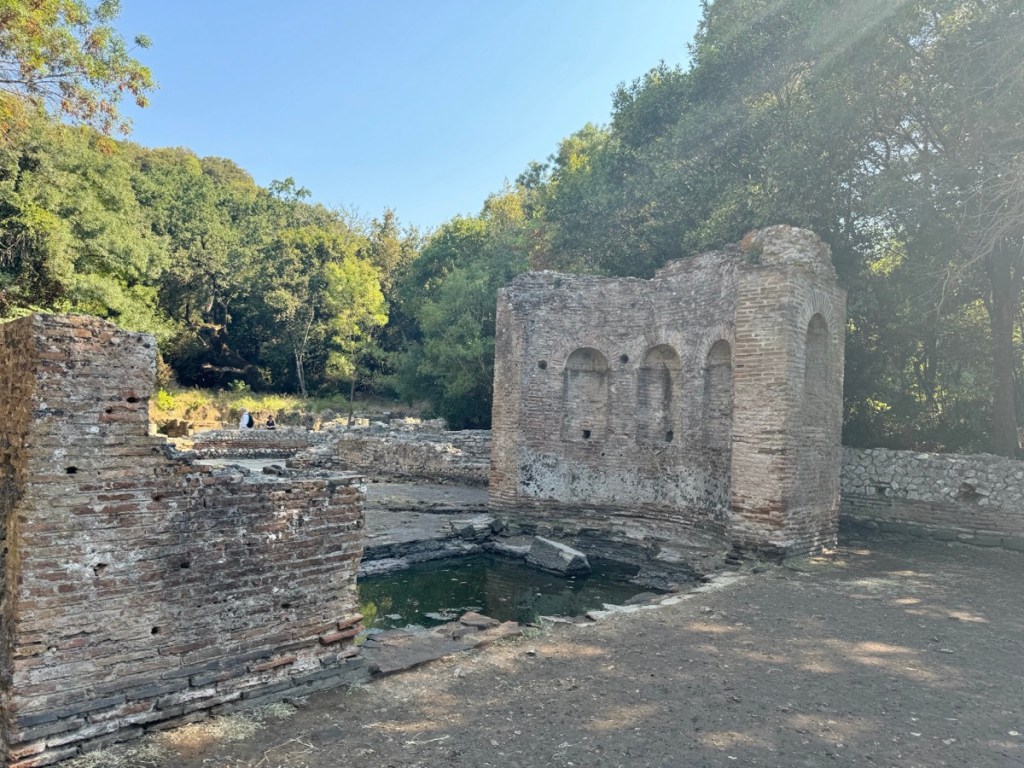


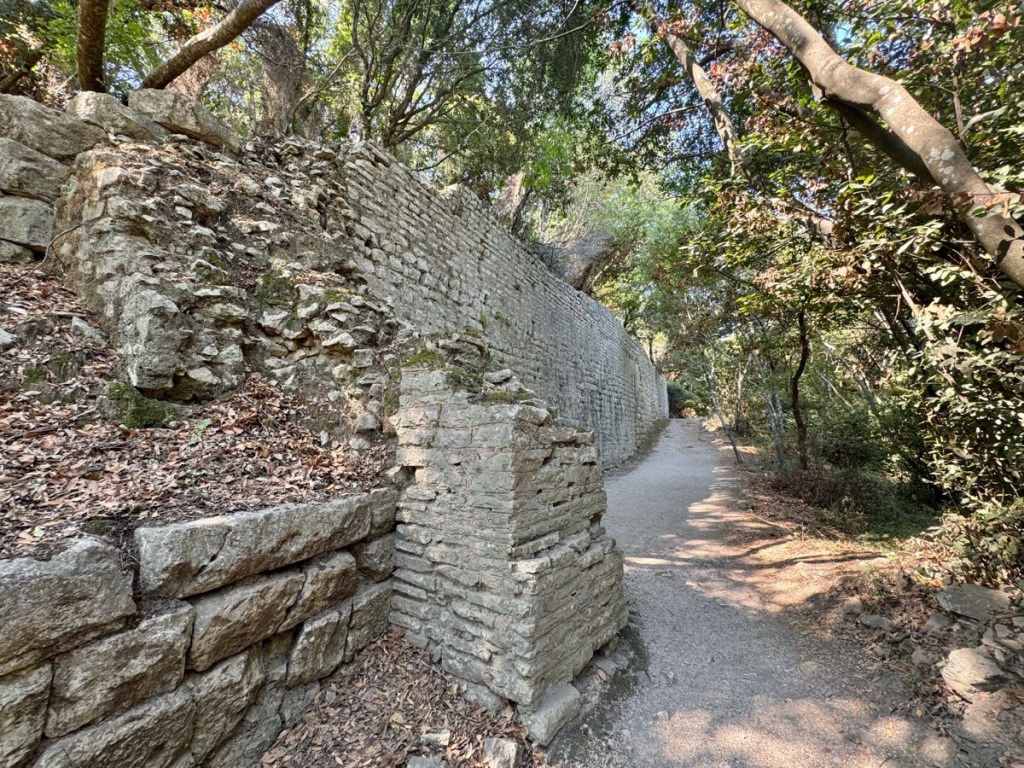
An earthquake destroyed a large part of the town in the 3rd century AD, however, the settlement and its high walls were rebuilt over the following years. The lower levels of the walls looked like they must have been built by ‘Giants’, whose work we had first seen in the Dodecanese islands.
The great basilica and a large baptistery with columns, arches and a mosaic floor were built during the early Christian period, 6th century AD. Unfortunately the magnificent mosaic floor is covered with shingle to protect it from the elements and regular flooding of the site during the winter months.
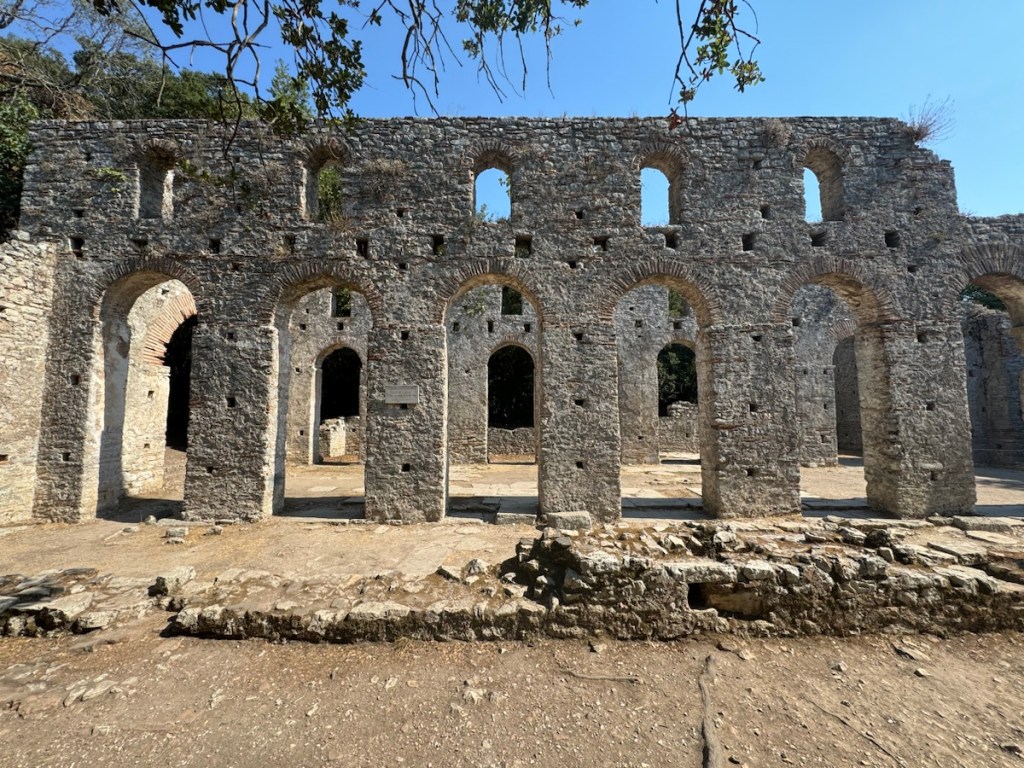

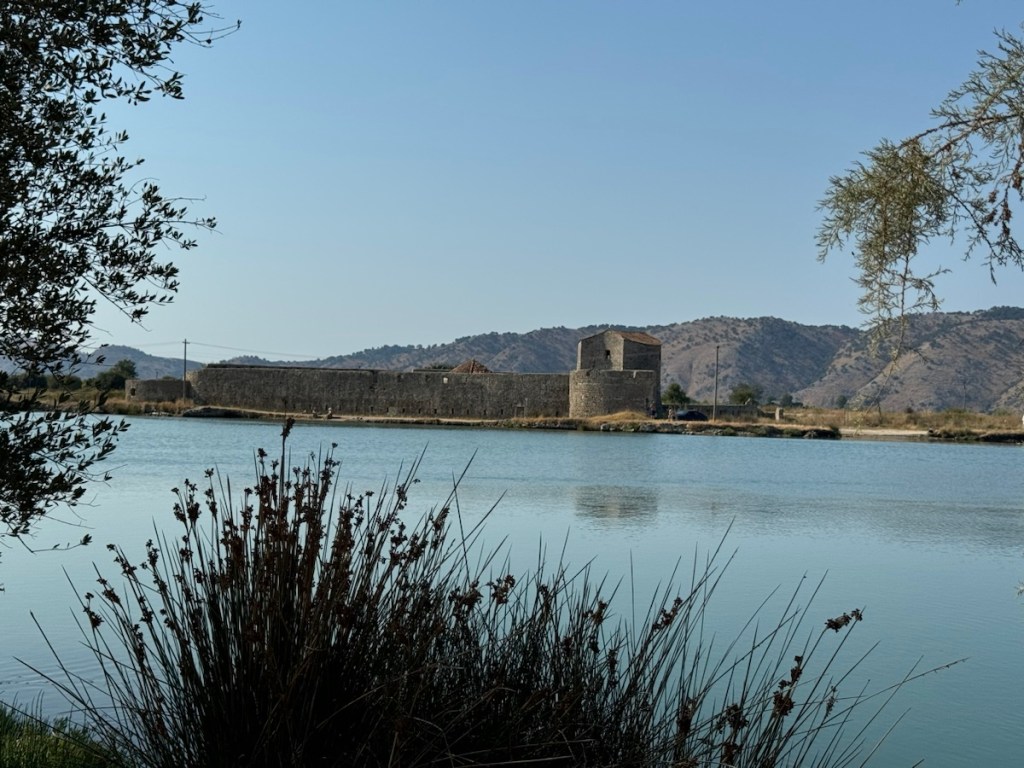
During the Venetian era, Butrint was re-fortified to protect their valuable mainland resources. They built a triangular fortress, with a square blockhouse known as the ‘Venetian tower’, in the lower town by the water. By this time fishing provided a substantial proportion of their diet and the land here was good for farming.

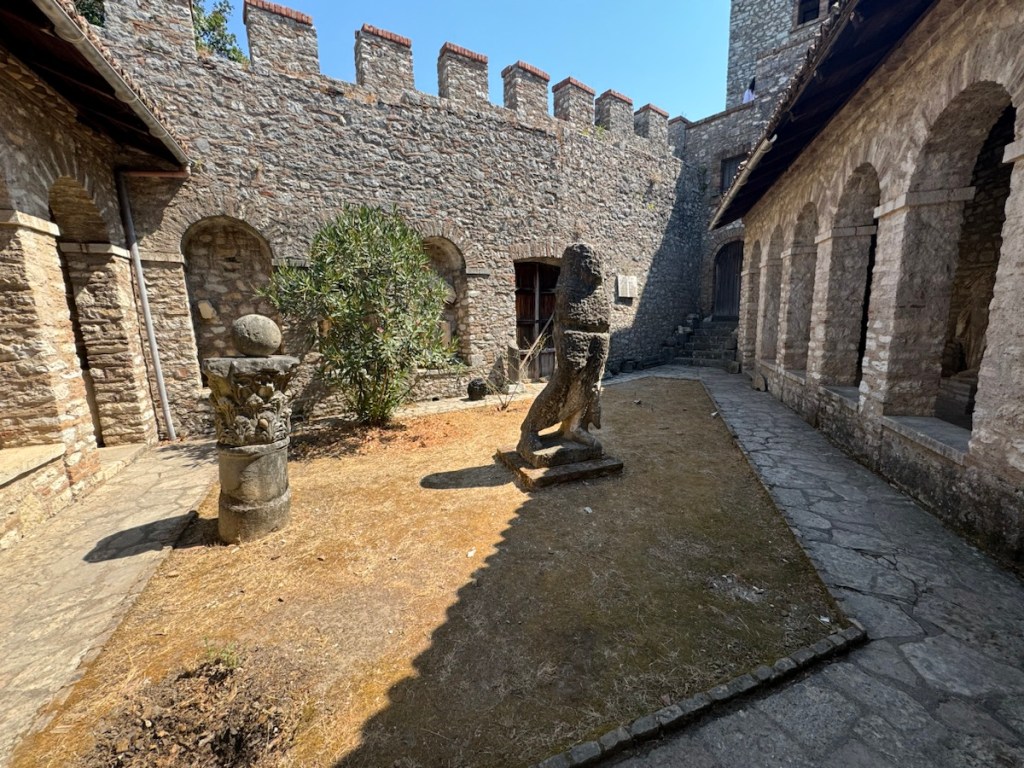
The smart looking 14th century Venetian castle was reconstructed in the 1930’s.
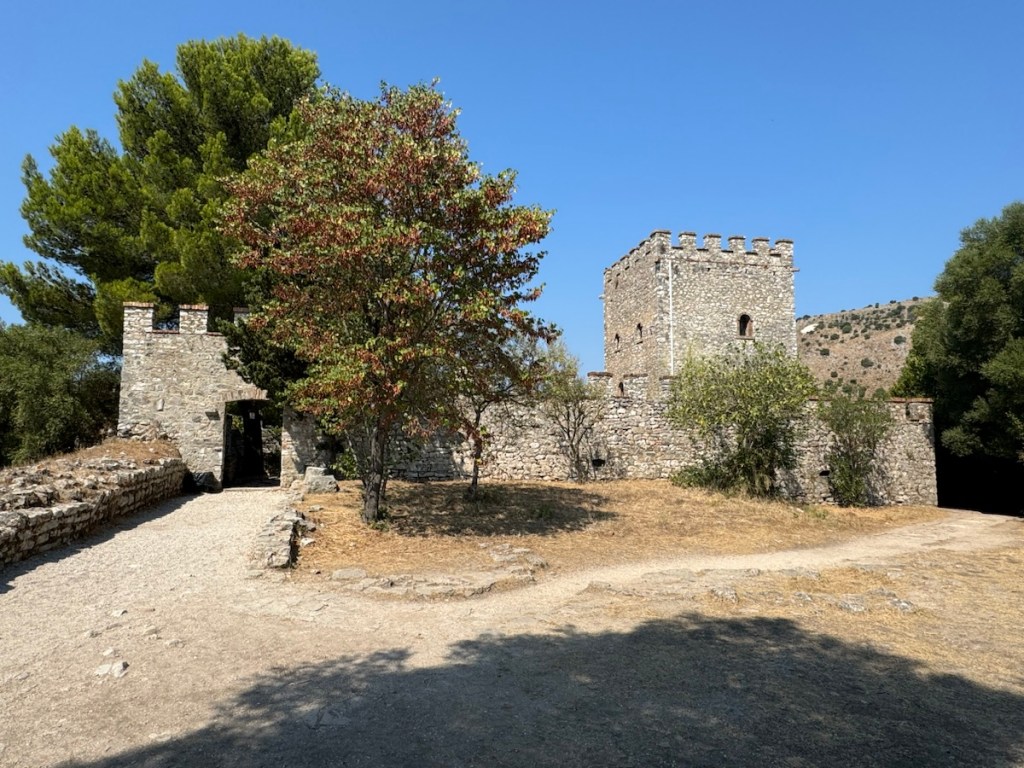


A museum of the ancient city has been set up in the castle. It presents an overview of the history and findings of Butrint from the Bronze Age to the late Middle Ages.
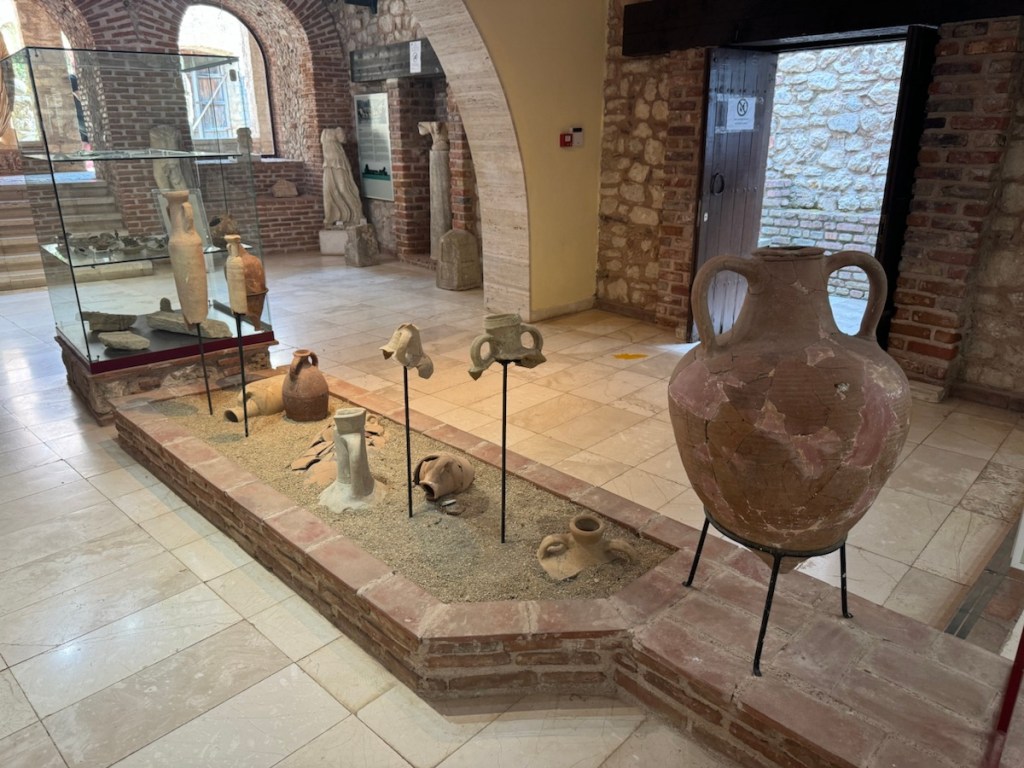
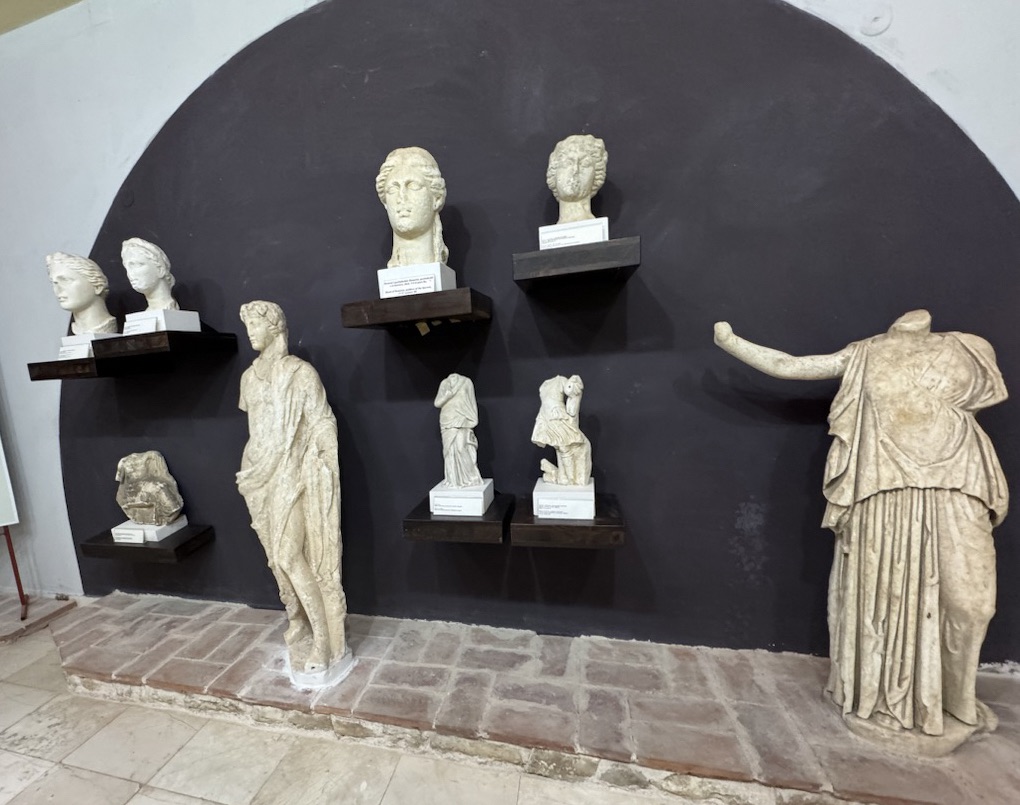
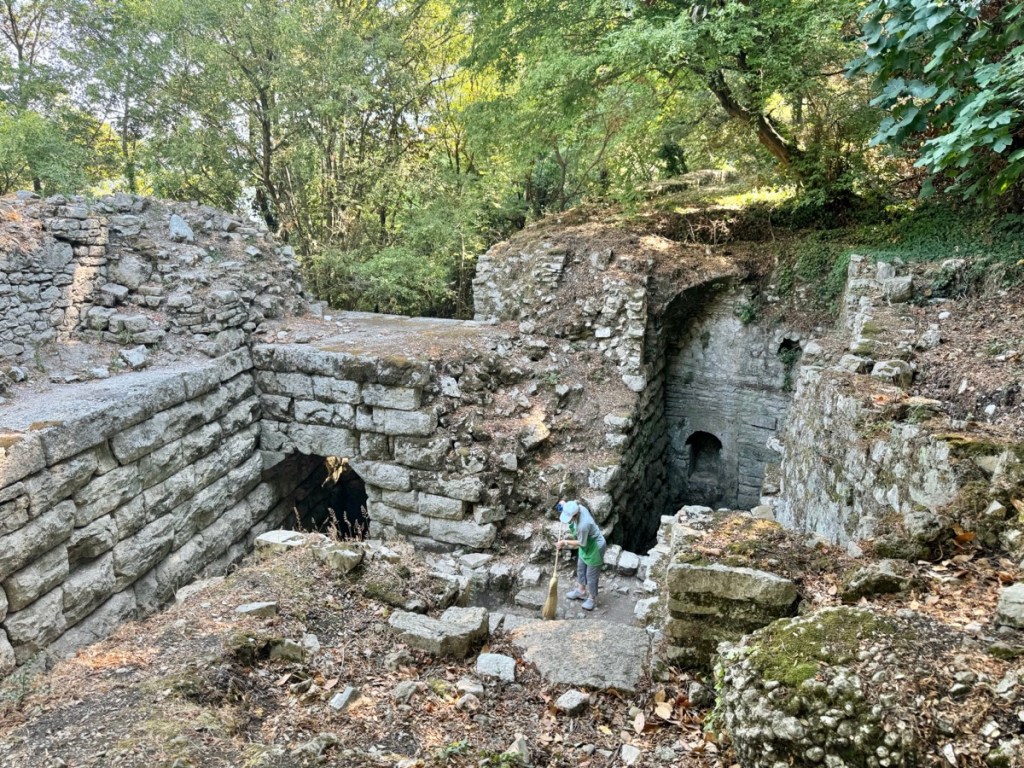
We enjoyed our leisurely walk around the park in its natural setting. The shady paths are very well maintained, we encountered many workers out sweeping away leaves and debris keeping the park clean and tidy.

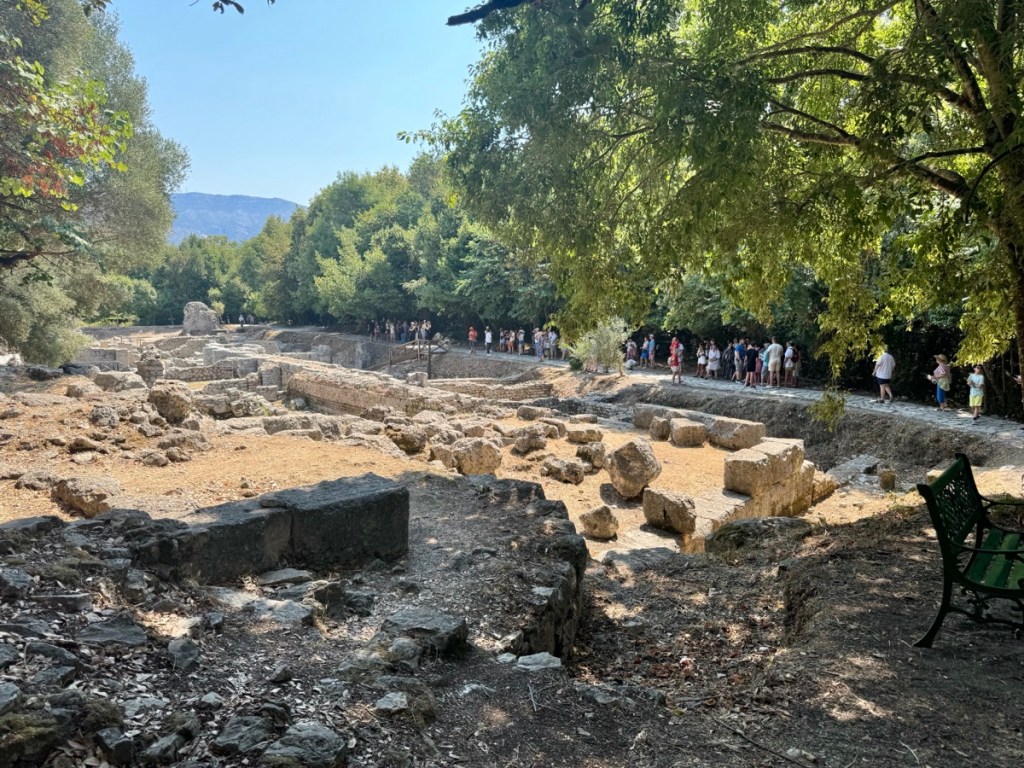
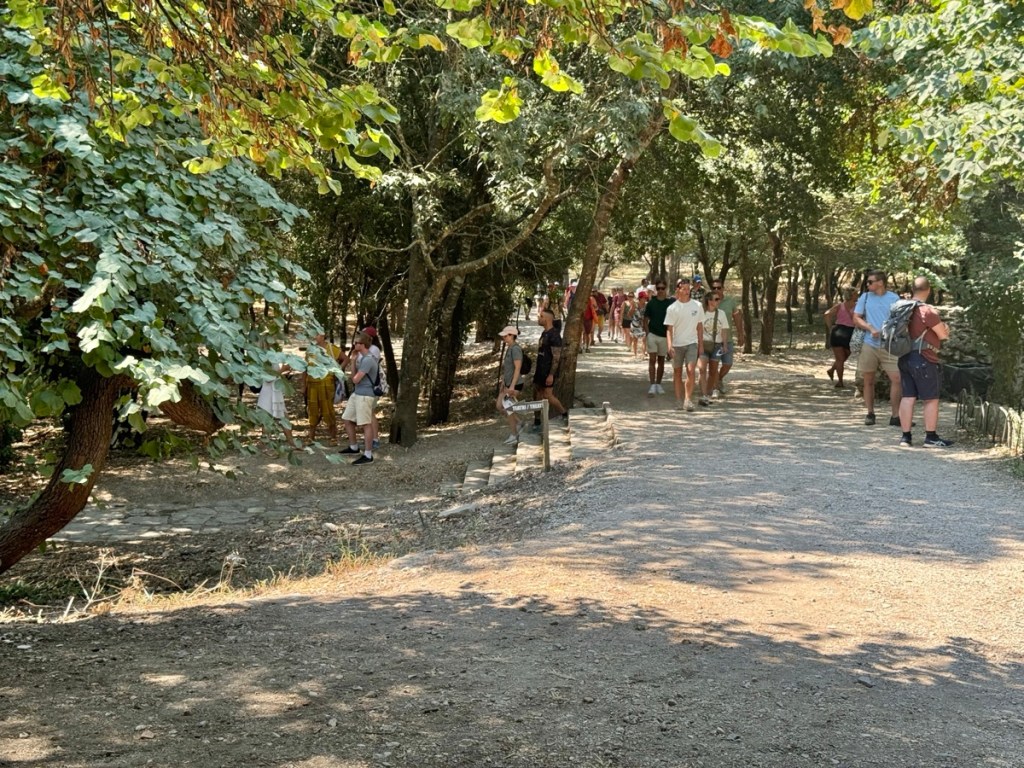
Once we had been around the site, we walked back to the main gates, the park was now getting busy, the car park was full of coaches and the crowds were arriving. Our bus pulled up just as we exited the park, so we hopped on and returned to Sarandë.
When we got back we could see Ziggy happily at anchor, so we found a nice cafe for lunch overlooking the bay.

 Sailing ZigZag
2 replies on “Dodging the Crowds”
The picture quality this week seems better than ever. Some super shots, and pictures of you and Ziggy as well, and this week has it all.
I can’t imagine how they built that wall with those giant blocks, but what fabulous skill. Great to see Paul being used to give us a sense of scale, unless of course he has shrunk from all the swimming in the sea, and those blocks are actually normal sized 🙂
As with some many of these ancient sites, the scale of effort and imagination is inspiring in todays world.
Love the look of the quiet bay and who doesn’t love a private beach of an evening for those romantic moments…
Safe onward sailing.
LikeLiked by 1 person
I nearly missed Paul in that first photo in Butrint park. Looks like he is well camouflaged! I can’t believe you wanted to get away from the rowdy music festival and pirate ships! 🤣🤣
LikeLiked by 1 person