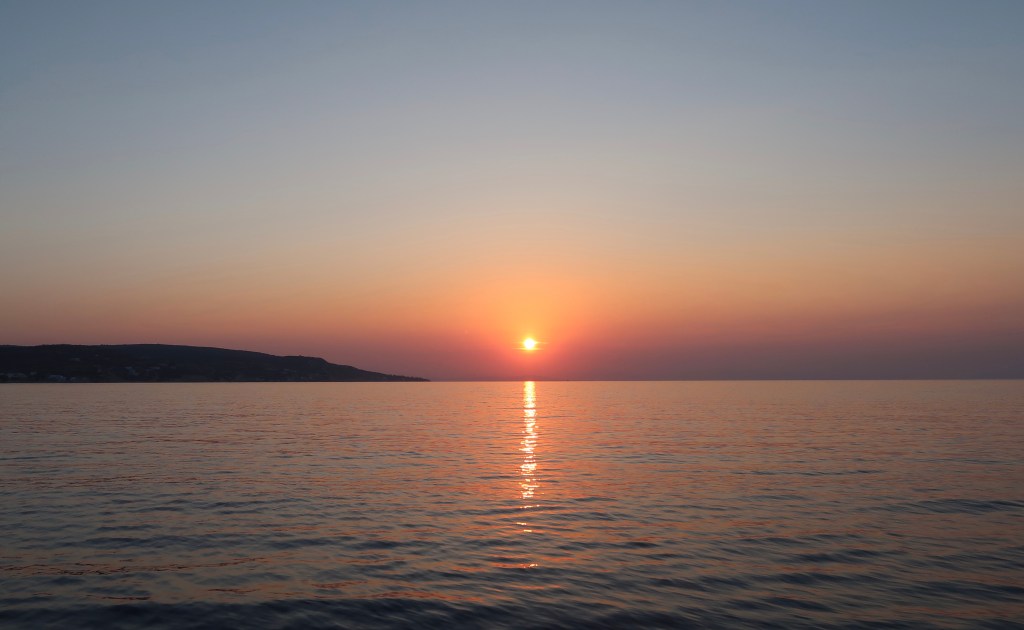
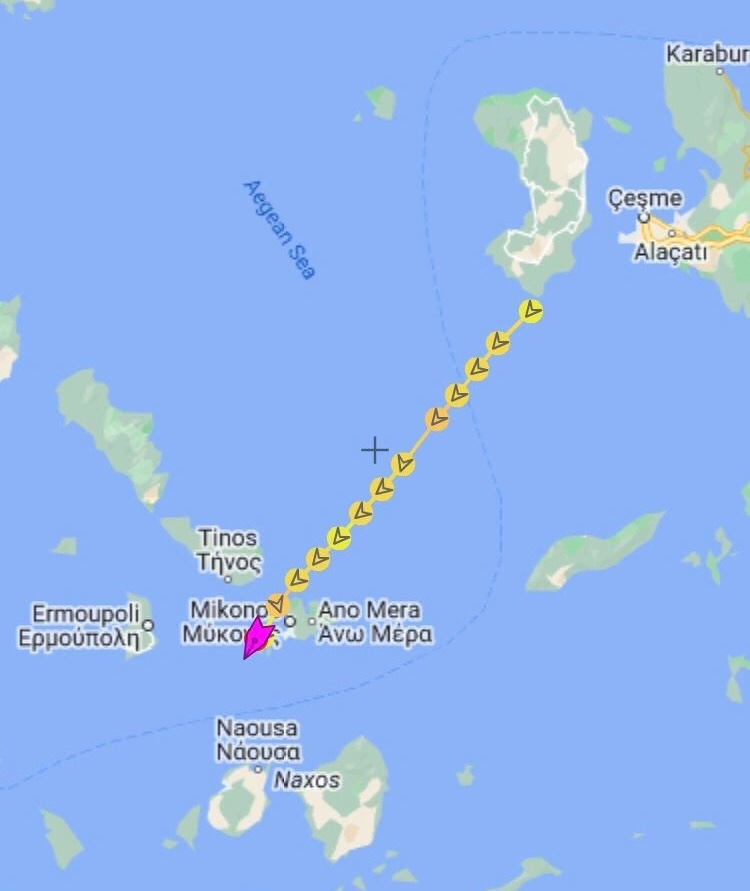
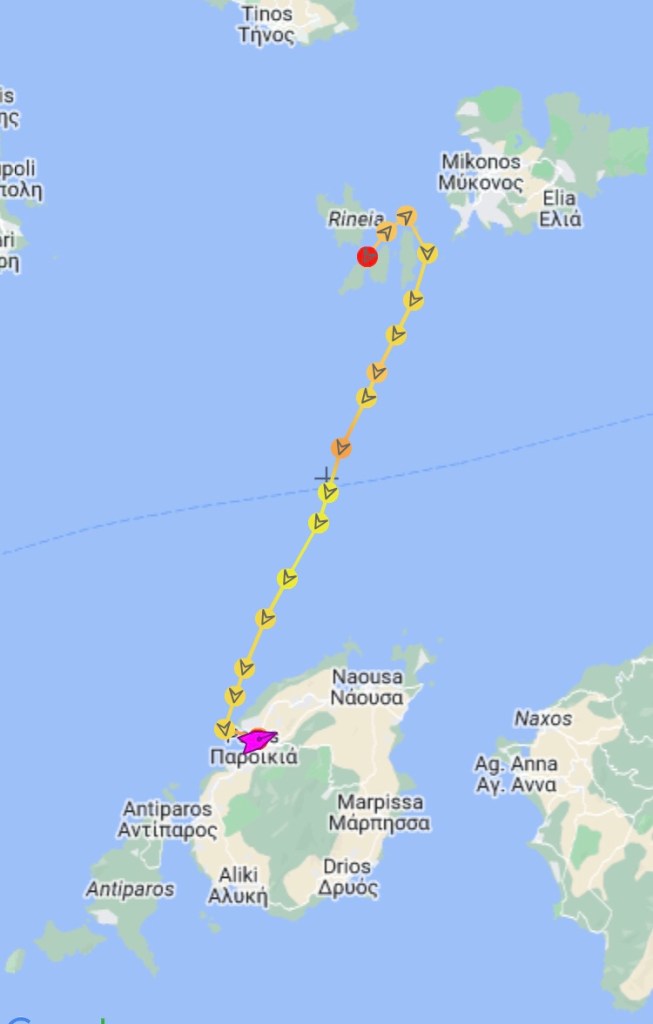
After a night of rolling around in the swell, we weighed anchor at Komi as the sun rose, there was a light northerly wind so we sailed slowly out of the bay and set our course to travel 57 nm southwest towards Mykonos.
It wasn’t long before dolphins came to entertain us, there was some small baby ones in the pod and it looked like the larger dolphins were teaching them how to swim alongside the boat and jump out of the water. Unfortunately, they were too busy playing and having fun in the calm, early morning sea to pose for a picture.
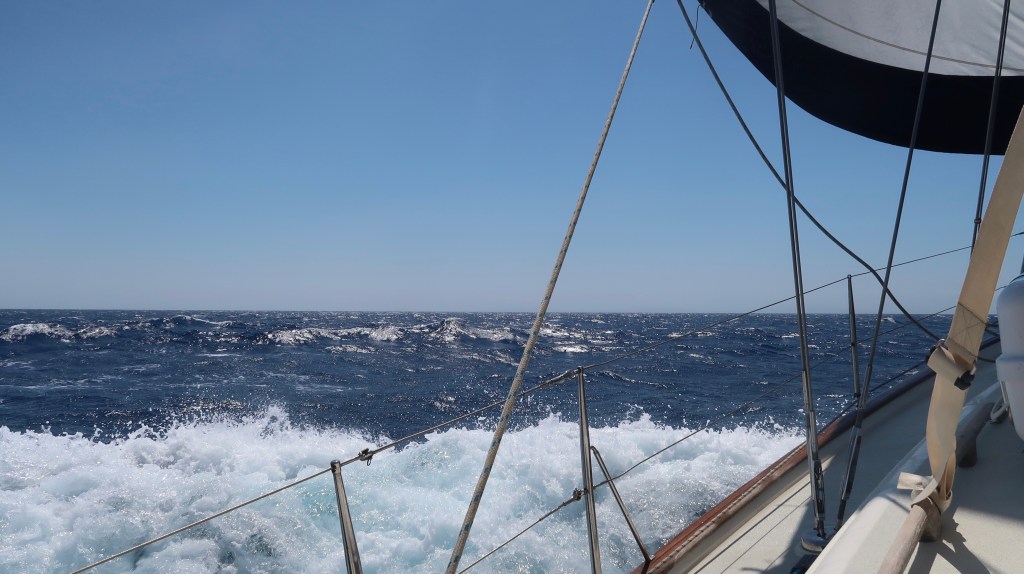
Once they had passed by, the wind picked up as did our speed and the swell, the wind continued to increase and we were flying along, Ziggy was ploughing through the big waves with a reef in both sails. Crossing this central stretch of the Aegean is known for its strong Meltemi winds and rough seas but we had picked a good day to enjoy a perfect fast sail.

On approach to Mykonos we steered in to the lee of the island to drop the sails and motored into the main bay. Unfortunately, the anchorage was not very well protected from the swell and it would be uncomfortable to stay, so we decided to continue on another 5 nm to Nisos Rineia which offered much better protection. After avoiding the rocks at the entrance to the bay, we dropped our anchor in clear, calm water on the north side of Ormos Skhinou just as the sun was going behind the hills.
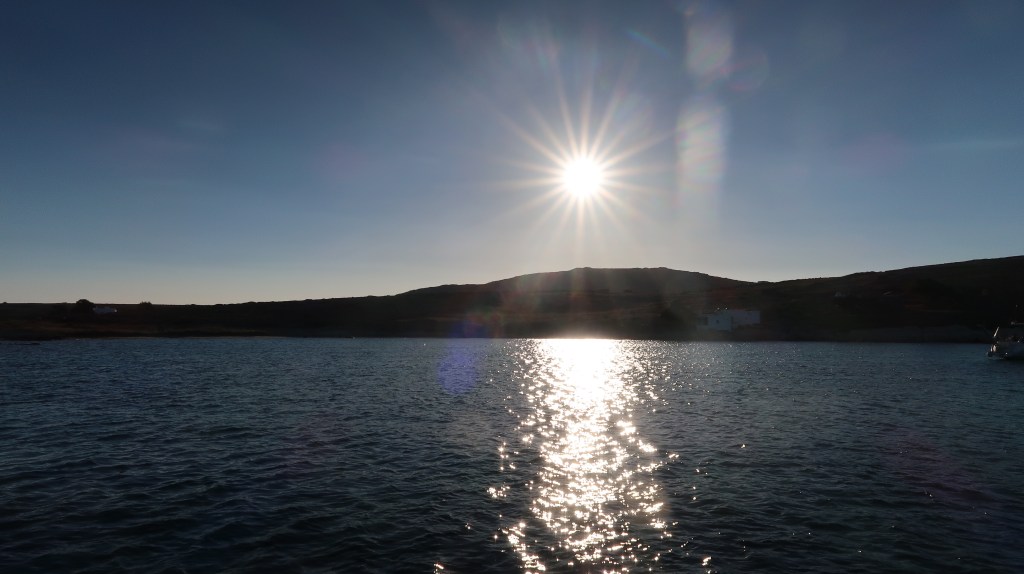
Several other boats joined us in this very calm, well protected anchorage!
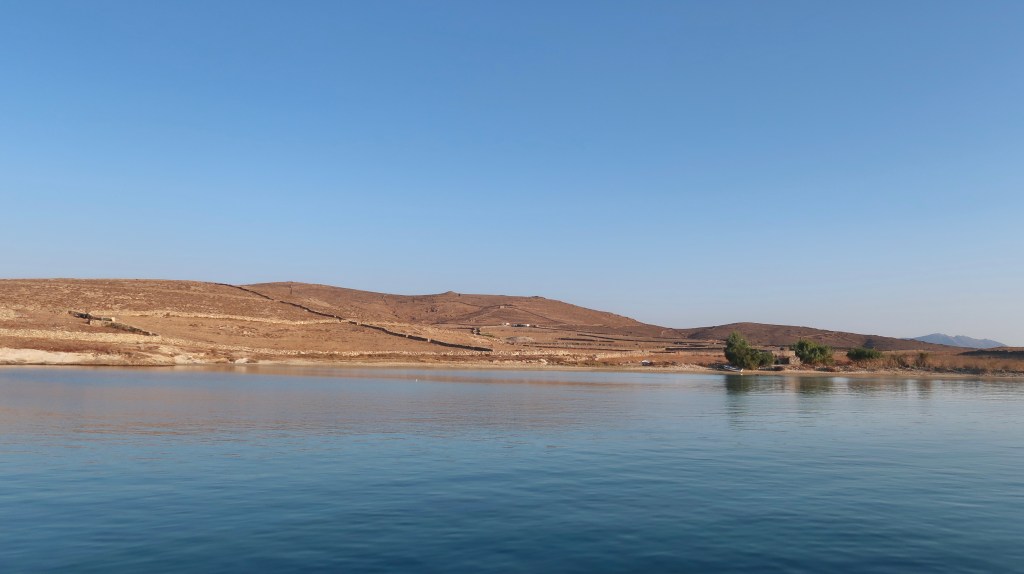

After a day relaxing here the wind was due to change around to the south so we moved a couple of miles to the south side of the bay and had another calm and peaceful night.

Nisos Rineia is very close to Delos, so the following morning we took Ed and Fred one and a half miles to the ancient site. This is the furthest we have ventured with them and was a little apprehensive particularly as we had recently lost one of our oars, but Ed has been behaving very well this year, so we set off. It was calm in the protection of the anchorage but once into the channel between the islands Fred was bouncing happily over the waves. We left early to beat the crowds and were the first to arrive, it was nice to have the site to ourselves again.

Delos is a small, rocky island, no more than 5 km long and 1,300 m wide, situated in the centre of the Cyclades. Even though it is one of the smallest islands in the Aegean, for ancient Greeks, it was the most sacred place because two important gods were born there. Apollo, god of sunlight, harmony and balance, and his twin sister, Artemis, goddess of the moonlight, it was worshipped as the birthplace of light, which the Greeks always regarded as precious.
Because of the sacredness and uniqueness of the island, no mortal was ever allowed to be born or die on Delos. Women on the brink of childbirth and people close to death would be carried to the neighbouring island of Rineia.
The earliest inhabitation of Delos was thought to be around 2,500 BC. They built their simple dwellings on the top of Kynthos hill, where they could easily watch the sea around the island for approaching enemies. They certainly had good views.
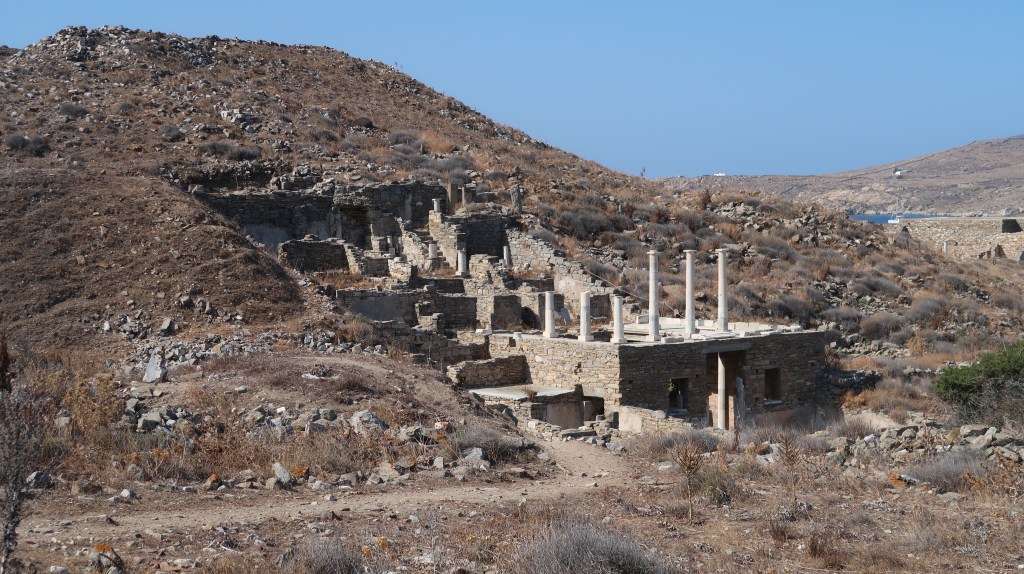


The Mycenaeans, who came later at the end of 15th century BC, felt confident enough to settle in the valley by the sea.
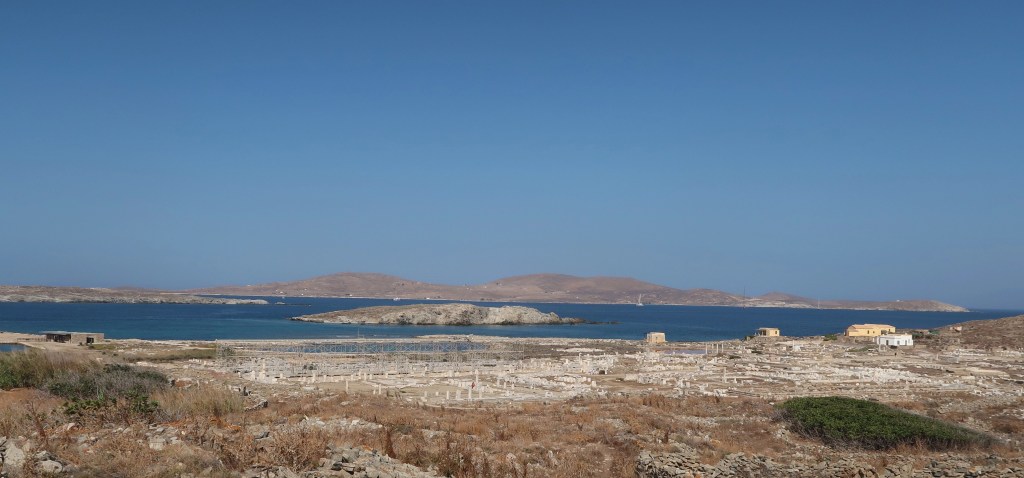
The Apollonian sanctuary, established at least since the 9th century BC, reached the peak of its glory between the 7th-4th century BC. Pilgrims from all over the Greek world gathered there to worship Apollo and Artemis.
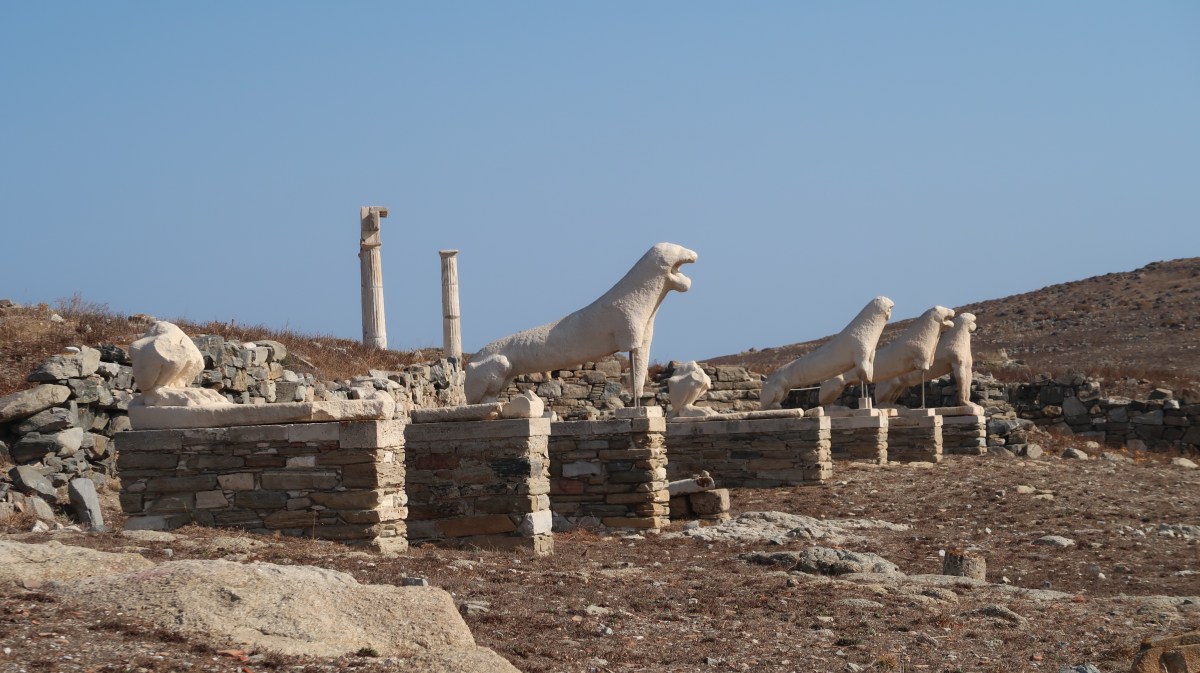
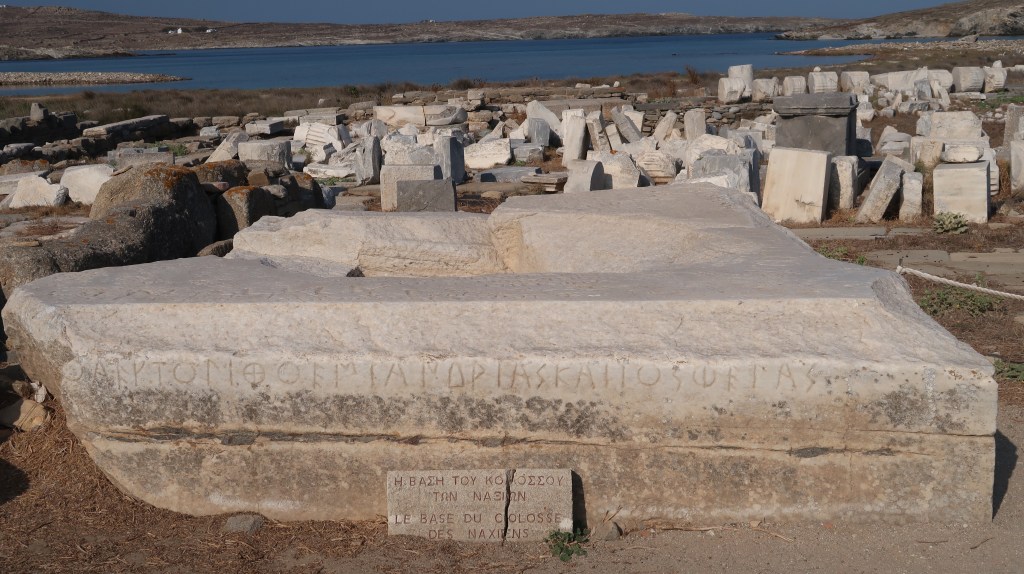
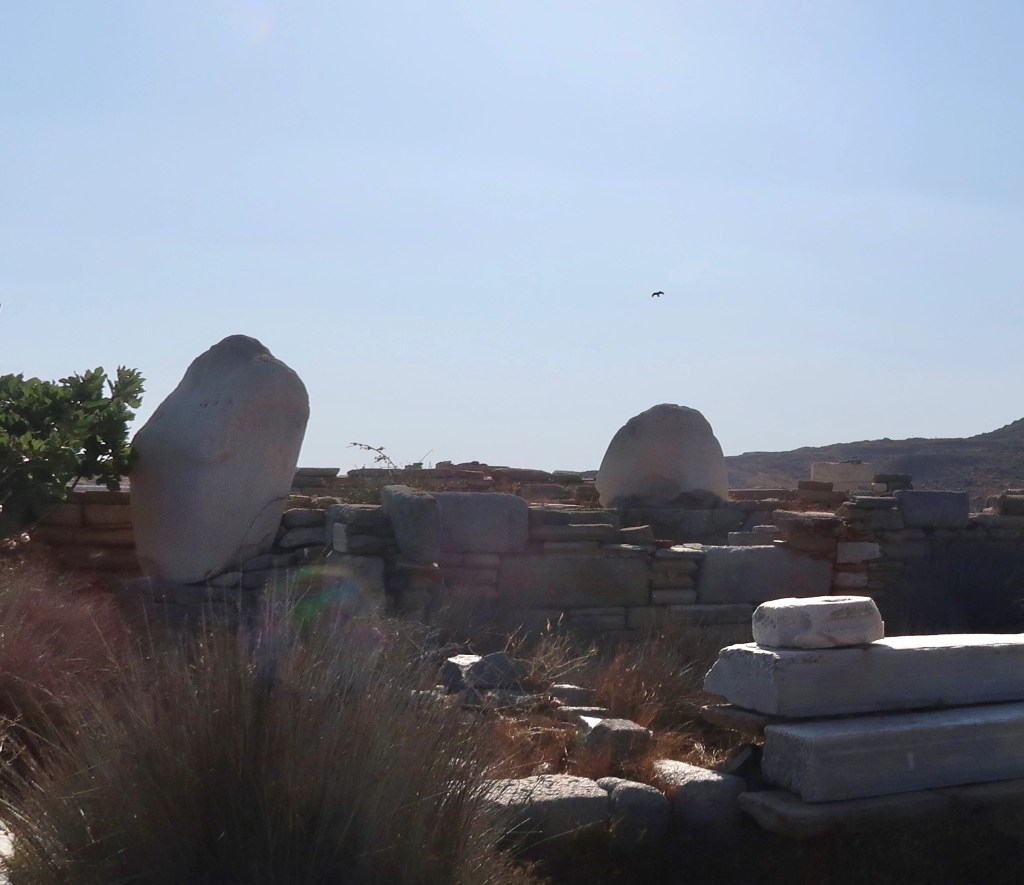
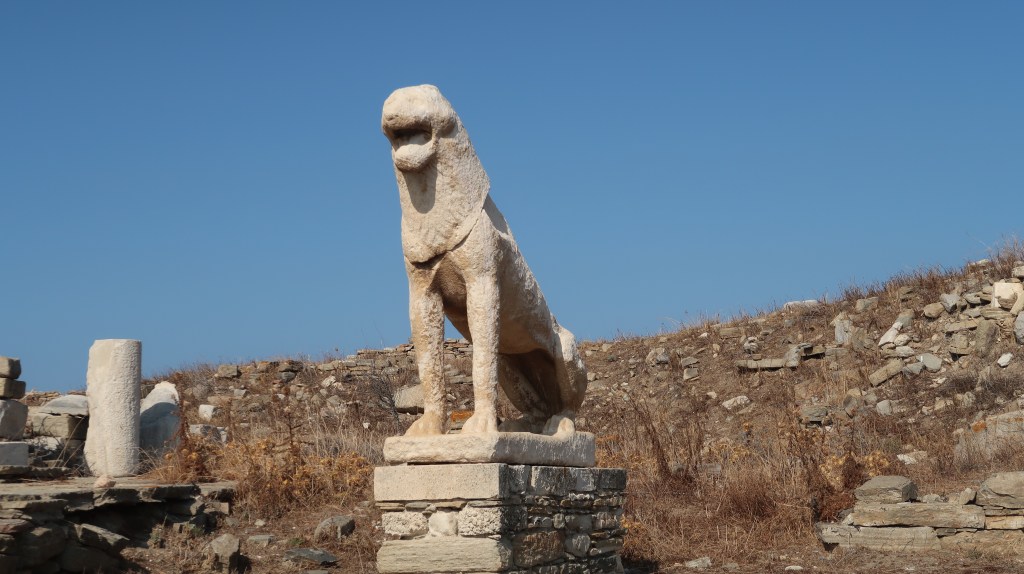
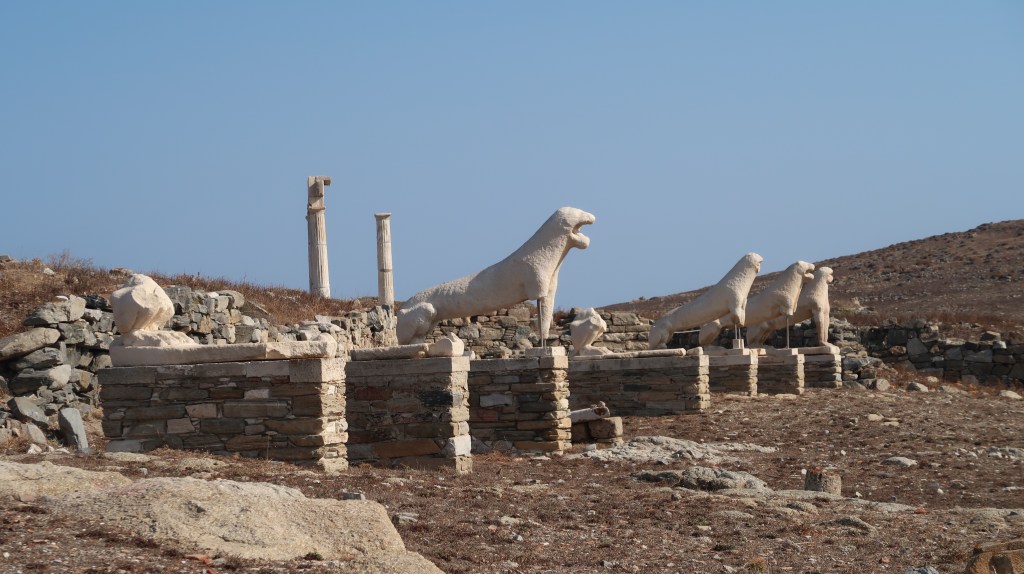
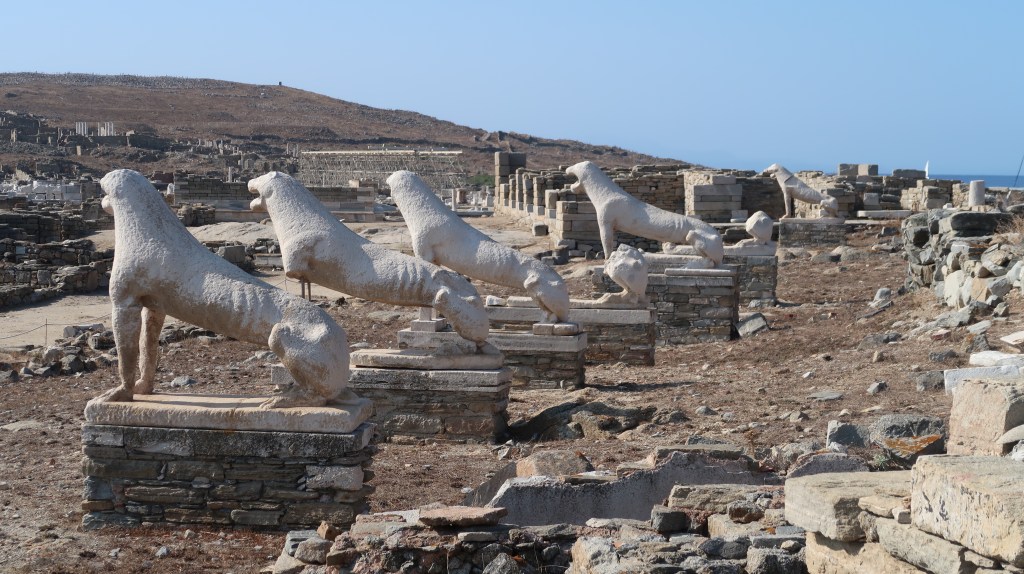
In the 6th century BC, the Oikos of the Naxians built a large building with 8 columns each side, made with granite blocks and marble. It is not certain what it was used for, many believe it was an early temple of Apollo. The building had a huge 32 tonne marble base which supported a towering colossus, a statue of Apollo 9m high, with an avenue of lions ending at its base. Inscribed on the base was ‘to Apollo from the Naxians’. Apparently a bronze palm tree fell on it and knocked it down. A thousand men tried and failed to raise it. Over the centuries, many attempts were made to haul away sections of the broken statue but were largely unsuccessful due to its weight, you can still see some of huge weathered stones amongst the ruins.

By the end of the 5th century BC there were already some houses and farms around the sanctuary. The town developed rapidly after 167 BC, when, as a result of the declaration of Delos as a free port, all the commercial activity of the eastern Mediterranean was congregated on the island. Rich merchants, bankers, and ship owners from all over the world settled there, attracting many builders, artists and craftsmen who built luxurious houses, richly decorated with statues, frescoes and mosaic floors. The small island soon became the greatest commercial centre of the world.
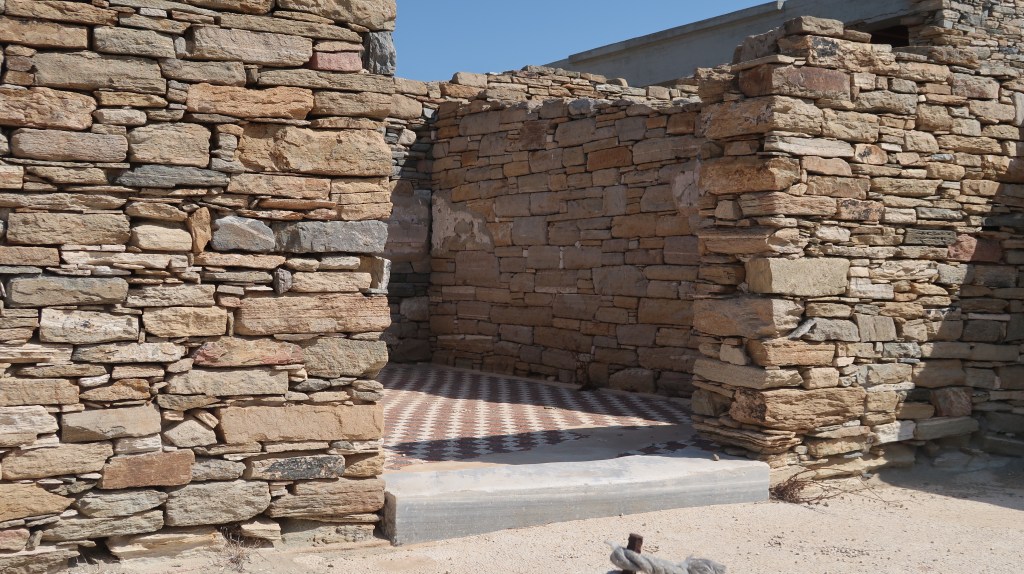

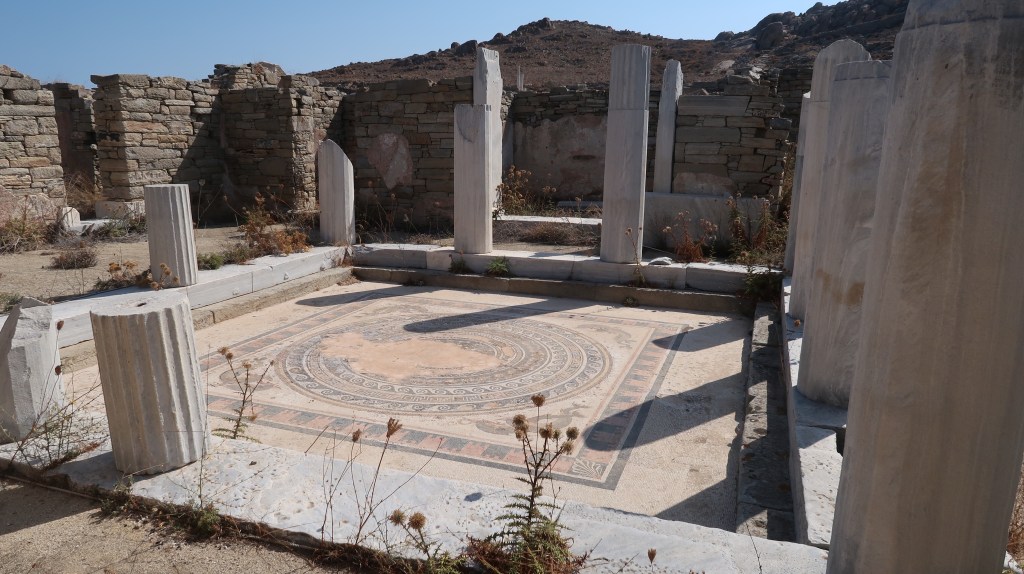
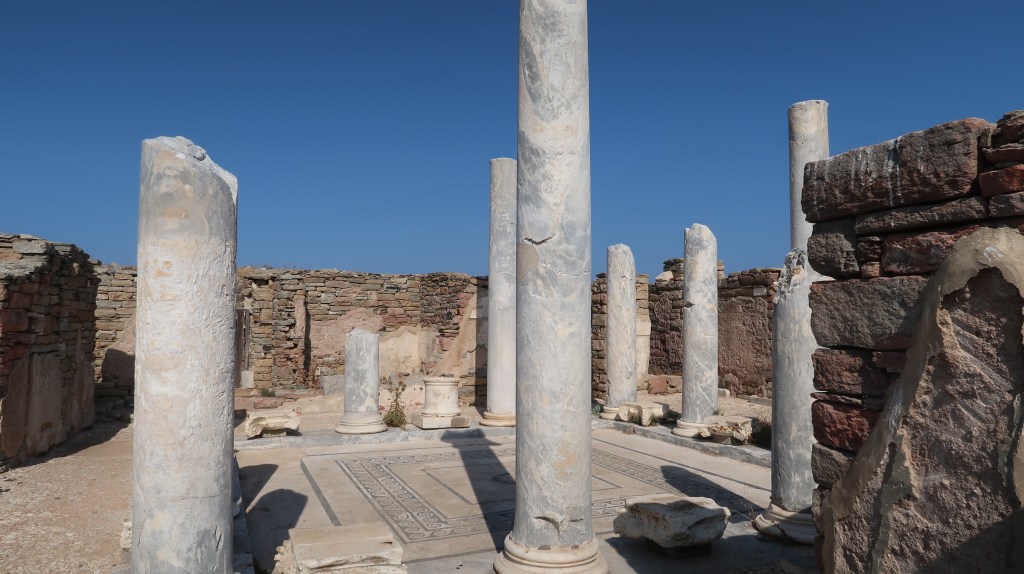
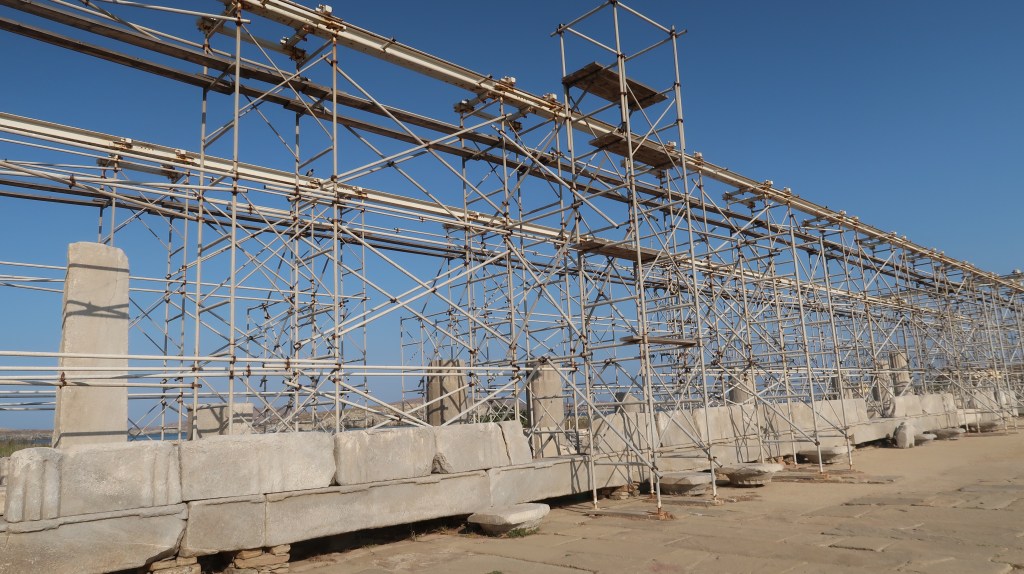
Rulers of state competed with each other to build the most magnificent buildings to show wealth and power. In the 3rd century the kings of Pergamum built a large portico on the east side of the sacred way that led from the port to the sanctuary. An even larger one, dedicated to Apollo, was later built in the 2nd century by Philip V. This was undergoing reconstruction.
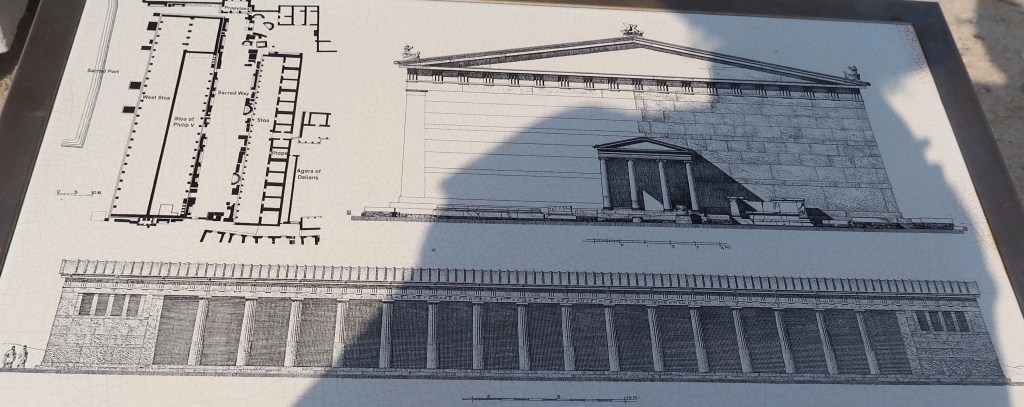
The stone theatre was completed around 240 BC, built on the slope of the hill overlooking the sea. With the capacity to hold 6,500 spectators, it is thought that large crowds would congregate on the island during the festive season as permanent inhabitants were still few at this time.

At the beginning of the 1st century BC, the population had increased dramatically and it is estimated that 30,000 people were living on this little island, and it is likely that 750,000 tons of merchandise could be moved through its ports in a year.
The prosperity of the island and the friendly relations with the Romans were the main cause of its destruction. Delos was attacked and looted twice: in 88 BC by the King of Pontus, an enemy of the Romans, and later, in 69 BC, by pirates. Since then the island fell into decline and was eventually abandoned. Delos was turned into a quarry site with its temple columns burnt for lime, and its houses left in ruins.
Excavations started in 1872 and are still in progress, they have unearthed the Sanctuary and a good part of the cosmopolitan town. As you walk through the ancient streets, the ruins also include many Doric temples, agoras and houses.
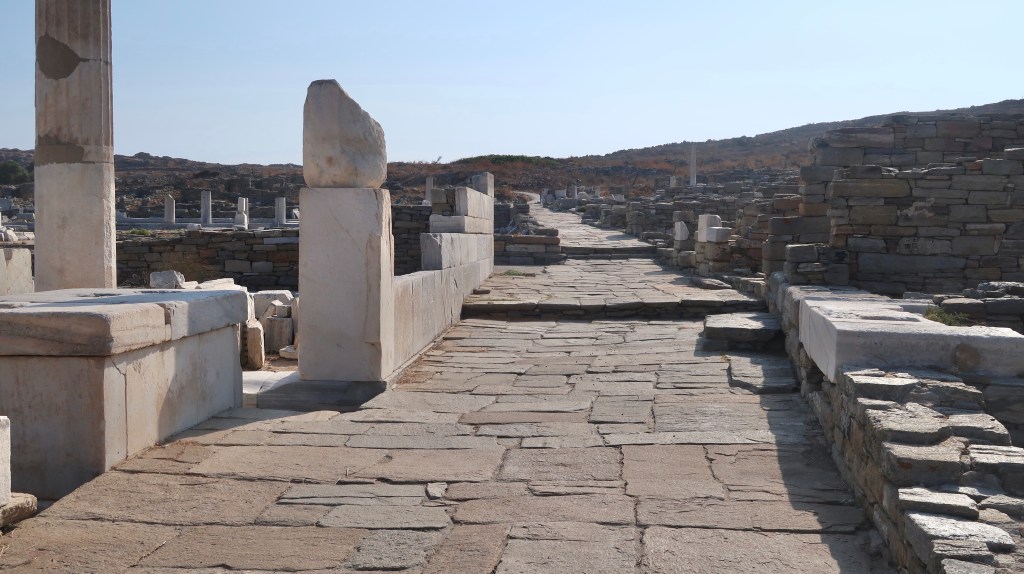


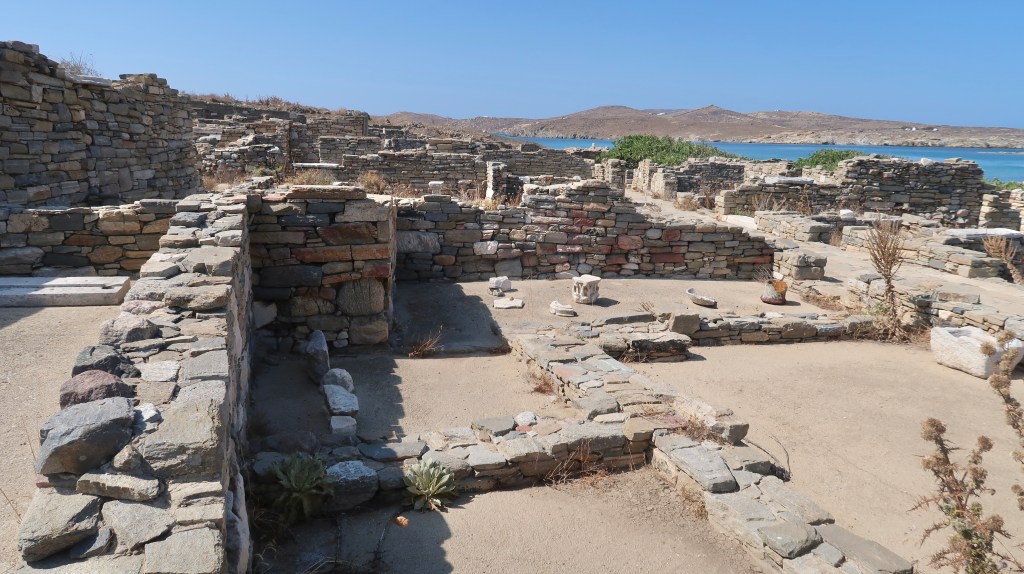

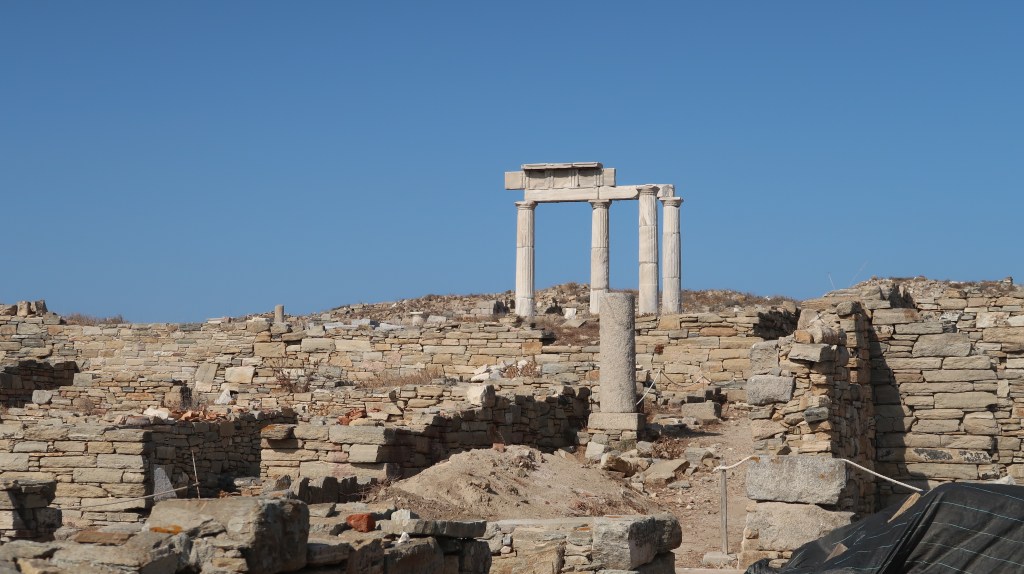
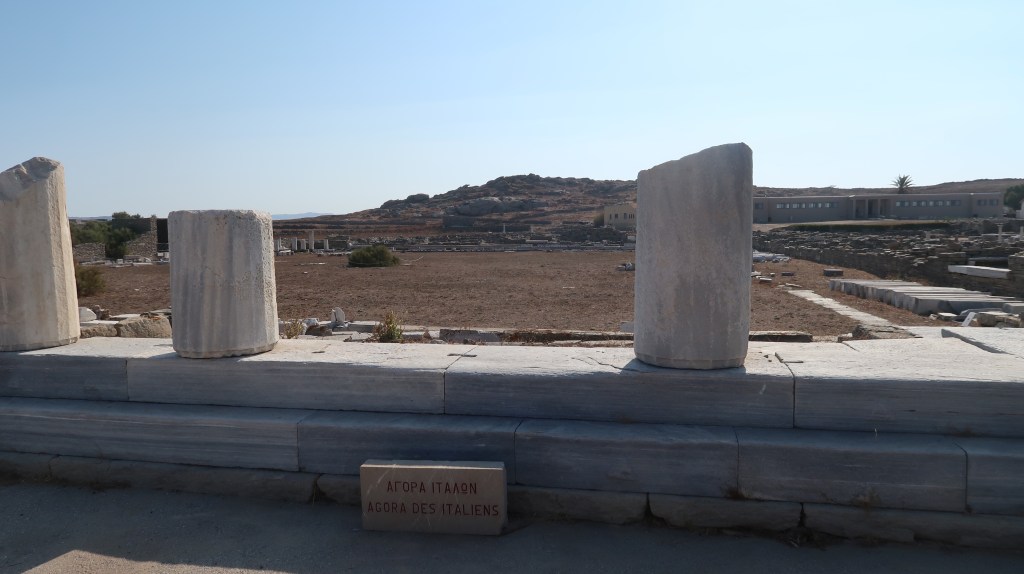
As we left the site, the harbour was full, ferries were arriving bringing many people and large tour groups, it was definitely good to come early. Thankfully, Ed continued to behave impeccably and we (Paul) didn’t have to row back against the wind and swell with just one oar and a mismatched paddle.
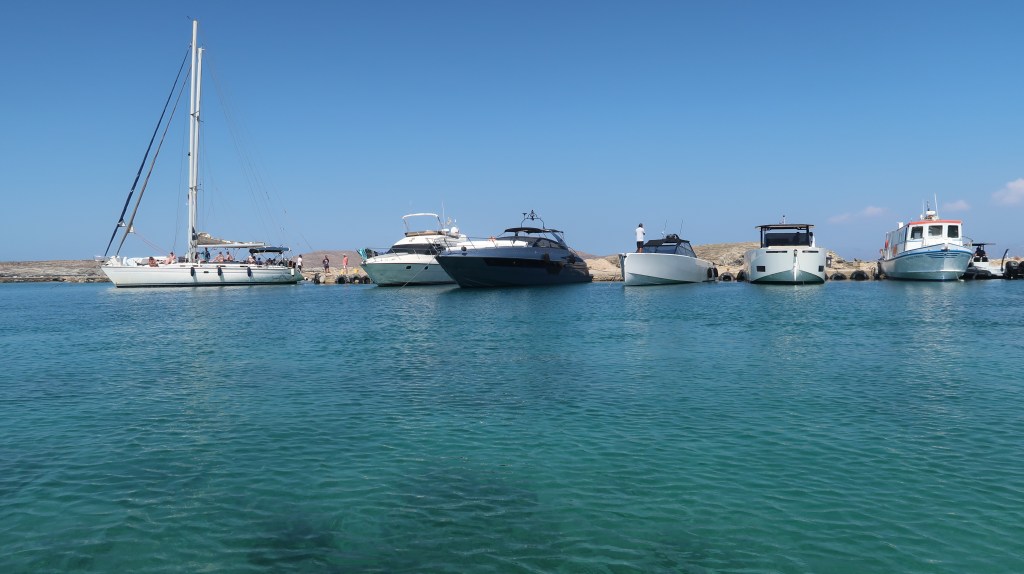

After a few days the wind turned back to the north so it was time to continue our journey another 25 nm southwest to Nisos Paros. The sea was a bit choppy but with 20 kts of wind from behind, Ziggy was again comfortably sailing at 6 kts with the Genoa only. The wind disappeared on our approach to the island and we had to motor the last few miles. We headed for the large anchorage at Paros town, avoiding all the ferries which constantly come and go into the bay, and dropped our anchor.
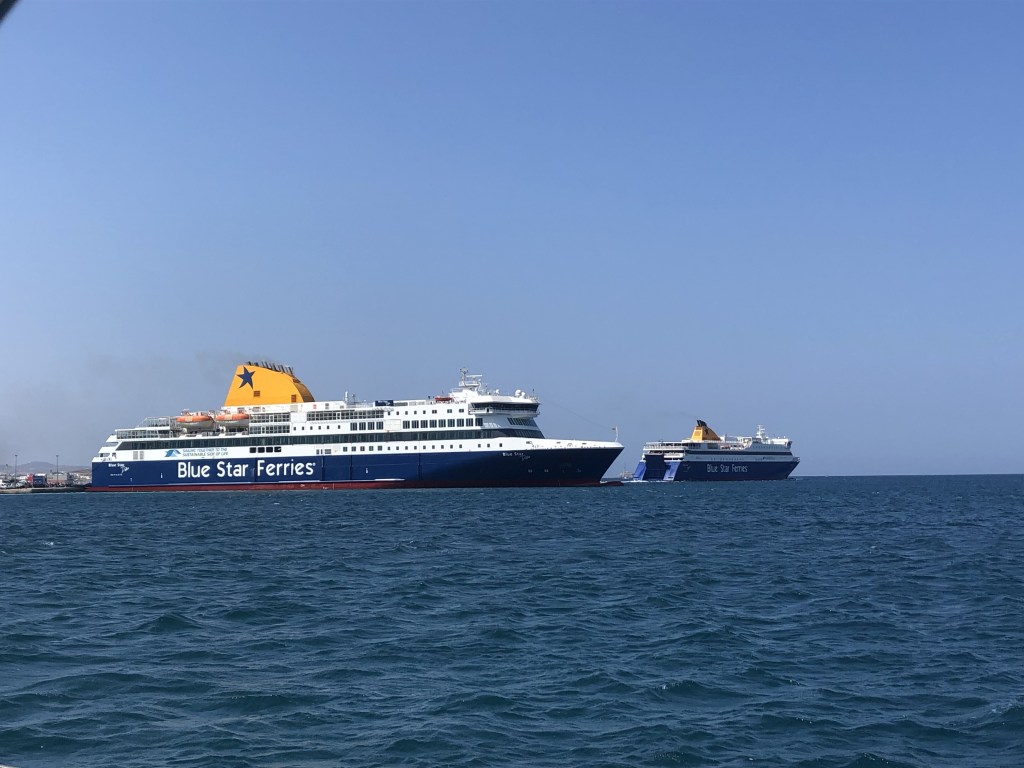
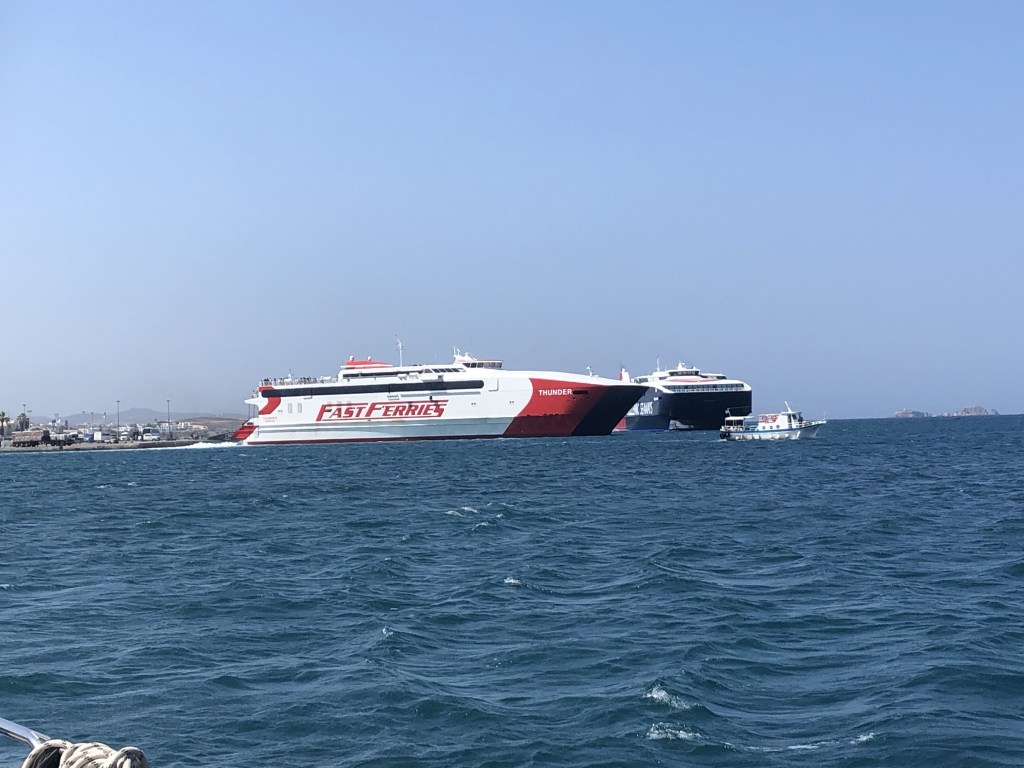

Paros town is a pretty town with the traditional white Greek buildings, we visited last year on our way to Turkey and I have previously written about it.
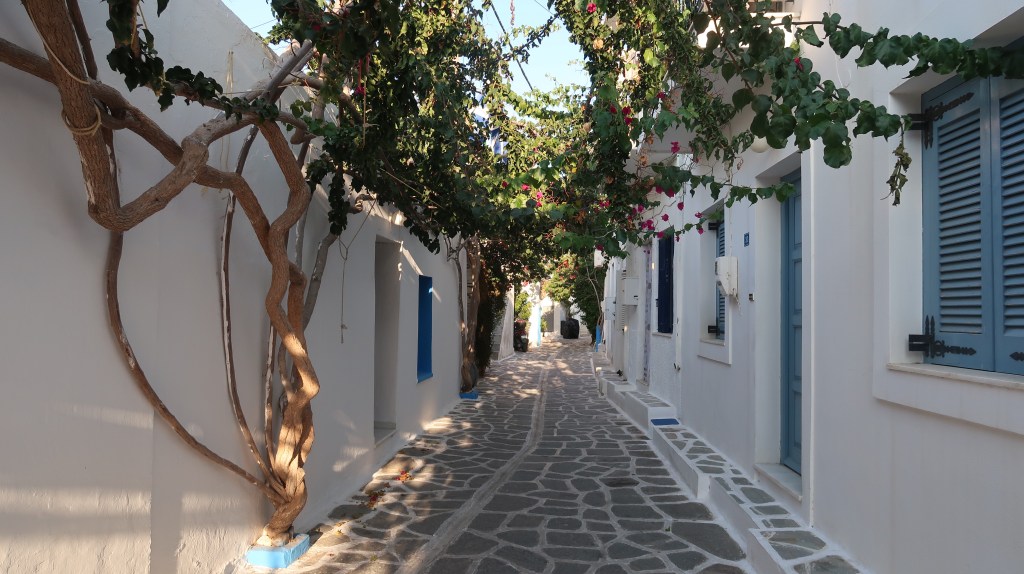
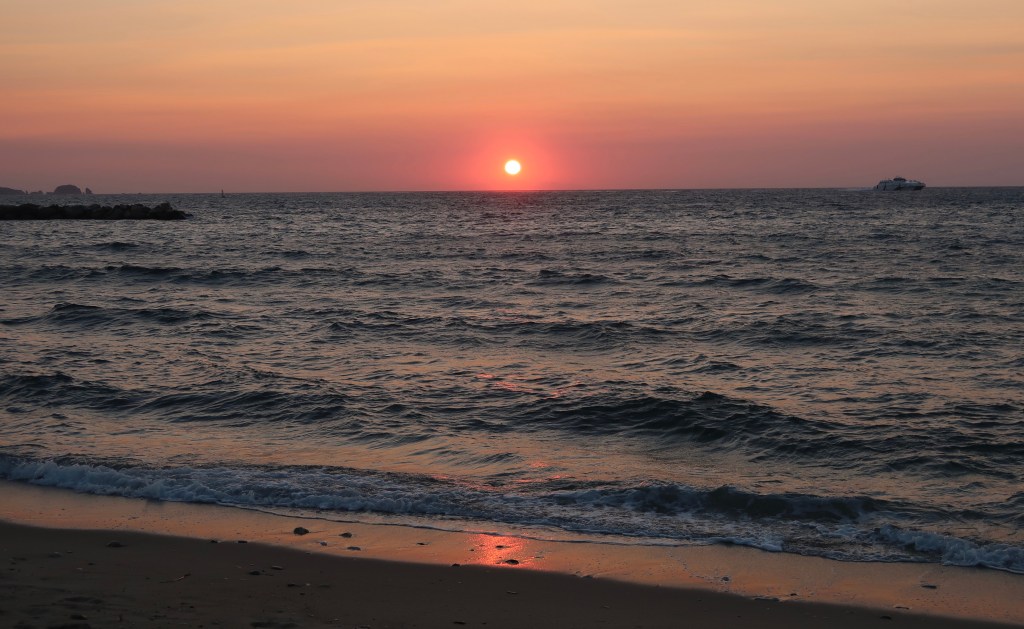
Being a reasonably large town, we had a list of boat jobs that we wanted to do here including: buying new oars, refilling gas bottles and the dinghy fuel can, laundry and some food shopping. After successfully completing our tasks we went to the beach bar to watch the sunset.
A cyclone is approaching Greece so we need to decide which way to go next to avoid it, should we go north, south, east or west?

 Sailing ZigZag
2 replies on “Birthplace of The Gods”
Much kudos to you both for that long trip in Fred and Ed. Notoriously temperamental and tricky to maneuver without an engine. But what a result you got. To visit a place like that without the unwashed masses is a gift. And again the results of human endeavour is writ large.
Loving the sailing shots of course, but not picture of you two living your best life 🙂
Thanks again for bringing some lovely photos, fabulous historical insights and no small amount of jeopardy! Which way indeed?
May you chose a safe path and enjoy safe sailing in the week ahead.
LikeLiked by 1 person
Paros looks so petty. I’d forgotten about the missing oar and glad you’ve replaced it. You failed with the dolphin photo. Sounds like it was lovely to watch 🐬🐬
LikeLiked by 1 person