Making the most of our car hire, we decided to head out on another road trip. This time we set off to the ancient city of Aphrodisias.
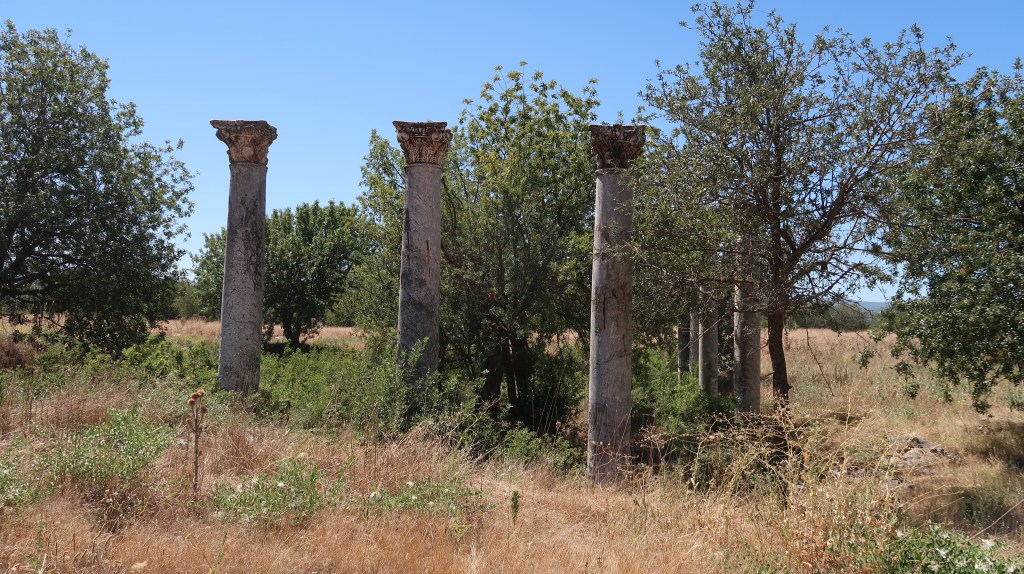
The site is very different from Ephesus, the city of Aphrodisias is more spread out and doesn’t feel like the buildings were all built on top of each other. It hasn’t been so well excavated, it was once a thriving city but most of the houses of the citizens haven’t yet been uncovered. The site looks a little unkempt as the undergrowth grows around the ruins, however, work was in progress to clear this, but it may take some time.

When we arrived, we were pleased to find that it also doesn’t have the large crowds that we found at Ephesus, we were almost the only people here.
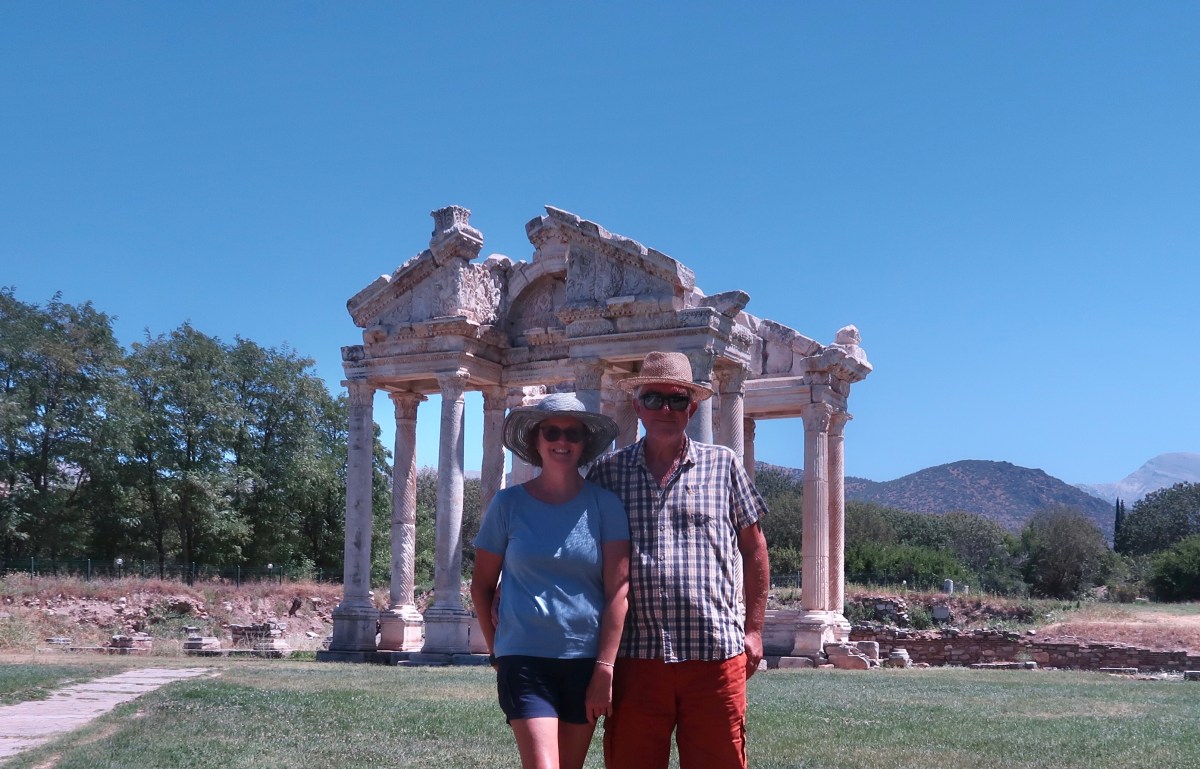
Aphrodisias was named after Aphrodite, who had a unique cult image as the Greek goddess of love. It was a prosperous ancient city, famous in Roman times for its Sanctuary of Aphrodite. This was the monumental entrance gate into the sanctuary.

A prehistoric settlement mound found here dates the earliest habitation of the site back to 5000 BC. By the 6th century BC, the Sanctuary of Aphrodite was well established. The Roman emperor, Augustus, granted tax free status to Aphrodisias towards the end of the 1st century BC, due to its loyalty during local rebellions, and over the next 250 years construction of most of the monumental buildings here took place.
The city was centered around the Temple of Aphrodite and the theatre, with a large colonnaded agora between them. Aphrodisias became the capital of Caria and was fortified in the 4th century AD. The city remained prosperous through the 6th century when the Temple of Aphrodite was converted into a Christian church. Aphrodisias never fully recovered after an earthquake in the 7th century when it fell into disrepair, and was eventually abandoned in the 12th century.
The grand Temple of Aphrodite was originally surrounded by columns, later when it was converted into a Christian church, it was extended and walls were built outside of the columns enclosing everything inside and making it much larger.

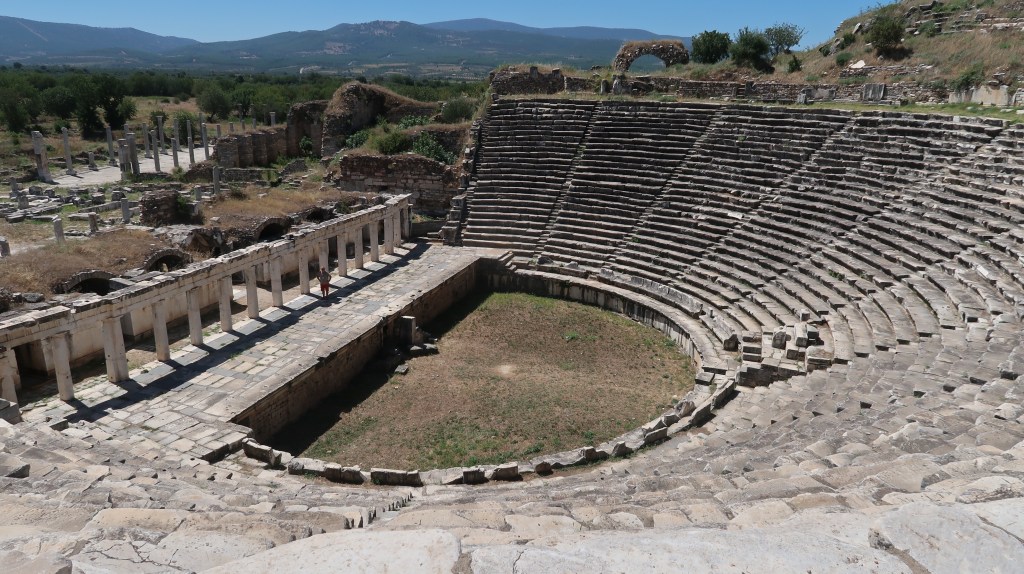
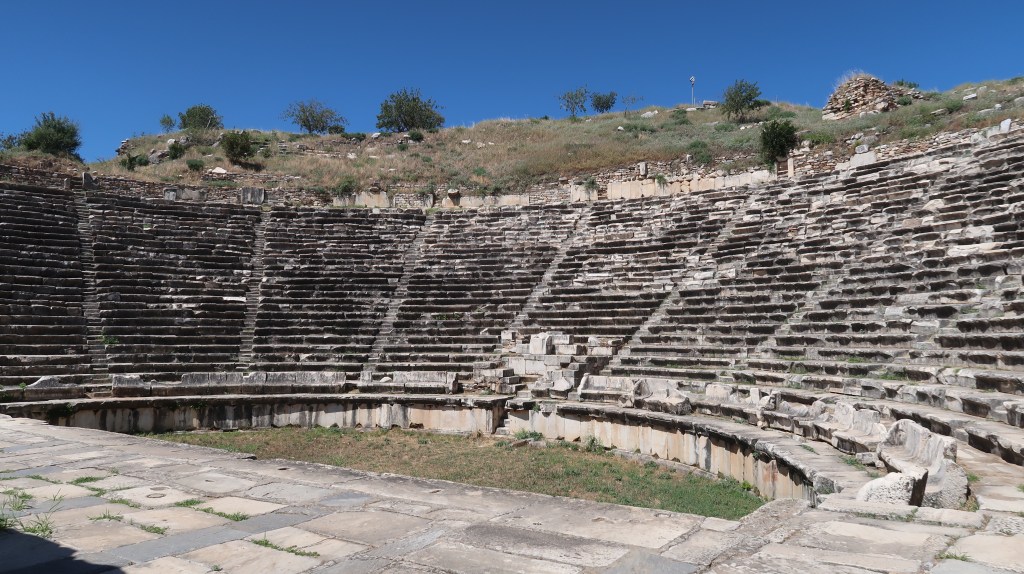
On the other side of town, the theatre is built up against the prehistoric settlement mound, originally there was a three story marble stage building. It is said to be the best preserved ancient theatre, where you can see the building in its original form without any modern restoration work. It was used for dramatic performances as well as public assemblies and had an estimated seating capacity of 7,000 people. The ‘luxury’ front row seats had backs and armrests.
The large colonnaded agora is in the centre of town. It was a tree lined urban park with a 170m long pool and fountains at each end.
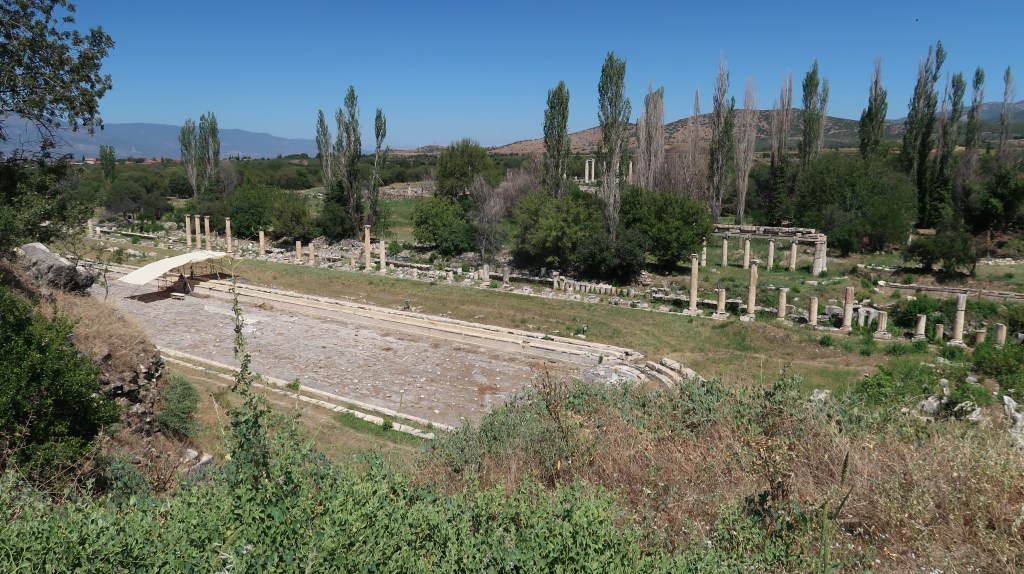

Of course every Roman city had some public baths for bathing, exercising, relaxing and probably plenty of gossiping. Dedicated to Emperor Hadrian, the traditional style bath complex took up two city blocks and had a grand colonnaded entrance. Inside was richly decorated with sculptures, there were vaulted halls, marble floors and a complex underground heating system.


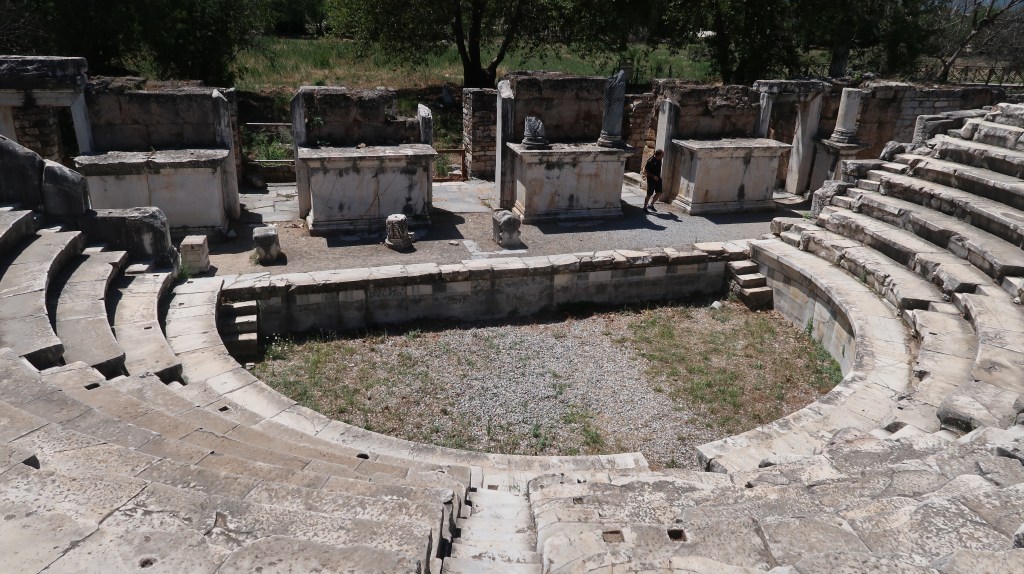
The Bouleuterion (town hall) served as a meeting place of the city’s council (the Boule), it was a multipurpose indoor theatre, concert hall and public assembly place.

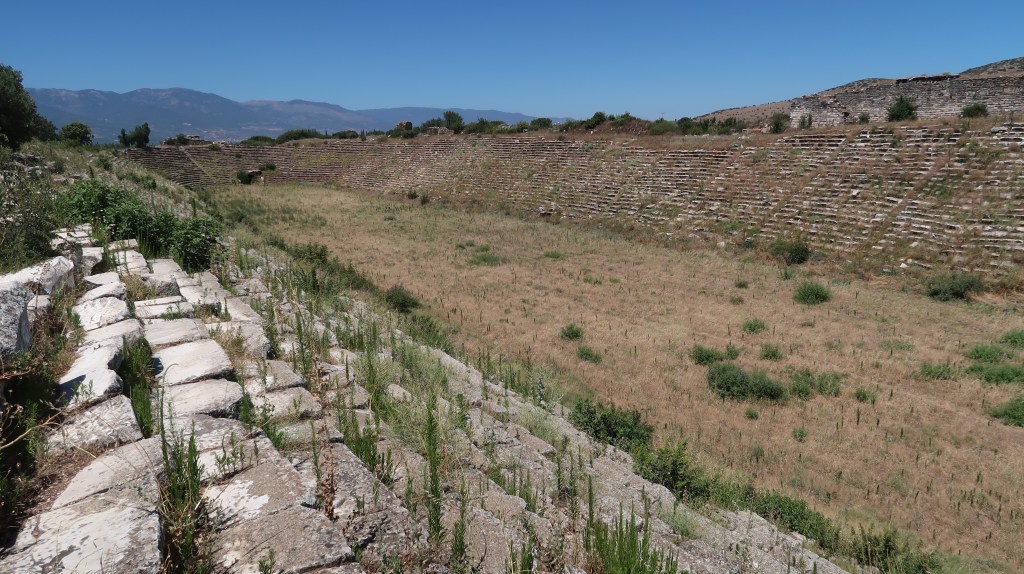
To the north of the town was the huge stadium, apparently the largest and best preserved stadium in the ancient world. It is 270 m long and originally had 30 tiers of seats for 30,000 spectators. It would host traditional Greek athletic contests including boxing, wrestling and running races. It was also used for gladiatorial combats and wild beast hunts. There were inscriptions on some of the seats to reserve spaces.


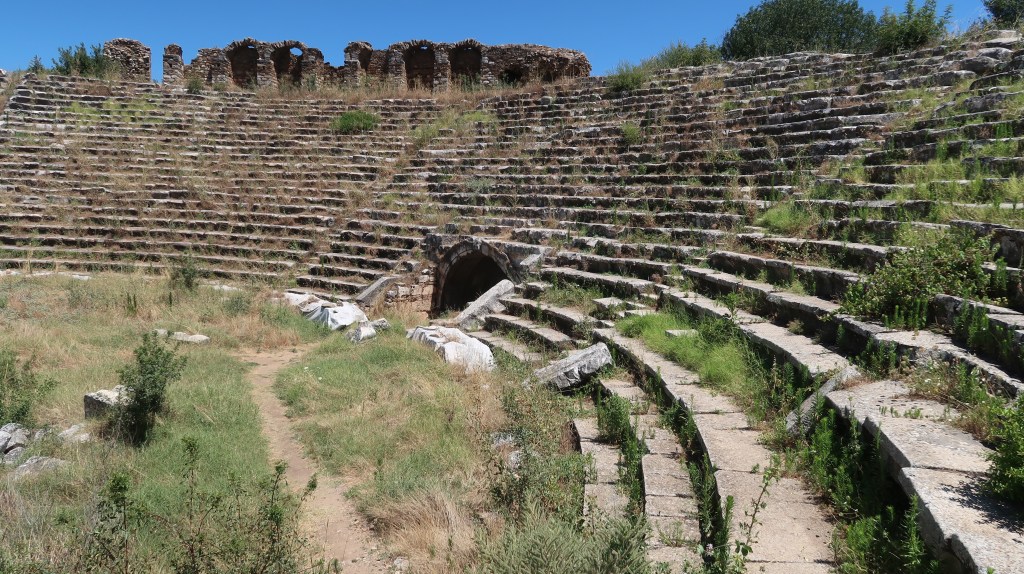
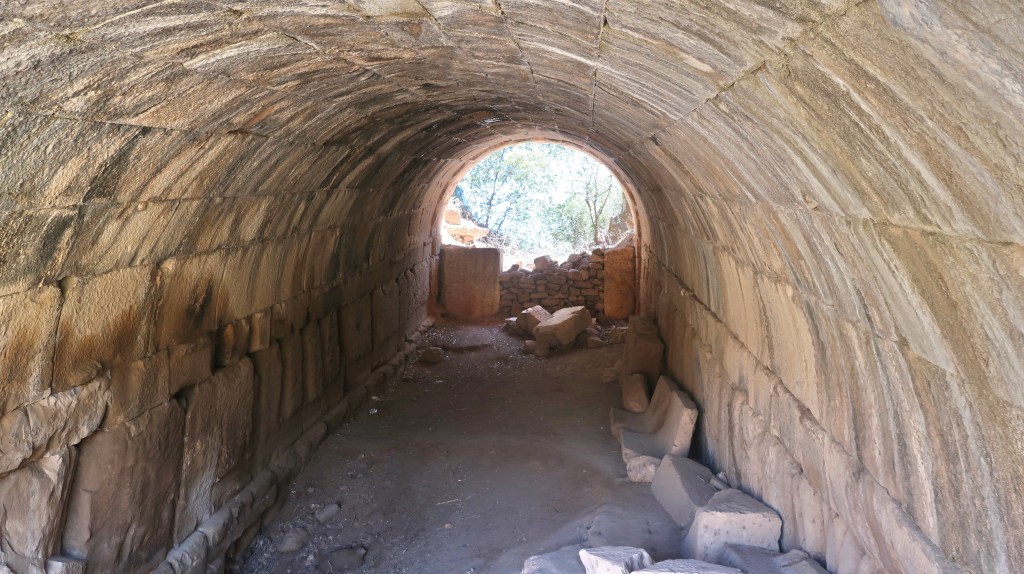
I found a few spare chairs in the tunnel!
The structures that remain at Aphrodisias are well preserved and have very intricate carvings. The city had taken its namesake to heart and the beauty of its buildings was often prioritised over their scale.
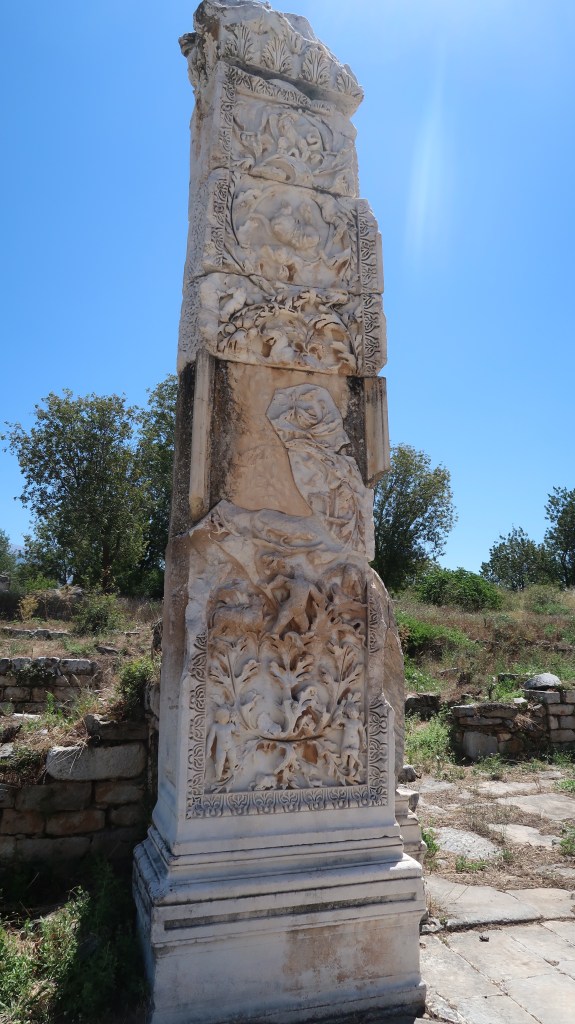
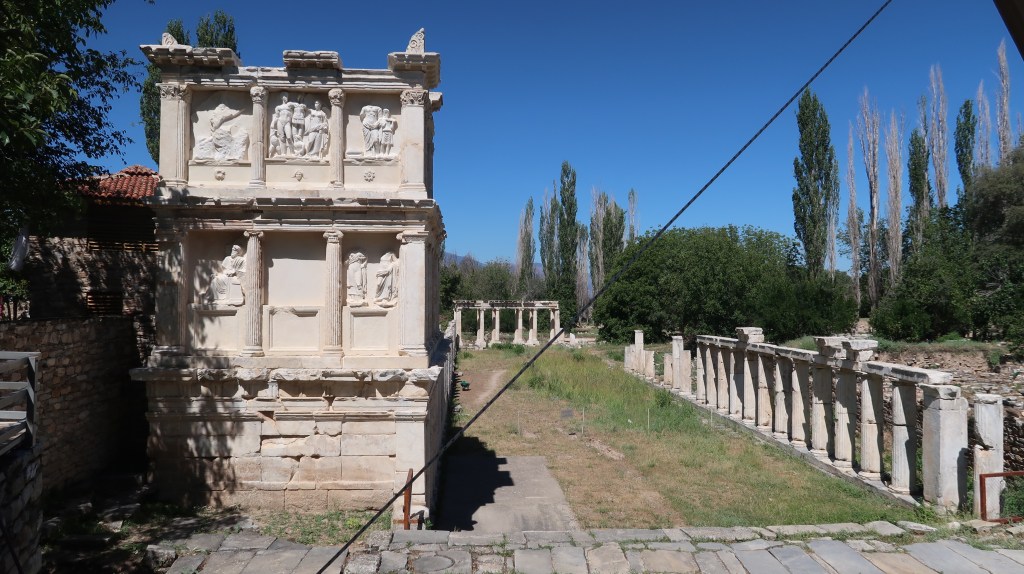
Mask and garland friezes decorated many of the iconic buildings. They represented prosperity and community celebration, the characters in theatre masks included gods, citizens, slaves, soldiers and athletes.
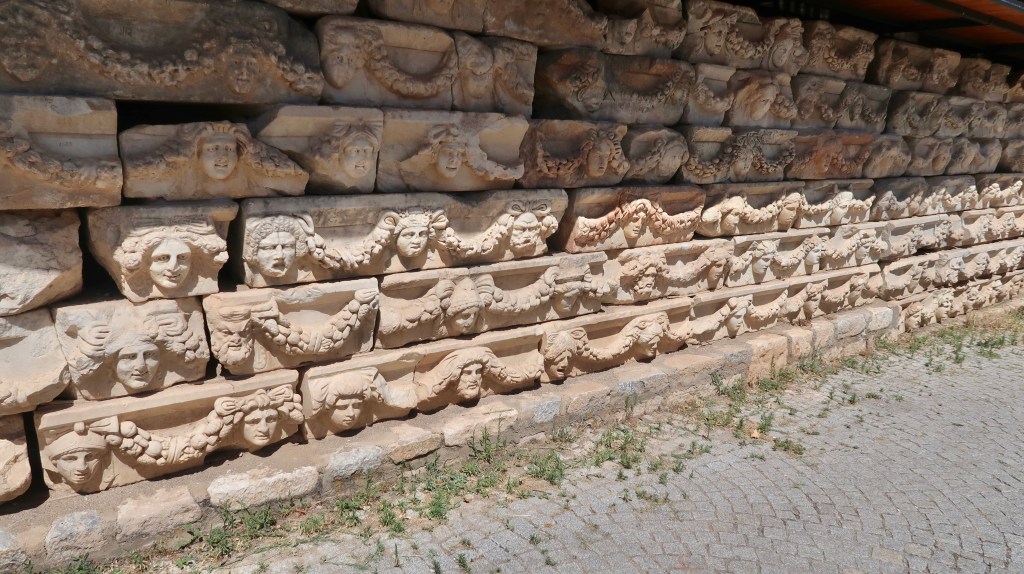
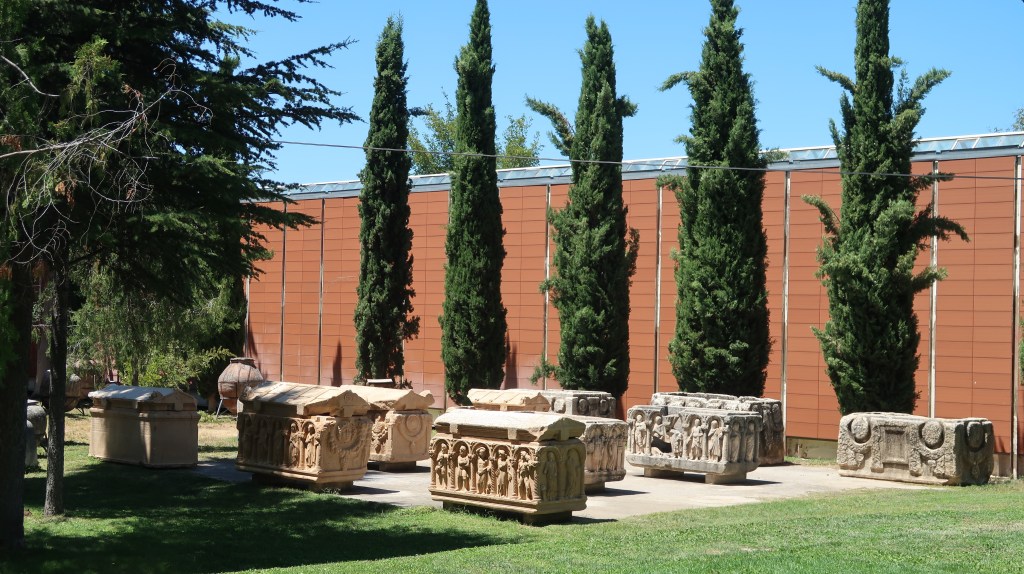
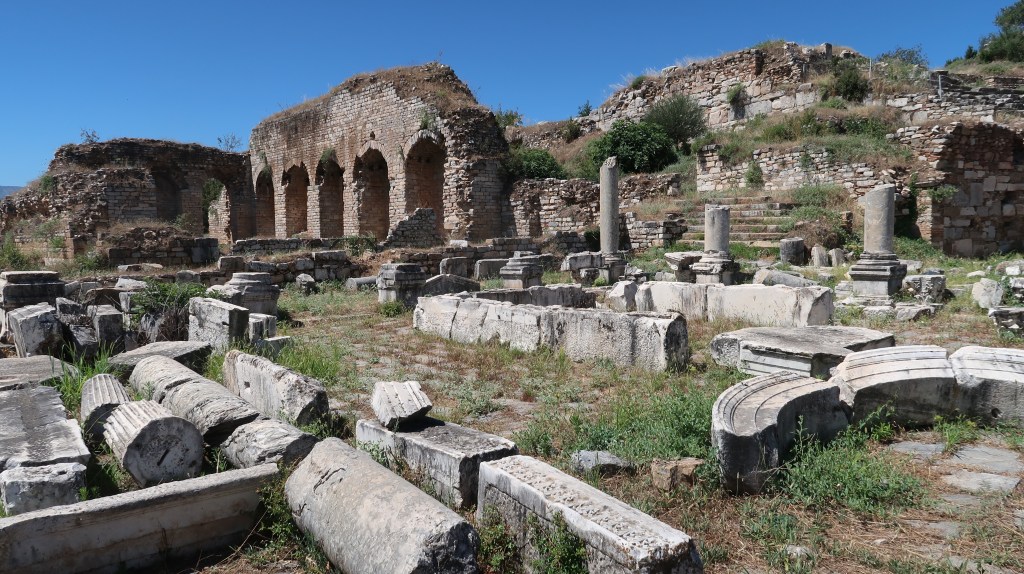
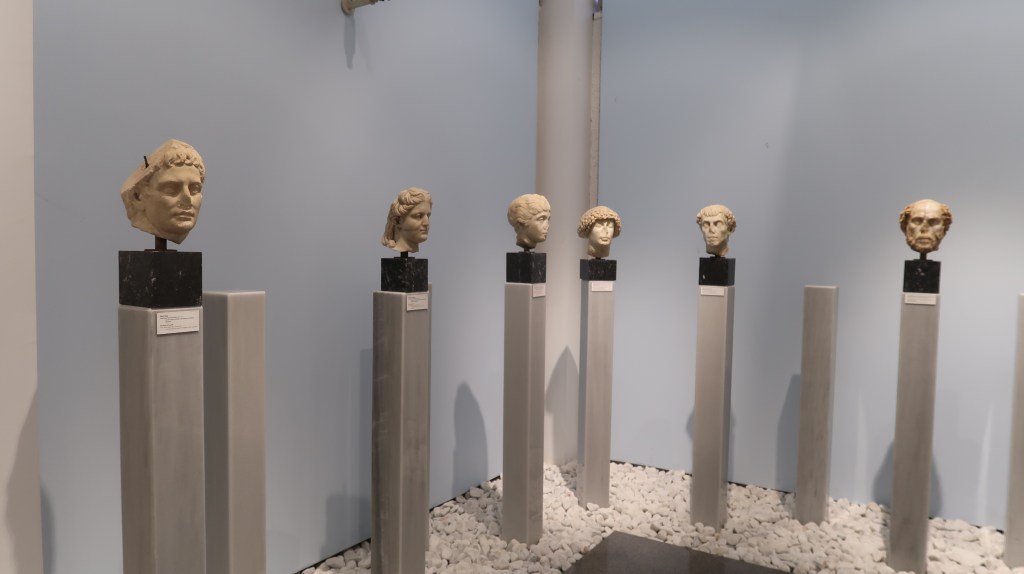
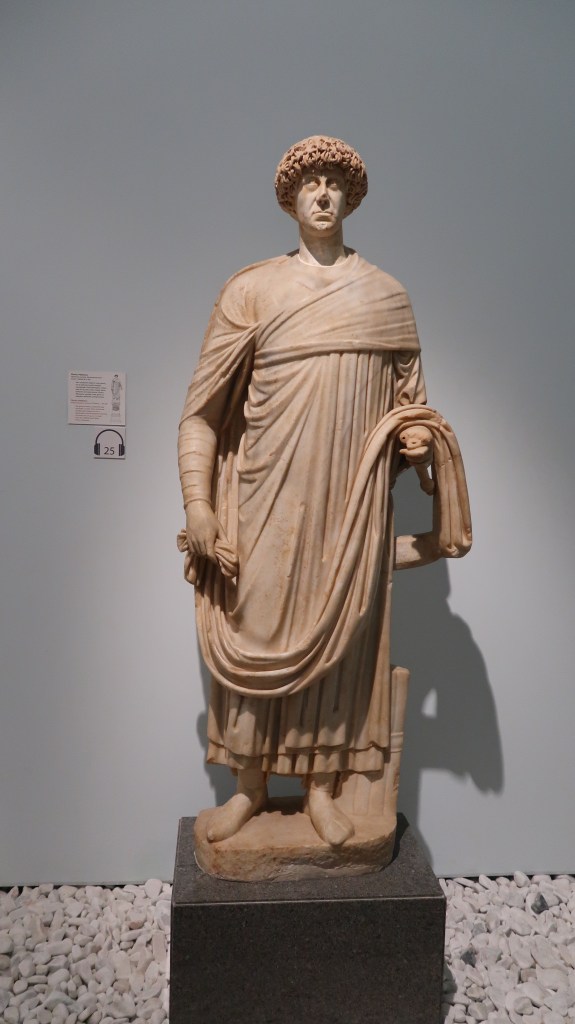
Lots of columns and friezes were found still waiting to be reconstructed. Most of the buildings were highly decorated with intricately carved marble friezes and statues, many of these were displayed in the museum.

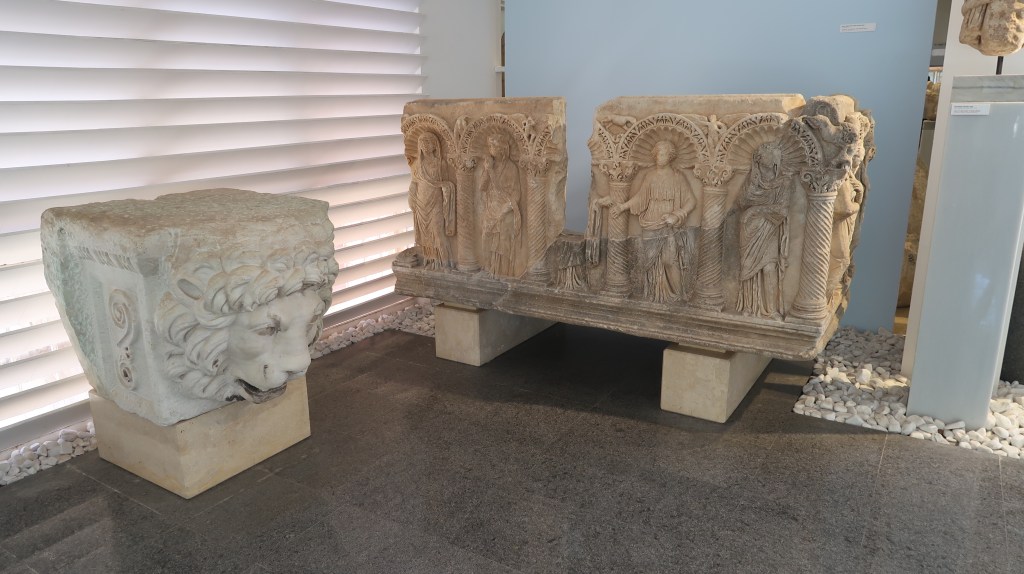
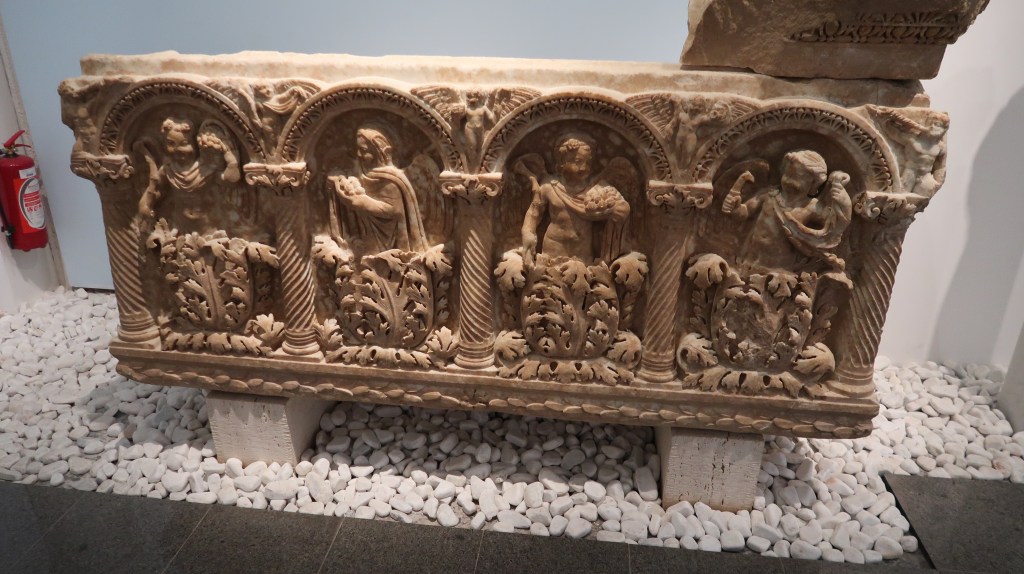

It seems that hairstyles and stubble were becoming fashionable, the Constantinopolitan cut being very popular.

After spending a few hours here, we continued our road trip on to Pamukkale, a town known for the mineral rich thermal waters flowing down white terraces on a nearby hillside. Pamukkale translates to ‘cotton castle’ in Turkish, as we approached, it looked like a massive snow storm had just landed on this one hill.

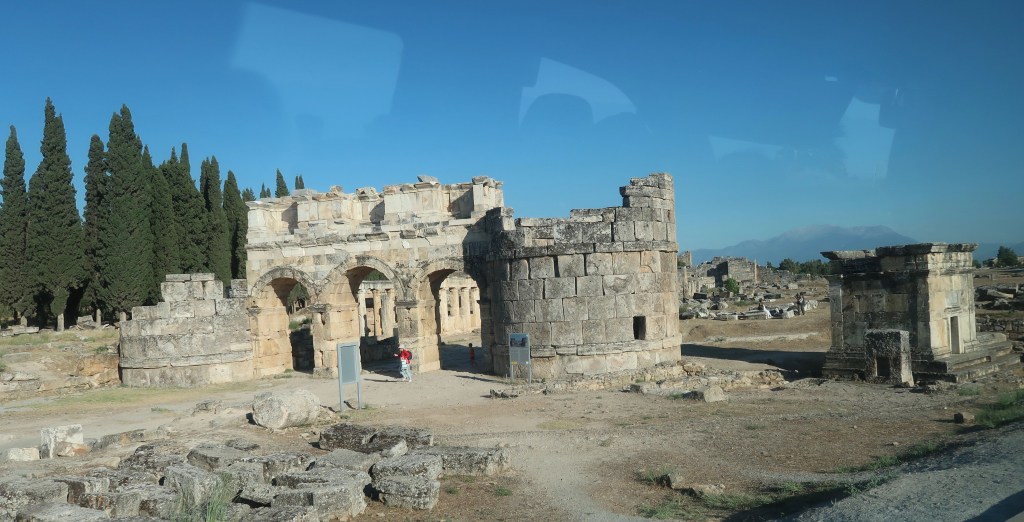
We arrived late afternoon and booked into our hotel (what a treat to have air conditioning and unlimited water), before heading to the site entrance. This was one of the original entrance gates to the city.

The ancient Roman spa city, Hierapolis, was built on top of the hill, above the white rock formation, around 190 BC. It became a healing center where doctors used the thermal springs as a treatment for their patients. It was a surprise to realise that as modern tourists we were now walking around a Roman tourist attraction.
The city grew and was very wealthy, but over the following centuries, as with other the sites in this area, it suffered many earthquakes, and was eventually completely abandoned around the 14th century. It was not until the 20th century when the ancient city was rediscovered and people started visiting Pamukkale again for its therapeutic thermal waters.
Ruins of the baths, temples, a necropolis and other Greek monuments stretch for 2km along the ridge of the hill. The healing spring waters were channeled throughout the city using typical Roman ingenuity for water management.

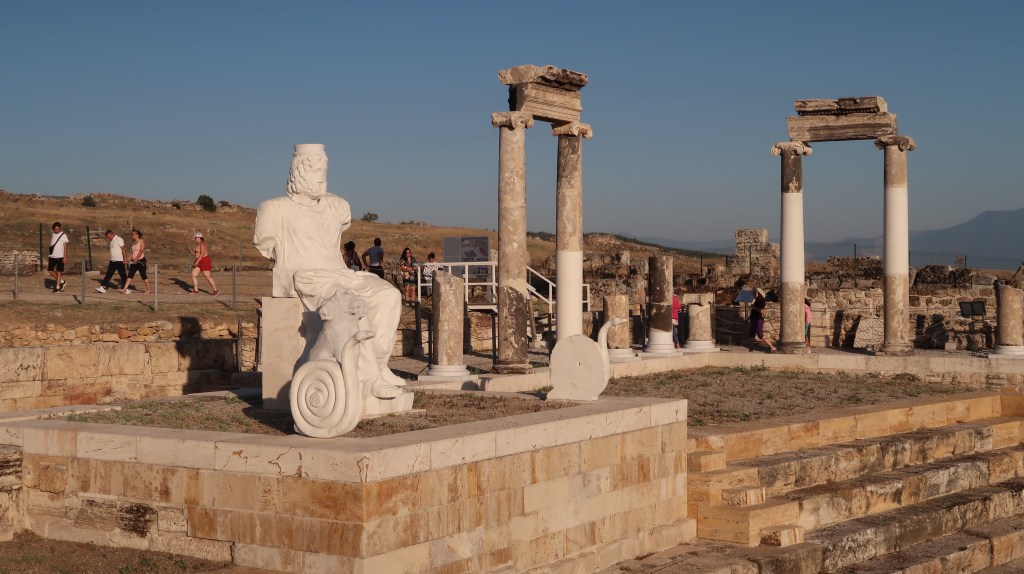
In the 1st century AD a major earthquake left the city completely in ruins. The Romans rebuilt it and added a big amphitheater which looks out over the town. It is a large, very well restored theatre which still hosts the occasional performance.
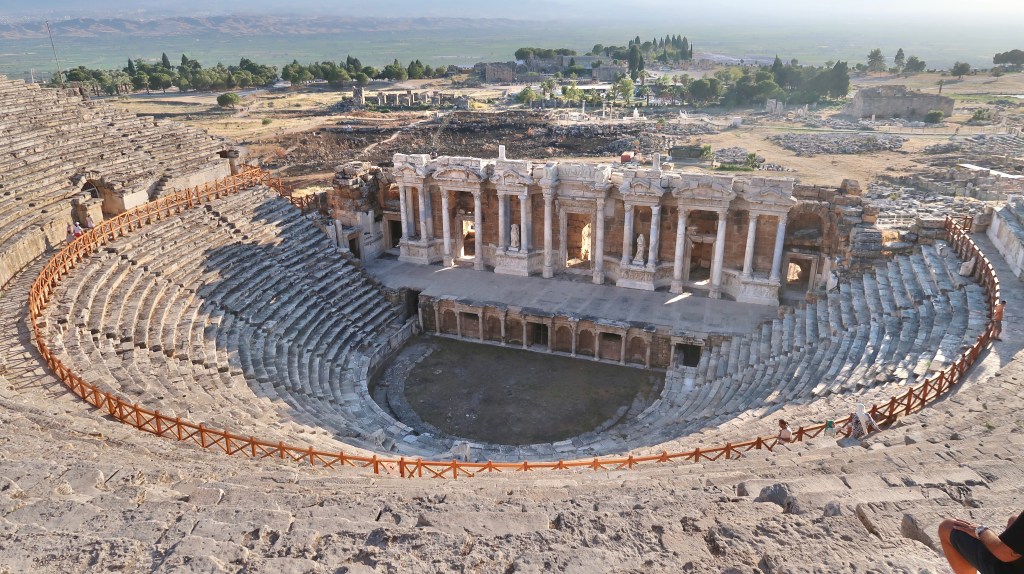
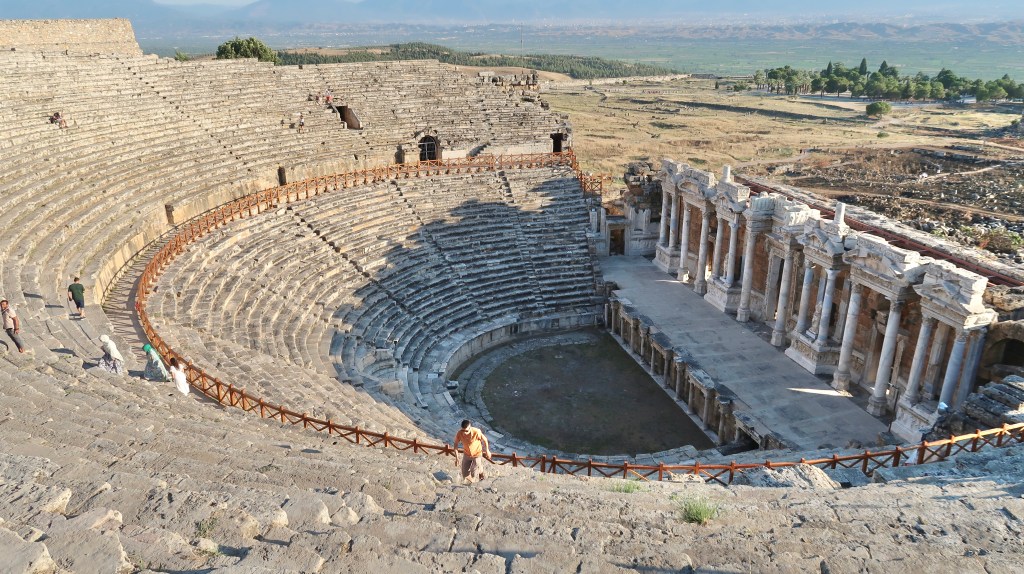
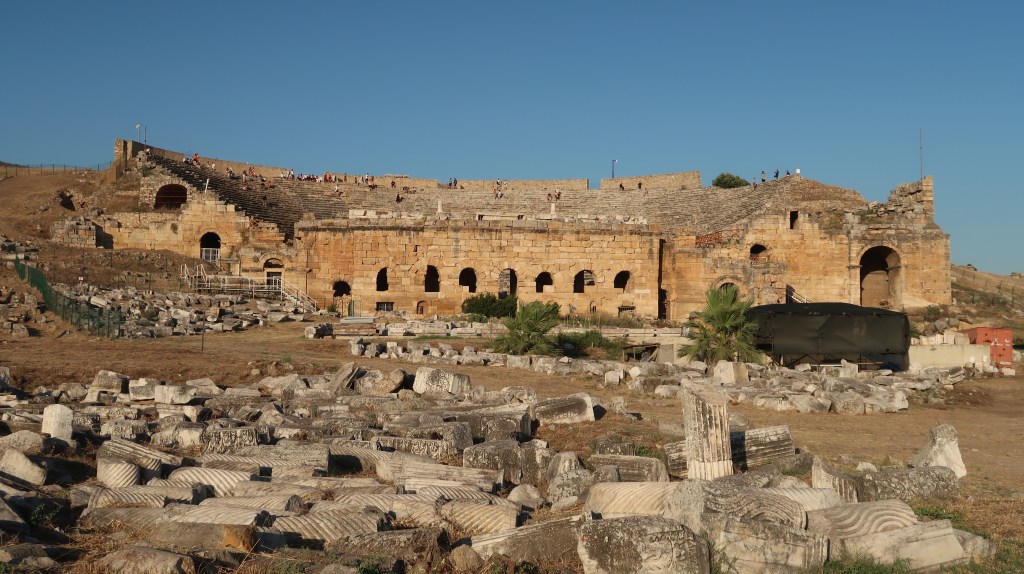
Having already spent most of the day looking around ruins, we decided to head towards the mineral pools. We had heard that they are particularly impressive at sun set (it appeared that many other people had also been given that advice).

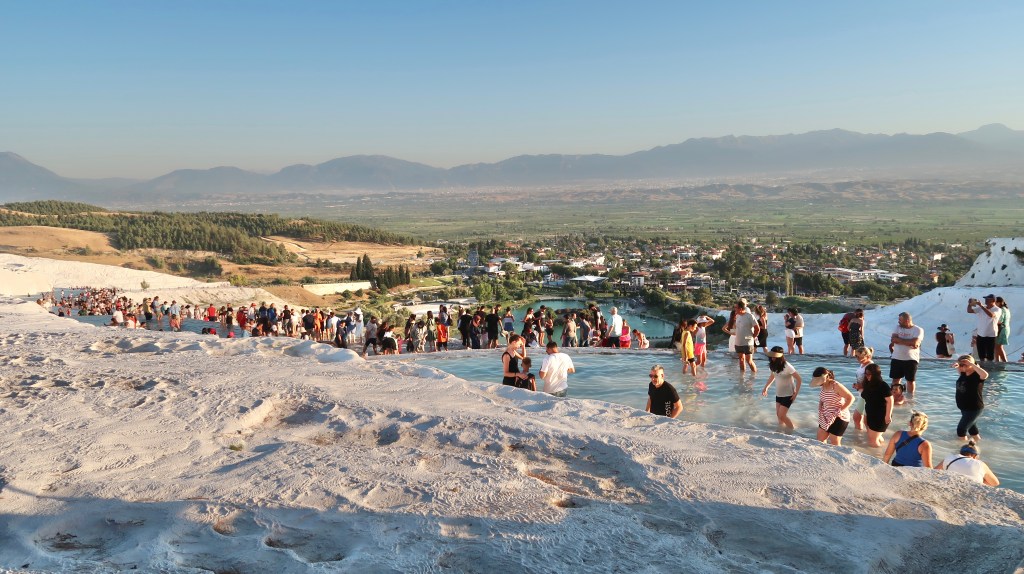
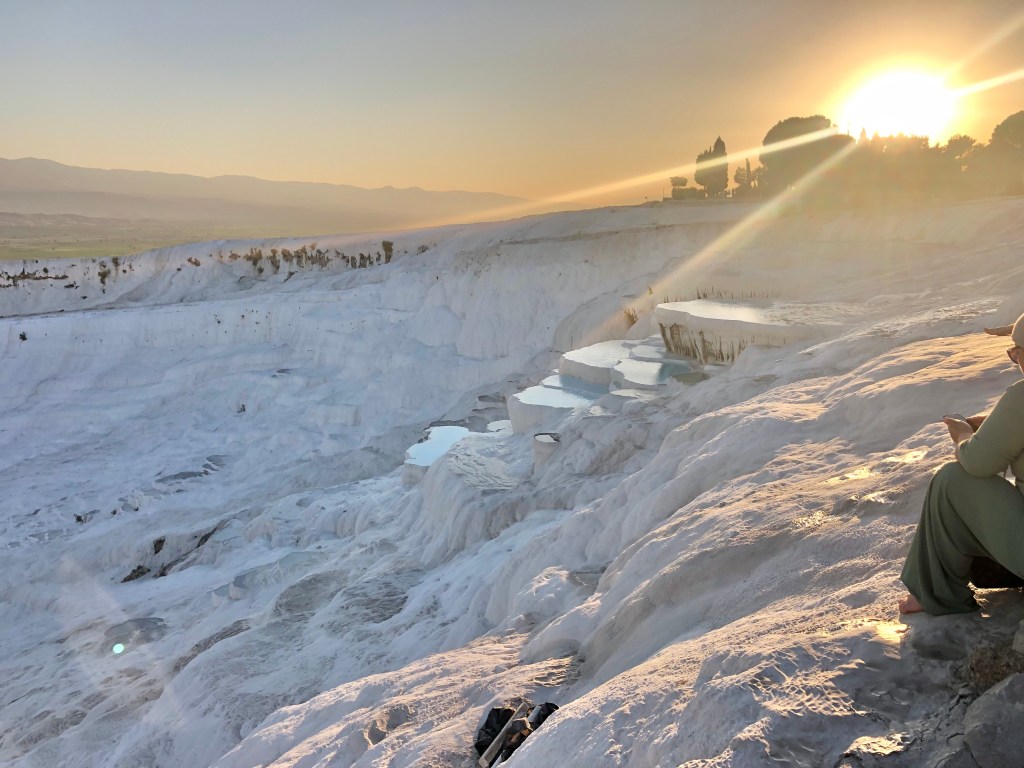
Pamukkale is a natural site where over the course of thousands of years, a carbonate mineral has been left by the flowing of calcite laden waters from hot springs emerging from a cliff almost 200 metres high. As these mineralised waters cascaded down the hillside, they have generated a series of petrified waterfalls, stalactites and pools with step-like terraces, which range in height from less than a meter to six meters.

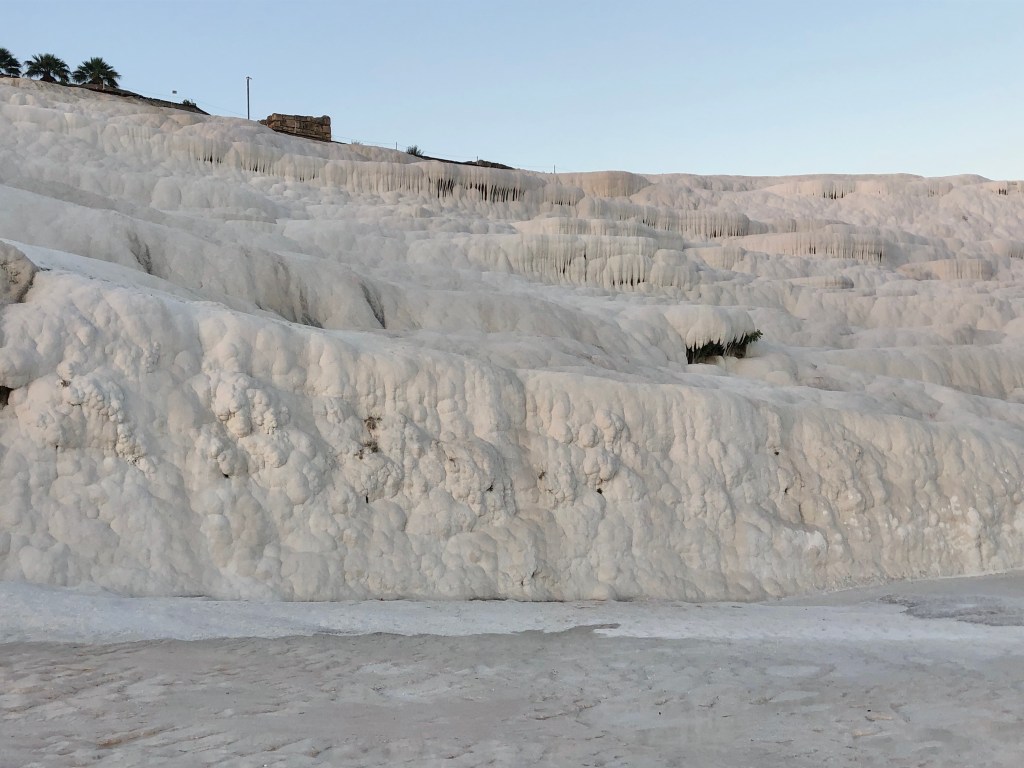
The terraces are made of travertine, a sedimentary rock deposited by the mineral water from the hot springs. Fresh deposits of calcium carbonate leave the white coating on these travertine formations which from the top are approximately 2,700 metres long, 600m wide and 160m high.
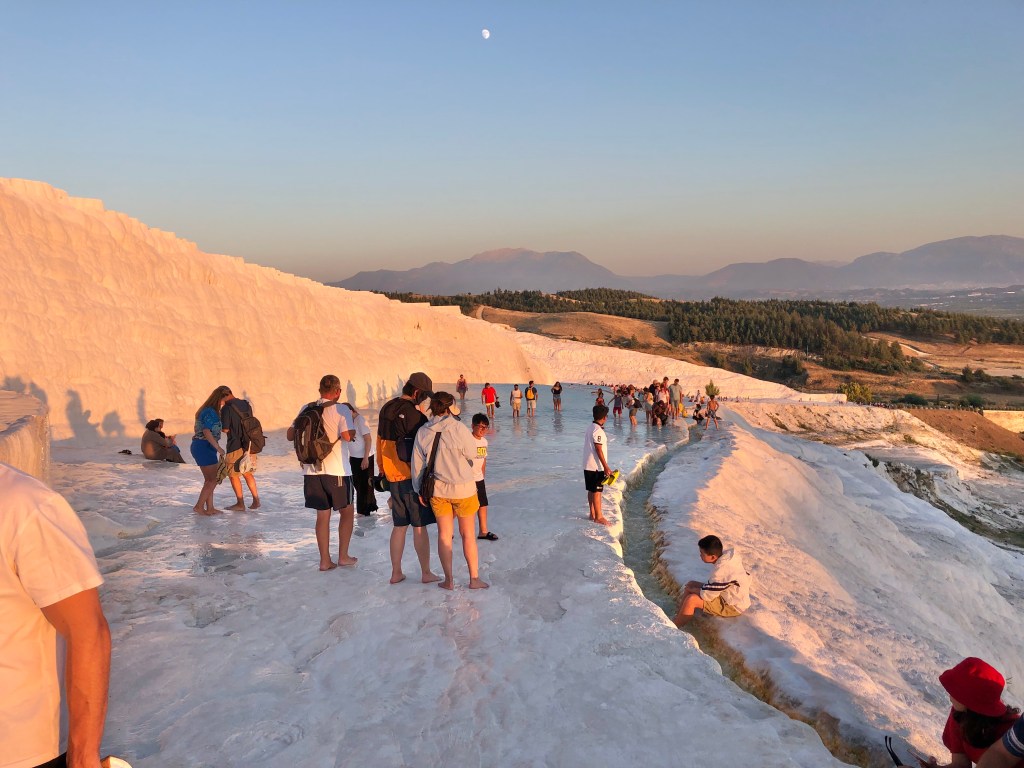
You can walk through the pools down part of the hillside, shoes aren’t allowed to prevent damage to the rocks. You had to be careful where you stepped as some parts were slippery in the shallow water at the top and there were some sharp rocks.
The water was warm, there was a channel where water was gushing through which was very hot. Apparently the temperatures of the hot springs range from 35°C to 100°C.
As we walked through the pools the sun was going down making the rock faces glow before eventually disappearing behind the hill.



The next morning we had a large Turkish breakfast and watched hot air balloons giving flights over the dramatic landscape here. We decided to make use of our free museum pass and returned back to the ‘cotton castle‘ at opening time to try to beat some of the crowds and to see it in a different light.


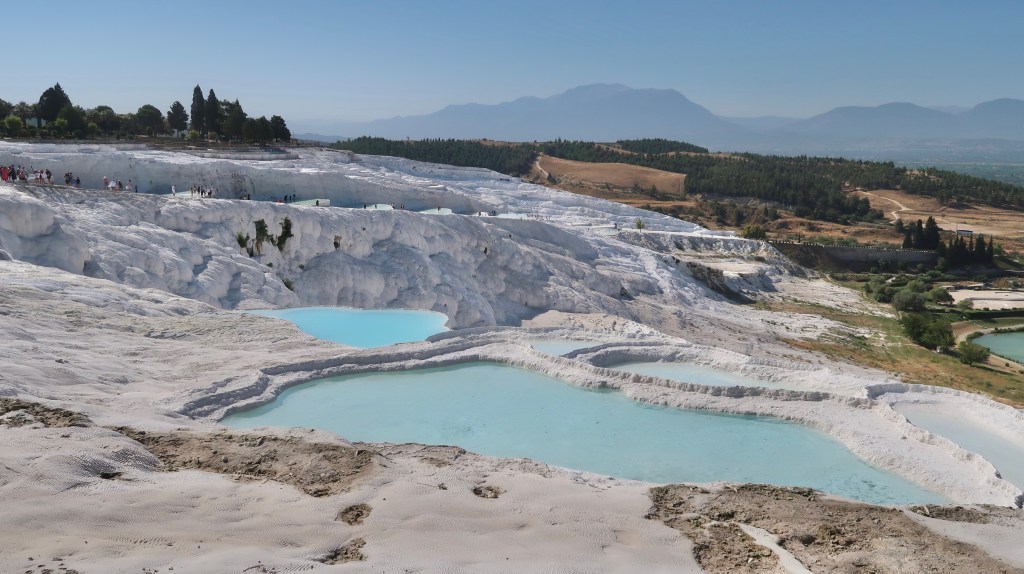
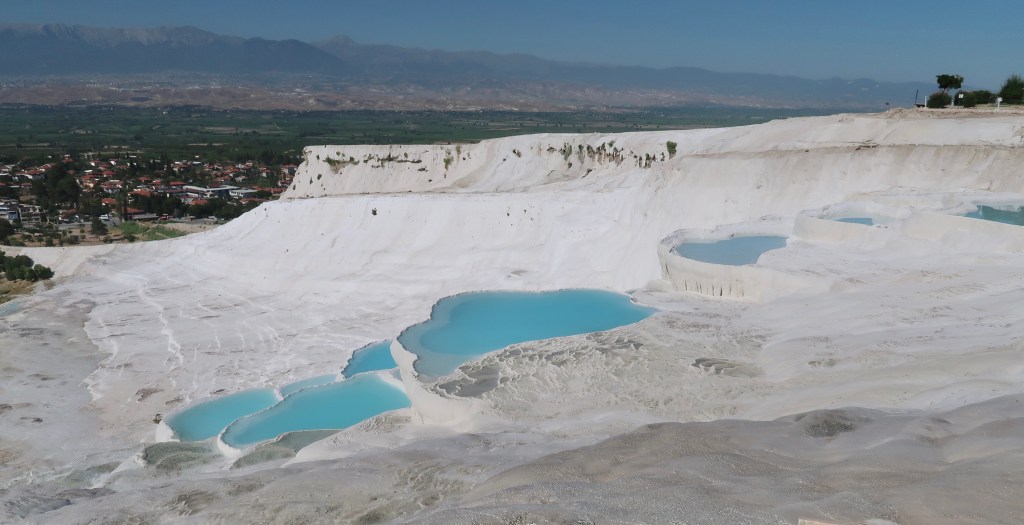
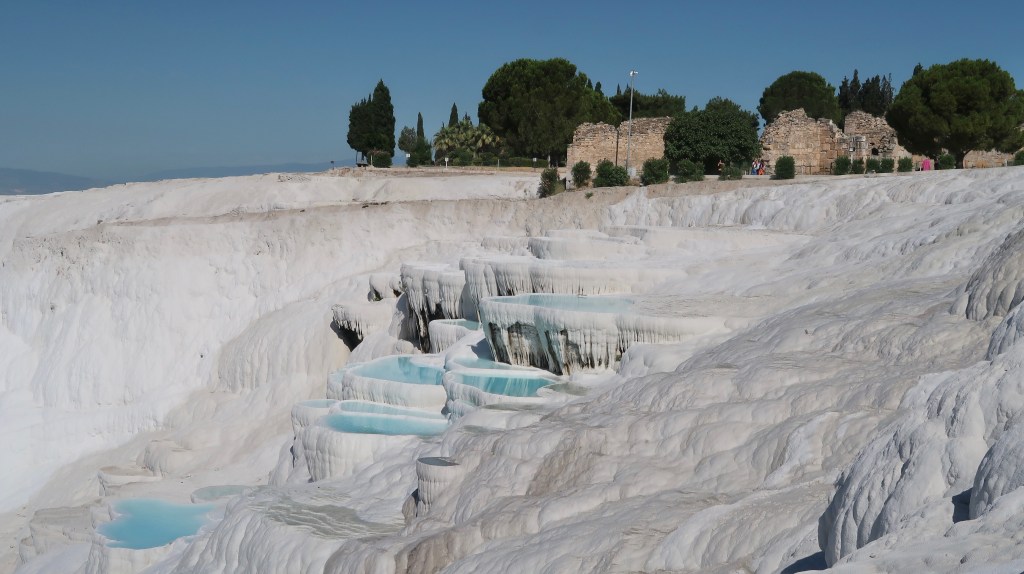
Walking in the pools felt much different after they had been left overnight and the sediment had settled, it felt very soft and sludgy on the bottom, much more comfortable to walk on.


In contrast to the natural travertine pools, there is also an antique pool which was carved into the rock by the Romans and fed by the hot springs. It has submerged columns and marble pieces from the temples scattered in the water as a result of an earthquake.

You can swim in this pool, the sign says that bathing here will cure illnesses such as nutritional and chronic disorders, digestive and circulatory problems, eye and skin diseases, etc. Throughout the ages, the hot waters of Pamukkale were always believed to have some healing properties. Even Cleopatra bathed in this therapeutic pool.
I had also heard of a legend that a young ugly girl became so lonely because nobody wanted to be with her. The magical powers of the water washed away her sorrows and she became a very attractive girl. When she climbed out of the pool, she met the lord of town who was so mesmerized by her beauty that he fell in love with her and asked her to marry him.
I had to give it a try and went into the water with high hopes, the pool was warm like a bath, there were fountains of water pouring in which were very hot and as you stood under them they were rather smelly.
After spending some time in the water, I got out and was a little disappointed to find that the magical powers hadn’t made me feel any different other than being very hot, thankfully there were some cold showers to cool down.
It was quite a long drive back to Kuşadasi so we had some lunch and headed back to Ziggy.

 Sailing ZigZag
7 replies on “More Ancient Ruins”
Absolutely incredible – to bathe at the pools where Cleopatra had previously been!
The Turkish Tourist Board needs to hire you as their chief blogger.
LikeLiked by 1 person
Brill as always, looks a bit like ancient Olympia in many ways. Sue, I think those pools are over rated, I’ve spent many hours in similar with no noticeable results…… Perhaps we are starting with little room for improvement!!
LikeLiked by 1 person
Super photos, loving cotton castle. Simply stunning and what a place to watch the sunset from. Always good to learn more about our ancient world, and see just how they knew how to live. They are some serious buildings and to have a 270m long stadium is impressive, though seeing the action at the far end without binoculars could be tricky 🙂
Always love to see pictures of you both. Maybe I could suggest it becomes weekly inclusion – a picture of you two during the week?
Safe onward sailing.
LikeLiked by 1 person
Simply FABULOUS, we went to Side in Turkey earlier in the year, and saw some amazing sights, but this is another level, thanks for the beautiful photos xx
LikeLiked by 1 person
Fabulous photos and great narrative of two stunning and interesting locations. Excellent photos of the superb cavings and awesome monuments and theatres, coupled with beautiful natural phenomenon. Thanks for sharing.
LikeLiked by 1 person
Love the photos of you and Paul. We might inscribe our names at Burnley on the seats we use so people can visit in 1000’s of years and see it. Great to see photos of Pamukkale as I went nearly 35 years ago. The antique pool didn’t work as you are not an ugly, lonely girl! 😃 xx
LikeLiked by 1 person
Would love for your travels to be made into a book, I’d buy it!
LikeLiked by 1 person