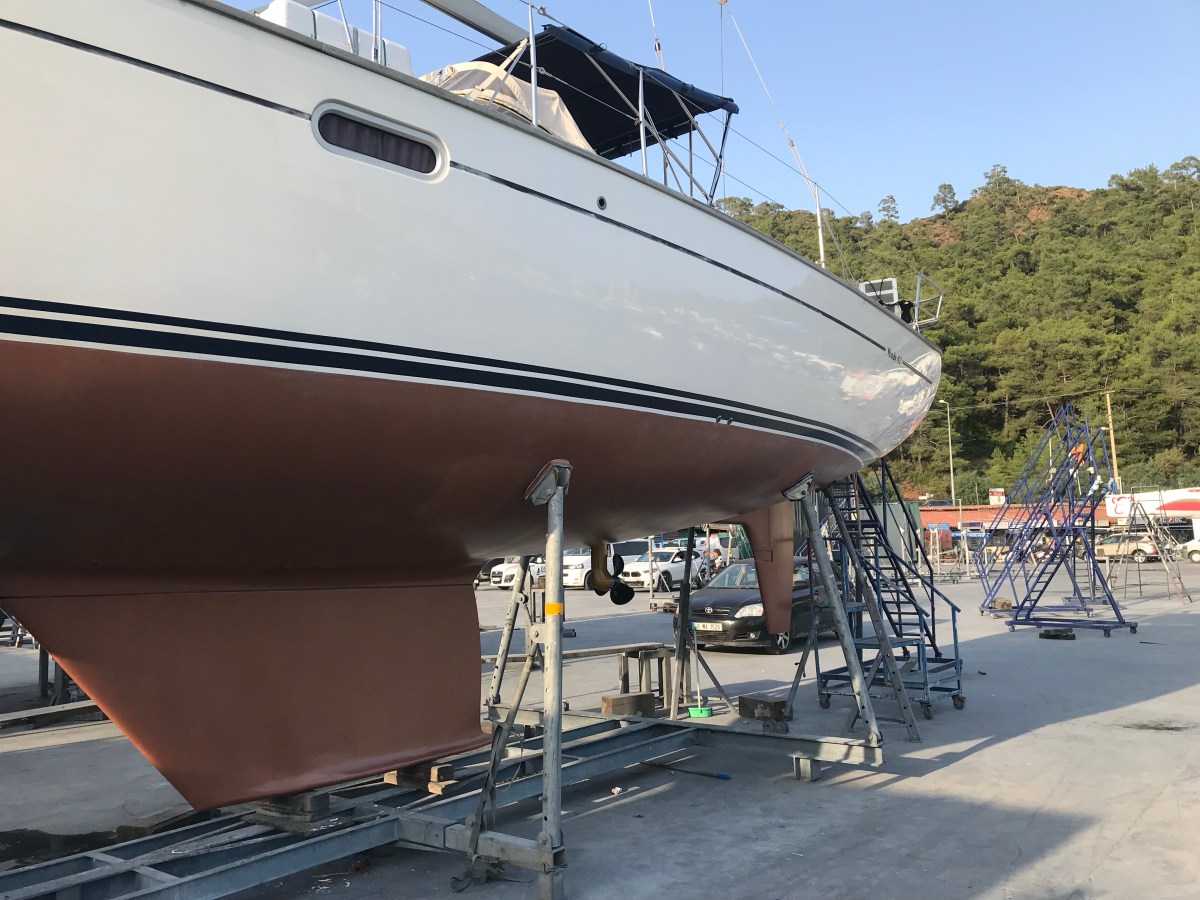
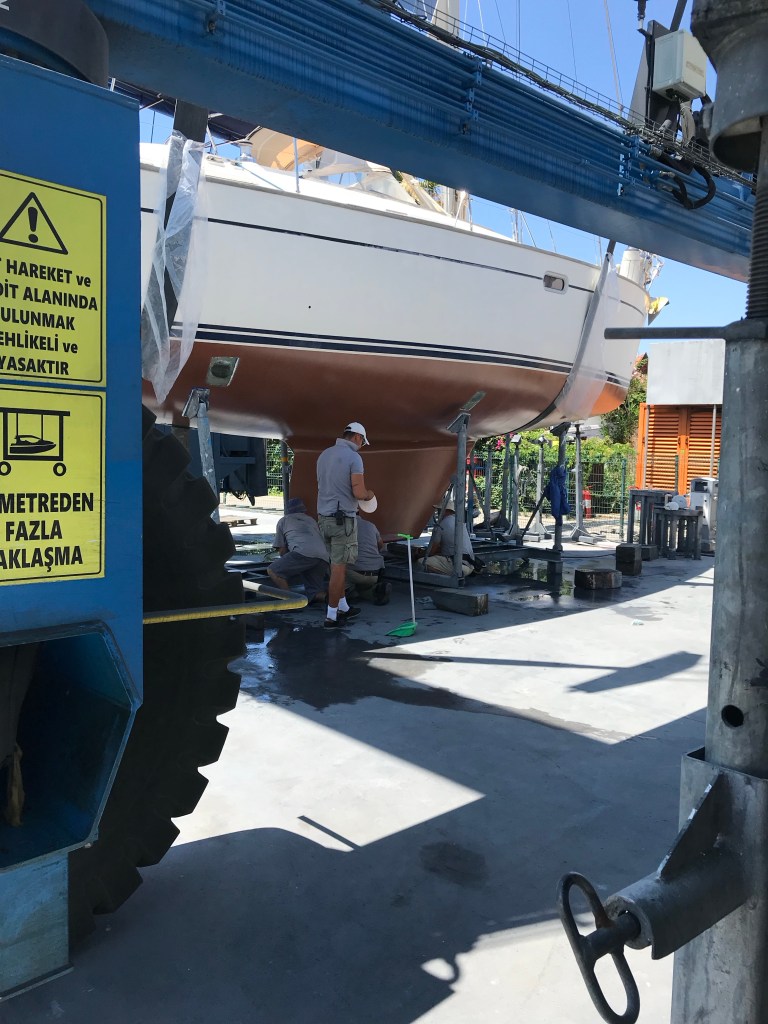
It was extremely hot in the boatyard and watching one person scrape all of the old antifoul off in 3 days bought back memories of when we did this in Greece back in 2020. We both worked at it for a week trying to scrape and sand the old antifoul off.

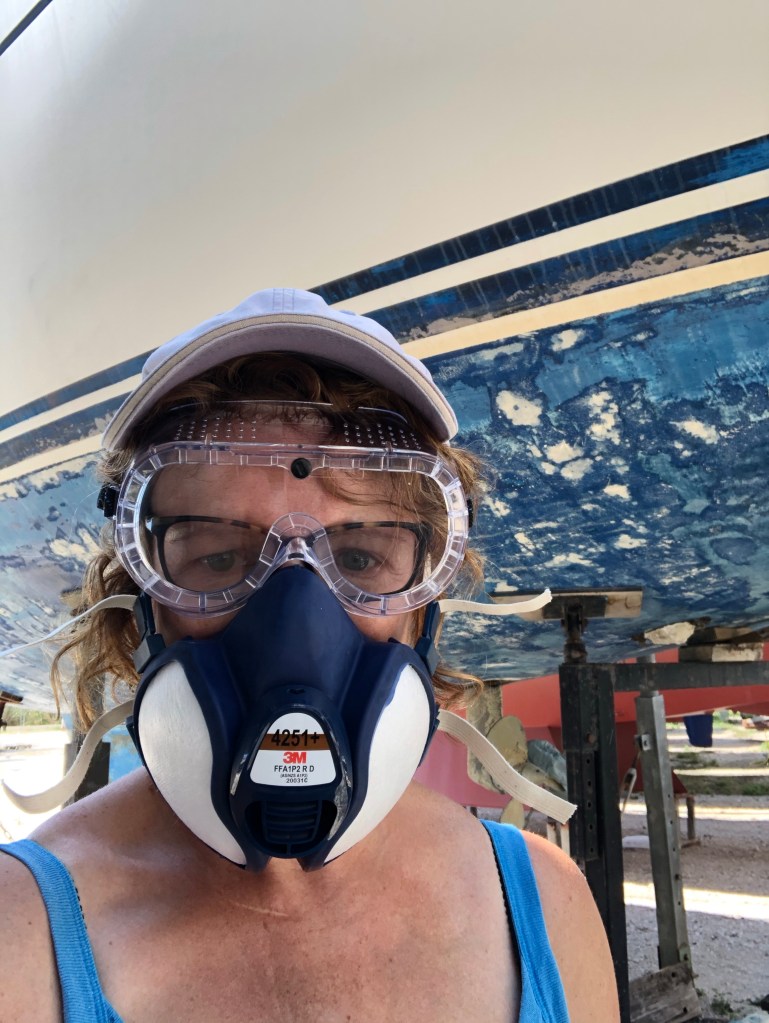
Our efforts were nothing like as good as how it looked after three days with a professional.
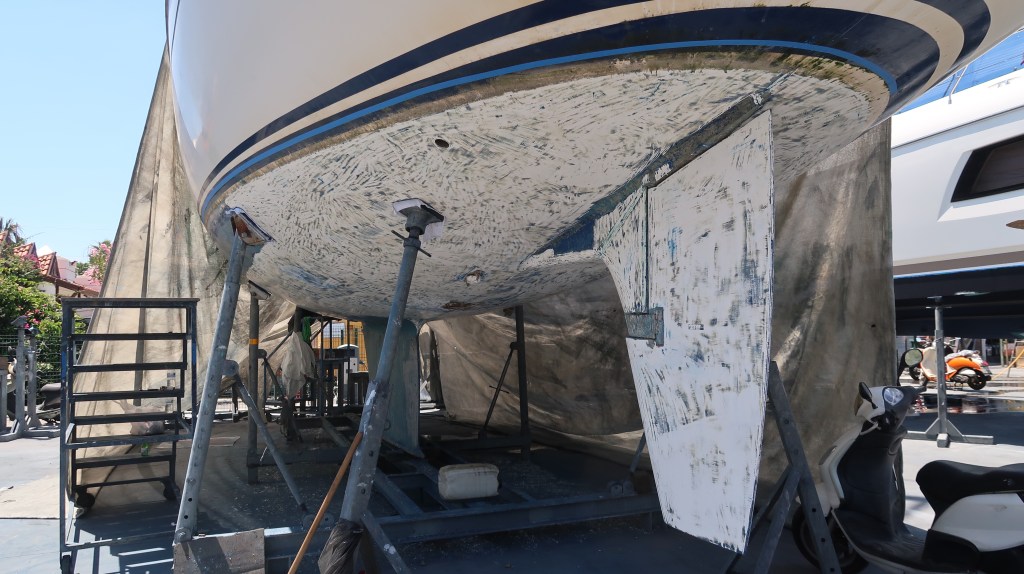
Antifouling bottom paint works by discouraging growth on the hull of a boat. This is typically done with the use of some form of biocide, a chemical toxic to marine sea life. Generally it is self eroding, when the boat moves through the water, the paint is slowly washed off in microscopic layers, revealing further biocide underneath.
There has been much talk of pollution of the ocean over recent years and copper-coating the hull has become a popular solution. This idea was first developed in an attempt to mimic the effect of the copper sheeting used by the British Navy from the 1700’s.
Coppercoat is an epoxy based hard bottom coating system, it is non-leaching and therefore considerably kinder to the environment. Whilst it won’t prevent all growth, it should require less aggressive cleaning and no toxic chemicals are scraped off into the water which will be much better than swimming in a cloud of blue dust.
Once applied, it lasts approximately 10 years as opposed to antifoul which generally needs reapplying after a couple of years, so a lot less maintenance and costs associated with lift-outs etc. It is also said to be more efficient through the water potentially saving money on fuel.
Aside from the environmental benefits, we were happy with the thought of no more regular antifouling, when it is often difficult to find a good quality, compatible paint in different countries. Although an expensive initial outlay, it should save time and money in the long term so we decided to opt for Coppercoat.
There is quite a detailed process in applying the Coppercoat, every speck of antifoul needed to be completely removed first in order for it to adhere to the hull. After scraping most of it off it was then sanded back to the original gelcoat ready for painting.
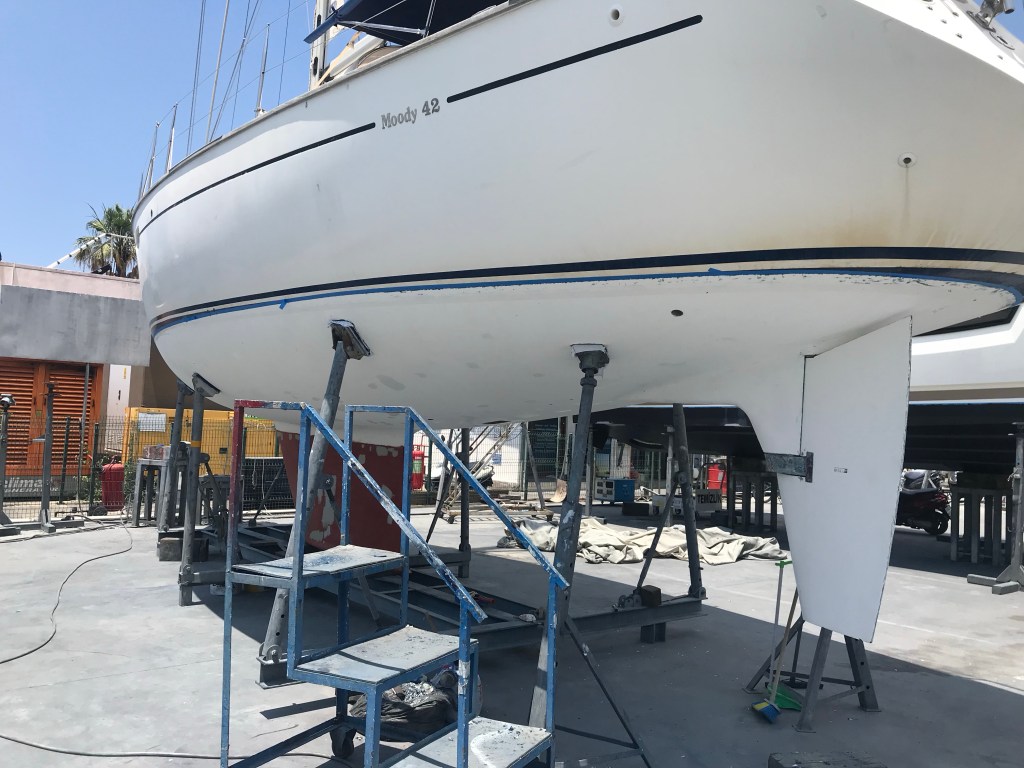

Our fridge had been a little temperamental lately and we had discussed some options but nothing had yet been confirmed of how we wanted to proceed. We had a keel cooler system which was a little mangled but had always been that way since we bought the boat so we weren’t too worried about it. Paul spent some time cleaning it only to find that the next day the workmen had cut it off making the decision for us that we need a new refrigeration system now. Well I guess it was one less obstacle to work around, making it easier for them to prepare the hull!

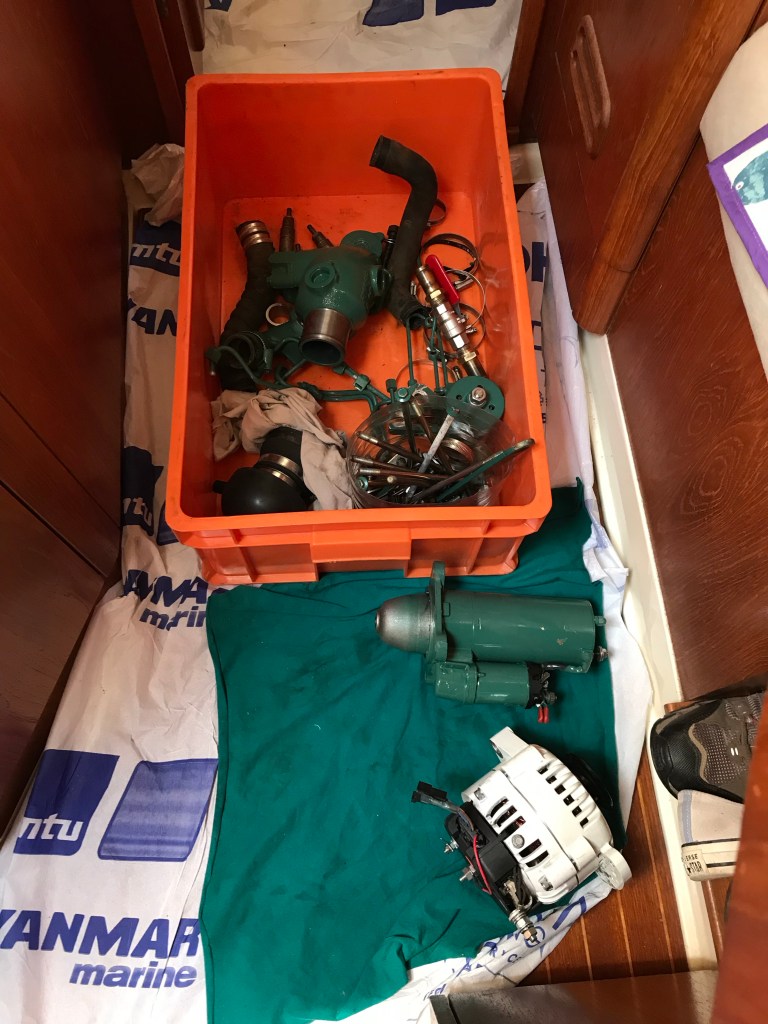
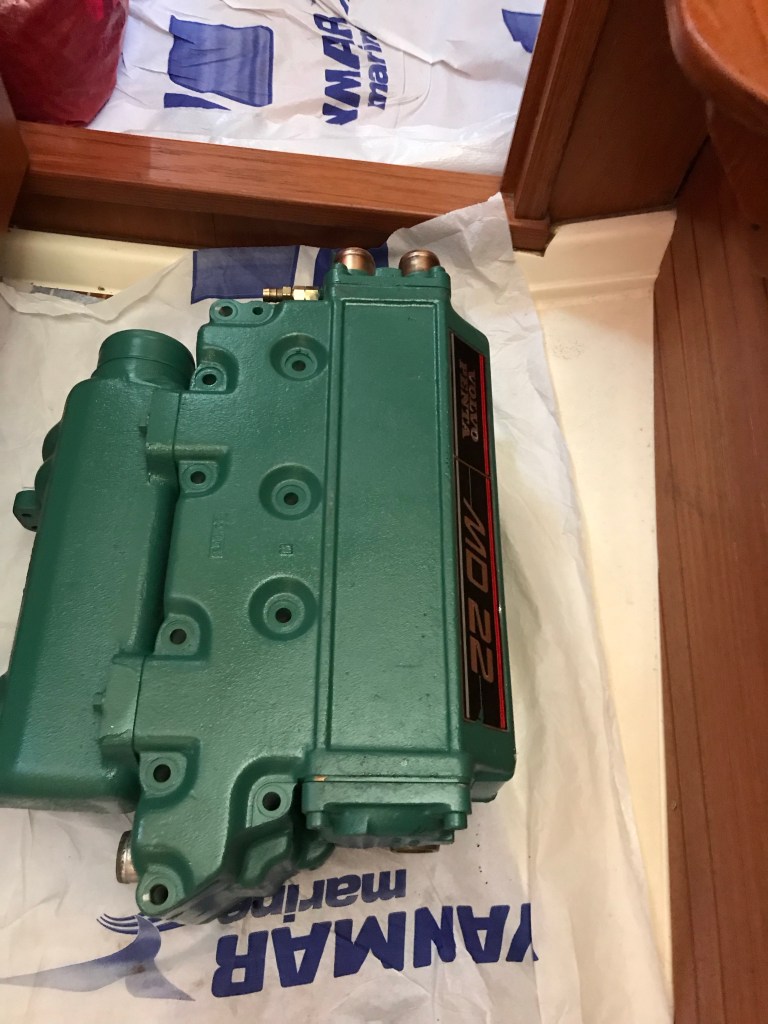
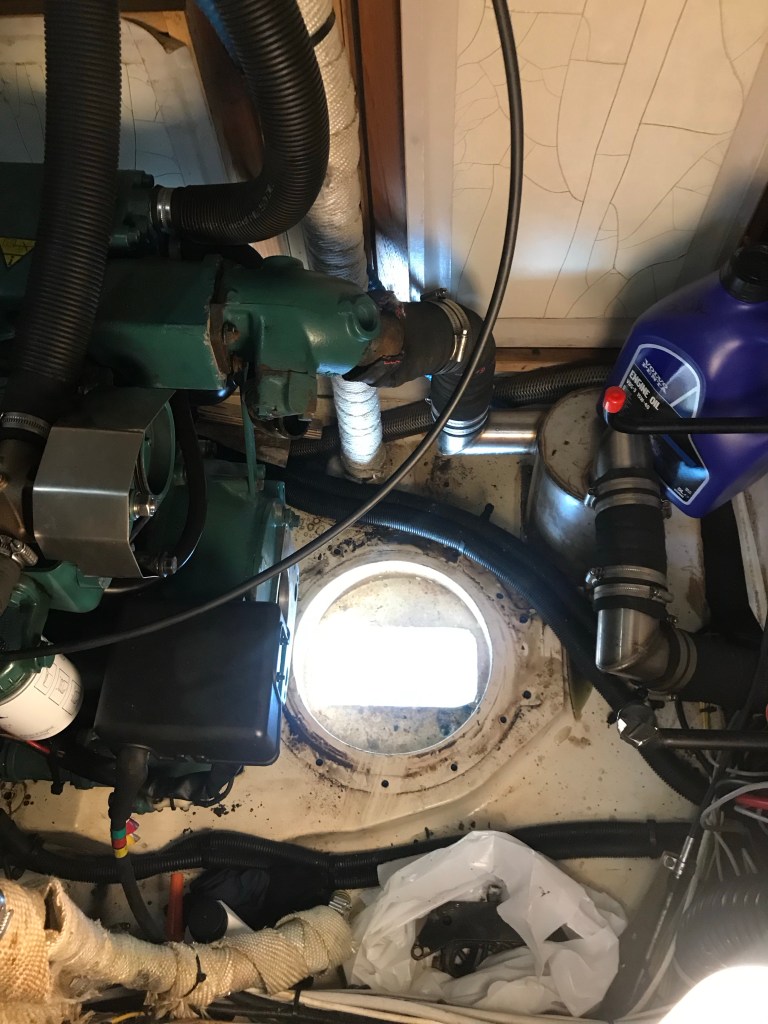
Whilst preparations to the hull were taking place we had engineers on board dismantling our engine and Saildrive to take away all of the parts for a full service. We were left with half an engine, no Saildrive or propeller and big holes in the boat where they had been removed, but at least Ziggy looked good with a perfectly smooth bottom!

It was time to apply the Coppercoat, first a layer of gel shield then 5 layers of Coppercoat. As this is a hard coating it does also provide extra protection to the hull against any water absorption (Osmosis).
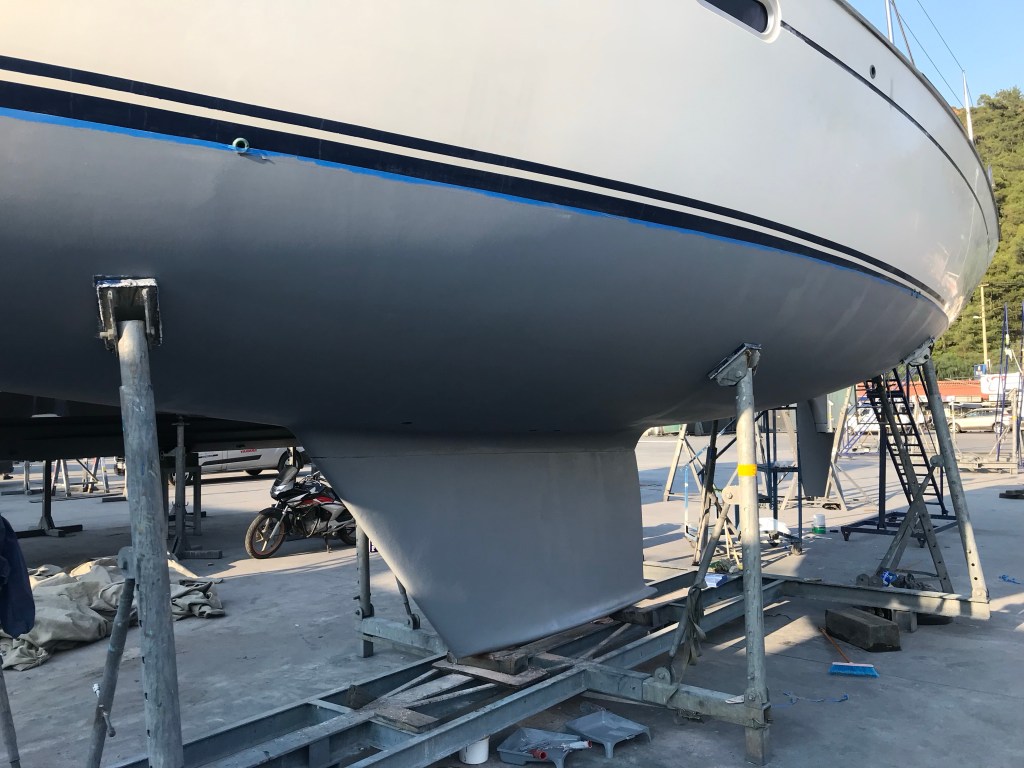

Ziggy was then back in the lifting sling so that the patches under the supports could be done.
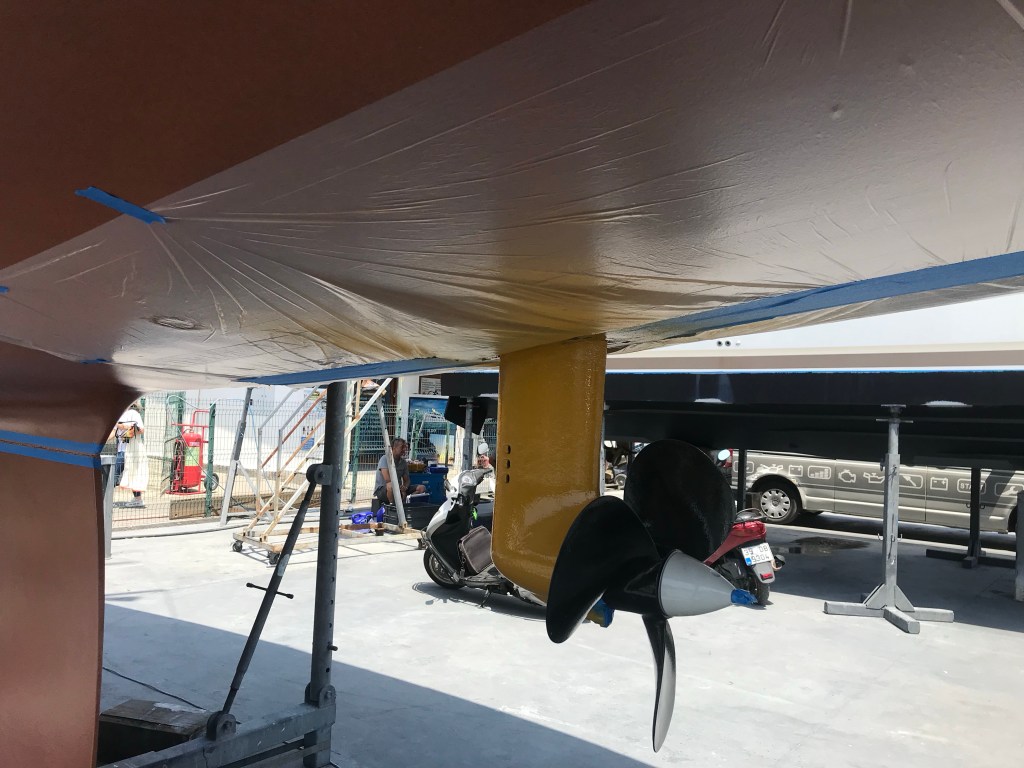
The Saildrive and propeller had been fully serviced, reinstalled and painted.

When in the water, Ziggy leans slightly to port, we have tried to move things around on board to balance the load but she still leans, it’s apparently common in Moodys like ours, so the waterline was raised on the port side to accommodate this. This meant that the boot stripes also had to be removed and repainted. She will still sit wonky in the water and lean to port but to the unknowing eye will actually look a lot straighter now!

Aesthetically not a colour that I would have chosen, but hopefully it will be worth it. A bit of polish to the topsides and she was looking pretty.

Good progress had been made after the first week in the boatyard, Ziggy must have felt like she had received the full Hamam experience being scrubbed, cleaned and polished!
There was still plenty of work to be completed including rebuilding the engine, changing all of the seacocks, fixing an ongoing leak from the rudder and decisions to be made regarding the fridge, but they are all jobs for next week.
 Sailing ZigZag
6 replies on “ZigZag is having a Makeover”
Antifoul removal is a bummer, we feel you guys. But In the end you get to go out sailing 🥰🥰🥰
LikeLiked by 1 person
Just re coated Azura this year, it’s bloody hard work for just 2 people but well worth it, you will notice a difference in speed, 1800 rpm gives us 6.5 it’s in flat water, no wind. We launched in early April and still smooth as. We also lean slightly to the left so we moved all the booze to the starboard lockers which helped, for a bit anyway……!
LikeLiked by 1 person
How brilliant to see the bits of Ziggy which normally lie hidden under the water. Whilst I am sure it is frustrating to be out of the water, you can feel confident that she is indeed shipshape for the adventures ahead.
Good luck with the other jobs this week.
LikeLiked by 1 person
Love the updates
LikeLiked by 1 person
Ziggy looks lovely and I think a smooth bottom always makes a massive difference 😃 I felt like I was having a science lesson in the first part of your blog. I had to get the dictionary out! X
LikeLiked by 1 person
Ziggy will be like a new boat!
Love the photo of the essential health and safety “microwave” step ladder.
The copper bottoming of boats must be playing havoc with Akzo Nobel (International Paint) share price.
LikeLiked by 1 person