
València is another beautiful coastal Spanish city with long sandy beaches, plenty of green park areas and a busy city with majestic buildings and historic centre. It was founded in 138 BC by soldiers discharged from the Roman army. Rome granted these men land where they could settle, with the obligation to build a new city. They traded their weapons for ploughs and settled with their families on an ancient island in the Turia river. With València halfway between Tarraco and Cartagena, the Roman Republic secured control of this part of the coast. The city flourished rapidly and within a few years was minting its own coins featuring a cornucopia emblem being an omen of good fortune.
After mooring ZigZag safely in the marina we set off in the evening to look around the local area. A Formula 1 street circuit opened in 2008 and was built around the marina, however, the track was deemed mundane by the drivers and with lack of interest and funding, it only lasted four years, many of the markings were still visible on the roads. There is now a large area around the marina where a big stage had been set up to host a concert that evening.

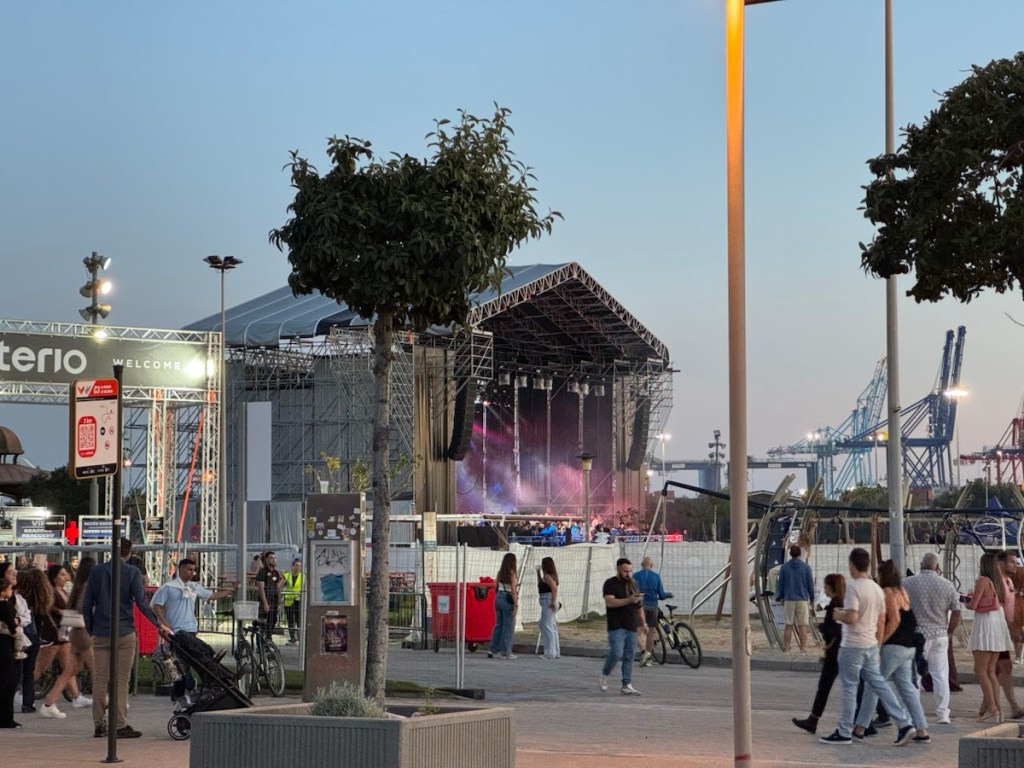
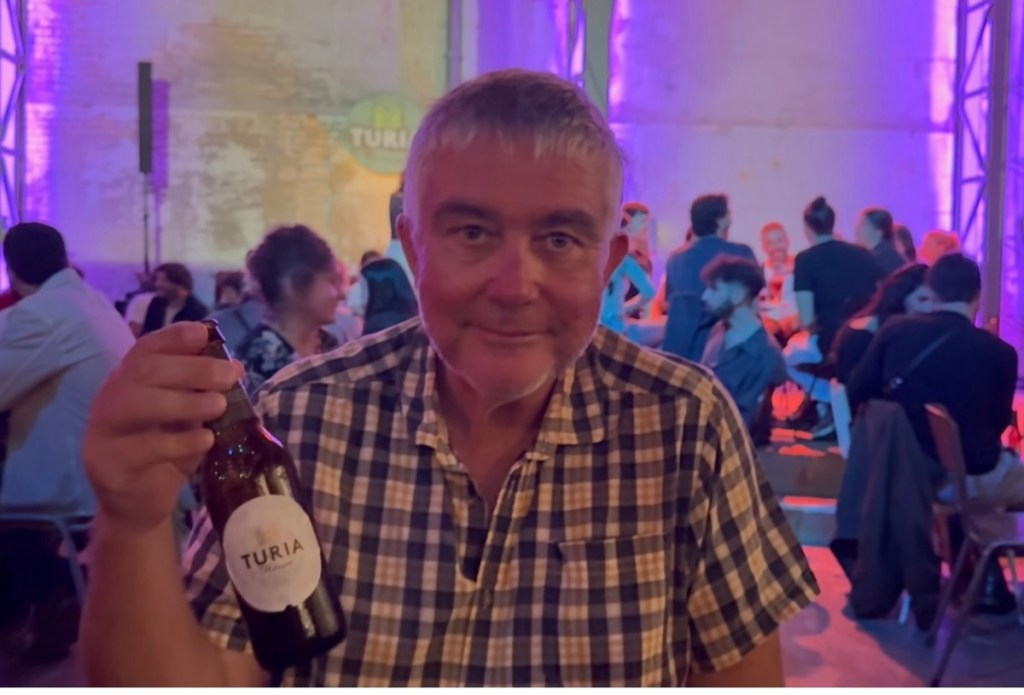
Next to the marina is a smart tree lined promenade following the large sandy beach with plenty of bars, tapas restaurants and popular beach clubs. We found a lively music bar in an old warehouse, Paul was very happy with his favourite Spanish beer so far. Later, when we returned, the concert was in full swing and we could hear them partying through the night.

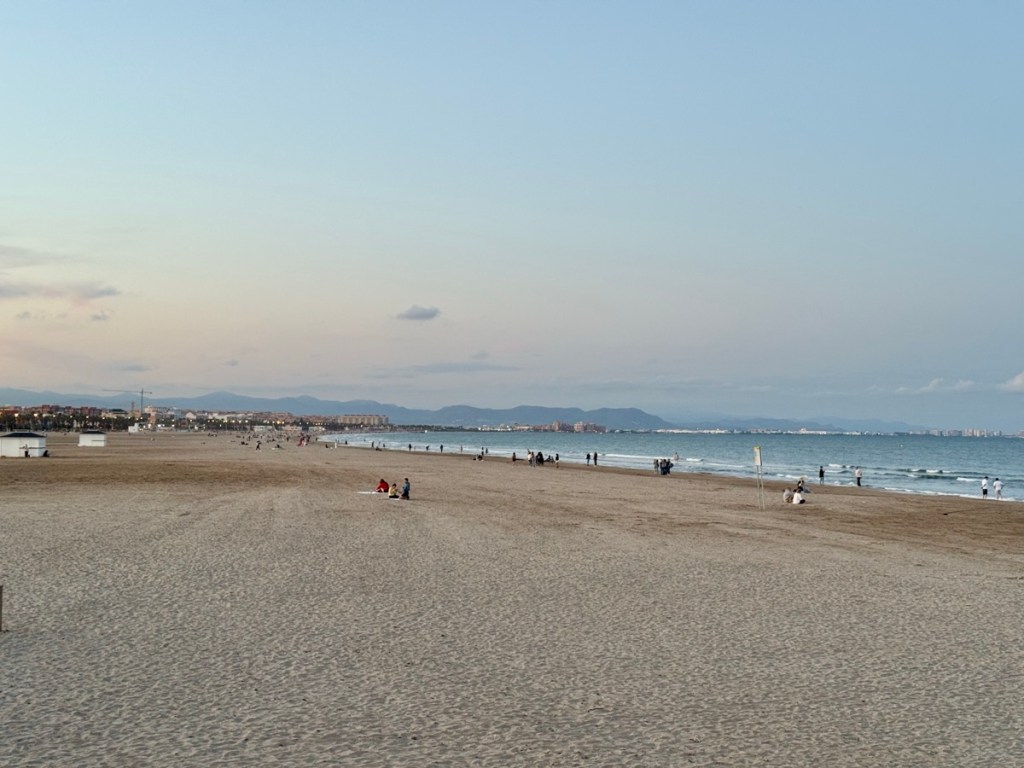

The following morning the sun was out and people were heading to the beach.


We took the tram to the city centre and entered the old city through the gate between the Serranos Towers, (the Torri de Serranos). The bridge leading to the gate goes over the dry bed of the former Turia river, which has now been transformed into a large urban park.


This famous monument was the main access to the medieval city. The two polygonal towers were built at the end of the 14th century to create the Gothic style entrance arch which was one of twelve gates along the city’s defensive walls. Over the centuries the structure has had various roles: firstly the defensive door of the medieval wall, it was also where ceremonies were held for the entry of sovereigns and as a storage facility for paintings. The towers were saved from demolition when the city walls were knocked down in 1865 and were being used as a prison for nobles and knights. Today, they are still used as the location for festivals, the back of the towers have been opened and the terraces of the pointed arches and the vaulted domes offer panoramic views of the city.

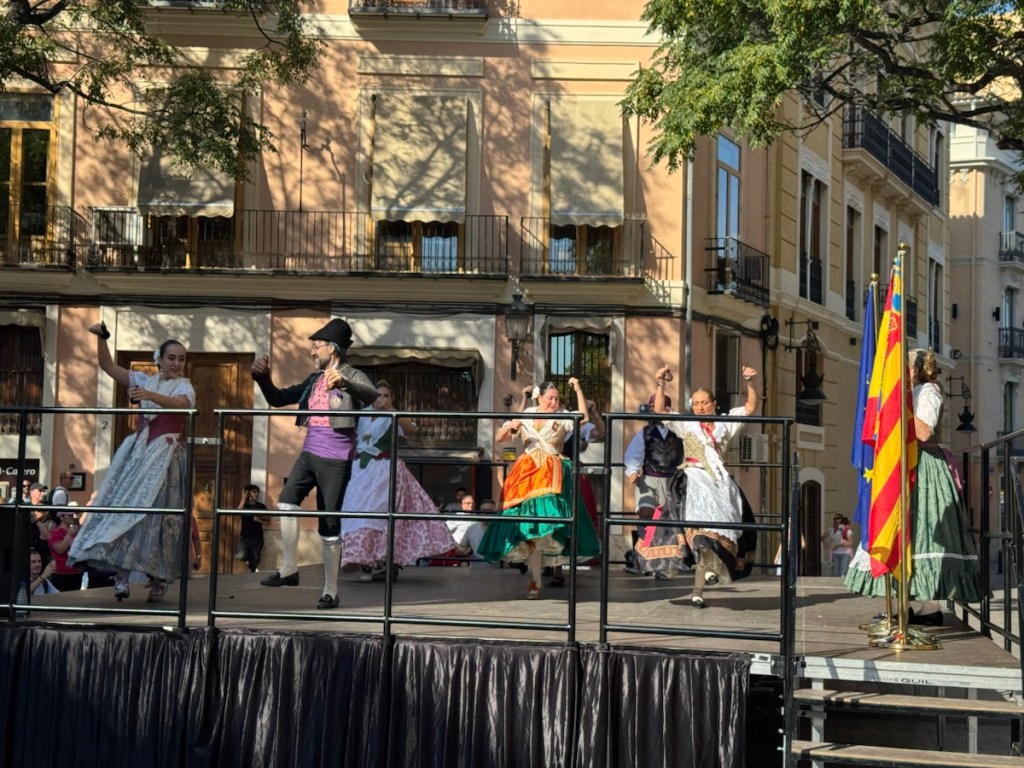
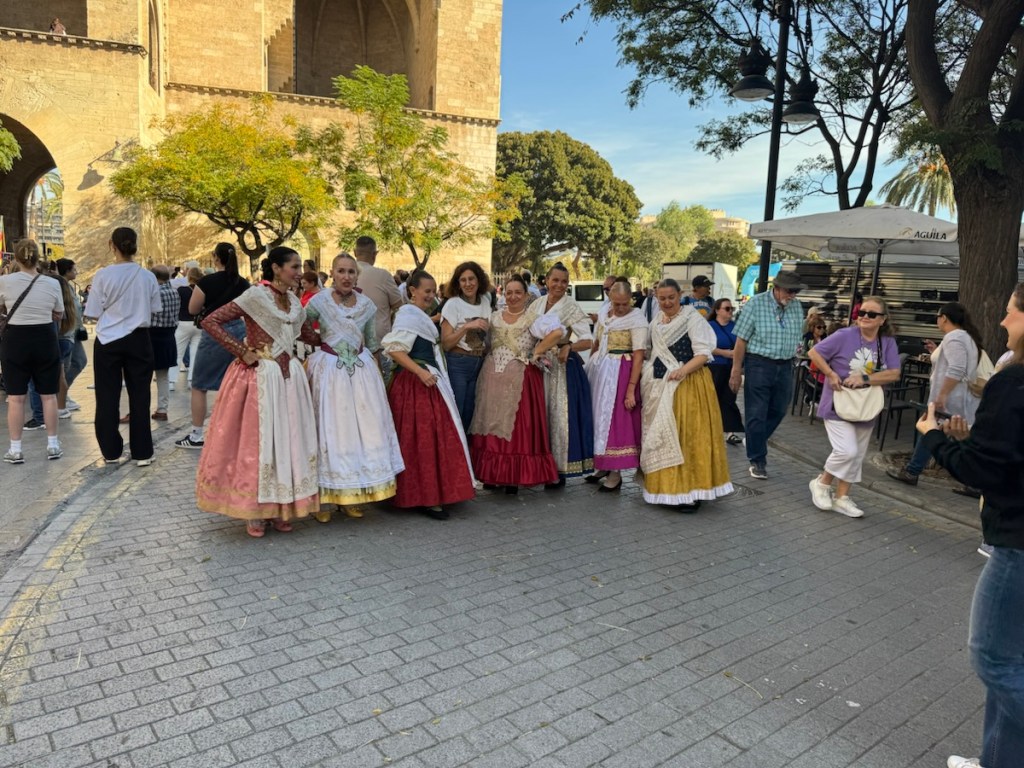
We walked through the gate into the Plaza de los Fueros where a small stage had been set up and locals of all ages were wearing traditional dress and dancing while clapping their castanets. Everyone was very enthusiastic and ladies continued dancing in the square while waiting for their turn on the stage.



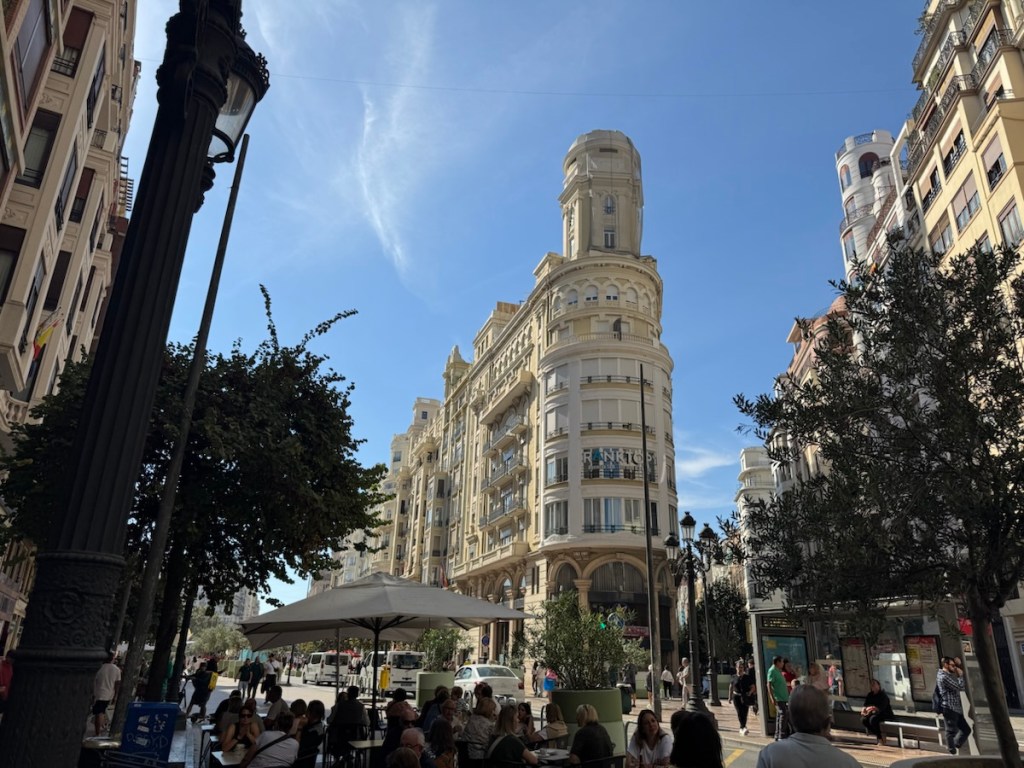
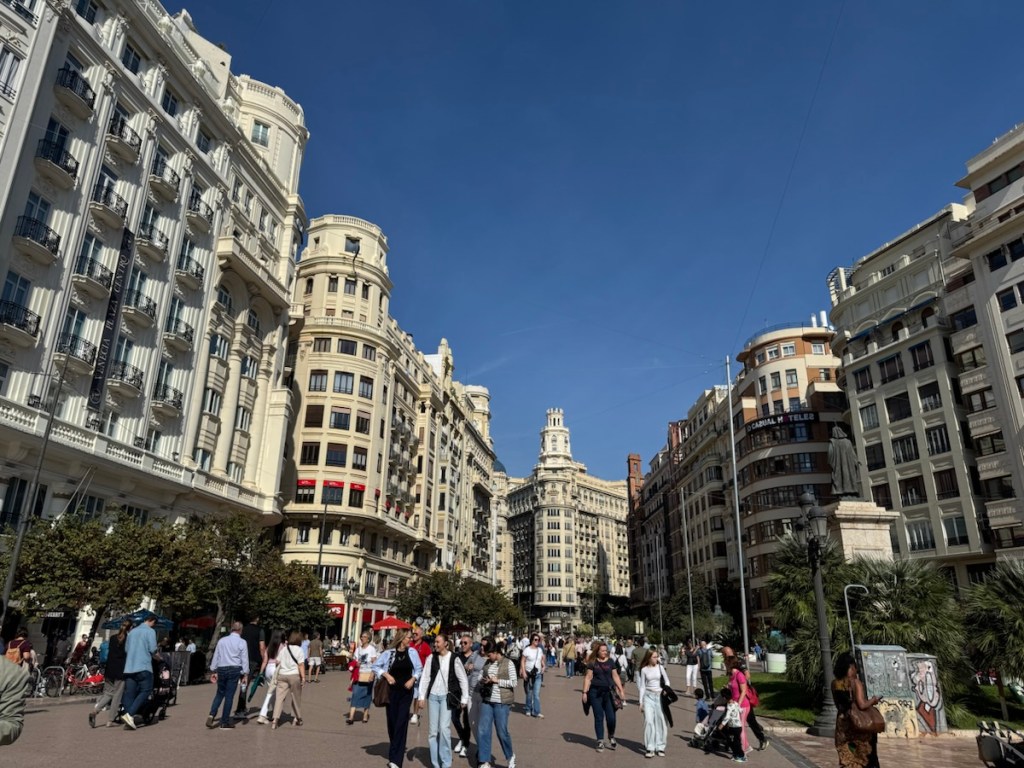
The city is full of huge classic and avant garde buildings, fountains and statues.



The Baroque style Basilica of the Virgen de los Desamparado, is dedicated to the patron saint of the city. It overlooks Piazza della Vergine, and the Turia fountain which represents the Turia River and depicts Neptune.
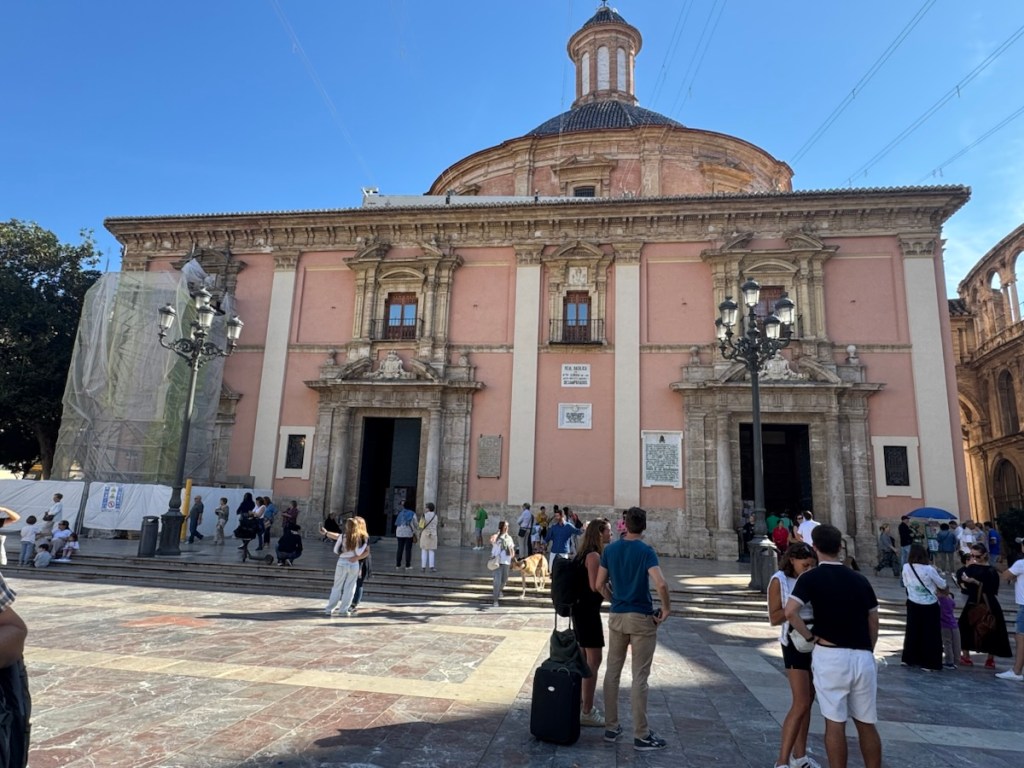

Next to the Basilica is the ornate Cathedral of València and a grand entrance door known as the Apostle Doors due to the carvings of the 12 apostles.
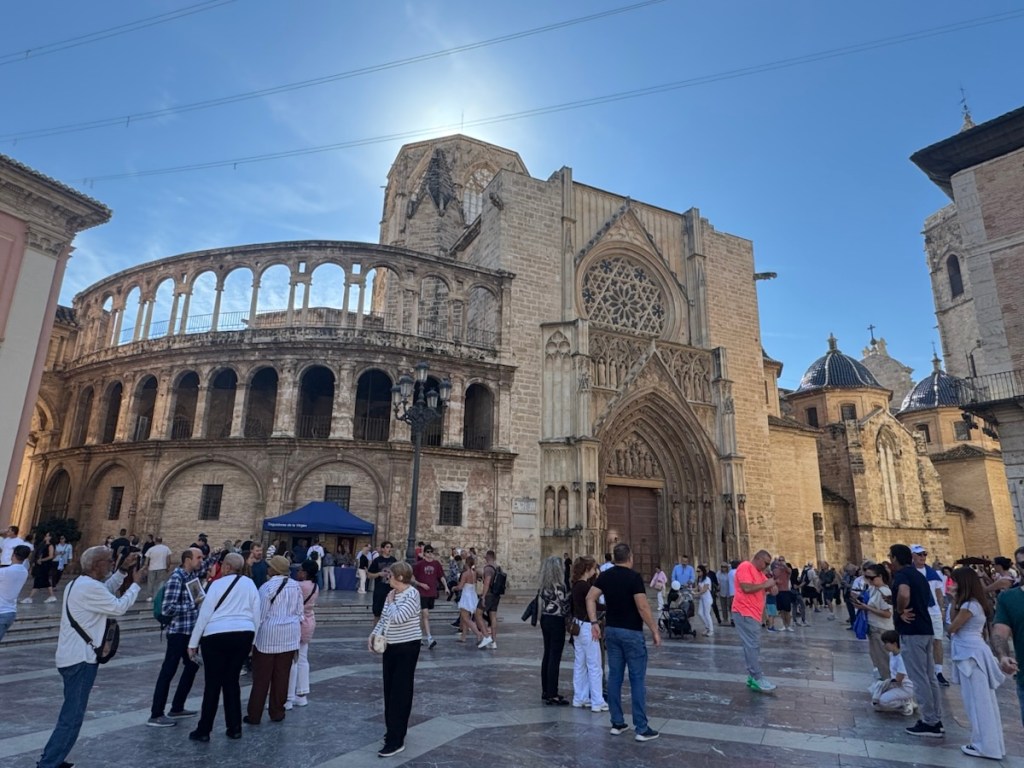
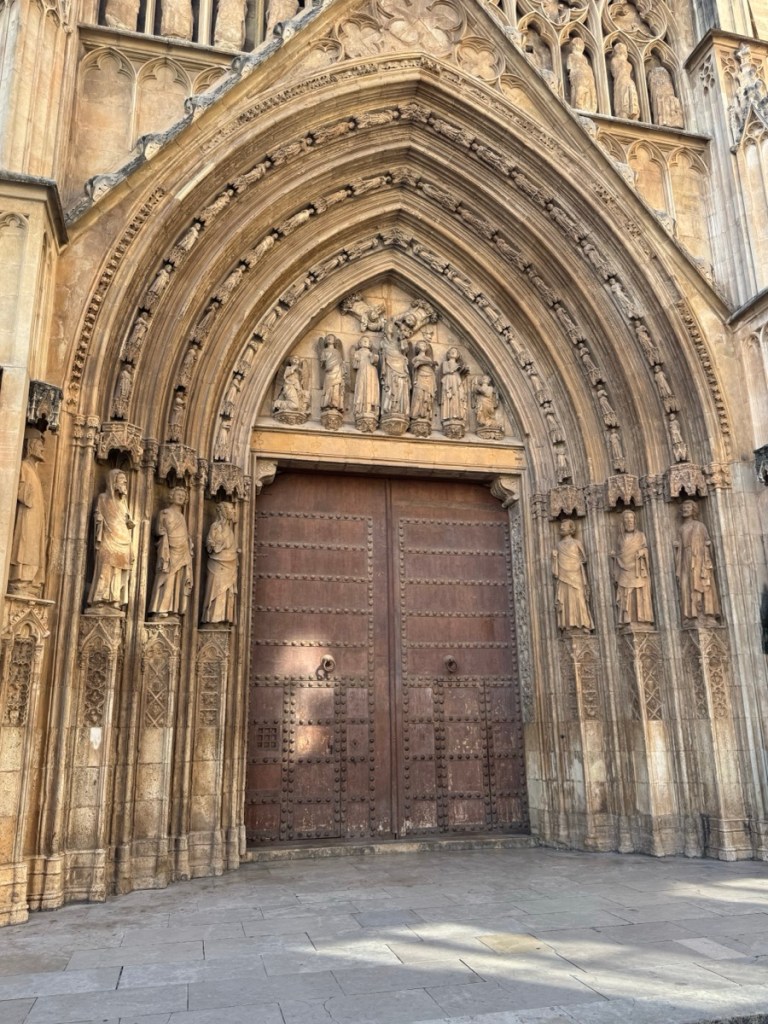
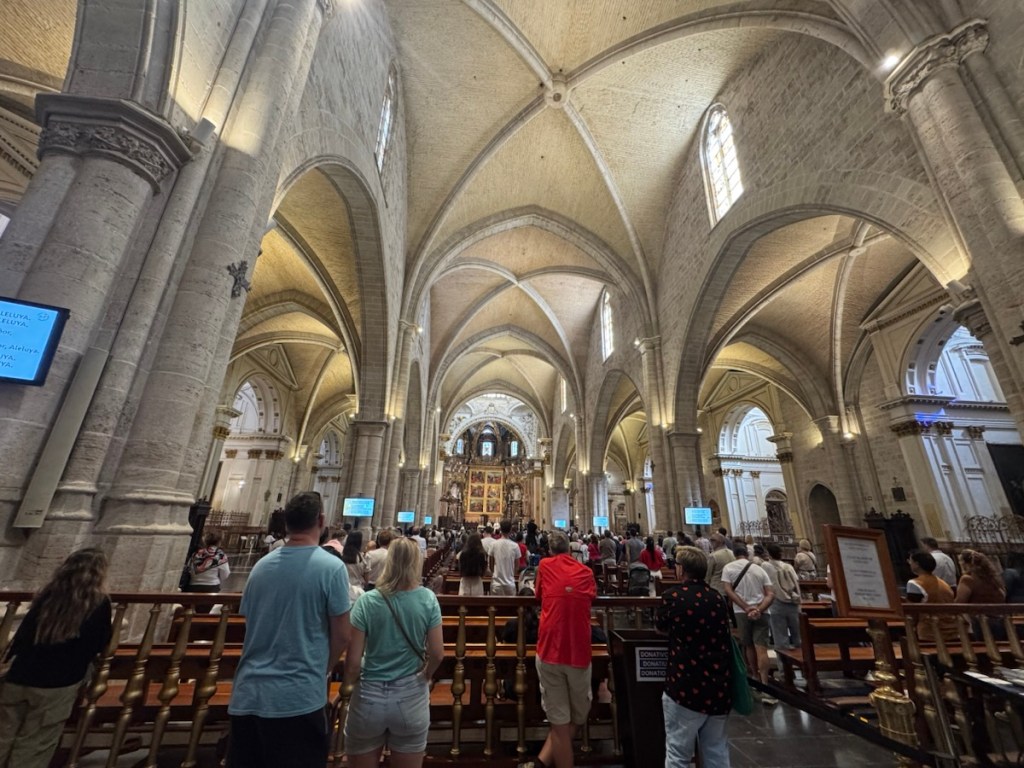
The cathedral and its towers dominate the historical centre. Built on the site of an ancient Roman temple that was later a mosque, work on the current building began in the 13th century and preserves elements from different eras with a mix of Gothic, Romanesque and Baroque architecture.
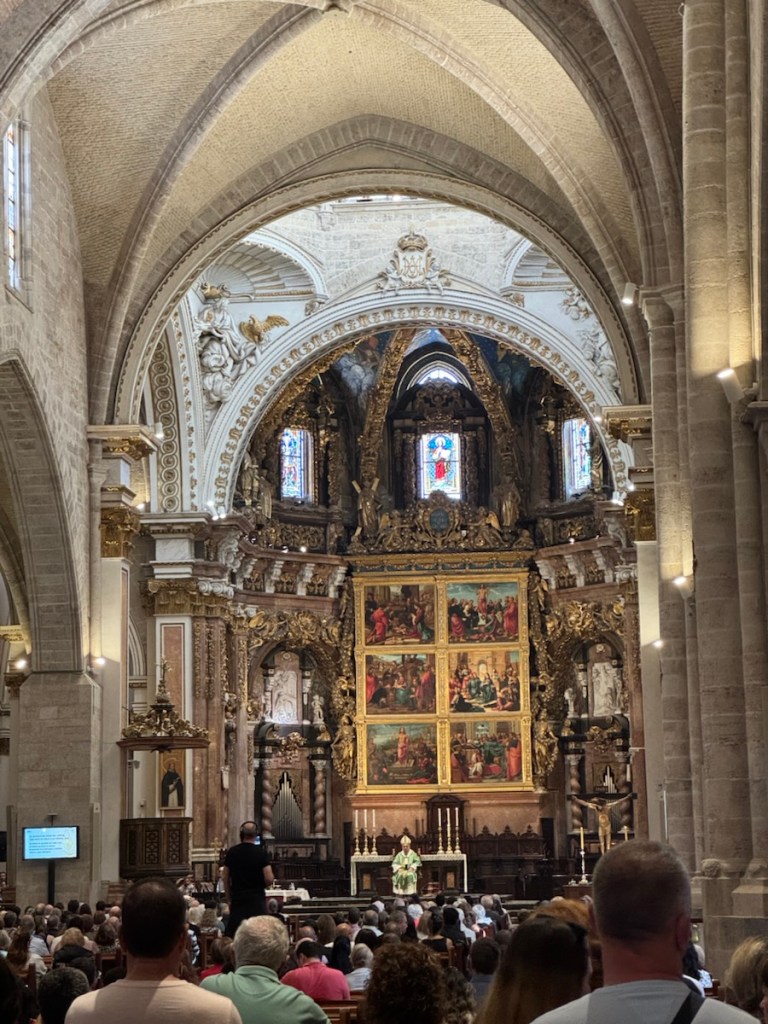
It is best known for holding a chalice which is most commonly credited with being the true Holy Grail, the cup with which Jesus celebrated the Last Supper, although our own quest was thwarted by the fact that it was ‘being cleaned’. There was a also service taking place, but we did manage to get a good view of the Altar decorated with Italian frescoes.


The Miguelete tower overlooks the cathedral and is one of the symbols of the city. The 14th century gothic style octagonal tower stands 51 metres high. There were long queues to climb the 207 steps of the internal spiral staircase, so we decided to save that for next time.
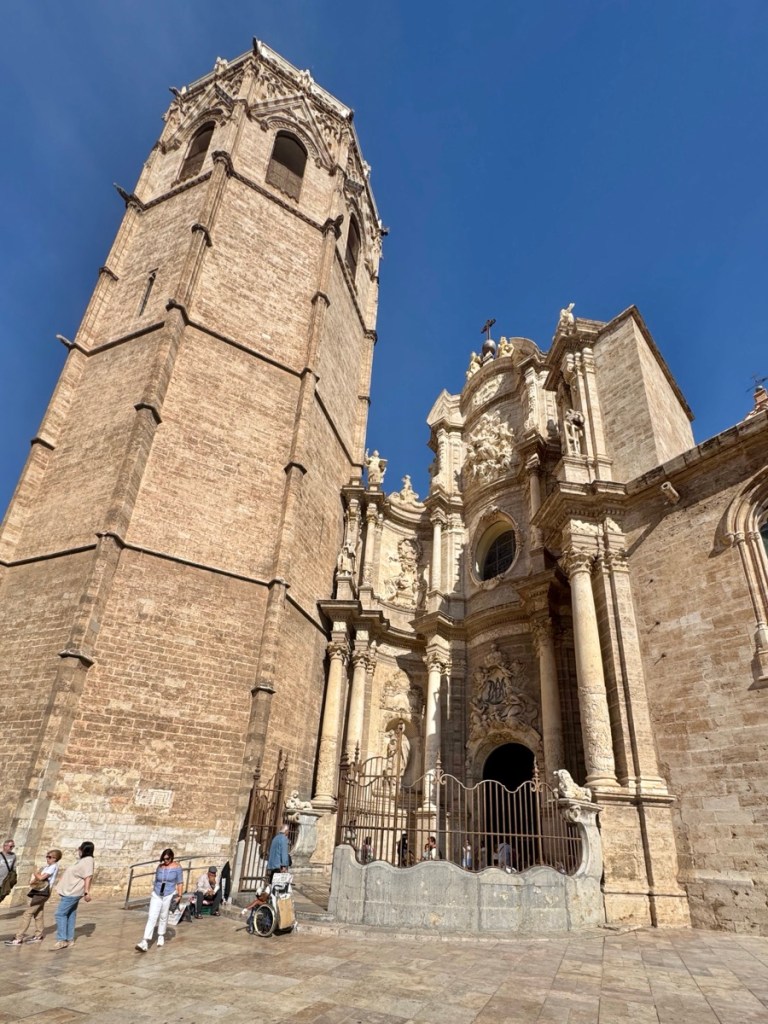

There were many other churches and bell towers to see around the city.


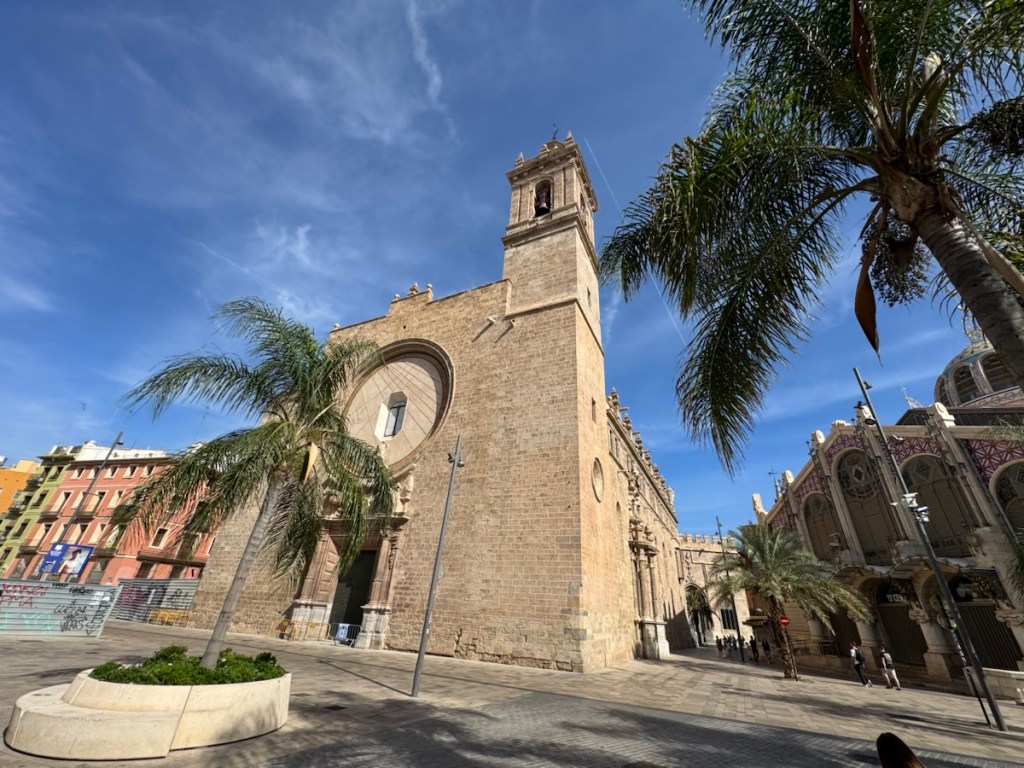
València is also known for its rice growing and for being the birthplace of paella. We were fortunate that the TastArròs 2025, Valencia’s Great Rice Festival, was taking place while we were there.
It was a very popular event with 27 restaurants cooking and serving classic rice dishes like Valencian paella and a variety of other rice creations, all for just €5 per portion.


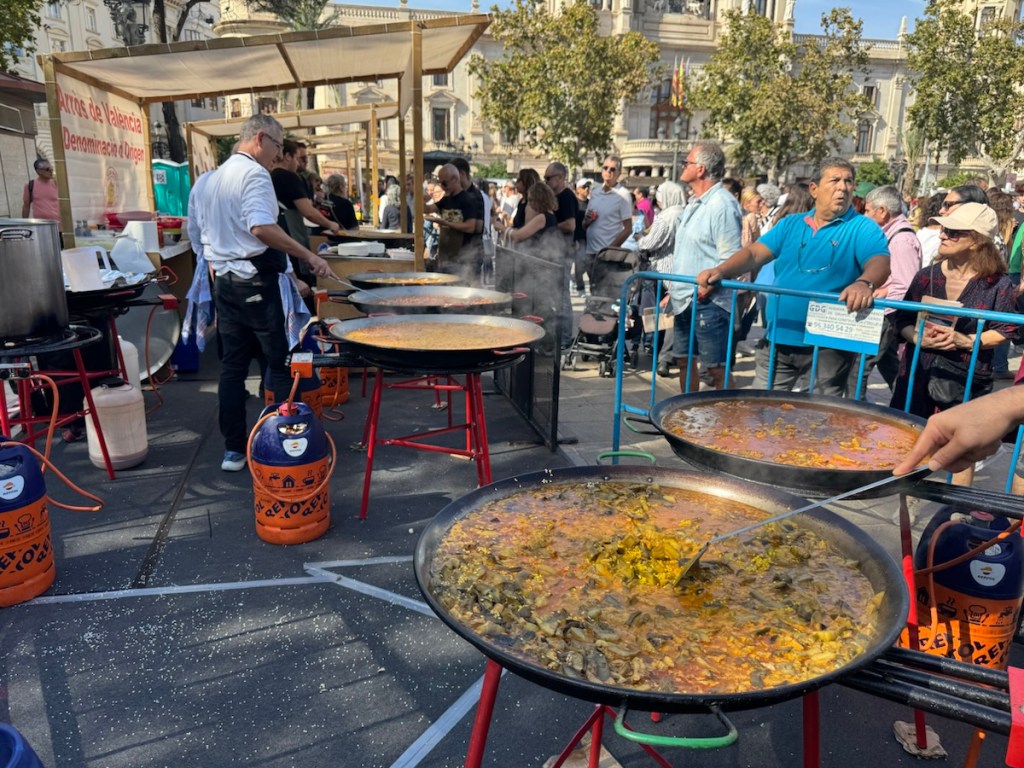
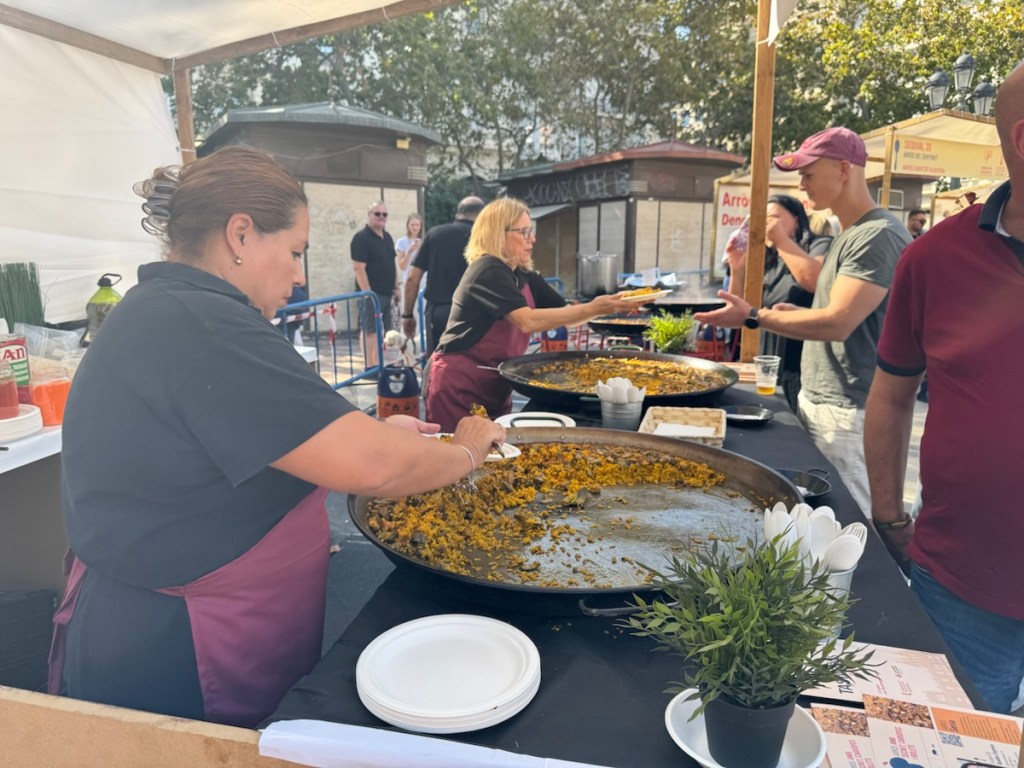
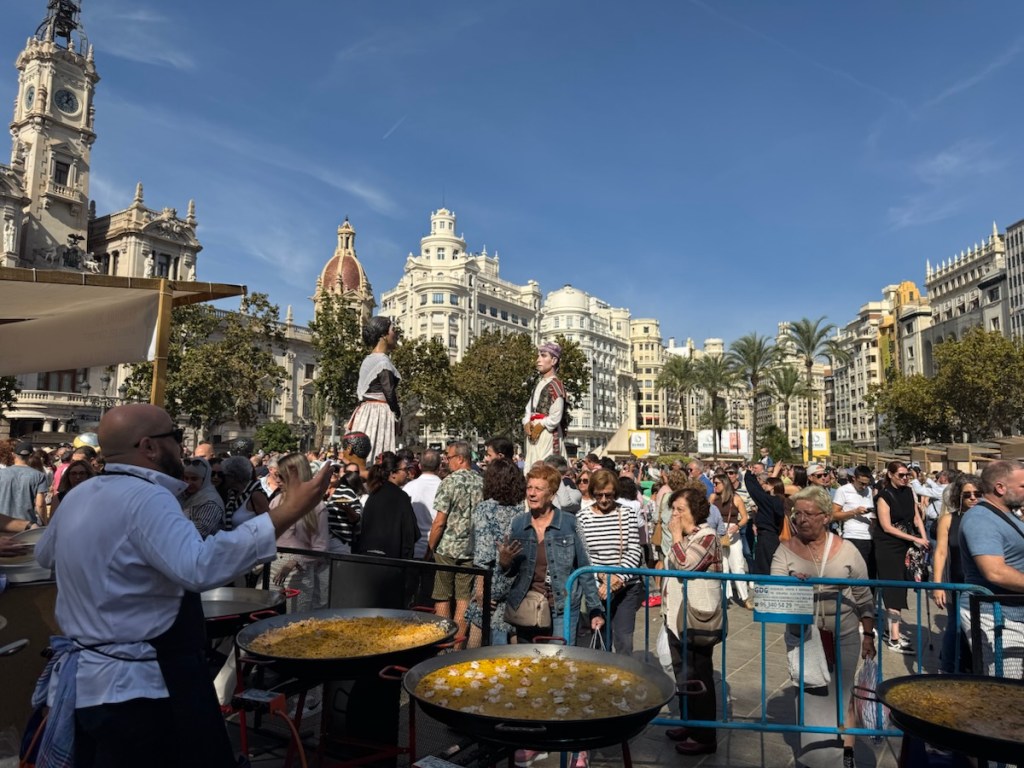
There were also competitions, including the race to find the ‘fastest farmer’ and young chefs competing for the title of ‘Rice Master of the Future’, as well as show cooking, family workshops and live music.
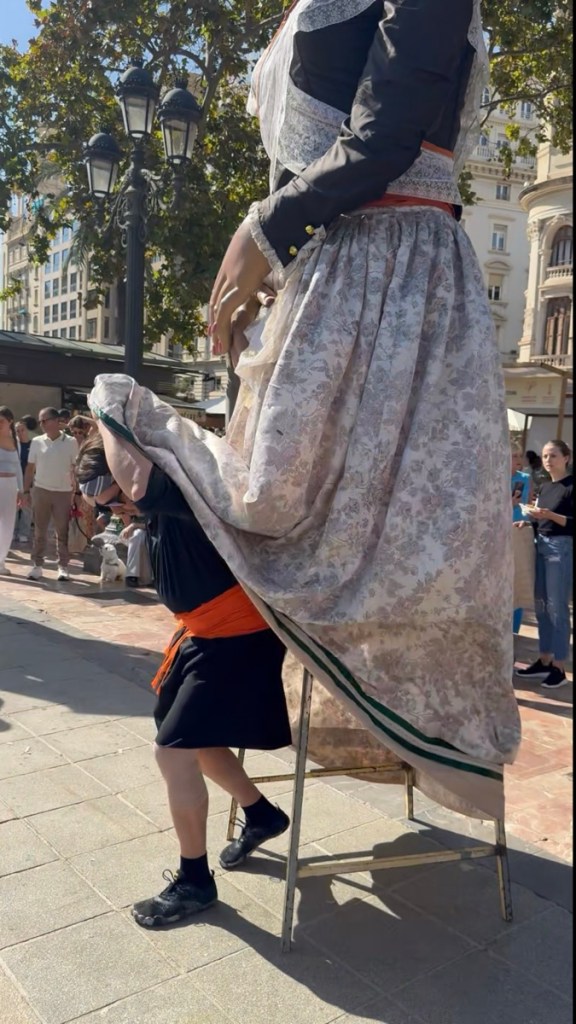
Just as we arrived they had the ‘Parade of Giants and Bigheads’ where huge statues were paraded around the square led by a couple playing the drum and a type of horn.
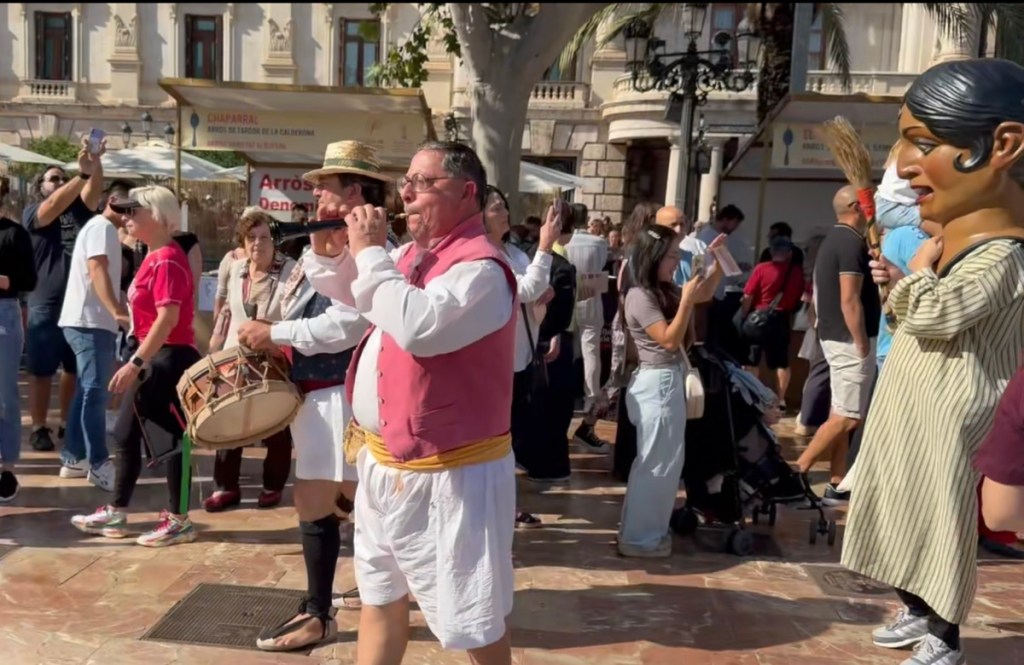
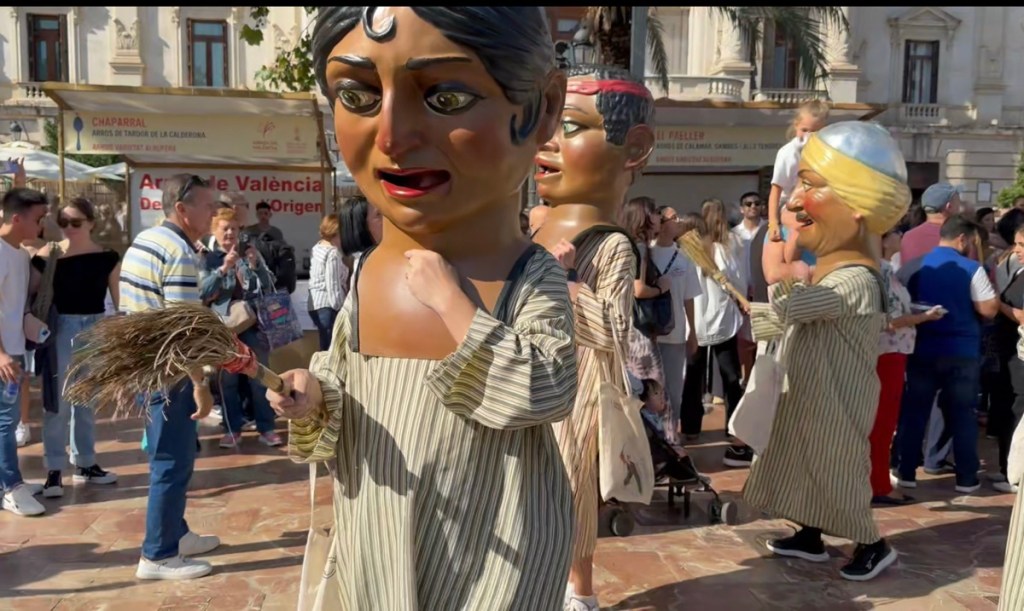

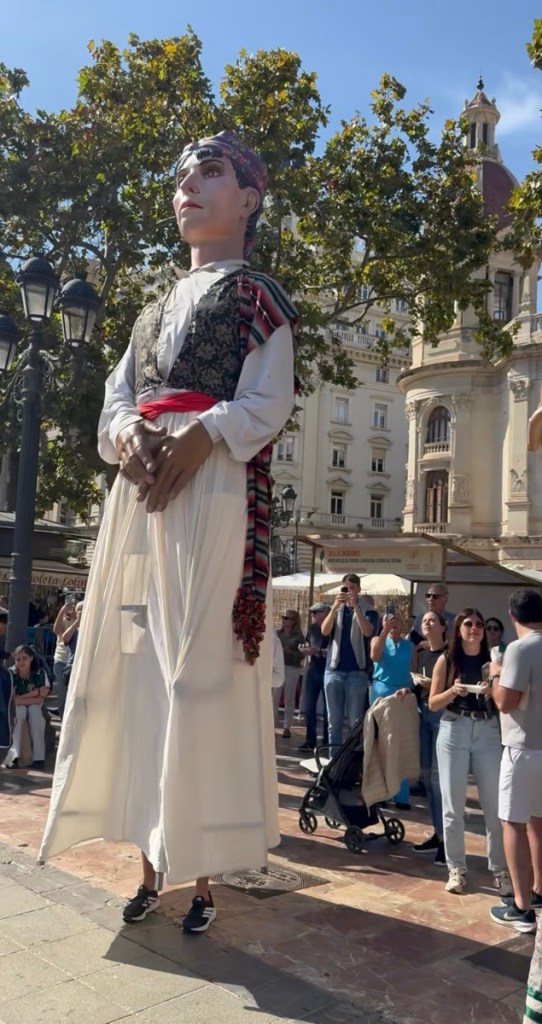

They must have been heavy or awkward to carry as the ‘operator’ could only manage a couple of minutes before needing to be relieved.
We strolled around the streets to the Silk exchange which is considered one of Europe’s most beautiful examples of Gothic civil architecture. It was built in the 15th century with fortress like stone walls looking similar to old medieval castles.

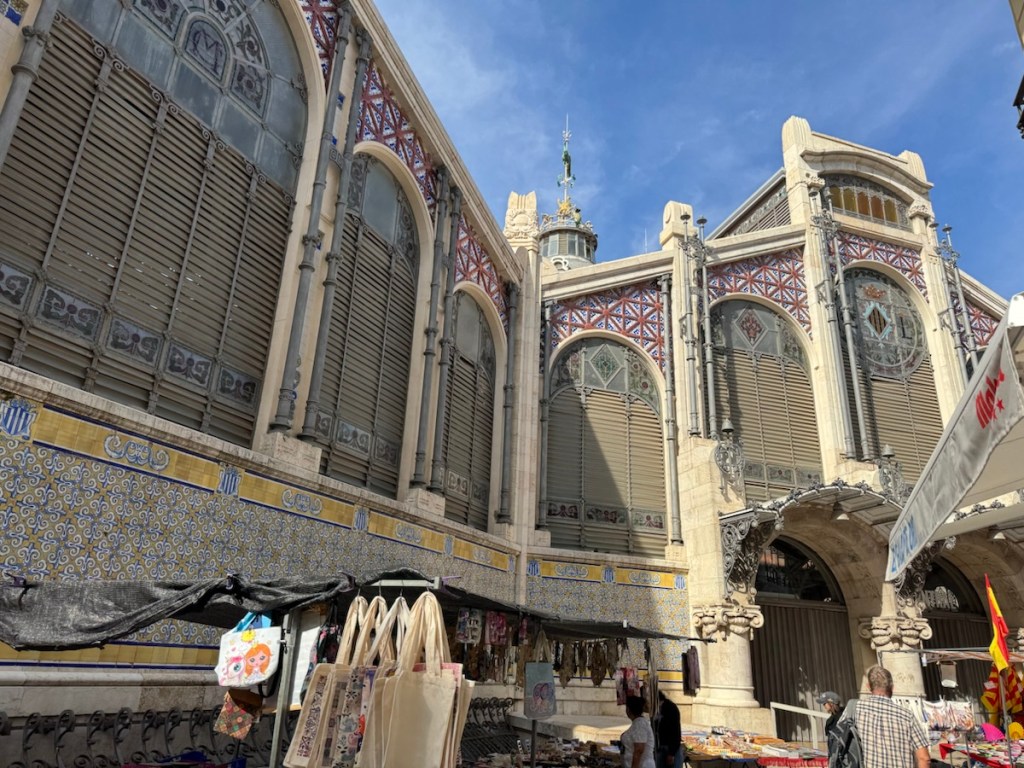
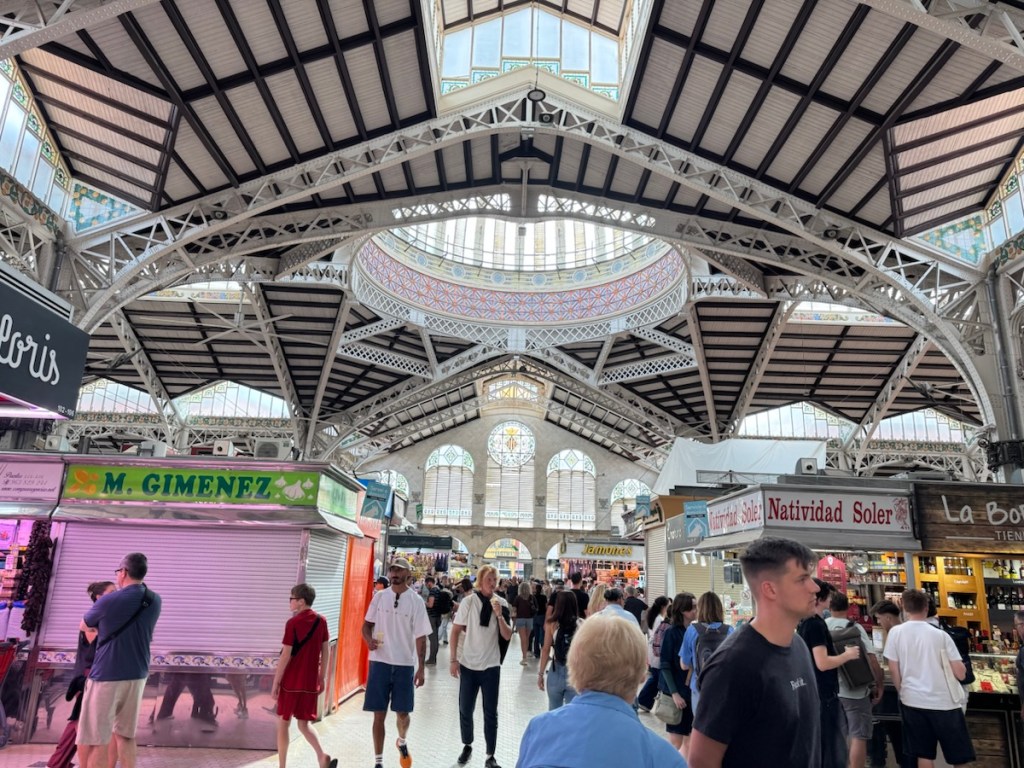
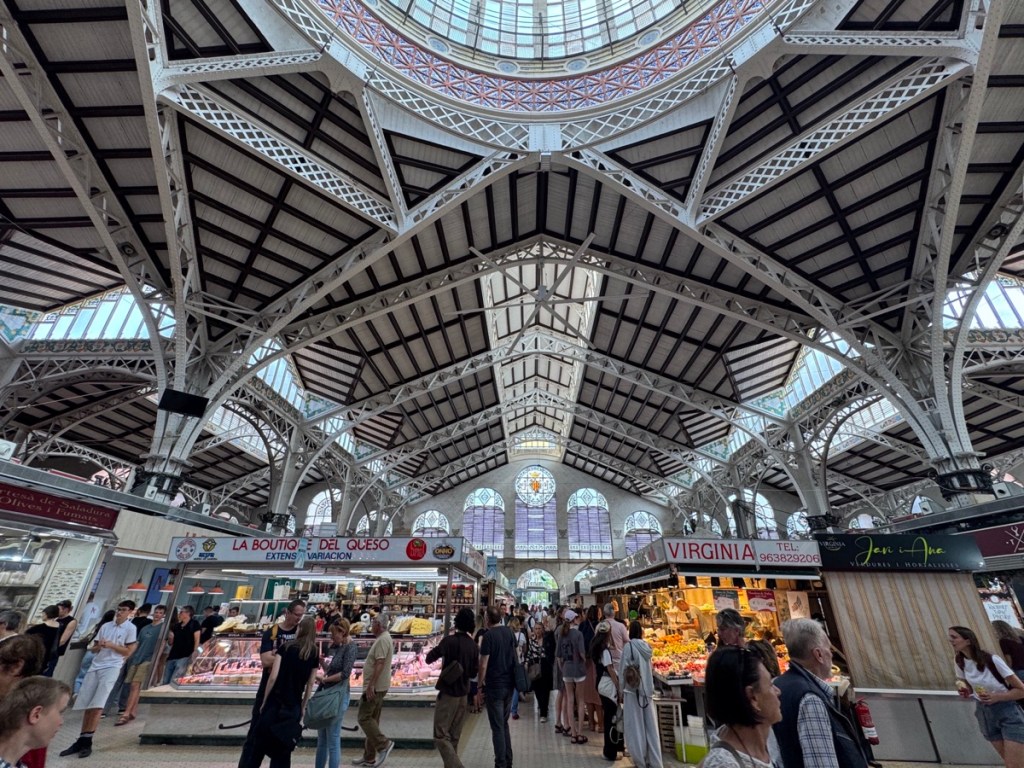
Close by was the Valencian Central Market, it claims to be the largest covered market of fresh products in Europe (they all seem to have their own version of a claim to fame!). It was Sunday and the market was closed so we decided to head back to Ziggy and returned the following day when we were able to go inside.
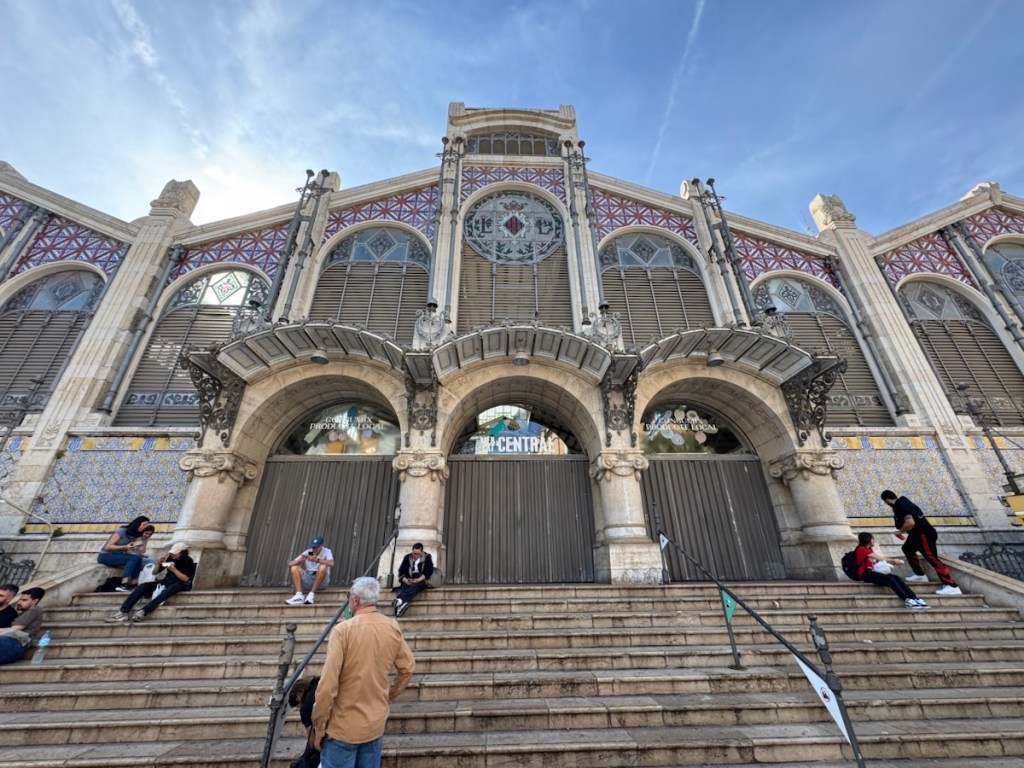
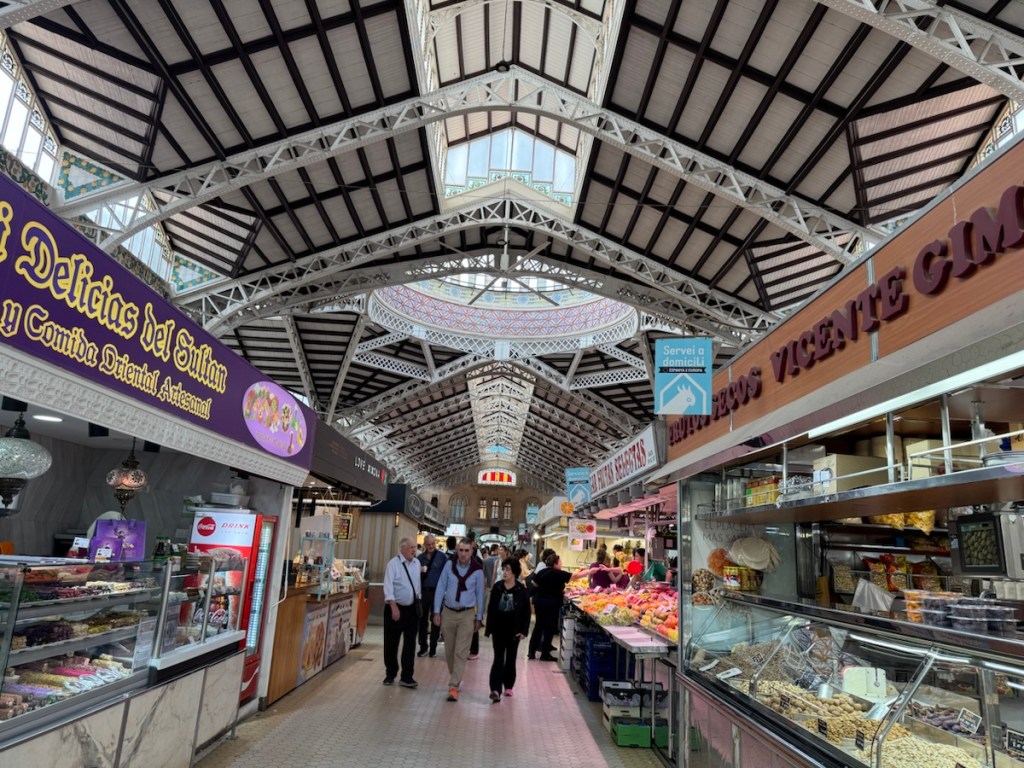
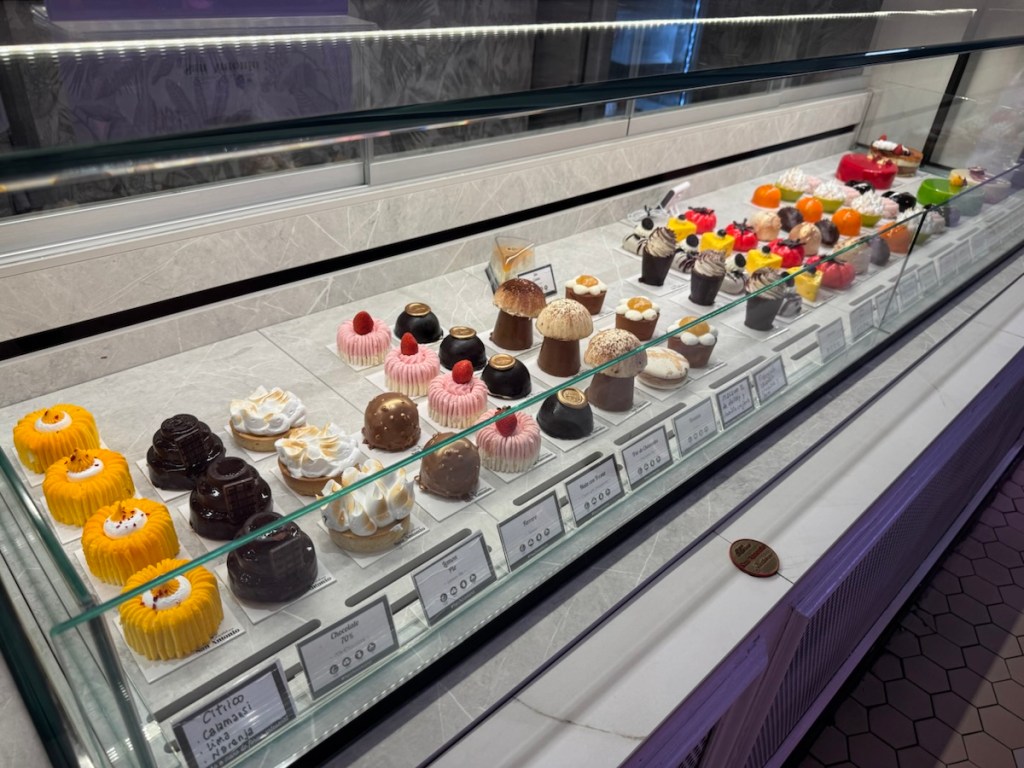
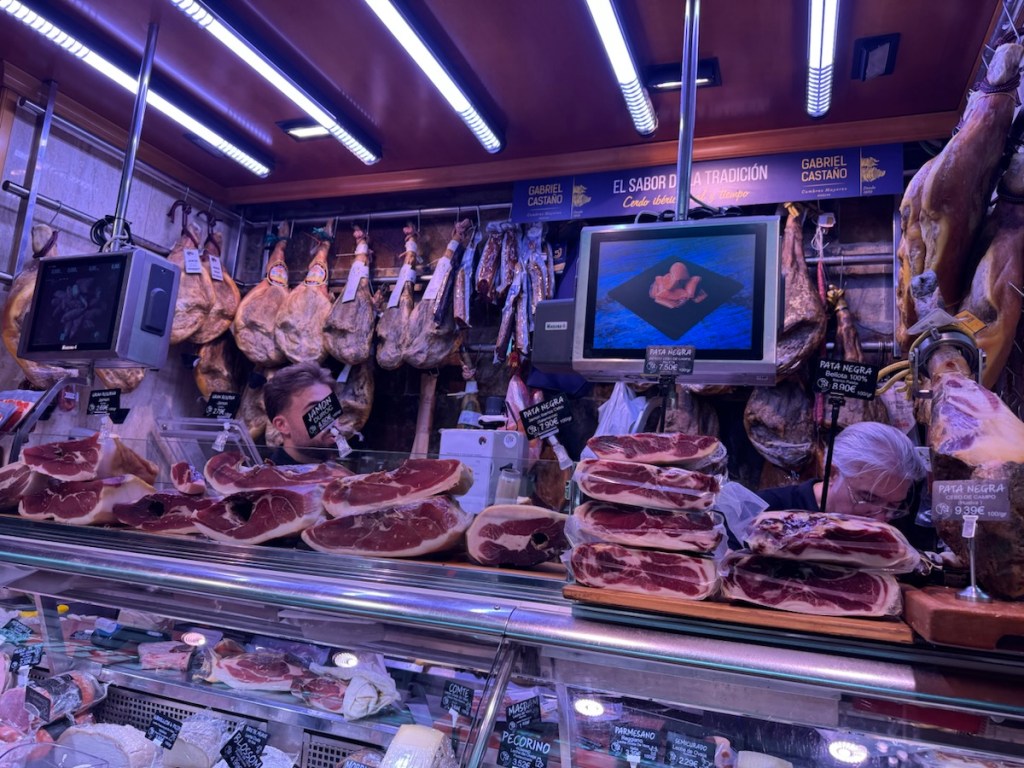
The market is huge, over 8,000 square metres, with crystal domes, iron columns, traditional Spanish tiles and stained glass. Apparently there are more than a thousand stalls which are full of fruit and vegetables, dairy, spices, nuts, meat and fish products. Stalls also spill outside along with various food and tapas bars.

The square which had been packed with people and paella stalls the previous day during the rice festival was very quiet, the stalls had all been tidied away. However, it did mean that the City Hall overlooking the square was open for visitors.
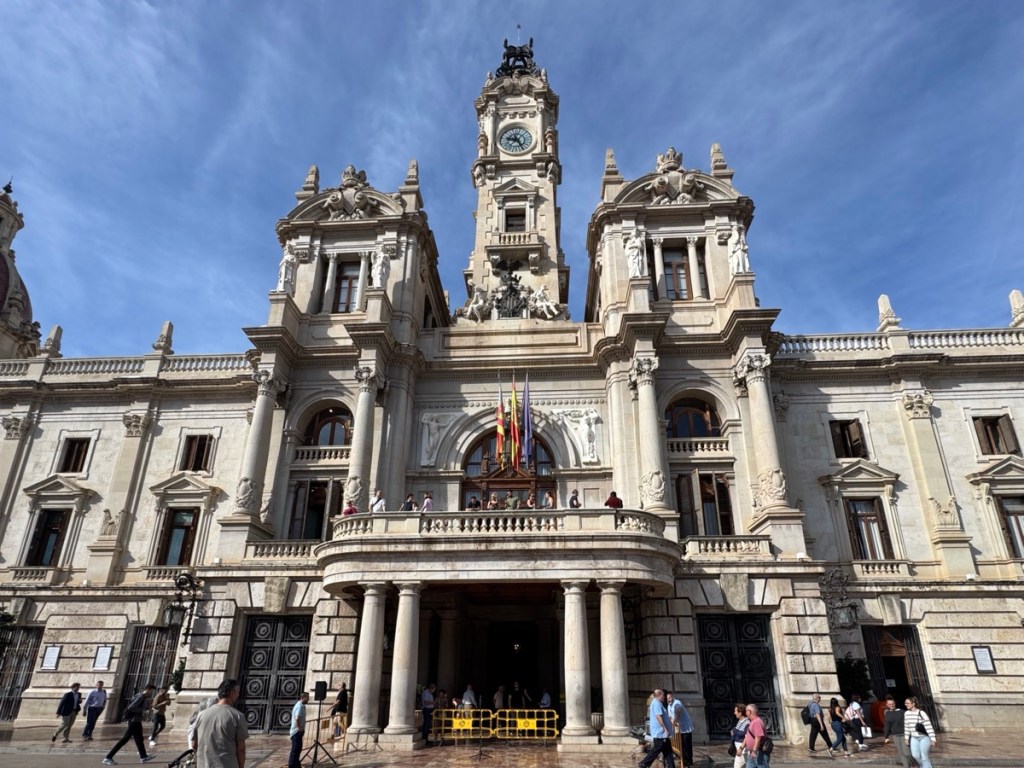
The City Council has been based there since 1934, and the building also houses the municipal archives, a museum, and various administration offices. Inside, the entrance hall has a marble staircase and stained glass ceiling, the assembly halls are lavishly decorated with glass chandeliers and paintings.


From the grand balcony you have great views over the now, much quieter square.


On our way back to Ziggy, we went via the Bullring, a bullfighting ‘Coliseum’. Built between 1850 and 1859 on the site of an unfinished plaza. It is 17.65 metres high, the ring itself is 52 metres in diameter, with 384 external arches and has a seating capacity for 10,500 spectators. València’s Bullring is one of the top five bullrings in Spain. Bullfighting is still carried out for various festivals throughout the year.
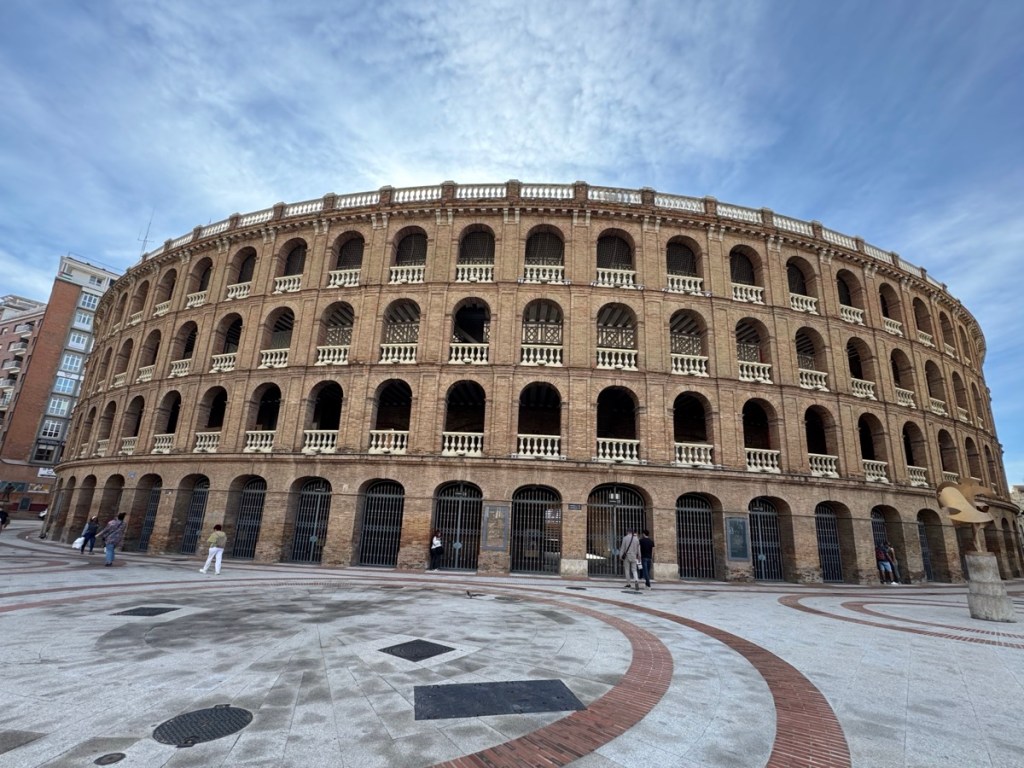
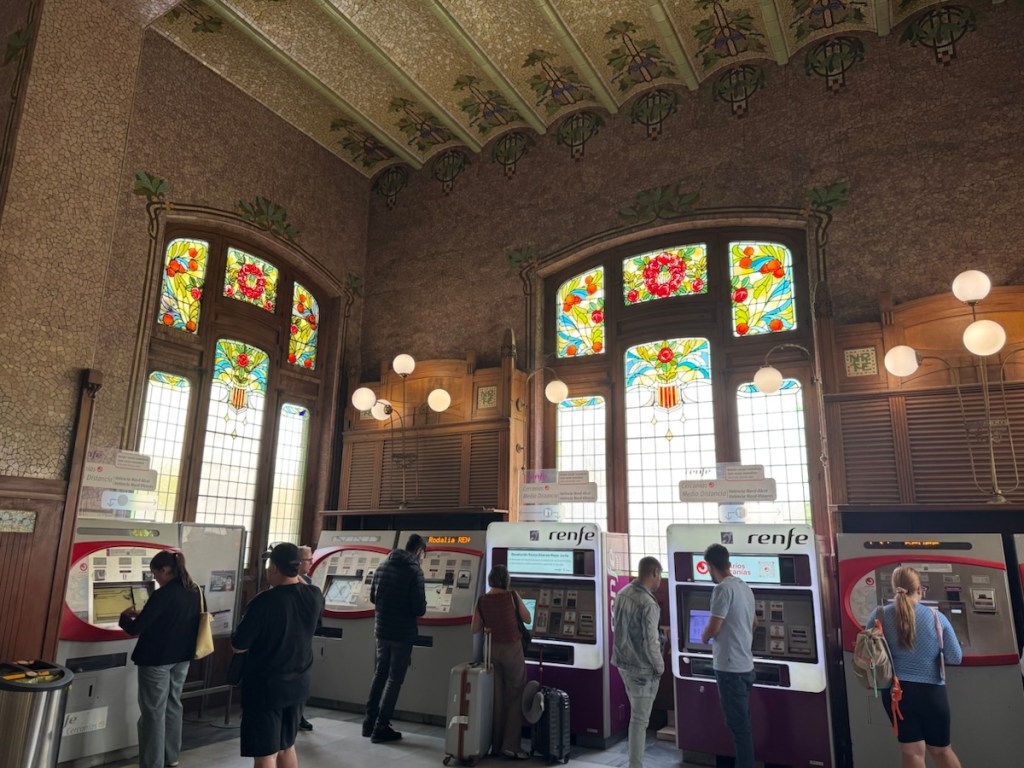
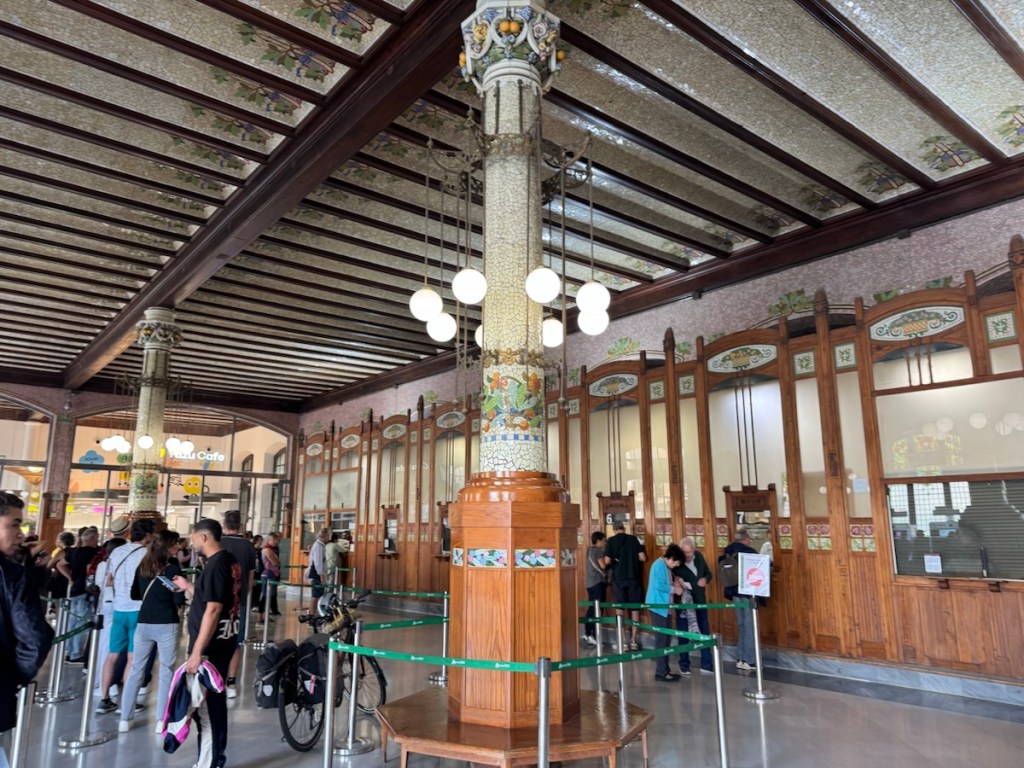
València has a great public transport network with trams, buses and trains. The elaborate North Railway Station (Estació del Nord) is located next to the bullring.

Built at the beginning of the 20th century, the front façade has motives of Valèncian oranges and orange blossom. Inside is just as impressive with stained glass, wrought iron, colourful mosaics and wooden counters. The old waiting room has intricate tiles and mosaics on the walls and ceiling.

València is an interesting city to visit with lots to see, we were only here for a short time and just scratched the surface. But with a good sailing wind forecast, it was time for us to move on. It would be good to revisit sometime, especially when they are holding one of their big festivals.
 Sailing ZigZag
2 replies on “València”
What a place Valencia looks. It really comes across beautifully in your photos. What a range of lovely buildings, history and culture. A little disappointed not to see Paul trying to be a giant – like you say, maybe next time!
It’s always great to read the background to the places you visit and to a learn and little nugget of info. So thank you.
Safe onward sailing.
LikeLiked by 1 person
Wow!
What a wonderful travelogue of Valencia, and what brilliant planning to arrive during the paella festival, finding the best beer, a superb market that looks more like a cathedral, dancing and those Spanish giants backed up by photos that make you feel like you are there.
Just what we needed with the heavy rain and clouds in Blighty whilst being tortured by radio coverage of the Ashes.
LikeLiked by 1 person