
With an extended marina stay in Tarragona, and free entry into all of the historical sites, we had a full itinerary ahead and set off to the old town.
Our first stop was to a large model of the Roman city of Tarraco at its peak in the 2nd century A.D. It was located inside the dark stone vaulted cellar of a medieval noble man’s house. A short talk was held explaining details of the ancient city, and its different terraces, with the temple at the top of the hill, the Forum in the middle and the Roman Circus on the lower level, all surrounded by a fortified wall which was built around Tarraco. Unfortunately, I couldn’t take a picture of the model but this is a map that we found later in a museum showing the layout of the ancient city highlighting the Roman past of Tarraco.

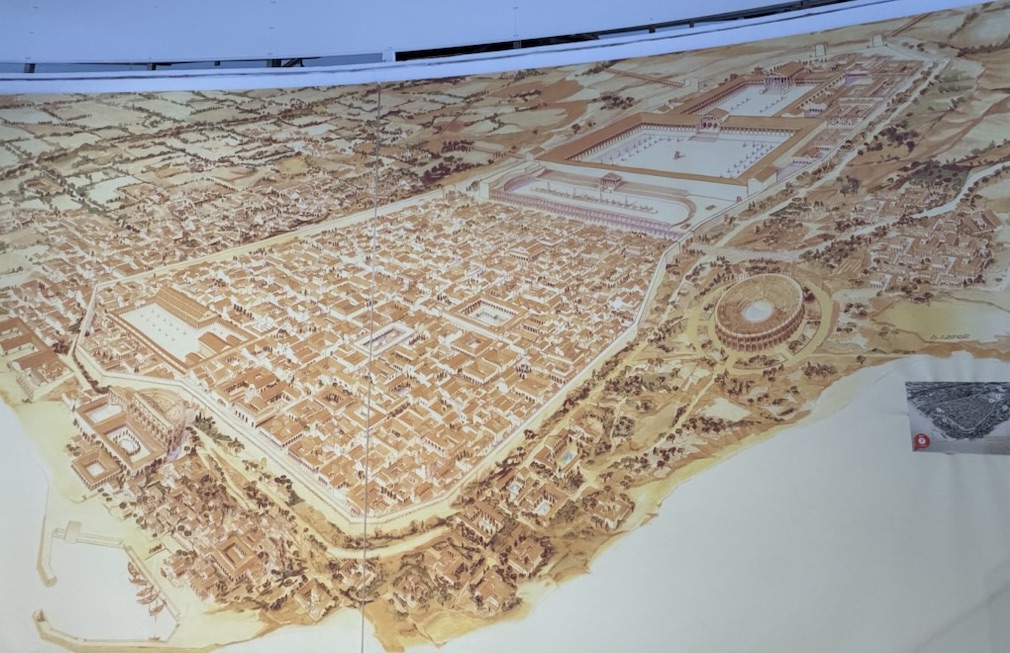
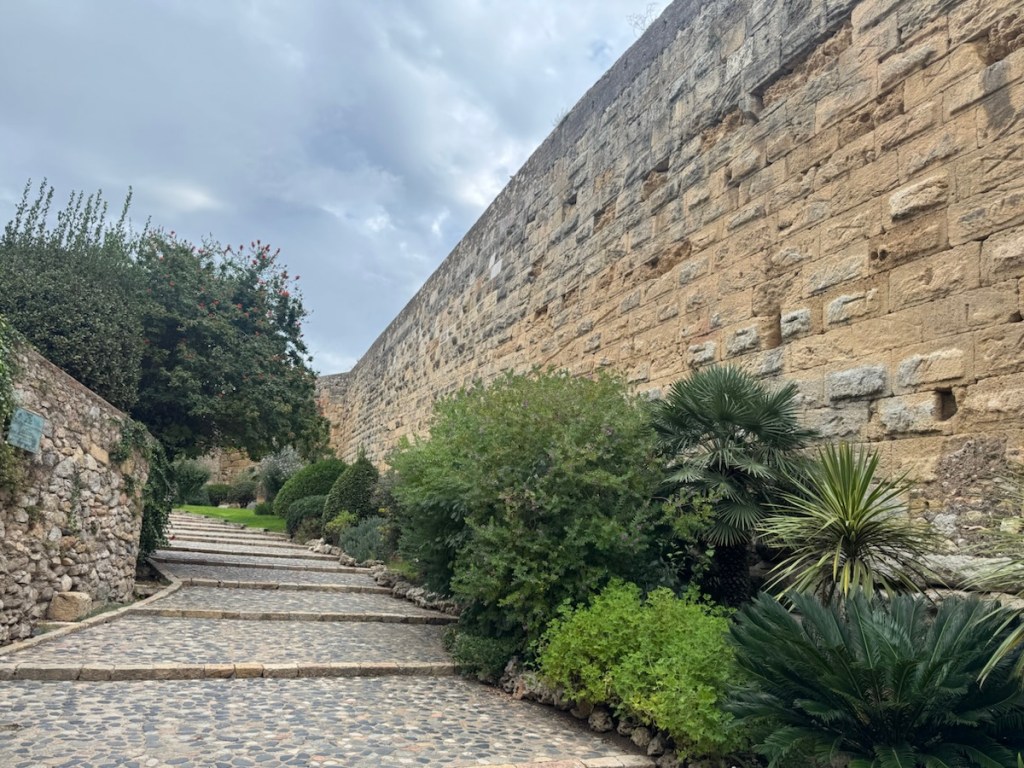
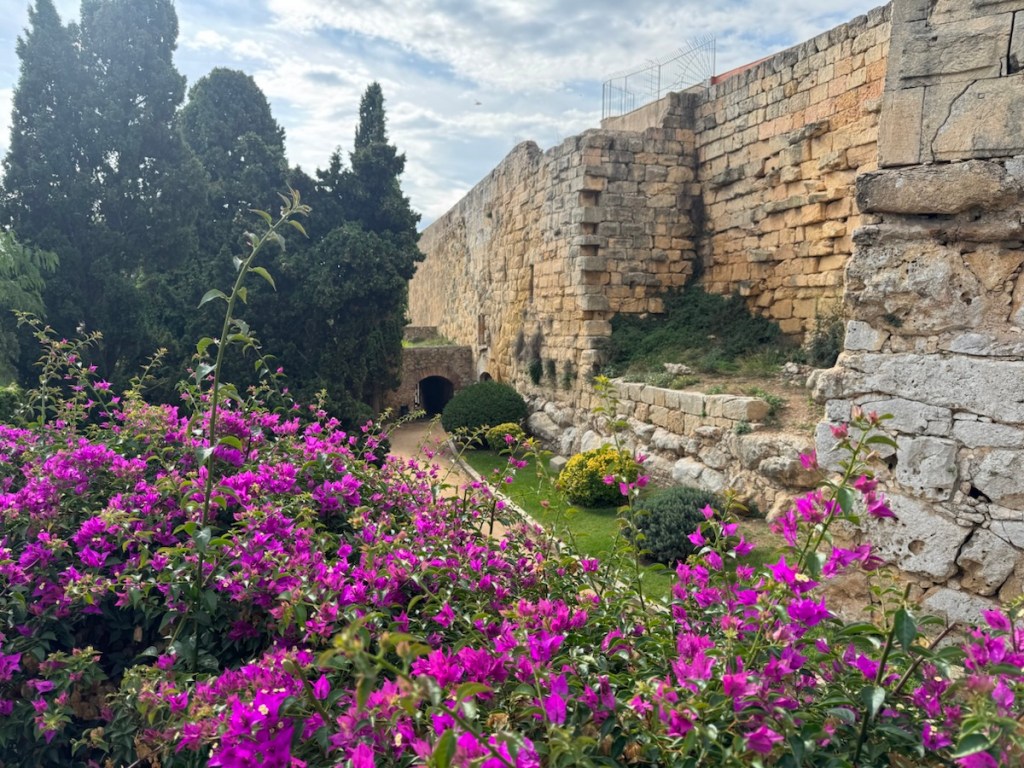
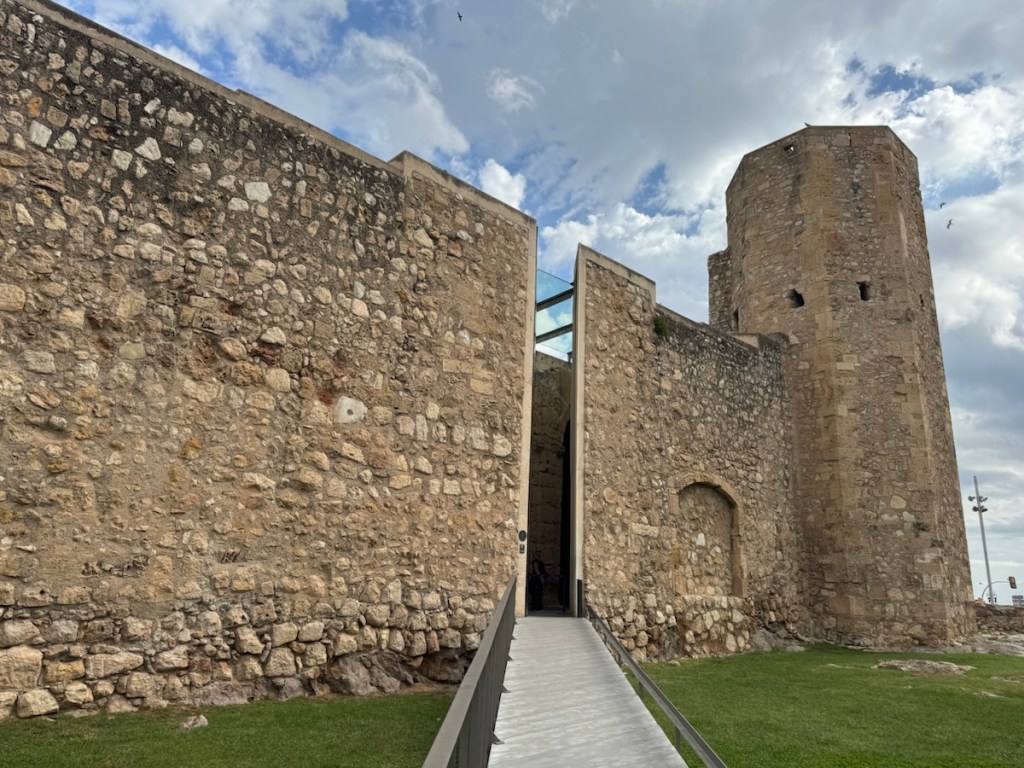
The old walls were built between the end of the 3rd century and the beginning of the 2nd century BC. Today, approximately 1.2km of its original 3.5km remain with just the upper part still standing.
In 1933 the area was restored and converted into gardens with an archaeological walk leading you around the remains of the fortifications and three Roman towers. The idea was to create ‘the most famous archeological promenade in the world’, quite a challenge, it was a lovely walk.
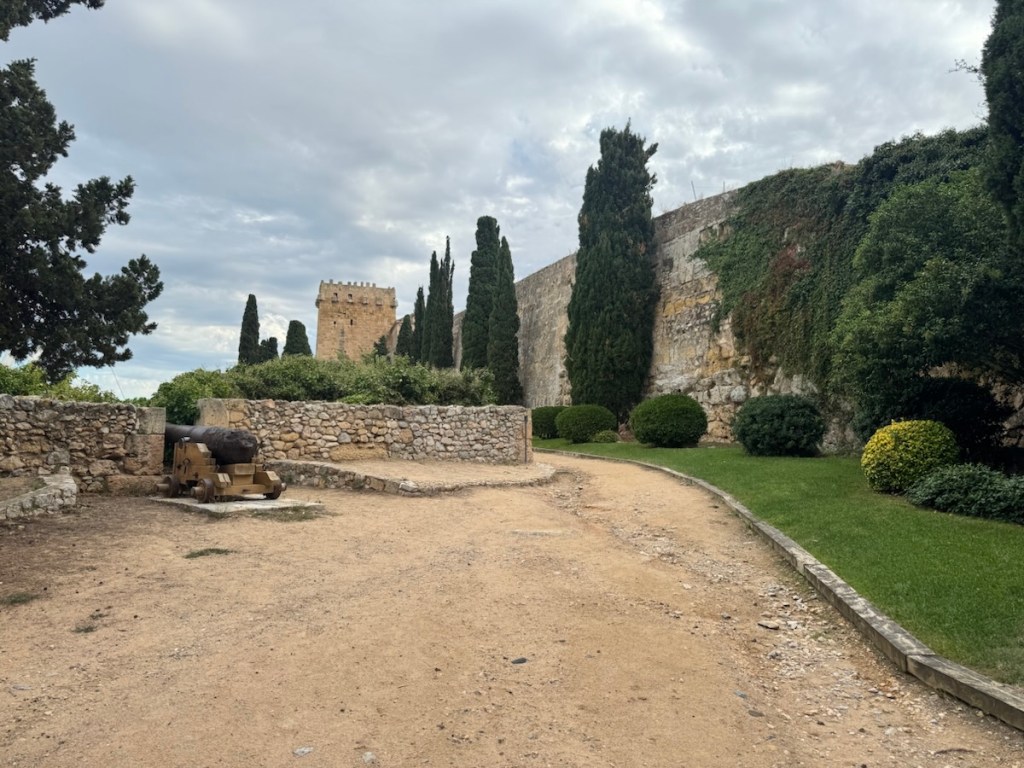


Two of the cannons were from La Cavada, Cantabria, others, such as this one, were manufactured in Falkirk, Scotland, in the 18th century.

The walls originally stood six metres high and four metres wide, reinforced by towers. This was later increased to twelve metres high and up to six metres thick. Some parts were rebuilt, but in places the extension was built on top of the early construction, the differences in the stonework were noticeable.
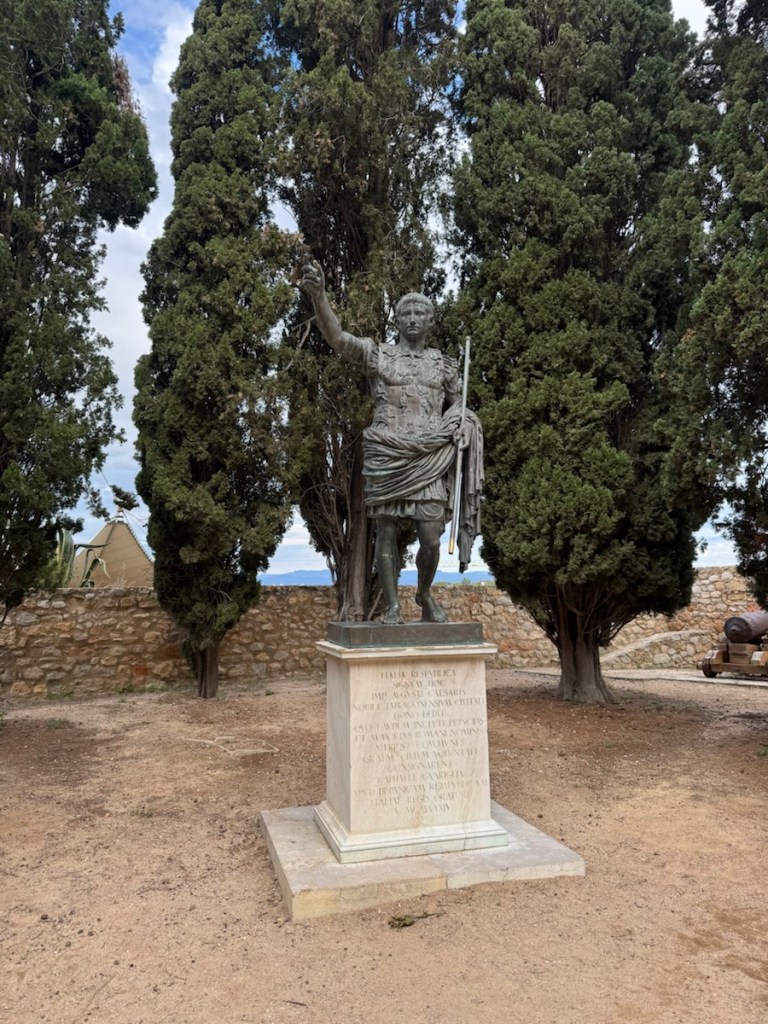
There is a bronze statue of Emperor Augustus in the gardens, apparently this is a copy, the original marble statue is in the Vatican museum.
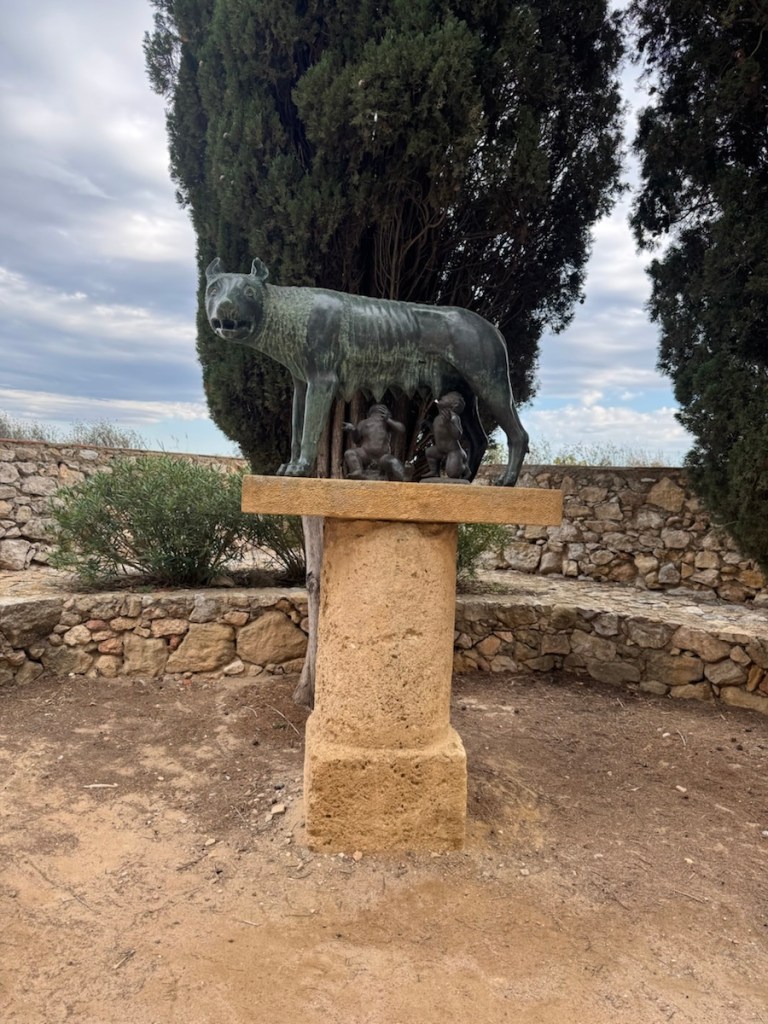
There is also a bronze copy of the Capitoline Wolf statue. The sculpture was inaugurated on 21 April 1967, marking the anniversary (2,720 years) of the founding of Rome.
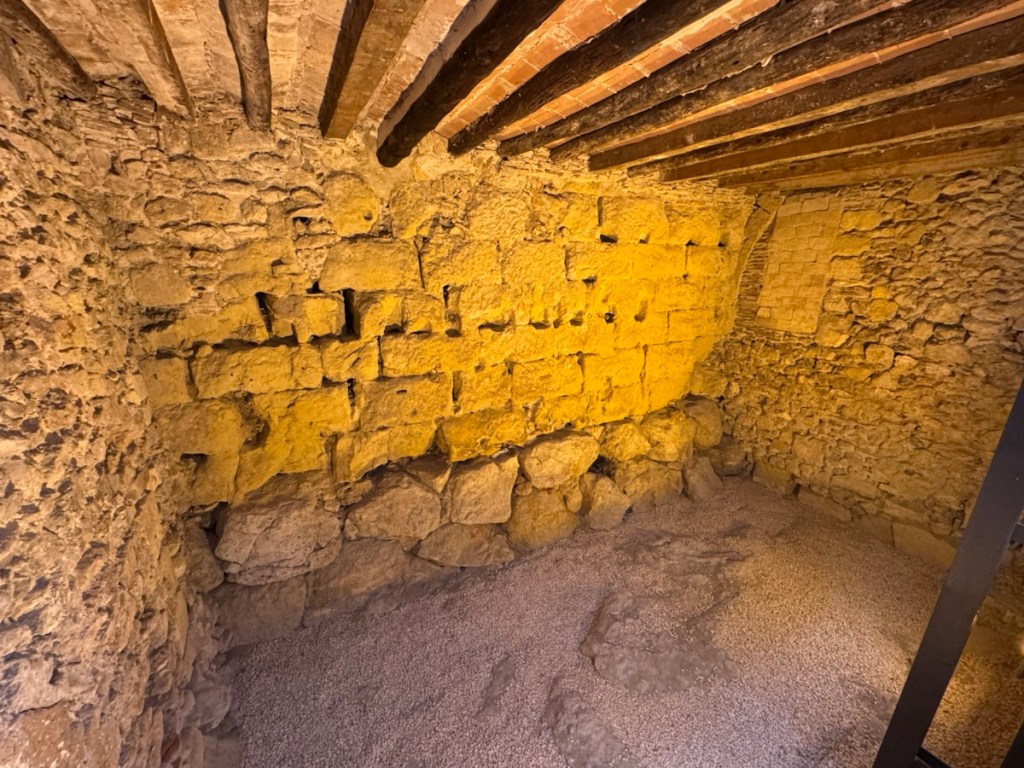
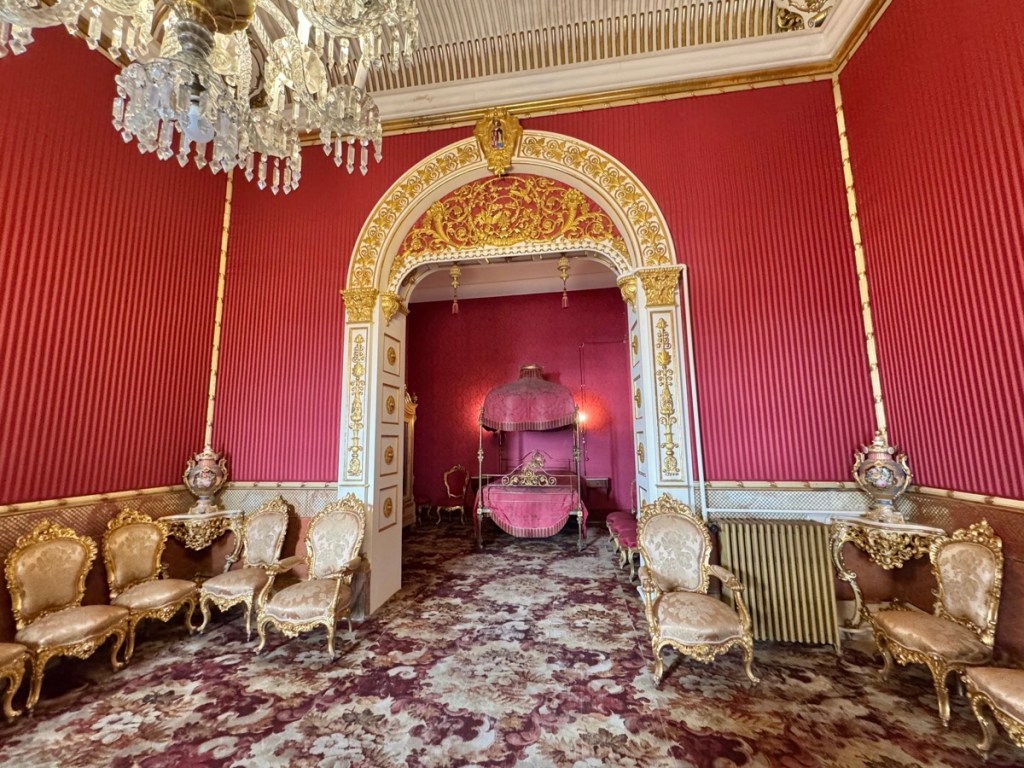
During the Middle Ages, Tarragona’s richest and most influential families built their homes and palaces near the Cathedral. Casa Canals belonged to the Canal family, members of a select noble class, it is first mentioned in 1802, but archeological excavations of the present day building uncovered evidence of an earlier 15th century building. Now a museum, the house preserves features from different periods, from the excavated stonework of the previous 15th century building to the luxurious 18th and 19th century living areas, which include richly decorated rooms with impressive crystal chandeliers and a small chapel.



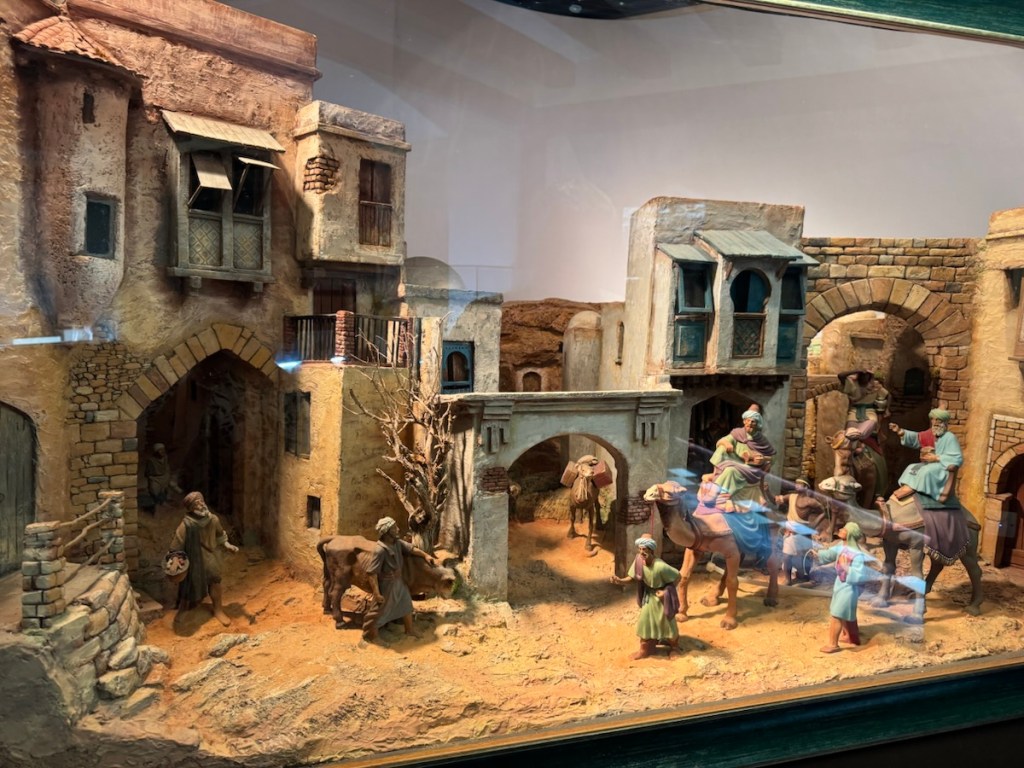
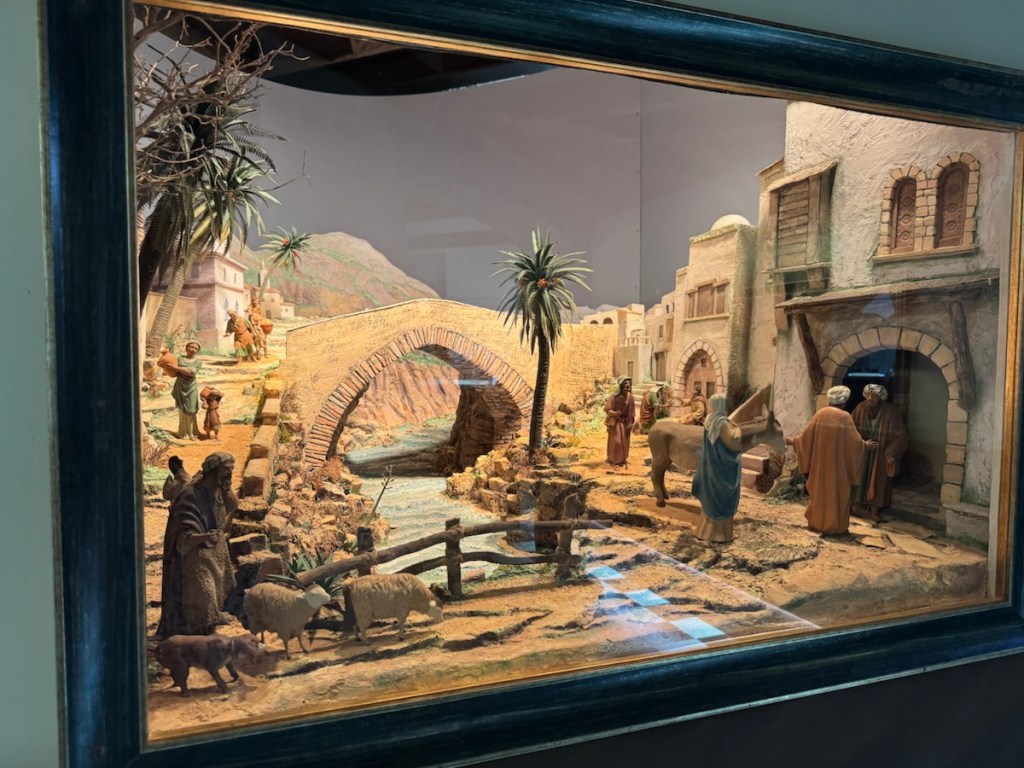
There was a rather random selection of early 20th century nativity scenes, which are used for exhibitions at Christmas. They are mainly made of styrofoam and have been exhibited in various contests in Catalonia as well as other parts of Europe.

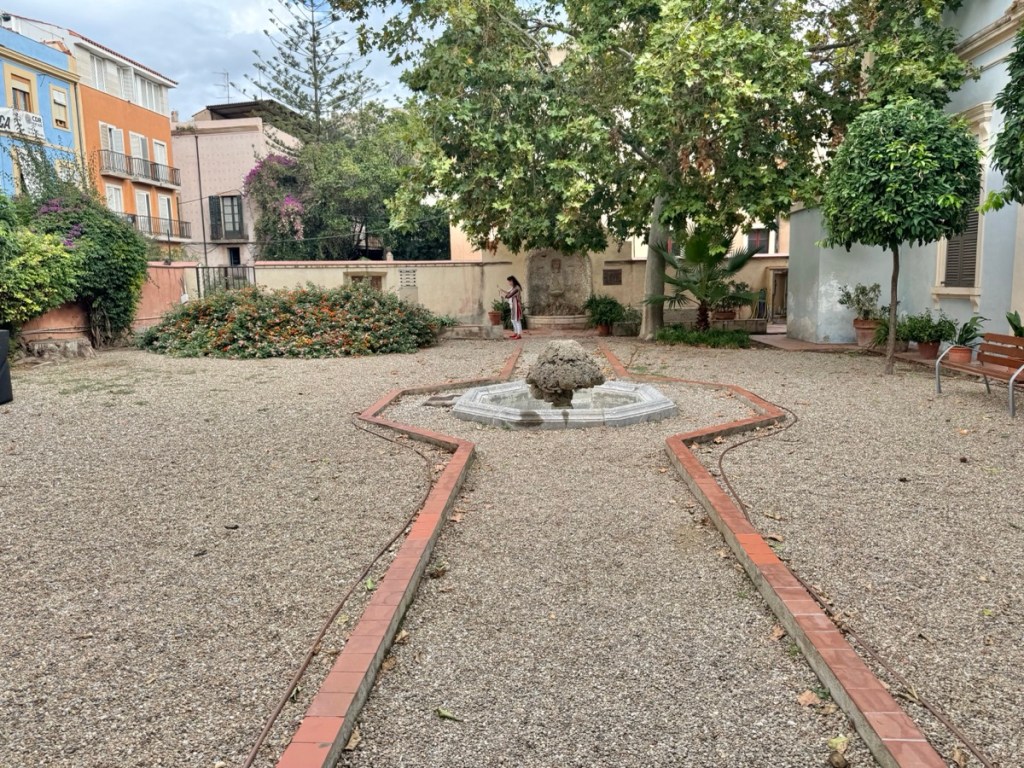
Outside there is a large patio garden and upper terrace with views of the sea.

After a good look around the house we visited the Roman Circus at the lower level of the town. A huge hippodrome built during the 1st century AD to stage horse and chariot races. The large structure was 350m long by 115m wide with an estimated seating capacity for 30,000 spectators.
We walked in through an opening in the 14th century section of the wall to see remains of some of the seating and archways at the eastern end of the Circus. The building now standing on this part of the Circus has a useful mural showing how this section would have looked.


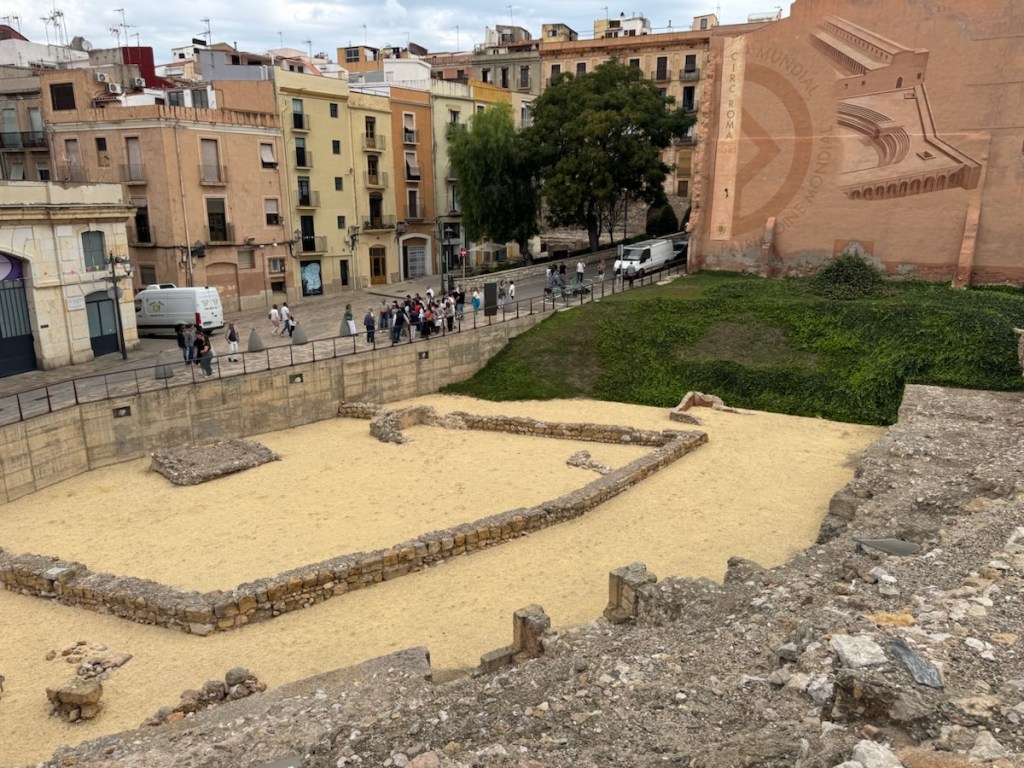
It is considered one of the best preserved circuses in Europe, although most of the circus now lies hidden beneath the medieval city centre. We could see another small area of the structure uncovered in the next street. All that remains are sections of the walls and some of the tunnels which originally gave access to the stands but now run beneath the surrounding streets and buildings of the city centre. We followed the long tunnels in various directions, which was all a little disorientating, and eventually emerged in the area of the old Forum.
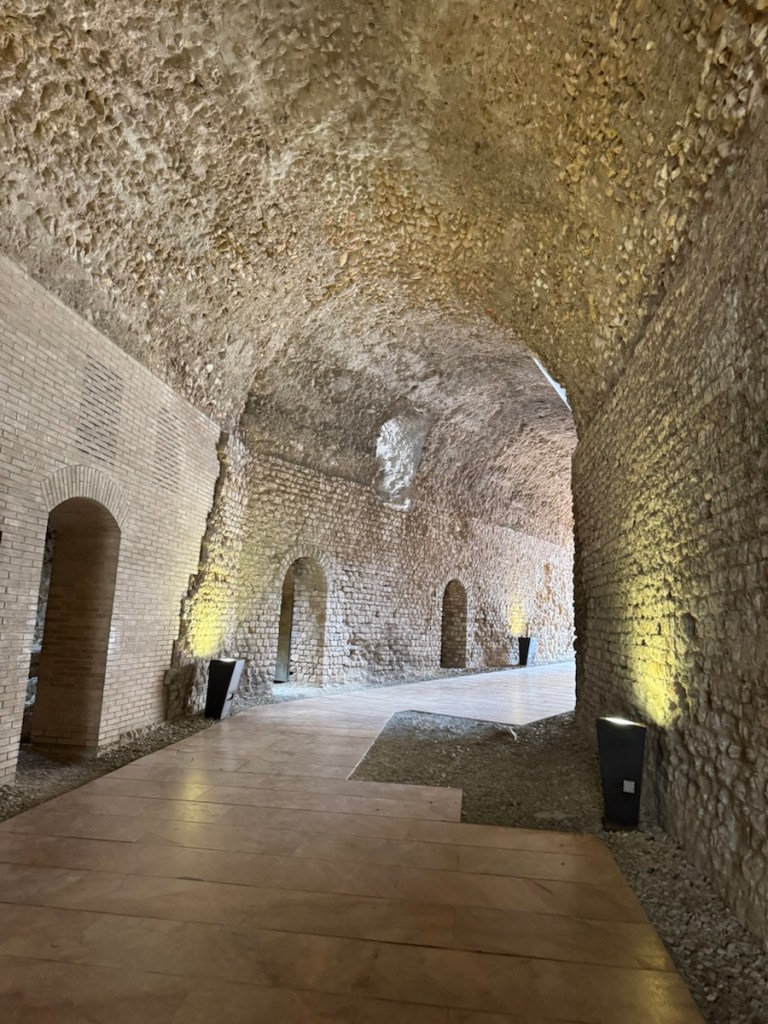

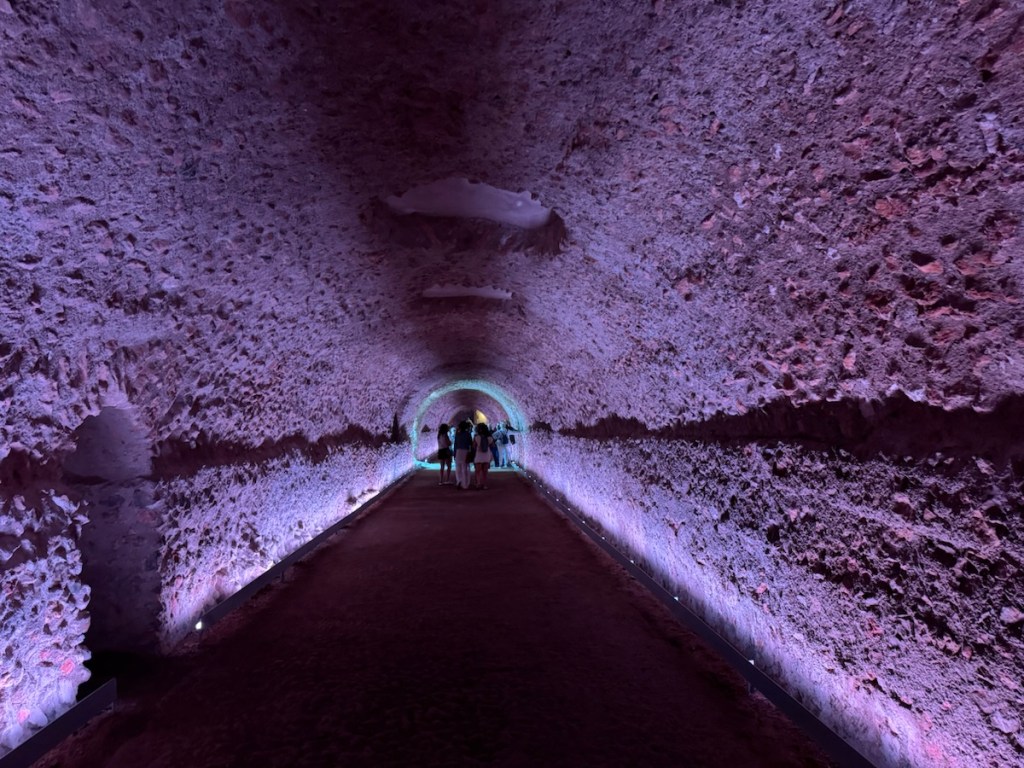

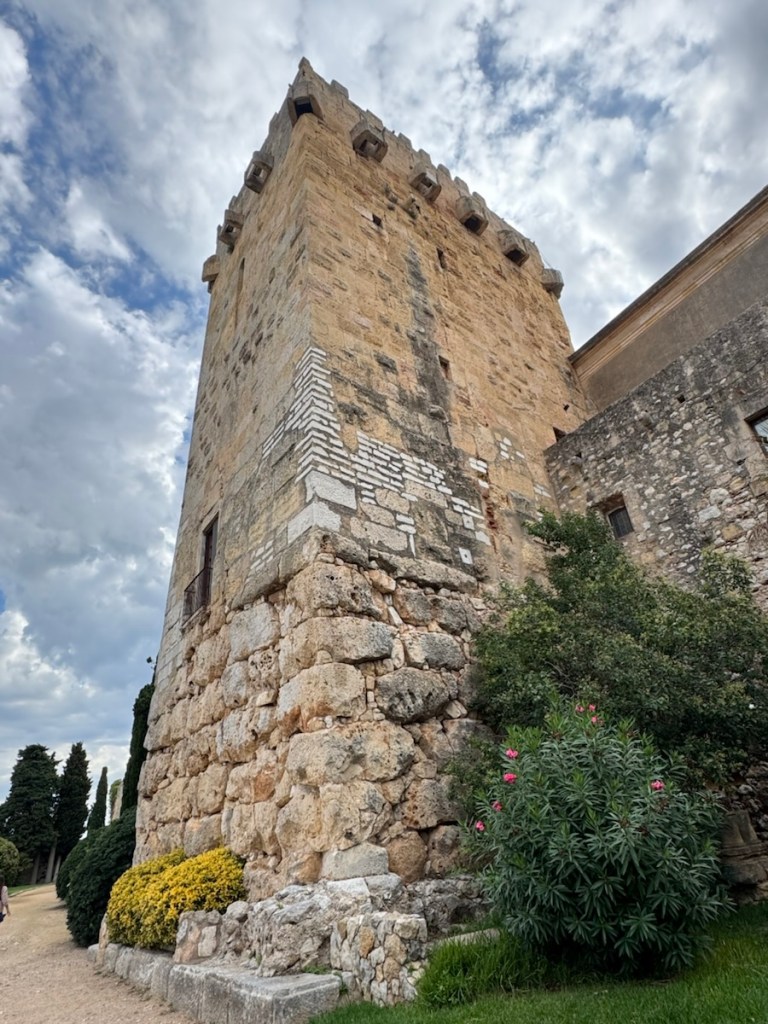
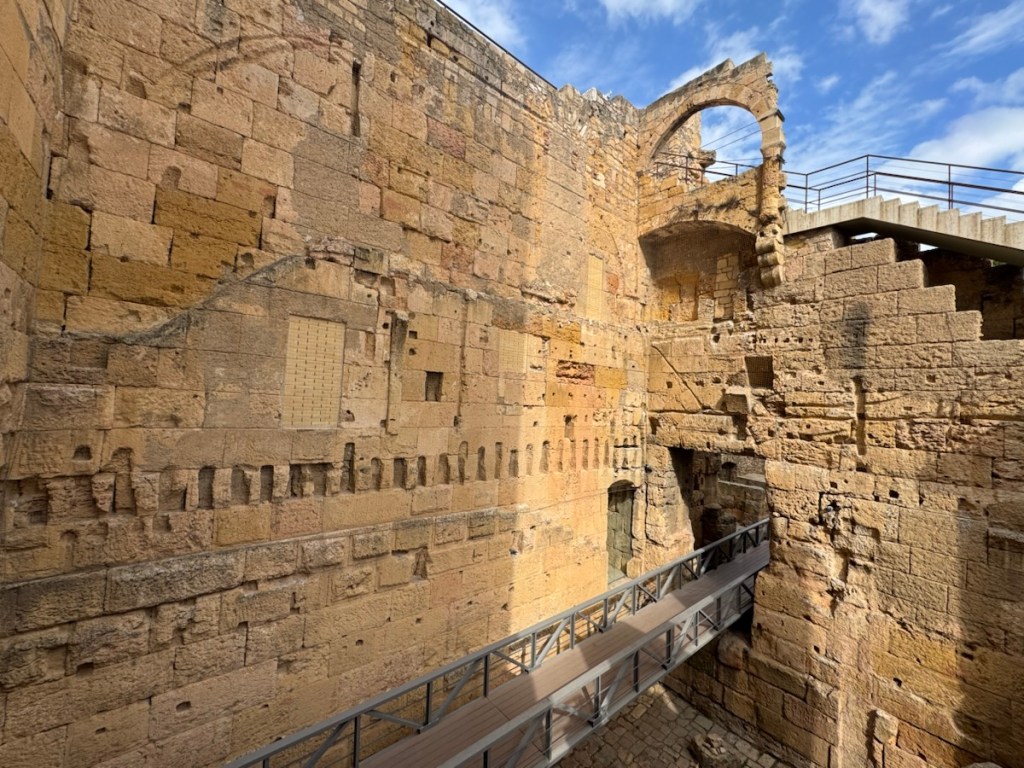
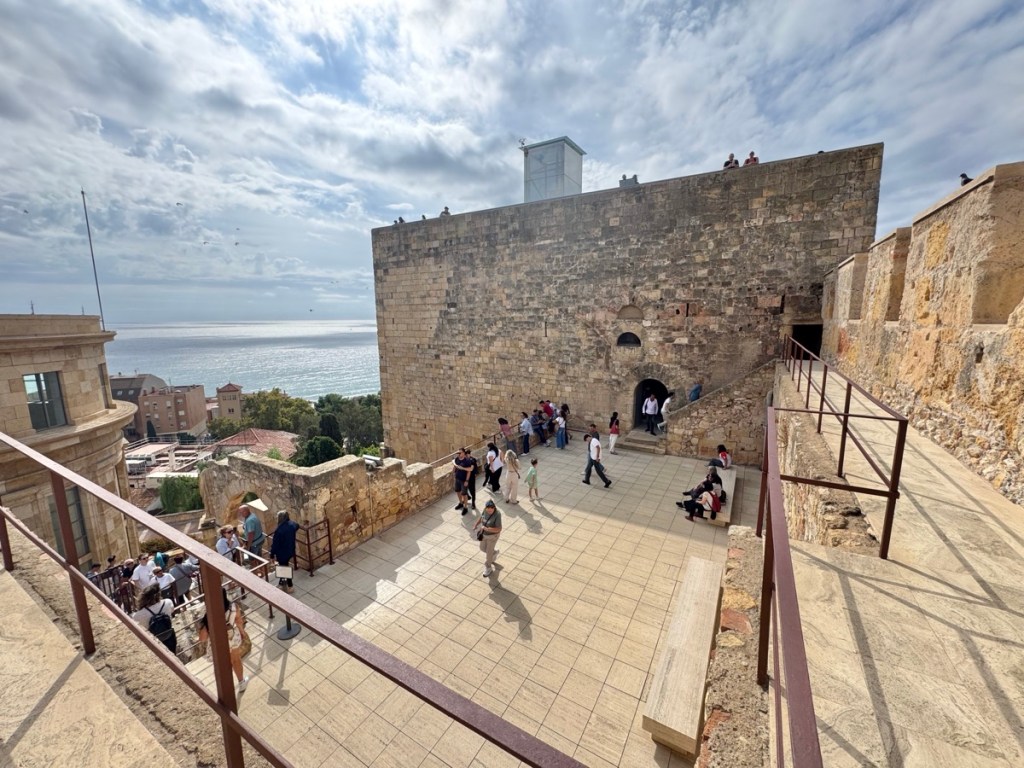
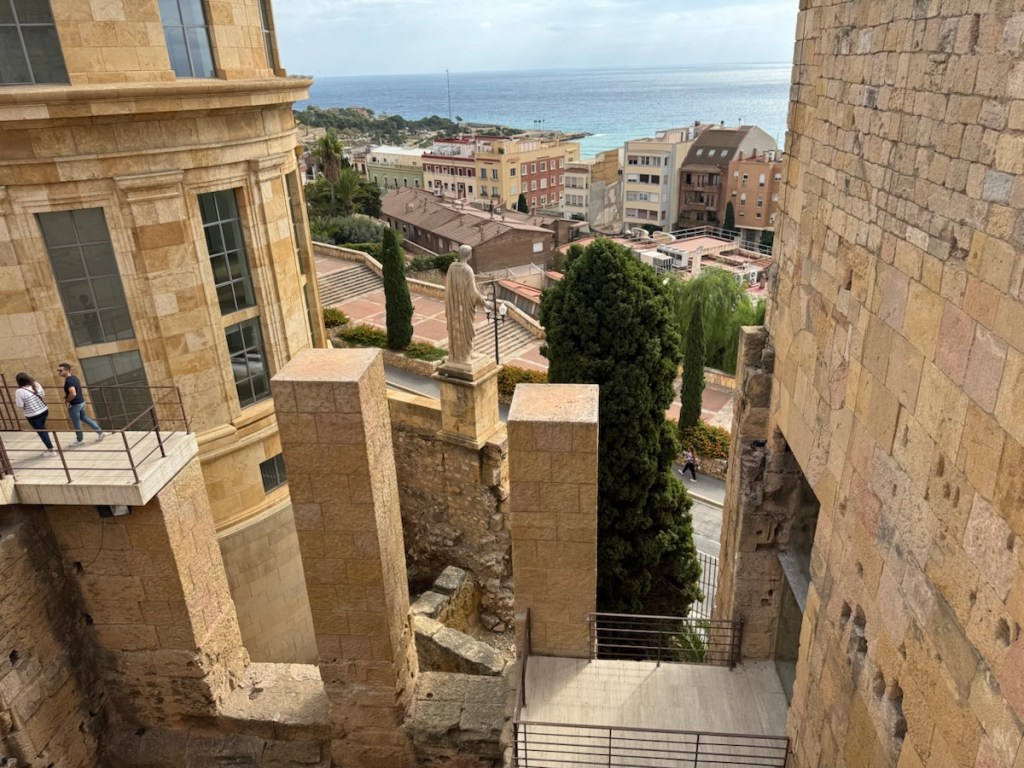
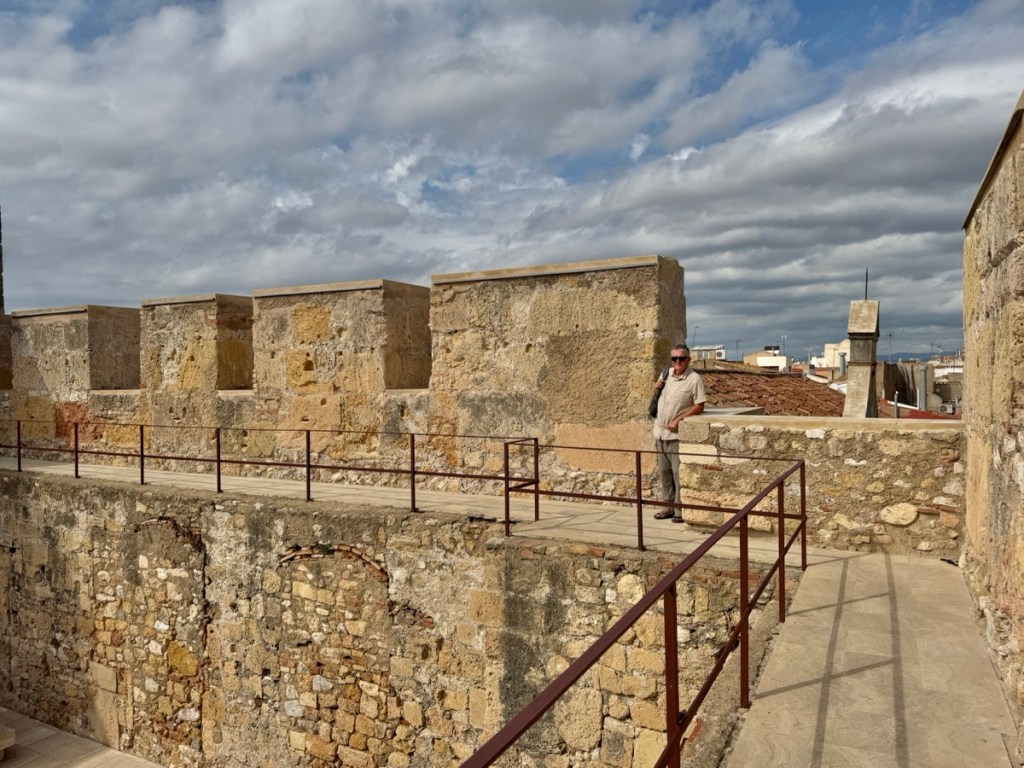
The Praetorium is a Roman tower that in ancient times, housed a monumental staircase that allowed people to move between the terrace of the Circus and that of the provincial forum square. In medieval times, the tower was fortified and turned into the castle of the Princes of Tarragona. We walked up steps to the terraces at the top for Panoramic views of Tarragona before descending down to the forum.
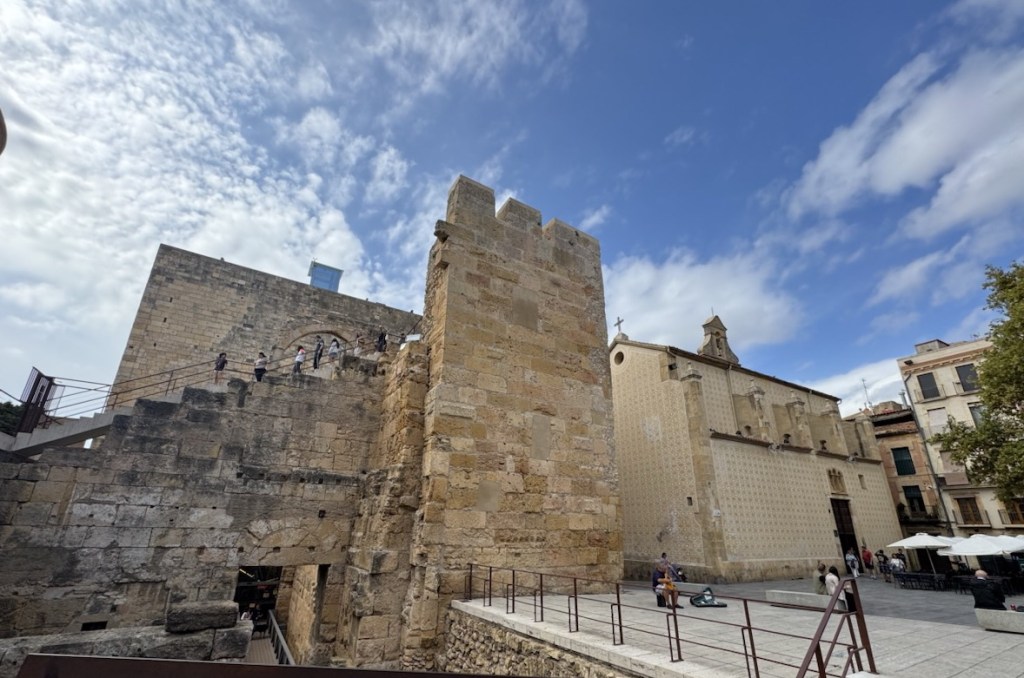
Roman forums were market places surrounded by temples and public buildings. Dating back to the 1st century AD, the forum would have covered a large part of what is now the medieval city centre.
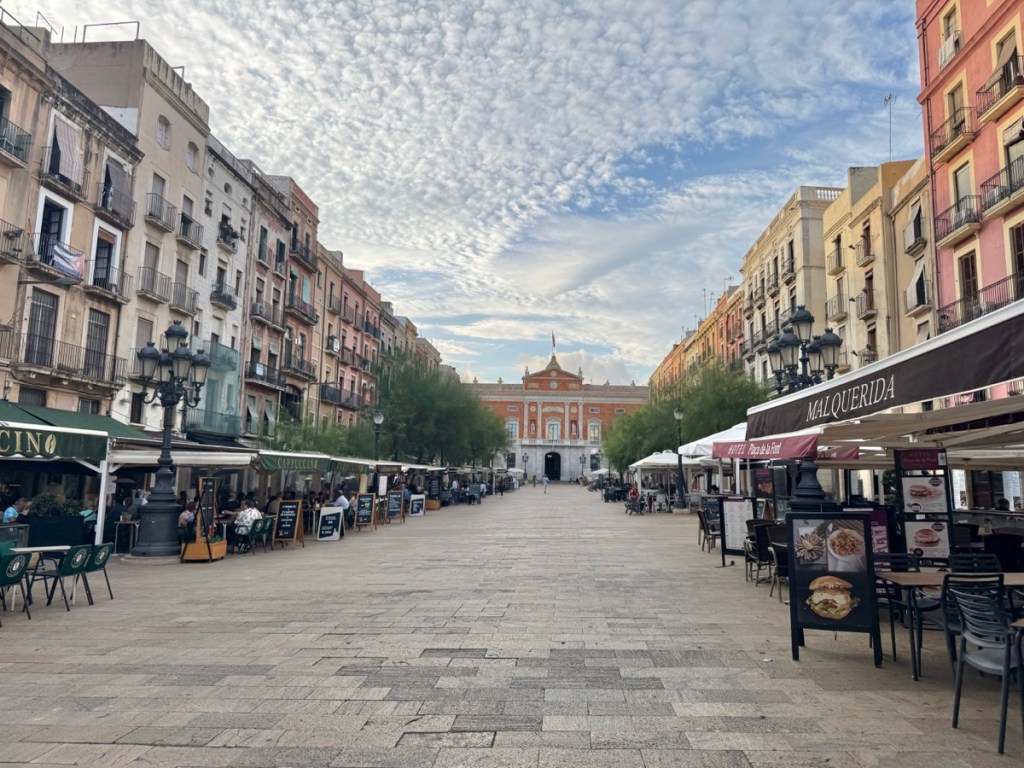
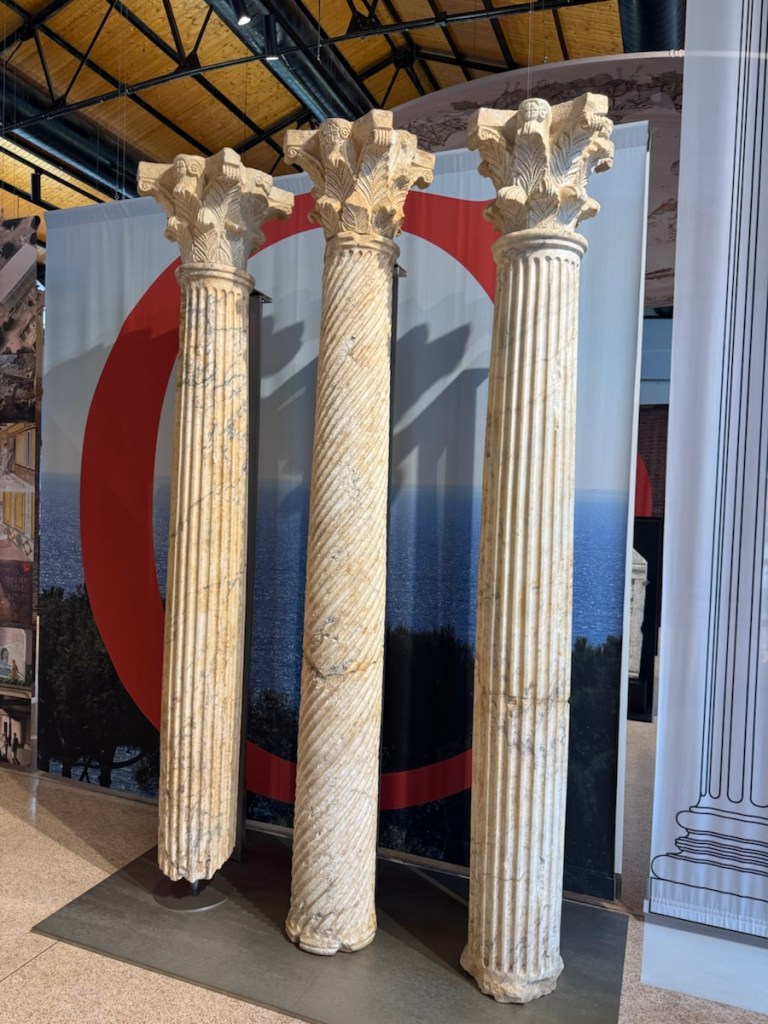
Areas of the forum were excavated during the 1920s and you can see the remains of sections of Roman buildings and Corinthian columns uncovered around the town. As we saw being used as a dance floor in last week’s blog.
There are several squares around the town with cafes and restaurants to stop for refreshments so we had a tapas lunch before visiting the Roman amphitheatre.
The Roman Amphitheatre was used for entertainment, including fights between gladiators and against wild beasts, as well as public executions. The oval shaped theatre, was cut into the hillside leading up from the beach. Built at the beginning of the 2nd century, it was the first large building for performances in Tarragona with a capacity of 12,750 spectators.


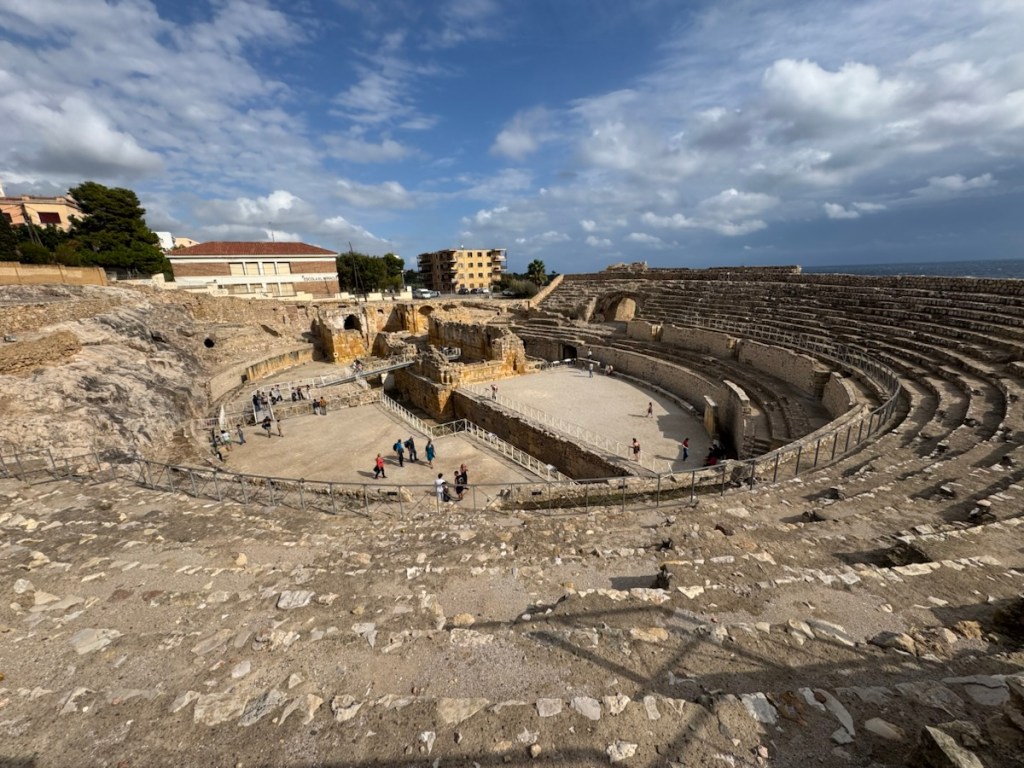

The building was in use until the end of the 2nd Century. Years later, when Christianity became the official religion of the Roman Empire, a basilica and small funerary area was built in the middle of the, by then, disused amphitheatre. In the 12th century, the basilica was replaced by a Romanesque church, remains of both can still be seen.

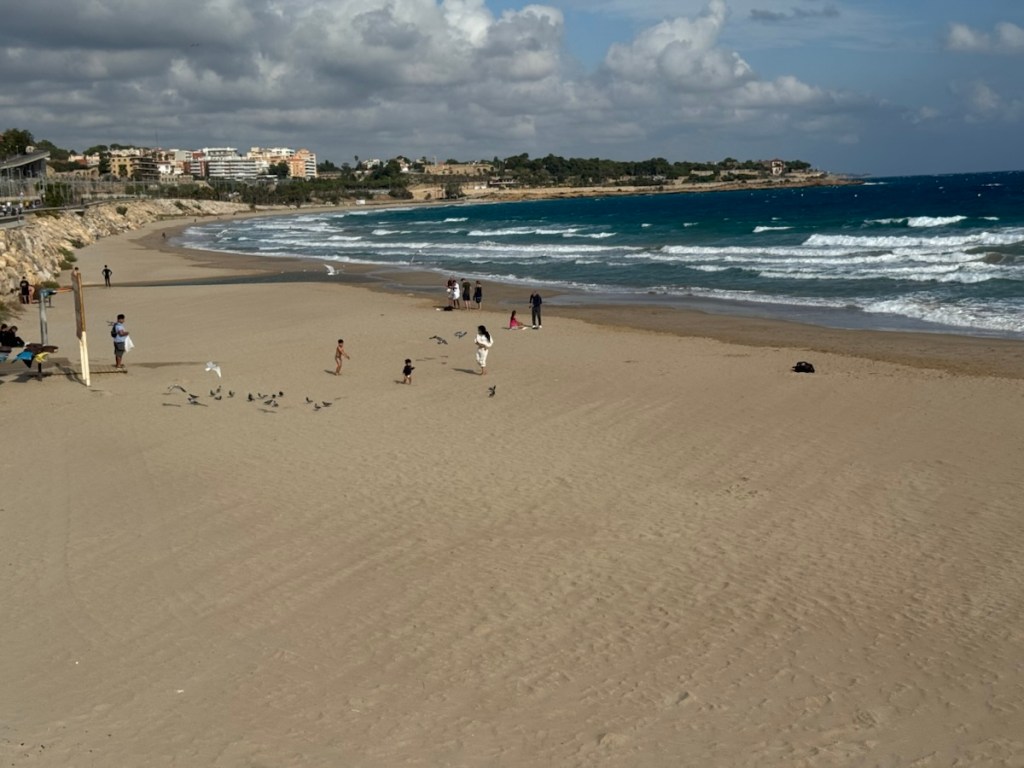
A few people were down on the nice sandy beach, but the sea still looked a bit choppy.
After spending a couple of days visiting all of the historic sites and wondering around the medieval alleyways, we just had the small archaeological museum left to see.
This was a little disappointing as it had been temporarily relocated to a warehouse near the port while renovations were being carried out at its official site in the old forum.
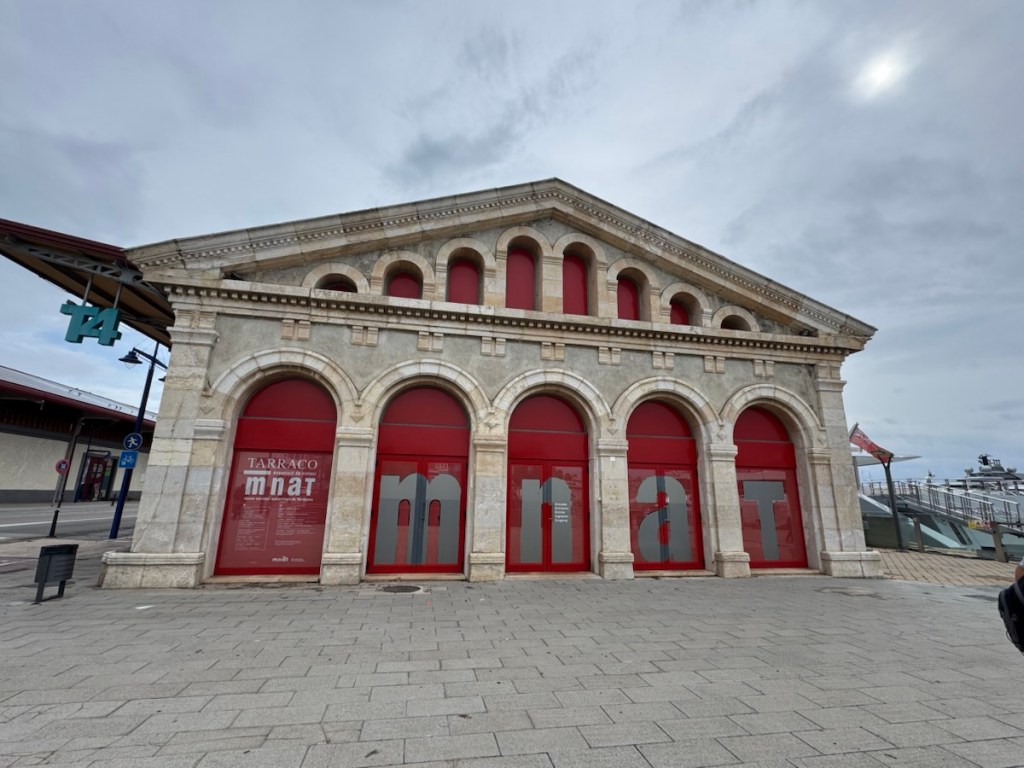
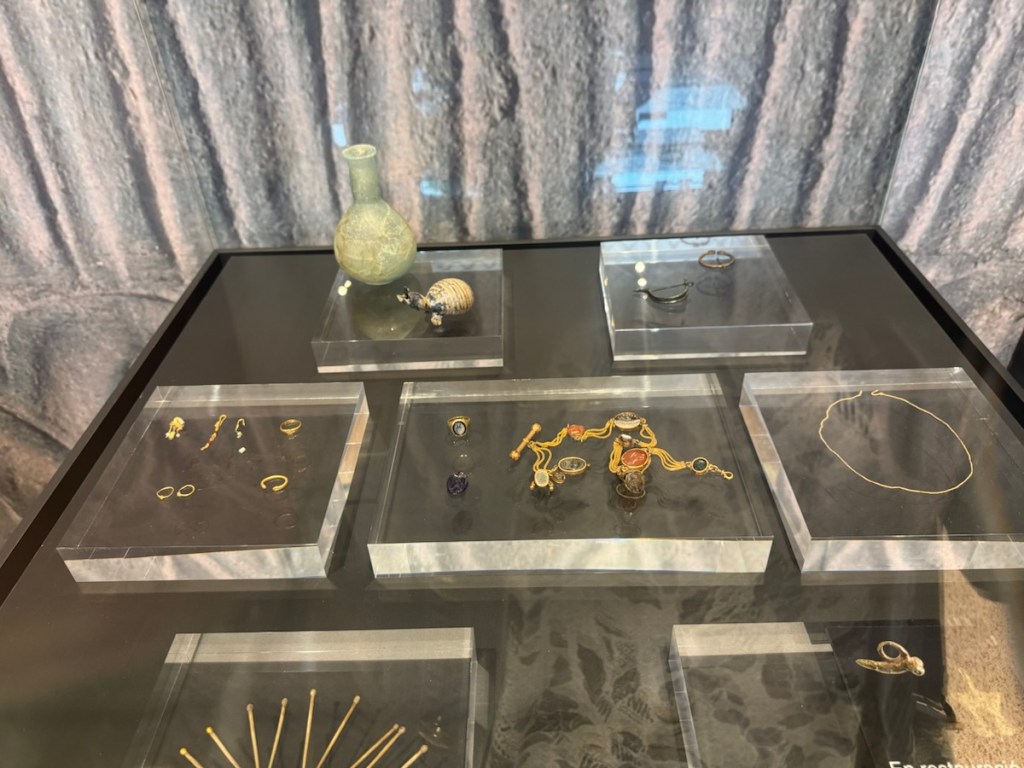
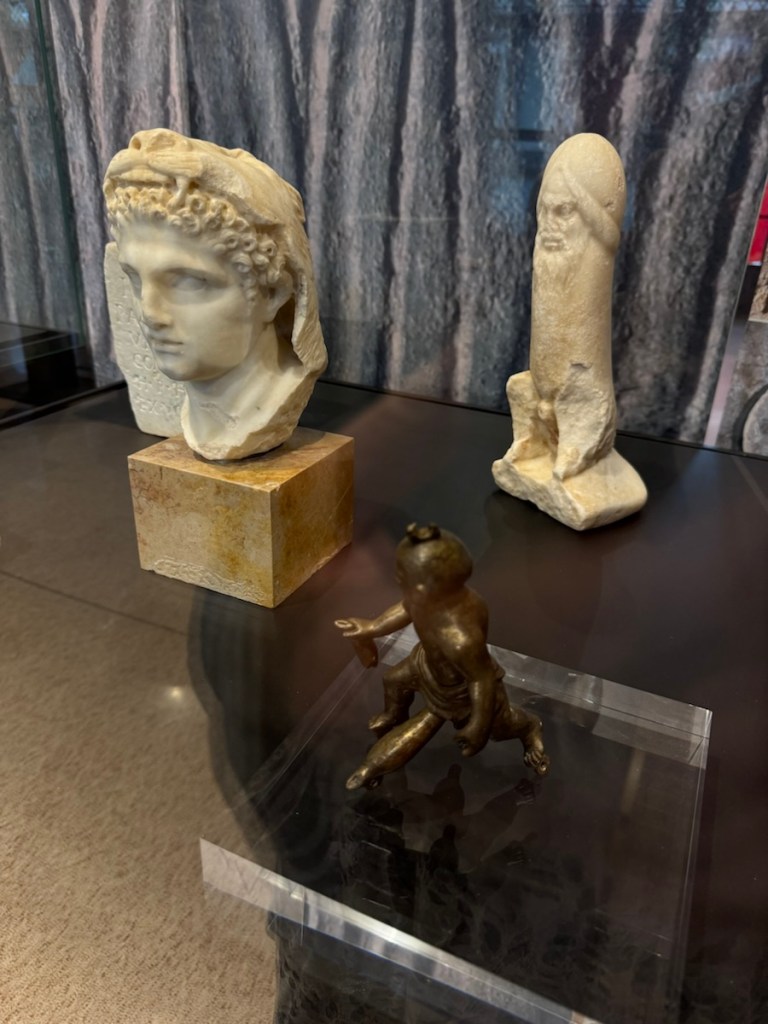
The exhibition was mainly narrative highlighting the historical and monumental importance of the Roman city of Tarraco, with remains of sculptures, mosaics, architecture, ceramics, coins and other objects used in daily life which had been uncovered during excavations.
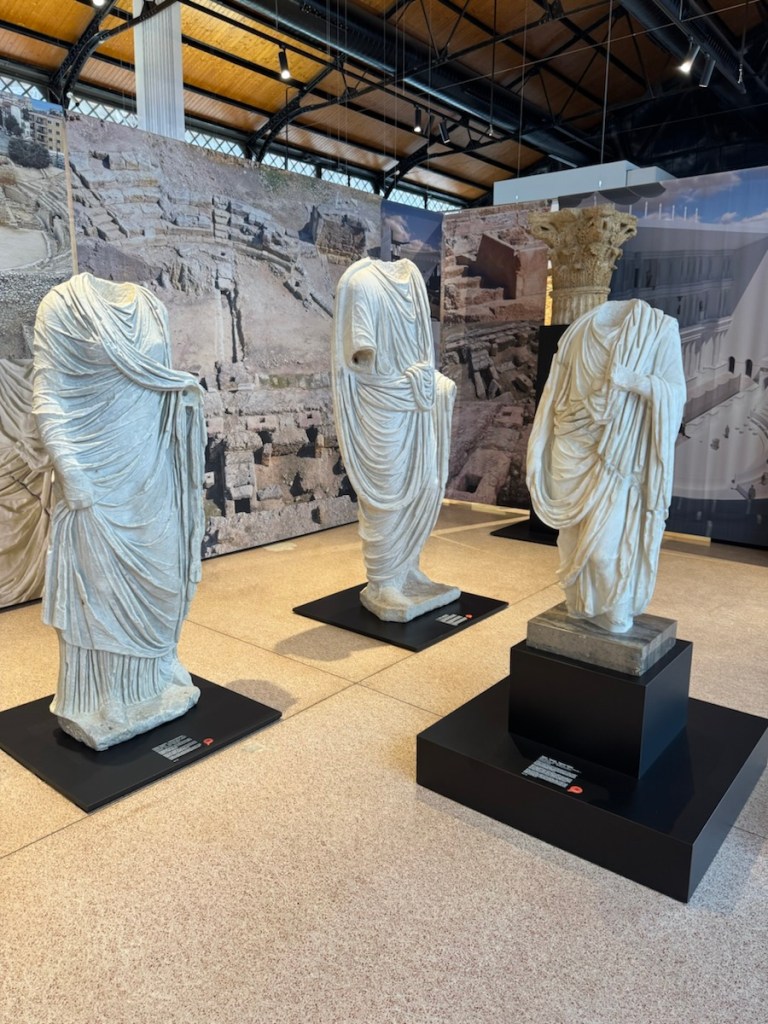
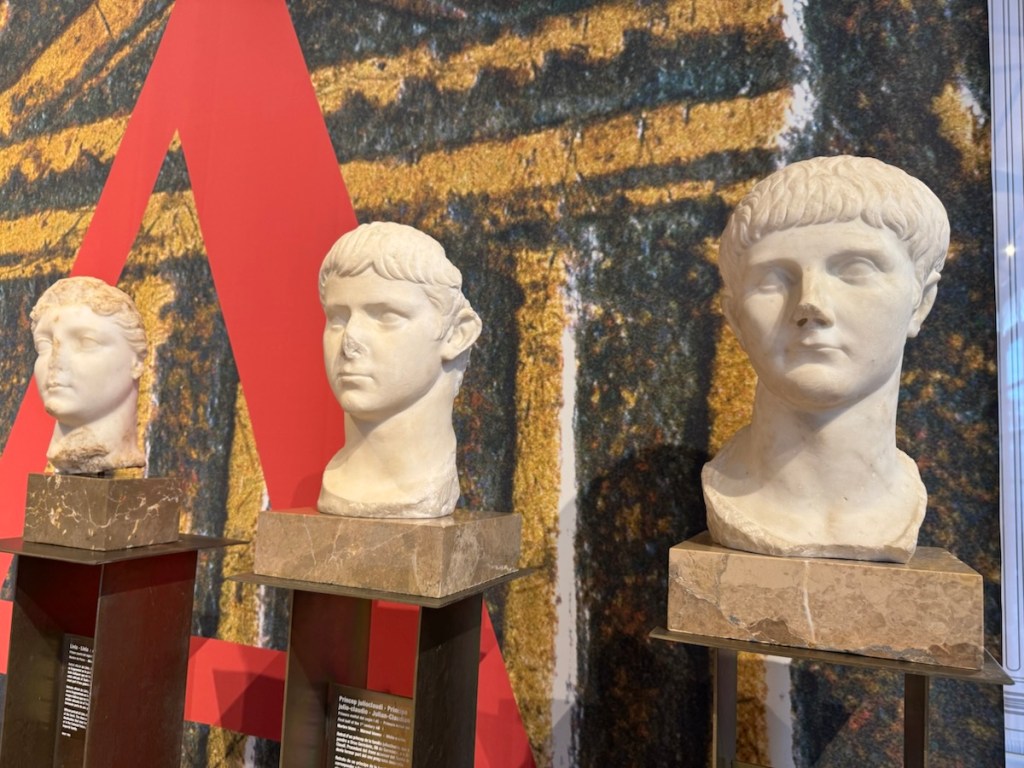
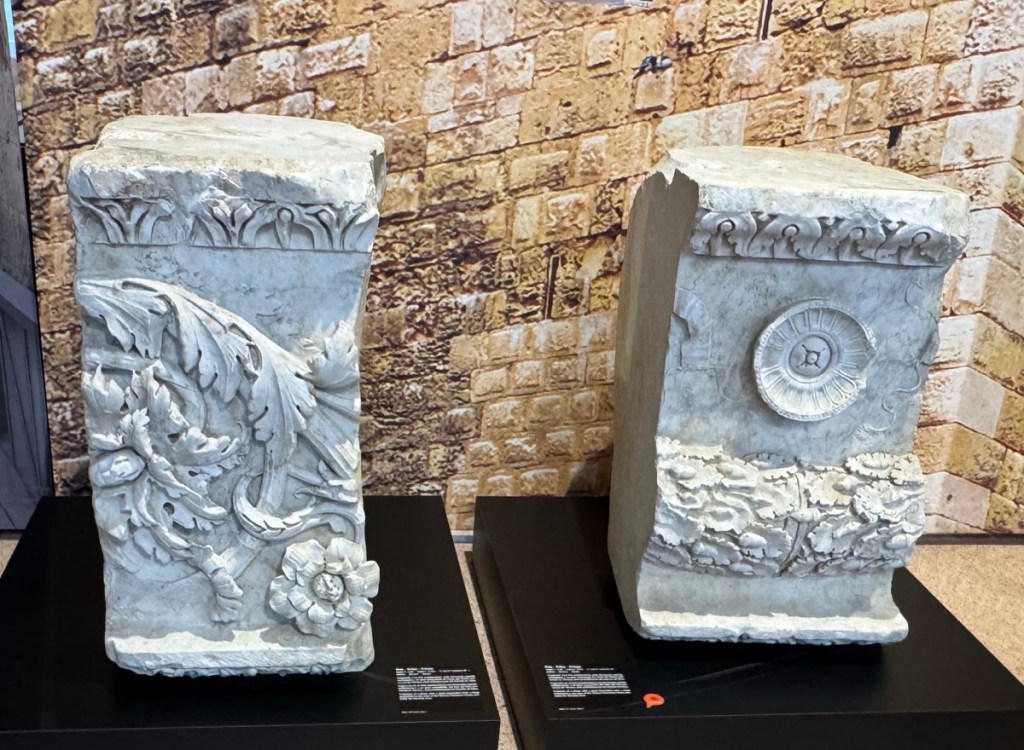

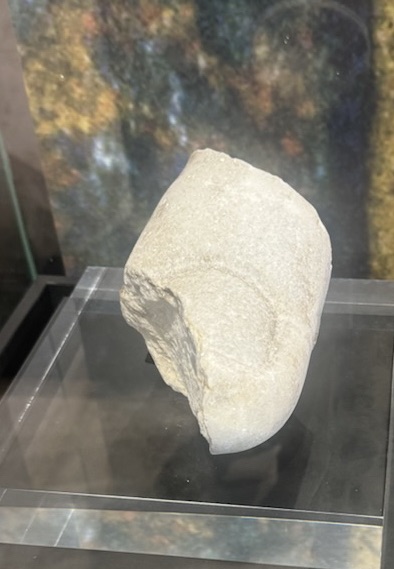
This was the fourth toe from a colossal 1st century marble statue which is believed to be from a seated statue of a god or Emperor Augustus, it would have been situated in the hall of worship in Tarraco’s main temple.
Tarragona is a great place to visit, with friendly people and so much to see. The compact historic centre is very easy to walk around with plenty of cafes and restaurants to sit and soak up the atmosphere. I would definitely recommend a visit if you get the chance.
We enjoyed it so much that we extended our planned stay of one night to nearly a week (also due to the stormy weather) but it was time to make preparations and finally untie our lines.
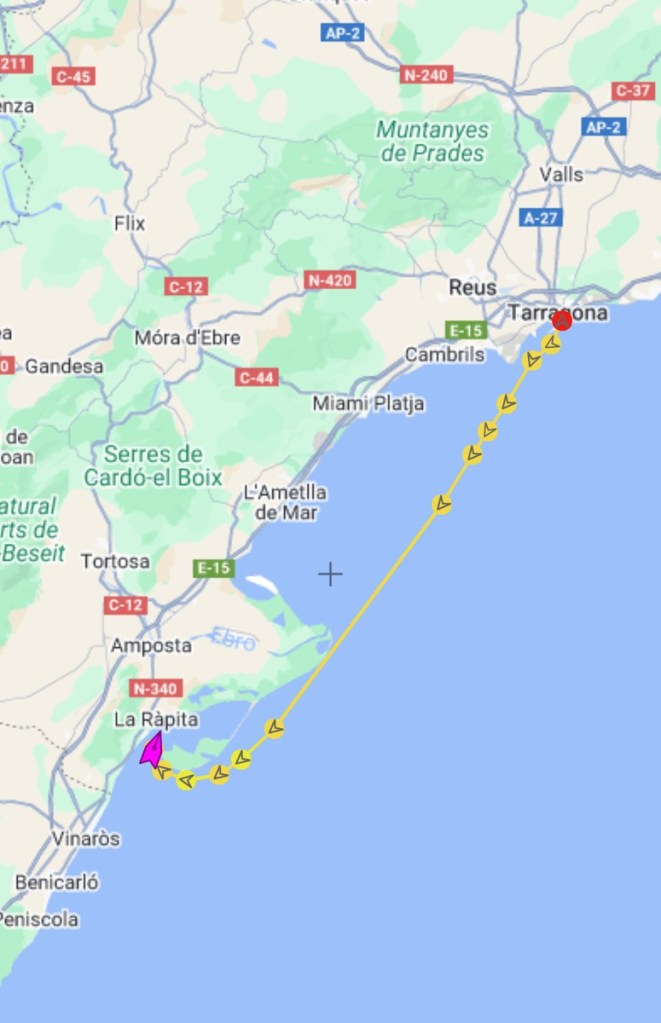
As we left the marina, the sky was grey and the sea was still quite choppy. The sun eventually came out and it calmed down a little. We sailed 50 nm continuing along the coast to La Ràpita where we dropped our anchor in probably the most protected anchorage on this whole coast. However, the recent stormy weather had brought bad flooding to this town and a red warning for rain in the whole area had brought back bad memories of the terrible flooding in Valencia just 12 months ago.
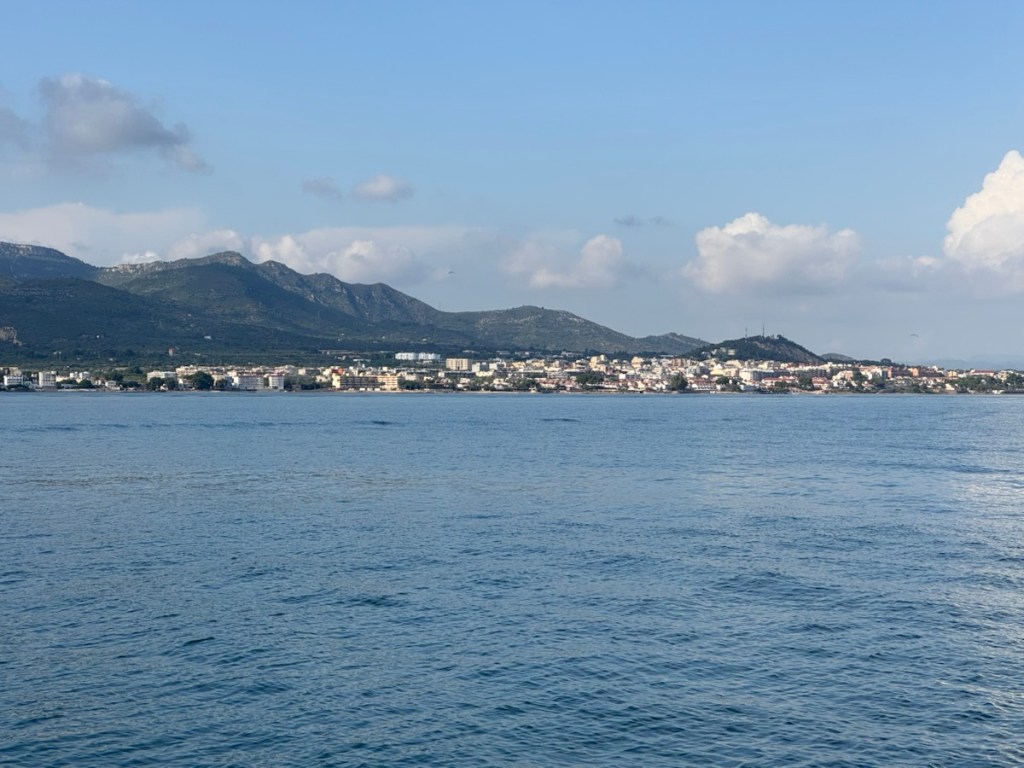
The town is situated at the mouth of a salt water lagoon which is also home to hordes of mosquitoes. We battened down the hatches to try to prevent being eaten alive, even a couple of hours of rain in the evening didn’t seem to dampen their appetite! We decided to leave early the following morning.
 Sailing ZigZag
3 replies on “Roman Remains”
Extensive and beautiful, thank you.
LikeLiked by 1 person
Your insights to the ancient Romans is always humbling. The things they achieved is really remarkable, and how special that the structures still survive so you can walk in their footsteps, and we can read about it here.
Whilst your last museum may have been slightly disappointing after the other fabulous locations, I was stuck by the craft and skill of the sculptors of the three robed headless figures. What work it must have been to create them.
This week’s ending leaves us on tenterhooks, with the expectation of further sailing adventures.
Wishing you safe onward sailing.
LikeLiked by 1 person
Well Tarragona certainly delivered, though not quite sure how two of the last three objects qualify as “other objects used in daily life” 😳
The nativity scenes are certainly in time for the “Winter retail festival” – sure Paul misses the joys of Black Friday 😉
Great pictures and commentary, as always, just what was needed to warm us up here!
LikeLiked by 1 person