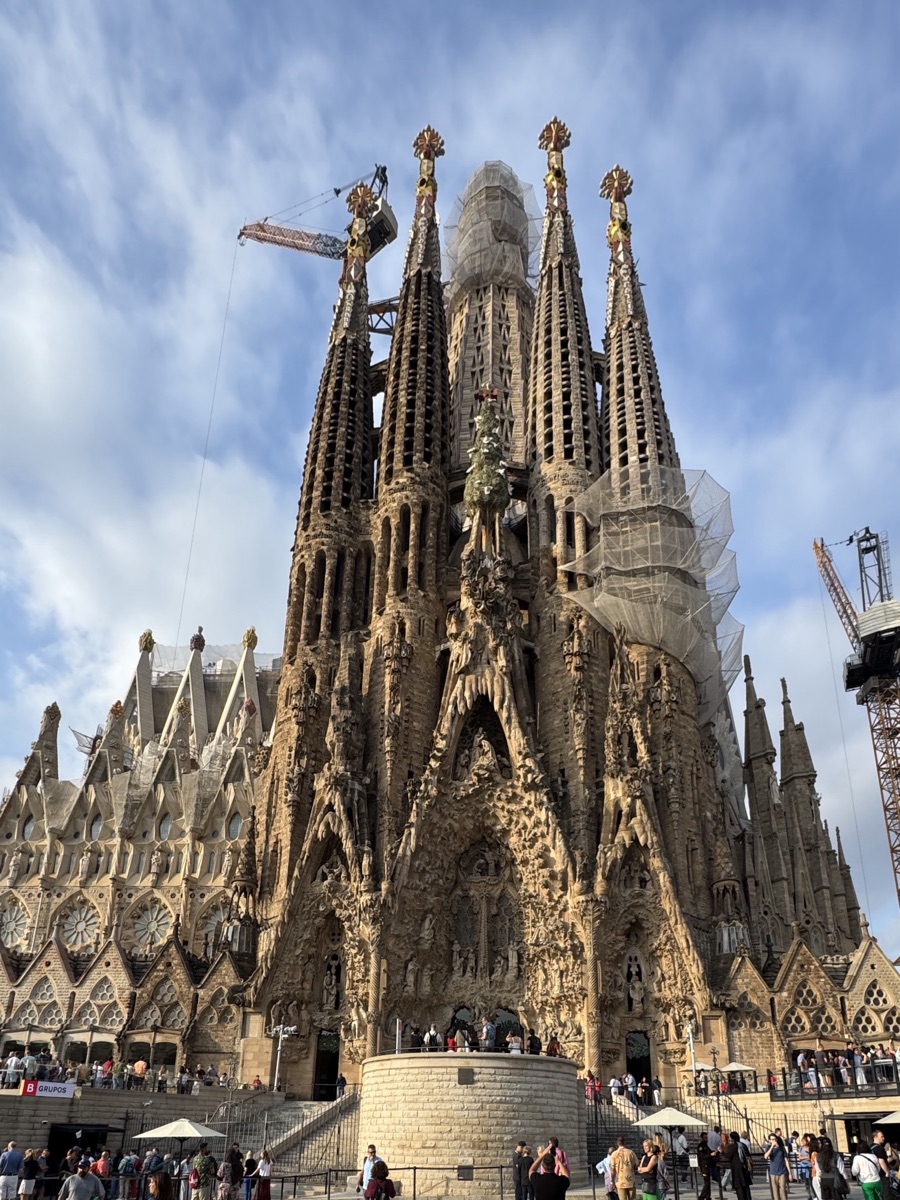
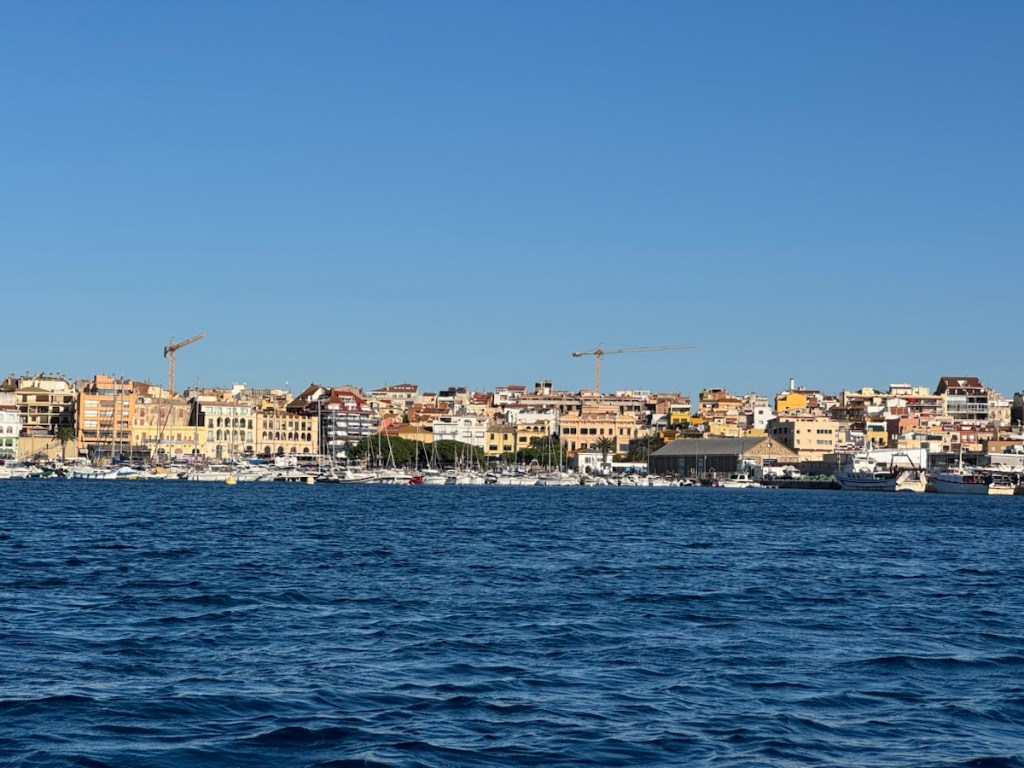
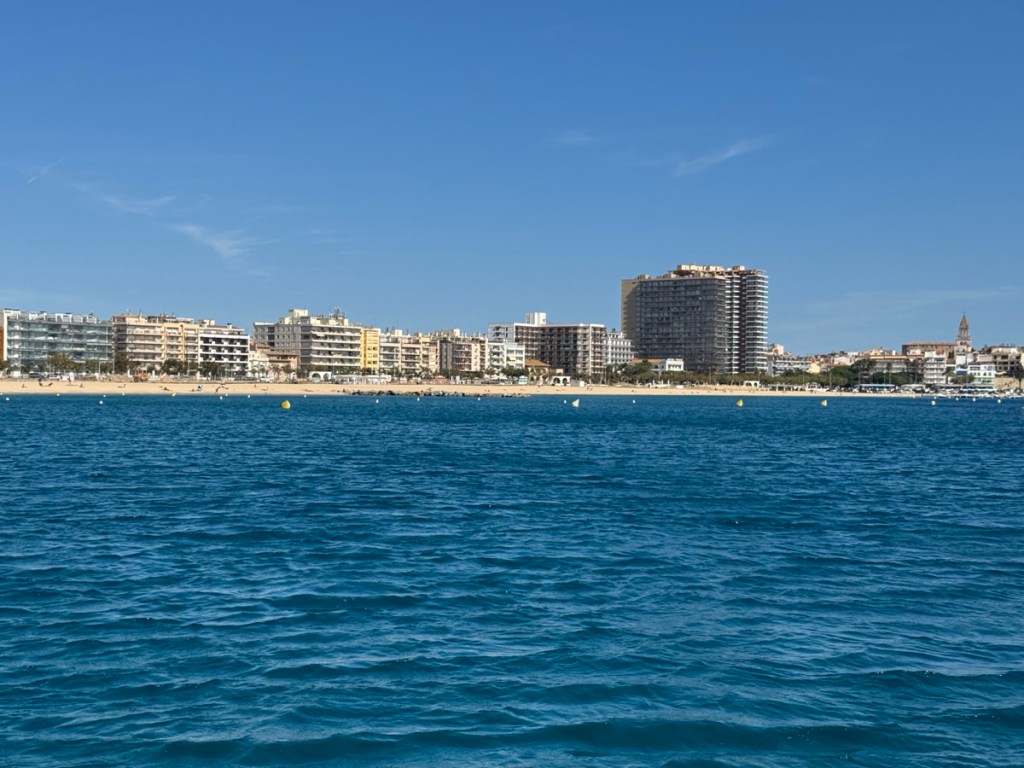
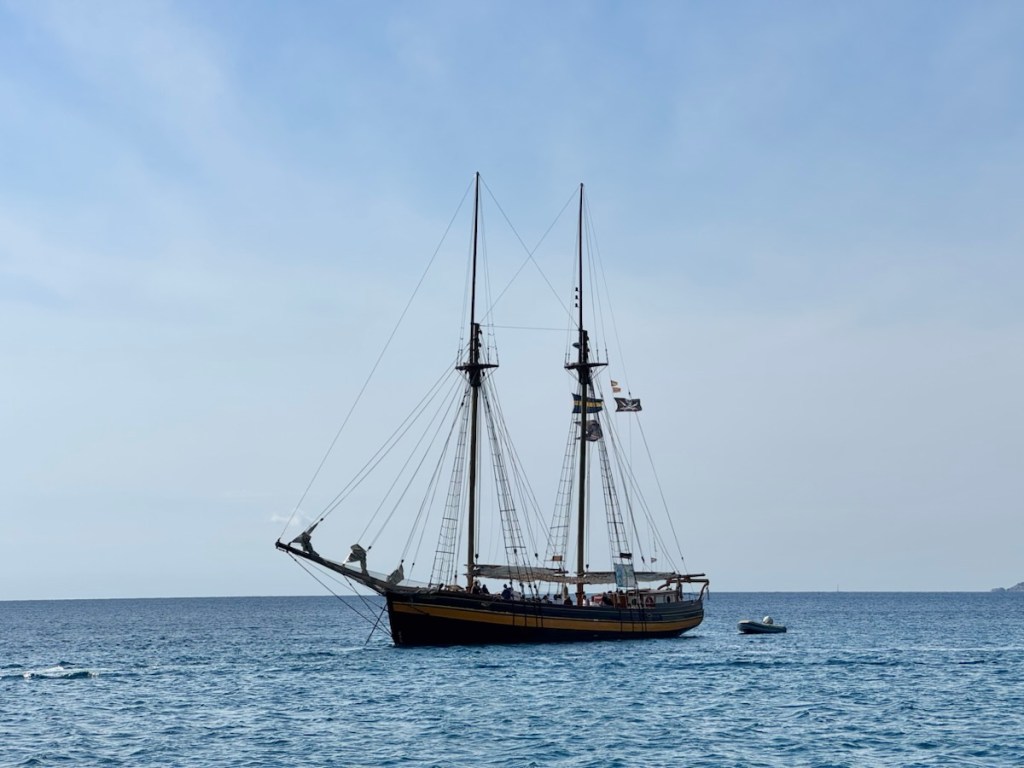
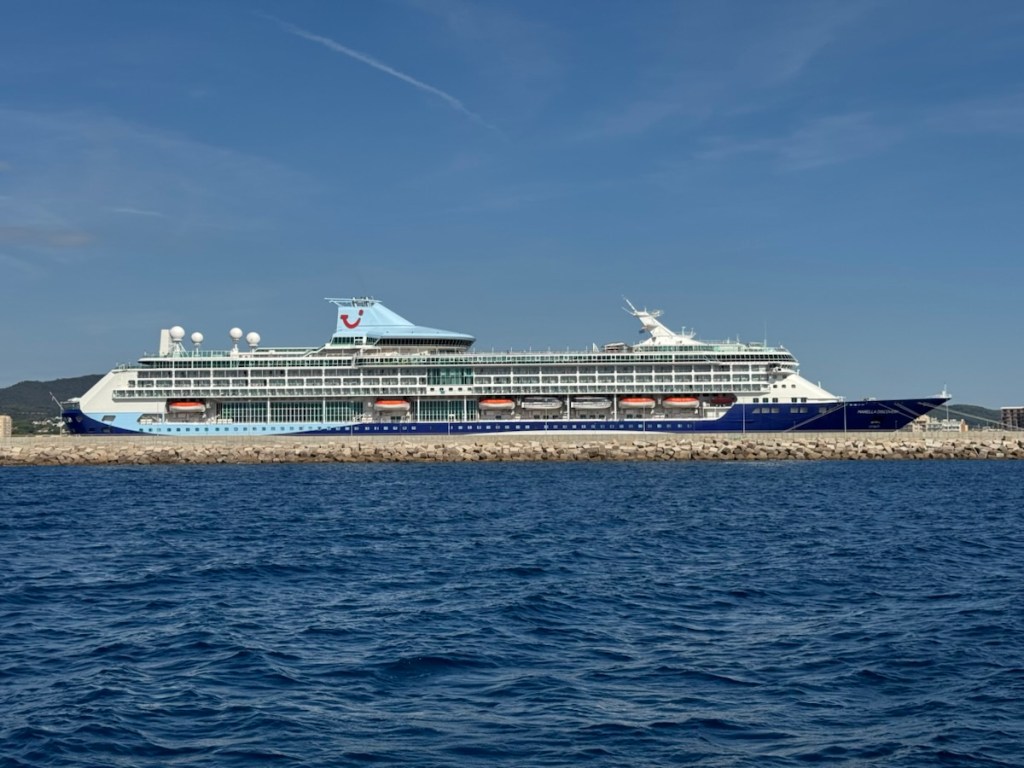
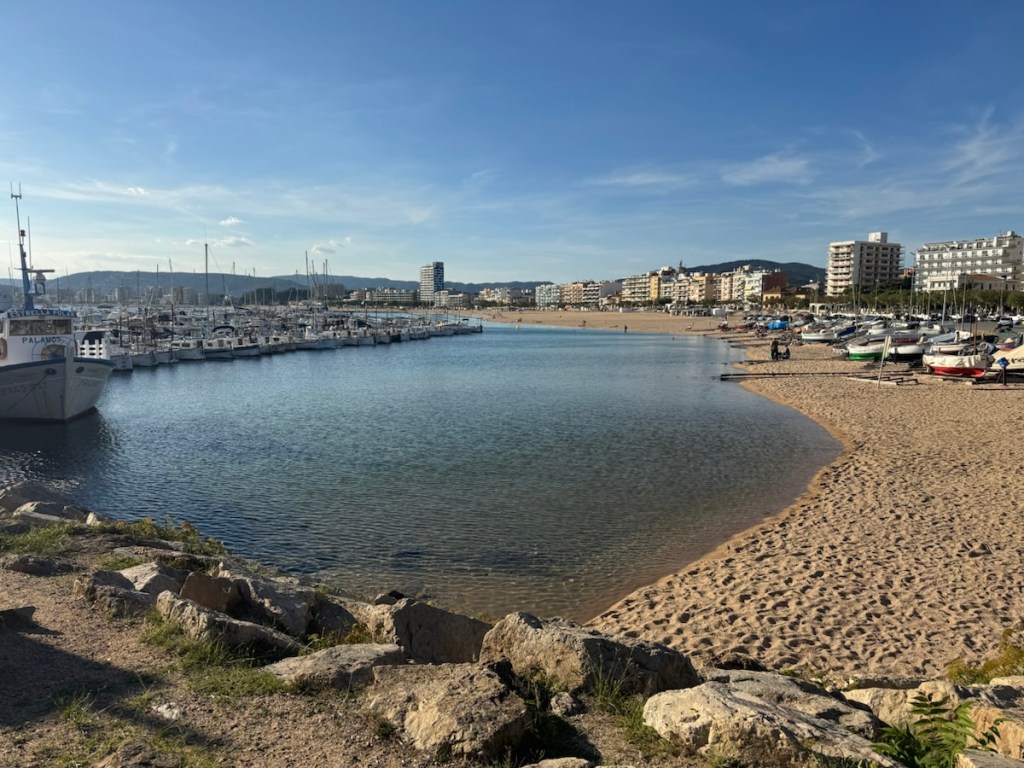
Palamós is a seaside town on the Costa Brava coast, in the community of Catalonia. We were anchored in a sheltered bay with views of the town and a wide sandy beach overlooked by apartment blocks and hotels. We shared the quiet anchorage with just a few other boats and a pirate ship. A cruise ship followed us in and moored on the dock.
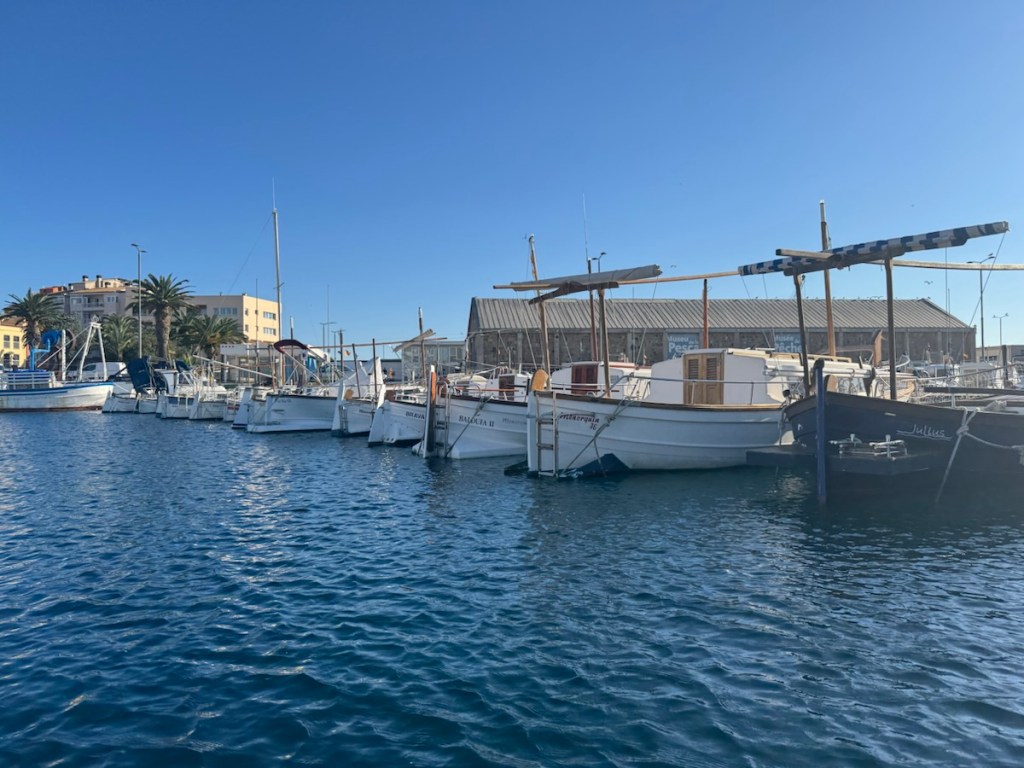
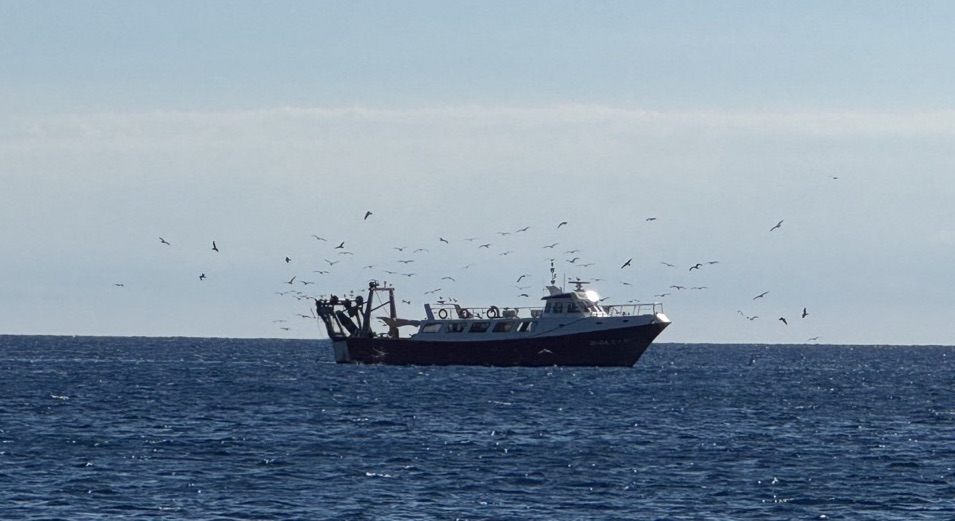
The port was busy with large fishing boats, smaller boats were pulled up onto the sand. It was always a delight for seagulls when boats returned with their catch of the day.


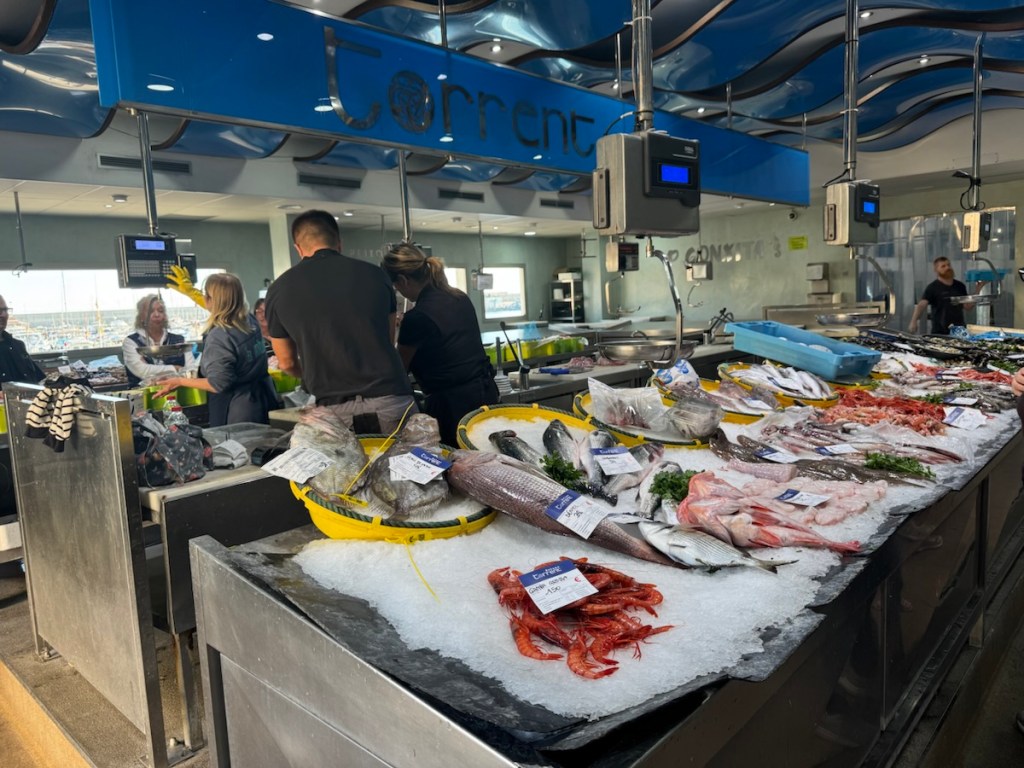
Palamós is well known for its fishing industry, offering excellent products from the sea, particularly the vived red prawns which are only caught in the deep sea trench just offshore from the town. We visited the fish market with hope of tasting some, but it was obviously coming towards the end of the season as there were only a couple of stalls. The few red prawns available were on sale for 150€ per kilo, we decided we would try that delicacy another time!
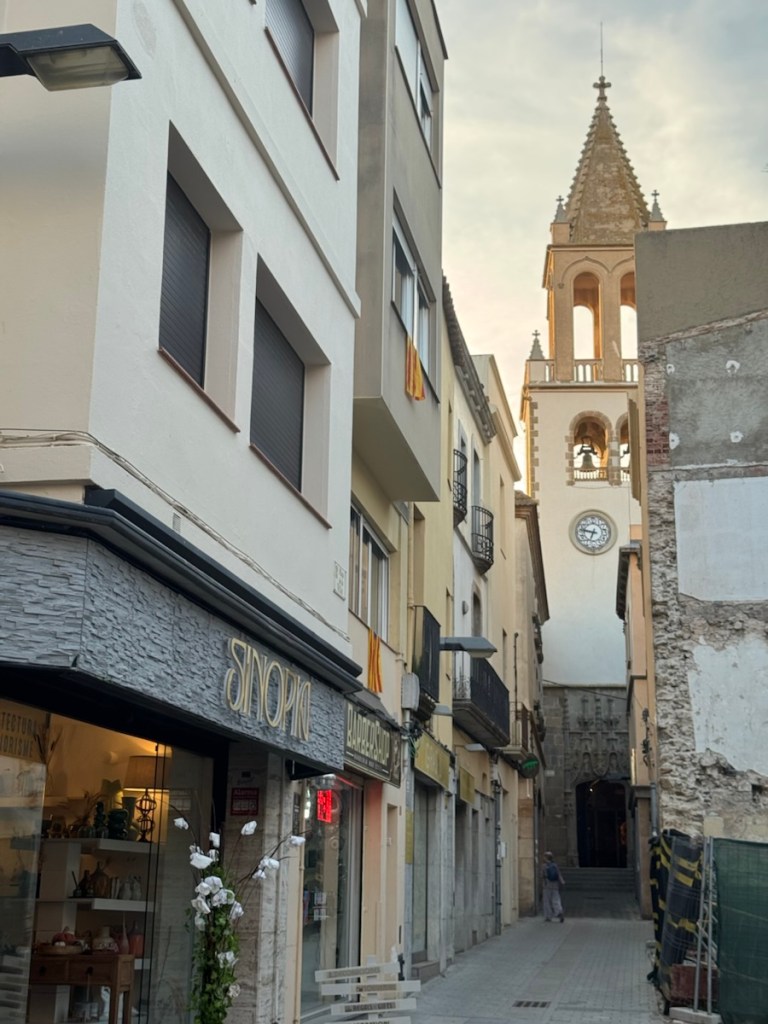
The town was quite smart with a main street full of cafes, shops, colourful buildings and small side streets.



After a couple of days we lifted the anchor and left the bay with a light wind blowing. Once out of the protection of the harbour, the swell was building and the wind picked up a little. The sails were hoisted but there was too much swell rolling us around and not enough wind to stop the sails flapping each time we dipped and rose over the waves. We ploughed on for an hour making very slow progress before giving up and motoring. Later the swell reduced slightly so the sails went back up, but it was not long before we gave up again.
There was more stormy weather on its way and we had booked into a marina at port d’Arenys de mar. The journey was 31 nm and we needed to keep up a good speed to arrive before 5 pm, as the wind was due to pick up after this, so we continued motoring the rest of the way.
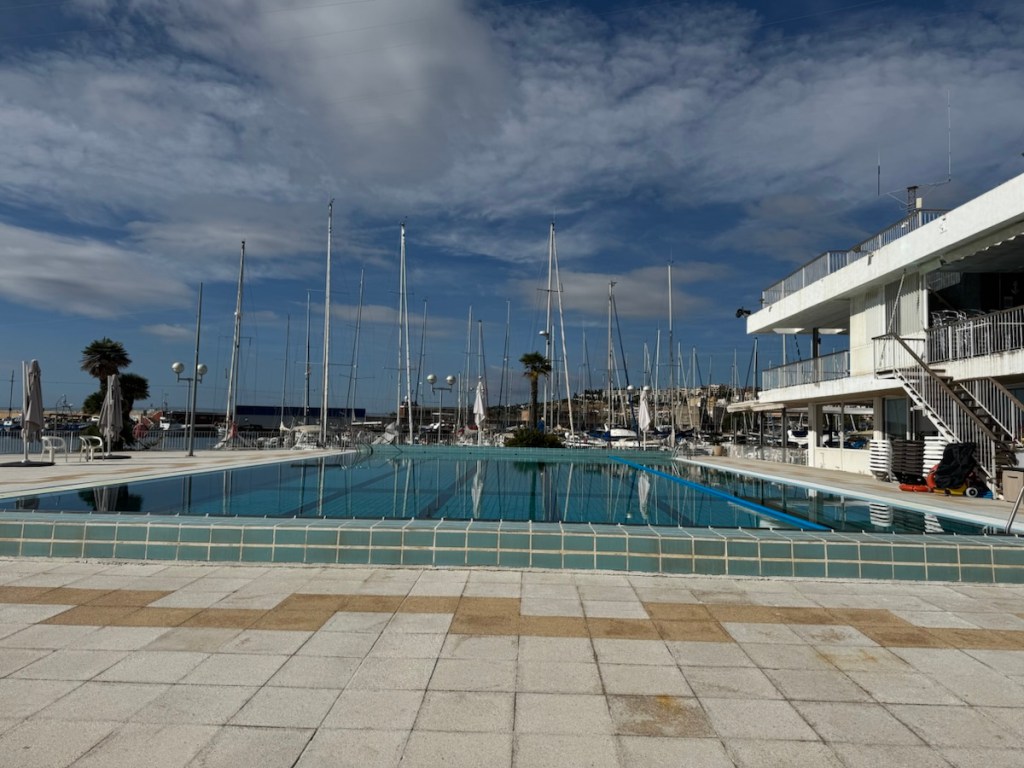
We arrived in good time and with still calm weather, moored in the marina with helpful marinaros. The marina was very good with friendly staff, clean facilities and a handy swimming pool.

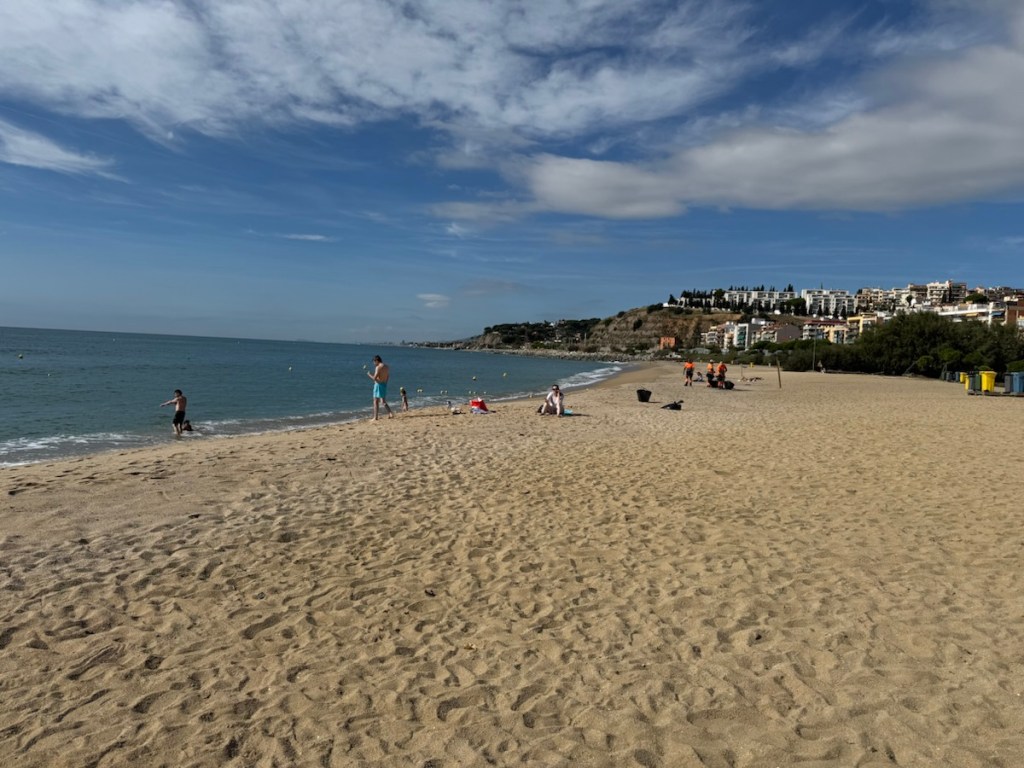
Arenys de Mar translates to ‘sands by the sea’, and it does have several kilometres of sandy beaches, with green hills rising up behind. La Rambla runs along the sea front which is lined with mainly apartments, tapas bars and shops.
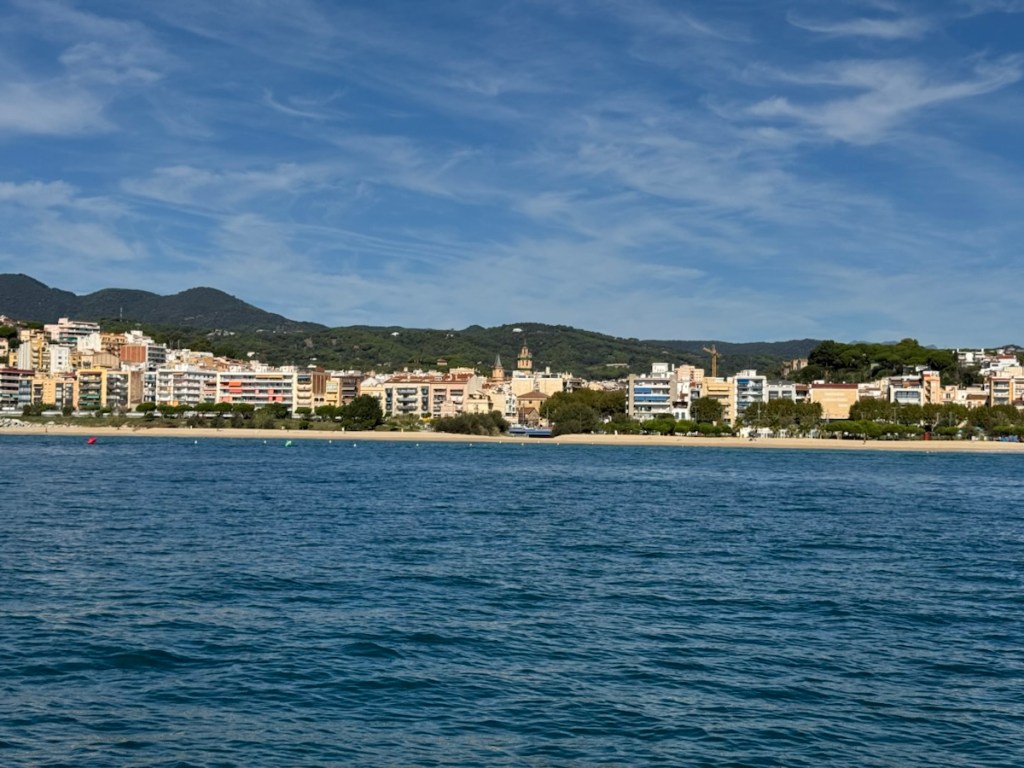
For many of the seaside towns on this coast it seems that fishing is still one of the main industries. Here again there was a large fishing fleet and many little wooden fishing boats in the harbour.

Being located just 40 km from Barcelona and linked with a good commuter train network, we decided to visit the regions capital and largest city of Catalonia.
We headed first to the city’s most iconic monument, the Basilica of La Sagrada Familia. Having visited 11 years ago we wanted to see what progress had been made since, and hoped to get tickets to go inside.
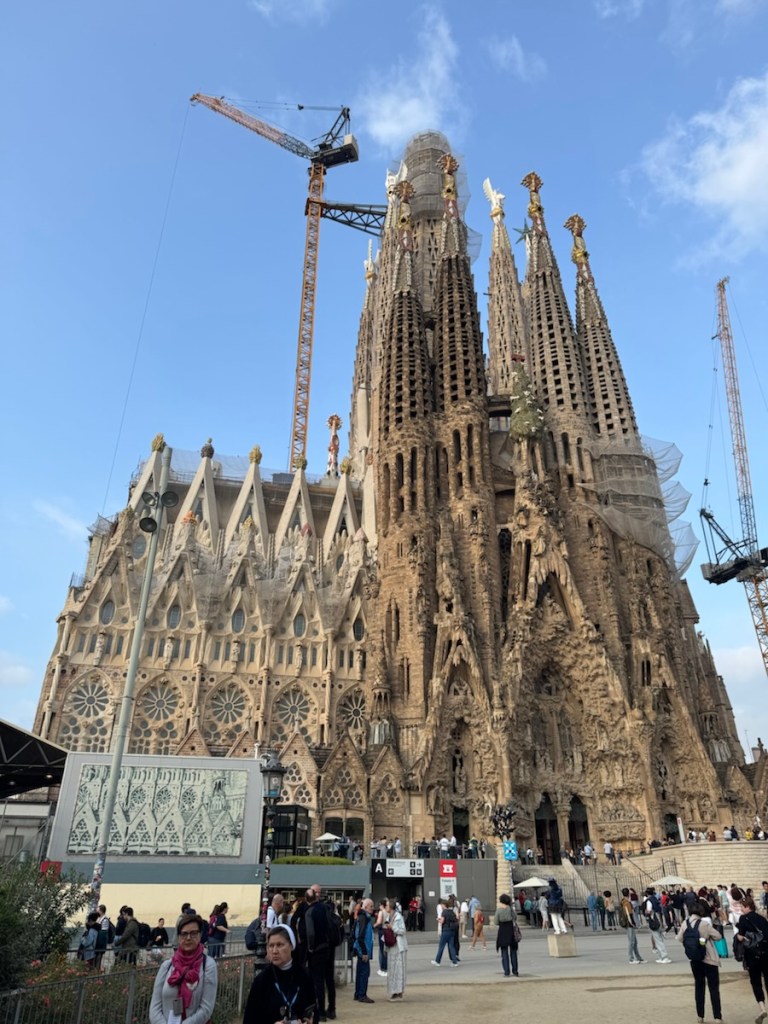
Local bookseller, Josep Maria Bocabella initially intended the building to be a simple Roman Catholic Church and assigned the project to the architect Francisco de Paula del Villar who designed a neo-Gothic church and began construction in 1882. However, because of disagreements with Bocabella, Antoni Gaudí was asked to take on the assignment a year later.
Gaudí stamped his own distinctive style on the building and conceived a groundbreaking design, his primary goal was to build a church with facades that highlighted the life of Jesus. He also wanted to incorporate organic symbolism in the architecture, along with stained glass, in order to tell Jesus’s story as well as highlight some key biblical histories. His philosophy was that nature is the work of God.
Gaudí worked on it until he died in 1926 and was buried inside the crypt. After his death, Domènec Sugrañes i Gras assumed the main role of architect. The end result is an architectural masterpiece which has been under construction for over 140 years. Completion of the central tower is planned for 2026, 100 years after Gaudí’s death.
There is an online booking system for entry tickets but the earliest date available was in three weeks. We are unable to book so far in advance, being always reliant on the weather we never know exactly where we will be on a particular day. Some web sites suggested that you may be able to buy on the day, so we arrived at opening time to try our luck, unfortunately, there were no options available for us to go inside this time. But, we were still able to see the stunning building from the outside, and being there early meant that it wasn’t too busy.

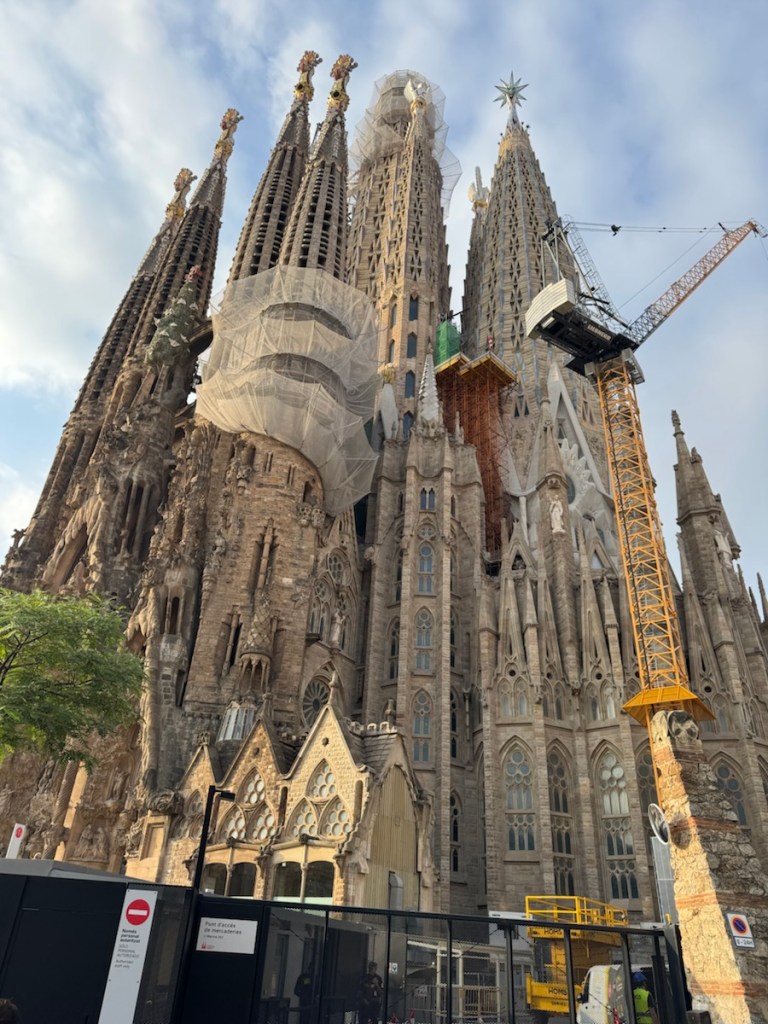
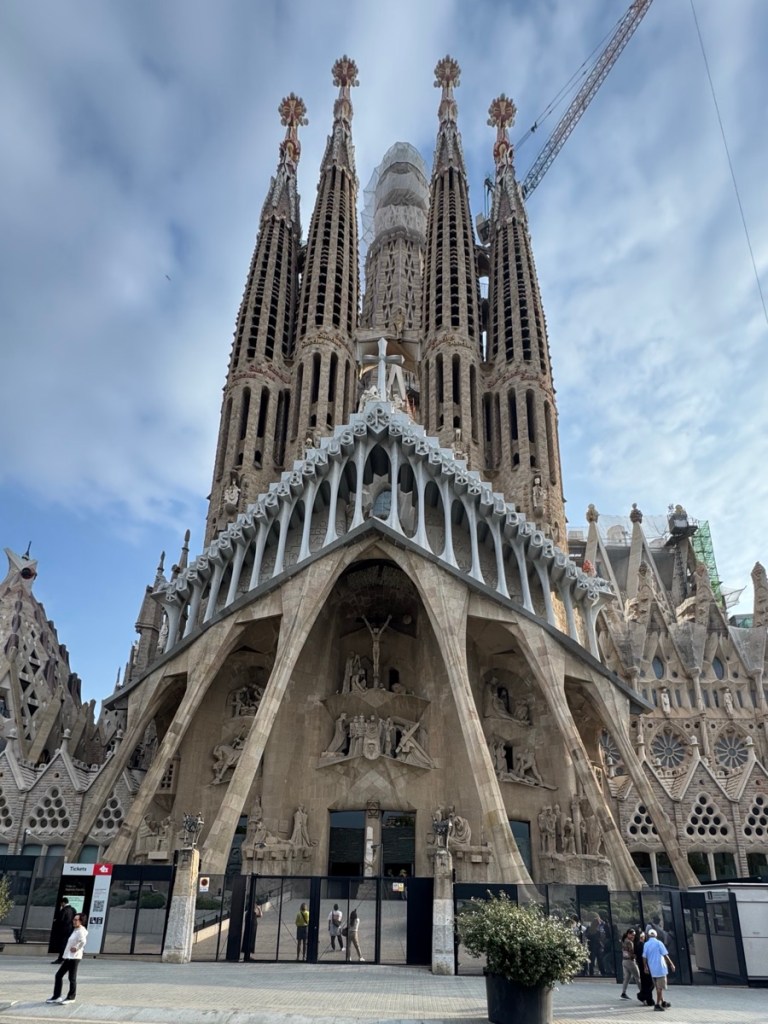
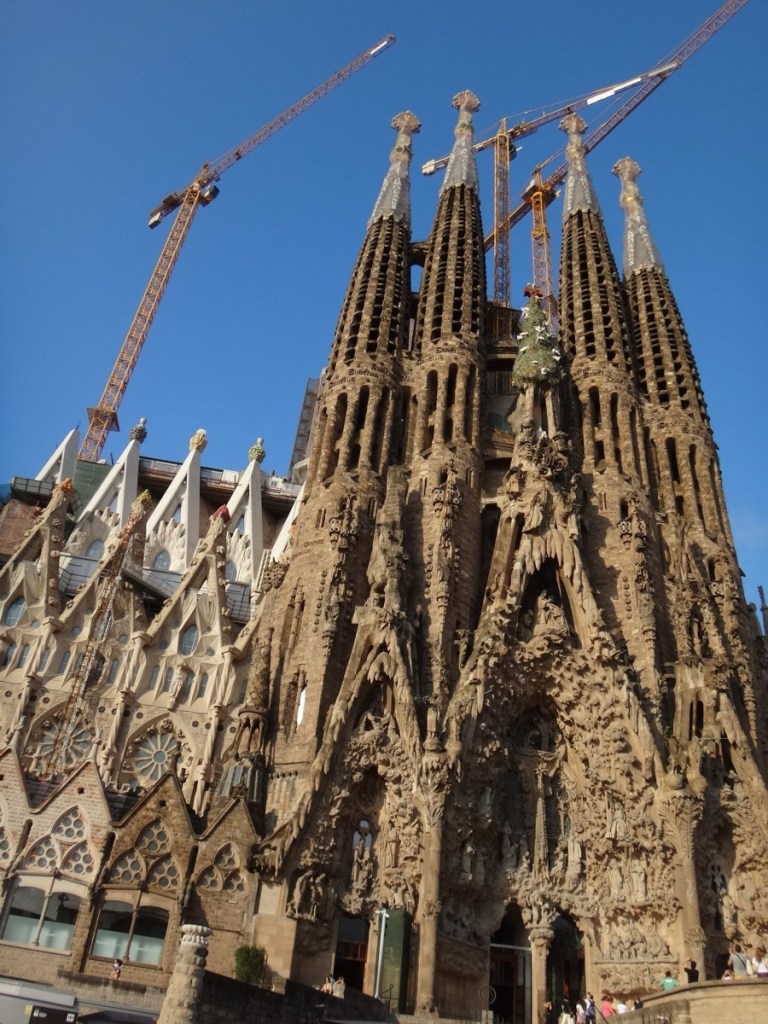
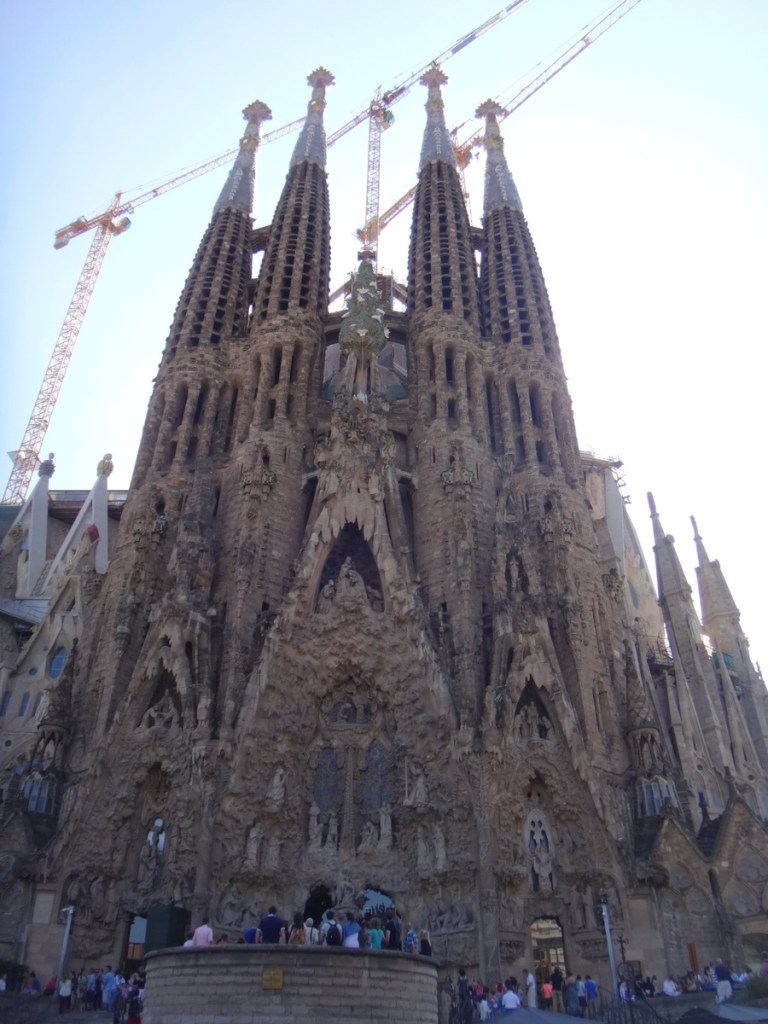
Progress had definitely been made within the last 11 years, particularly on the central tower and additional decorative tops on the towers. These are pictures that we took back in 2014.
We decided to have breakfast and plan our walk around the city. Barcelona was founded over 2000 years ago as Roman Barcino, it now has a mixture of architectural styles. Many of the buildings date from medieval times when great churches and mansions were built across the Ciutat Vella (Old City), among these buildings and ancient walls are now tapas and vermouth bars, galleries and museums. At the end of the 19th century came modernista buildings (relating to the Art Nouveau movement) and of course the famous work of Antoni Gaudí can be seen throughout the city.
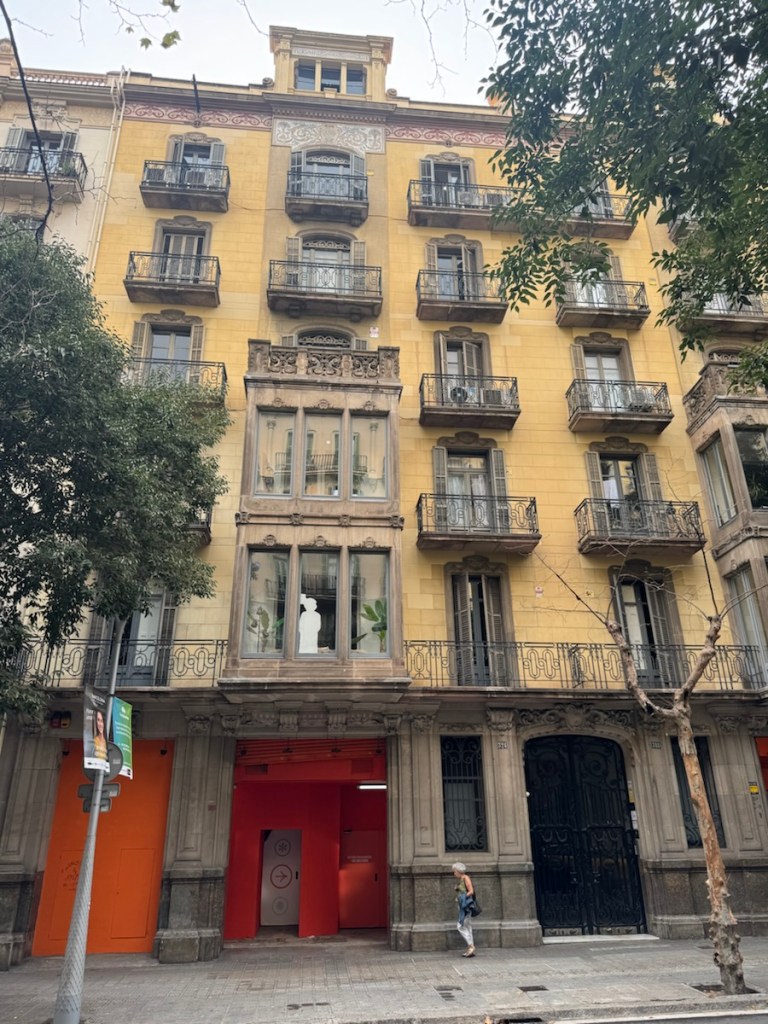
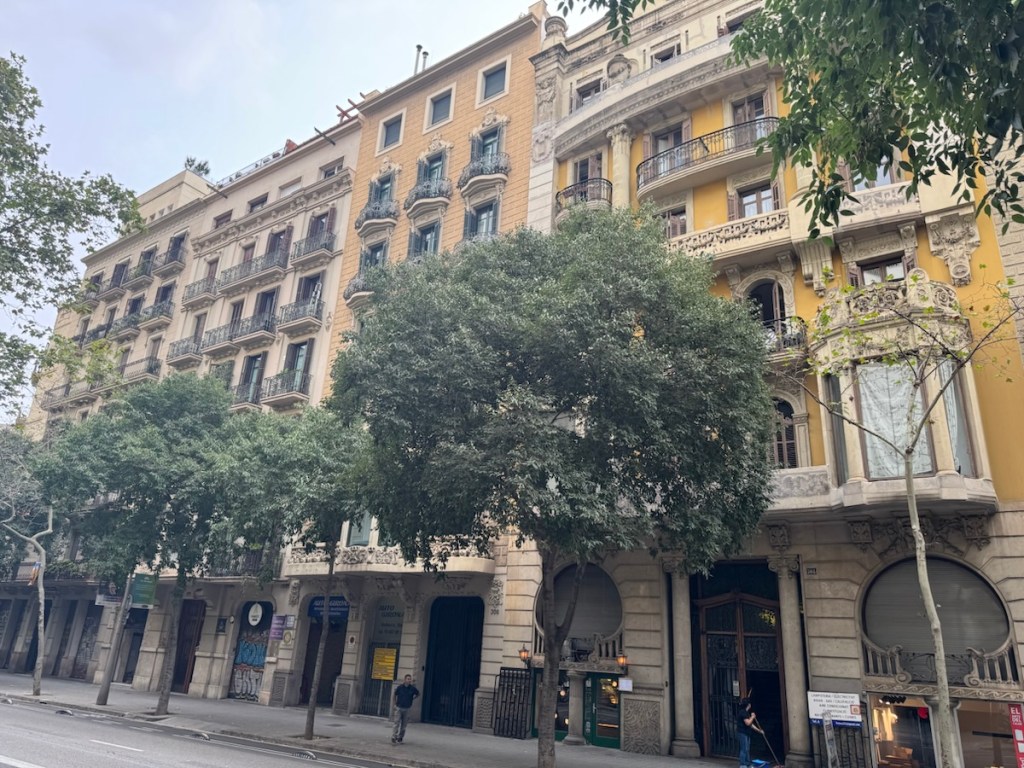
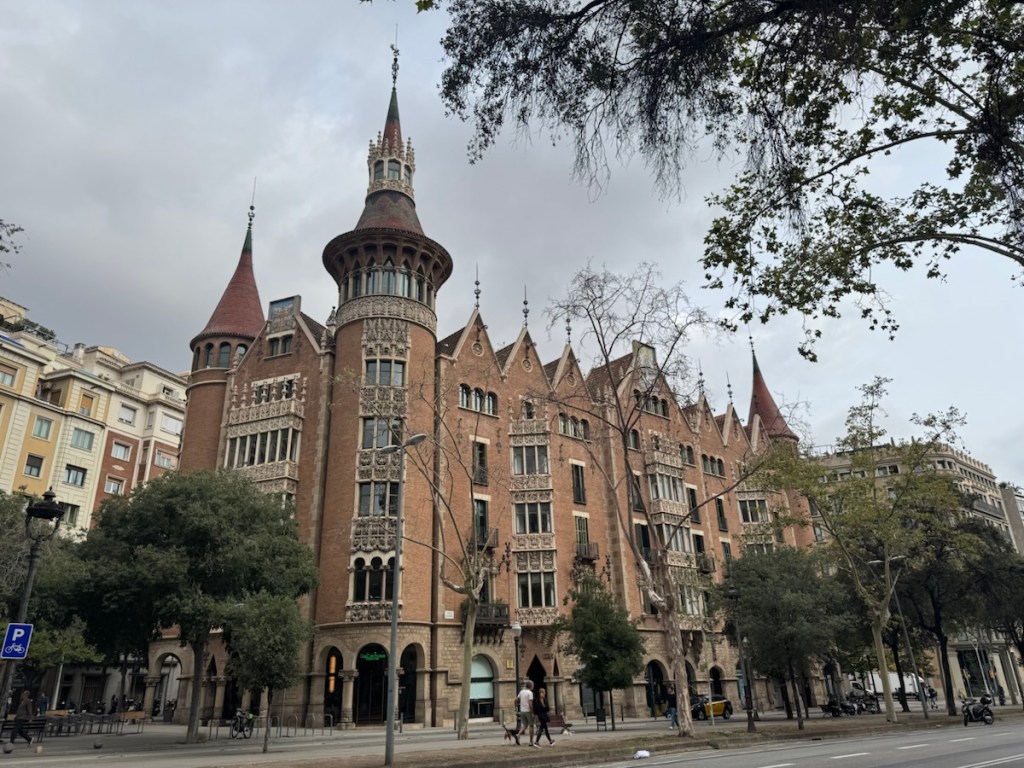
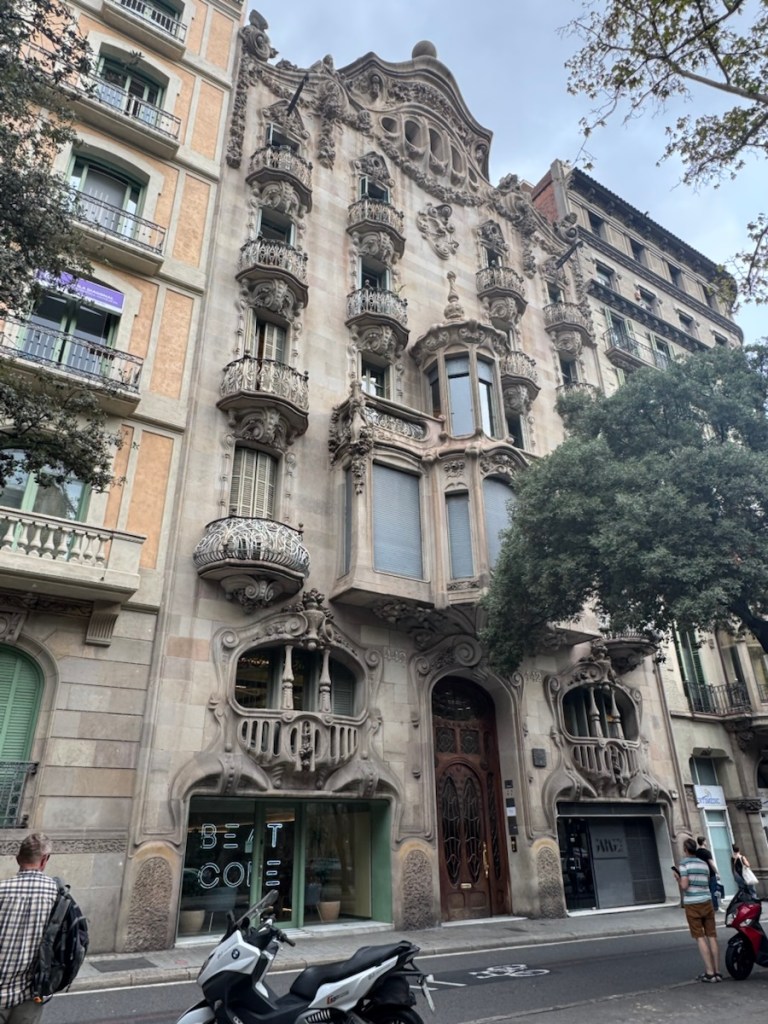

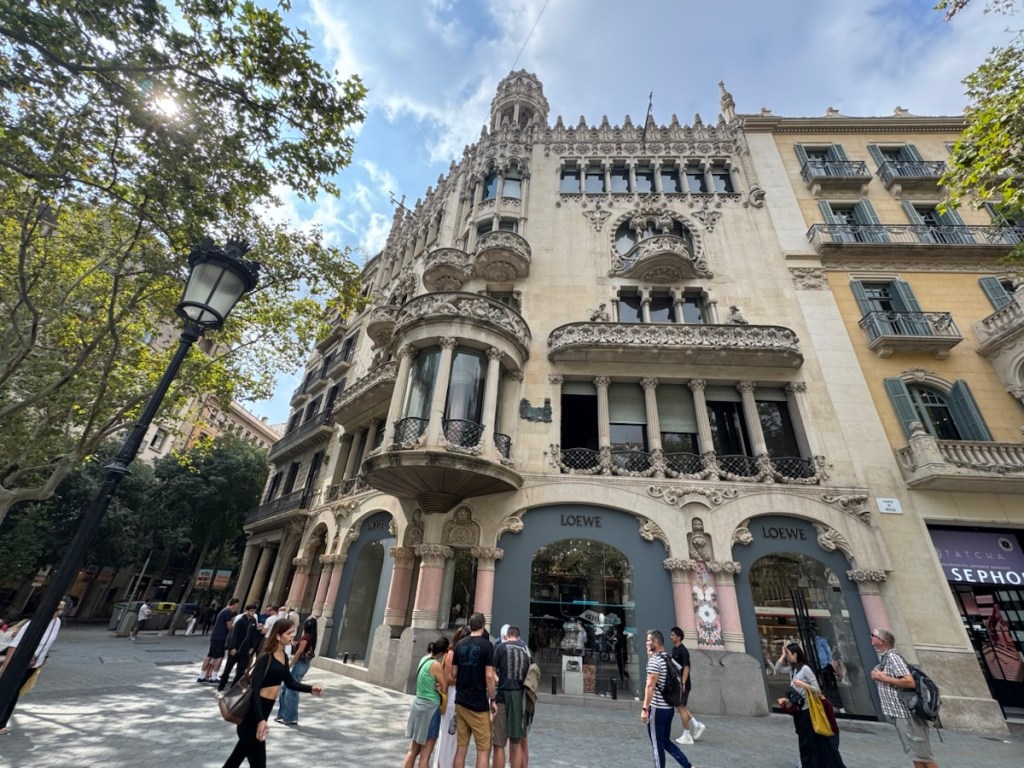
We walked up the Avenue Diagonal to the top of the Passage de Gràcia where some of Gaudí’s famous houses and palaces are situated. These were very popular with long queues and expensive entrance fees. Many of which we had visited previously.

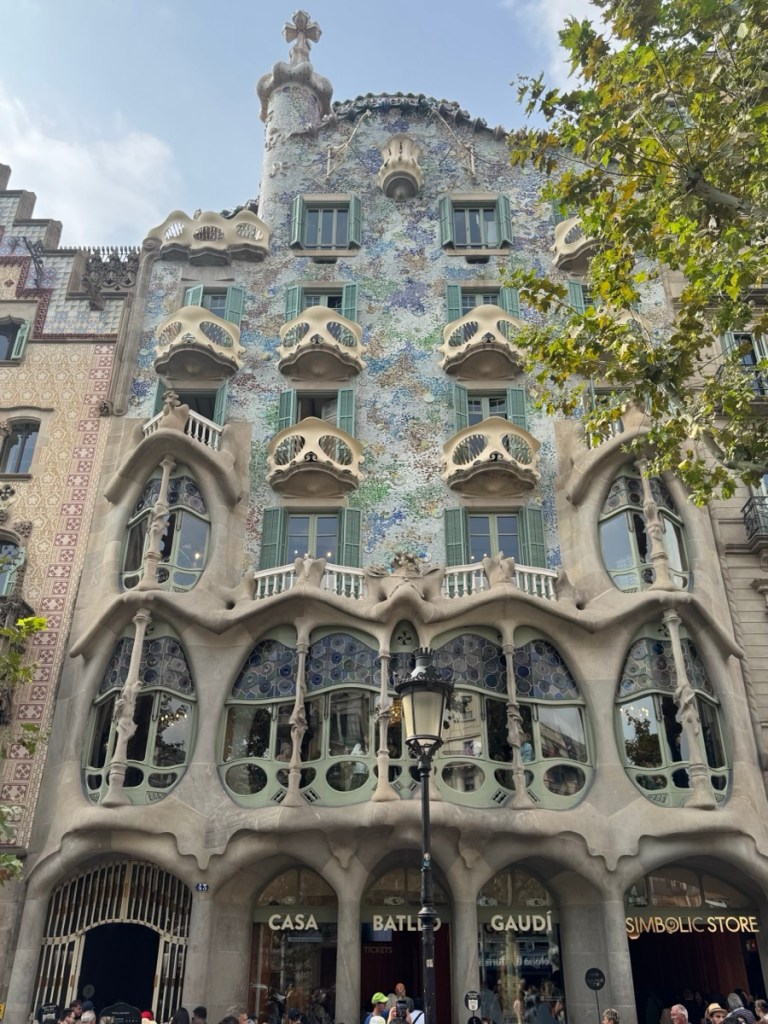
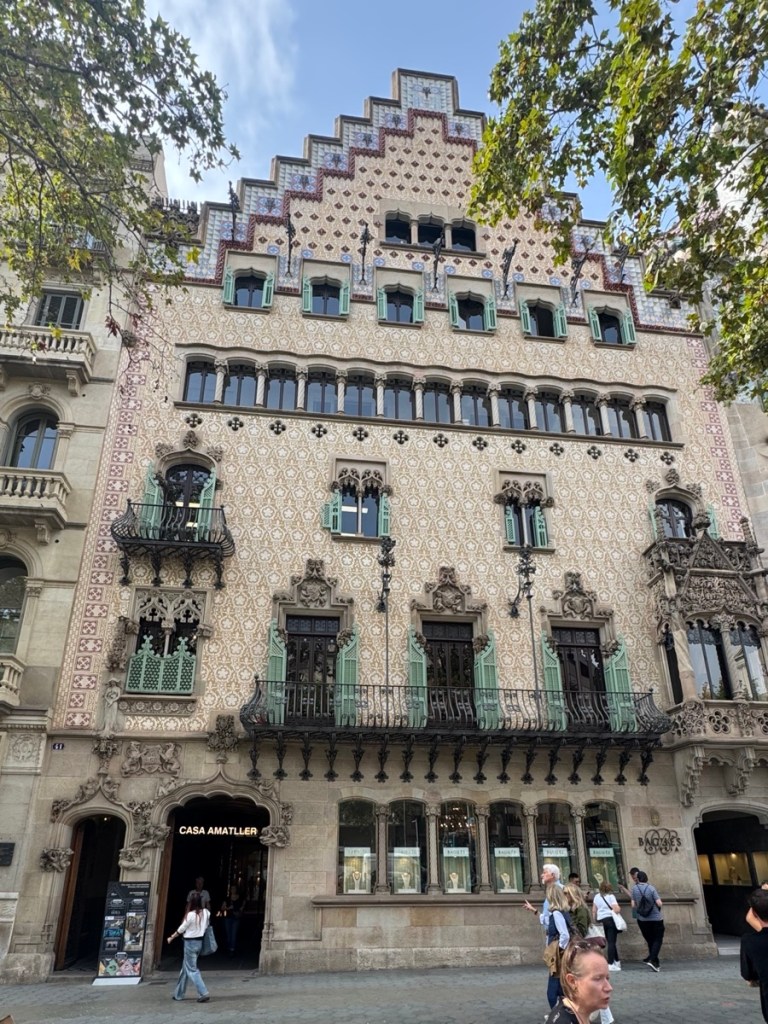
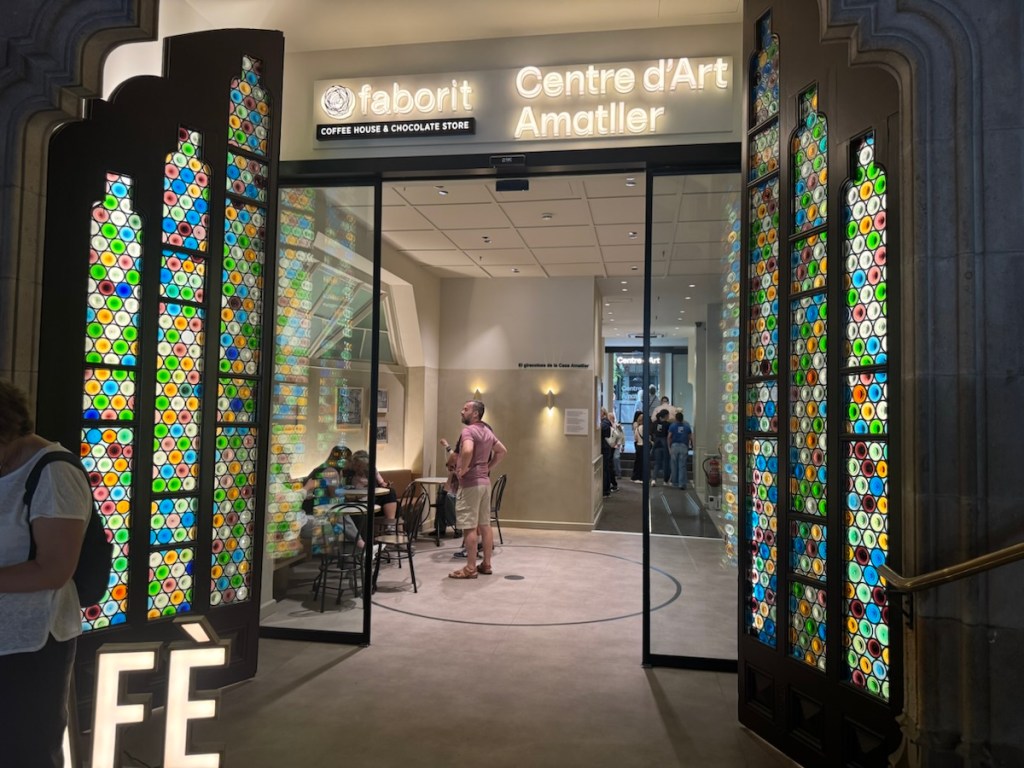
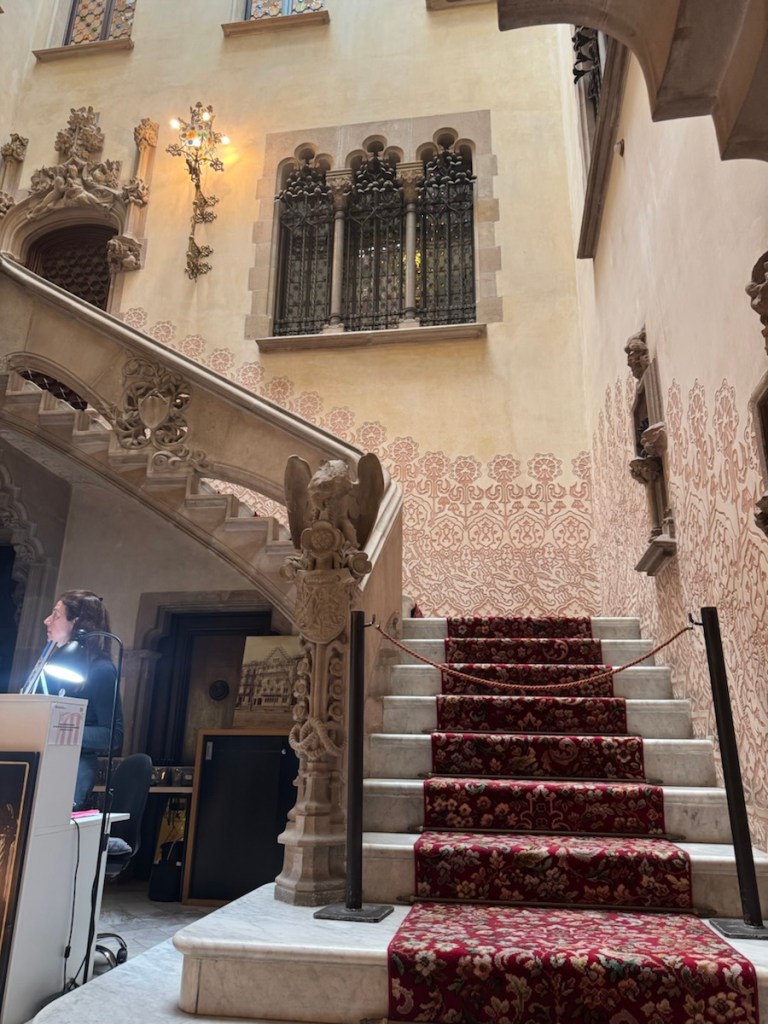
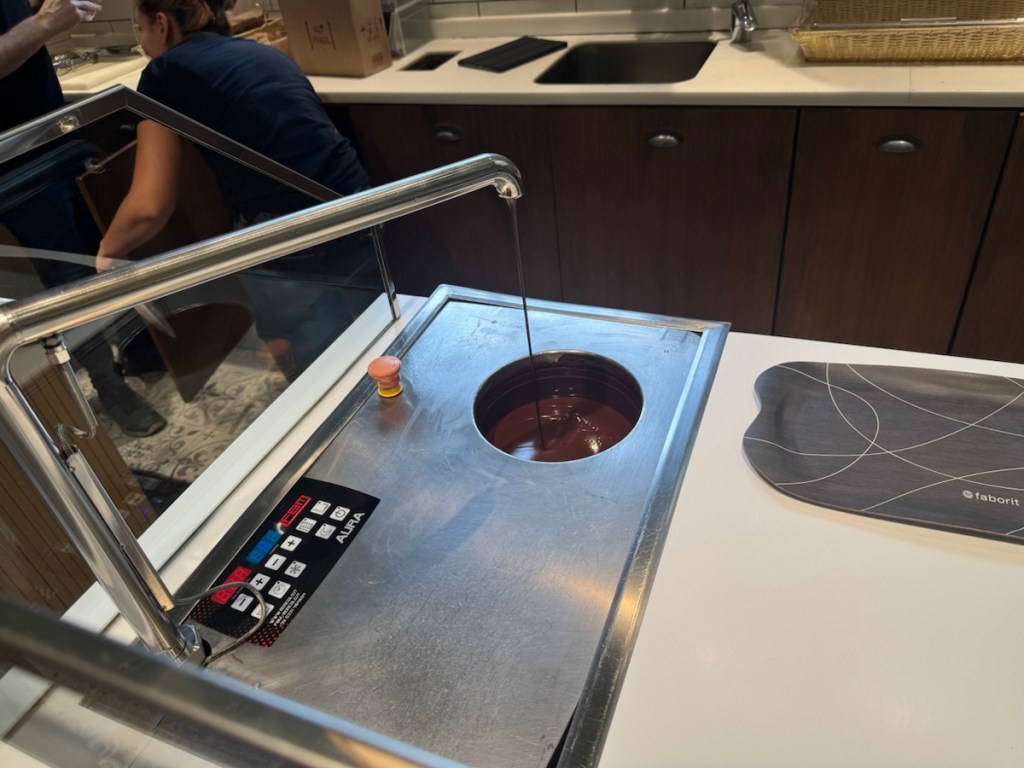
Instead, we went to a grand house where chocolate was on tap. The Amatller family have been making chocolate for over 100 years, and the cafe is situated in the former kitchens of Casa Amatller. We sampled a cup of hot chocolate which was served with pieces of toast to dip in, it was very dark and rich, but very delicious.
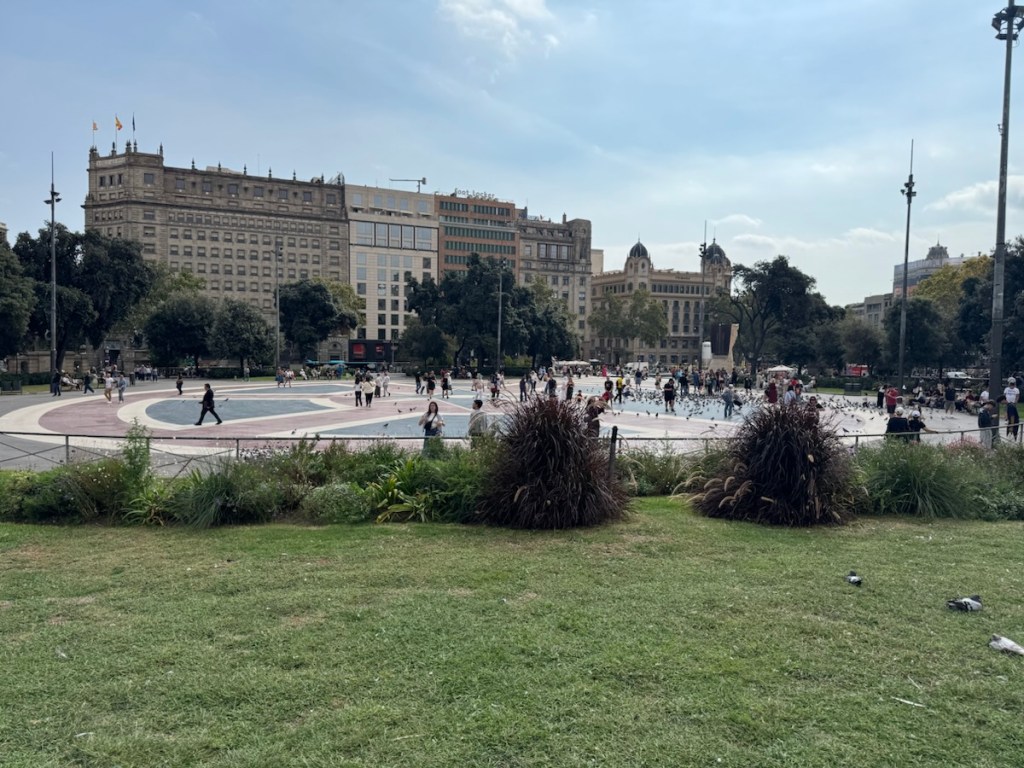
We continued down towards La Rambla, crossing the Plaça de Catalunya, the central square in Barcelona, on the way. Unfortunately, someone thought it would be a good idea to feed the pigeons.
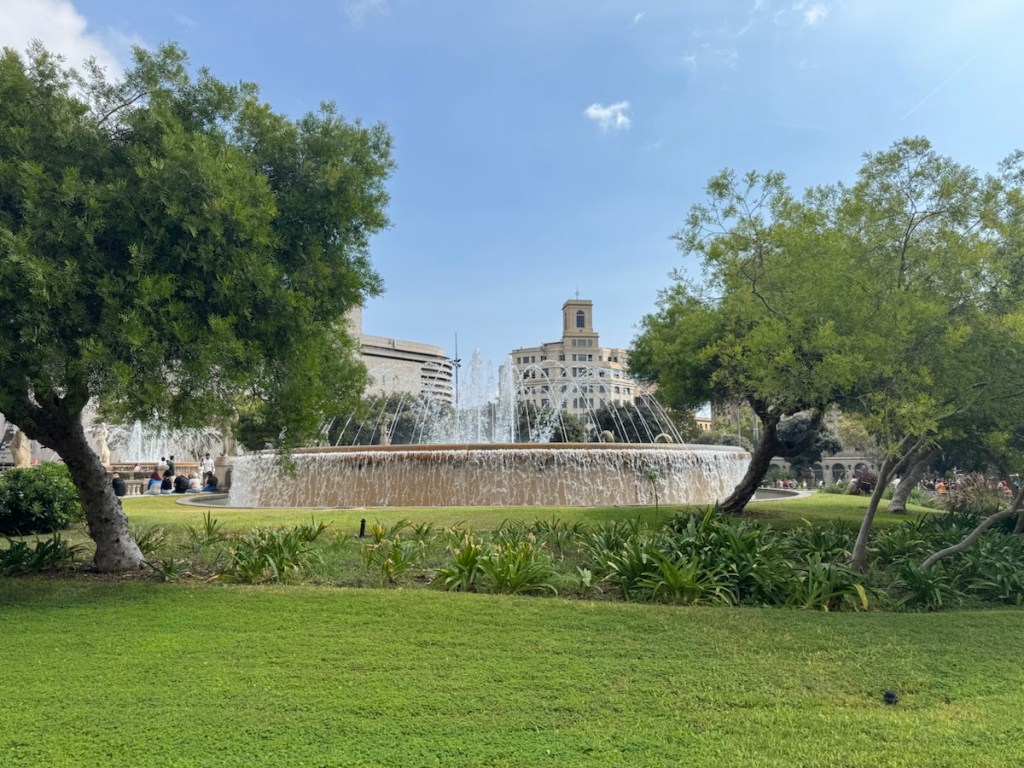
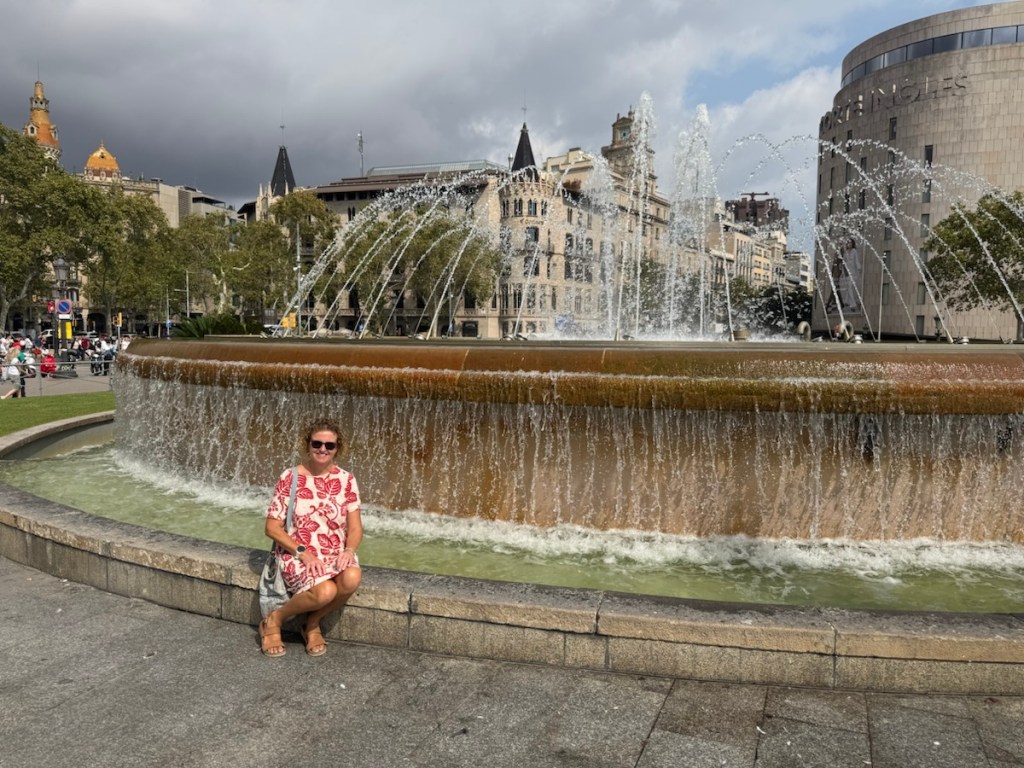

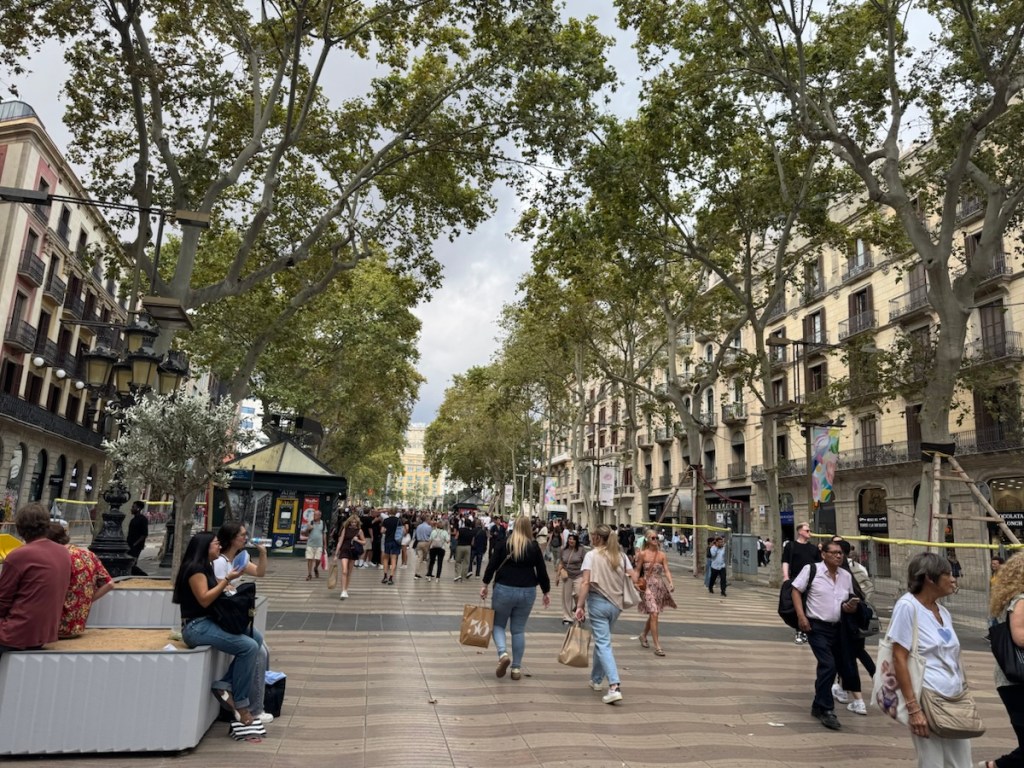
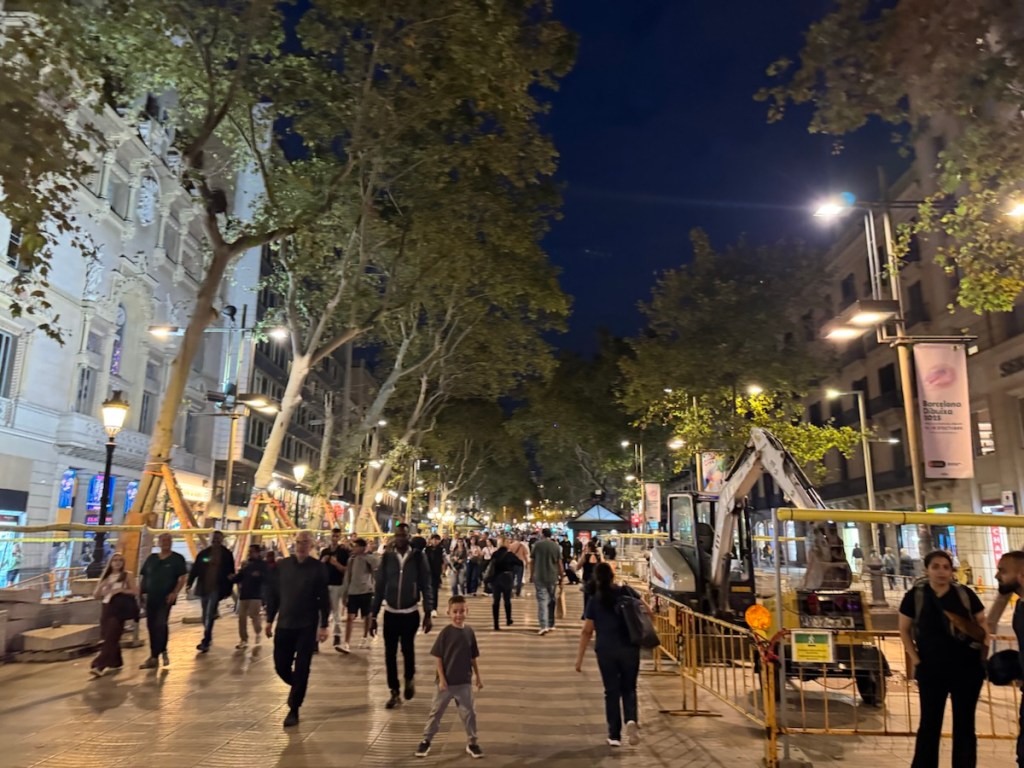
La Rambla (or ramblejar, as the local people say) is a tree lined avenue linking the square with the old harbour, lined with more interesting façades, shops, flower stalls and human statues.
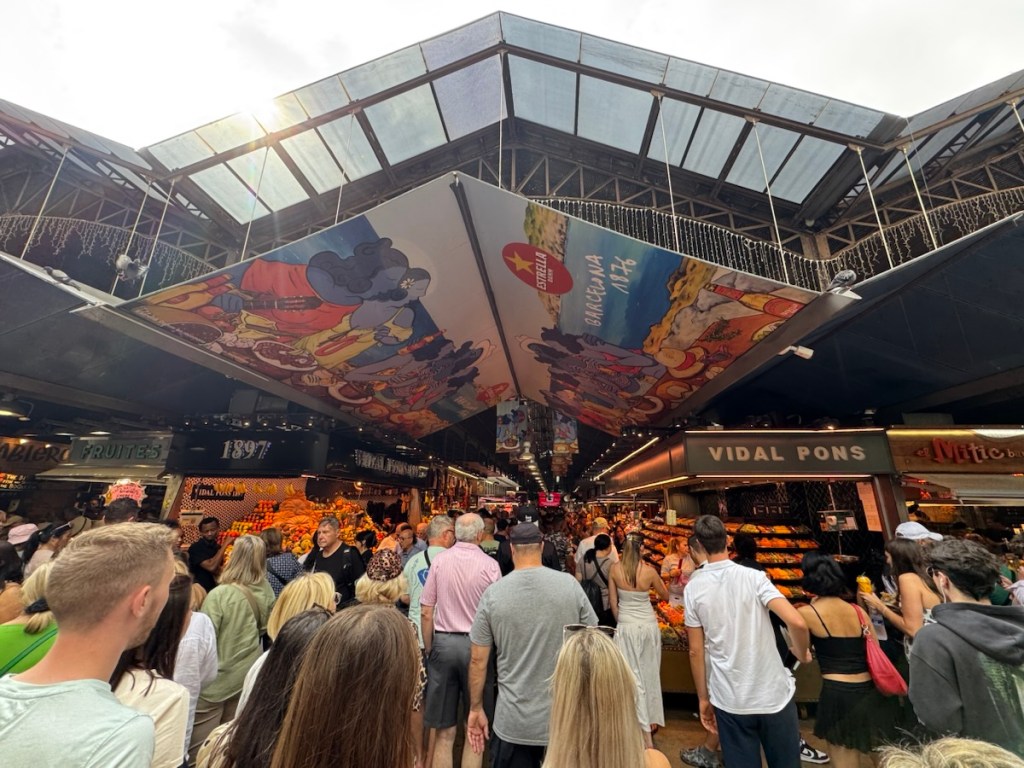
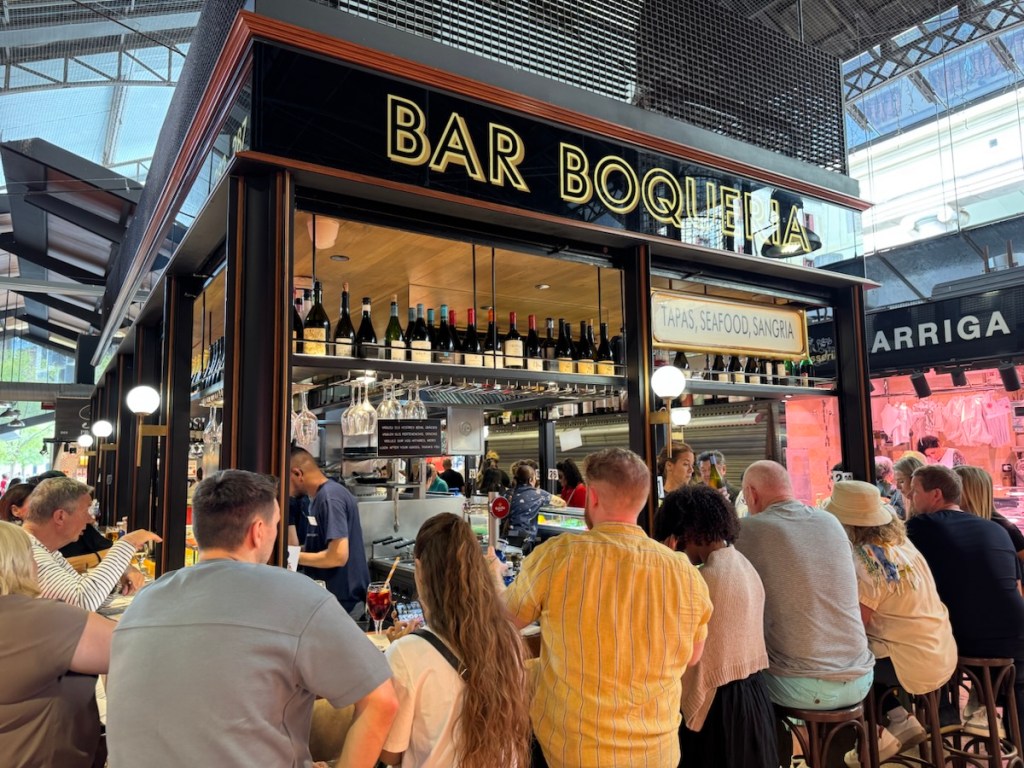
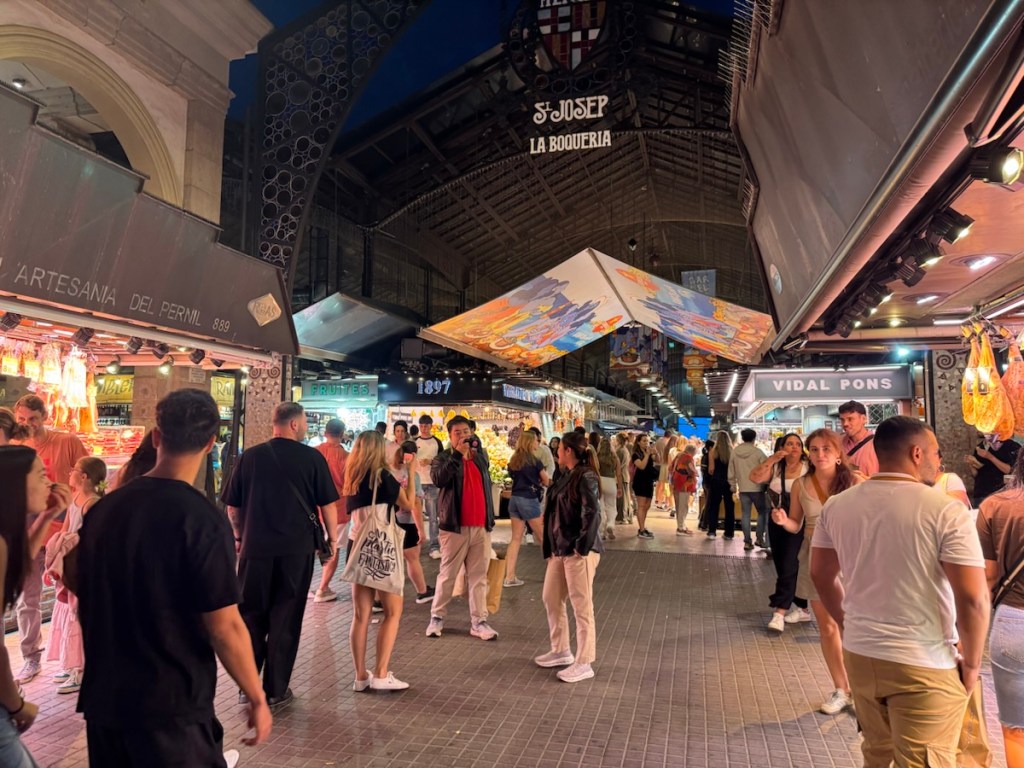
We arrived at Mercat de la Boqueria, considered to be the best and largest gourmet food market in Europe. Although it opened officially in 1840, there were already market stalls here in the 13th century. Counters were overflowing with the freshest locally sourced ingredients, including pungent cheeses, seafood, meats, fruit and vegetables. There were also plenty of tapas bars where you could taste some of the local gourmet treats, if you were lucky enough to find a seat.



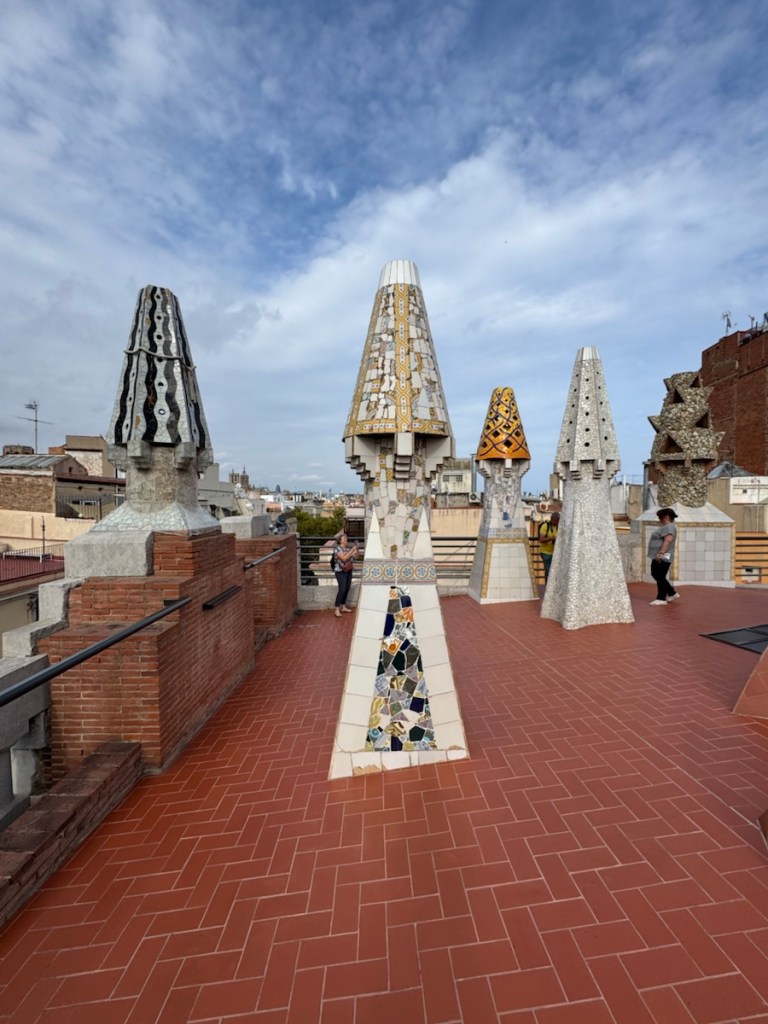
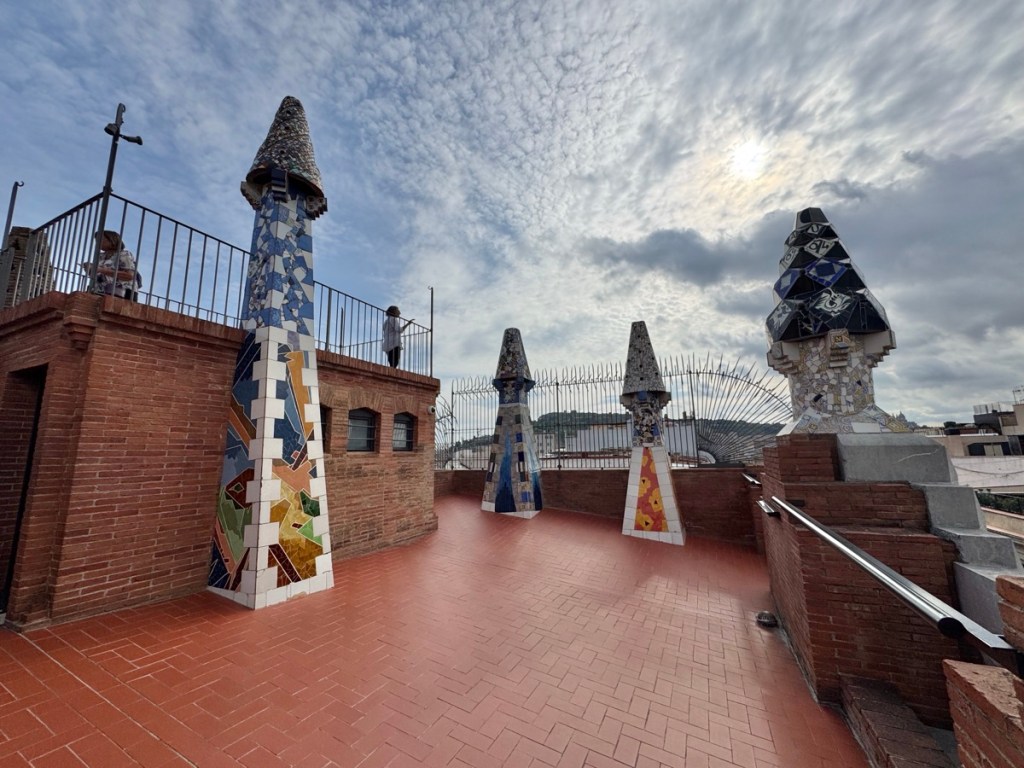
Just around the corner from the market and down a side street we found The Palau Güell, which was the first commission that Antoni Gaudí received. We had not previously visited this building, it was not so popular and had a very reasonable entrance fee so we went inside.
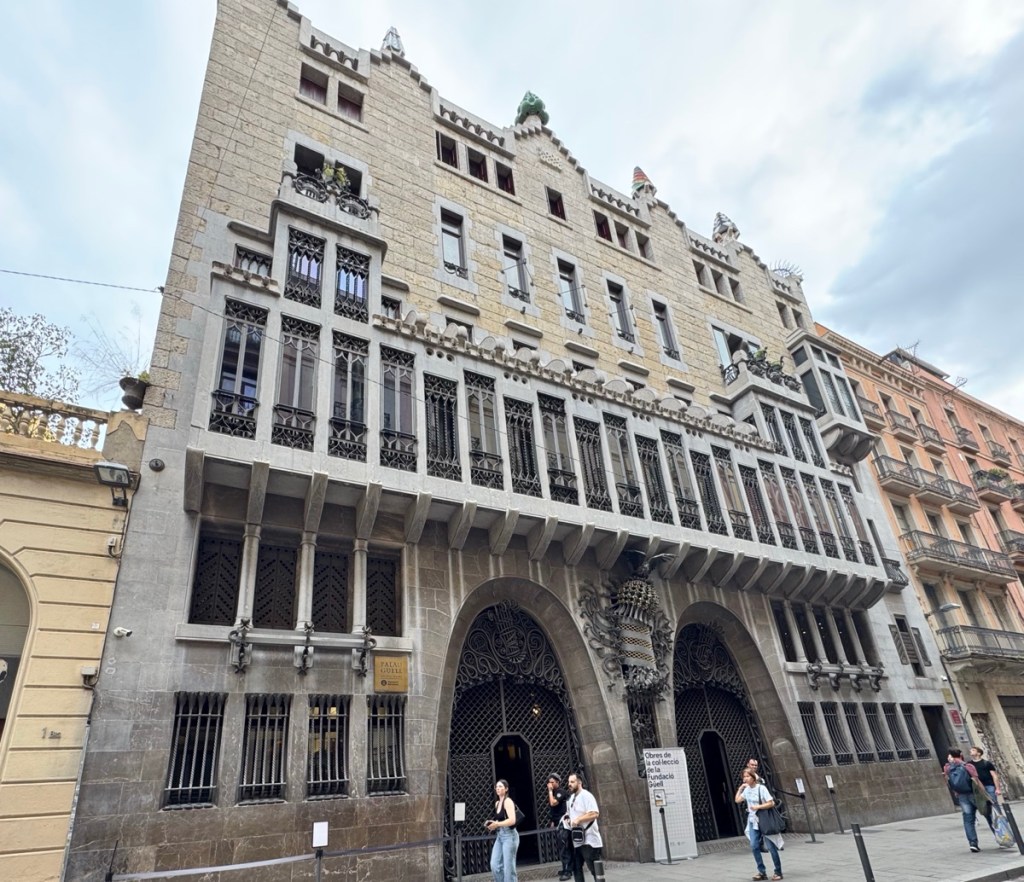
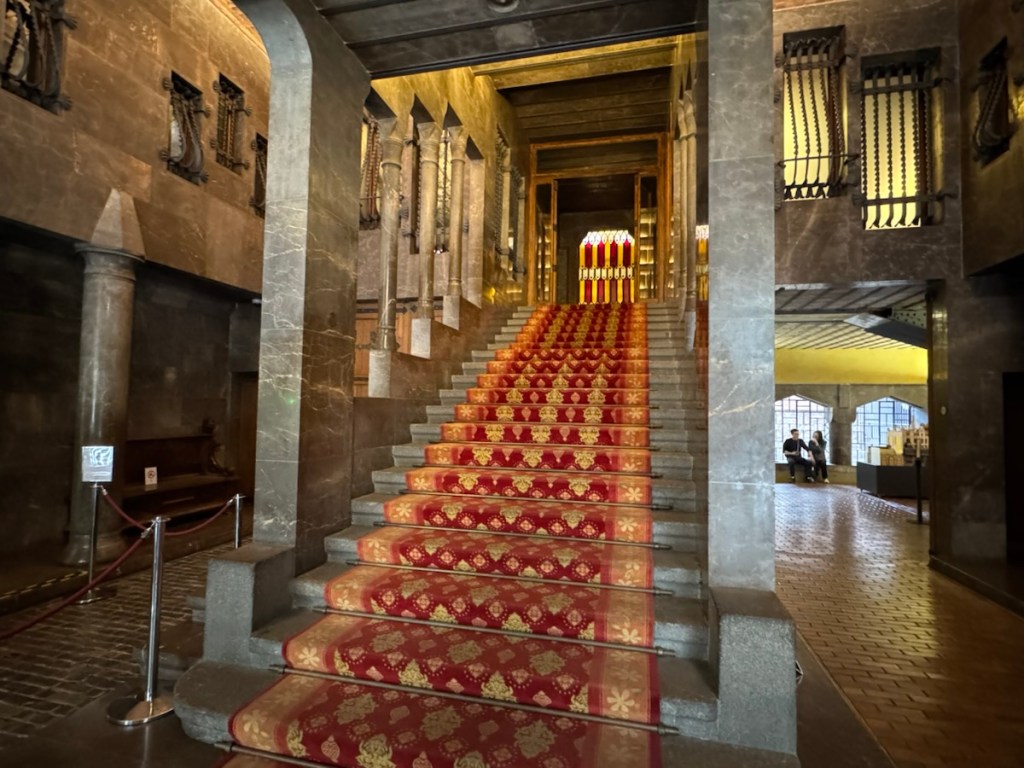
The palace was built between 1886 and 1890, Gaudí incorporated his new concepts of space and the treatment of light along with rich and original decorative details in wrought iron, pottery, glass, stone and wood. As with all of his buildings the attention to detail is remarkable and makes any visit a joy.
We were able to look around the underground stables, coach house, living quarters, central hall and courtyard.

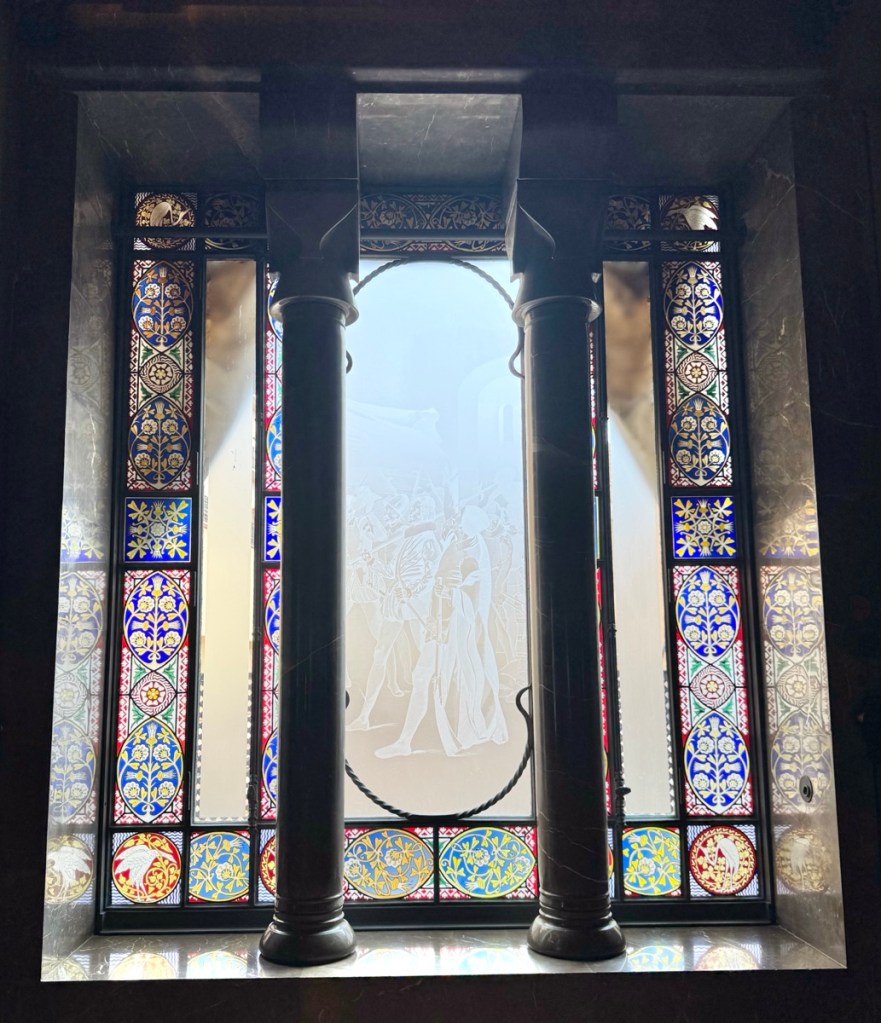

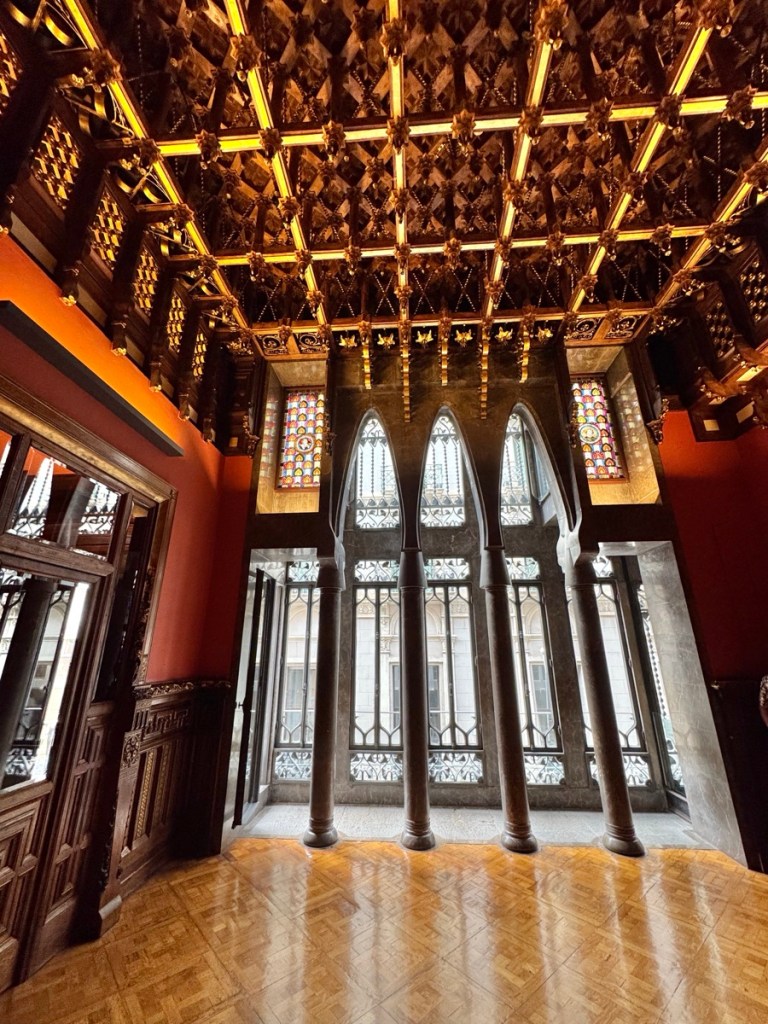

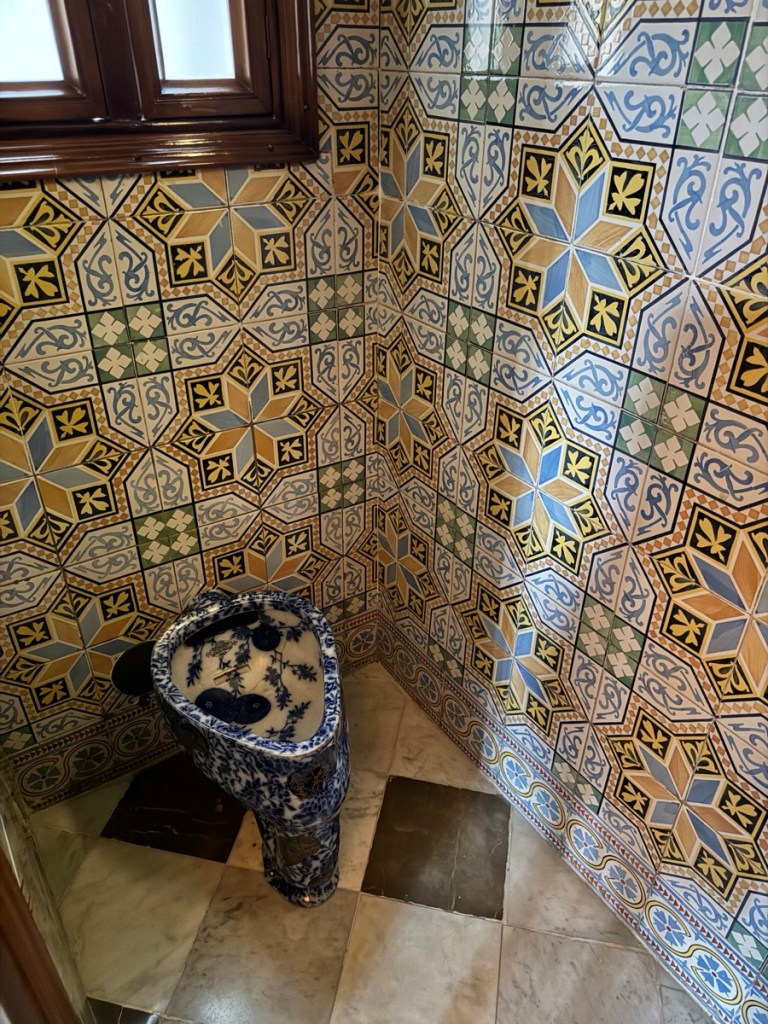

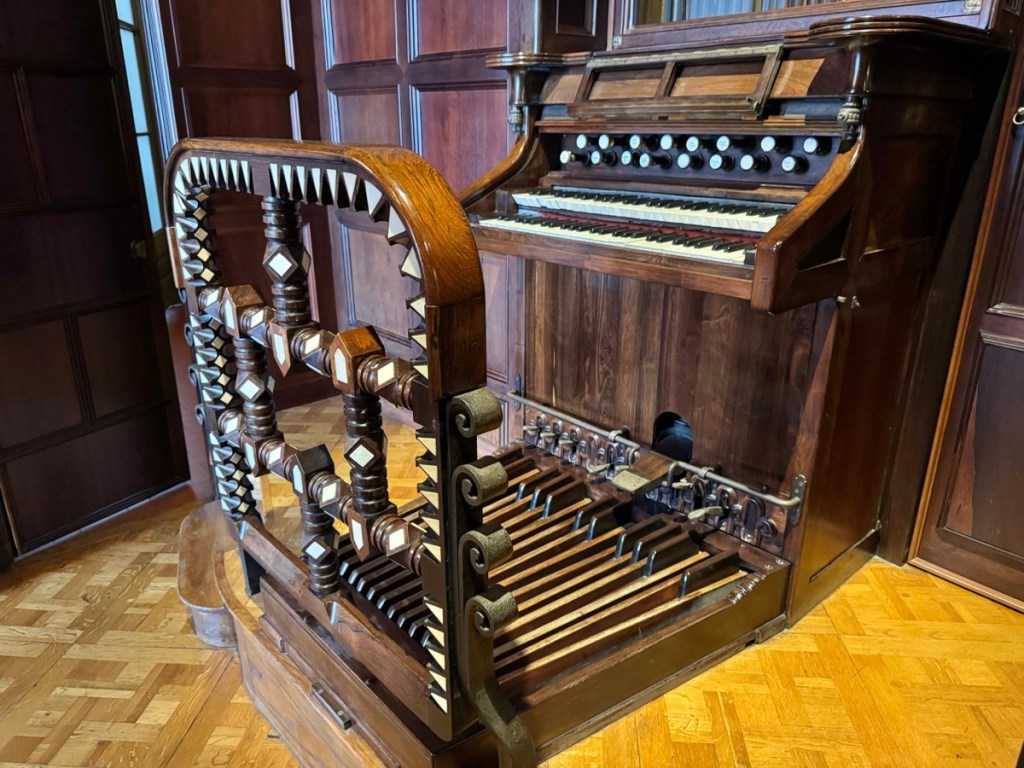
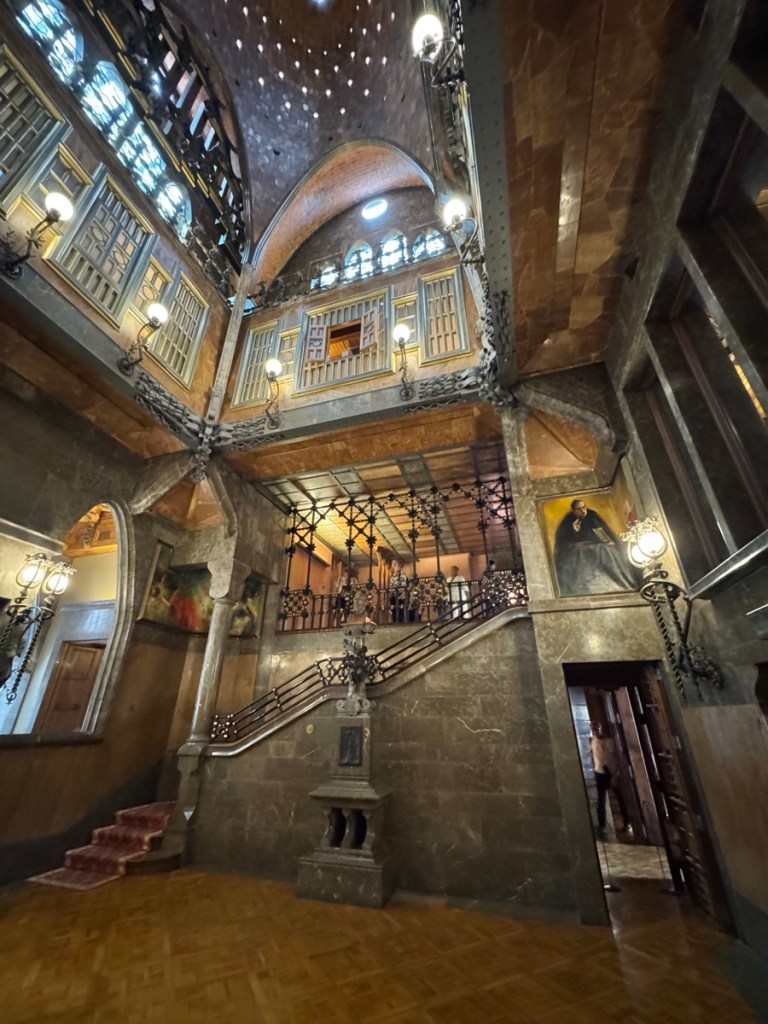
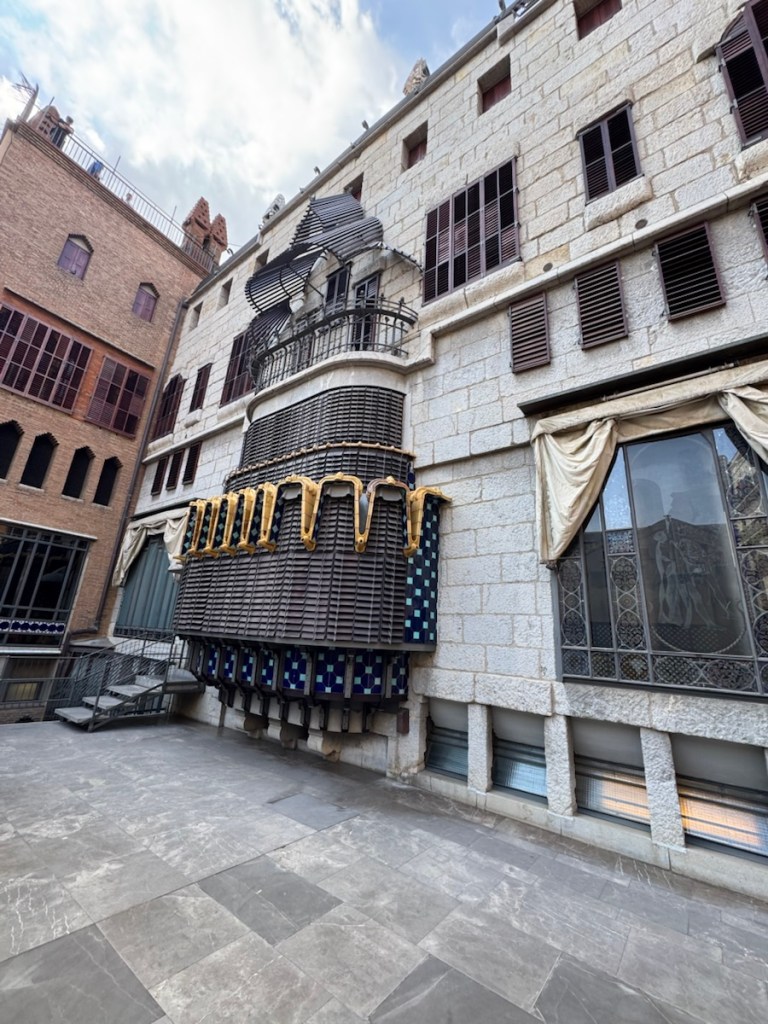
Up on the sloping roof terrace, we wandered around the ornate chimneys and had good views of the city.
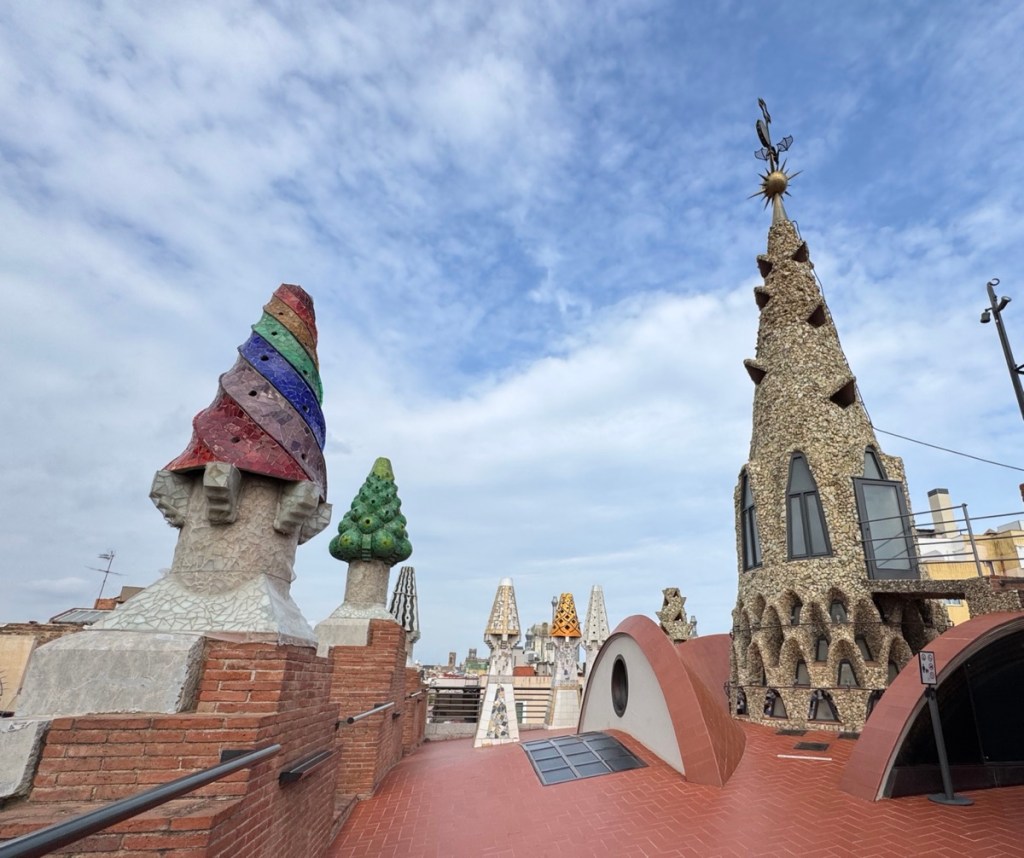
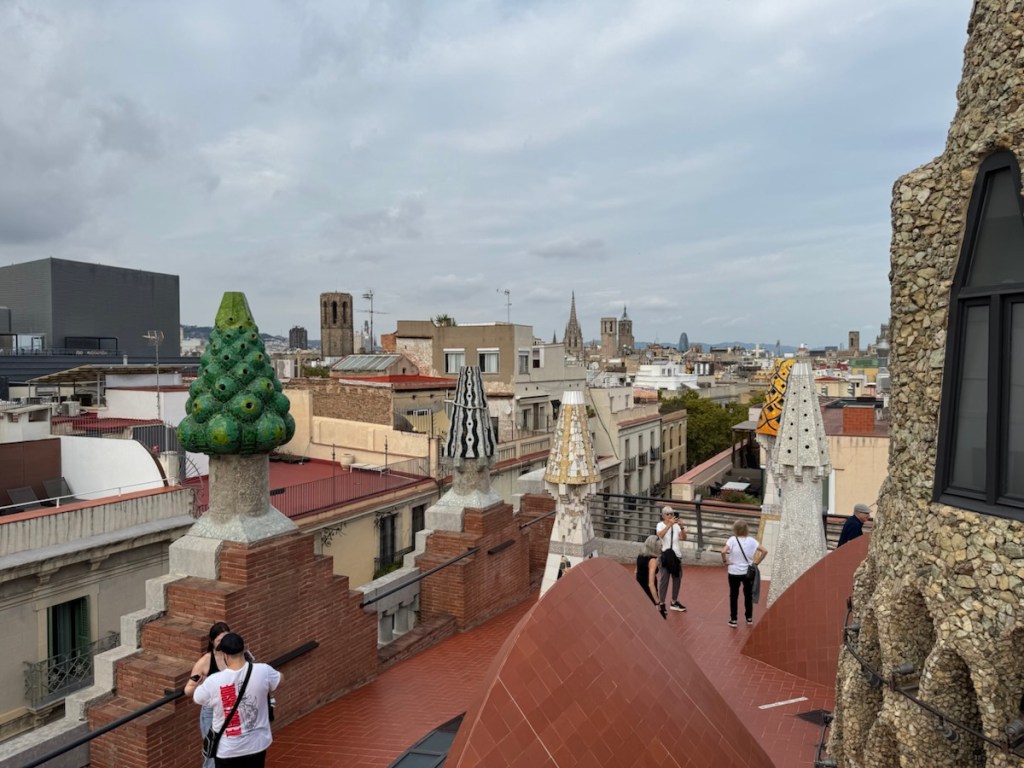
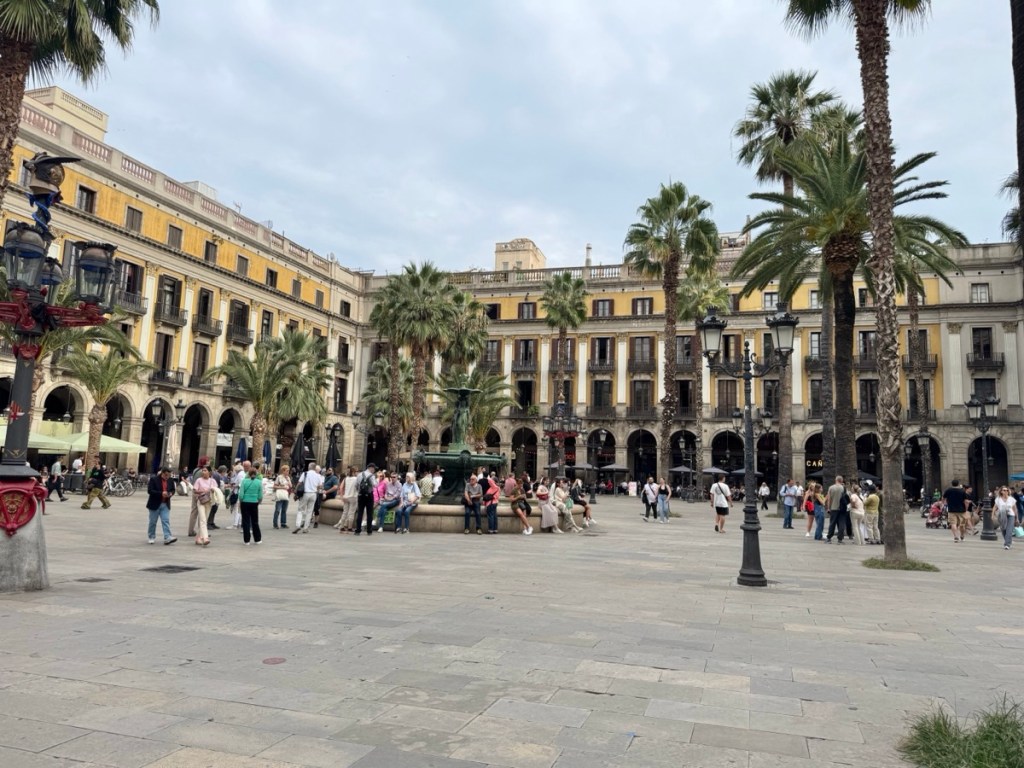
Walking back across La Rambla, we arrived at a square full of bars and restaurants, as it was almost sundowner time, we stopped for refreshments and did a bit of people watching.
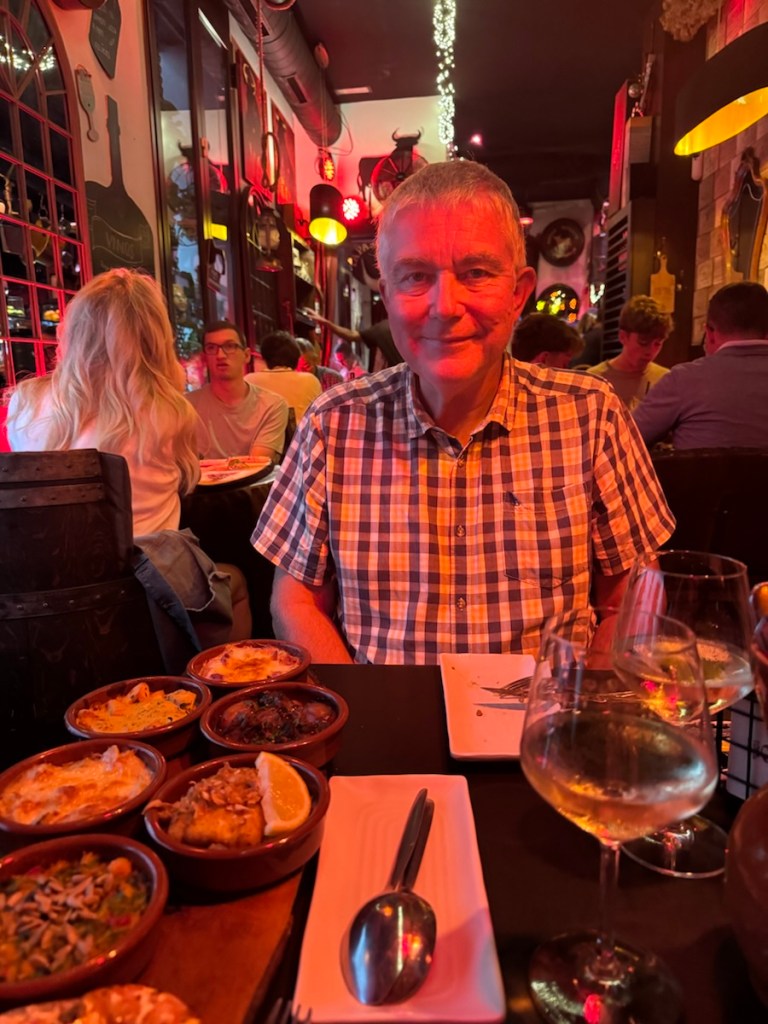
To finish the day, we found a small tapas bar which had good reviews. There was a short queue, but we soon got shown to good seats in the busy restaurant. There wasn’t a menu, you just tell them what you do and don’t like, and they bring a selection which was all very nice.

It was now time to get the train back to Ziggy, so we walked back up La Rambla towards the station.

 Sailing ZigZag
2 replies on “Catalonia”
As I write, I have had to turn my light on as the greyness has turned to gloom and the rain is falling heavily outside, so a little blast of continental sunshine and style is a welcome sight.
Looks like you had a great day out in Roman Barcino. To fair, it’s changed a fair bit since we decided that was a good location to set up camp!
The Palau Güell looks like a great place to wander around. Oh to have the time to design and build fancy chimney pots….
Also, you continue to attract the crowds wherever you go. Looked super busy there, and far cry from the peaceful quiet bays you have anchored in in recent times.
Safe onward sailing.
LikeLiked by 1 person
As always, Sue and Paul’s “Rough Guide” hits the spot, especially with the advice on The Palau Güell.
One of the great joys of European cities is finding the slightly off track attractions and bars.
The photos of La Sagrada Familia past and present really emphasised the continued development.
The opening description of seagulls reminded me of Eric “Kung-fu Fighting” Cantona and his “when the trawlers ….” press conference!
LikeLiked by 1 person