
We left Menton and had a short trip west along the coast to Beaulieu Sur Mer, sailing past Monaco on the way.

We anchored in crystal clear blue water at the bay at Beaulieu Sur Mer among super yachts, which were all very well lit up at night
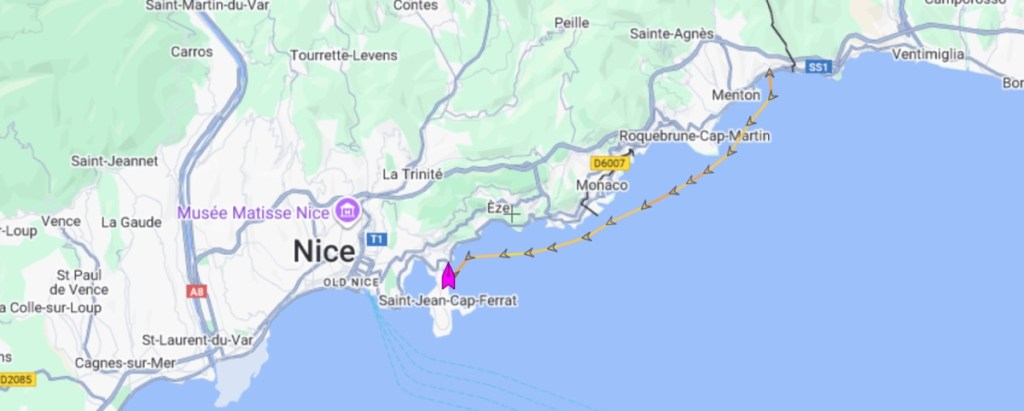

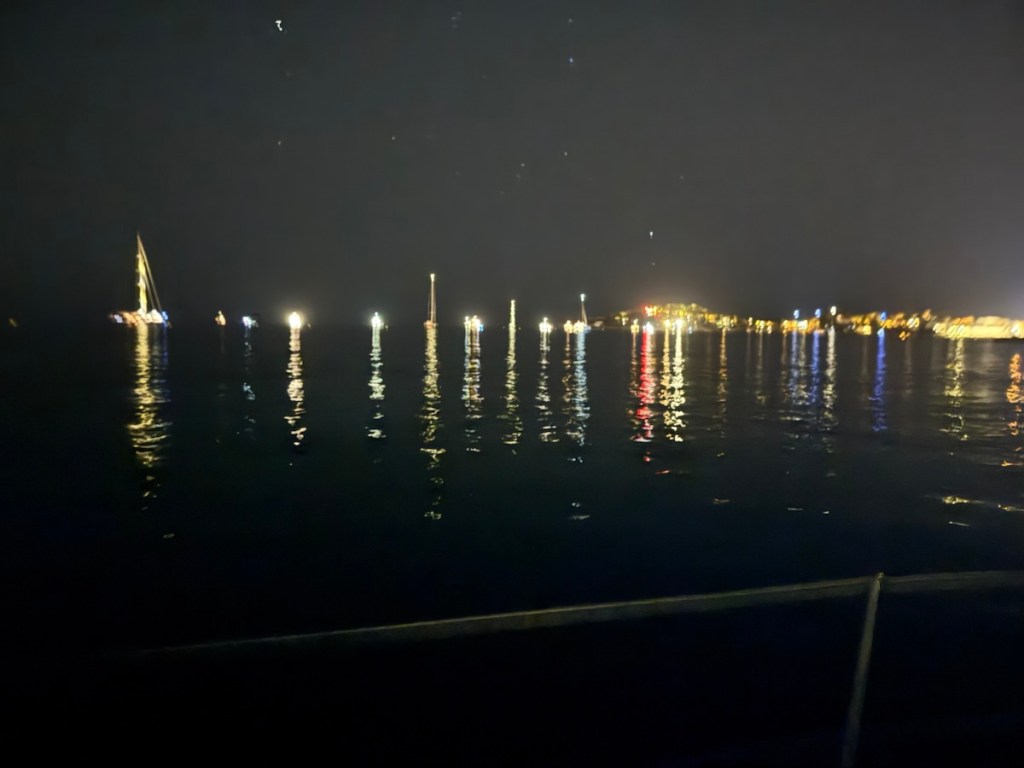
Being much smaller, we were able to anchor closer to shore, in the shelter of Saint Jean Cap Ferrat peninsula, with a view of David Niven’s villa on the sea front and Rothschild’s manor house overlooking us from the top of the hill.
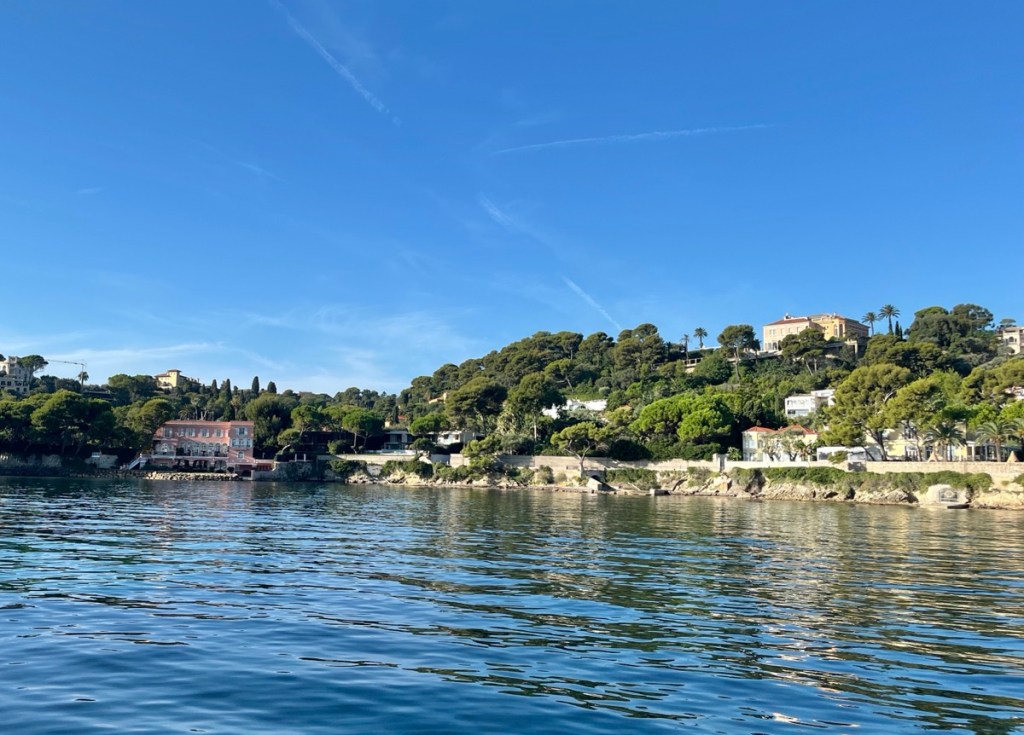
Beaulieu Sur Mer (Beautiful Place on the Sea), is a seaside resort, surrounded by green hills, on the French Riviera. It is believed to have been inhabited since prehistoric times, later in 1860 it was incorporated into the county of Nice. From this time it became a popular destination for the international elite, visitors included writers, publishers, composers and rich aristocrats as well as monarchs from major European countries, this all helped the town to develop. It has been named as one of the most expensive place to live in the region.

We rowed Fred over to a very convenient dinghy harbour which we seemed to have exclusive use of during our stay. Maybe it was the narrow, slightly dilapidated, staircase that you had to fight your way up through overgrown bushes to get to shore, which put people off.

We walked along to David Niven’s house which was very smart with its own little harbour at the front, the 7,000 sq ft home has manicured gardens and a private swimming pool. Being situated on the Cap Ferrat promontory, it is surrounded by sea on three sides.
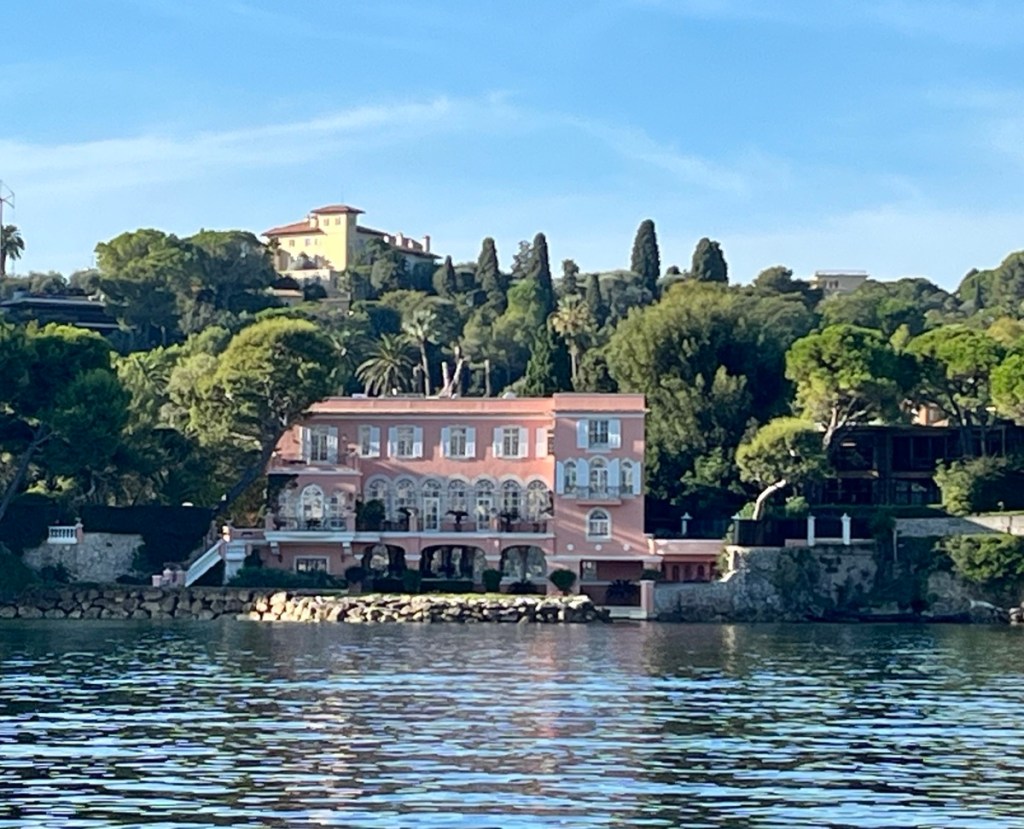
The villa ‘La Fleur du Cap’ was built in 1880 by the son of an arms dealer, and was originally known as ‘Villa Socoglio’ (the Little Rock). It was later home to the Duchess of Marlborough, King Leopold III, Charlie Chaplin and then David Niven. Since 1999, it has belonged to New Zealand born billionaires Christopher Chandler and Richard Chandler, who bought the house as a gift to their parents.
The square behind the villa is named ‘Place David Niven’ in memory of the English actor who owned it for over twenty years. The villa was used as a primary film location for the 1982 movie, Trail of the Pink Panther, and Curse of the Pink Panther, in 1983, its distinctive pink façade became iconic after these movies. These were the last films Niven starred in before his death in 1983. It is believed that he was at his happiest and most comfortable while in residence, even turning down movie roles to be there for the summer months.
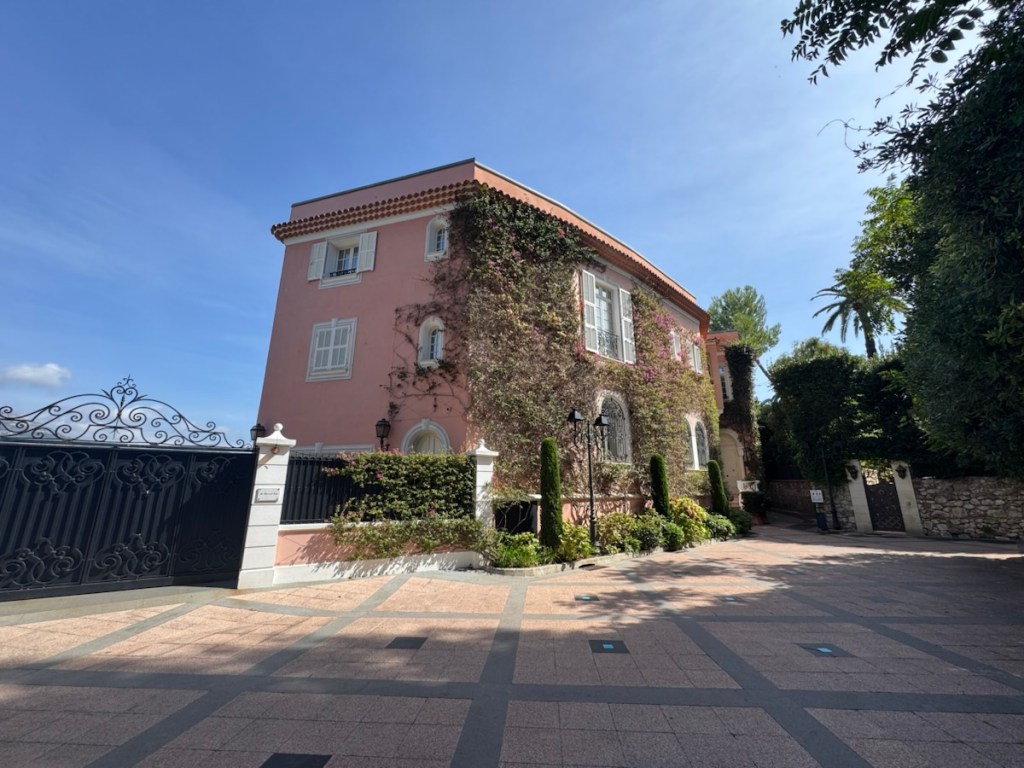
When Niven bought the house it was in need of renovation, David and his wife, Hjördis, completely modernised it in the 1960’s. Despite the poor condition of the interior, Niven has been quoted as saying that he couldn’t understand why the house was such a bargain when he bought it for £10,000. He then discovered that it was because developers were going to build up the bay across from the house and destroy the view. He was horrified and called Princess Grace. Grace said ‘Leave it with me’ and she had the development plans scrapped! It has since been suggested that this story regarding Princess Grace may have been embellished and that David and his neighbours successfully fought the development through conventional channels. But then Niven was famously never one to let facts spoil a good story.
Unfortunately it’s not open to the public to look inside so we walked up the hill to Villa Ephrussi de Rothschild. We had good views on the way of all the private villas hidden in the trees and Ziggy in the bay.

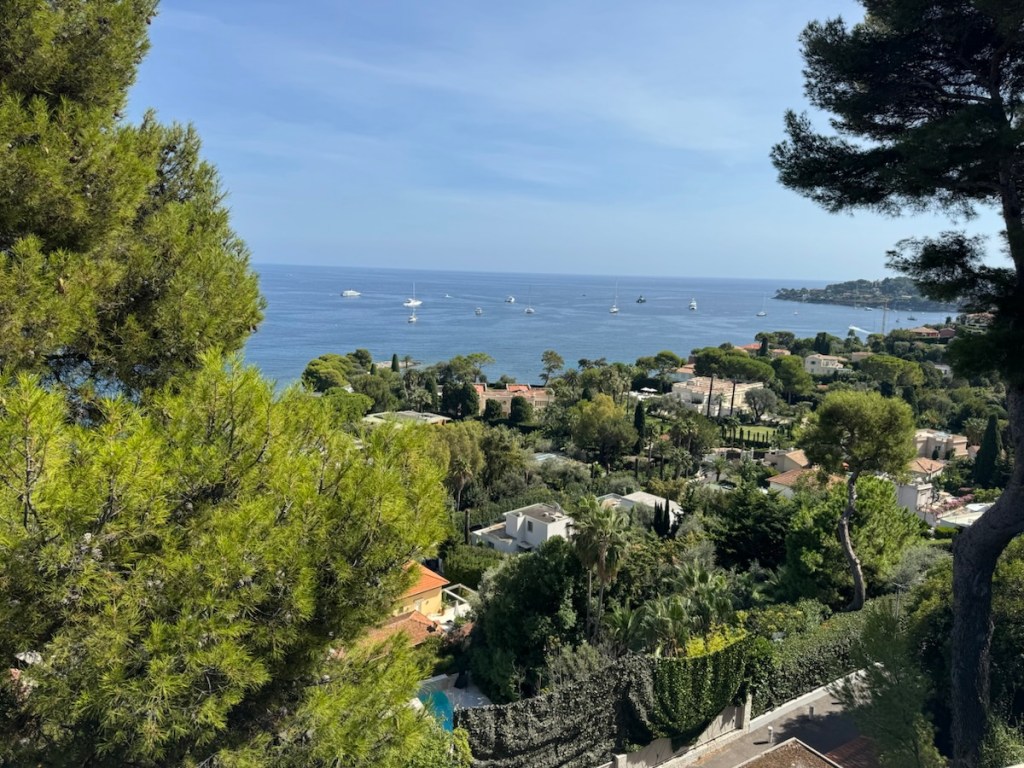
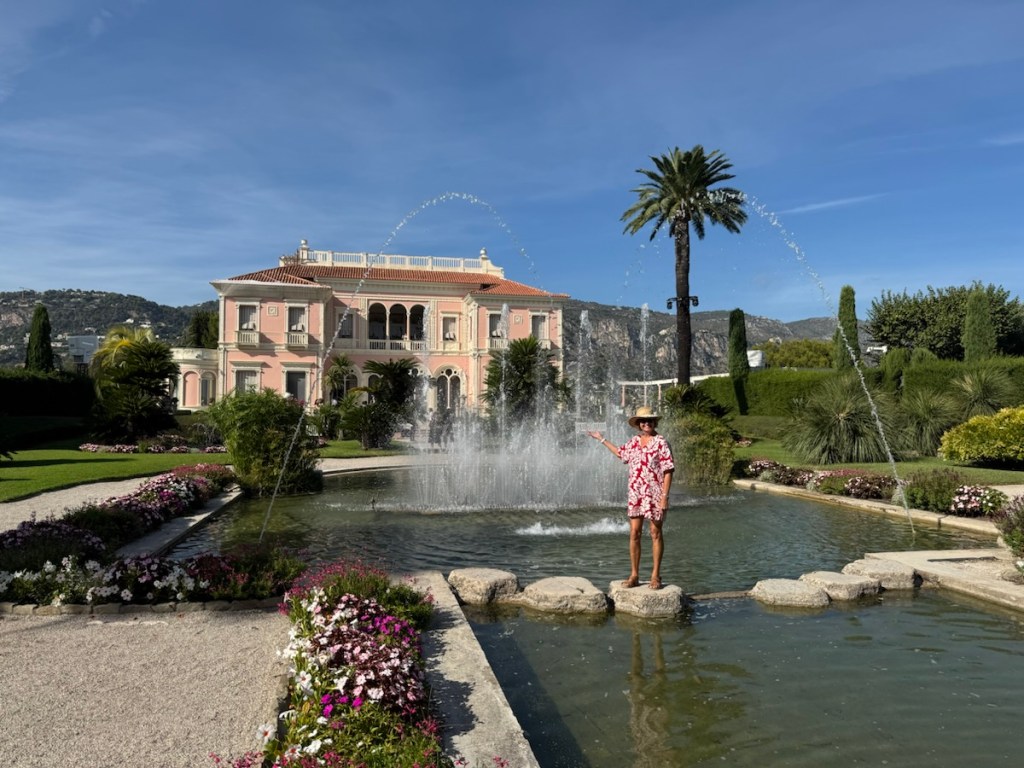
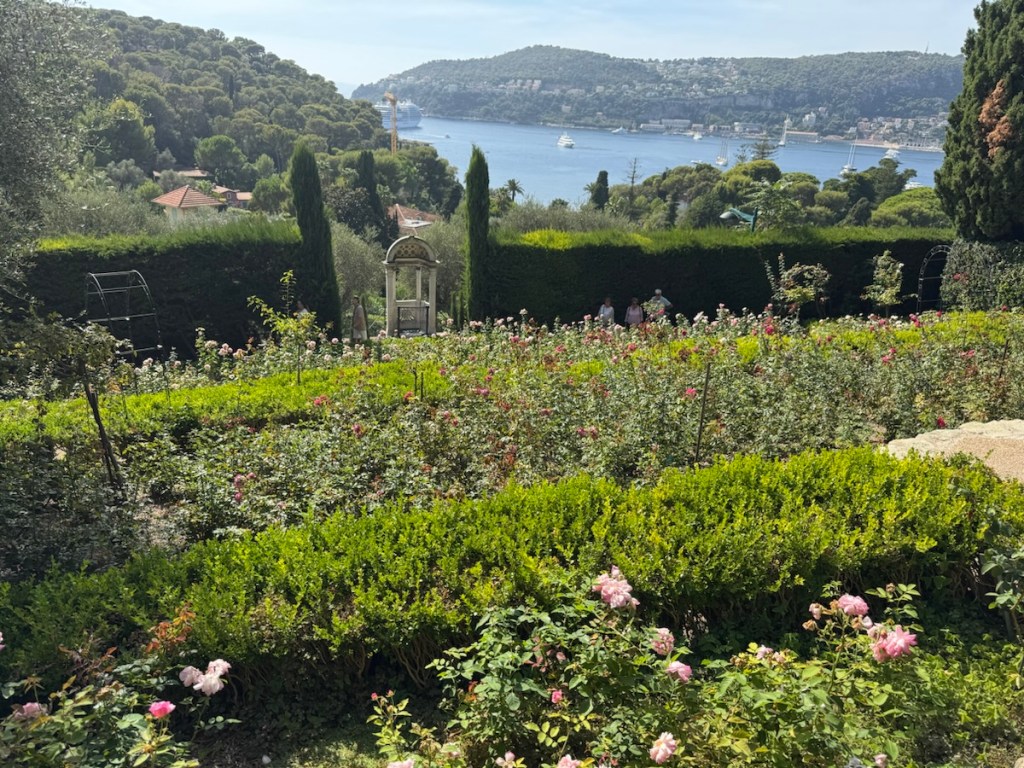
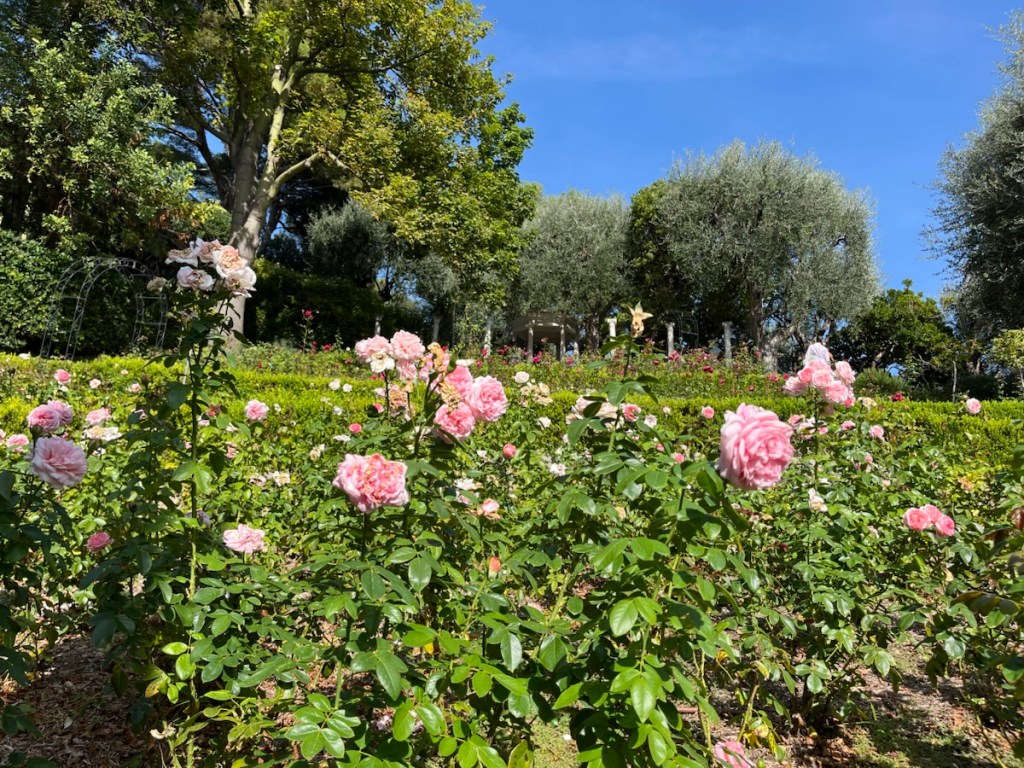
The Belle Époque Villa Ephrussi de Rothschild, also called Villa Île de France, was designed by the French architect Aaron Messiah and built between 1907 and 1912, for baroness Béatrice Ephrussi de Rothschild. A member of the Rothschild banking family and the wife of the banker Baron Maurice de Ephrussi. The baroness built her rose tinted mansion on top of the hill overlooking both the bay of Beaulieu Sur Mer and Villefranche Sur Mer. It is surrounded by nine themed gardens; French, Spanish, Florentine, stone, Japanese, exotic, Provençal, Sèvres and a rose garden.

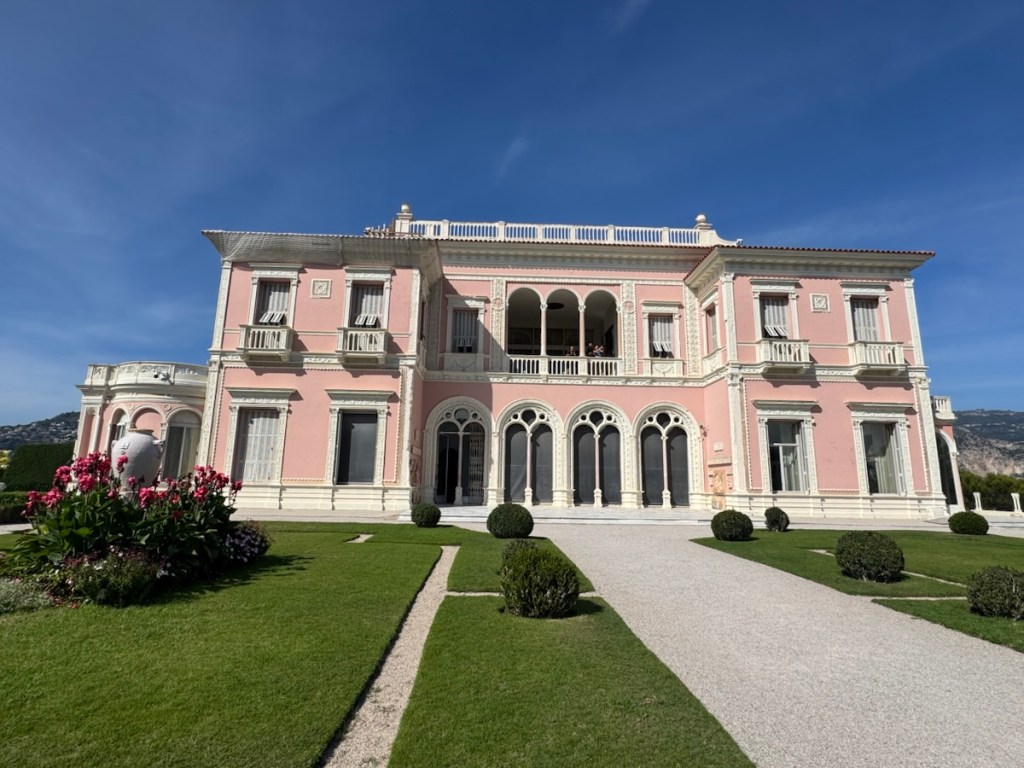
Upon her death in 1934, the luxurious mansion and its priceless works of art were donated to the Académie des Beaux of the Institut de France, which has preserved its unique character and opened it to the public.
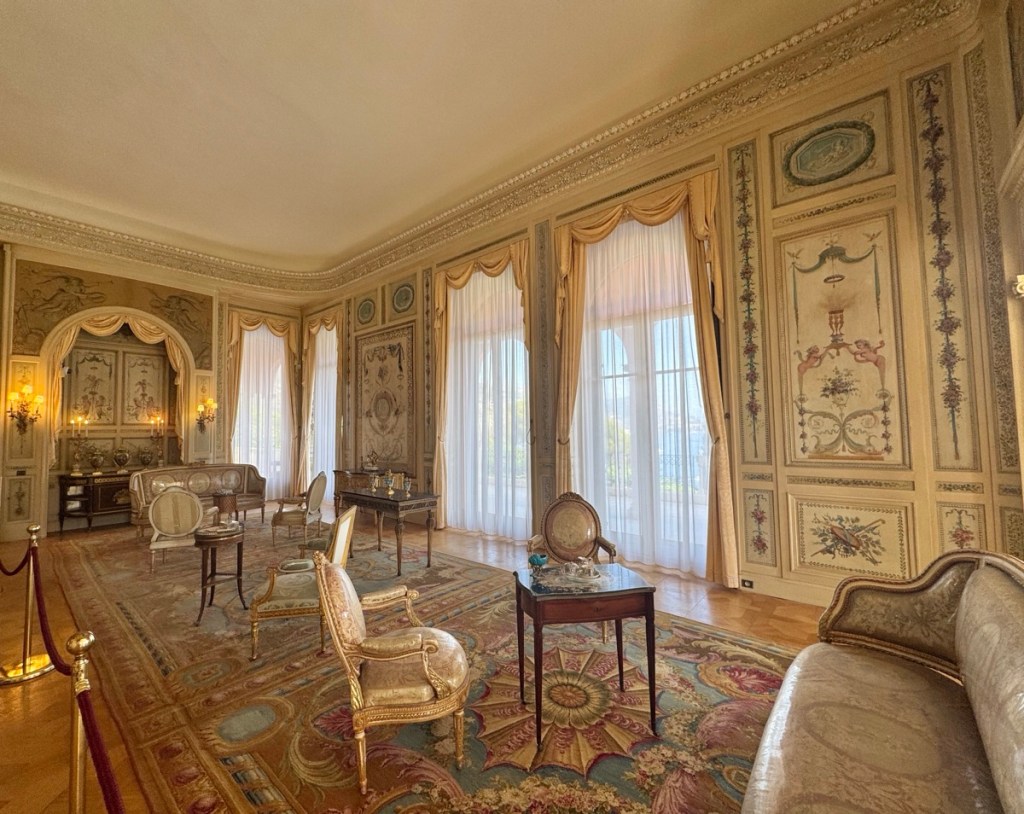
The entry into the house takes you to a grand reception hall which was used for entertaining and high society soirées.
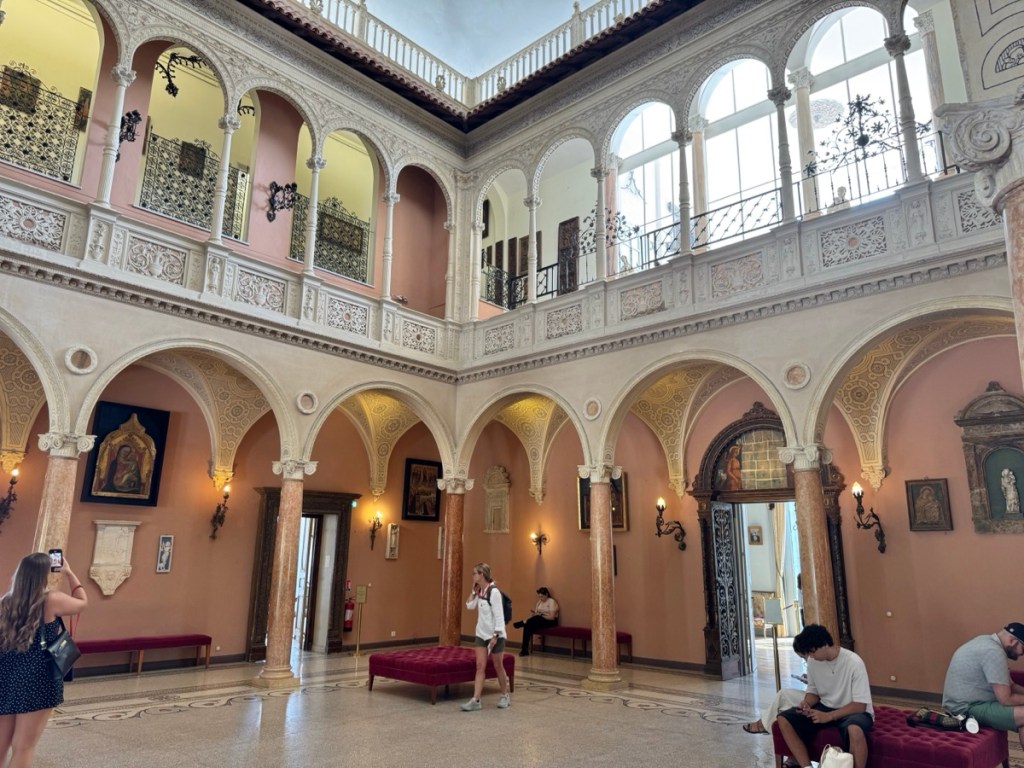
We continued through the grand, elaborately decorated, rooms of the house.


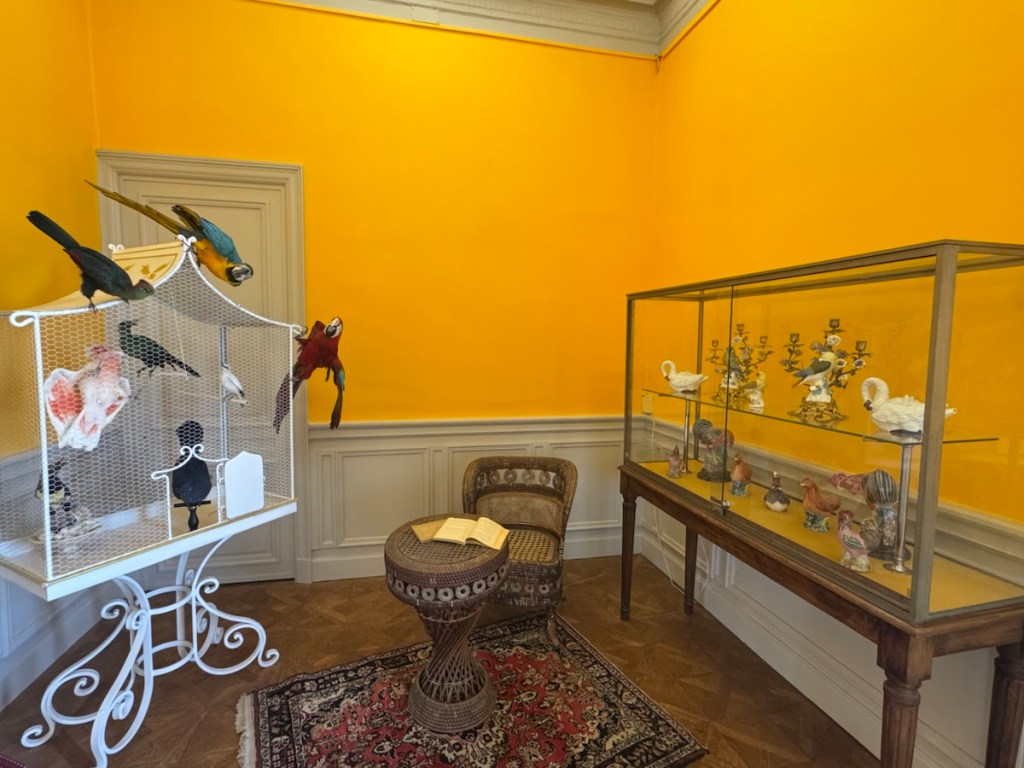
There were rooms dedicated to monkeys and birds.

On the first floor, a balcony gives views of the very well kept garden where you can see the sea on either side.


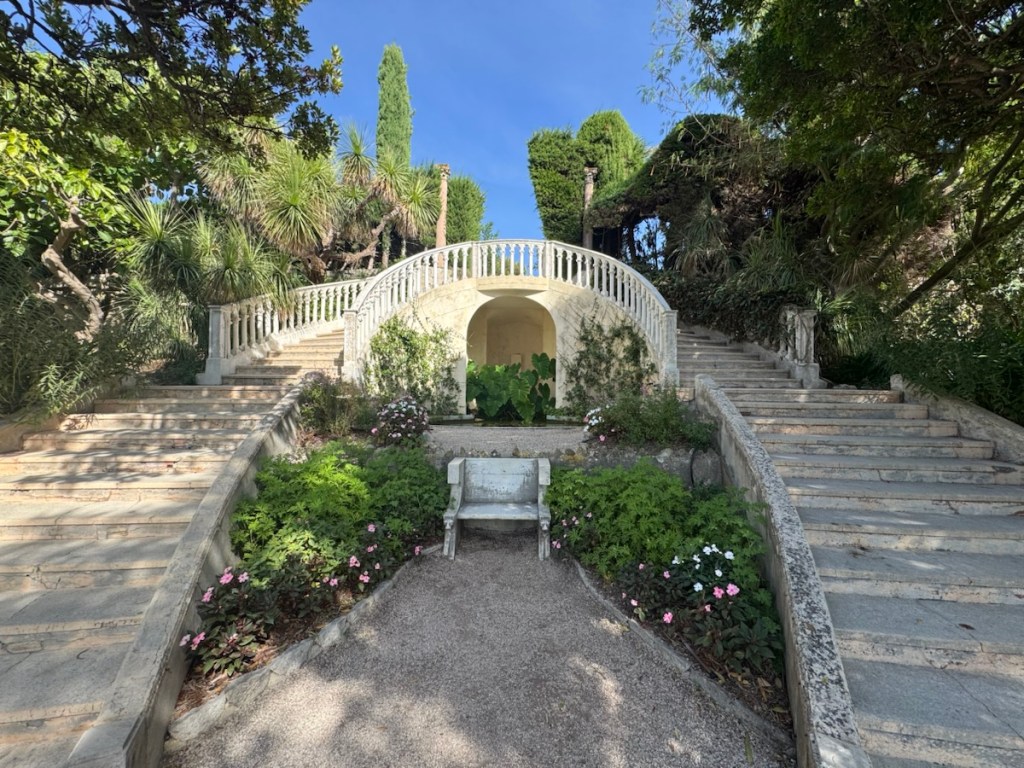
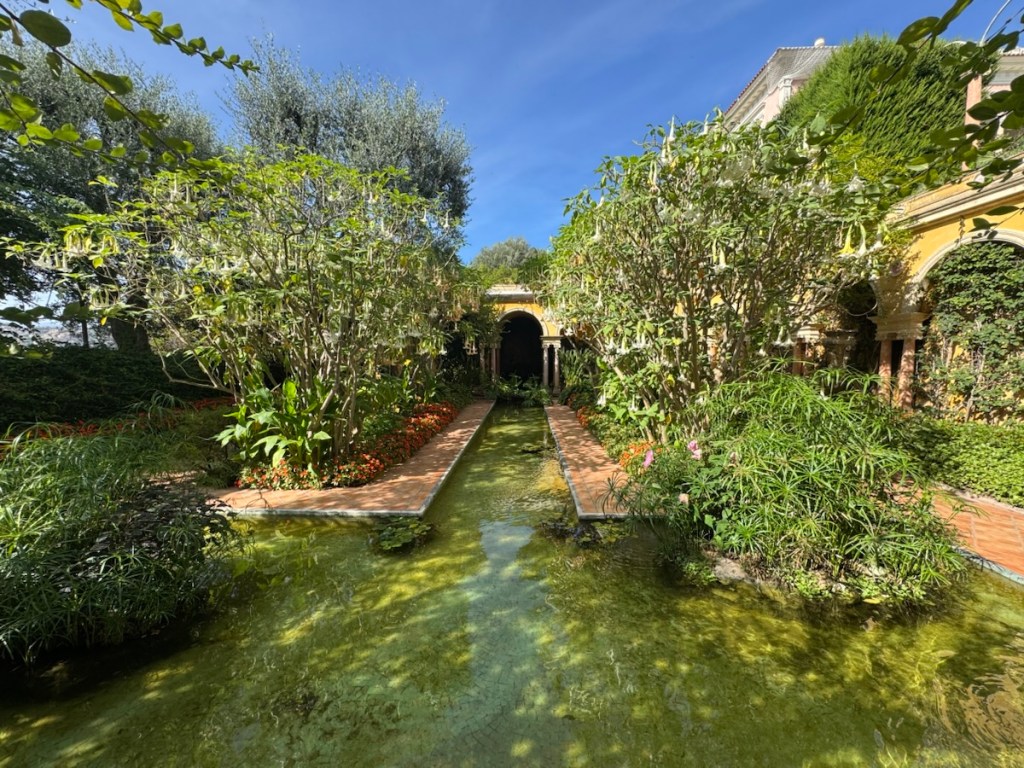
The gardens were definitely the highlight of the house, with colonnades, waterfalls, ponds, flowerbeds and rare species of trees.



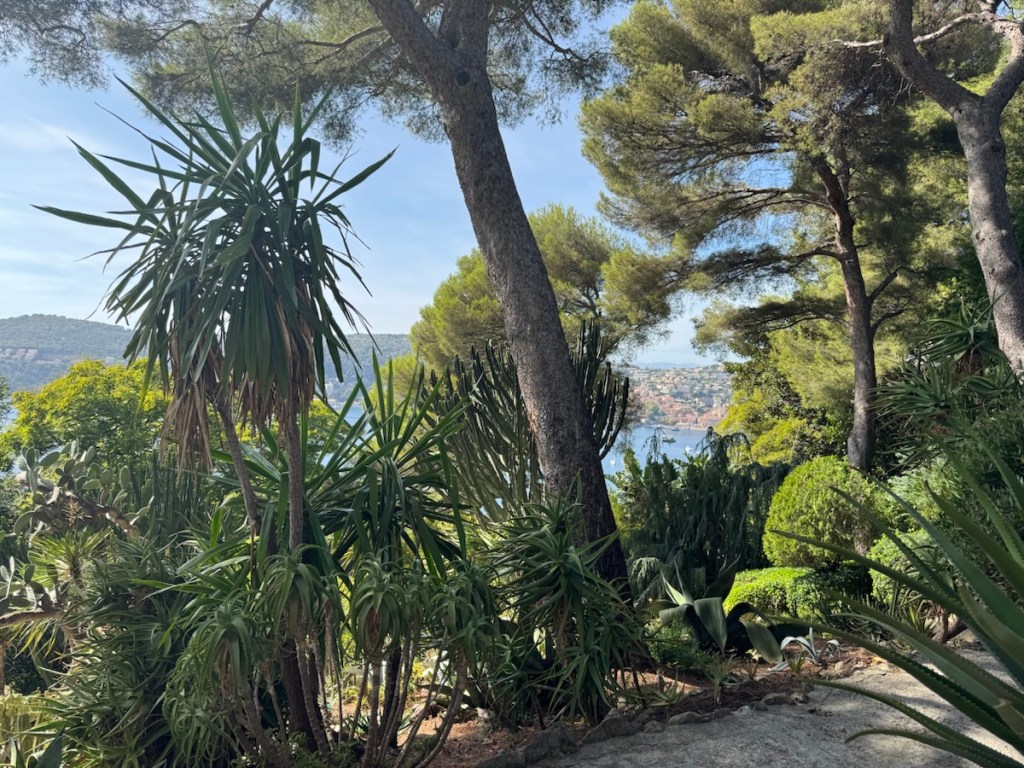
A winding pathway led us around the themed gardens.

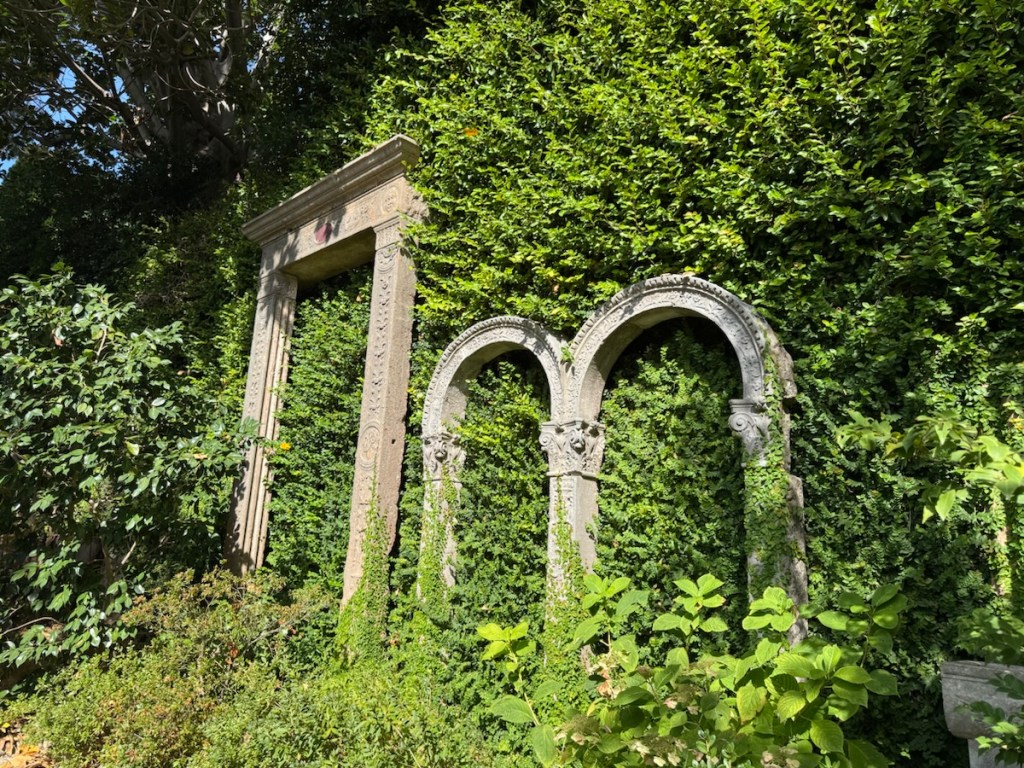

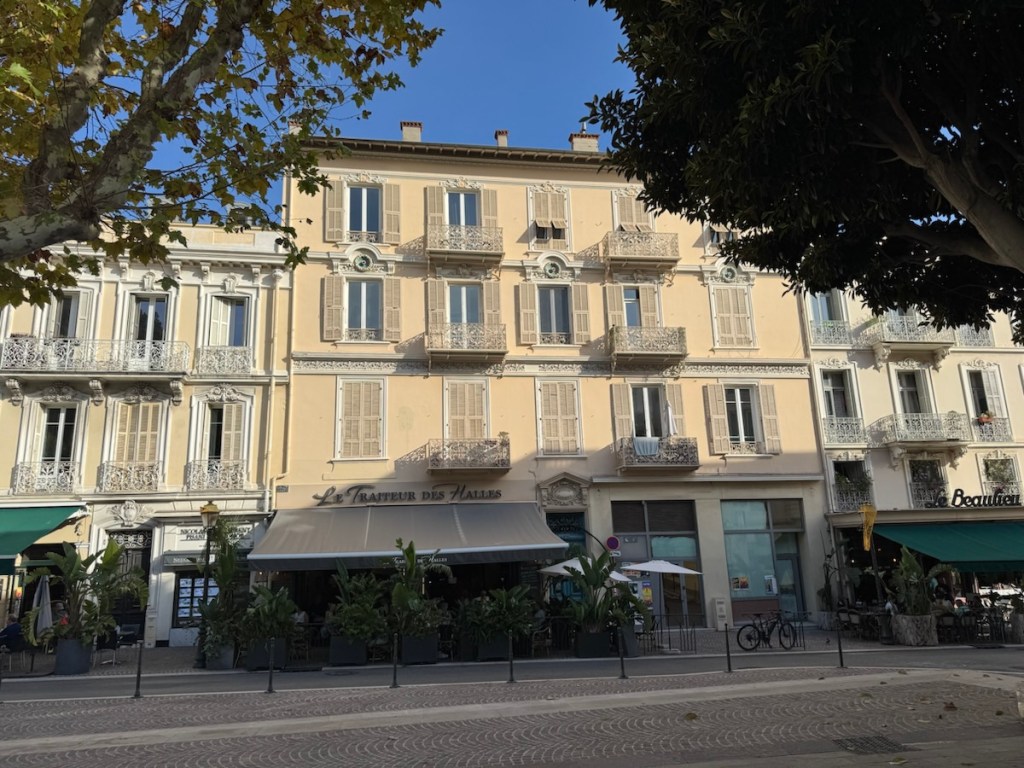
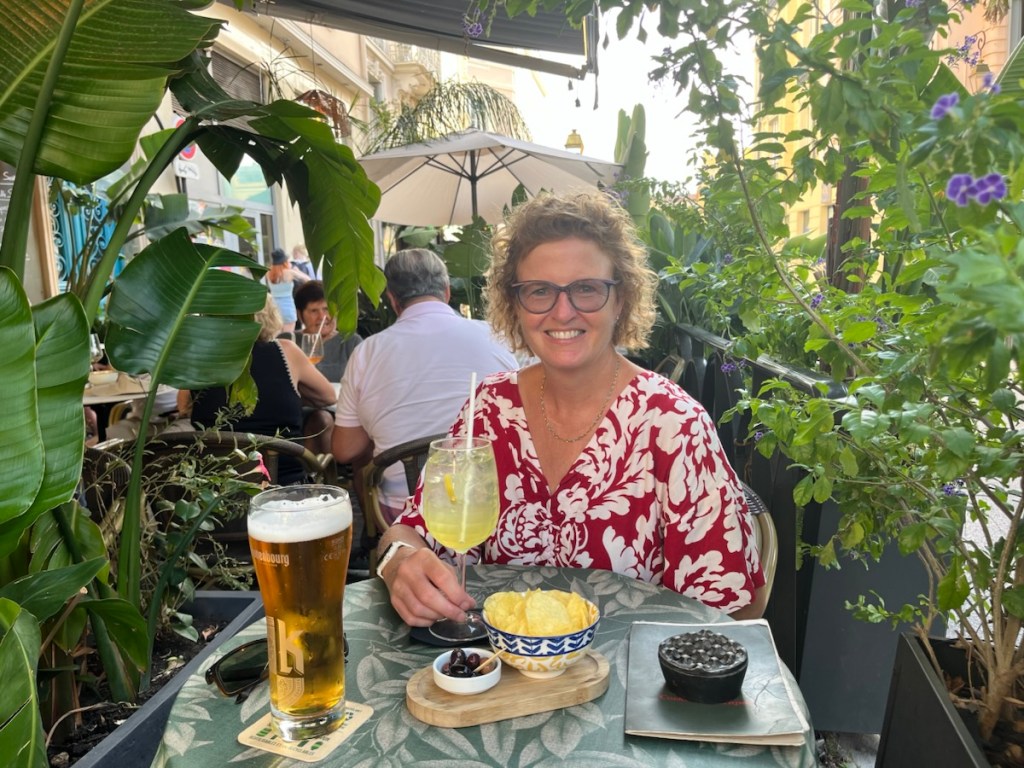
Back down the hill, we cooled off in the clear water at the beach before a walk around the smart town, with plenty of expensive ornate buildings, a casino and without the usual cheap souvenir shops. Later we enjoyed refreshments in a bar, sitting among more bushes.




We considered moving Ziggy around to Villefranche Sur Mer, but seeing how busy it was from the Rothschild villa, also, there is a natural canyon running through the bay with depths increasing to 50 metres in the centre, limiting the space available to anchor, so we decided to stay where we were and walk there instead.
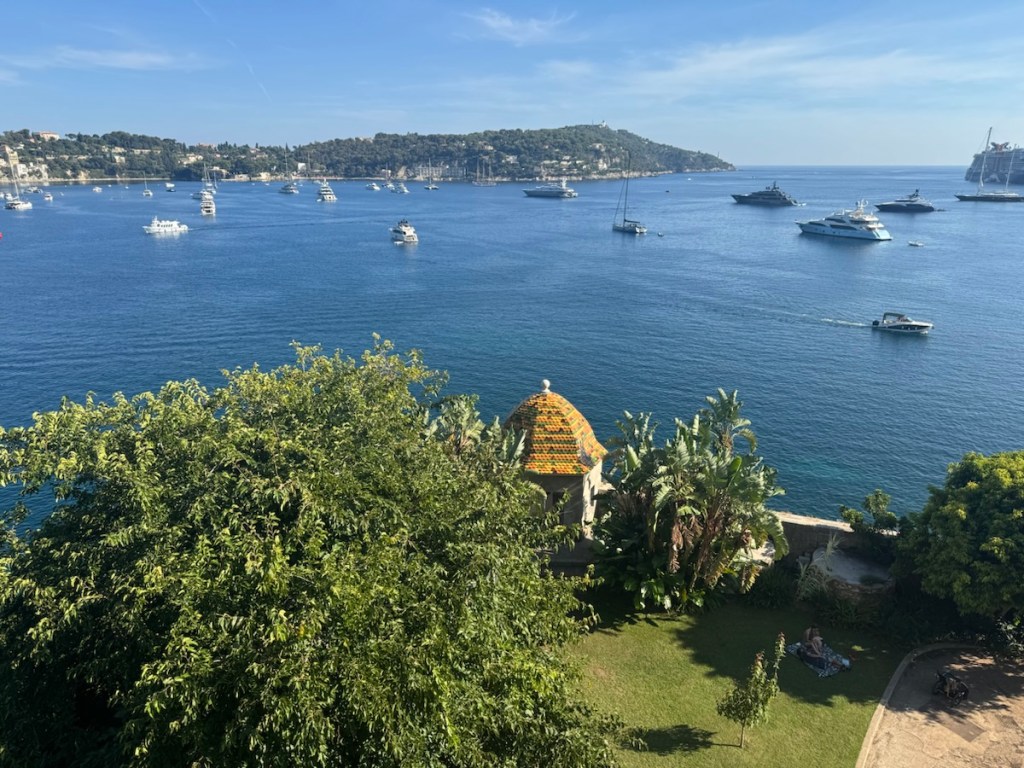
Making good use of our private dinghy harbour, we left Fred and walked up and over the hill to Villefranche Sur Mer. In contrast to Beaulieu, numerous tourists and cruise ships frequently visit the bay of Villefranche. It is set within an amphitheatre of cliffs with long beaches, turquoise water, sea front cafes and restaurants, all at the foot of the old town.


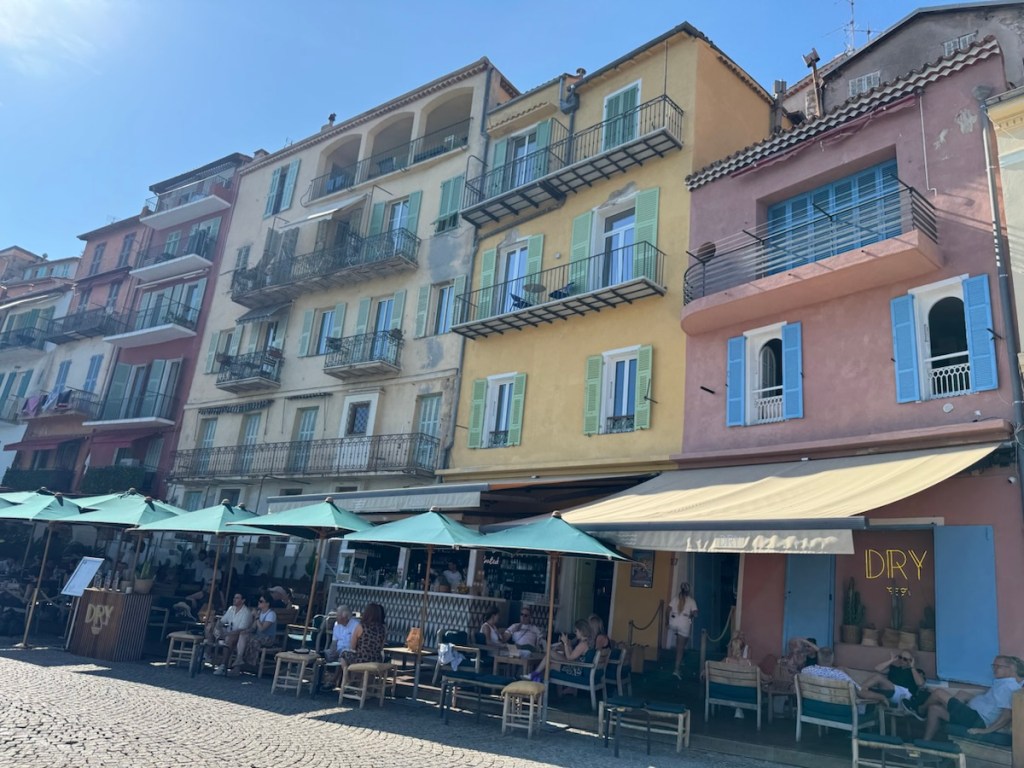
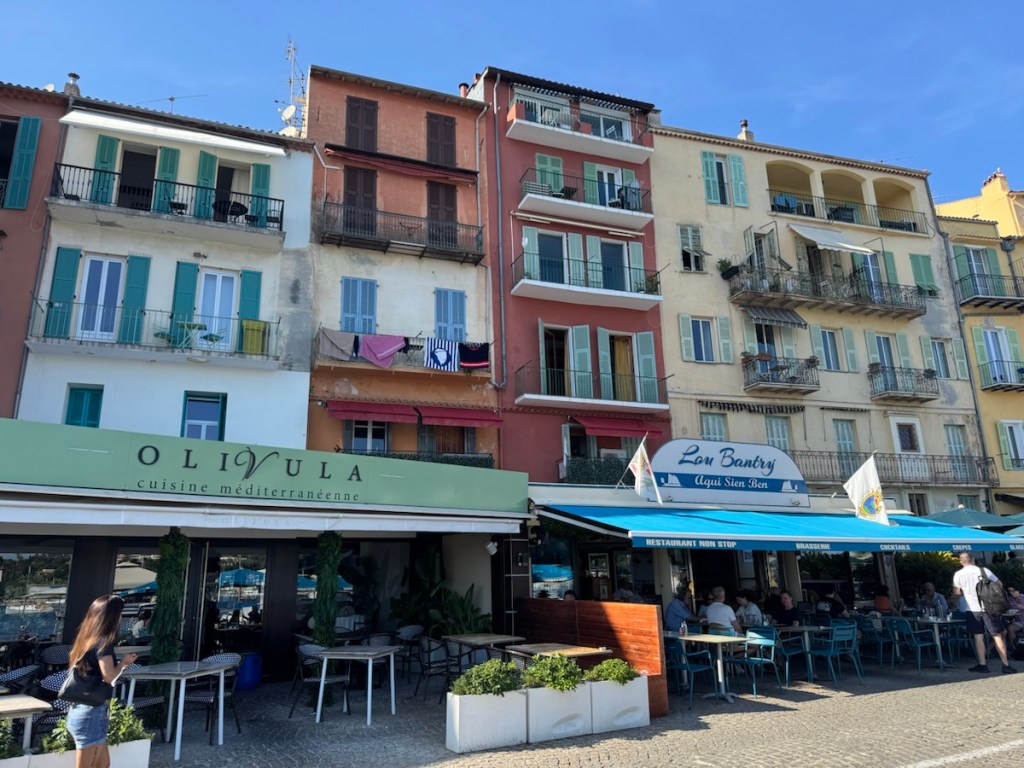
Villefranche is an old fishing village overlooking a natural inlet, narrow winding cobbled alleyways and stairways lead from the waterfront up to the picturesque 14th century town with colourful façades.
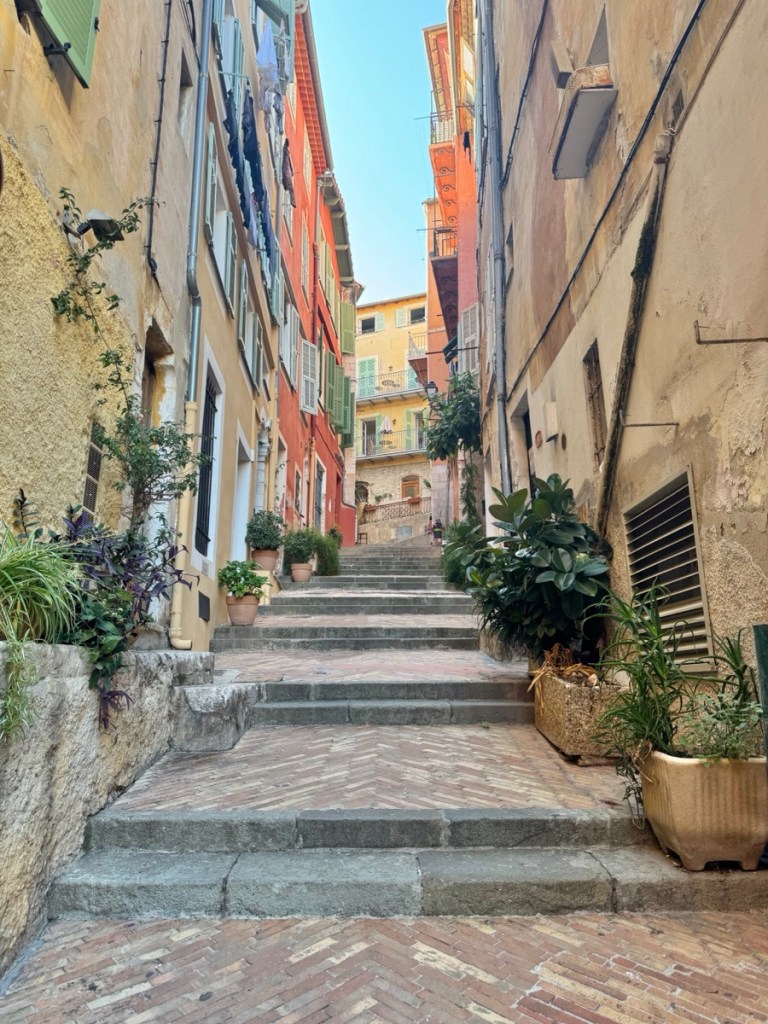


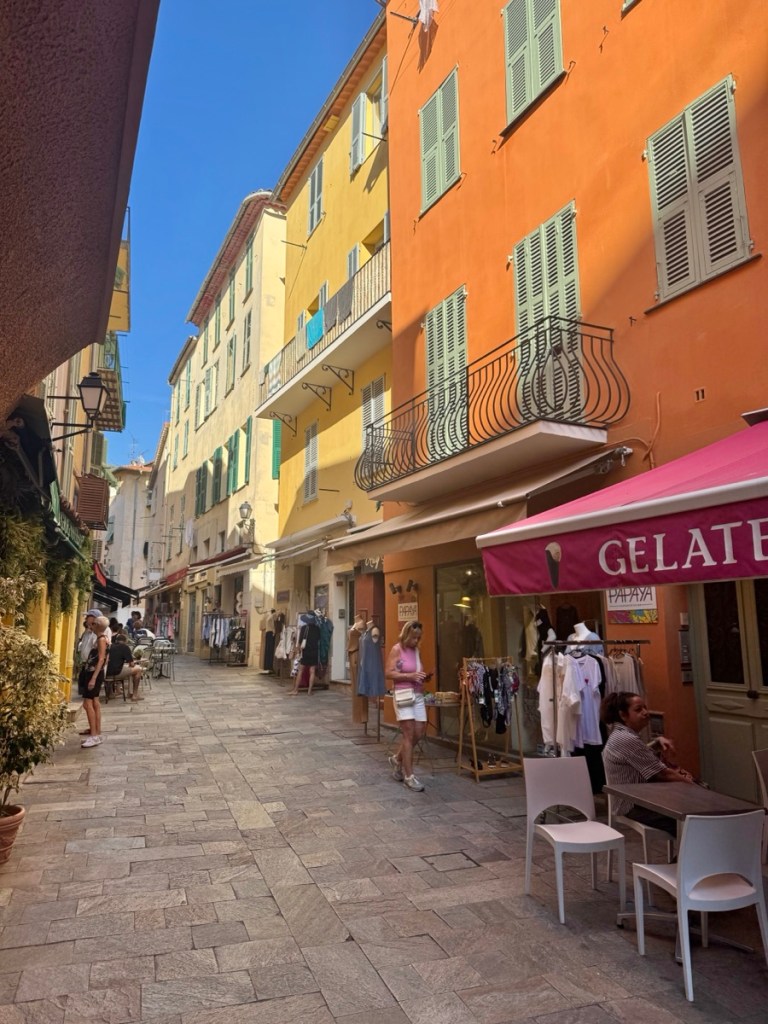
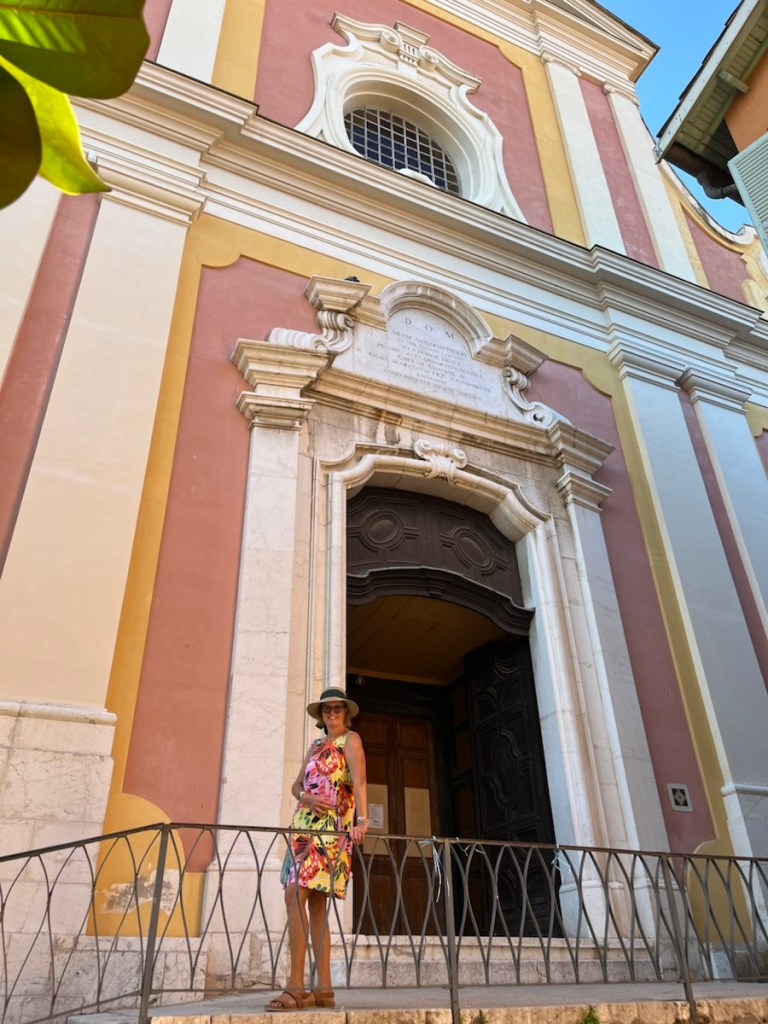

Dominating the town is the Citadelle Saint Elme which was built mid 16th century following an attack in 1543 by 110 galleys which landed in Villefranche, plundering, burning and devastating everything they came across. The fortification was part of a chain of coastal defences, designed and built with massive stone walls, bastions and a moat to protect the harbour and defend the city from further attacks by sea.
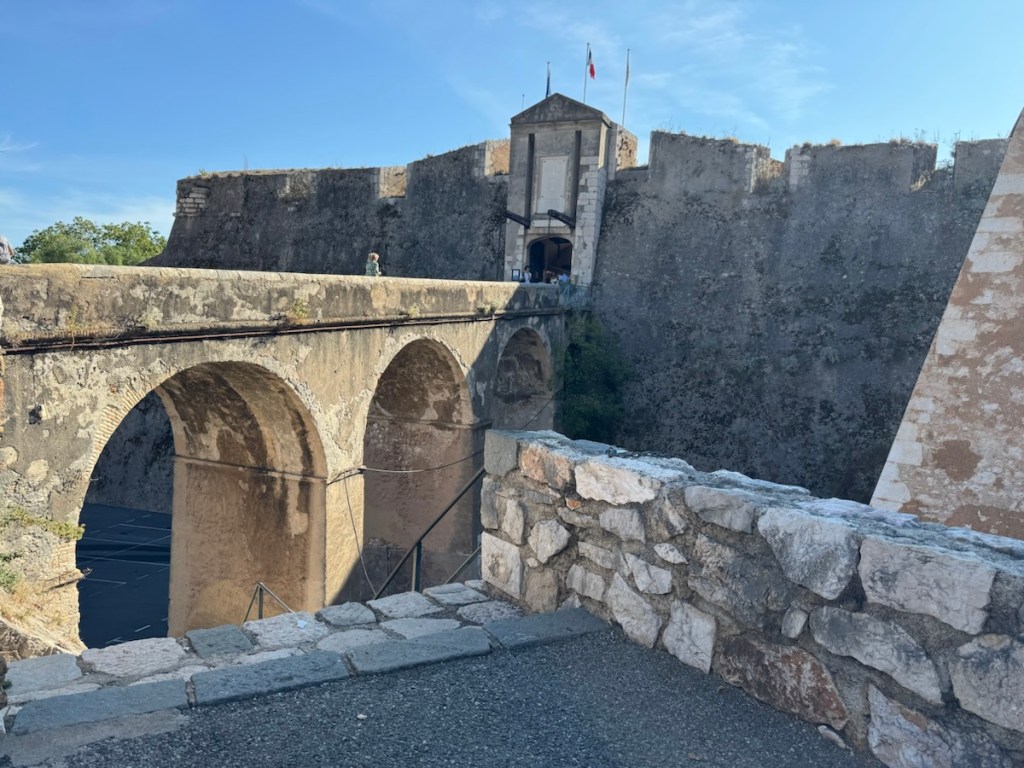
In 1965, the municipal council bought the Citadel and gardens and began a restoration project. In 1981, it was decided to use part of the space to house the town hall and part as a cultural centre, with several museums, art galleries, a theatre and a chapel.
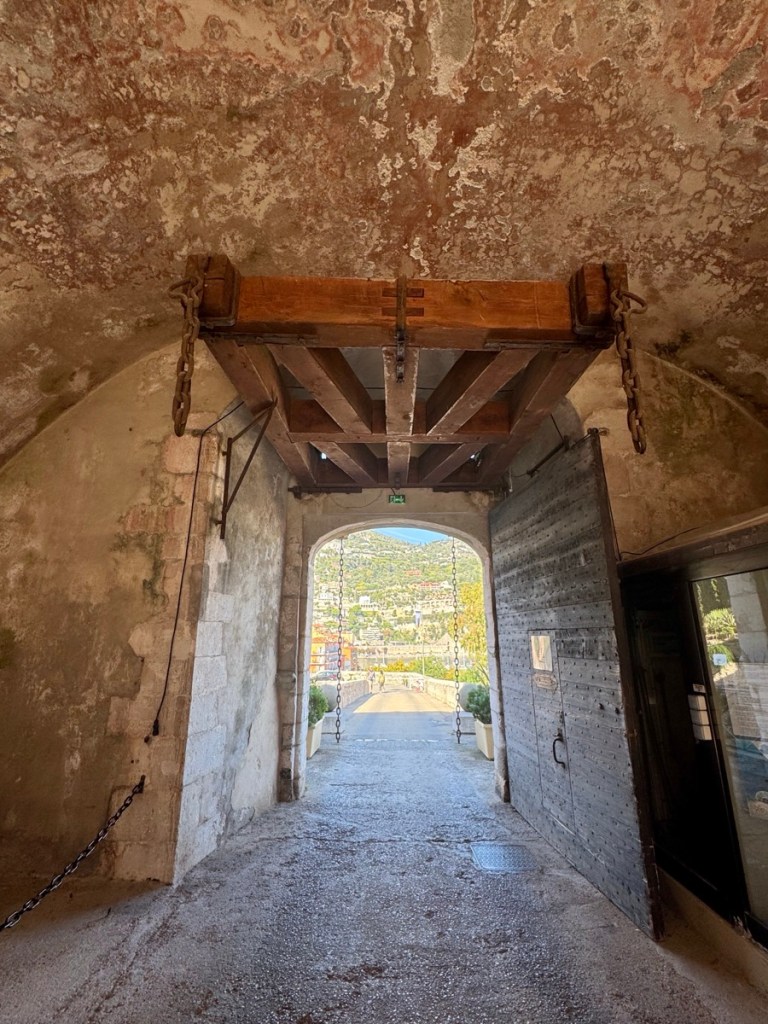
We went in through the huge draw bridge, the original entrance into the Citadel. From the top you had a clear lookout point.
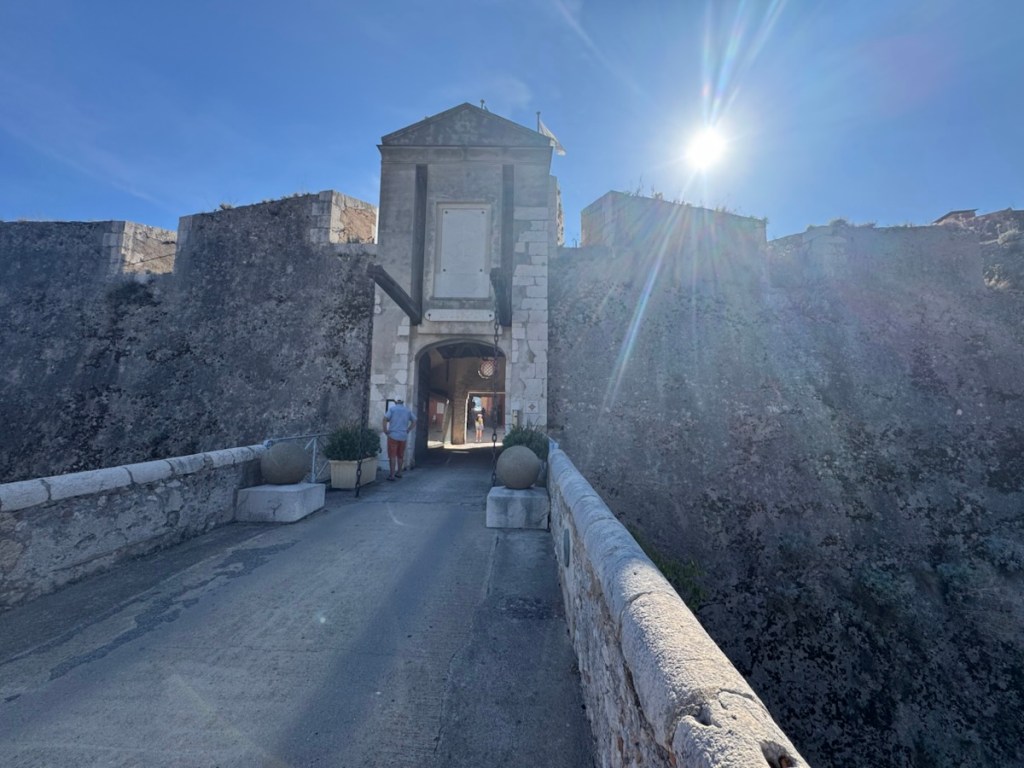
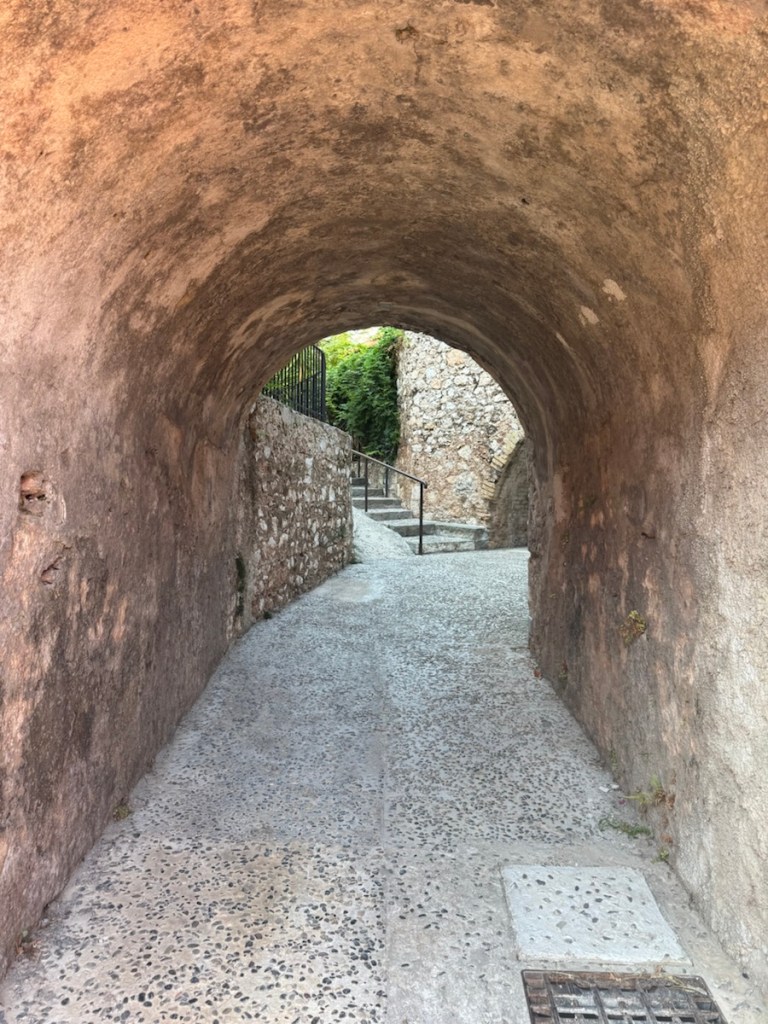
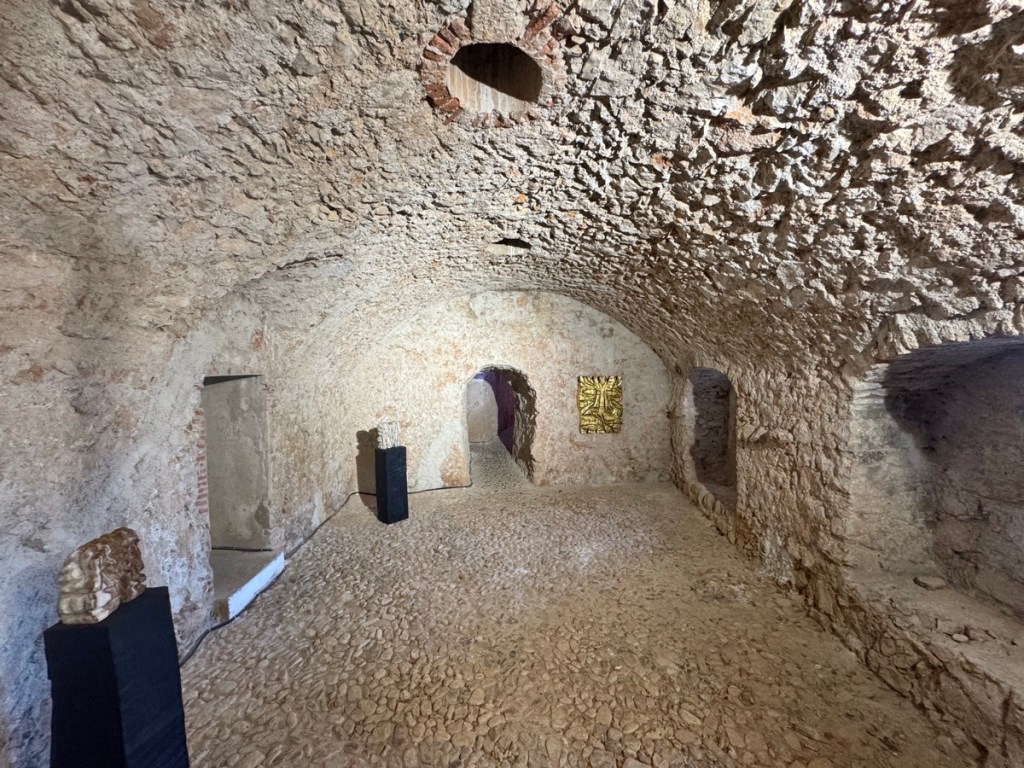

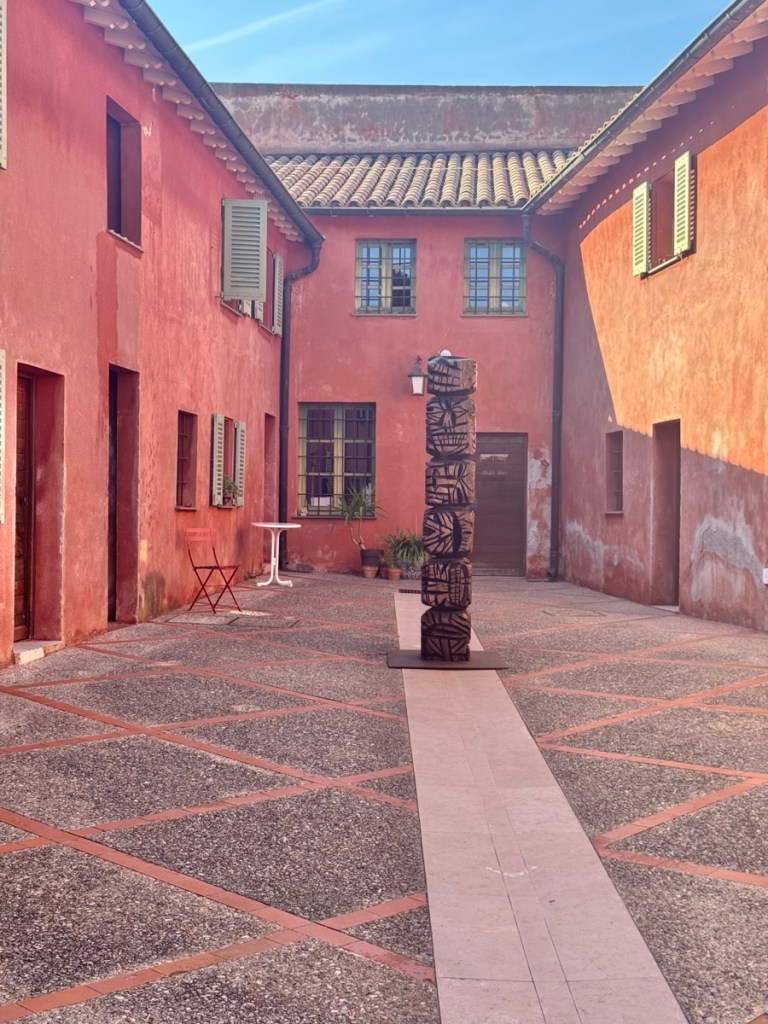
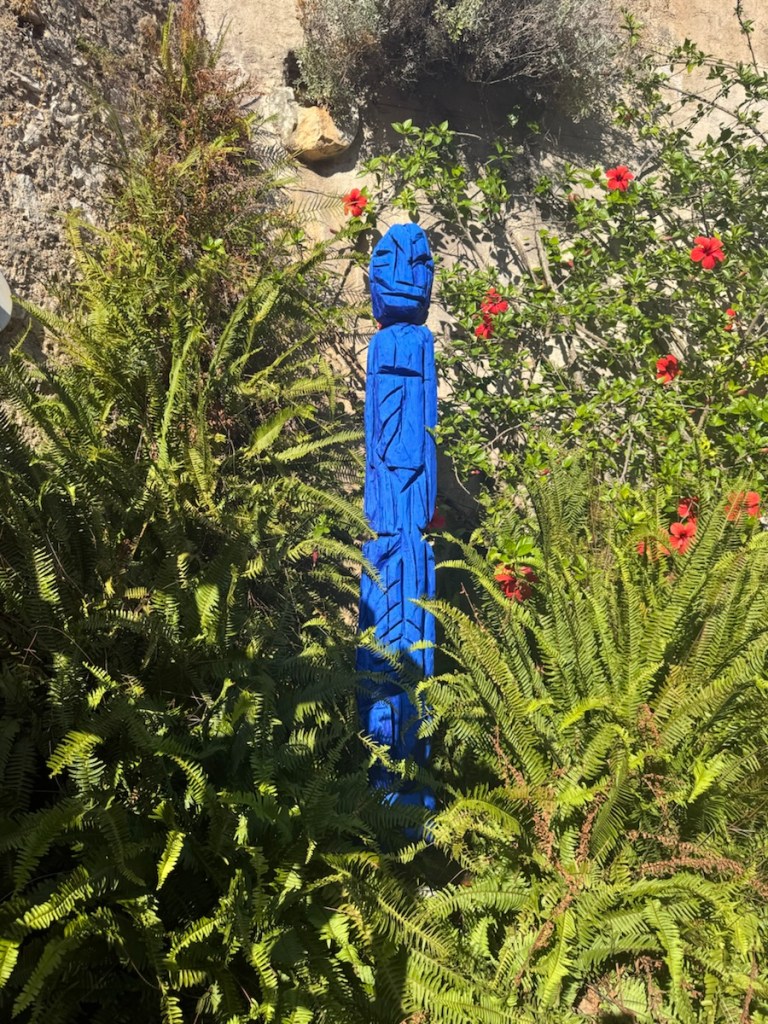
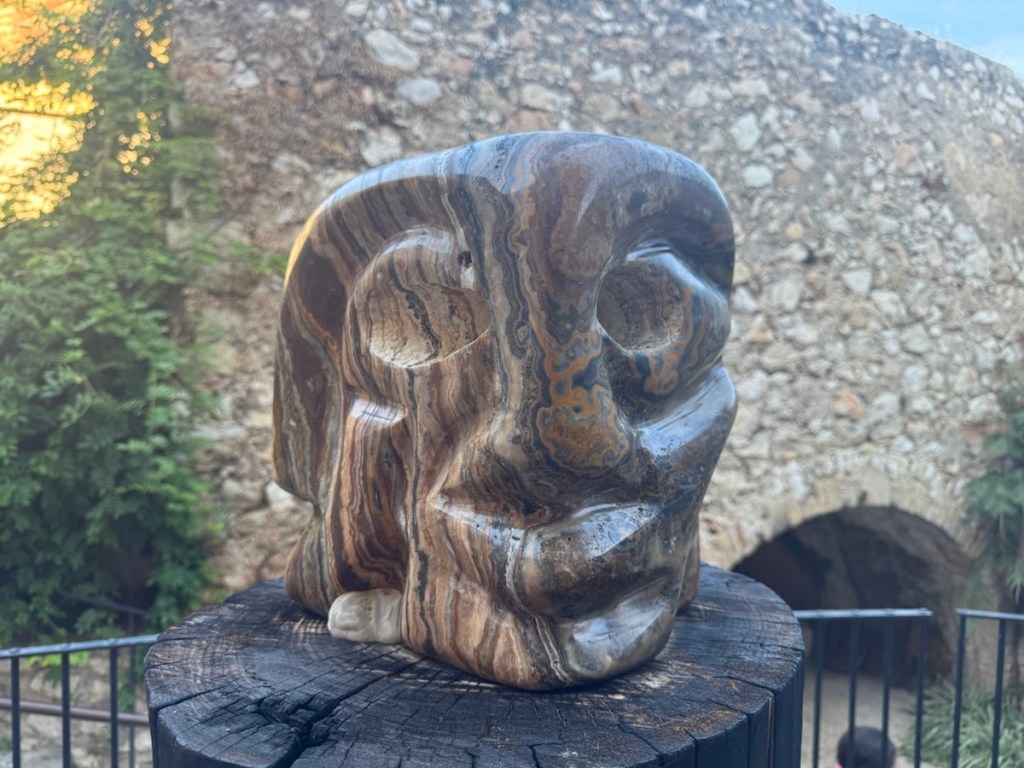
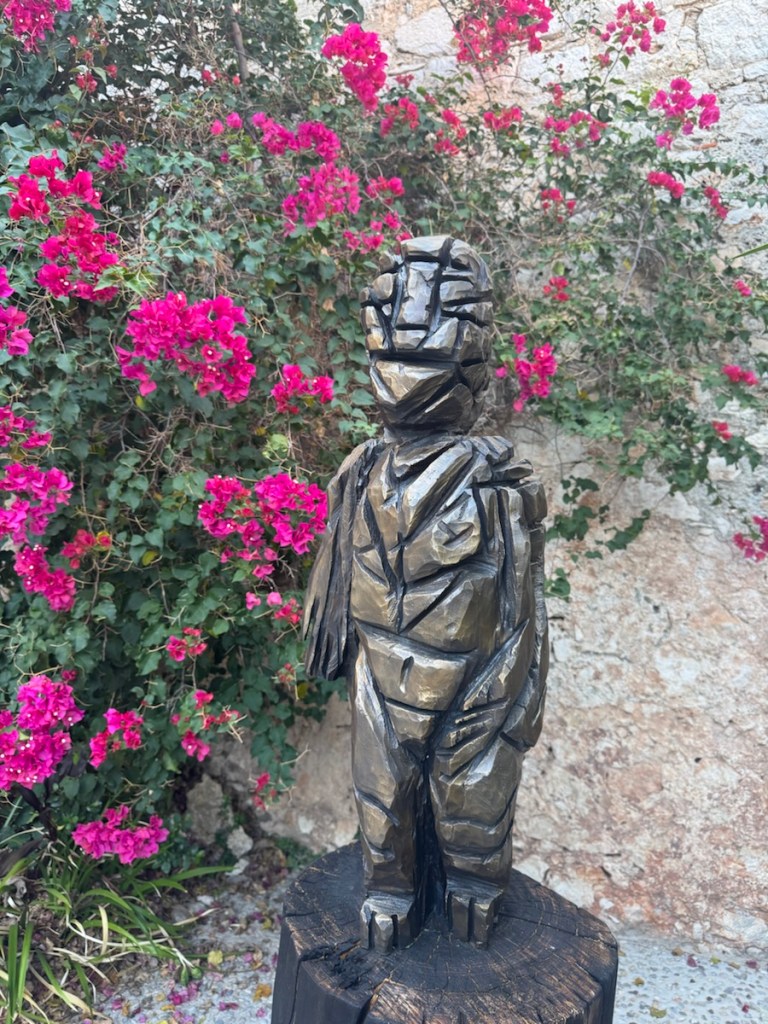
The inner courtyards and garden had an exhibition of carvings by Ryan Schneider. The bronze and wood totemic forms are created to bind humanity, nature and inner spirits. The monumental figures are described as standing watch, observing and creating a quiet dialogue with the ancient stones of the Citadel.

We returned down to the seafront and walked back over the hill to Ziggy arriving just in time for a sundowner under the colourful sky.


 Sailing ZigZag
4 replies on “The French Riviera”
Clearly life with the rich and famous is suiting you both, as you look fabulous darlings!
The garden photos make me think I need a project for next year 🙂
Lovely lighting as always in that part of the world – the sky always looks so blue. In stark contrast to the grey stuff I currently enjoy.
Safe onward sailing.
LikeLiked by 1 person
Fantastic photos as always, great story about David Niven, stunning gardens and lovely photos of you both. What’s not to like. Thanks for sharing.
LikeLiked by 1 person
s
LikeLike
The photos really capture Villefranche and Beaulieu sur Mer at its best, glad to see you enjoying yourselves so much!
LikeLiked by 1 person