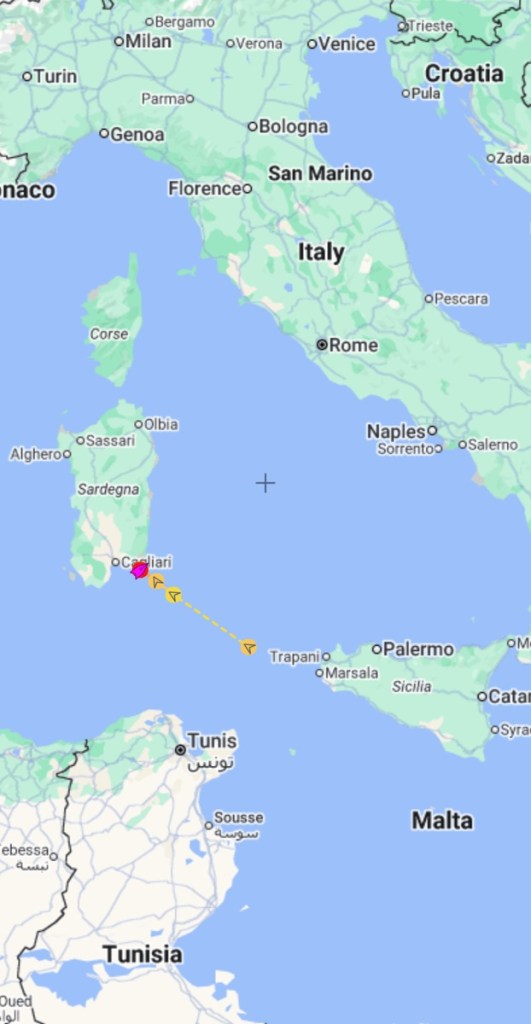
This week we’ve had a week of travelling which started when we lifted the anchor at Favignana. The sun was rising and a force 3 northerly wind was blowing as we left Favignana, and headed northwest towards Capo Carbonara on the south coast of Sardinia. Once out of the bay, we had the sails up and were sailing slowly.

After a couple of hours, the wind picked up and it was pushing us along at 6-7 kts. We went south of the western Aegadian islands to give us a good sailing angle on the wind.

Once past the islands, we had a sporty sail as the wind continued to increase, we had gusts up to 28 kts from the north, Ziggy was speeding along with a reef in both sails, although we were going slightly off course, of course! This was ok as the wind was due to eventually move around to the west, so we would be able to sail back on course.
Later in the afternoon, it calmed down a little so we shook out the reefs and were still making good progress. The water was much calmer and we watched a single dolphin swim past. We continued on as the sun set.
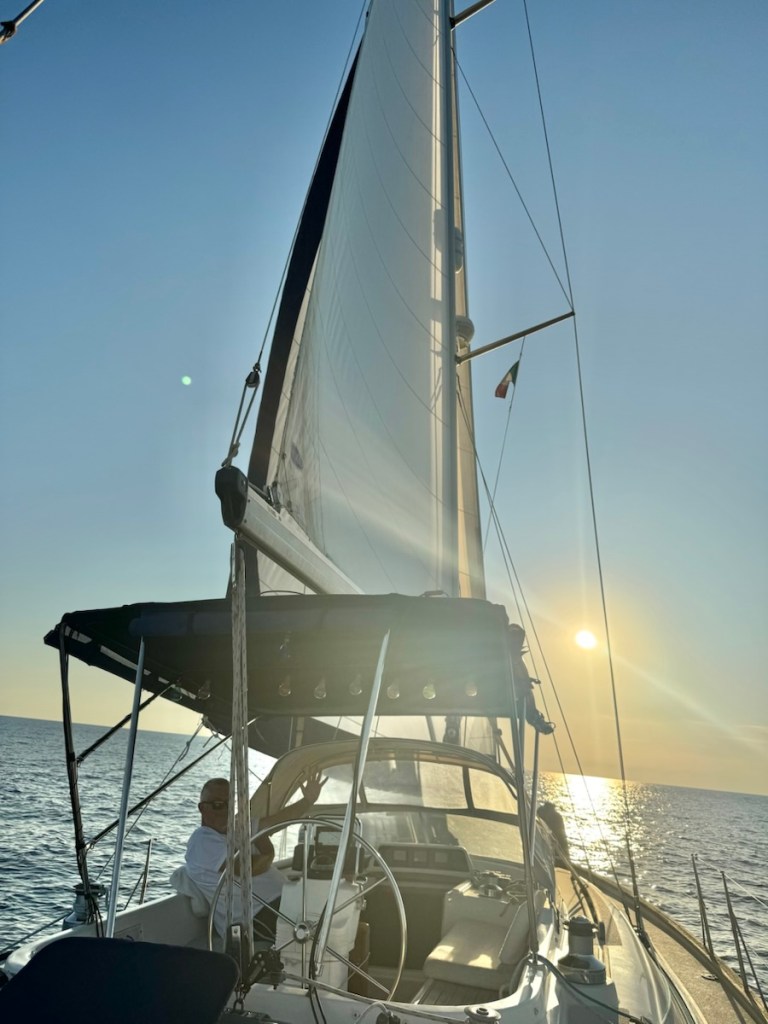
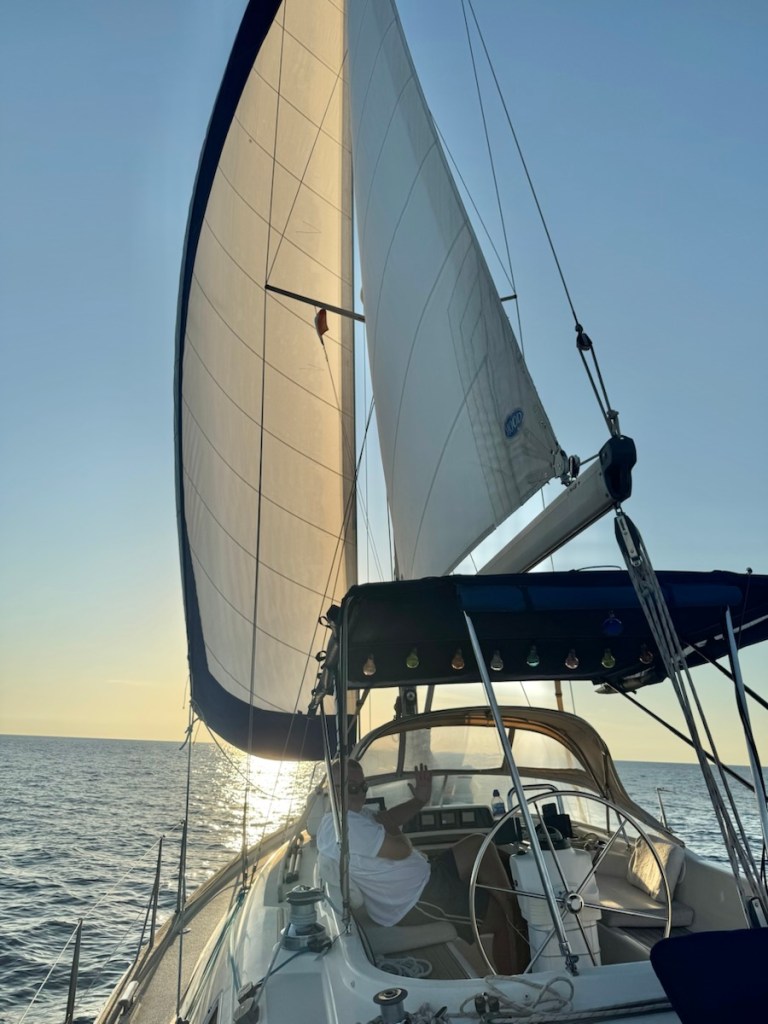
It was a starry night with a bright half moon, by midnight, there was only a very light breeze, the sails were flapping so had to come down, the engine went on. Throughout the night it remained very warm, not going below 27°C, the instruments showed that the water temperature was 29.9°C.


At 5am, just before the sun came up, we had wind from the west as forecast, so the engine had a rest and we were sailing again. With the wind shift to the west, we were able to sail back on course. The sky turned orange as the sun started to rise up out of the sea and a turtle calmly swam by.

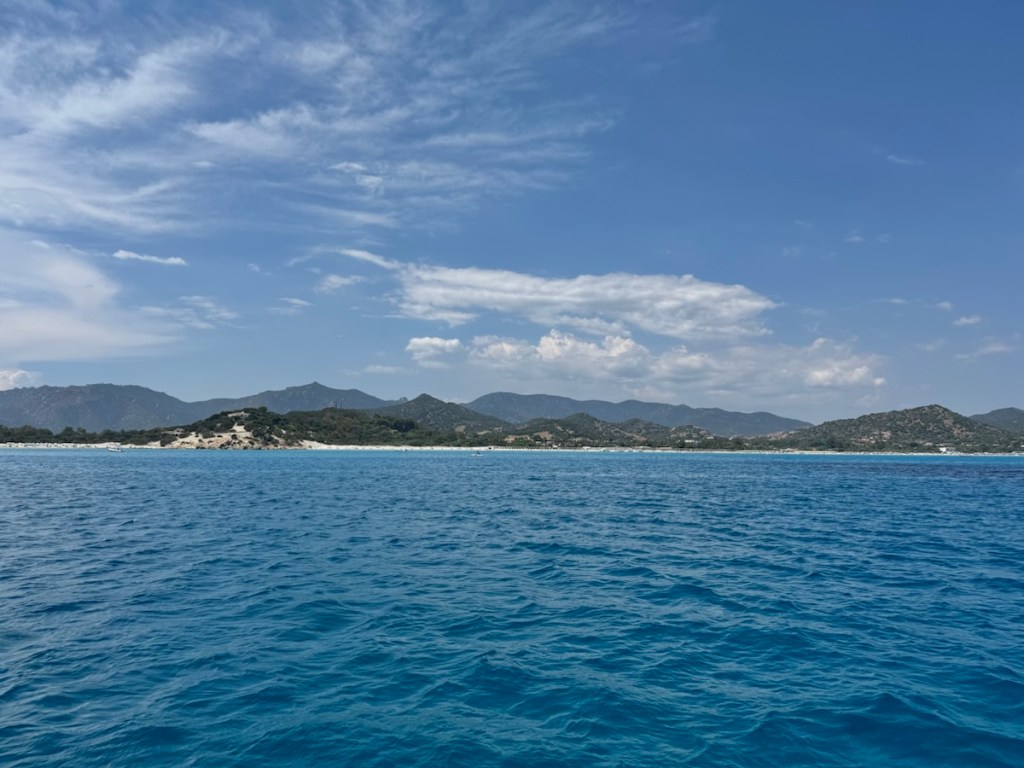
After 150 nm, we approached Capo Carbonara and anchored at Porto Giunco in clear water surrounded by hills and sandy beaches. The journey had taken 32 hours so we were ready to relax.

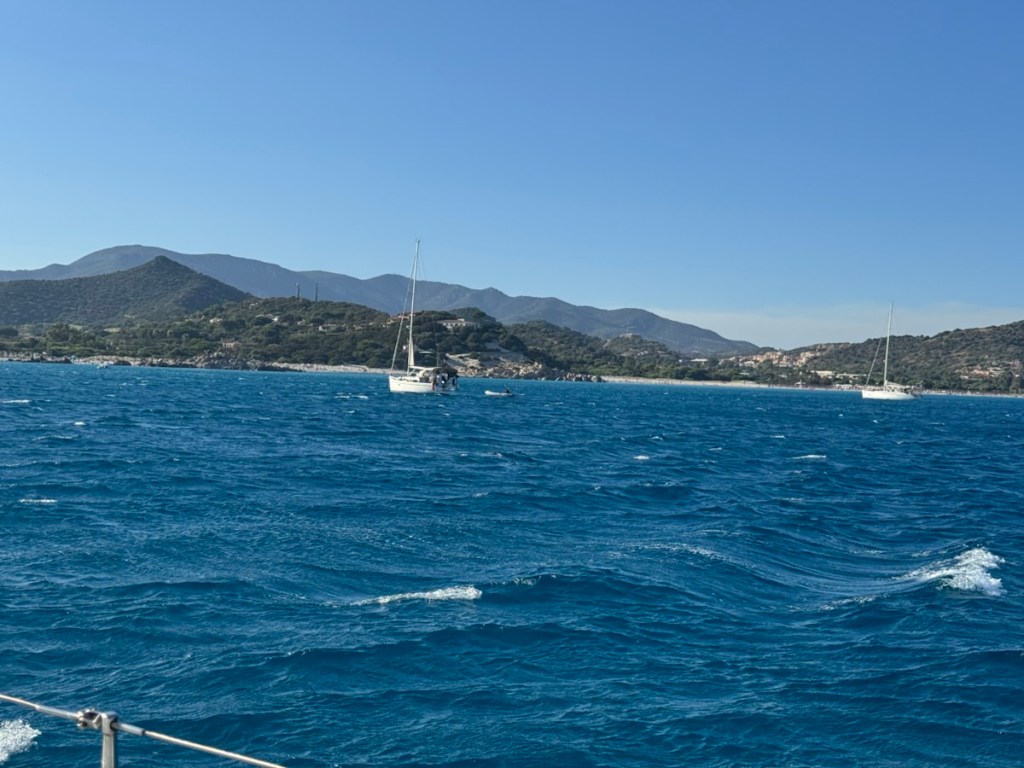
We stayed here for a few nights while some strong winds passed, then moved on to Cala Foxi Manna which is 37 nm further up the east coast. It was a long day as the wind was light for most of the journey, at times we were only doing 2-3 kts. When we arrived in the bay, there was no other boats anchored, we wondered if everyone else knew something that we didn’t! It was a very peaceful and pretty bay surrounded by rocky hills with beaches below, so we dropped the anchor and had a quiet night.

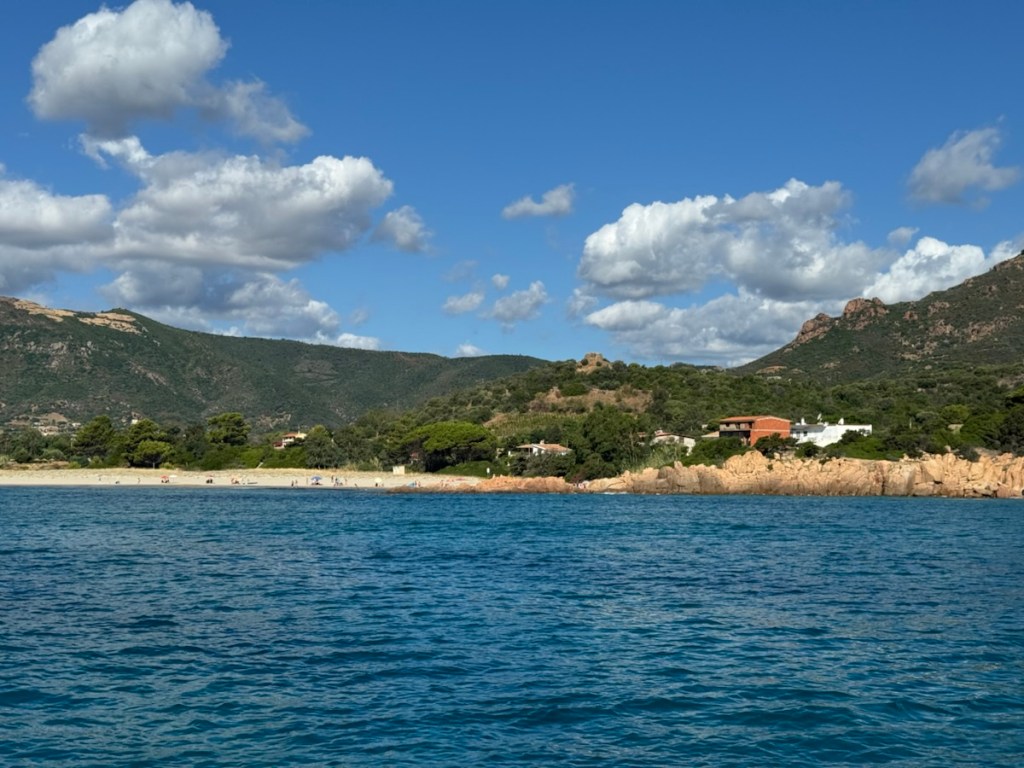
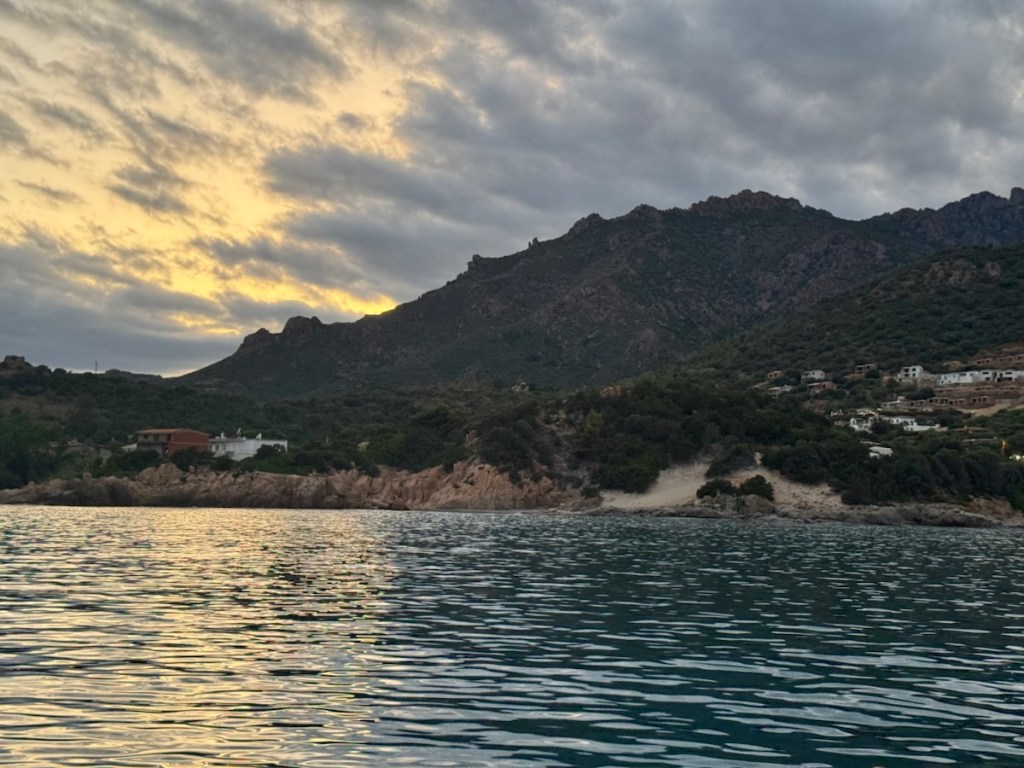
However, by the morning, some swell started rolling in and Ziggy was rocking from side to side. We decided to leave and continued a further 17 nm up the east coast to Arbatax.
The scenery on the way was very picturesque with mountains behind rocky hills along the coast.

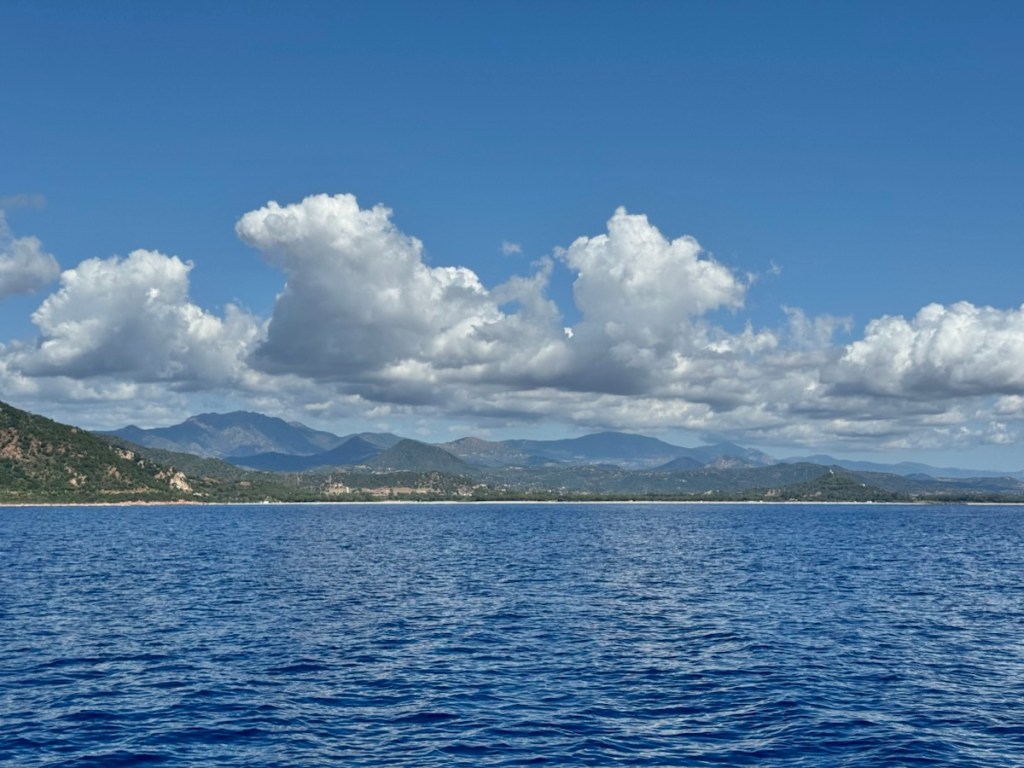
There were lots of fishing pots to avoid as we approached the bay which was lined with beaches. We anchored close to the small harbour and the town on the hill.
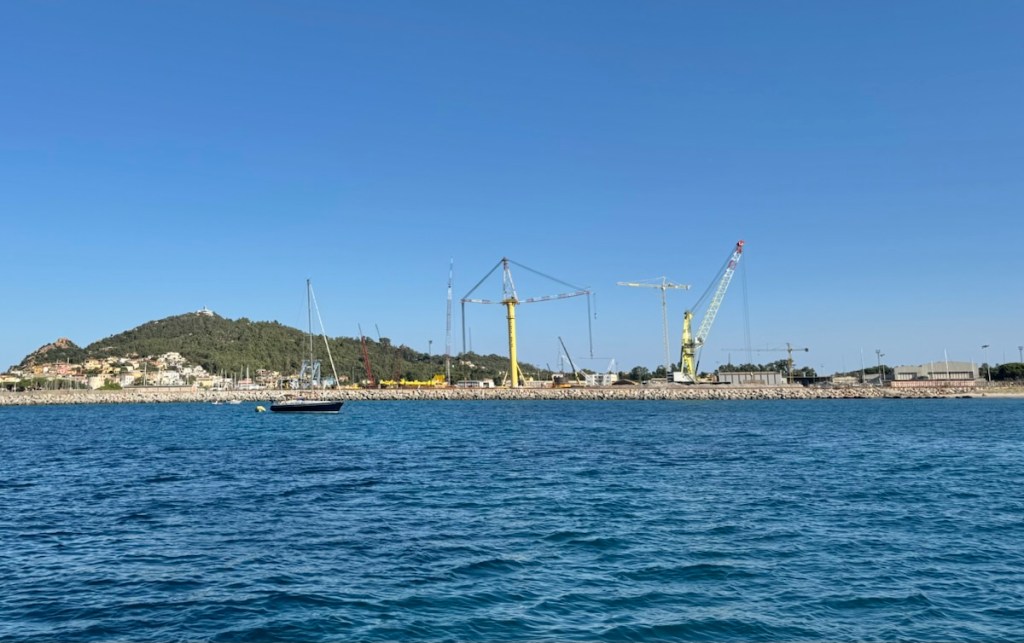
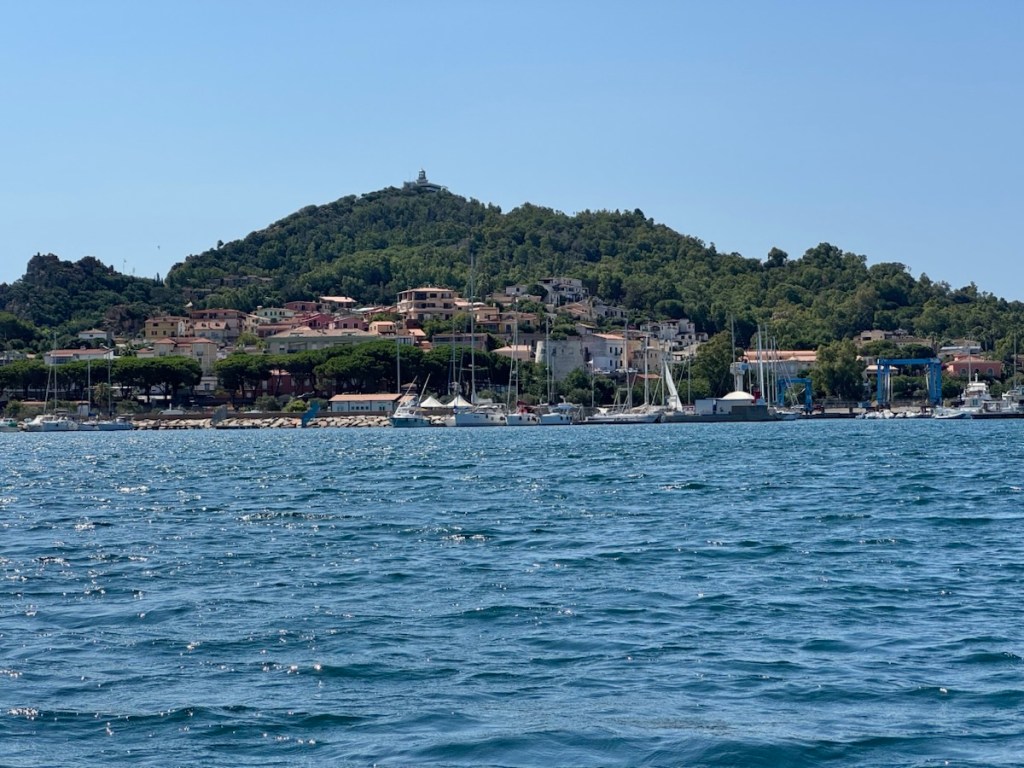
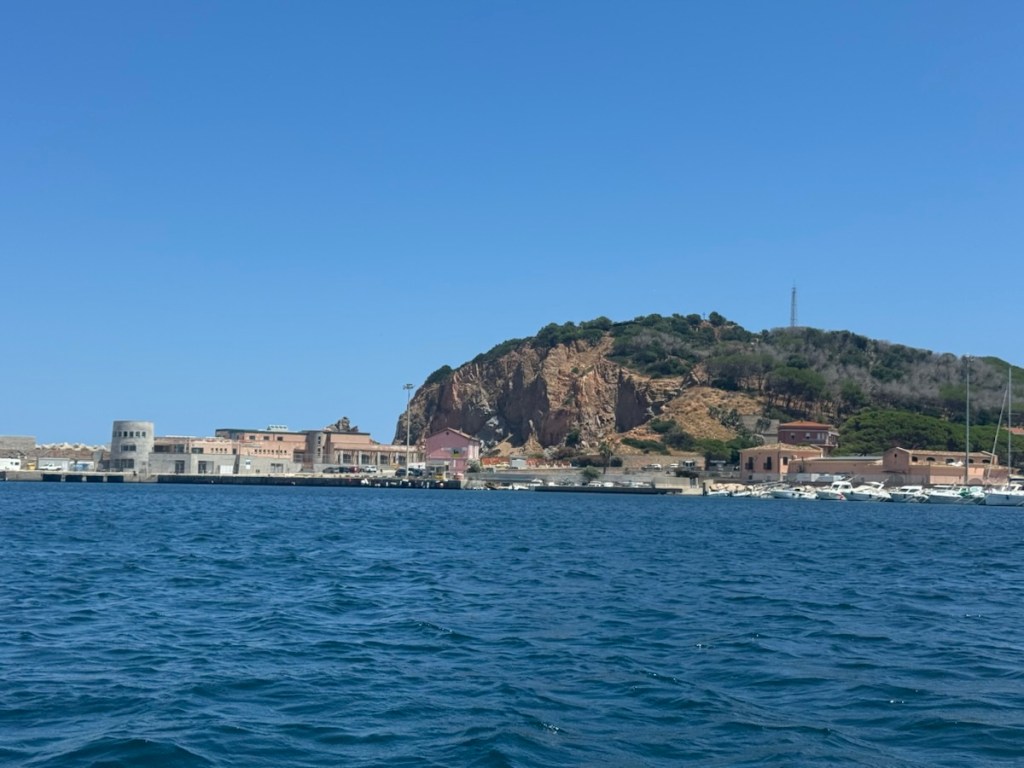

So far in Sardinia, we haven’t been able to go ashore as landing with a dinghy near any beaches is not encouraged and can be met with a stiff fine. However, here in the harbour they have a designated spot for dinghy’s by the white crane so we were finally able to check that our legs still worked.

Centuries ago, Arbatax was a dangerous place and the scene of frequent pirate attacks. Since the 8th century, the Arabs also began to raid the Sardinian coast, making construction of coastal defence towers necessary.
From the 9th to the 15th century, several forts were built to control the coastline. During the 16th century, under the island’s Spanish dominion, the building of forts increased considerably with a network to defend the coast. King Philip II of Spain set up the ‘Royal Administration of Towers’, controlling the construction of new towers and their management, enrolling soldiers and supplying weapons. The pirate attacks died out at the start of the 19th century so the coastal towers became redundant. Nowadays, 93 coastal towers remain along the Sardinian coast.
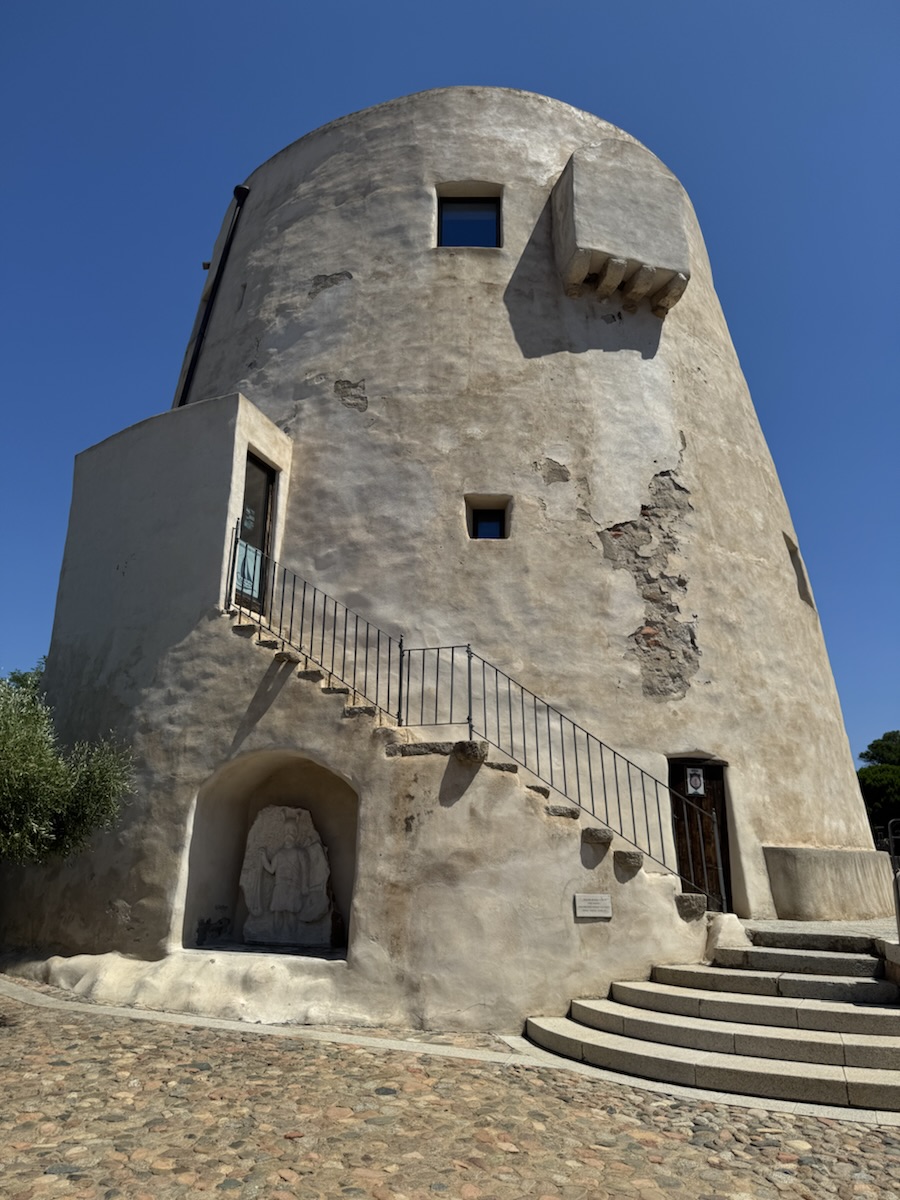
The ‘Spanish tower’ in Arbatax is a conical shaped tower with three levels. On the ground floor, a large door provides access to a living area, the first and second floors were reached via an outside staircase.

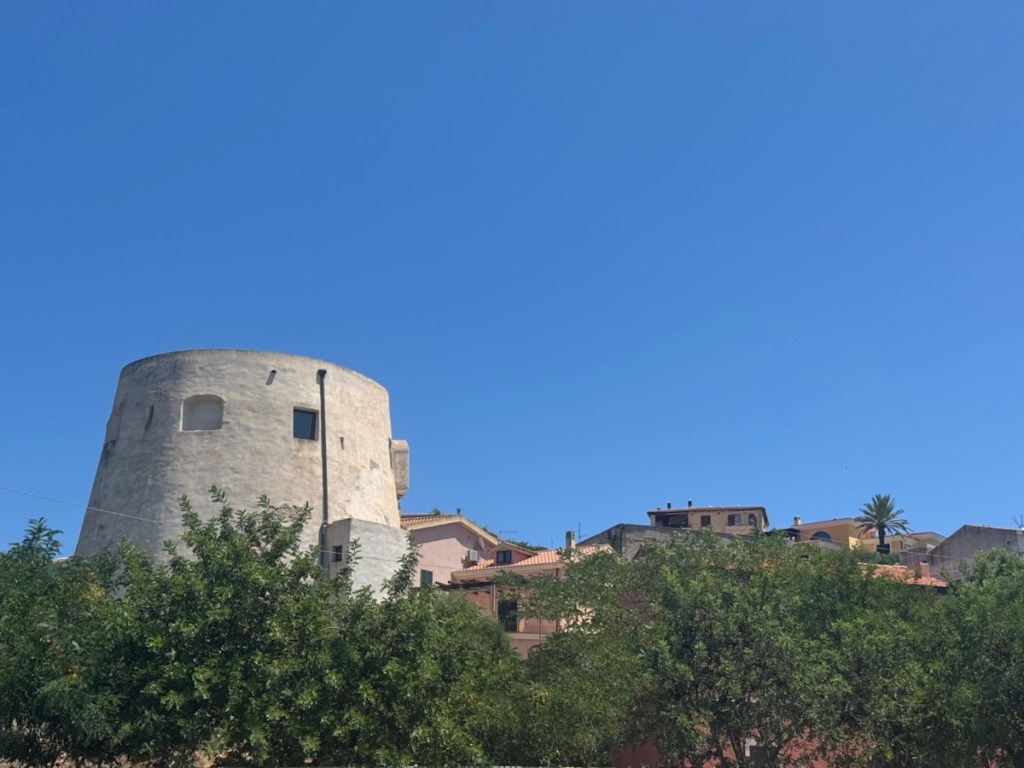
The origin of the name Arbatax is uncertain. Some believe that it is derived from an Arabic word, which means ‘14th Tower’, referring to the towns watchtower. Later opinions believe that it derives from the Latin arbutus, “strawberry tree”, a common plant in the area.
We had a couple of peaceful nights here, then a big swell started rolling in during the night. Ziggy was rocking and rolling, everything had to be tied down and things were clanging in the cupboards.
We planned to leave the following morning anyway but waited for sunrise so that we could see, and avoid, all of the fishing pots as we left the bay and continued up the east coast of Sardinia.
 Sailing ZigZag
5 replies on “Sardinia”
Not sure what happened to my previous comment, it should have said:
Another treat of great narrative and superb photos. Especially those of the blue skies with fluffy white clouds, and the rugged mountains. Absolutely beautiful and serene, and only topped by the fabulous atmospheric pictures of the moonlight reflecting on the sea and a stunning sunrise. Not to mention seeing a turtle and dolphin swimming by.
LikeLiked by 1 person
Wonderfully atmospheric photos, especially on Ziggy, and an engaging description of speeding along with the wind full in your sails.
LikeLiked by 1 person
Another tre
LikeLiked by 1 person
Lovely photos as always, those moon pictures are amazing, they don’t look real 😍
You just missed us in Cagliari… was there a reason for that 😅
Glad Ziggy wasn’t rocking and rolling that much when I was on board!
LikeLiked by 2 people
Ah, a magical sailing blog this week. Loving the ‘sailing’ photos with Paul hard at it 🙂
And what a lovely sight it is to see the genny trimmed and full of wind – not unlike myself!
Looks like you have found a few lovely spots this week, and as always you bring the sunshine to us. Though we are enjoying some fine weather this week for a change.
Safe onward sailing and take care.
LikeLiked by 2 people