
The bay of Sarandë is very busy both on the water and on land. Tourist trip boats are constantly coming back and forth, and jet bikes are aplenty, all creating their own wash and unsettling the calm sea. The sandy shores are lined with bars, restaurants, cafes and souvenir shops.


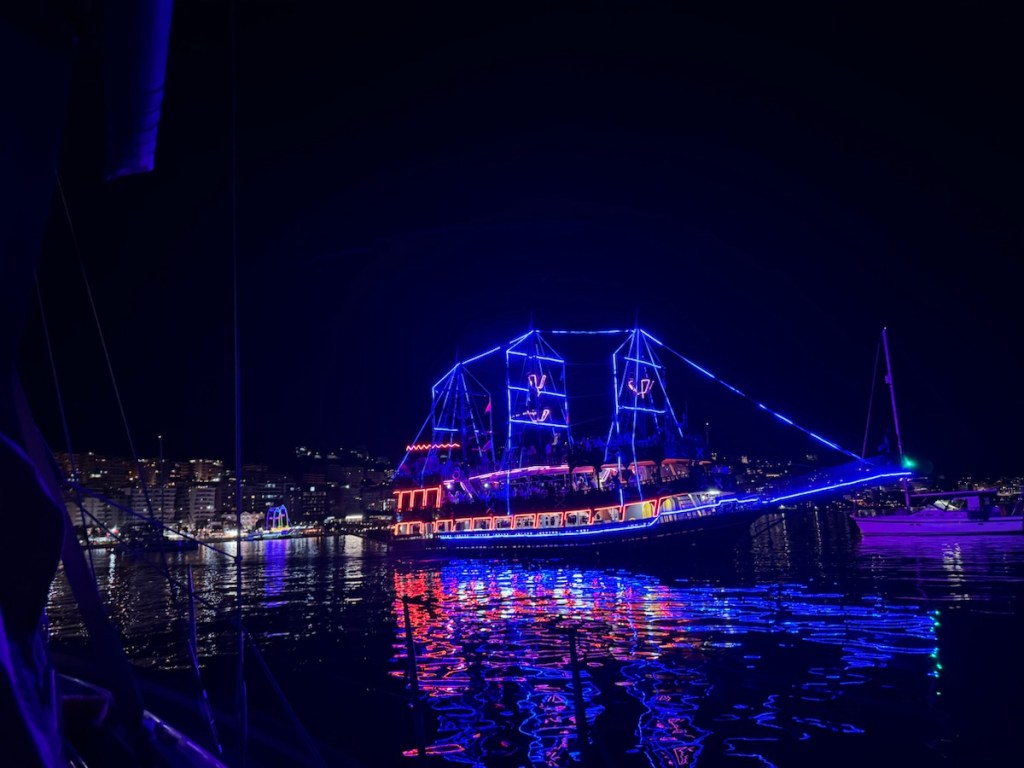
In the evening, the pirate ships are lit up and take passengers for a party in the bay, they circle all of the anchored boats playing loud music until midnight. I was not expecting Albania to be such a popular tourist destination.
We decided to hire a car and explore inland. We drove through valleys and over mountains. The landscape was now completely different from the busy built up towns, and mostly looked to be uninhabited, we saw hardly any dwellings, only a few isolated farmhouses. Just after an hour we came to the city of Gjirokastër. Located in southern Albania, it is situated in a valley between the Gjerë mountains and the Drino river.
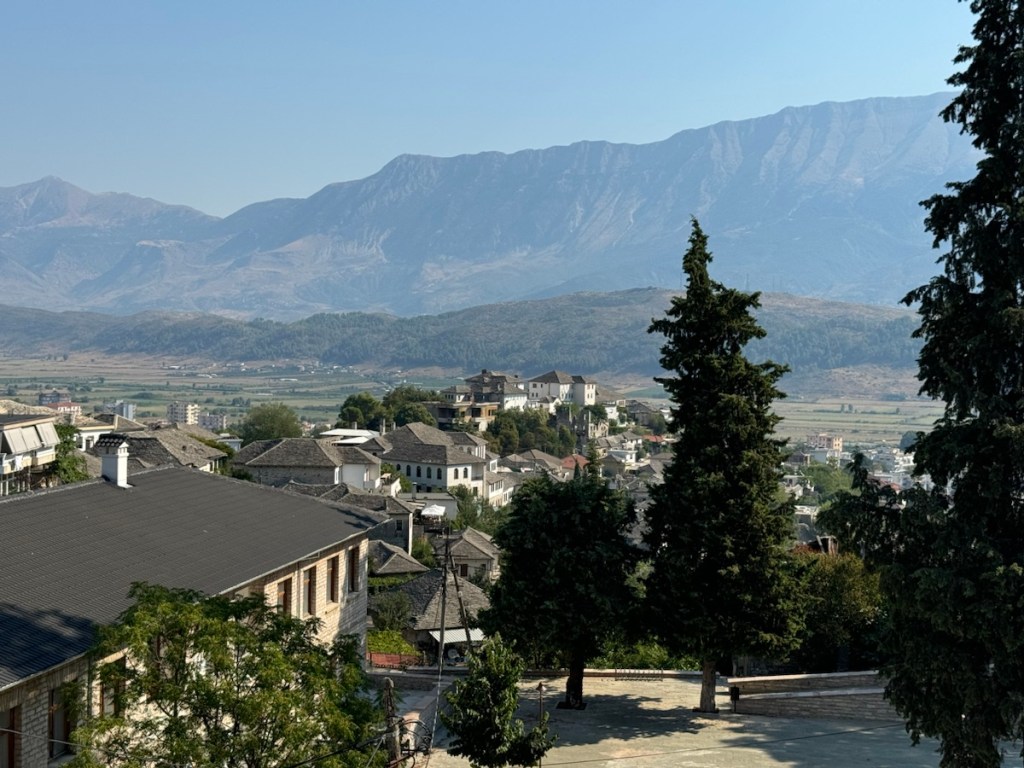
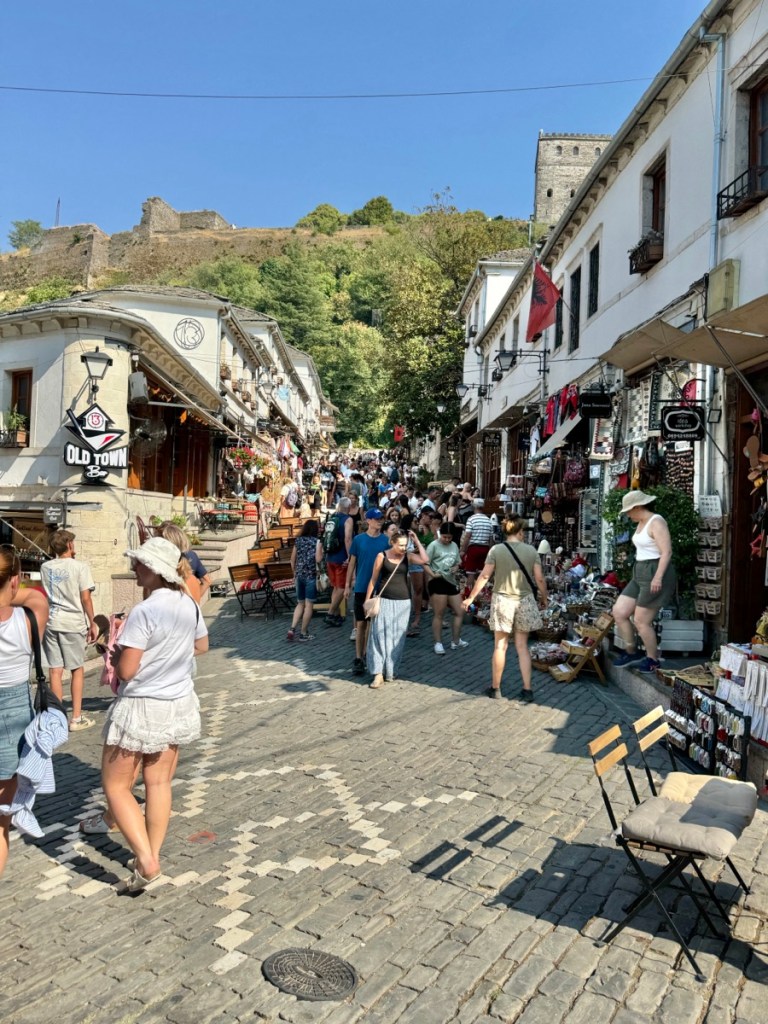
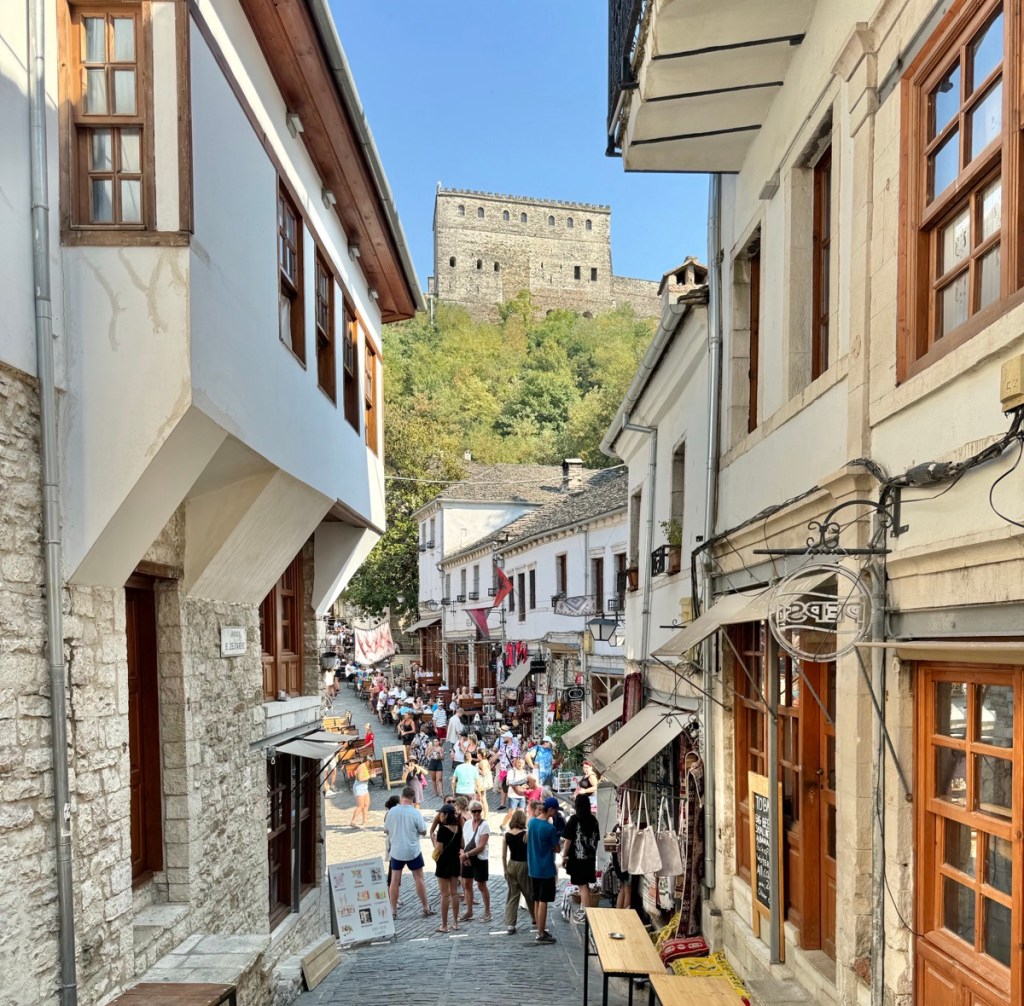
We arrived early and walked through the old town which is very pretty, it was still fairly quiet with shops just opening up. Gjirokastër is often referred to as the ‘city of stone’ because of the locally quarried limestone. The steep cobbled streets have existed for centuries but most of what is seen now dates from 1960-1980. There is recognition for a key master-builder, Simi Liukani, who began work in 1956 until his death in 1981. During years of backbreaking labour, it is estimated that he and his team laid 60,000 square meters of cobbled streets.


Houses were built completely in stone. Stones were placed on top of each other to create the roof which was held up only by its own weight. The roof can weigh up to 550 kg per square meter, about the weight of a fully grown horse. You definitely wouldn’t want that to collapse on you.
The city is built around Gjirokastër Castle, an ancient fortress situated on top of a rugged hill at a height of 336 metres (1,102 ft), with impressive mountain ranges on all sides. The castle dominates the town and overlooks the routes along the Drino river valley.
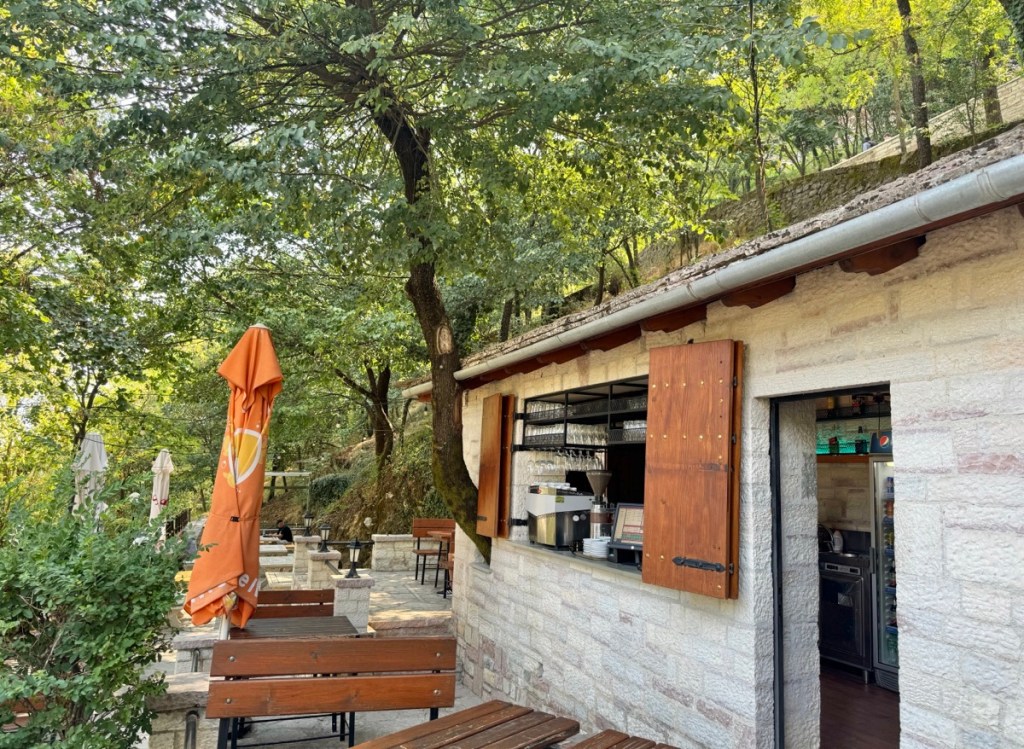
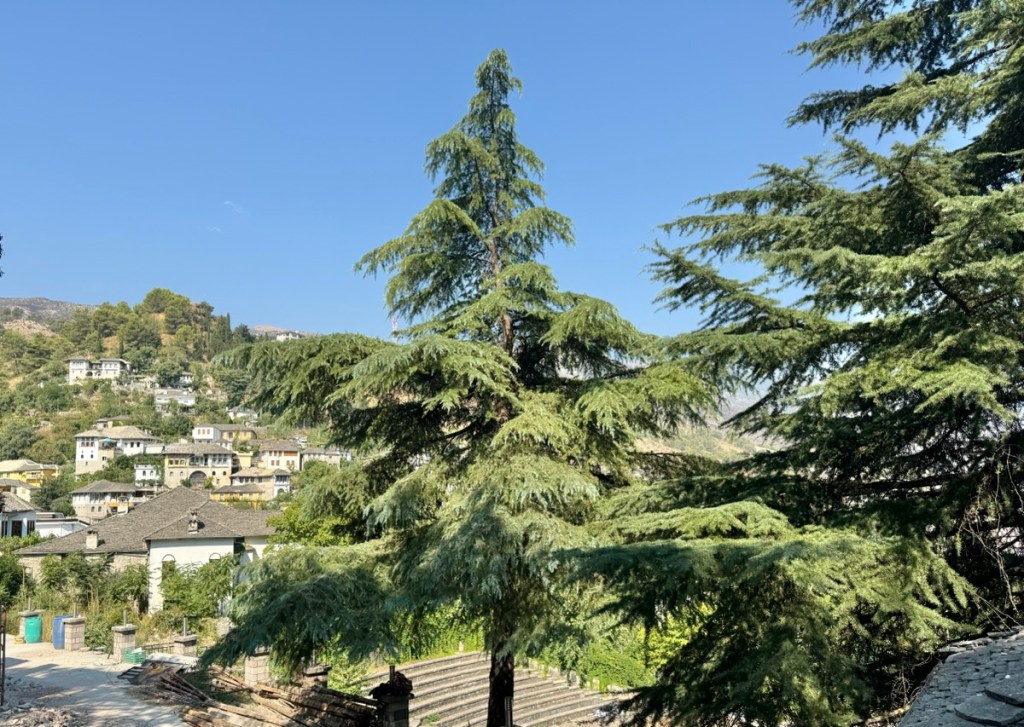
We walked through the town and continued up some steps towards the castle, it was quite steep and already very hot, we were about half way when we came to a small cafe in the trees so we stopped for refreshments. The tree was obviously here first. We had good views over the town and the stone roof tops.

Eventually we arrived at the castle just as it was opening its doors. Although it is unknown when the first fortifications were built, archaeologists believe that it has been inhabited since the 4th to 5th century. According to historians, the first walls of the citadel were built around the 12th to 13th century. Some rich families built the castle to feel safe and protect themselves. Then gradually many other families populated it.
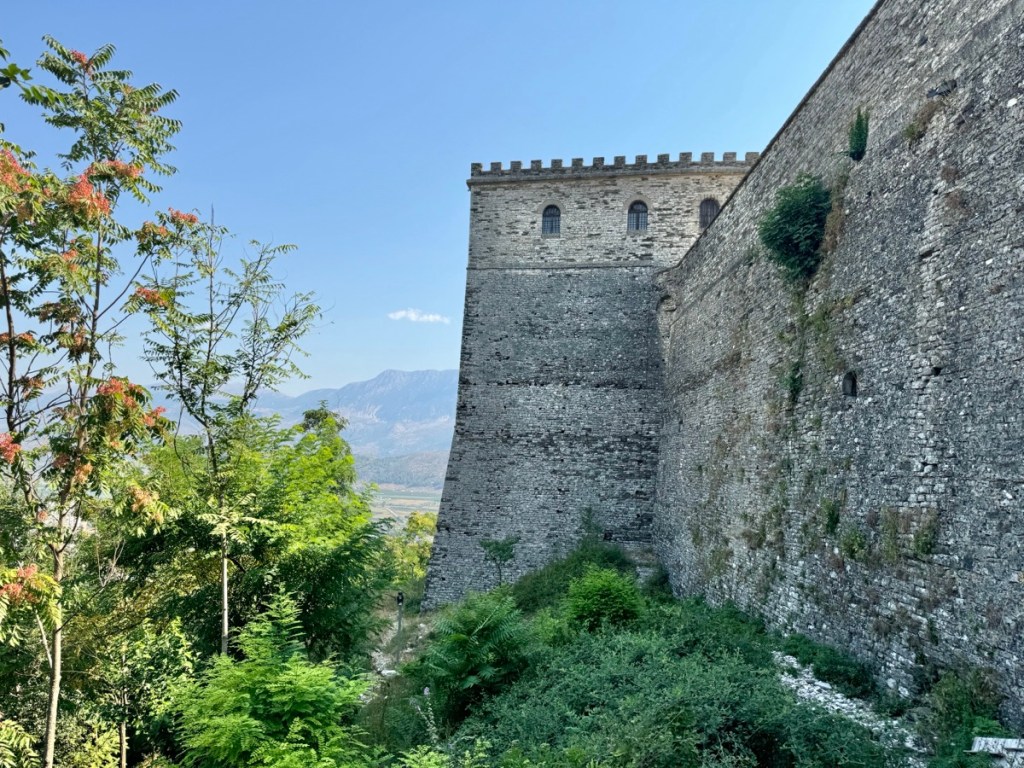
Later in 1419 the castle came into Ottoman hands and soldiers used it as a shelter. Under the rule of Ali Pasha the castle was reconstructed and extended to its current size.
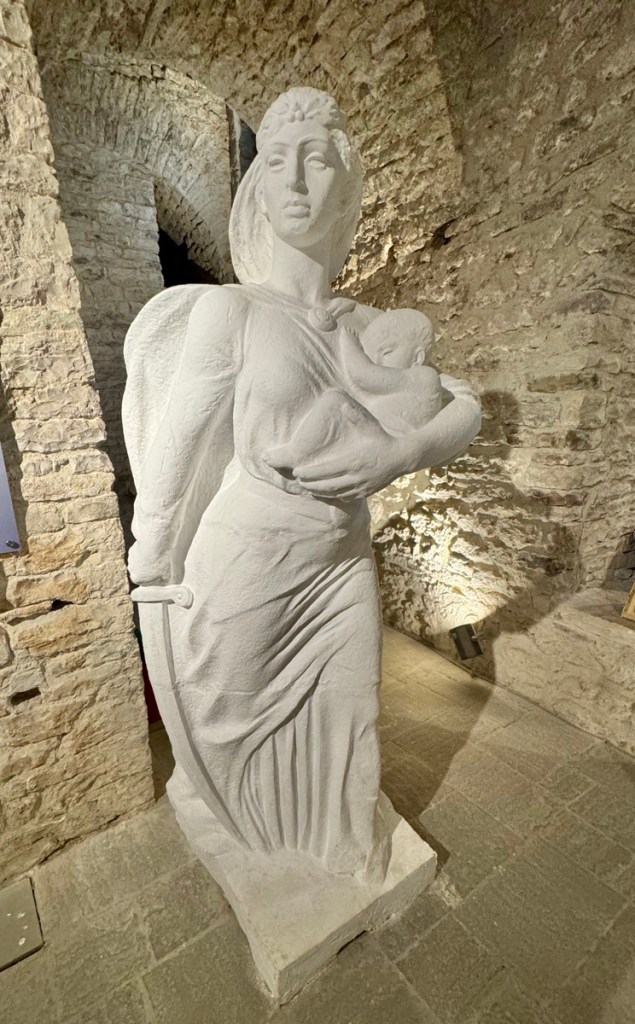
The origin of the name is unknown, a popular legend is that it refers to princess Argjiro who refused to surrender to the Ottomans and threw herself from the top of the castle battlements clutching her young child. There are various other theories but early records of Gjirokastër refer to the city and castle as Argyrokastron. There is a sculpture of the princess in the castle, as with all of the recent art on display here it had a very communist style to it.
After entering the castle, we first came to a long arched corridor displaying various pieces of artillery. The objects are all from World War II that were either abandoned or captured from the Italian and German forces and includes various cannons and a small Italian tank built by Fiat.


At the end of the artillery gallery is the entrance to the Museum, which gave a very detailed explanation of the history and culture of Gjirokastër and the surrounding region, from prehistoric times until now. It is displayed in large rooms with stone arches, mainly through narratives and images, with a few archeological and historical objects.

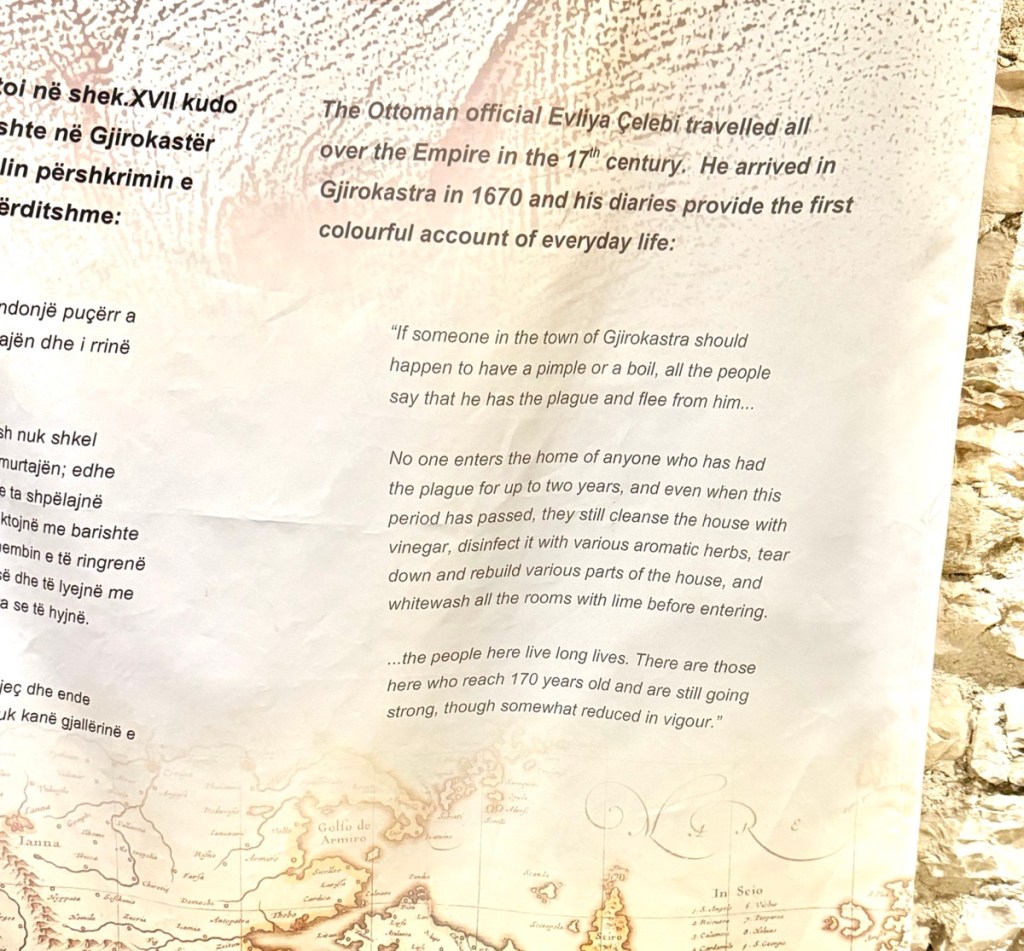
It was serious business if you got a pimple or boil!
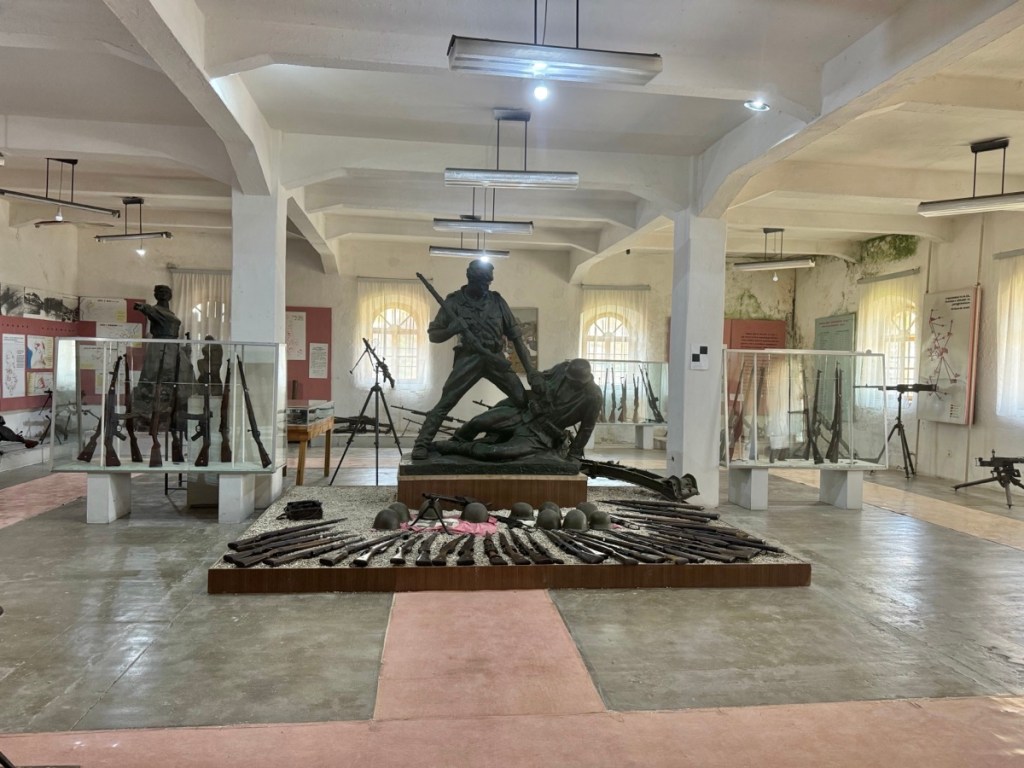
There is also an armaments gallery which displays arms from the beginning of Albanian independence in 1912 to the end of WWII.
The castle is made up of many long corridors with arched ceilings.

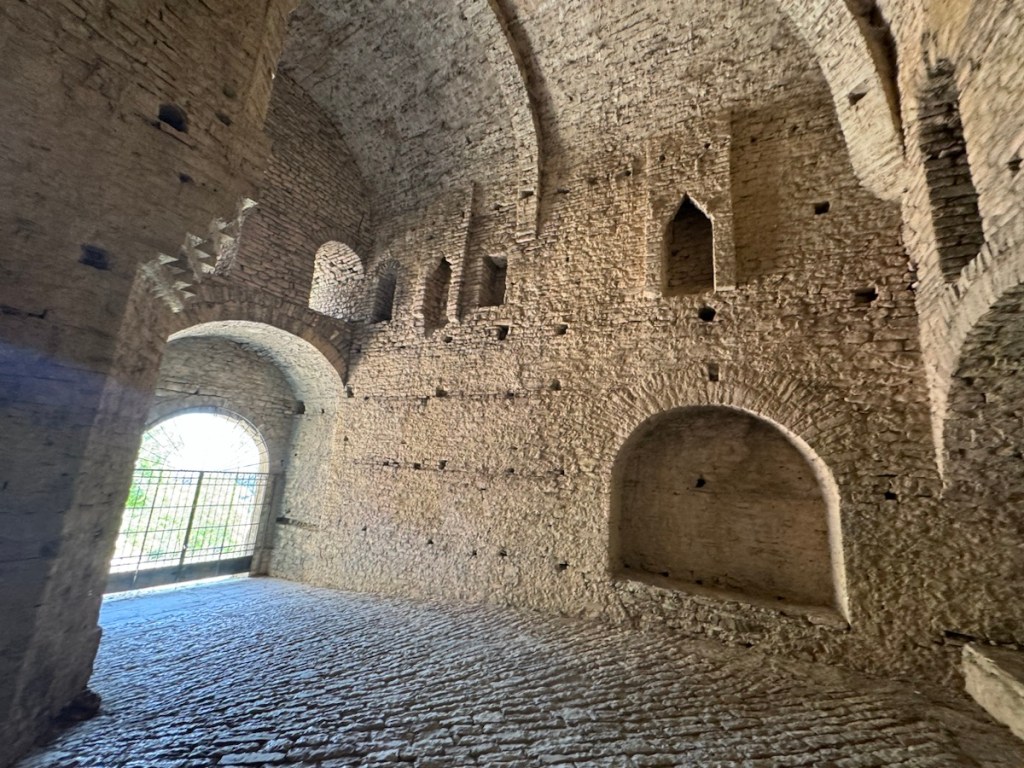
Outside, the large courtyard is full of old brick rooms and further archways, much of it now falling into disrepair.
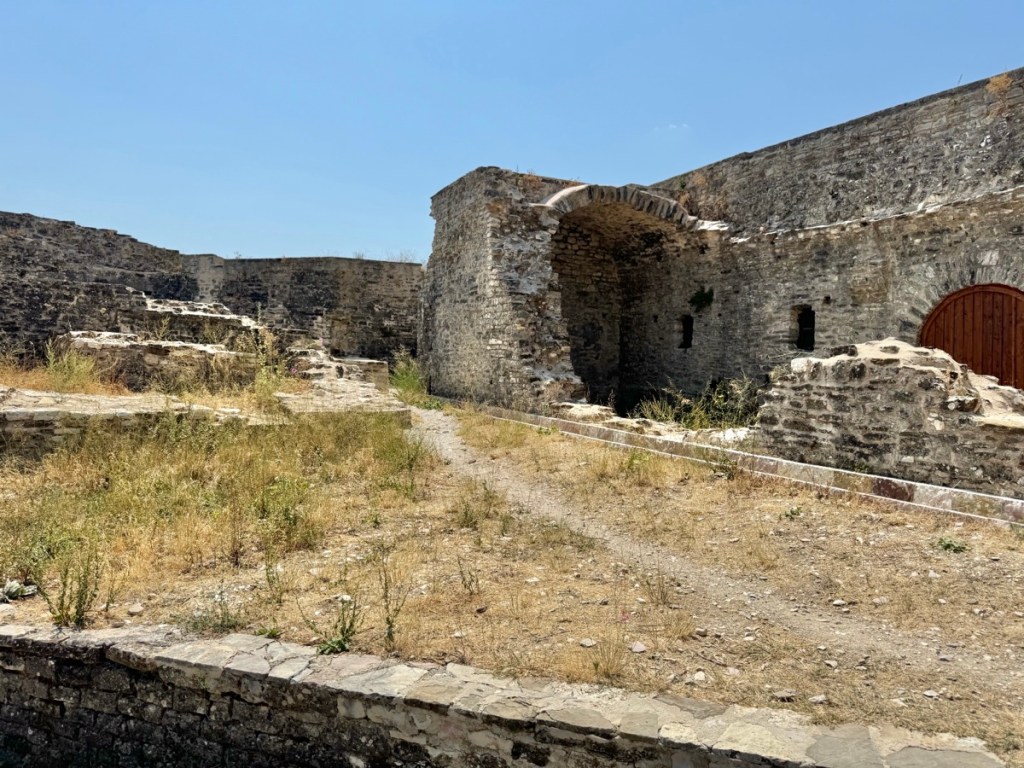

There were great views from the top, it was very well situated for defence, you could see all directions, over looking the town, mountains, farmland and river valley.
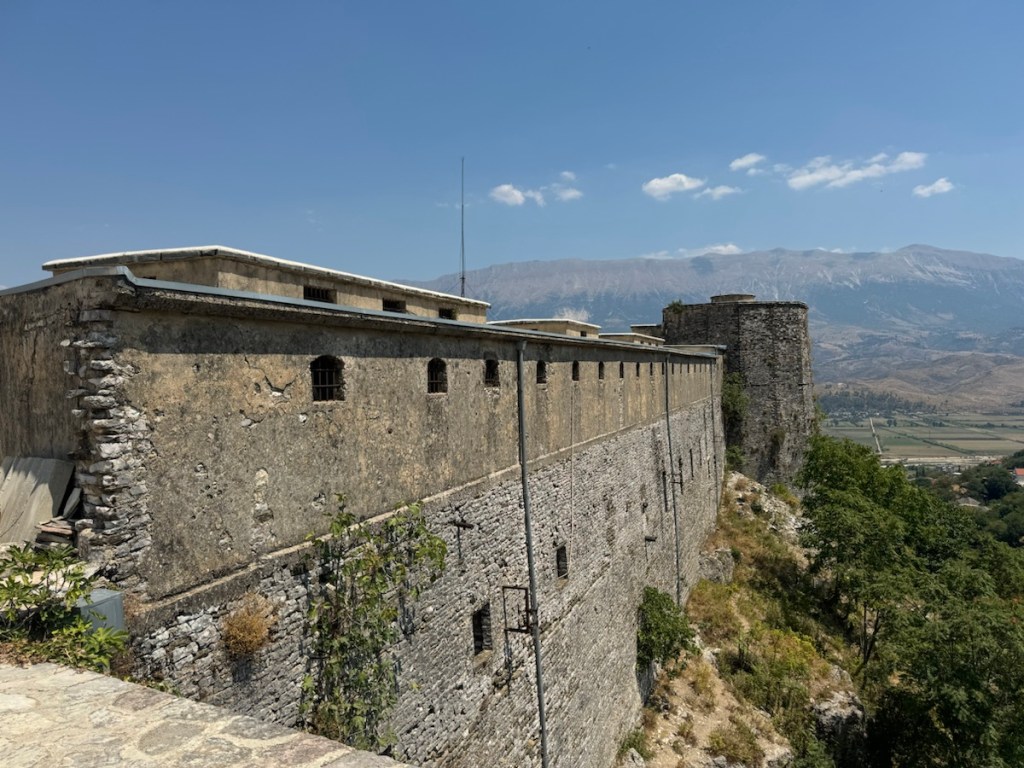

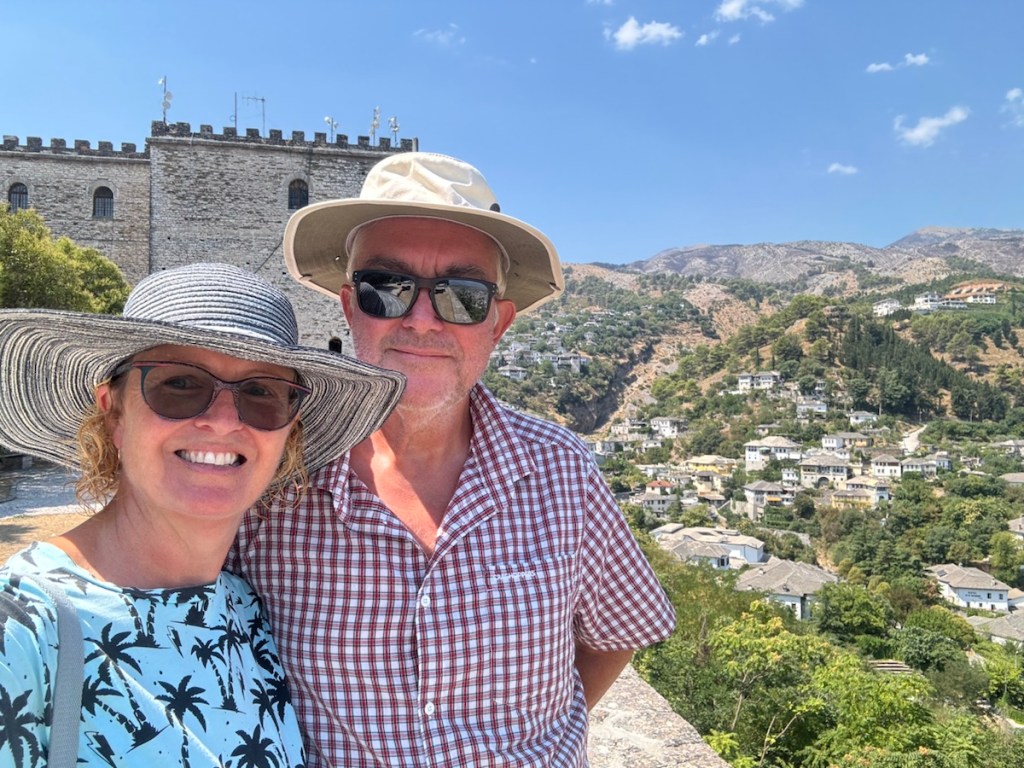

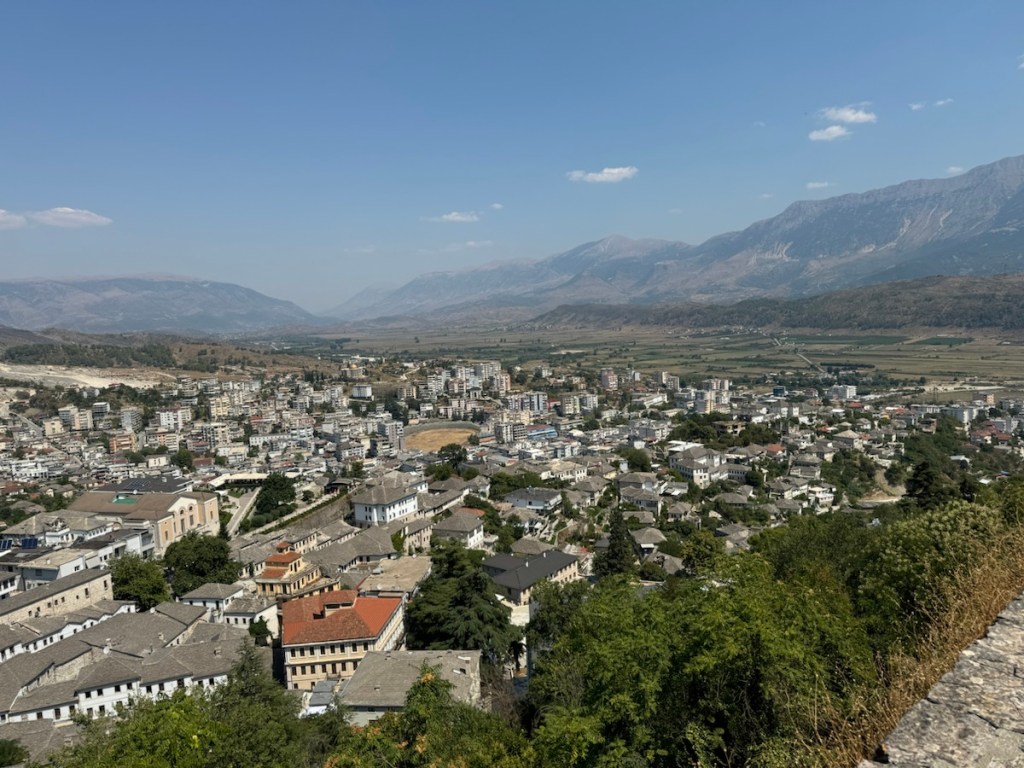
The extensive renovations added by Ali Pasha after 1812 included a clock tower so that residents of the town could determine the time of the five daily prayers. The clock tower stands out over the city and can be seen from almost anywhere.


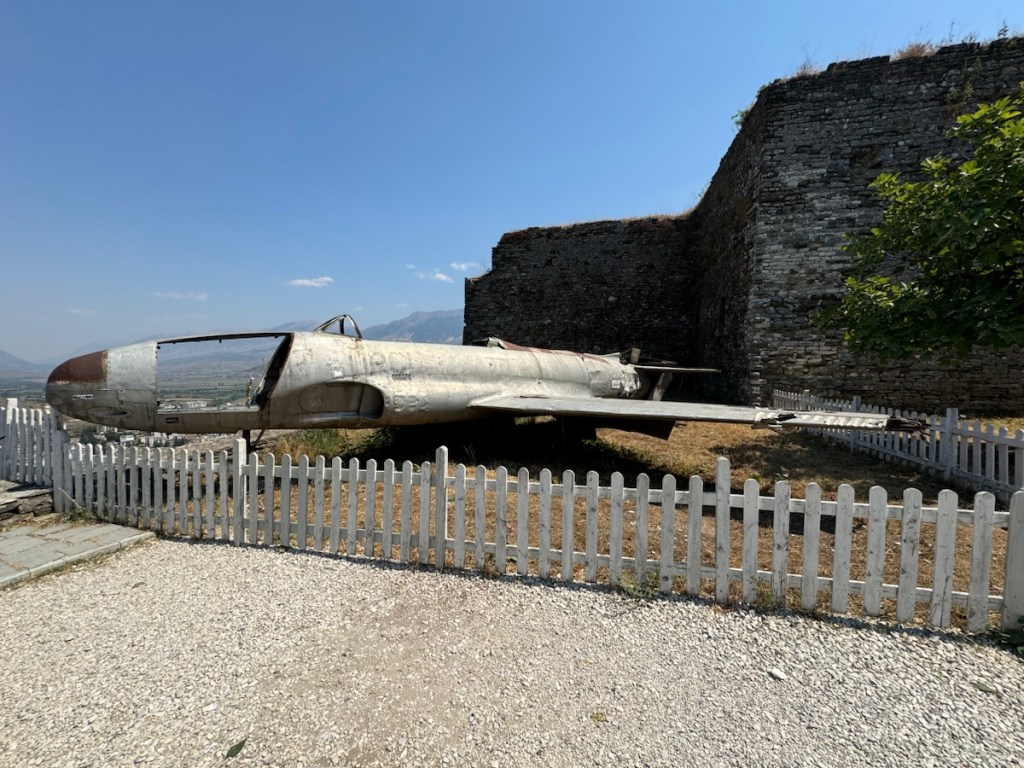
On the top of the castle there is an old U.S. military airplane on display, a Lockheed T-33 Shooting Star. In 1957 the plane landed at Tirana Airport and after the pilot returned to the U.S. the plane was left behind. In 1970 it was brought to the castle to be displayed as part of the Arms Museum. At the time there were two different versions of the story, the Americans claimed that the pilot made an emergency landing due to being low on fuel under bad weather conditions, while the Albanian version contained an interception by the Albanian army, forcing the landing of what they called a ‘spy plane’.

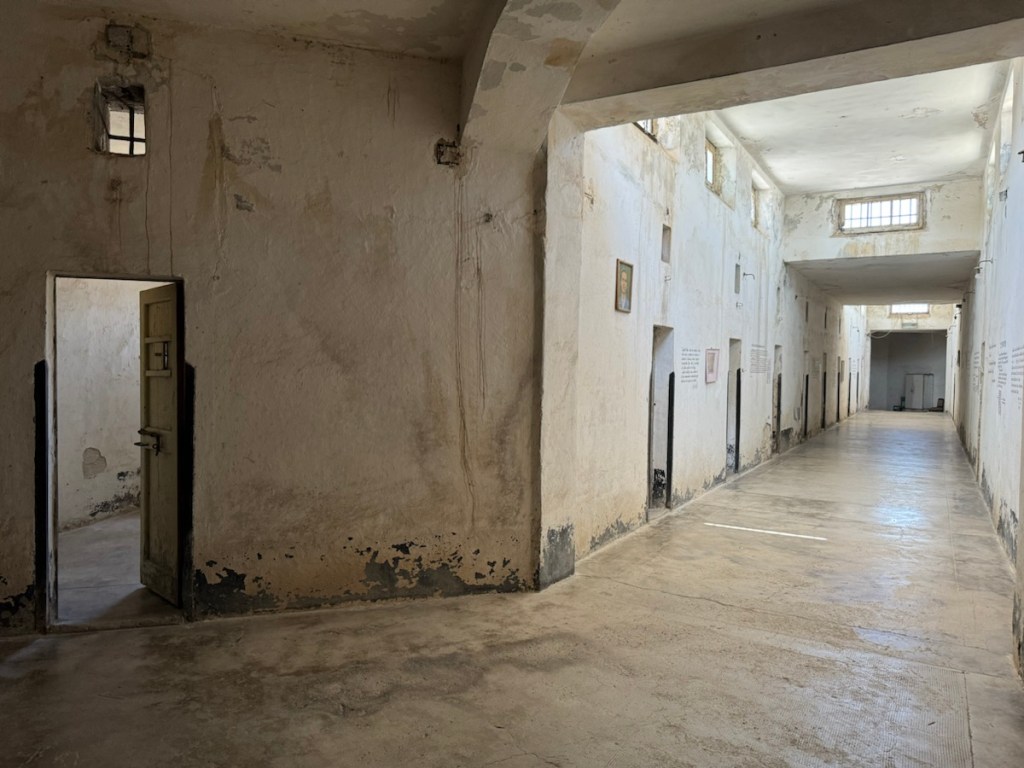
After Ali Pasha’s time the castle was neglected, until in the 1930’s the last Albanian King ‘Zog’ added an extensive number of prison cells to Gjirokastër castle to hold political prisoners. This was soon followed by the Italian and German occupation forces during the Second World War, and finally the incaceration of political prisoners during the communist regime until 1968.

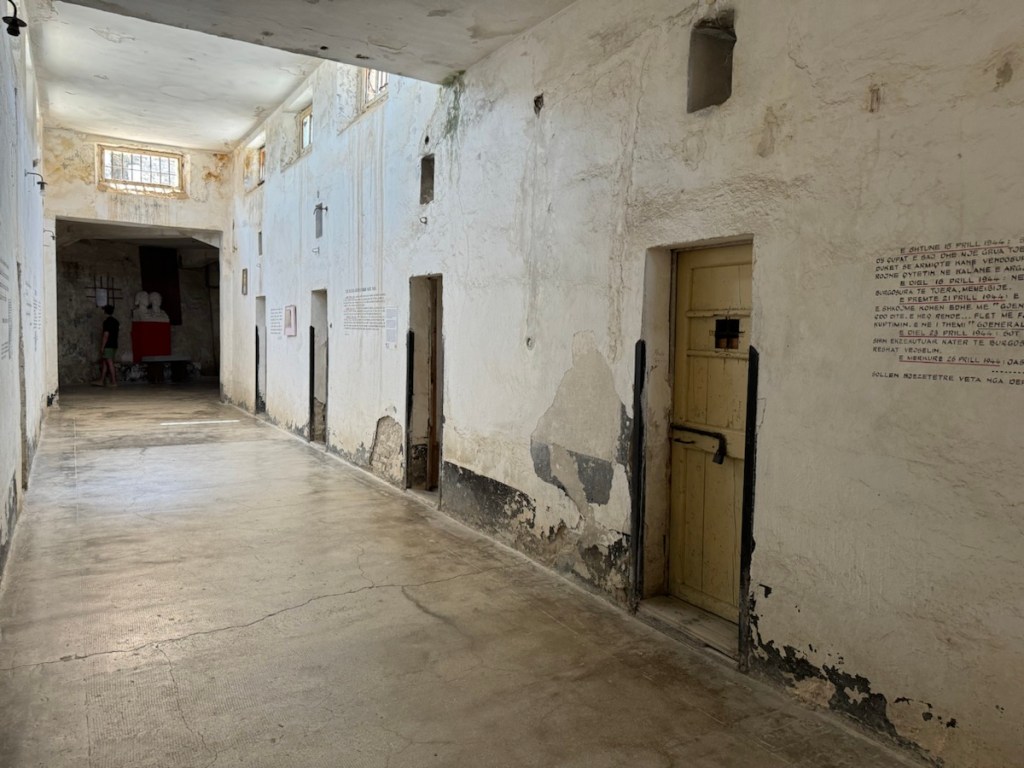


Having walked through all the tunnels and archways and looked around the huge castle, we returned to the town where the streets were now much busier.

Around the town there are several old ottoman era manor houses that are open to the public, having been restored, decorated, and furnished in Ottoman style. We visited two of these houses.
Skënduli house is known as a tower-house, it has twin towers and a arched façade. It would have belonged to wealthy individuals such as administrative officials or merchants.


The house has a stone lower storey topped by a wooden gallery where family rooms are located. There are three floors and a central staircase. The top floor has a grand reception room with frescoed walls, a carved ceiling and an ornate fireplace. The room would have been used for celebrations such as weddings. Unfortunately photos weren’t allowed of this room.


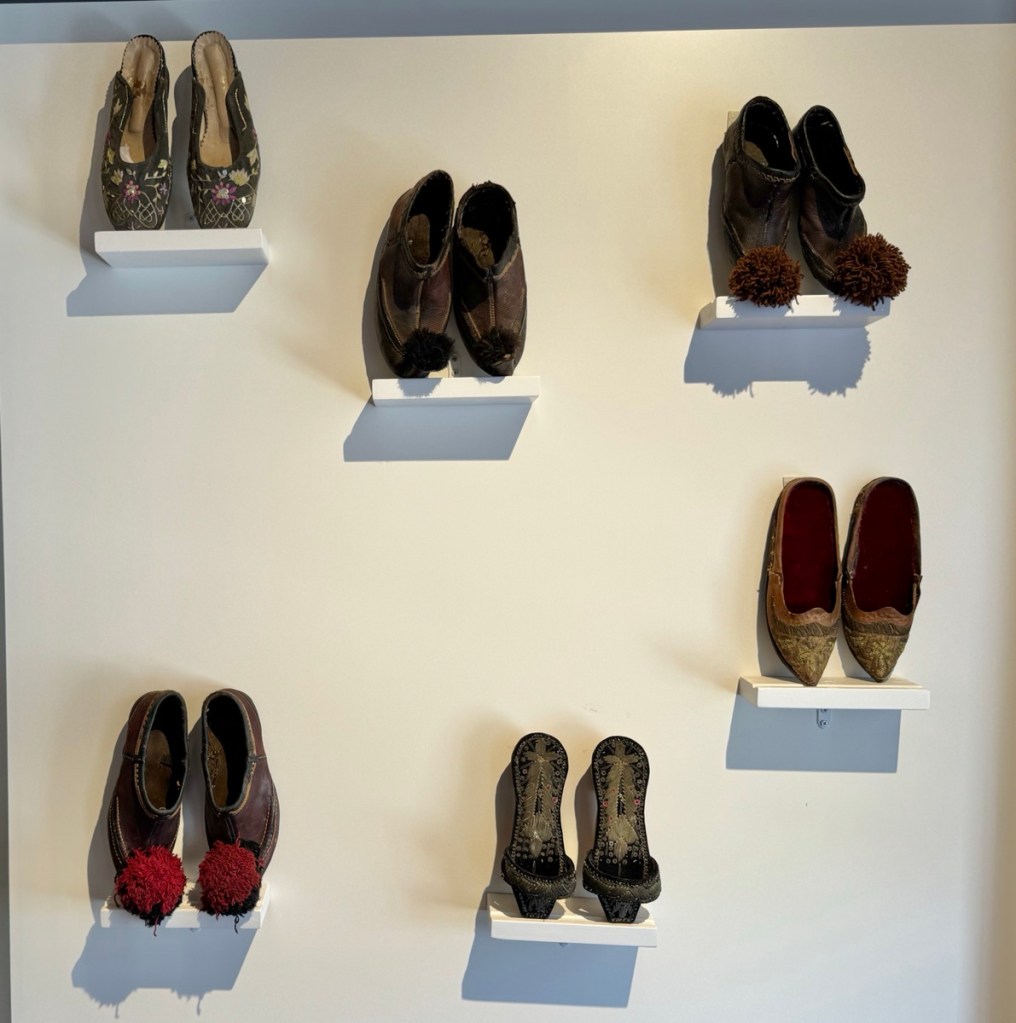
We also visited the childhood home of Enver Hoxha, the former communist dictator of Albania from 1944 to 1985. This has now been converted into an Ethnographic museum and displays the traditional dress from the Ottoman period, with embroidered clothing and tasseled shoes. The rooms are arranged as they would have actually been used and are decorated with numerous household items and cultural artefacts typical of a wealthy Gjirokastër family.

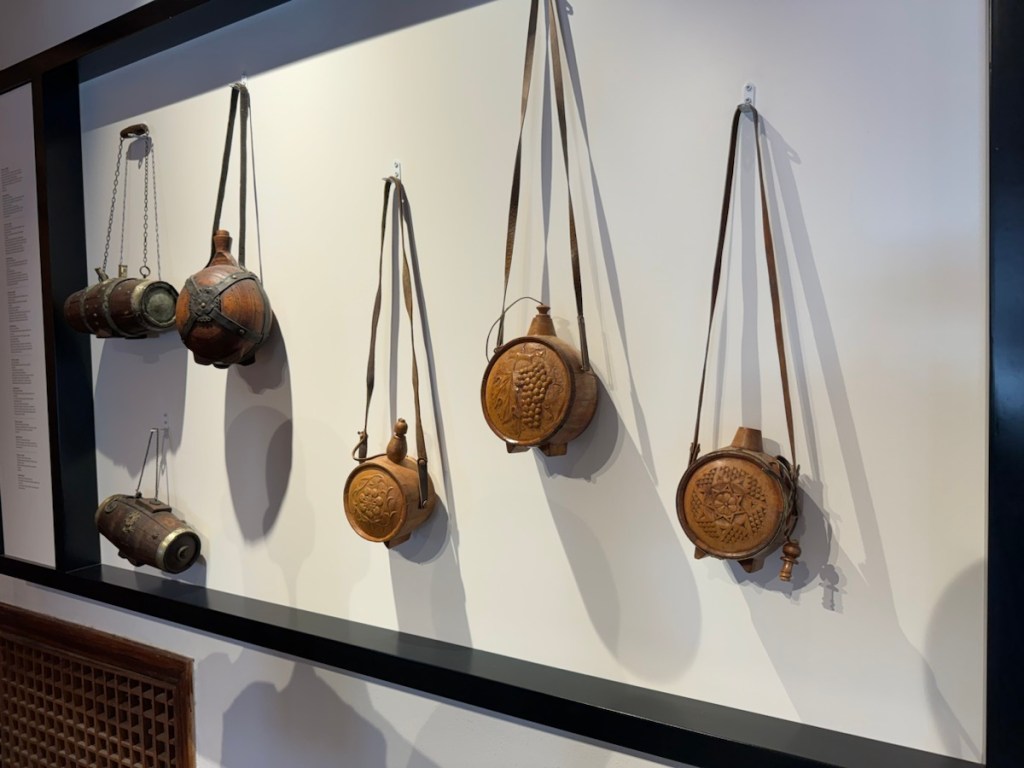

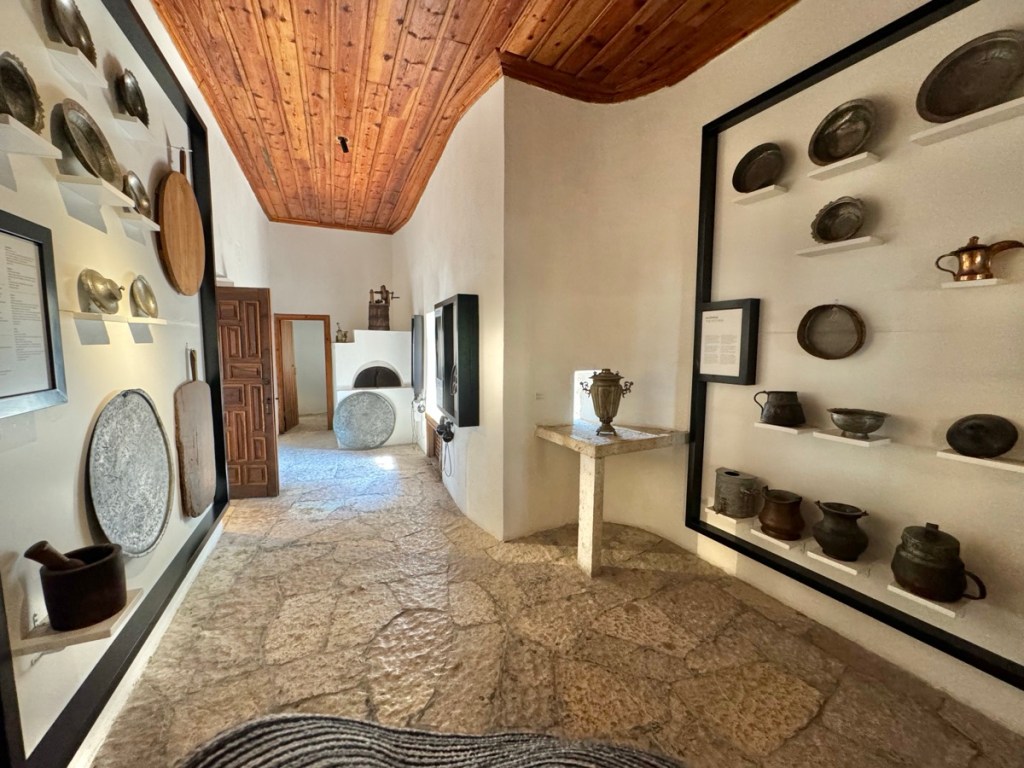
While each house is unique, there are similarities which gives an insight into the lives of the people who lived there and still live there. Each house has multiple sitting rooms for different parts of the year.
The winter room has no, or small, windows and a long cylindrical fireplace built into the wall, sometimes hosting a heavy metal teapot. The summer rooms have tall wooden windows and low couches lining three of the four walls. They had elaborate woodwork, embroidered tapestries and loom-woven rugs, all made by hand.


Each house also has a women’s space accessed with a ladder or steep wooden stairs. The small space is caged in with wooden latticework so that the women crouched within could watch the men in the room below without being seen by them.

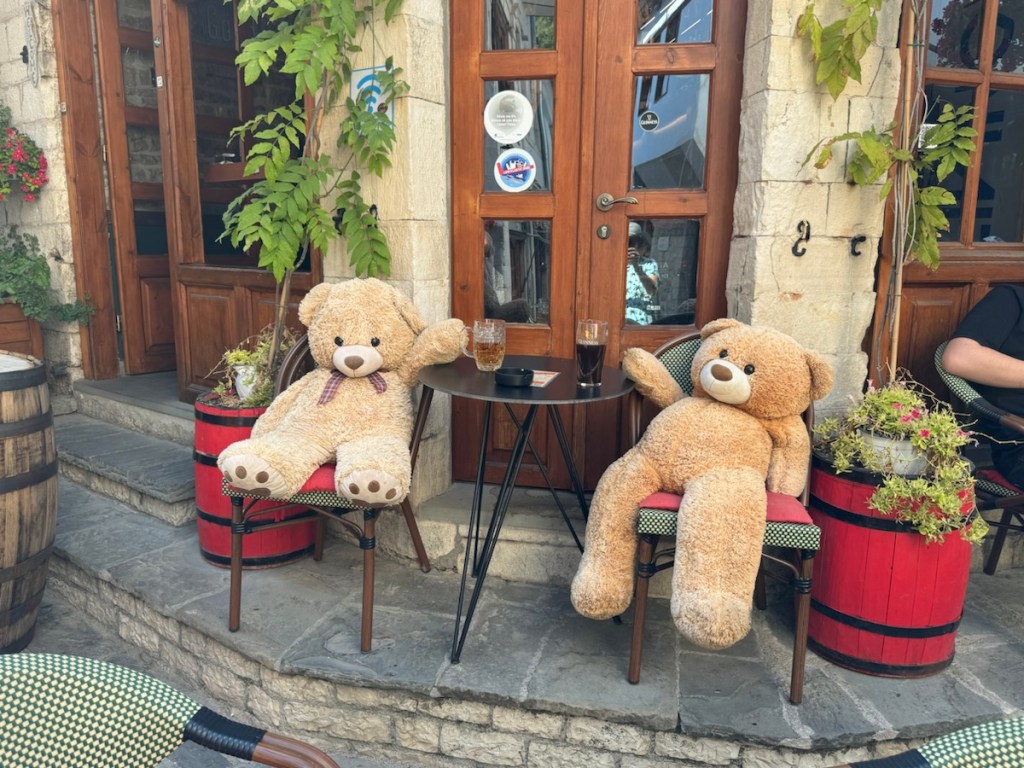
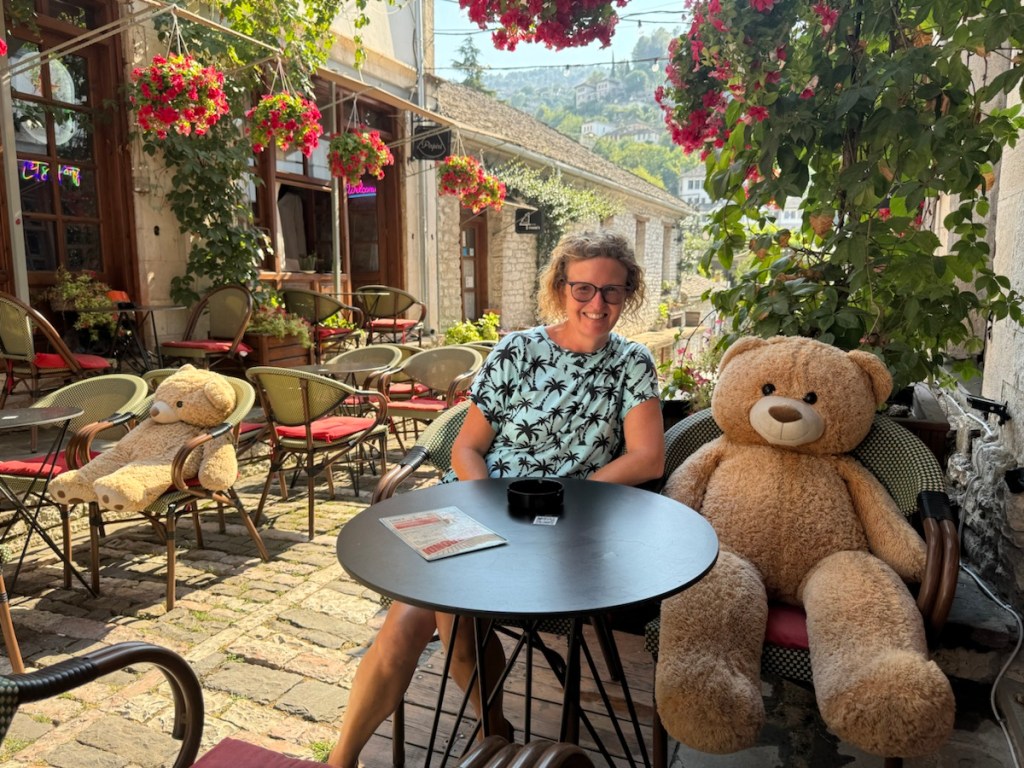
All of this site seeing was thirsty work so we went looking for somewhere to stop for a sit down and refreshments. These bears looked like they were having a good time so we joined them for a cold beverage, before returning back to Sarandë.
 Sailing ZigZag
4 replies on “Gjirokastër”
Those bears must have sold more beer than George the Hofmeister bear did in the 1980s!
LikeLiked by 1 person
What a spectacular gallery of guns lined up. Yet again the work needed to build such a fortress is mindboggling.
The mention of King Zog brought to mind a Peter Sellers movie for some reason, maybe the Mouse that roared or the Prisoner of Zen. Where he plays some Albanian-esk king/prince.
Sounds like the prison was a terrible place to find yourself in the communist days, so nice to finish on happier times chatting to bears while enjoying a small libation. 🙂
Safe onward journey
LikeLiked by 1 person
lovely photos, Albania looks a lot nicer than expected. Very random to meet those bears at the cafe… was teddy smiling though?! 😅
LikeLiked by 1 person
Albania does look lovely. The photo of the little town is really pretty. The photo of you and Paul is really nice. I hope you are enjoying being in Albania at the moment. We are in Greece. 😎
LikeLiked by 1 person