
Continuing our tour of the Sahara, we set off towards Tozeur. The city is located between two salt lakes, Chott el Jerid, and the smaller Chott el Gharsa. The route would take us across the former.
Just as we approached the salt lake we first stopped at Dune de Sable Dur, which translates to ‘hard sand dune’, where there were interesting formations of small sand dunes just a few meters high, they are ‘petrified’ due to the large amount of salt in that part of the desert.

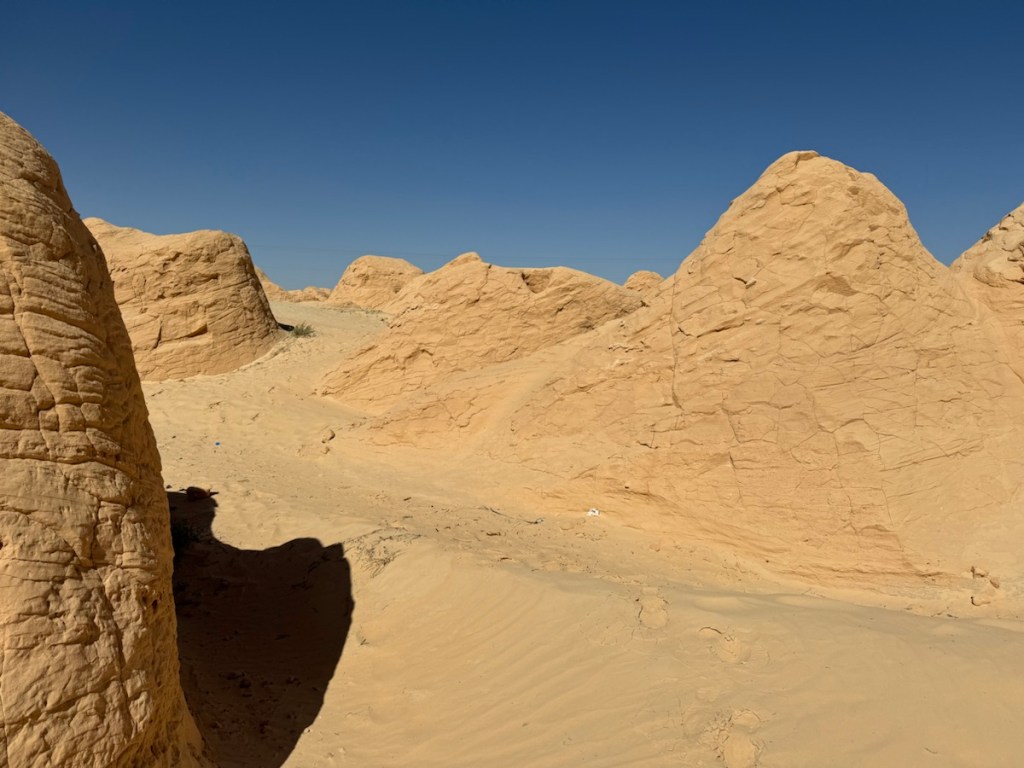
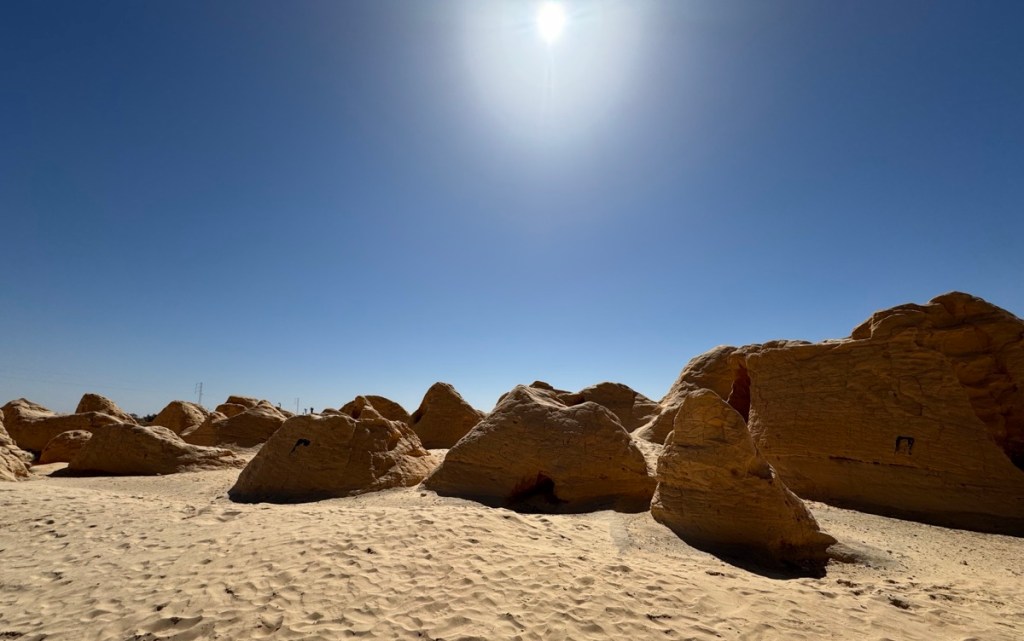
It is very unusual and often referred to as ‘Little Cappadocia’ comparing it to the much larger scale rock formations of a region in Turkey. I think they are being a bit optimistic, we haven’t been there but it looks a little more impressive in this picture I found.

After a short stop to look around here, we drove across the salt lake, Chott el Jerid. It is an ancient interior sea almost entirely dried out, covered with a thick crust of white salt. The natural salt lake is shaped like a tadpole, it is approximately 20 km wide and 250 km long, which makes it the biggest salt lake in the Sahara Desert.
After half an hour, we arrived at the town of Tozeur which is situated between desert dunes and salt flats.
The region of Tozeur is known as the Jerid, which signifies ‘land of the palm’. The oasis is the result of man’s work over thousands of years, which brought life and abundance to the heart of the desert. Tozeur today has several hundred thousand palm trees fed by springs. Water streams were split into many channels running through stone canals dating back to the 13th century. With the passing of centuries, the land became fertile and allowed agricultural cultivation with crops protected from the sun by the tall date palms.

We arrived at our hotel, which was an old palace in the centre of town. Dar El Sultan has rooms leading from a small courtyard with a swimming pool. The rooms are interestingly decorated with all kinds of vintage objects.
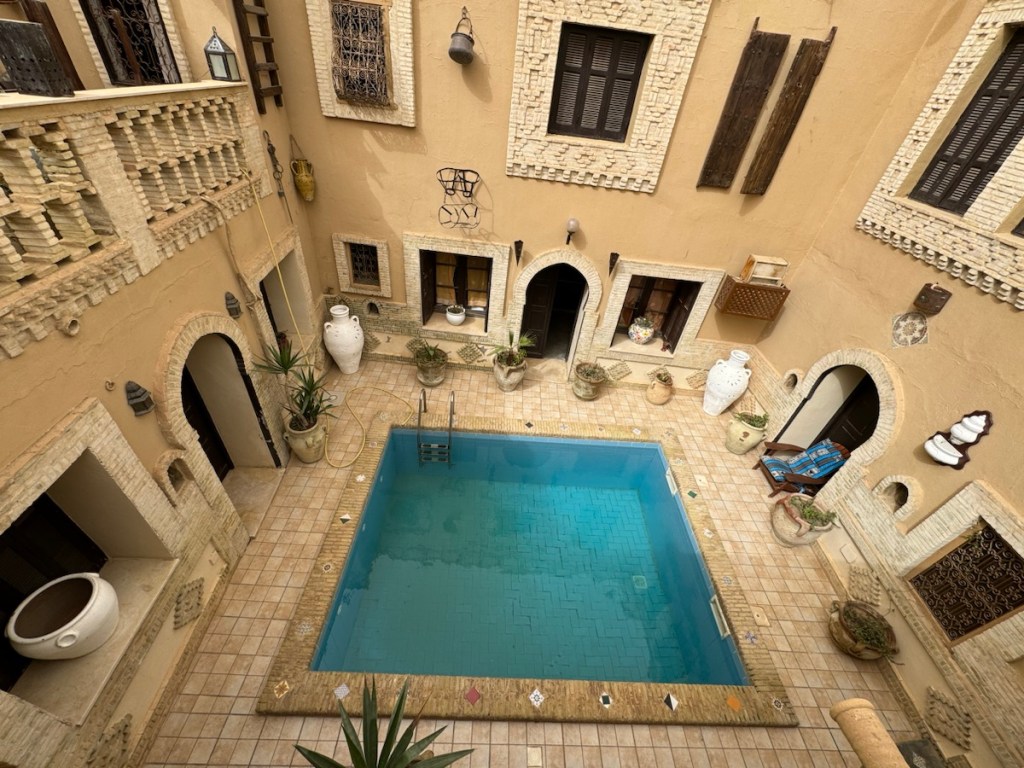
Once we had tracked down the owner to open up just for us it seems our booking had been mislaid, however, as with typical Tunisian hospitality there was never any question that we would be accommodated. We had our pick of the rooms, checked in and then went to look around Town.
But as we stepped out of the hotel we were immediately engulfed by a sand storm, everyone had scarpered, apart from us, there was no one on the streets. We were getting covered in sand so sought shelter in a cafe but still chose a seat on the open terrace, much to the amusement of the locals. Eventually we realised the error of our ways and moved inside. We were hoping for food but this cafe only served drinks, at least we were able to wash away the taste of sand.


The storm started to ease so we ventured out again looking for lunch and found a small cafe where we had traditionally cooked couscous.
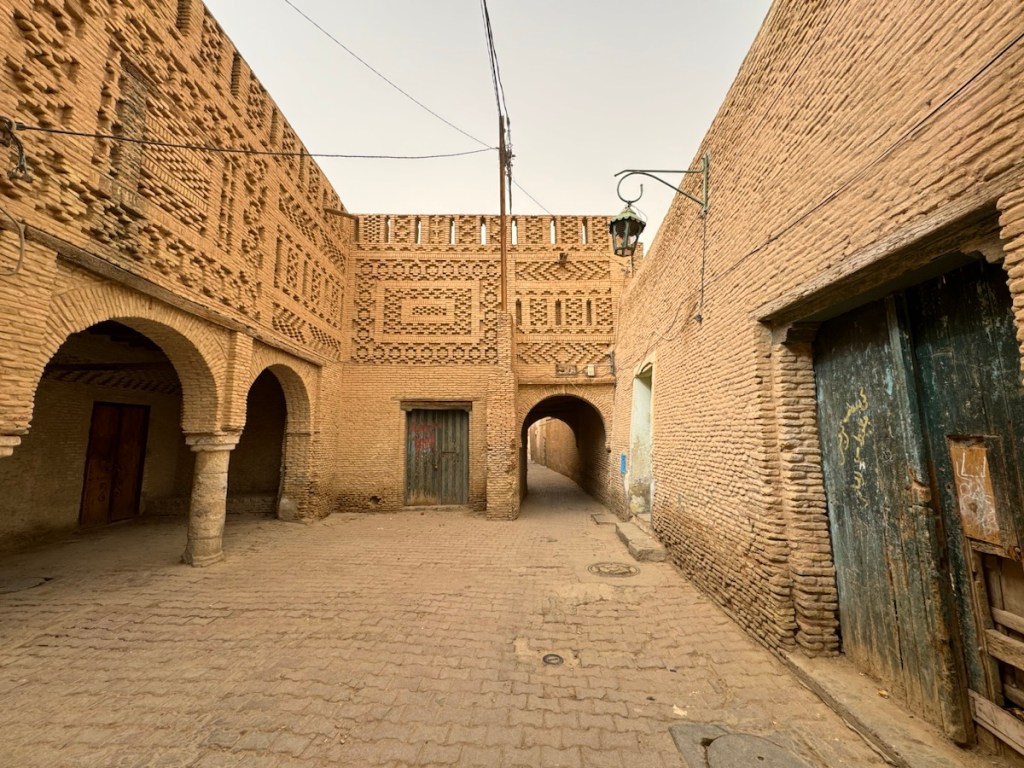
The air eventually cleared but after walking around the town with its ancient medina for a while, we were still feeling very sandblasted, so we retuned to the hotel to dust ourselves down.



The following day we drove across the smaller salt lake, Chott el Gharsa, to the village of Midès which is situated on the border with Algeria. It is a small mountain oasis in the middle of the dry desert region.
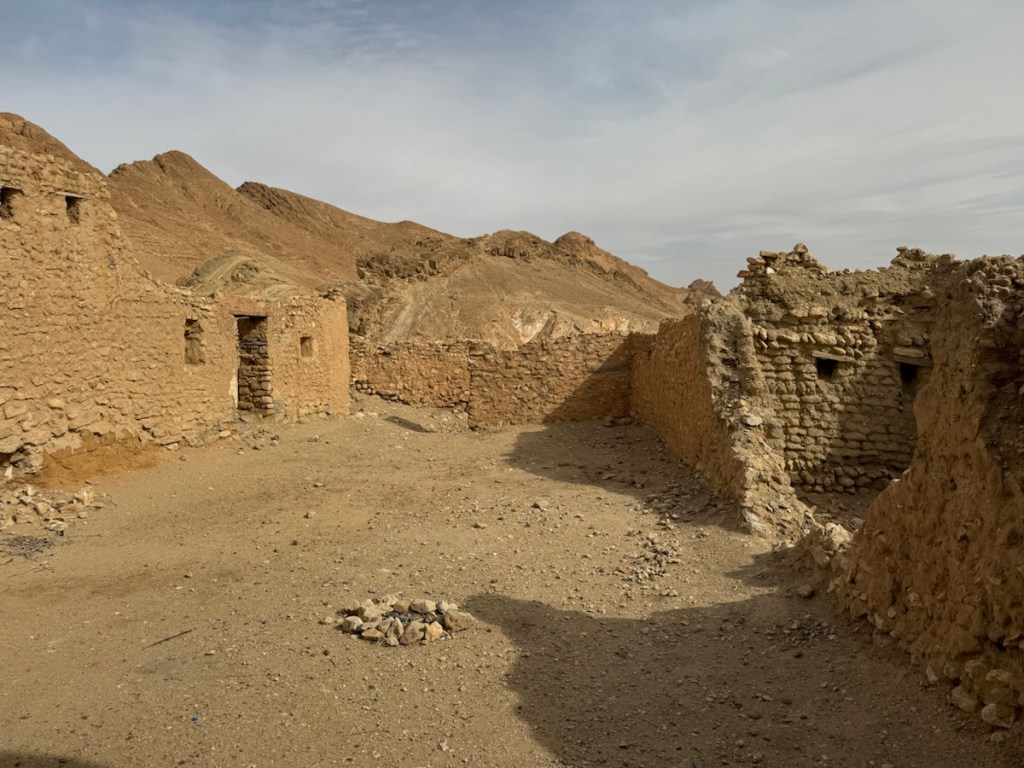
Midès has an impressive gorge which has been sculpted out of the rock by the river torrents over hundreds of years. The main gorge is 3km long and was part of the natural defense of the original village. We had a local guide who was very friendly and knowledgeable, he first took us through the remains of the old village where the dry mud houses were destroyed by sudden floods in 1969.


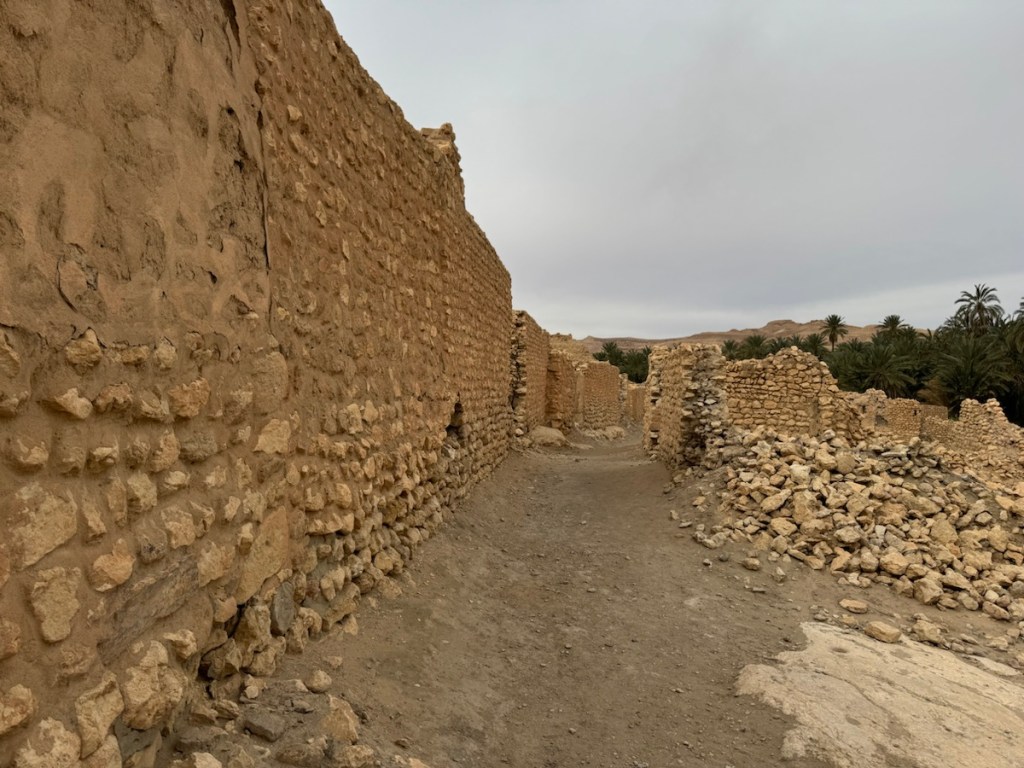
We then reached the canyon and had good views into it.
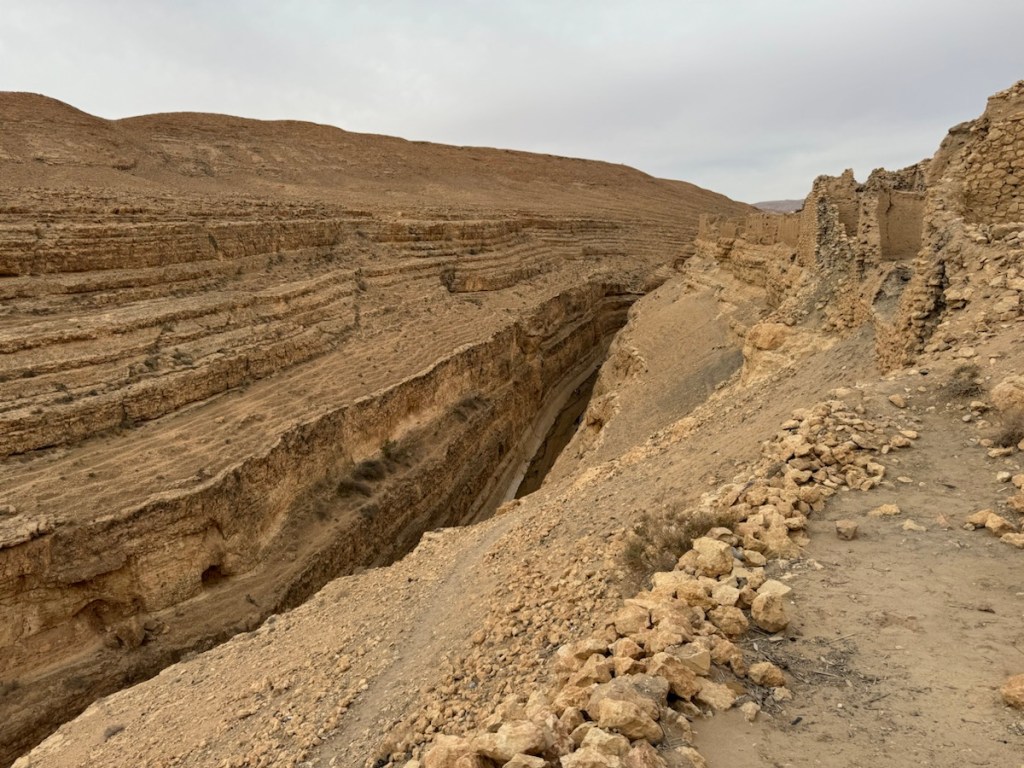
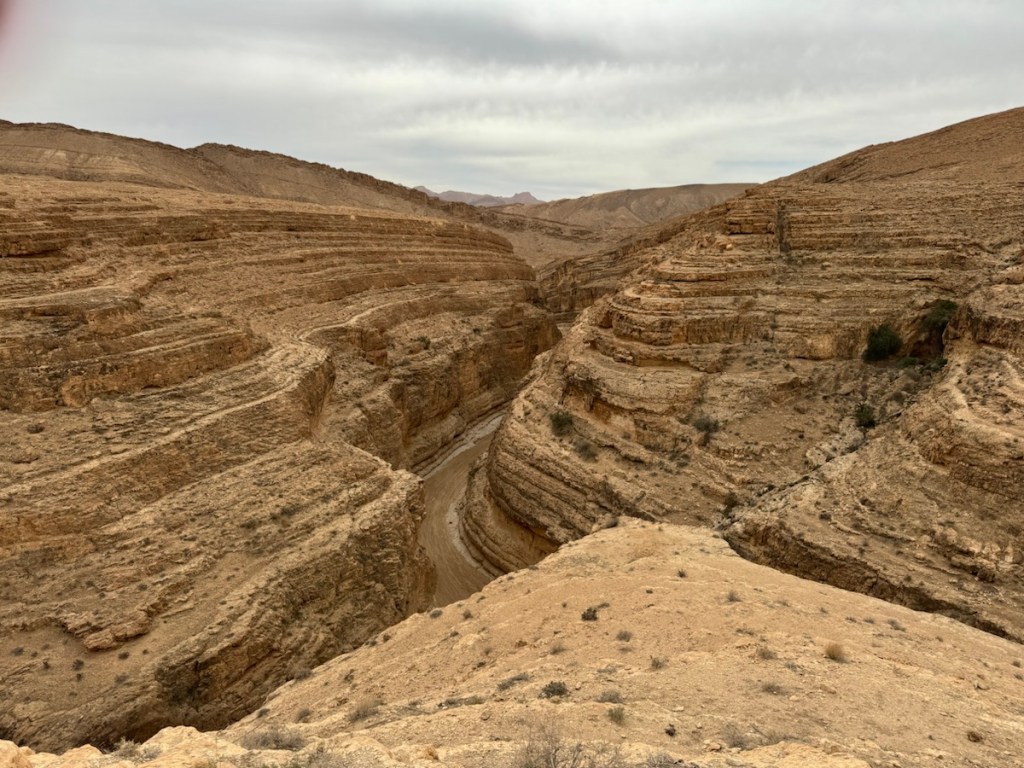
We were not sure how extensive the tour would be and the sides of the gorge looked impenetrable but our guide started descending and so we followed, and cautiously climbed down the rocks.
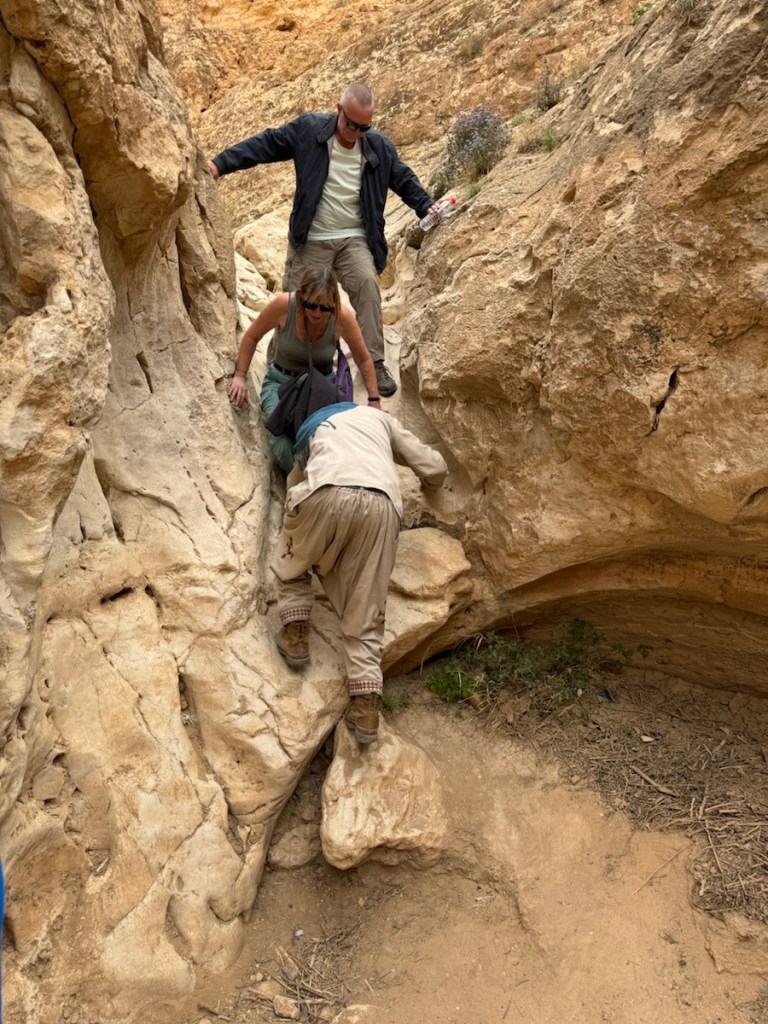
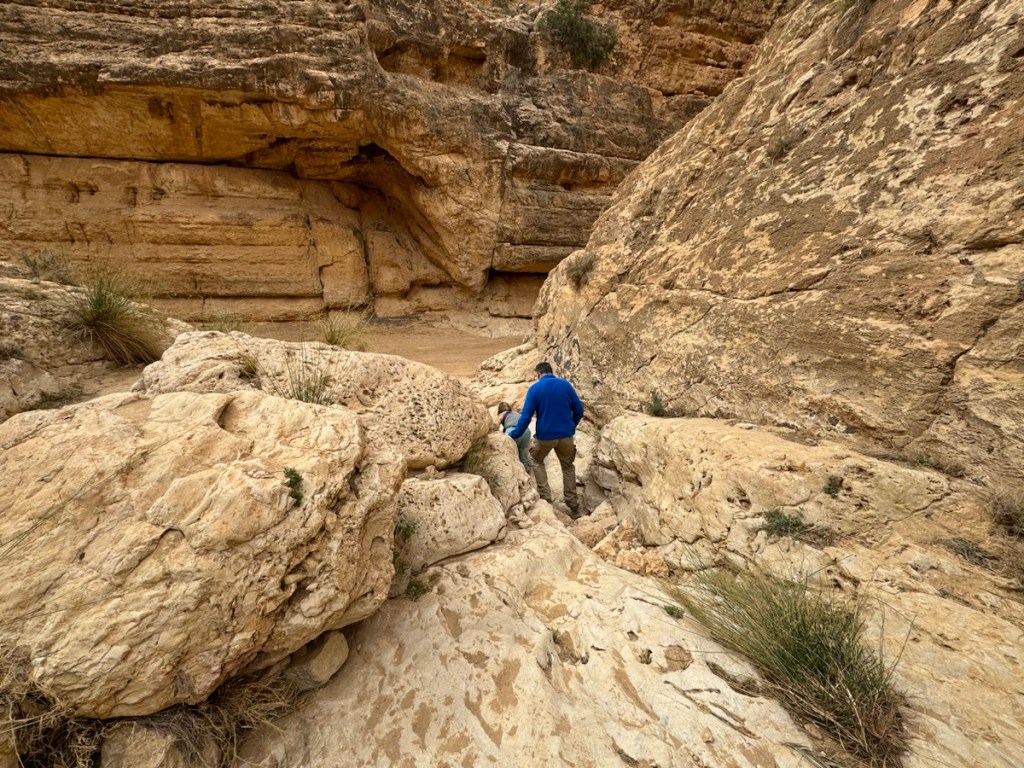
The bottom is dry and sandy below the high, irregularly shaped rock walls which consist of various layers of stone.
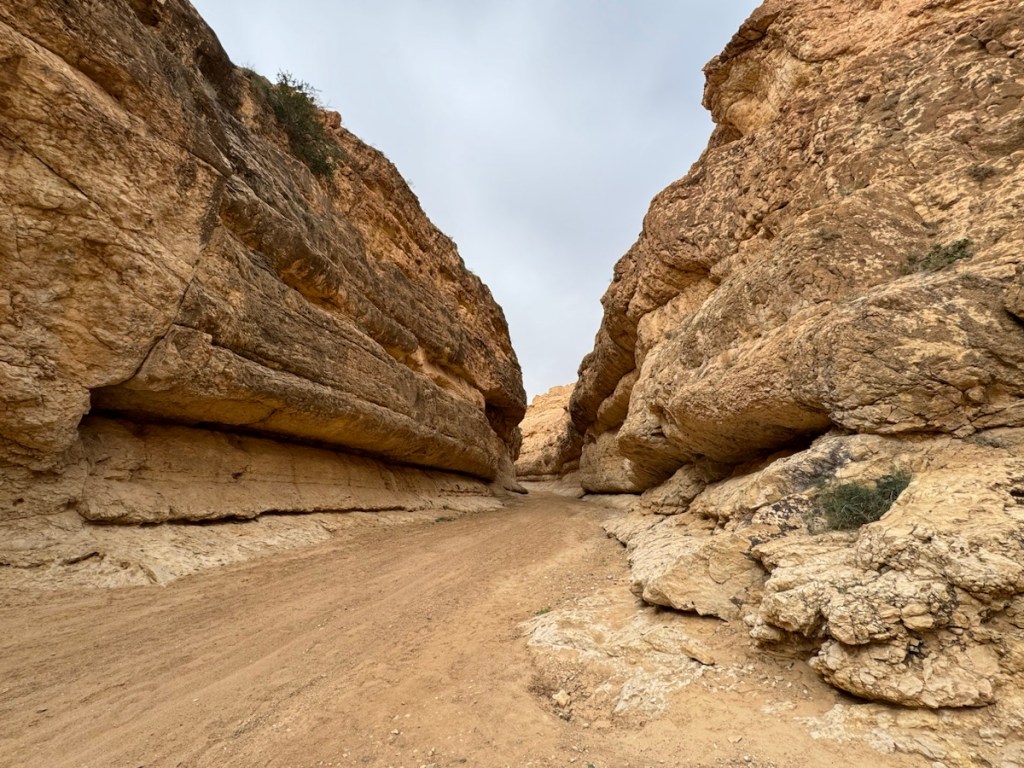
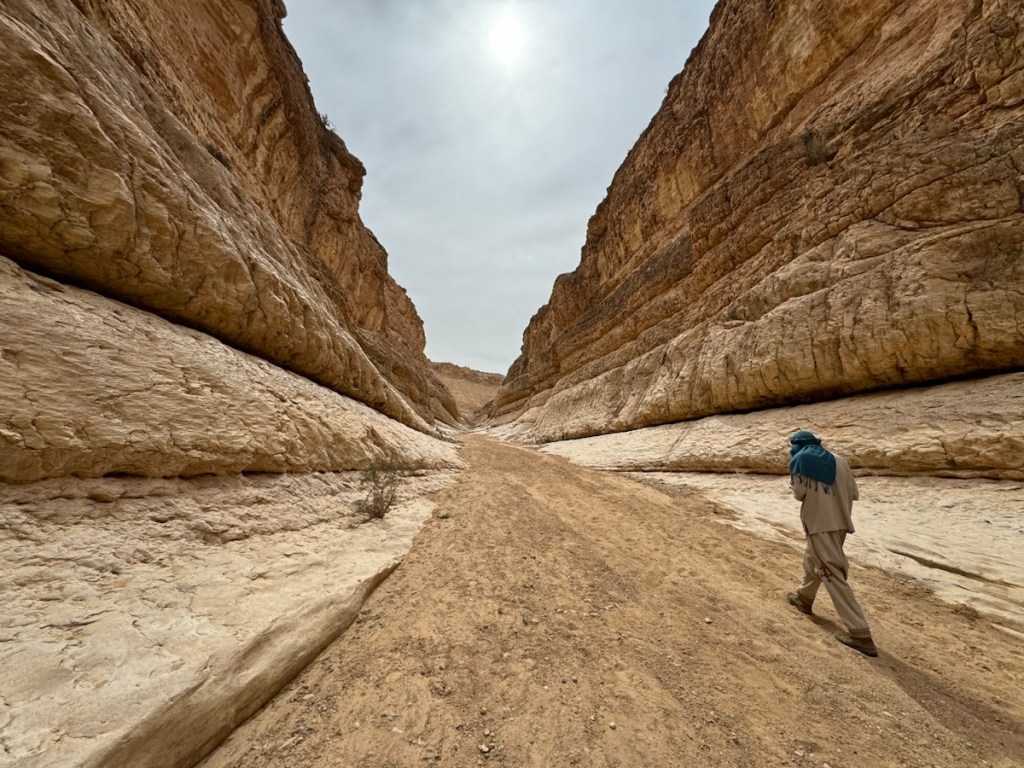

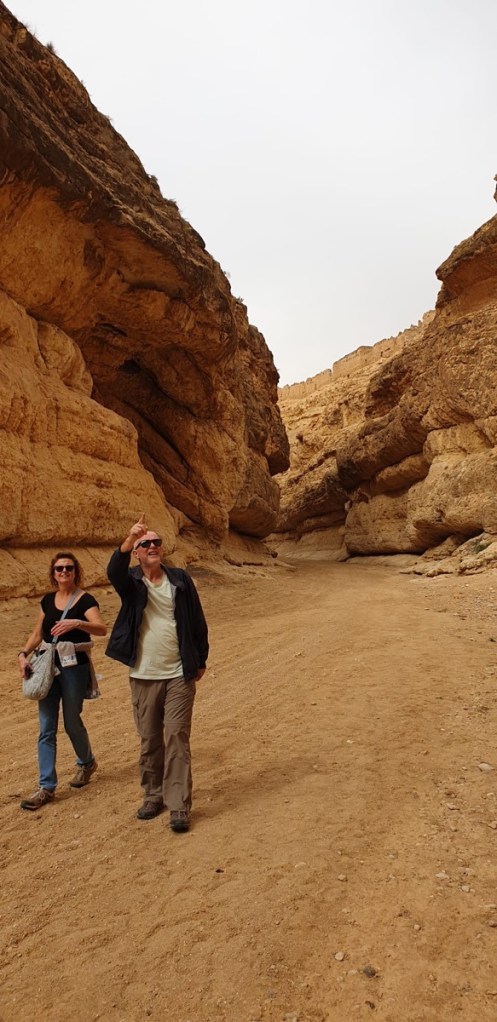

As with many of the unique and dramatic landscapes in this area, the canyon has been used as a film set for ‘Raiders of the Lost Ark’ and ‘The English Patient’.
After all of that walking and climbing over rocks, we set off in search of lunch. We passed a cafe on the roadside with views of the valley and hills with owls eyes (you have to look closely). There didn’t appear to be a menu and we couldn’t understand the owner, after a while another customer tried to translate, but that also didn’t really work. However, we did get food, a variety of dishes arrived at the table and more just kept coming, I think we ended up with one of every dish they had, lucky that we were hungry!

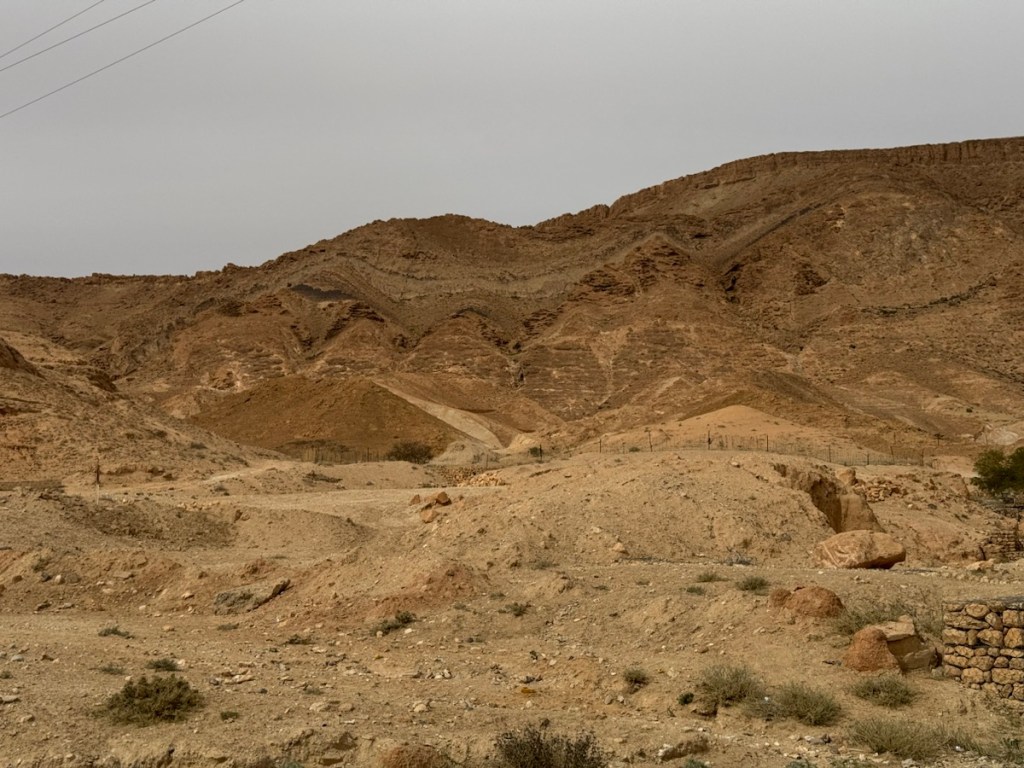
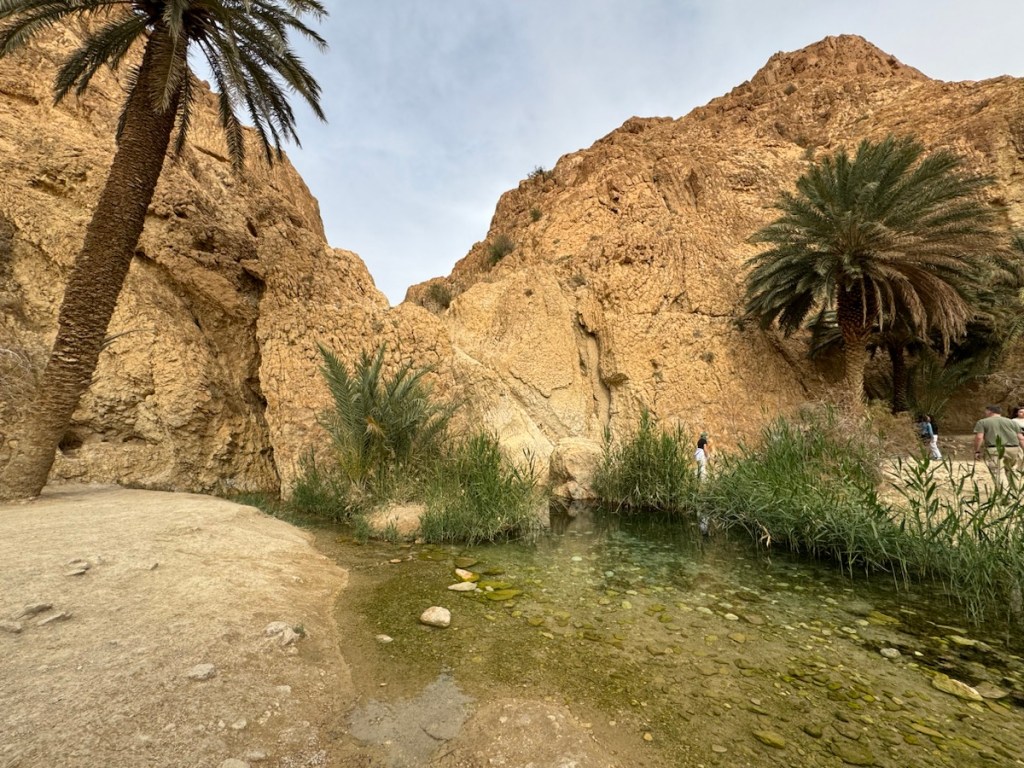
Next stop was Chebika, another oasis at the foot of the mountains, only a few hundred people live in this village today but there were plenty of tourists. Here there is another canyon to walk through, but this one had a lot more water and vegetation in it. Again we took a local guide and went first through the old village, then up a hill and down to a waterfall where the river flows from the rocks and naturally irrigates the palm tree grove.

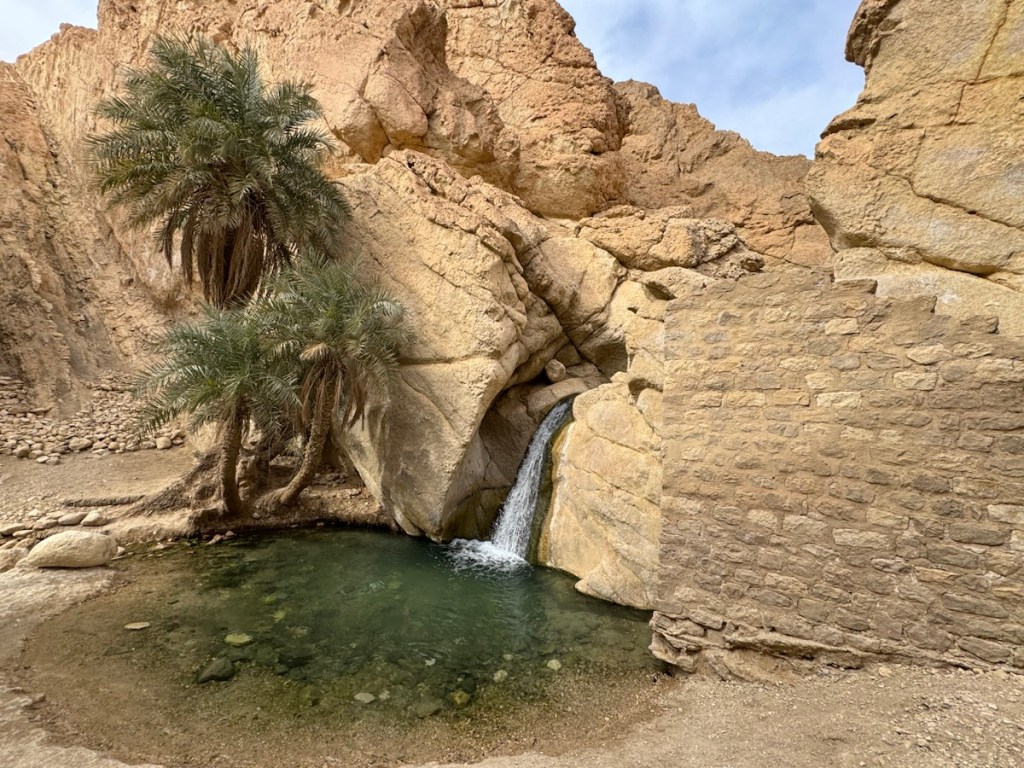
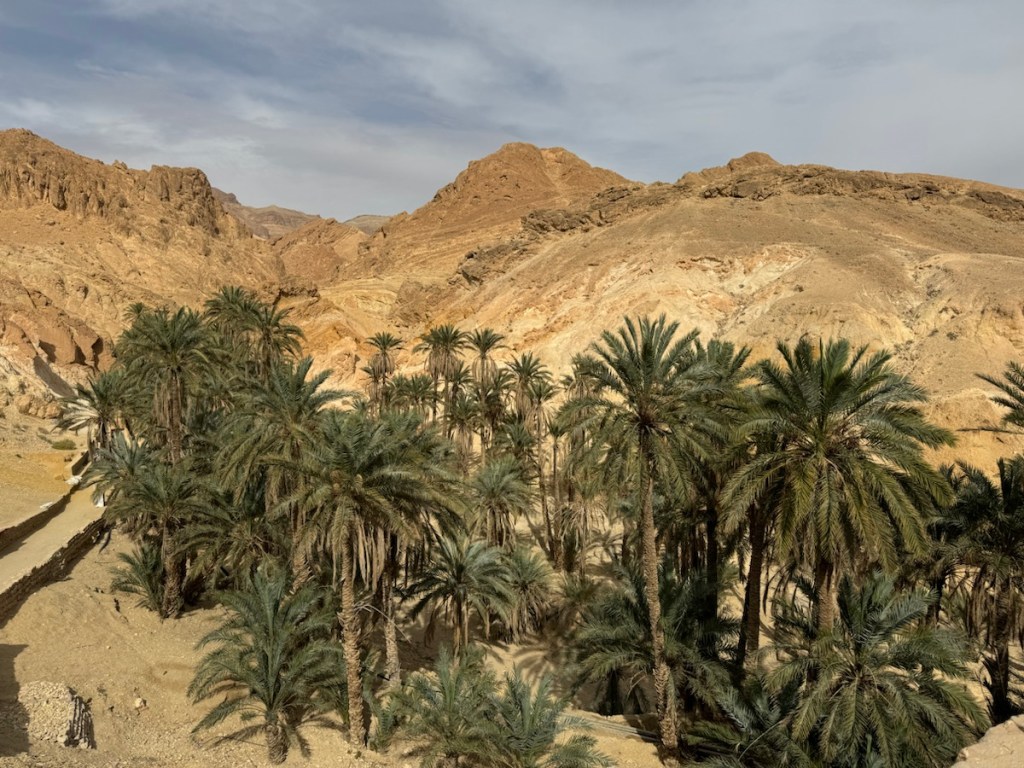
After such a big lunch we decided that we wouldn’t need an evening meal so we tracked down the town’s only alcohol store and had a cheese and wine evening at the hotel (we were the only guests so had it all to ourselves), along with a game of Uno, I’m sure I was the winner again!

For the final day of our tour we started heading back across the salt lakes towards Monastir. We took a slight detour to visit El Jem on the way, just an hour south of Monastir.
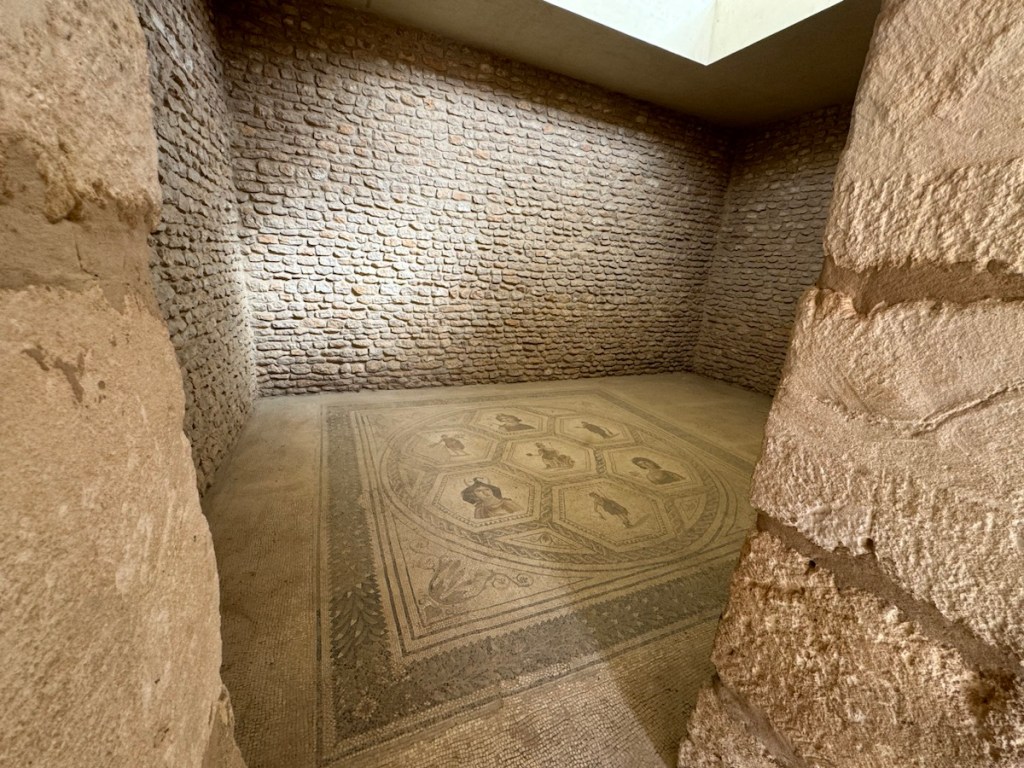
El Jem was previously the old city of Thysdrus, a Roman colony. We visited the Archaeological Museum which has exhibits of Roman era art including sculptures, huge mosaics and ceramics found from excavations of Thysdrus.
The museum was built on the ruins of a Roman villa, restoring many of its original features, it retains a central courtyard that opens to further rooms.


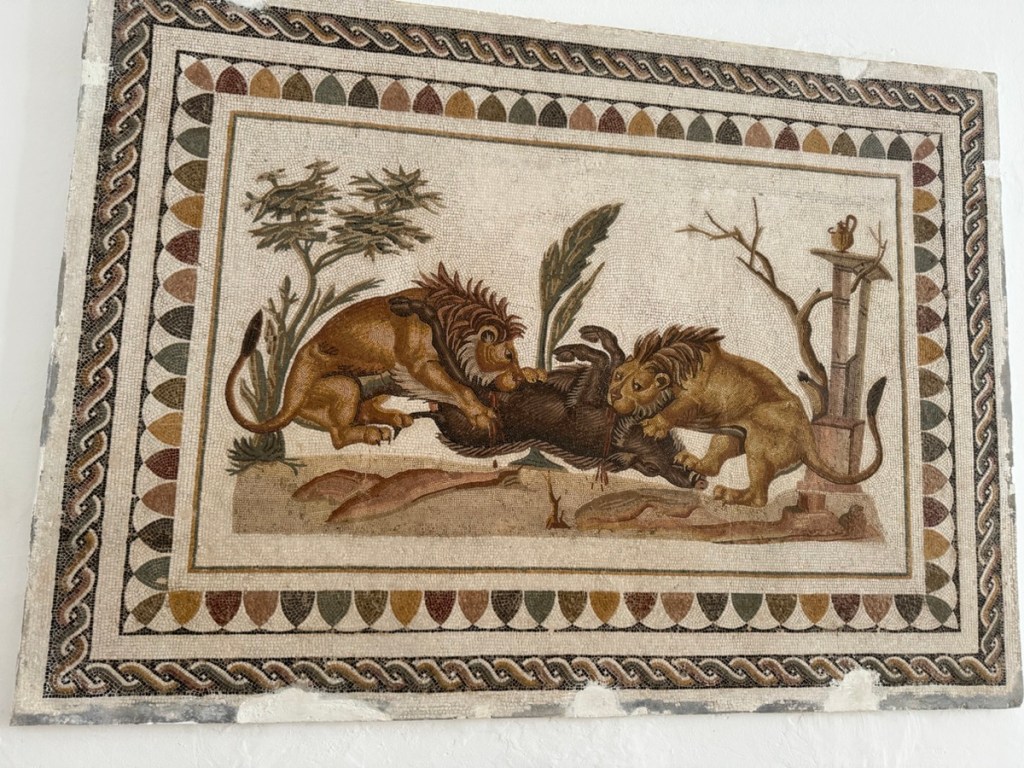


The museum also has an ‘archaeological park’ containing the ruins of a house called the House of the Peacock and Solertiana, a luxurious residence of the nobles in which a large number of its mosaics were preserved in their original location.

In the same space ‘The house of Africa’ was remodeled in its true size, a grand aristocratic residence, built around 170 AD covering 3000 sq.m, making it the largest house in Roman Africa. This luxury residence was owned by rich nobles, it had thermal baths, shops and watchman lodges.
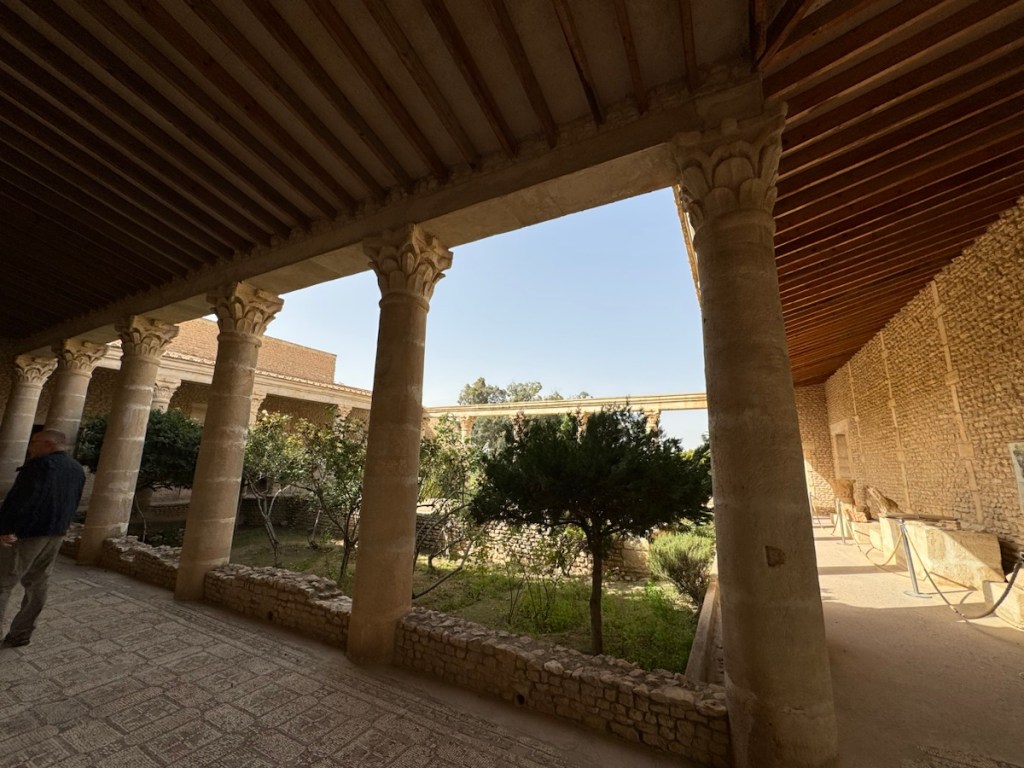
El Jem is best known for having the third largest and best preserved amphitheatre in the world, trailing only the Colosseum in Rome and the amphitheatre in Capua.
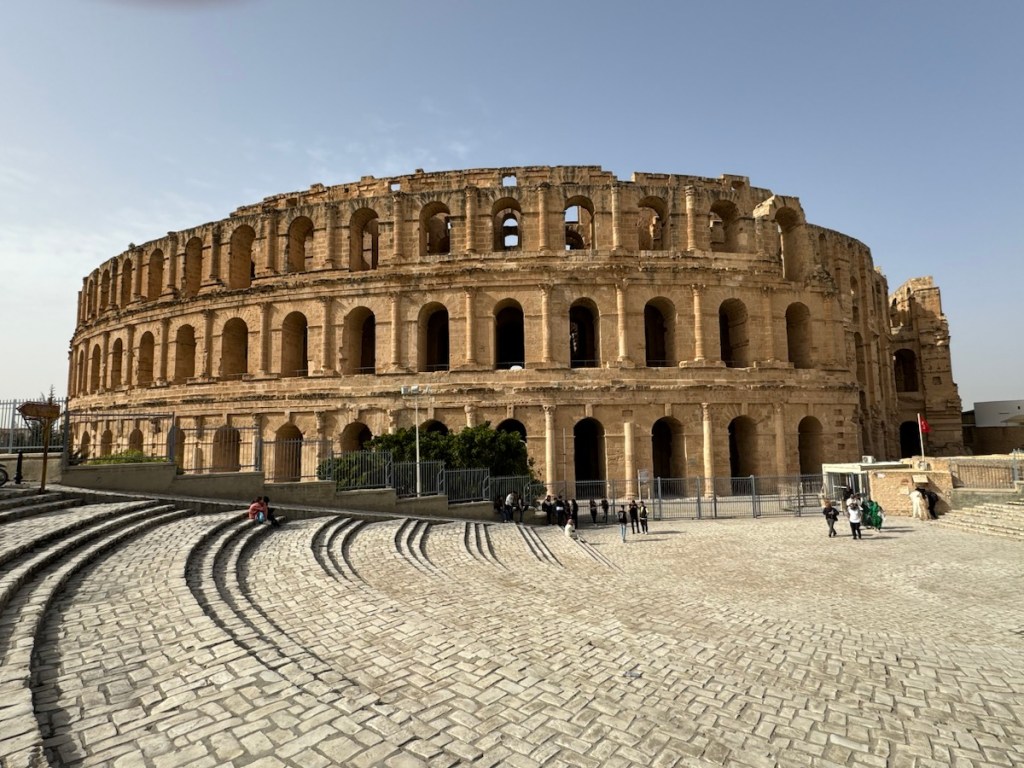
The huge 3rd-century monument could hold up to 35,000 spectators which gives an indication of the grandeur and extent of Imperial Rome.
Located on a plain, this amphitheatre is built entirely of stone blocks, with no foundations and is free standing, supported by a complex system of arches.
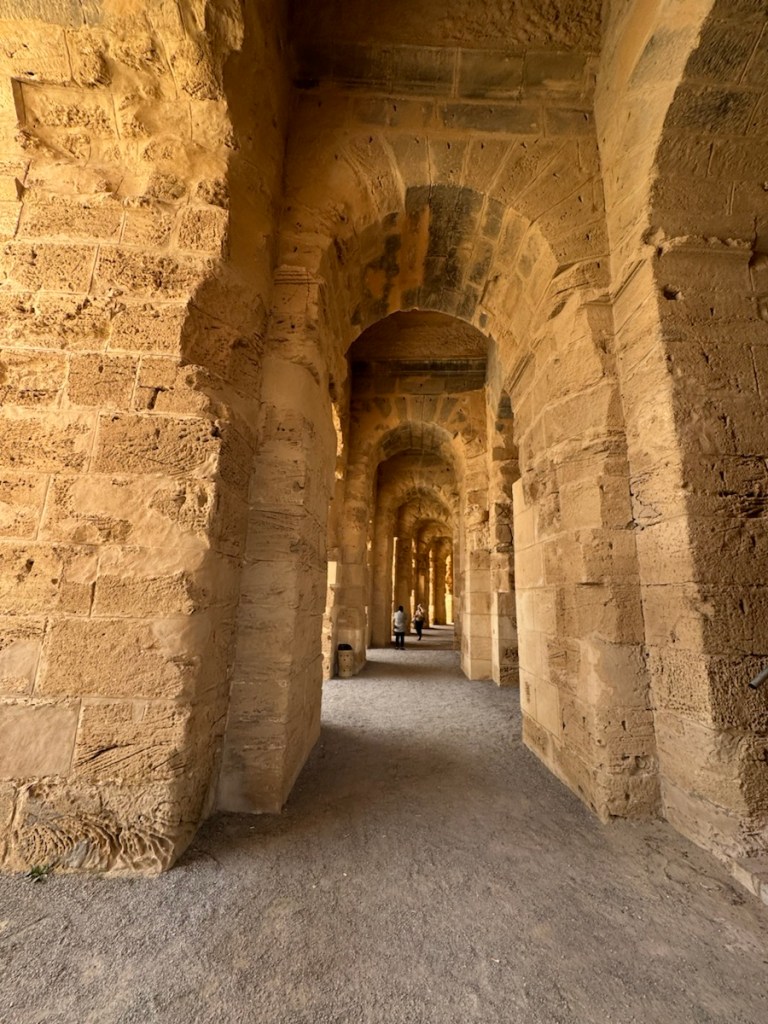

It was modelled on the Coliseum of Rome but not an exact copy. It is 148 metres long and 122 metres wide. The facade comprises of three levels. Inside, the monument has most of the supporting infrastructure for the tiered seating. The wall of the podium, the arena and the underground passages are practically intact. The Amphitheatre is evidence of the prosperity of the small city of Thysdrus at the time of the Roman Empire.

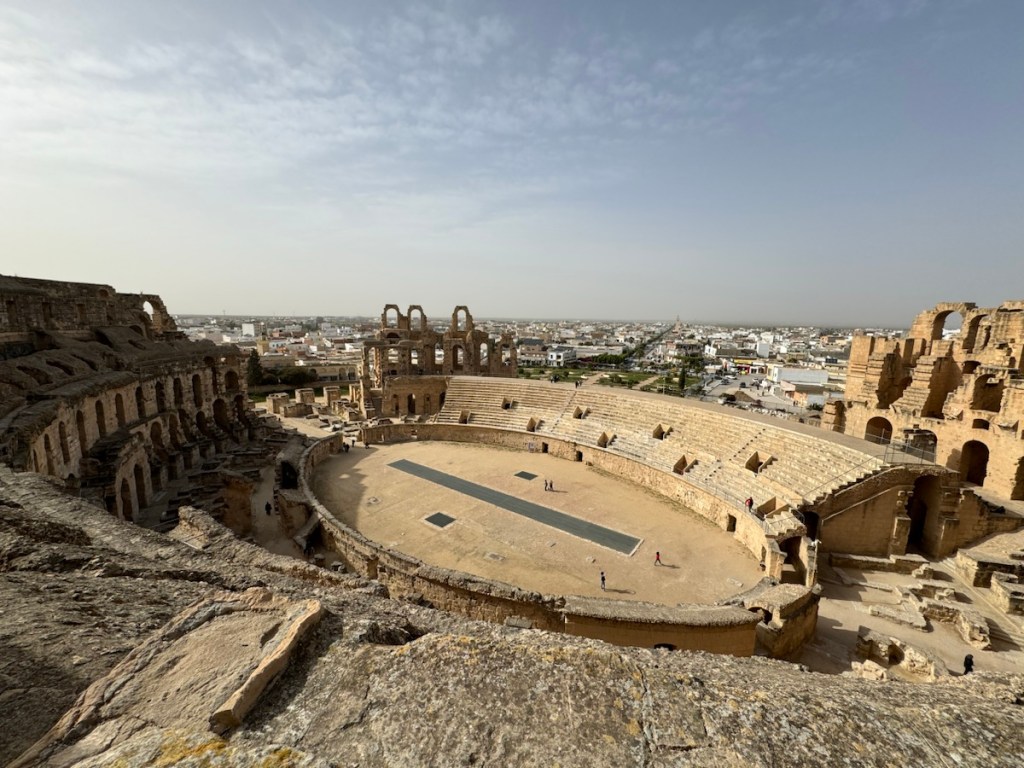


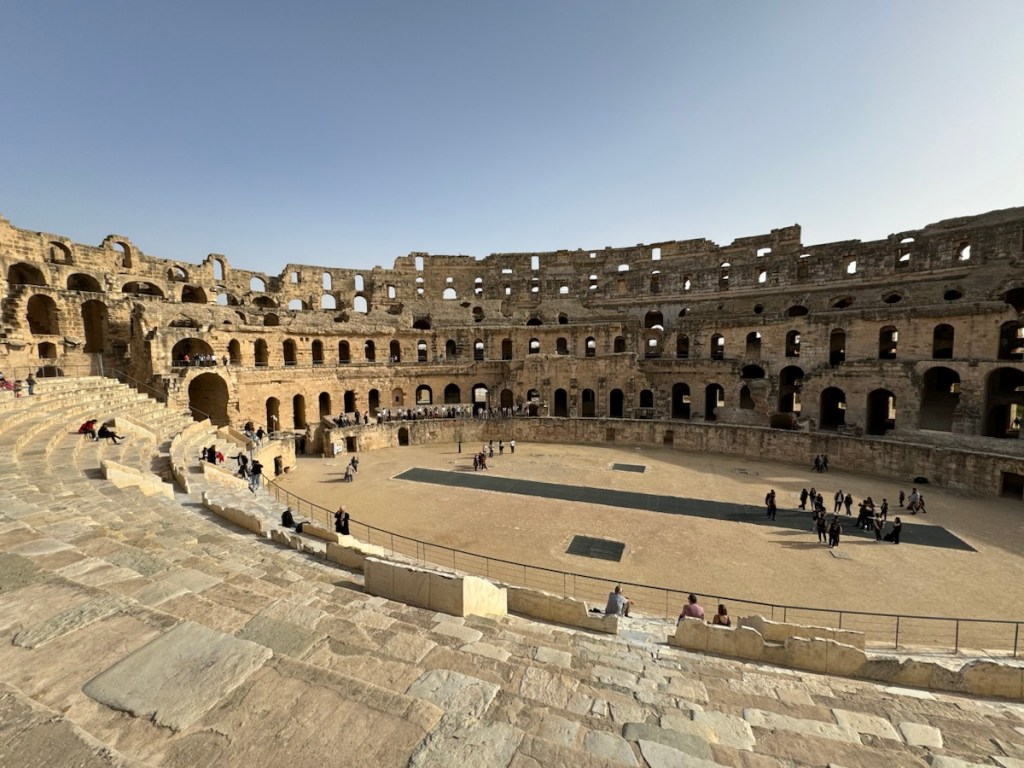
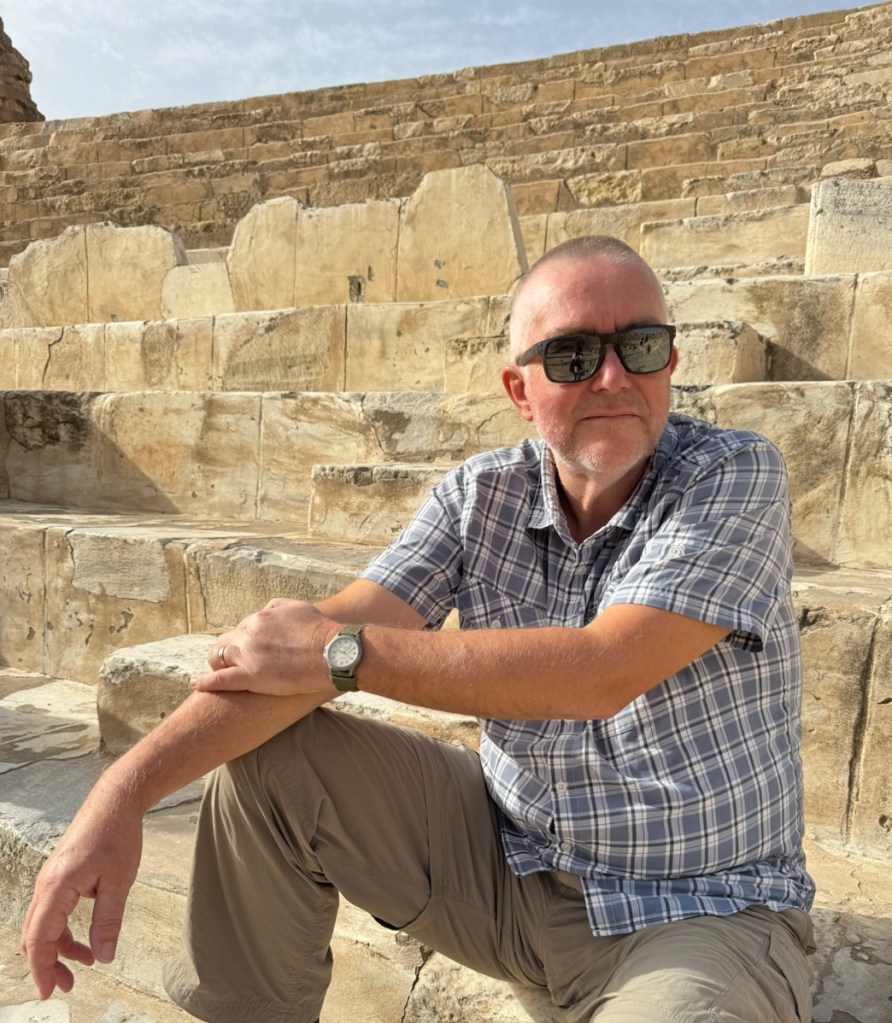


The Amphitheatre was built for events popular at that time such as gladiator fights. Over the centuries, it has served as a fortress where locals could hide during attacks. At the end of the 17th century, during the Revolutions of Tunis, the western part of the wall was destroyed and by the second half of the 19th century, the Amphitheatre was used for shops, dwellings, and grain storage.
El Jem Amphitheater has been a UNESCO world heritage site since 1979 and open to tourists. Of course, such a grand monument has been used by the film industry with some of the scenes from ‘Gladiator’ and Monty Pythons ‘Life of Brian’ being filmed here.
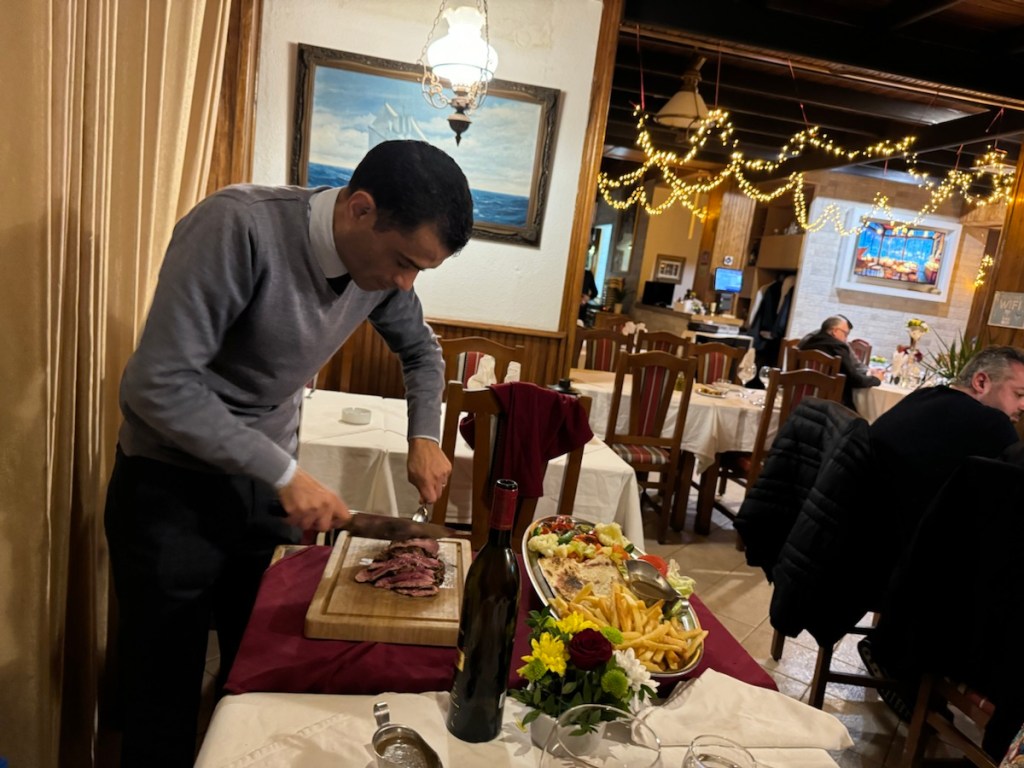
Our tour was now at an end and it was time to return to Monastir, where we had one more evening meal at the marina before waving our guests off the following morning. You can certainly eat well in Tunisia for not a lot of money.
Next week, we actually do some sailing!
 Sailing ZigZag
3 replies on “Too Much Sand”
Another insightful and informative blog this week. I was struck by the lack colour in the villages. To paraphrase my old school buddy Henry Ford, “you can have any colour you like as long as it is Sandy Brown”
That said, how wonderful to see green and it yet again shows how truly resourceful and resilient us humans have been.
Rather jealous of the dry gorge walk you did. Looks very atmospheric and I am sure in no small part quite scary, given the previous line about flash flooding.
The Amphitheatre is a marvel and to think there were so many people in that area when they built it they could filled a 35,000 seat stadium. I can’t imagine the toil that went in to creating it in those conditions.
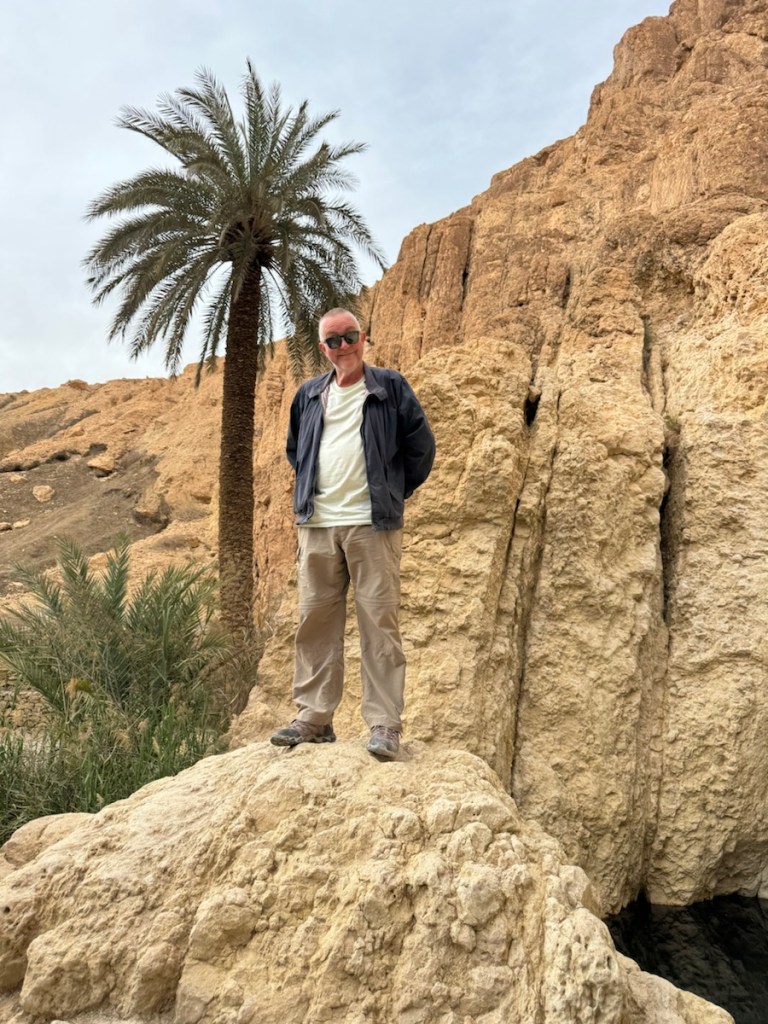
Also loving the pictures of you two in various poses. Please do keep them as a feature this year 😉
Looking forwards to seeing Zigzig sailing again.
Safe onward sailing.
LikeLiked by 1 person
A fabulous week. Not sure you did win at Uno?? 😁 Looking forward to hearing where you went next.
LikeLiked by 1 person
Yes, but I get to write the history 😉
LikeLike