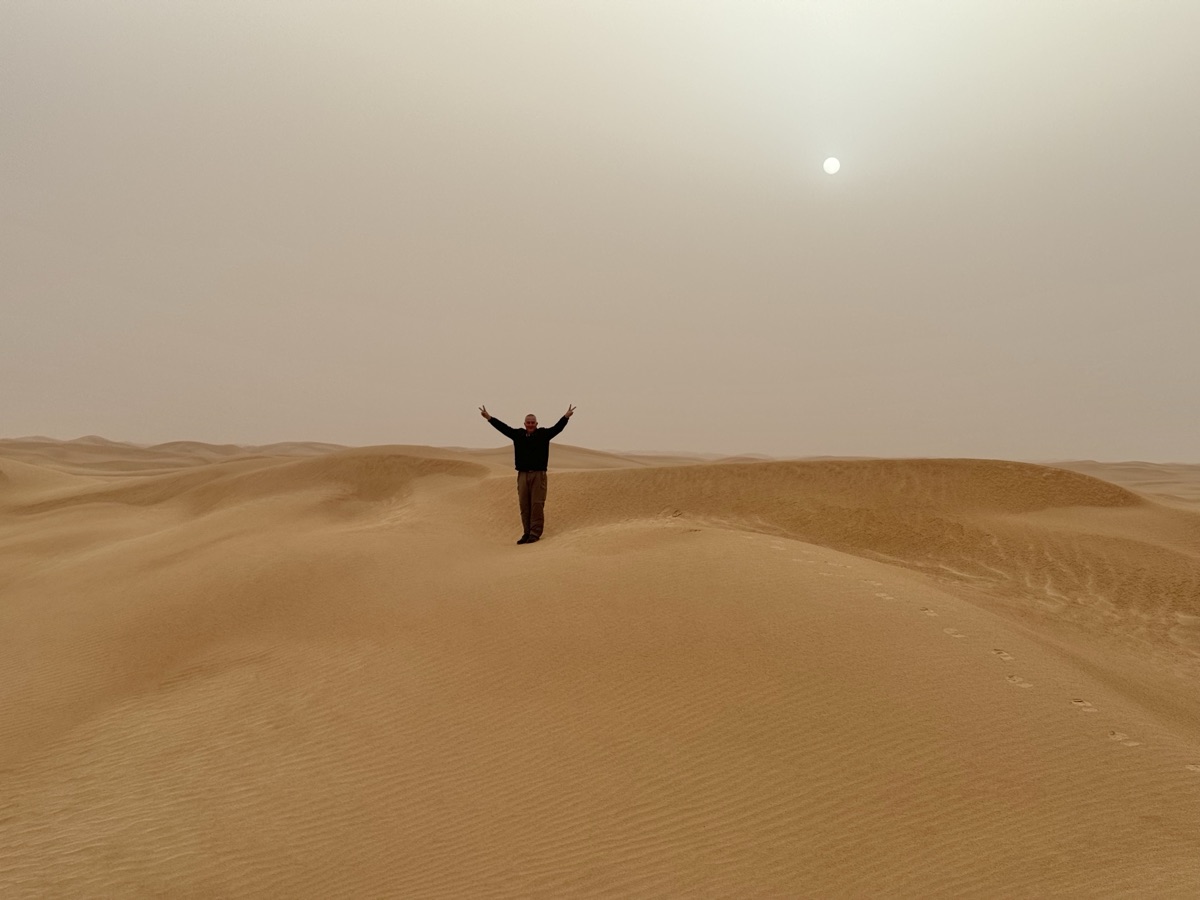
We had some friends visiting us in Monastir, so we packed our bags, hired a car and set off with them on a road trip south to the desert.
The Sahara Desert is the largest hot desert in the world and the third largest desert overall, smaller only than the cold deserts of Antarctica and the northern Arctic. It covers 9.2 million km², which is almost the same size as China.
When I think of the desert I imagine it being just sand, however, the majority of the Sahara is made up of barren, rocky plateaus, as well as salt flats, sand dunes, mountains and dry valleys.
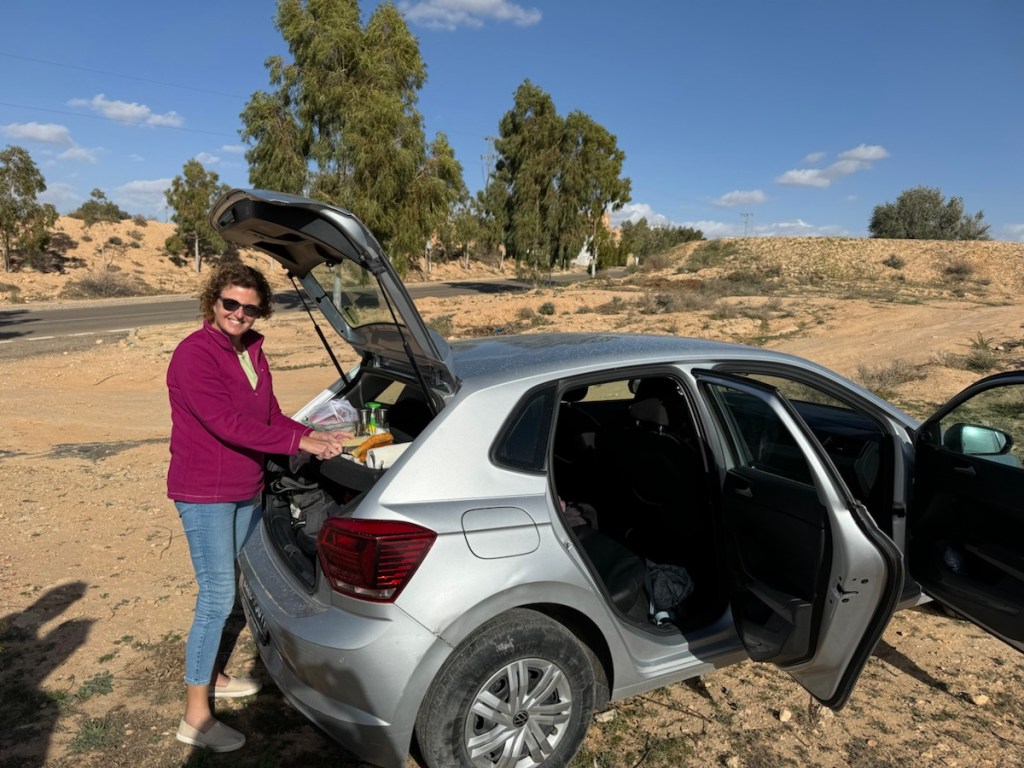
It was going to be a long drive, luckily we brought a packed lunch.
After a few hours we arrived at Matmata, a small town best known for its underground cave like structures. People have lived here for centuries, and still do, underground and hidden in the valleys of the mountains. Invisible from a distance, the dwellings are popularly known as ‘troglodytes’ (troglodyte meaning cave dwellers) and are architectural remnants of the ancient Berbers.
It is uncertain as to when tribes first decided to settle here, some suggest as far back as the 11th century, when the Berbers sought shelter in the mountains, hiding from the Arabs who had conquered Tunisia.
To escape the immense heat of the desert, the Berbers discovered layers of hard and soft earth which made digging by hand, using simple tools, possible. The ‘houses’ were built by first digging a deep circular pit into the sandstone, and then tunnels to caves were dug out around the edges of the pit, forming the underground rooms and leaving the main pit as a courtyard.

The courtyard is important because it brings in fresh air, it is also a central location for the family to do chores and socialise. The rooms were designated for sleeping, cooking, eating, or socialising, just like a normal home.
Some of these dwellings have been converted into museums and hotels. We visited Musée Dar Khadija, which provided a glimpse into the past. The entrance is in the side of a small hill and it felt like stepping into a cave.

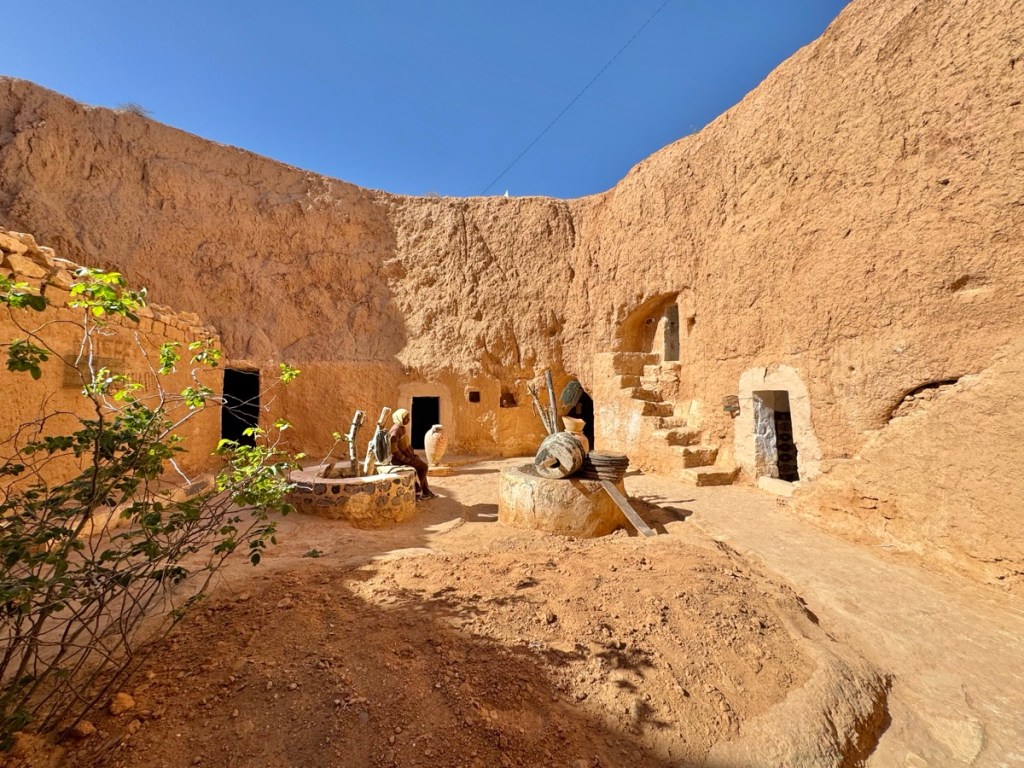
The setting is very authentic with traditional exhibits in all of the caves leading from the courtyard.


The staff were very friendly and I was invited to join a lady showing us a grinding stone, she was effortlessly spinning it around, however, when I tried, I could hardly move it, she had to help me!

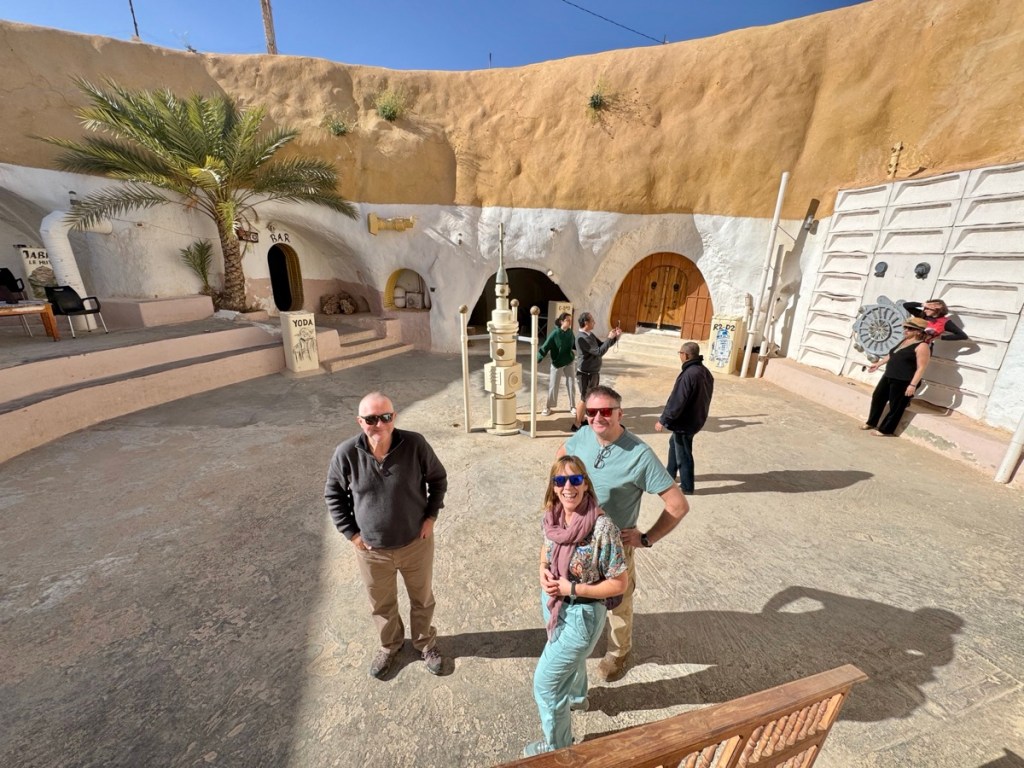
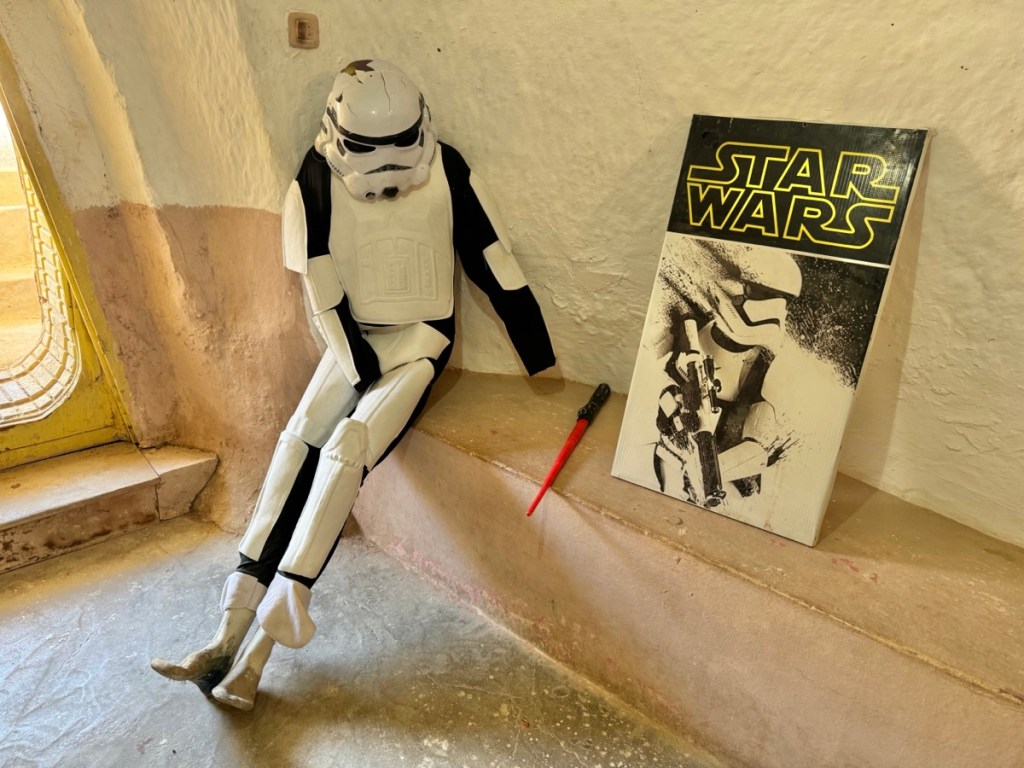
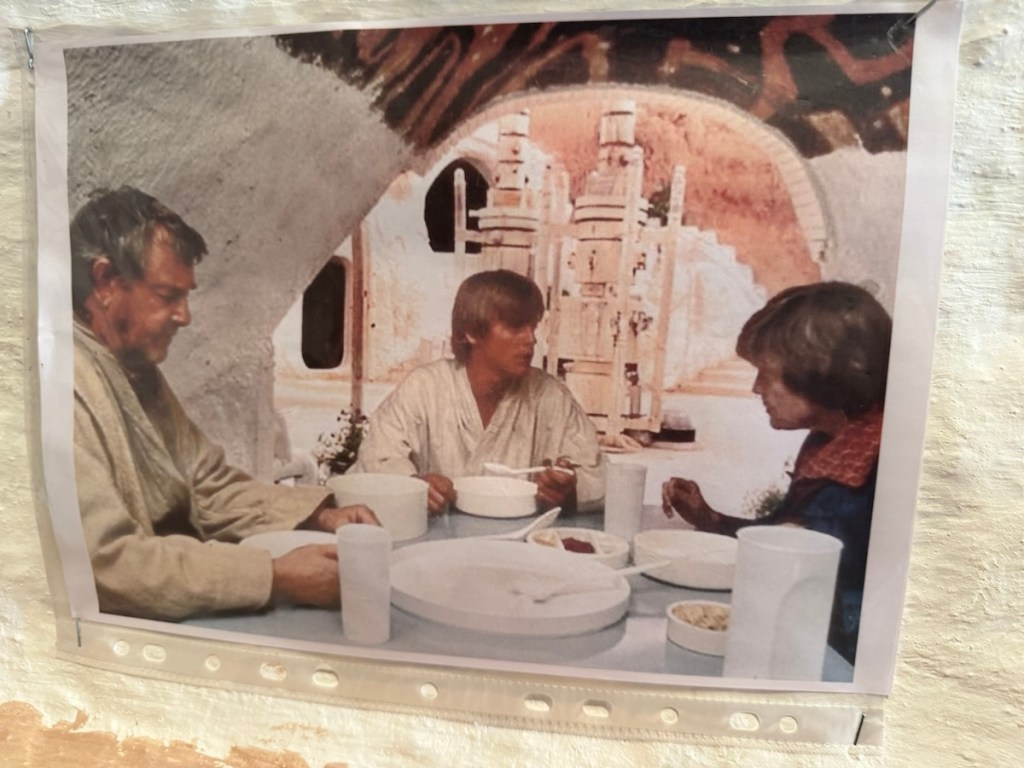
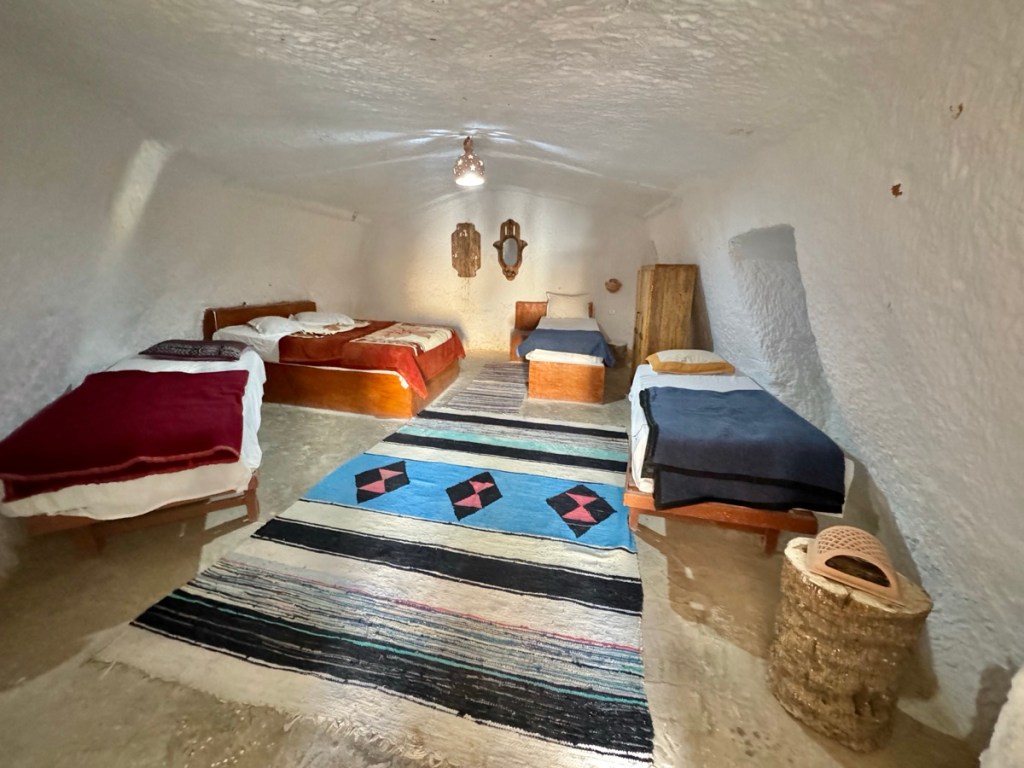
These cave dwellings were shot in many scenes of the Star Wars series. The troglodyte homes were made famous when George Lucas used one as Luke Skywalker’s childhood home. Now converted into a hotel it has been set up for Star Wars fans. You could clearly see the structure of the dwelling but there wasn’t much else, also the hotel bedrooms were very basic. You obviously need to be a real fan to appreciate it.

Next we made our way to our hotel in Douz, known as the gateway to the Sahara. We opted for a small homestead which was the last building before the desert. It was very isolated and after a couple of wrong turns and a bit of off road driving along a sandy track we eventually found it. The compound had three simple buildings with a wall surrounding it and a central sandy courtyard.
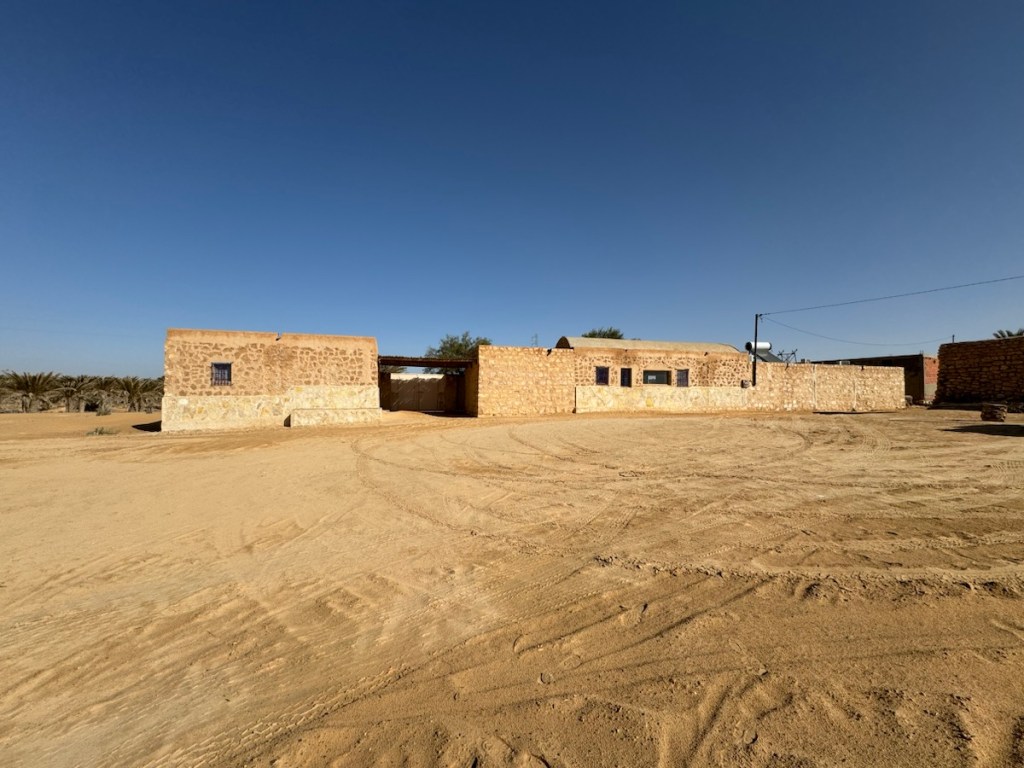


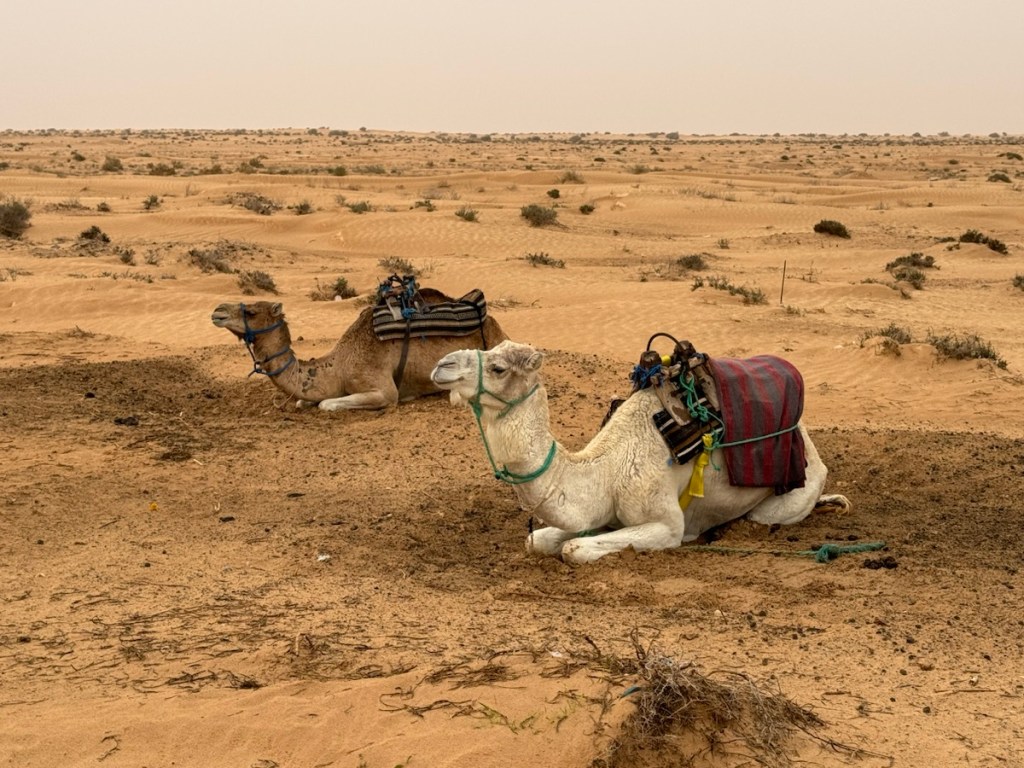
We arrived just in time to enjoy the sunset and our first sighting of a couple of camels, then we were treated to a homemade meal prepared by the owners.
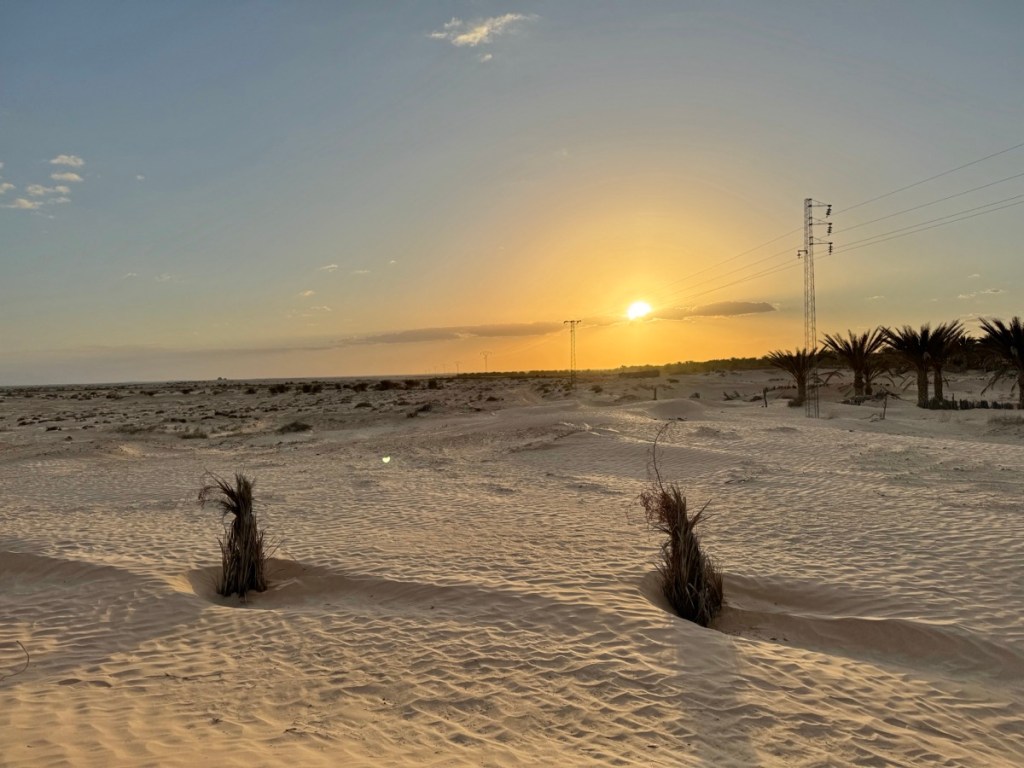

It was a very cold night, I’m glad that we didn’t opt to camp. The Sahara is the hottest desert in the world, the average annual temperature is 30°C, whilst the hottest ever recorded was 58°C. We certainly didn’t experience any of this heat while we were there. Apparently, temperatures are known to drop at night, due to the lack of humidity, and can reach lows of -6°C, it wasn’t quite this cold but definitely felt very chilly.

The following morning, we had breakfast in the hotel, Paul was waiting patiently for the rest of the guests to arrive before he could start.

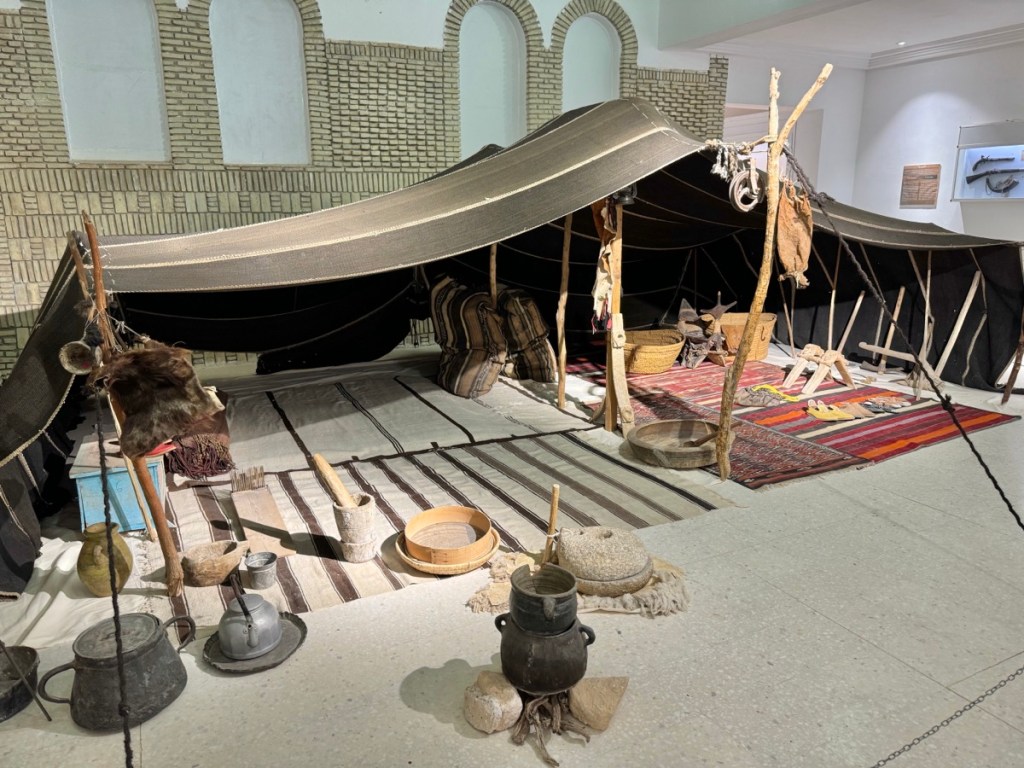
We decided to have a look around the town and it started to rain as we arrived, so we took shelter in the Douz Museum of the Sahara. Here we saw exhibits to help understand all aspects of the lives of women, men and camels of this region.
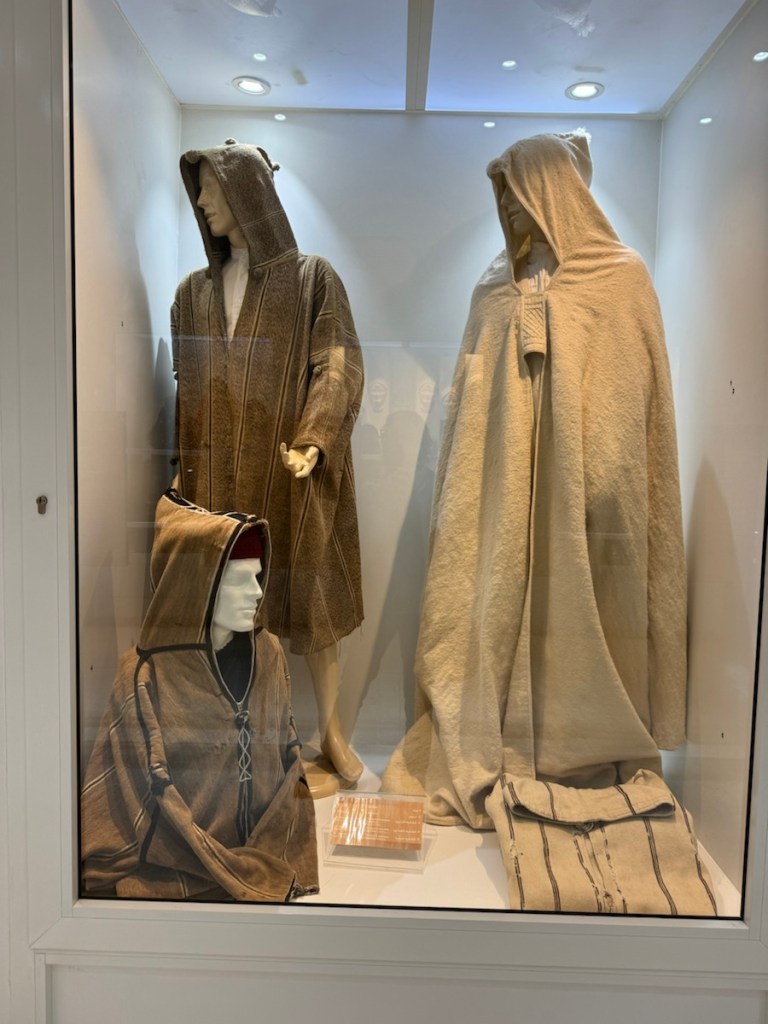
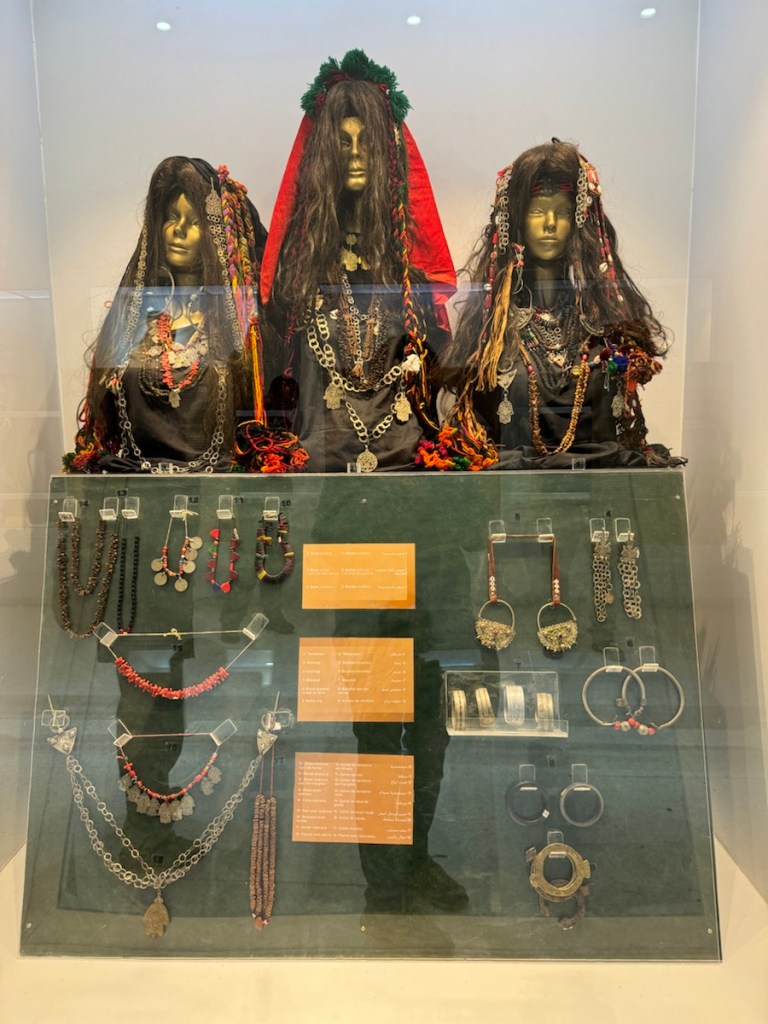
In addition to all of the heavy clothing and jewellery that they had to wear, it seems that women had it hard. Assembling, dismantling and folding the tent was women’s work only. The tent was divided, the right side was for the man, it was carpeted and where he would keep his gun, haversack and a few agricultural tools, it is also where he would entertain guests. The left side was reserved for the woman, it is where she would do all her household chores, food and cooking utensils would be kept here, it would probably have a weaving loom and is where she would look after newborn livestock in bad weather.
Camels played a big part in every day life, they were branded to indicate which tribe they belong to, at the age of one, they would be marked with a red hot instrument to burn and peel the skin to draw the sign. Camel fighting was popular, two males were put in a ring with a beautiful female camel who would look them up and down, she was then removed and the males would fight, often to death. The victorious camel was covered in jewels and taken out for a nice walk, I think he would have preferred the beautiful female camel!
Similar to camels being branded, it was obligatory for women to have their faces tattooed as identification and to indicate belonging to an ethnic group. It was ruled by a code specifying every social groups own signs; the linage in a tribe or village. Markings to different parts of the face had different meanings, a mark on the cheek can mean ‘the one ensuring the happy fate’ or ‘ the one driving the tent peg into the ground’, whereas one to the forehead could mean ‘the one who sends to sleep’.

With it still raining when we left the museum, we looked for somewhere to stop for coffee and found a small cafe. We sat and dried off, after a while, they fired up the pizza oven, so we stayed a bit longer and had lunch.
We wanted to visit the Souk but by the time the rain stopped, it had already been packed away and only tourist stalls were still open. I read that the area receives little rainfall, in fact, the Sahara Desert receives less than 1 inch of rain every year. I think this all fell while we were in Douz.
We returned back to the hotel as we had booked a ‘sunset’ tour of the desert in a 4×4 truck. Just outside of the compound were some camels in a pen. Wanting to get a closer look, I went over to see them (much to the bemusement of the camel handlers). Paul stayed back waiting for the camels to start hissing and spitting at me, particularly as they had their young with them, but thankfully they were very friendly, although I was taken by surprise at how big they are when one came and stood right in front of me.


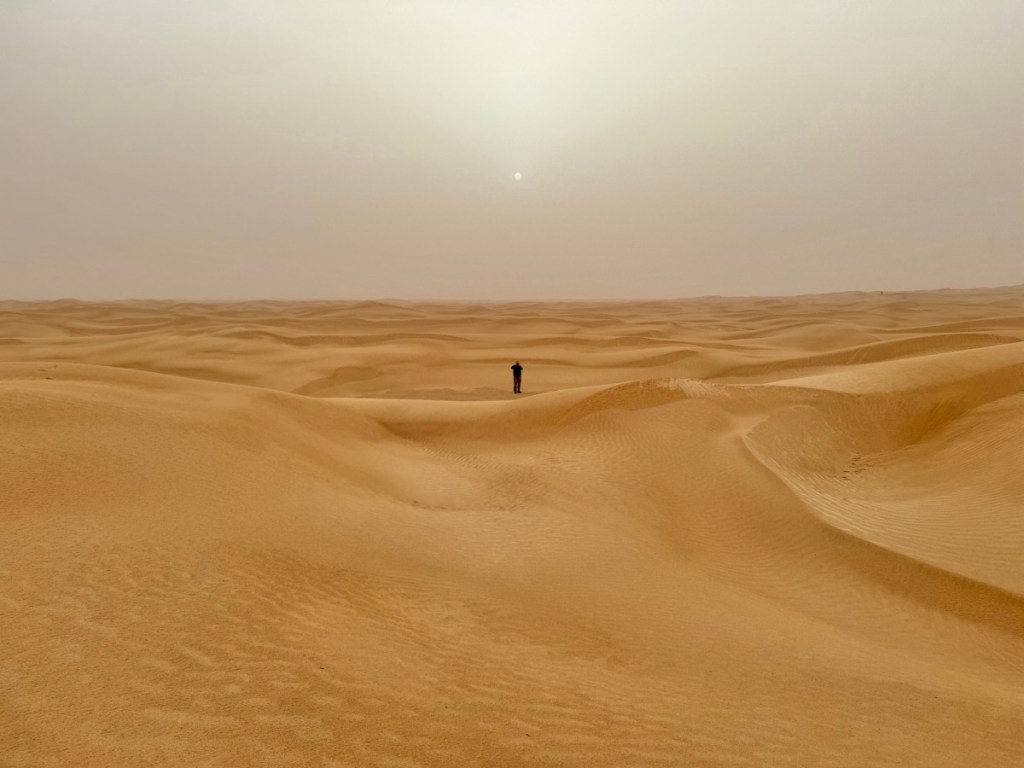
The 4×4 journey was interesting, the guide took us way into the desert so that all we could see was huge sand dunes all around us. He drove up and over the steep mounds, how is he going to find his way back?

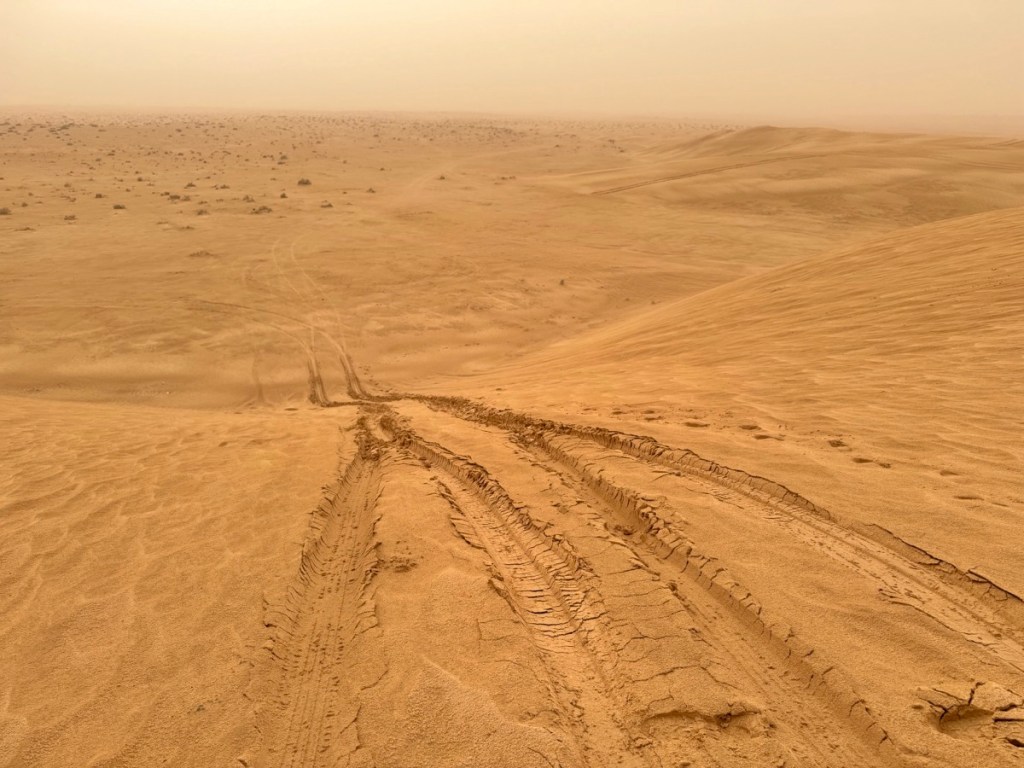

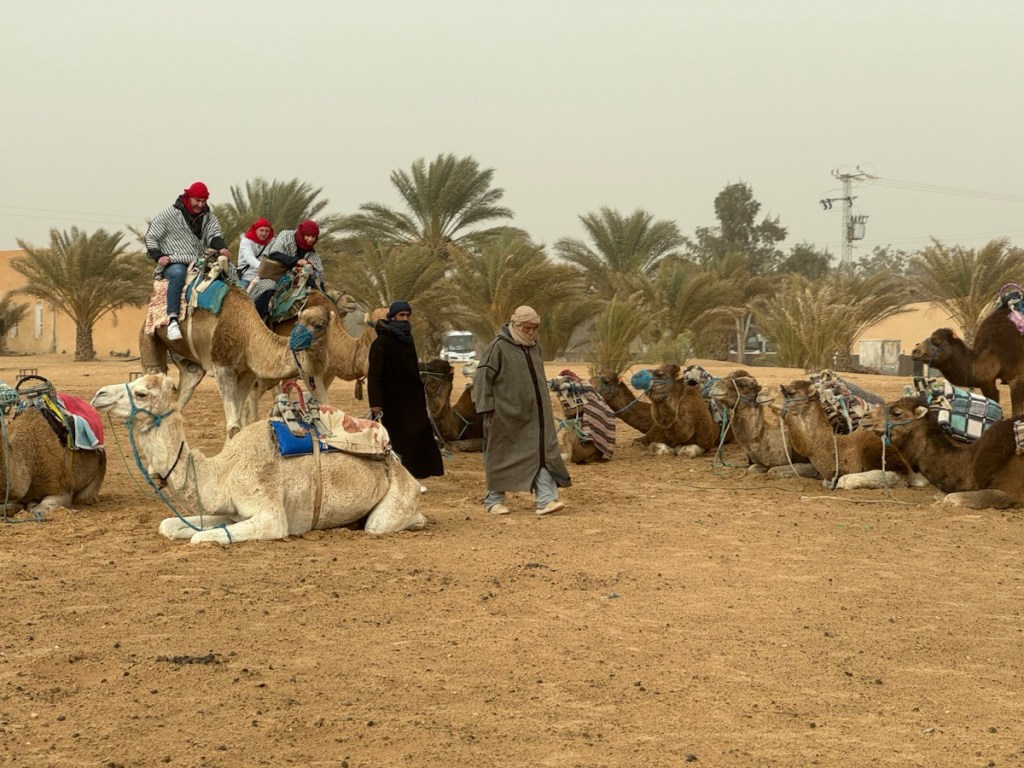
We passed a group of camels getting ready for their tours, a camel ride would be a great experience but it was still quite cold and good to be inside the warm truck.
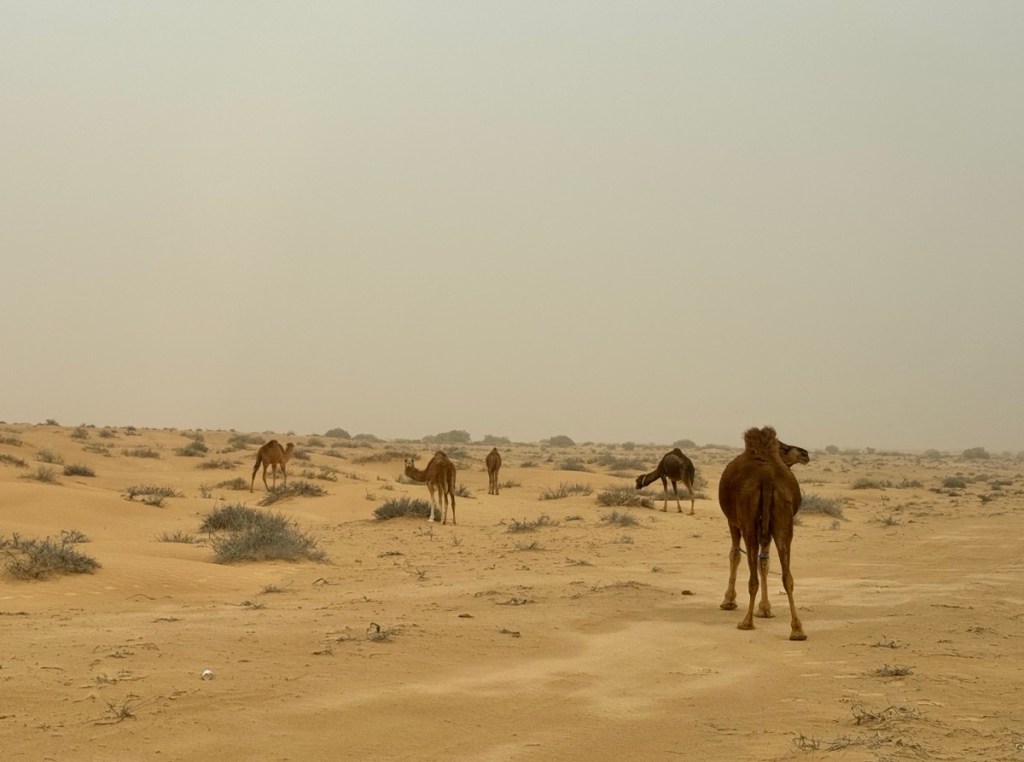
There were also some camels roaming freely in the desert which was nice to see as many others that we had seen had their legs tied together when they were not ‘working’ to control them.
Unfortunately it was still cloudy so we didn’t get to see the sunset, but it was fun to walk up and over the deep sand dunes, we just had to make sure that we didn’t lose sight of the truck!




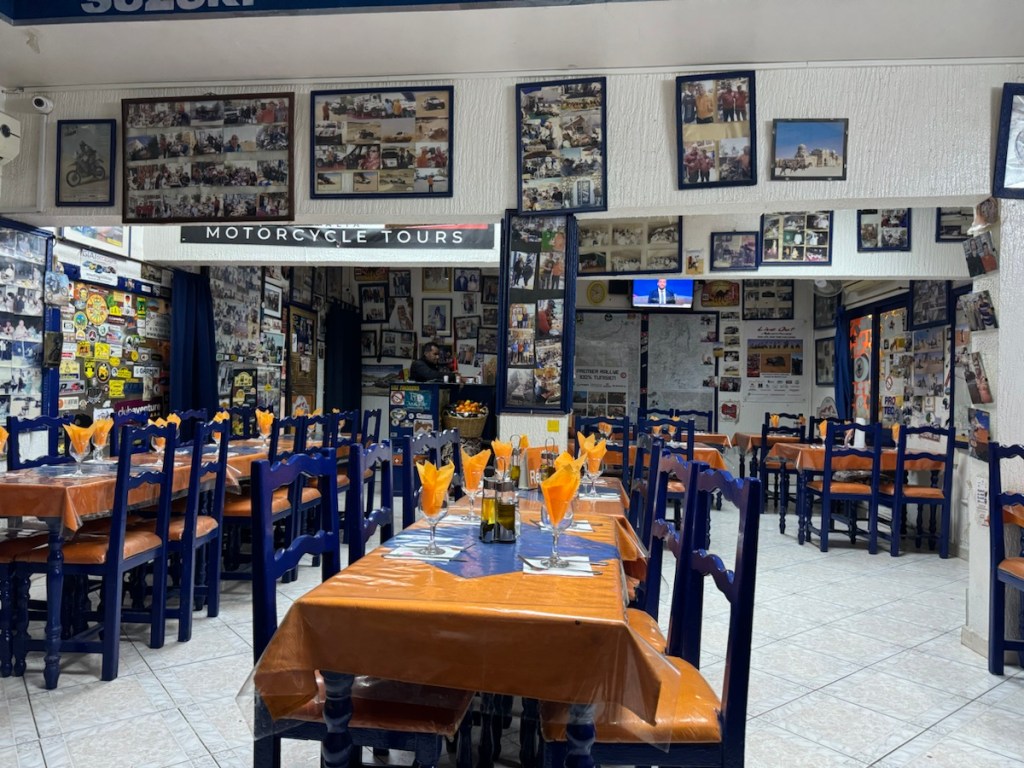
After the tour, we went back into town for dinner and found a restaurant full of memorabilia from the many desert rally’s or ‘raids’ which pass through Douz. We had looked inside during the day but it was full with a large crowd of Italian motorcyclists so we couldn’t get in, however in the evening we were the only ones there.
Most of the hotels and restaurants in Tunisia do not serve alcohol, but we had managed to find a shop with a very discreet alcohol section so stocked up. After a nice meal we went back to the hotel with a bottle of wine….or two, and had a game of Mexican train. I think I won!
After one more night at this hotel we continue our trip over salt flats and visit a ‘Grand Canyon’ which I’ll save for next week.
 Sailing ZigZag
6 replies on “The Sahara”
A packed lunch for the Sahara Desert? Like you do………..
Brill, love it as always!
LikeLiked by 1 person
Absolutely amazing read. The set of pictures taken in the sand puts perspective on the scale of the sand dunes. Thanks for sharing and looking forward to reading your next adventure.
Thanks Pratibha
LikeLiked by 1 person
How unlucky to get a rainy day in the Sahara!! Thanks for another interesting update and more fabulous photos. I knew it was big, but not the size of China!! Looking forward to the next instalment.
LikeLiked by 1 person
Great to see photos of you two in action this week. What a strange landscape and so different from your watery world.
Thanks as always for sharing and have a lovely week.
LikeLiked by 1 person
Great trip, can’t wait for next years adventure, where are we going again?
LikeLiked by 1 person
From a sea of water to a sea of sand – and you still get wet!
The reference to troglodytes made me smile, as my cockney boss referred to me as one of “the cavemen of Derbyshire” when I started my first office job.
Slightly disappointed not to see Paul going for the full Lawrence of Arabia vibe, but happy to Google that “Mexican Train” is a dominoes game and not a rugby drinking game of downing bottles of wine in one go!
As always, a great way to finish the week, thank you.
LikeLiked by 1 person