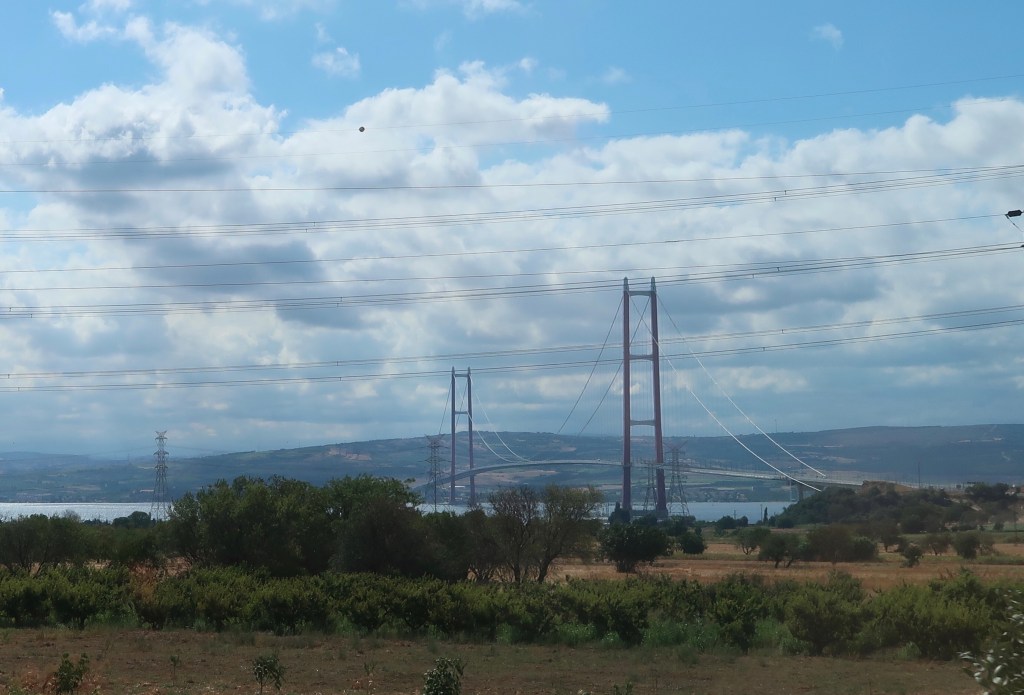
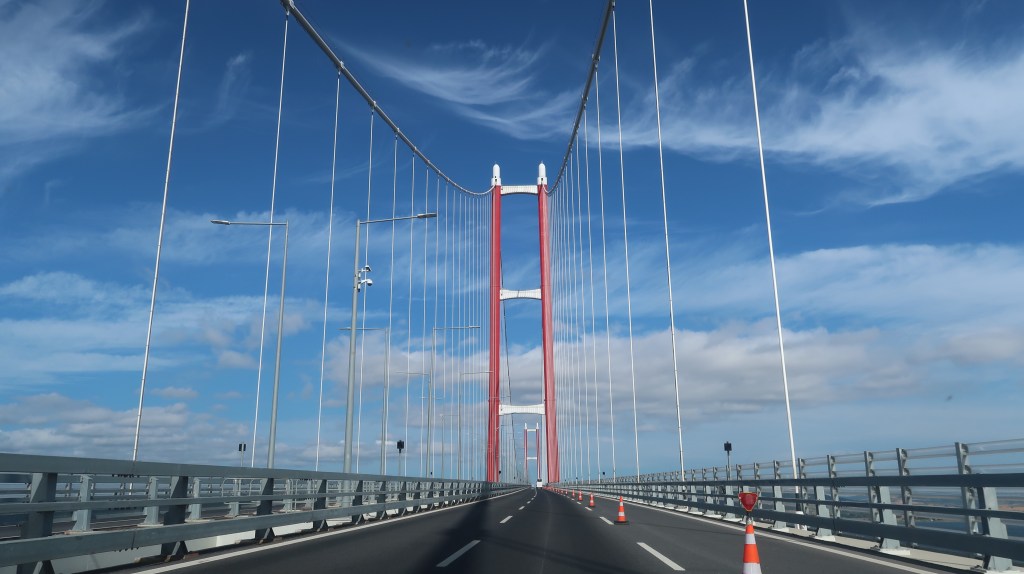
As Paul explained last week, our road trip continued to Troy completing our Odyssey. We left Istanbul and headed towards Troy passing over the 1915 Çanakkale suspension bridge which spans the Dardanelles. The bridge was opened by President Erdoğan in 2022. The year ‘1915’ in the name honours an important Ottoman naval victory during World War I.
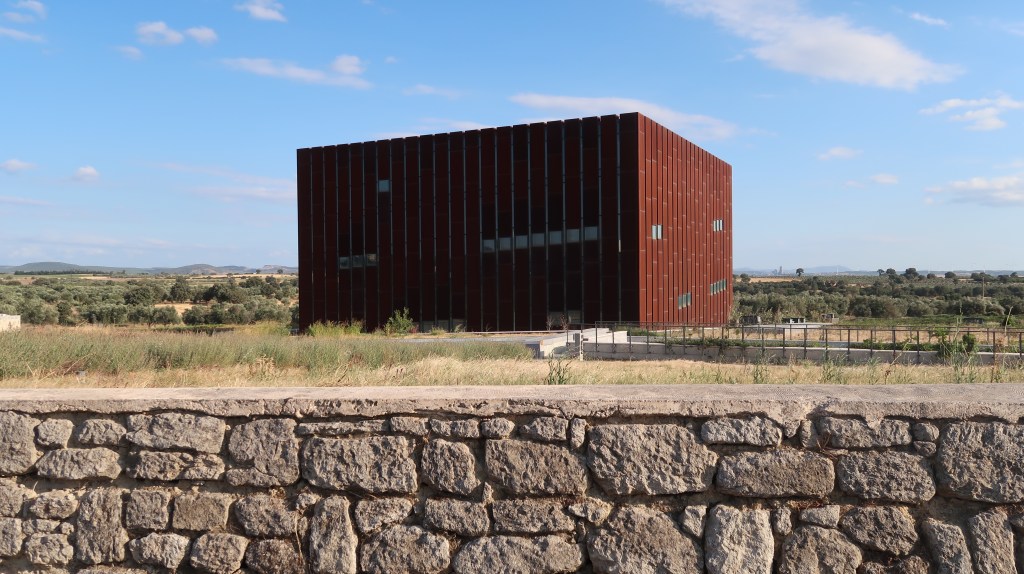
After a long drive we arrived early afternoon and decided to visit the museum first before going onto the archeological site. The museum building was giving nothing away from the outside.
Troy is most famously known as the Bronze Age city attacked in the Trojan War, a popular story in the mythology of ancient Greece. The Trojan War started in the 13th century BC and was a ten year siege of the city by Greek forces led by King Agamemnon of Mycenae. The purpose of the expedition was to reclaim Helen, wife of Menelaus the king of Sparta and brother of Agamemnon. Helen was abducted by the Trojan prince Paris and taken as his prize for choosing Aphrodite as the most beautiful goddess in a high stakes competition with Athena and Hera.
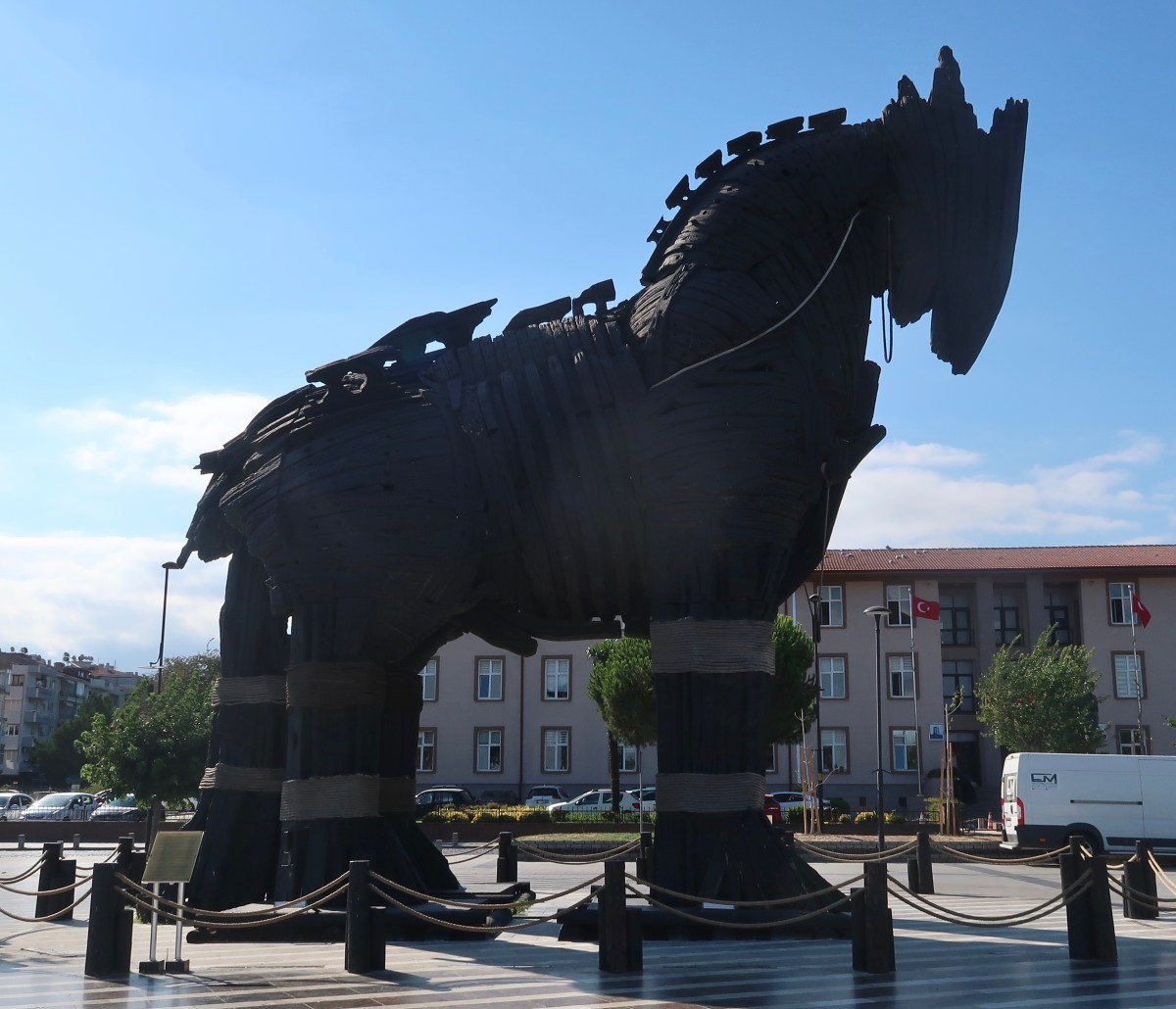
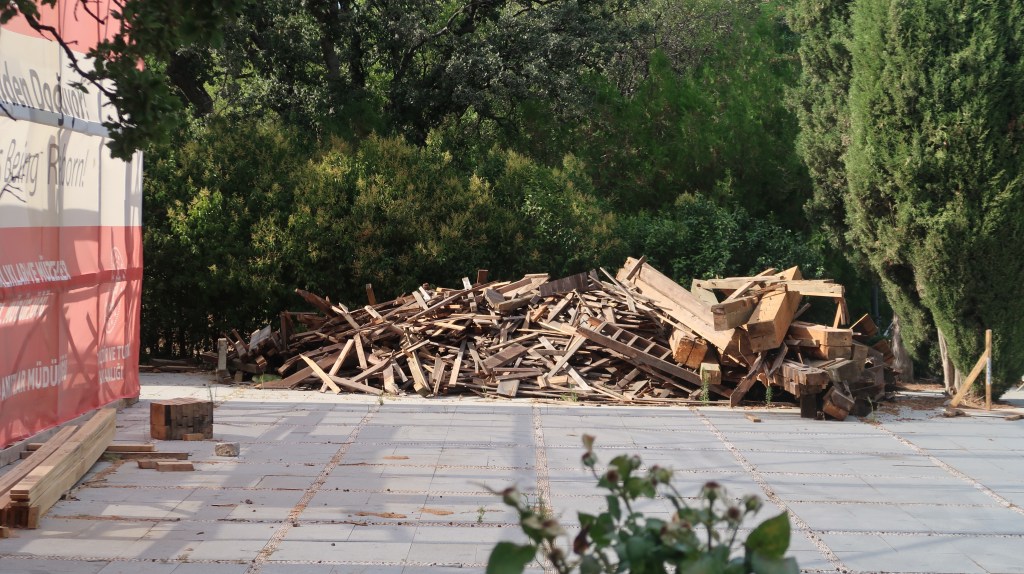
The city of Troy is described as ‘strong-built’ and ‘well-walled’. The walls must have been unusually strong (believed to have been built by the Greek gods, Poseidon and Apollo) in order to withstand a ten year siege and in fact, Troy fell through the trickery of the Trojan horse ruse rather than any defensive failing. I was disappointed to find that the replica wooden horse was being rebuilt while we were there and all that was left of the old one was a pile of wood which looked more suitable for a bonfire.

Prior to the siege, the city of Troy already had a long history, it was inhabited since 3600 BC and its extensive remains are the most significant evidence of the first contact between the civilisations of Anatolia and the Mediterranean world.
Troy was situated close to the mouth of the river Skamanda with good access to the sea. This was a strategically important position between the Aegean and Eastern civilisations, giving control of passage to the Black Sea, Anatolia and the Balkans. Consequently the site became the most important Bronze Age city in the North Aegean. Nowadays, since the river has silted up, it lays 5 km inland.
The first excavations at the site started in 1863 and over the following 150 years, features from each of the periods of occupation have been revealed and a chronology of the different ‘layers’ of Troy has been discovered.
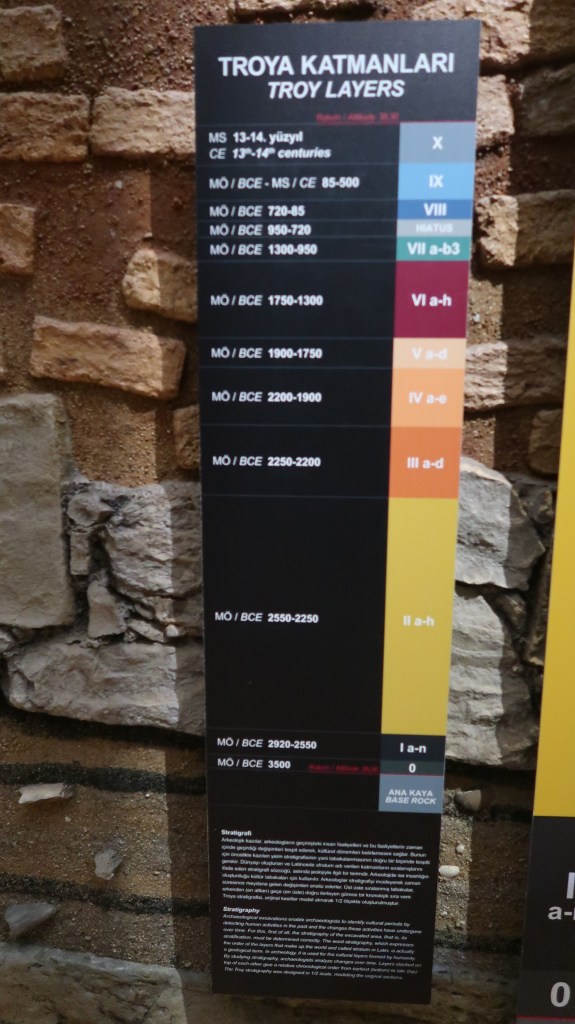
Troy was repeatedly destroyed and rebuilt during its 4000 years of occupation. As a result, the site is divided into nine archaeological layers, each corresponding to a city built on the ruins of the previous. These layers are named using Roman numerals, Troy I being the earliest and Troy IX being the latest.
At the beginning of the excavation, a 40 m wide by 17 m deep trench was dug as a test trench. During this excavation, remains of walls dating back to the early Troy I period were found.

Troy I is dated 3000-2550 BC, it was a small village settlement surrounded by stone walls. Pottery and metal were among the earliest findings.
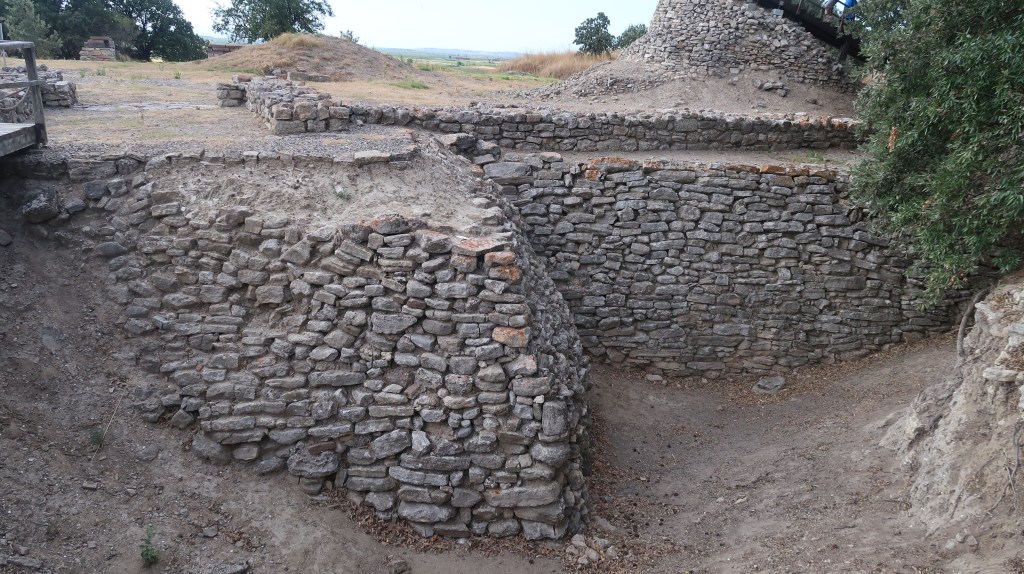

After Troy I was destroyed, the second city, Troy II, was carefully planned and strongly built in the same area. A row of three parallel houses with porches called Megarons were discovered.
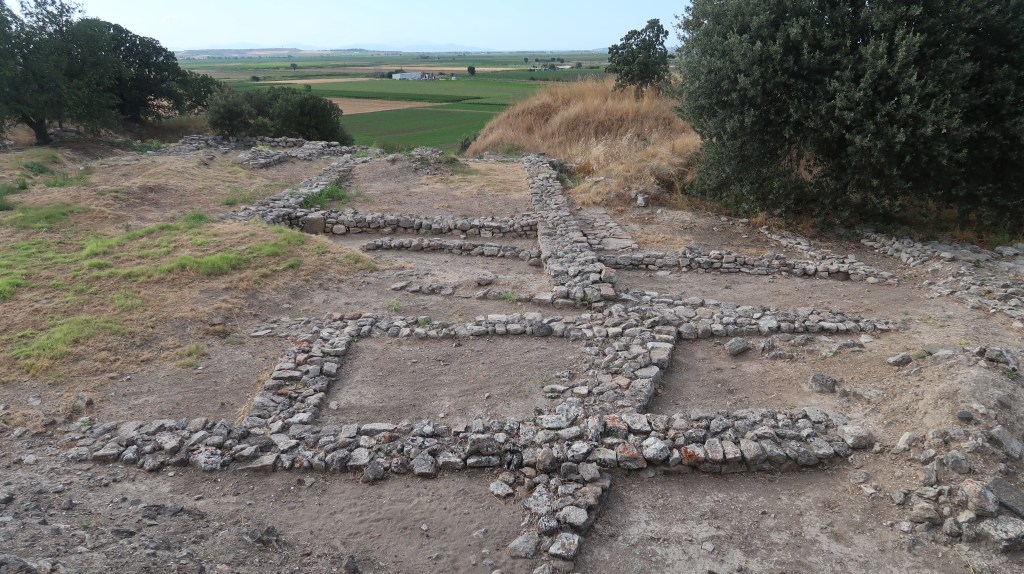
Troy II was notable for its wealth and imposing architecture. During the Late Bronze Age it had larger buildings (40 m long), mud brick and stone fortifications with monumental gates. The protective dome cover has been placed at the height of the original mound when excavations first began in the 19th century. They have certainly done a lot of digging to uncover this citadel.


The citadel would have been entered through a gate at the top of this paved ramp.


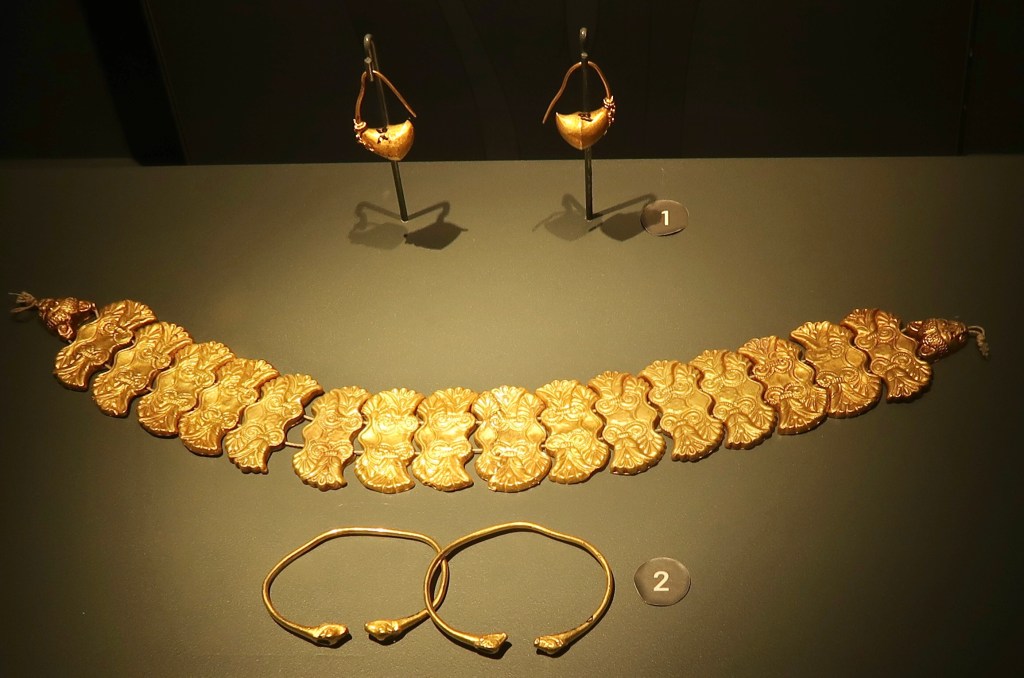
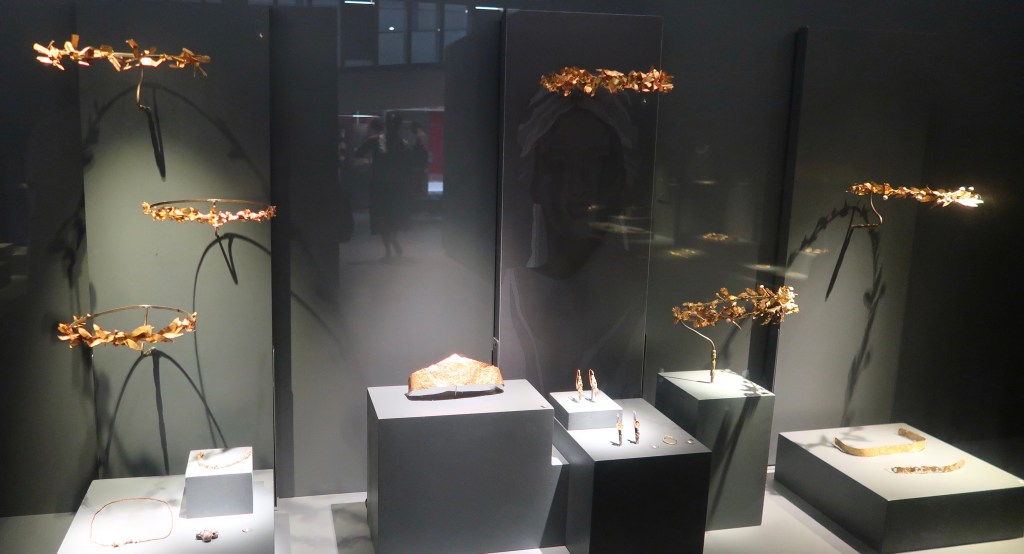
There were many ‘treasure’ finds in gold, silver, electrum, bronze, carnelian and lapis lazuli from this period.


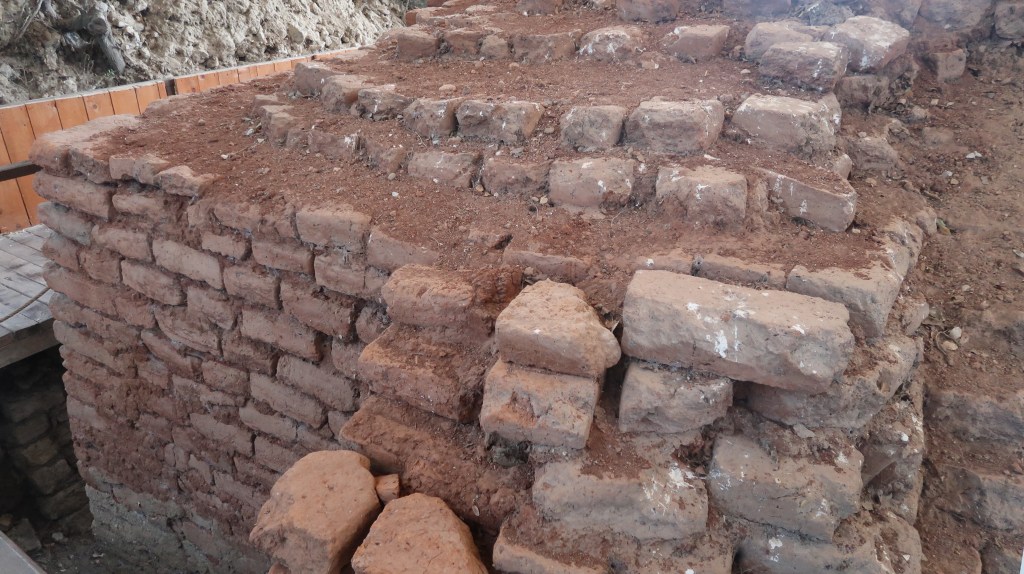
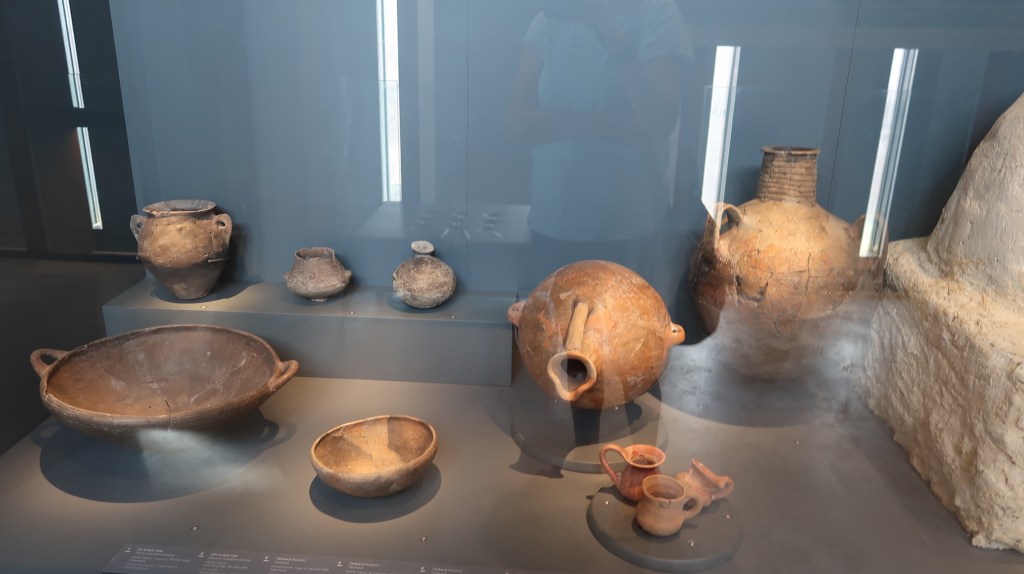
Much of the layers of Troy III – Troy V were hastily removed in early excavations in order to reach the lower levels. Generally, this period, 2300-1750 BC, seems to have been less prosperous, they had fewer domestic animals and hunting played a significant part in their dietary habits. Large vessels that were used in ovens were found from this period.

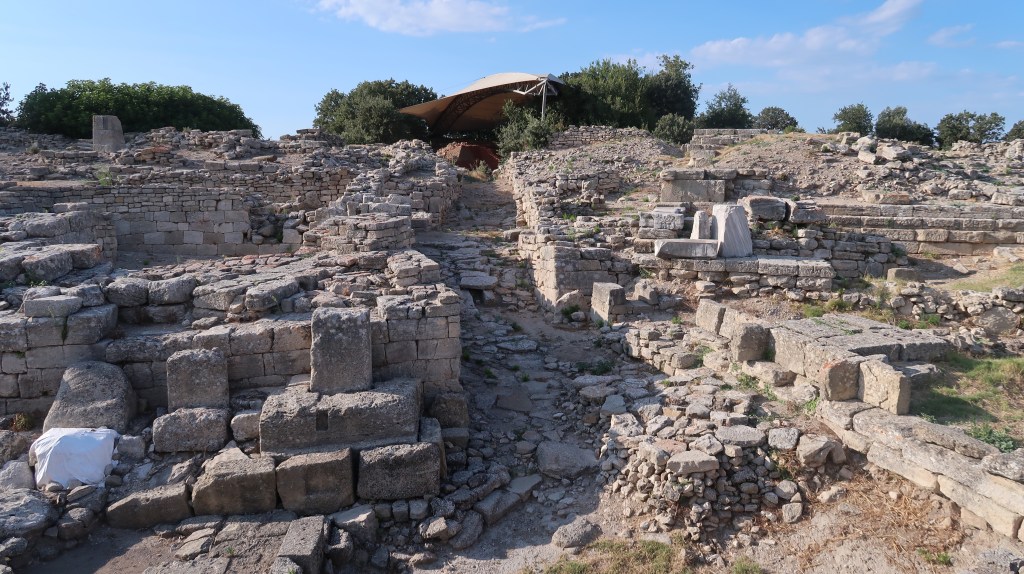
Troy VI (1750-1300 BC), is most visible at the site. There are impressive fortification walls 5 m thick and up to 8 m high constructed from large limestone blocks and include several towers which demonstrate the prosperity, but also a concern for defence during this period confirming a ‘strong-built Troy’. The walls included five gateways allowing entrance to the inner city which had large structures and palaces, some with two stories, central courts and collonaded halls.
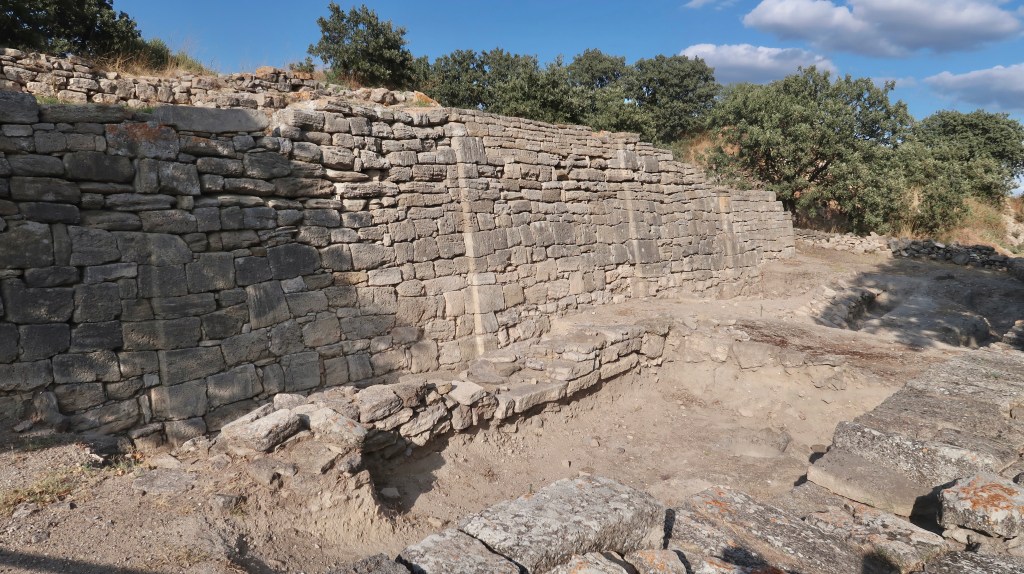


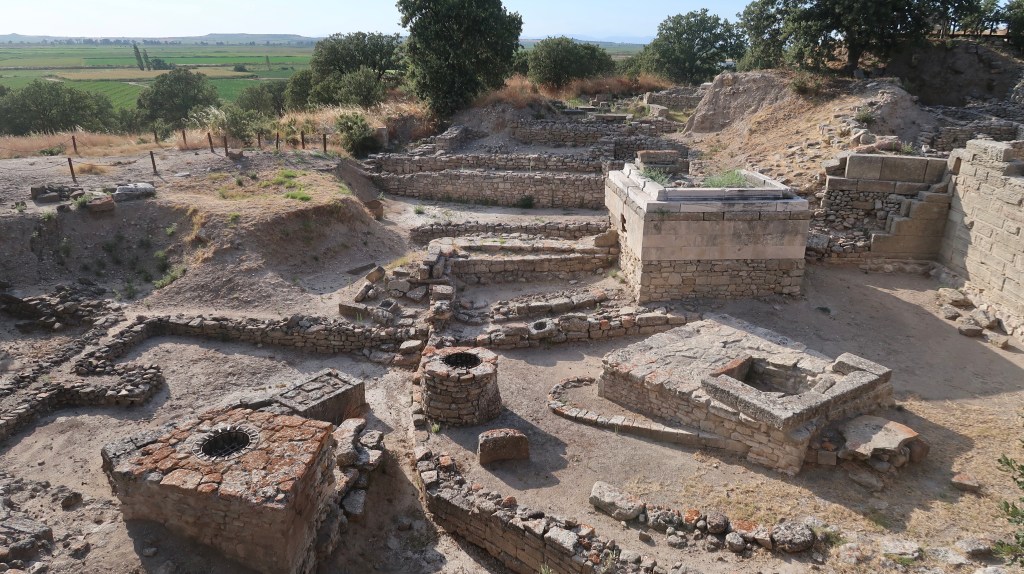
Outside the fortified citadel the lower town covers 270,000 square metres protected by an encircling rock-cut ditch. The size of the site is now much bigger than first thought and suggests a population of as high as 10,000.
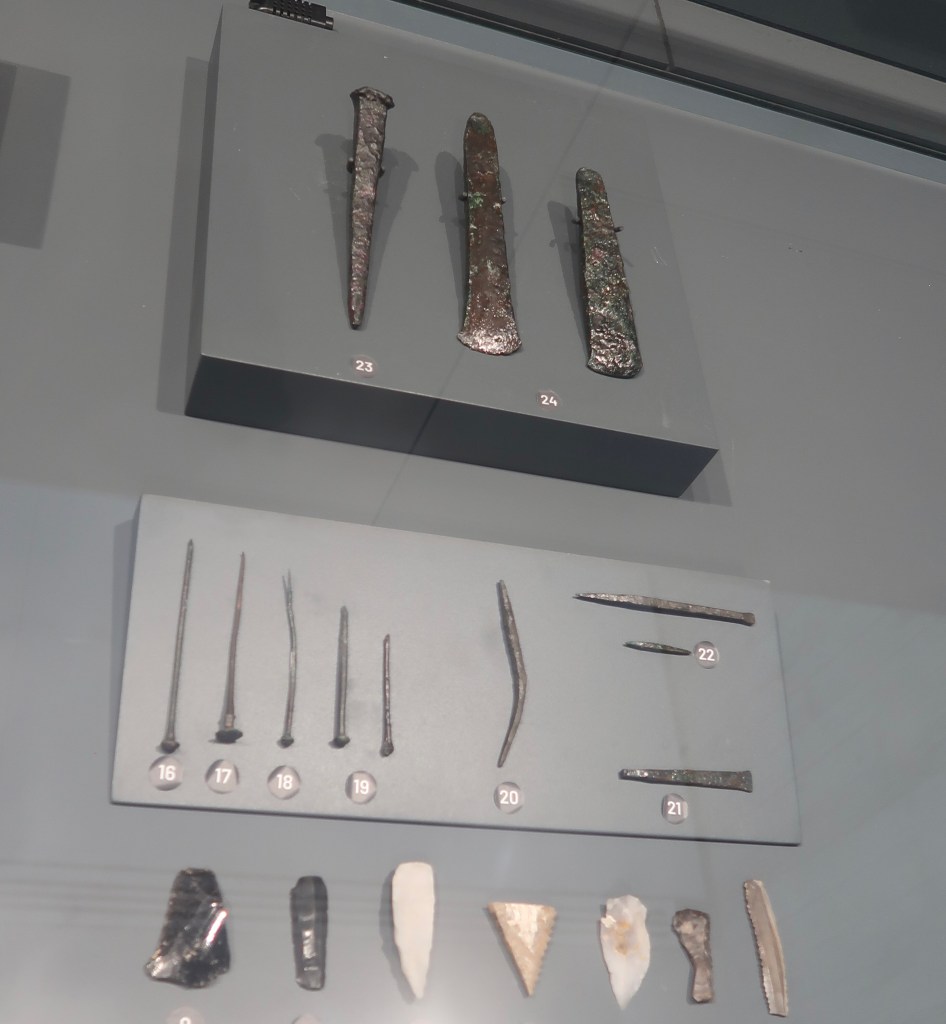
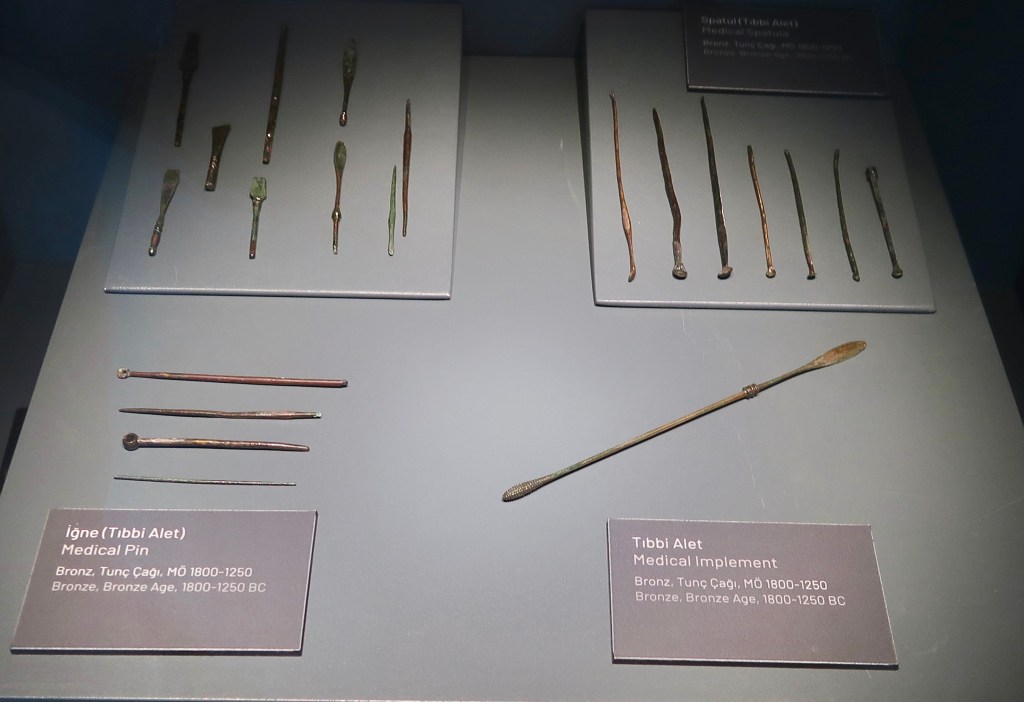
Surgical implements were uncovered and evidence that surgical operations took place. I think you would be lucky to survive after undergoing an operation with these tools.
Troy VI was partially destroyed but the exact cause is not known beyond some evidence of fire or earthquake.
Troy VII (1300-950 BC) shows an increase in the size of the lower town and reconstruction of the fortifications, but also a marked decline in architectural and artistic quality in respect to Troy VI. Bronze arrow heads, spear tips and sling shots have been found on the site and even some embedded in the fortification walls, suggesting some sort of conflict. The dating of these and the cities ultimate destruction correlate with proposed dates for the Trojan War.
The site is surrounded by views of the battle fields from the Illiad.

There is evidence that the site was populated after this period but the settlement did not return to the same importance until the 8th century BC, when it was recognised as the location of the Trojan war. The final layers, Troy VIII-IX (950 BC to 550 AD) were Greek and Roman cities where tourism flourished and attracted distinguished visitors including: the Persian King, Alexander the Great, Roman Emperors and the Ottoman Sultan Mehmed the Conqueror. All of these leaders being keen to associate themselves and their empires with the heroes of the Trojan war.
A Doric temple to Athena was constructed in the early 3rd century BC along with new fortifications. The Romans held Troy in high regard and even referred to the city as ‘Sacred Ilium’. Julius Caesar and Emperor Augustus rebuilt much of the city in the 1st century BC and added buildings which included a gymnasium, baths and an Odeion with an oversized statue of Emperor Hadrian, possibly erected in honour of his visit to Troy.
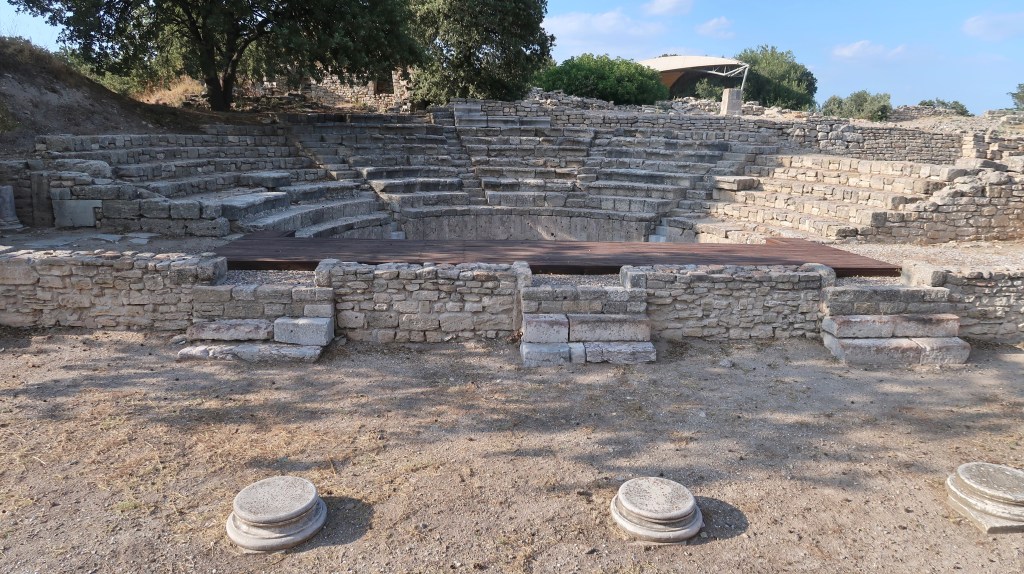


In the 4th Century AD, Emperor Constantine planned to build his new capital at Troy and some construction work began until Constantinople was chosen instead. Over time the site declined, most probably because the harbour had silted up and the once great city of Troy was finally abandoned, not to be rediscovered for another 1500 years.
The museum in Istanbul had a very good presentation demonstrating the layers of Troy showing the relationship between the different levels.
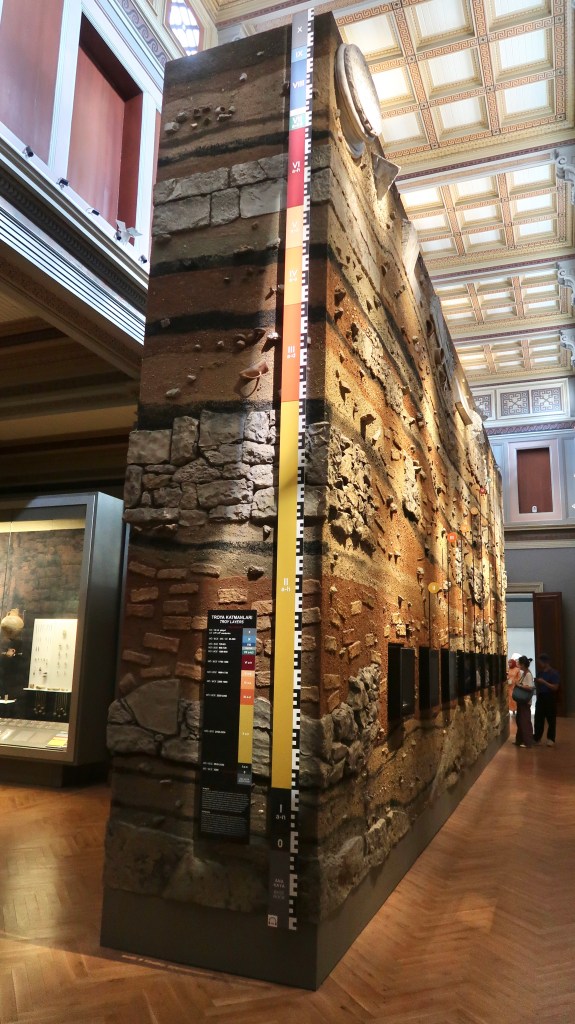
The archeological site was a pleasant surprise to us as we had heard that there would be nothing more than a field to see. There were walkways all around with very detailed descriptions. It was difficult to photograph as it is a very slow moving excavation site and parts of it looked like ‘piles of bricks’. But, it is authentic as there have been very few reconstructions and it hasn’t been subjected to too much tourism development.
After fully exploring the site, we had a hotel booked for the night in the busy town of Çanakkale on the Dardanelles Strait.
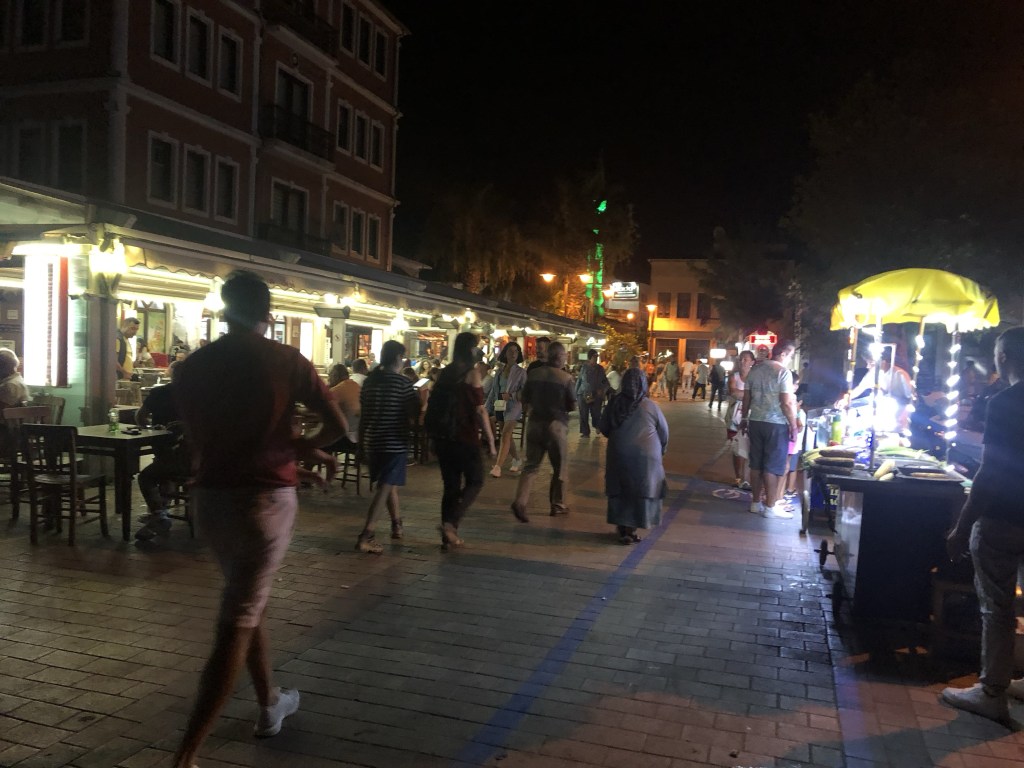
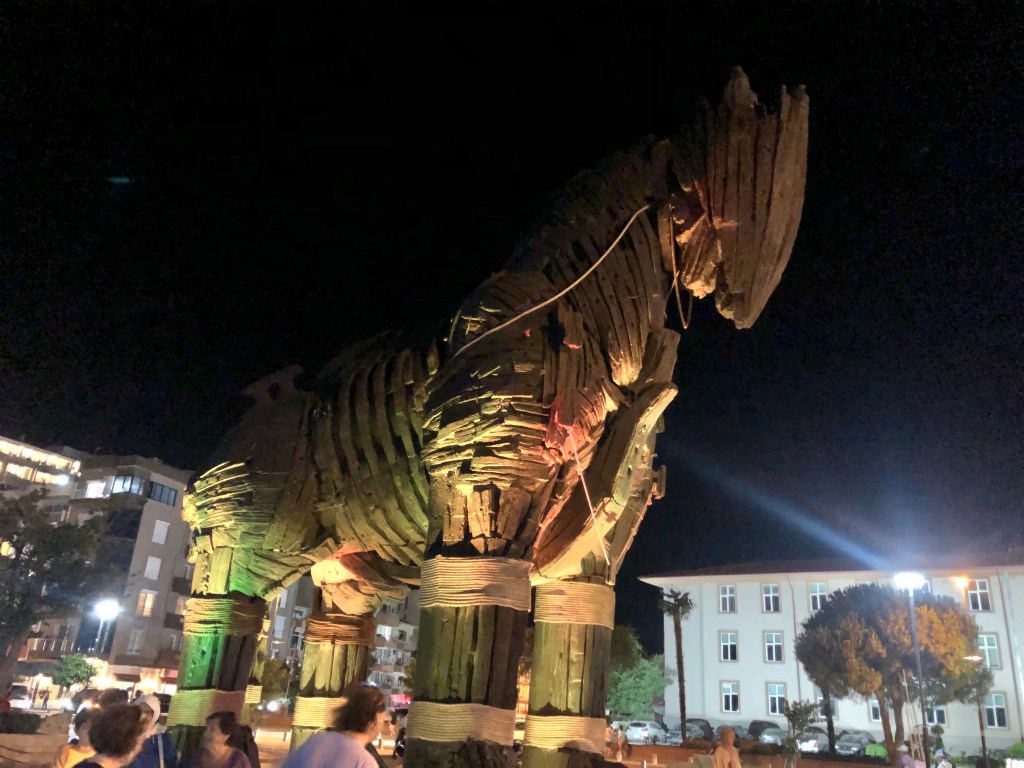
I was happy to find the Trojan horse here which was apparently used in the film ‘Troy’. Unfortunately, I didn’t find Brad Pitt, Sean Bean or Orlando Bloom hanging around!
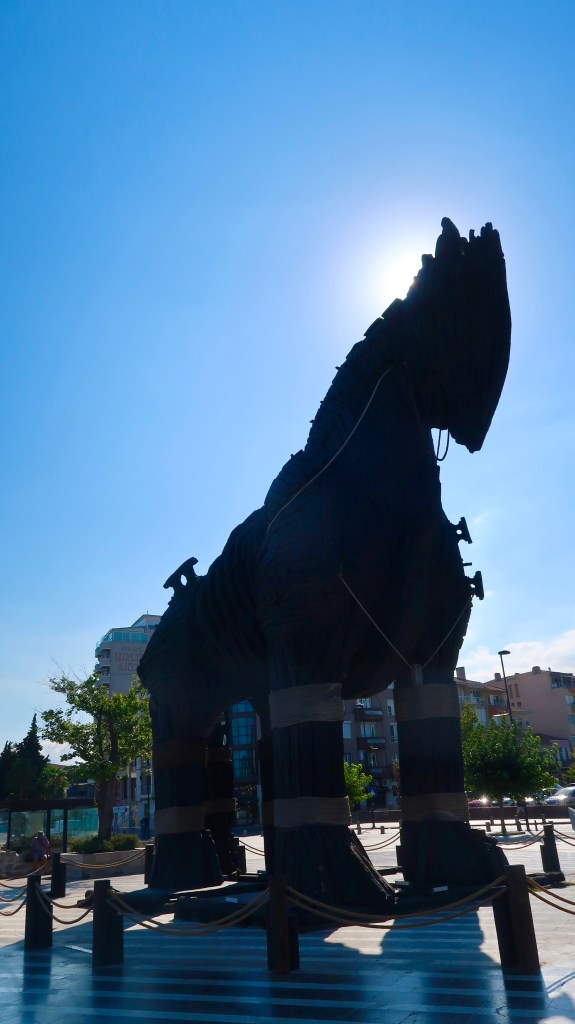
The next morning we set off back to Çeşme and ZigZag, passing the horse on the way for a look in daylight (and to double check whether I could find any movie stars climbing out of it)!

 Sailing ZigZag
6 replies on “Troy”
Well, firstly, how important must you be to have them close off the bridge so you could travel across in style? Most impressed.
That wood had bonfire written all over it, and that comes from a man who knows about these things. But how disappointing not to see something at least looking like a horse.
Finally, who doesn’t like a good trip in the Dardanelles? Always sounds like a lovely flower.
Safe onward sailing aboard ZigZag.
LikeLiked by 1 person
Brad Pitt …… Reminds me of the time I was having an x-Ray and the nurse said to me “has anyone ever told you, you look like that actor …. Stephen Merchant?” I’ll go private next time☹️
Another great blog, educational as always – I now know what “electrum” is!
LikeLiked by 1 person
Yes, me too! 😎
LikeLiked by 1 person
The museum looks like a sea container but at least it has some nice earrings on display. The surgical implements look like your mum’s knitting needles and I think they may have been used on Hadrian based on the expression on his face. I can’t believe you only saw an old dismantled horse but at least you saw one in Istanbul. I have to say though, most disappointing thing is not seeing Brad Pitt!
LikeLiked by 1 person
I love looking at all the jewellery and seeing how little some of it has changed in the past 5000 years!
LikeLike
Yes, I’ve seen you in those earrings many a time! 😃
LikeLiked by 1 person