
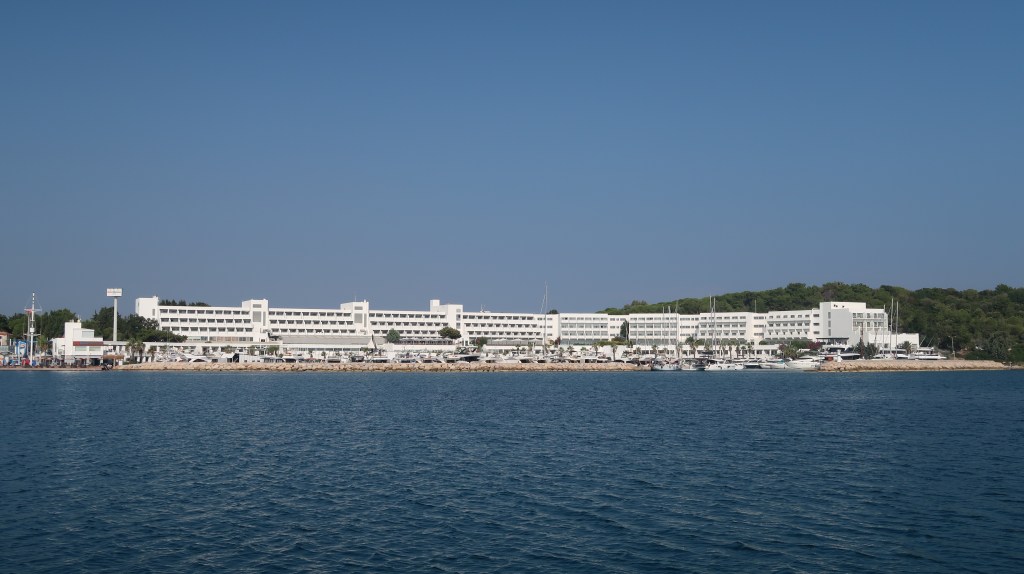
The weather forecast was for yet another meltemi wind to pass through, so instead of sitting it out on the boat for a week, we managed to get Ziggy a mooring in a marina in Çeşme, another one in the Setur group where we can stay under the terms of our winter contract. It’s very small based in front of a hotel and always busy but after a couple of days of trying, they had a space for us. With her safely tied up, we hired a car and headed for the bright city lights of Istanbul.
Istanbul was formerly called Byzantium in ancient times and then Constantinople in 324 AD. Istanbul became the official name of the city upon the foundation of the Republic of Turkey in the 1920s.
The city straddles the Bosphorus Strait between the Sea of Marmara and the Black Sea, lying in both Europe and Asia.
The ancient Greek colony of Byzantium was expanded by the Roman Emperor Constantine who modestly renamed the city Constantinople, and for nearly a thousand years it was the fortified capital of the Eastern Roman (Byzantine) Empire. It was besieged a number of times but only eventually conquered by the Ottomans in 1453, and became a major cultural, political, and commercial centre under Ottoman rule until it was also defeated in the first World War. When the Republic of Turkey was born in 1923, Kemal Atatürk moved its capital to the city of Ankara, however, Istanbul continued to expand in industry and tourism. It is now the largest city and principal seaport of Turkey.
After a long drive we arrived late afternoon and checked in to our hotel. With only a couple of days here we went straight out to explore some of the main sites. It was quite overcast making it a little cooler and much more comfortable to walk around.
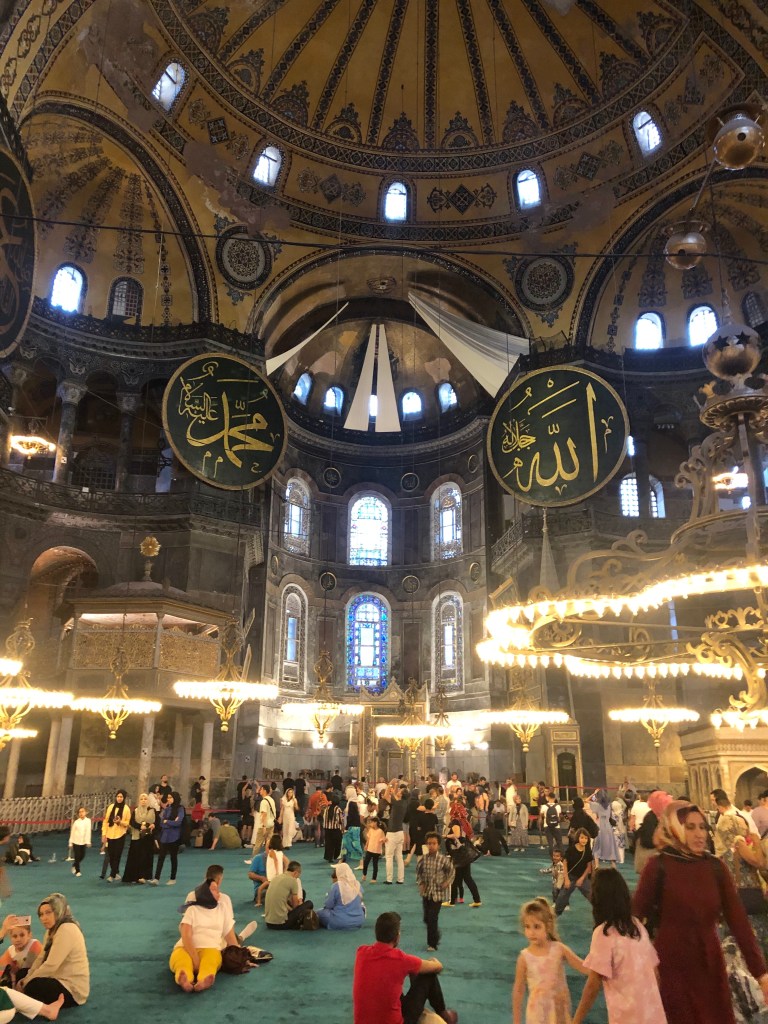
We walked through the hippodrome and Sultanahmet Square to the Hagia Sophia, a huge structure dating back to 537 AD, the monument has witnessed the rise and fall of several dynasties. Originally it was an Orthodox Church, in the 13th century it became a Roman Catholic Cathedral until 1453 when it was converted to a mosque. In 1934, the Turkish government decided to establish it as a Museum to preserve its rich history, without being confined to one religion or group of people, it remained a popular museum until 2020 when it was once again declared as a mosque.


Women had to cover the head, shoulders and legs to enter, so after being tied up in scarfs we took our shoes off and were allowed in.

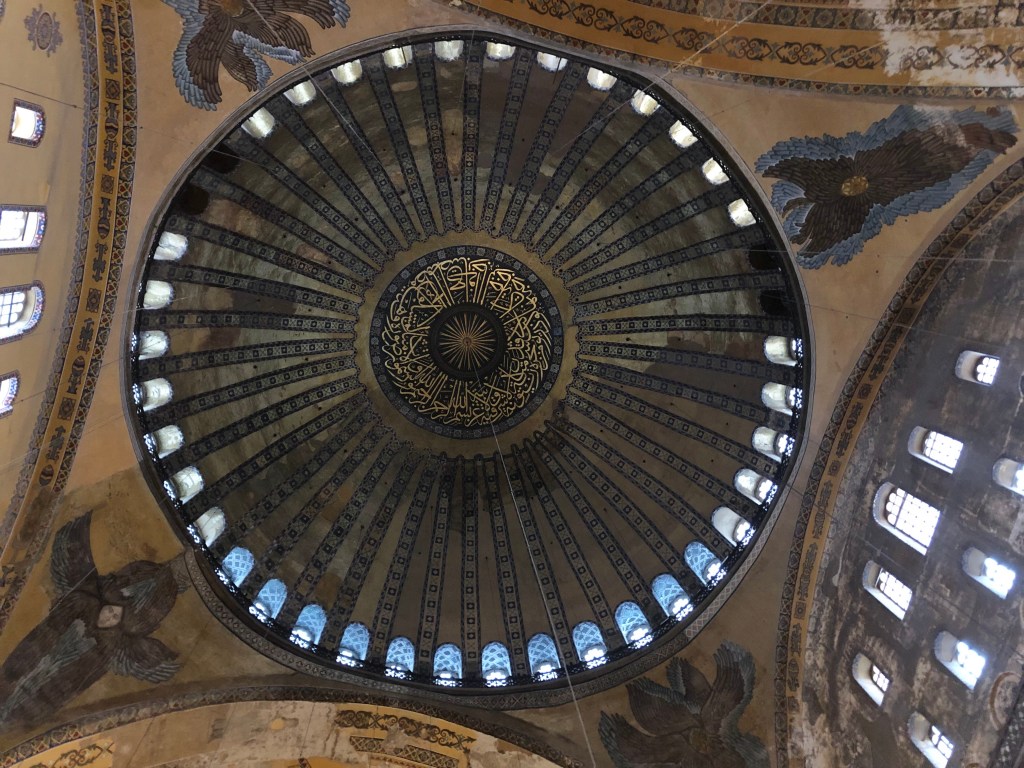
The Hagia Sophia is known for its Grand Central Dome, intricate mosaics, and delicate stonework. The massive dome spans 31 metres in diameter and rises to a height of over 55 metres. The dome was a technological marvel of its time as the building was designed to bear the weight of the massive structure without the need for support columns. It was very busy inside with a mix of tourists and worshippers.


Opposite the Hagia Sophia is the Blue Mosque, also known as the Sultan Ahmed Mosque, it is an Ottoman-era mosque constructed between 1609 and 1617.
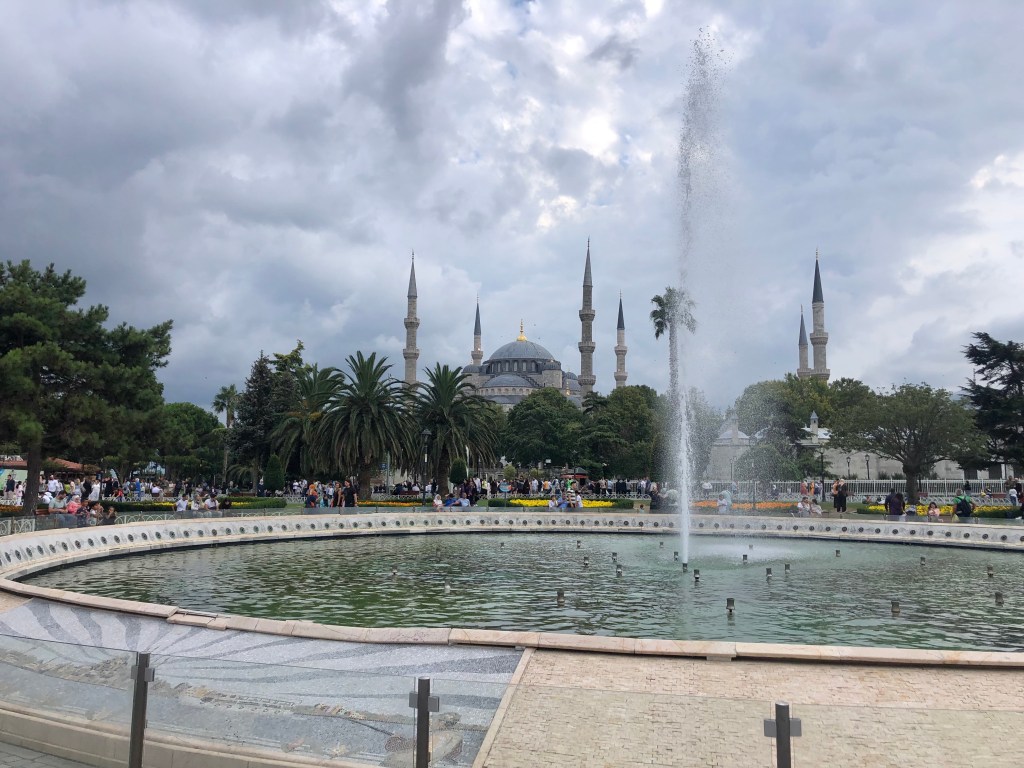

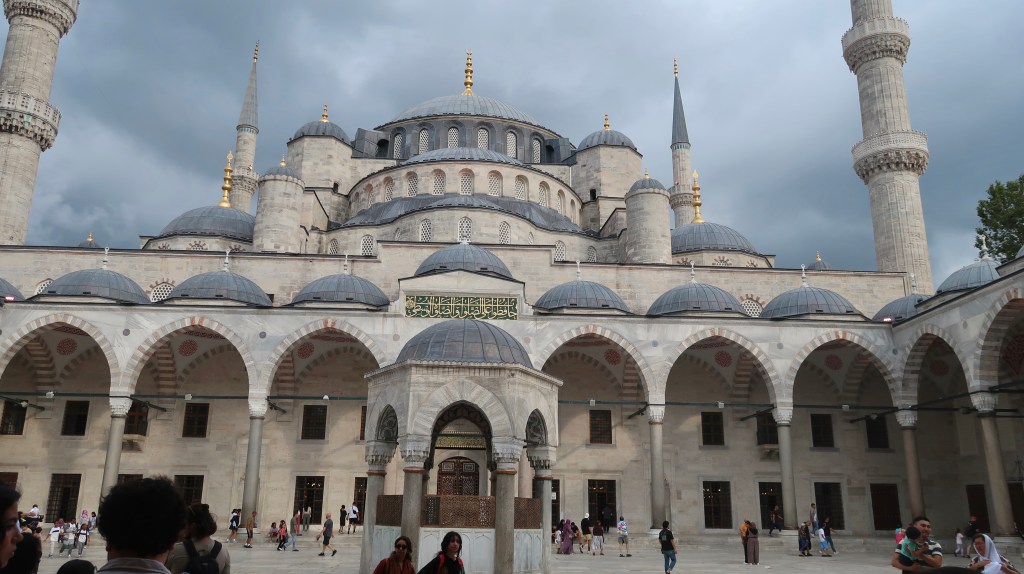
The construction was commissioned by Sultan Ahmet I. He was known to not be very good at warfare and came up with the idea to build a monument that would not only rival the Hagia Sophia (at that time, the most respected mosque), but also surpass it in size and beauty to placate Allah.
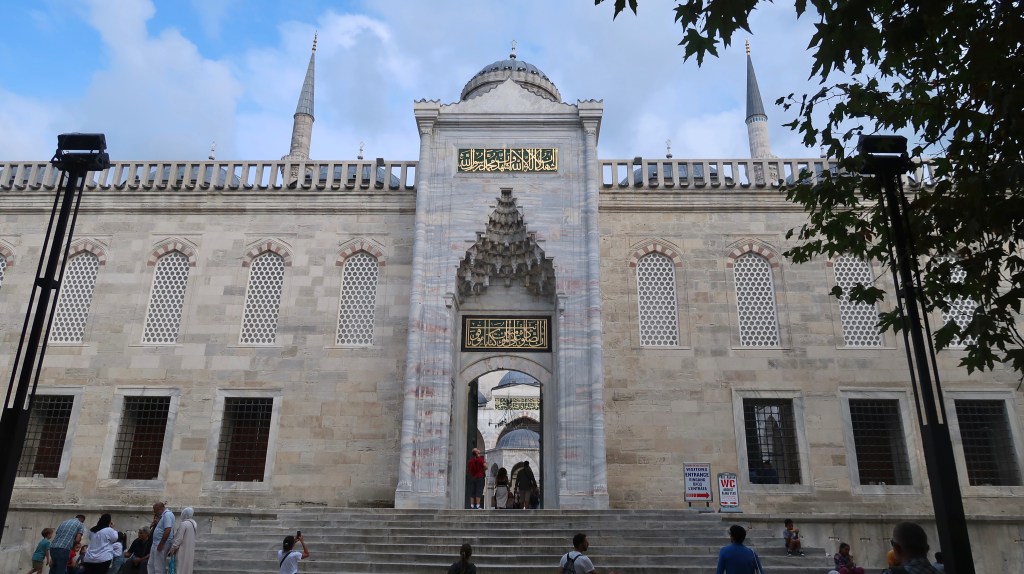

It remains a functioning mosque today, we were about to go in but then ‘the call for prayer’ played out loudly from the speakers. We have become used to hearing this regularly since arriving in Turkey. Finike marina was overlooked by a mosque on the hill which called for prayer throughout each day from dawn until dusk. We found a nice cafe for some dinner while we waited for prayers to be done and the mosque to reopen for tourists.
The mosque has a classical Ottoman layout with a central dome surrounded by four semi-domes over the prayer hall. It has six minarets, four on the corners of the mosque and two on the corners of the courtyard, more than any mosque in Istanbul. This provoked hostility at the time, as the Prophet’s mosque in Mecca had six minarets, the sultan was criticized for thinking a bit too highly of himself. Legend has it that the sultan overcame the problem by paying for a seventh minaret at the mosque in Mecca.
The impressive central dome is 23.5 metres in diameter and 43 metres high, but unlike the seemingly unsupported dome at the Hagia Sophia, there are four immense pillars to support it all.


The inside is decorated with 20,000 handmade ceramic tiles and painted floral motifs in predominantly blue colours, which gives the mosque its name. There are more than 260 stained glass windows and several chandeliers to provide plenty of light. Apparently they put ostrich eggs on the chandeliers to repel spiders, hence avoiding cobwebs inside the mosque, otherwise they would need a very long feather duster.
I think that Sultan Ahmet achieved his plan to build a more beautiful mosque than the Hagia Sophia. Of the two, I much preferred the Blue mosque, it is definitely more elegant and felt much brighter and cheerful inside. The Hagia Sophia was not so attractive to look at and seemed like several buildings had all been joined together, I assume as a result of its changes of use over the past 1500 years. Inside it felt darker and rather oppressive, it is slightly higher than the blue mosque, as it’s original use was a church it seems that it was built to impress with its size rather than beauty.
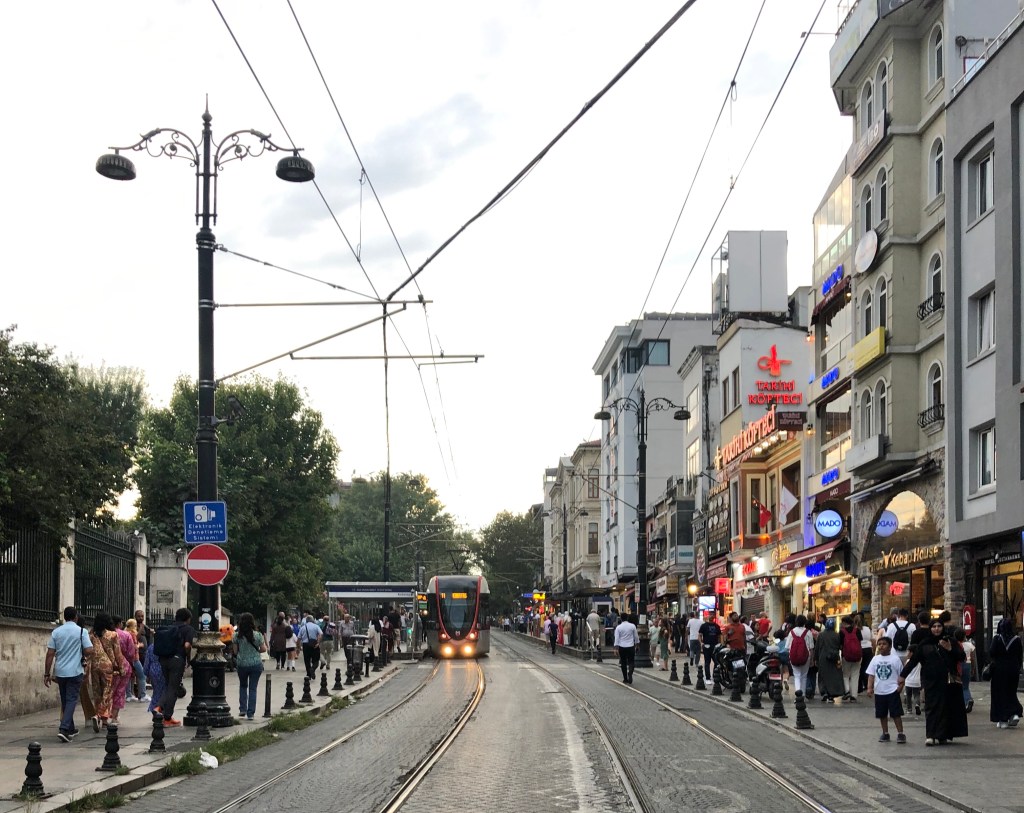
Next on our list was to go underground and visit the Basilica Cistern. We walked through the busy town to it. Unfortunately, there was a queue when we arrived, this was the first place that we had come across recently that didn’t accept our museum card so we had to wait our turn.

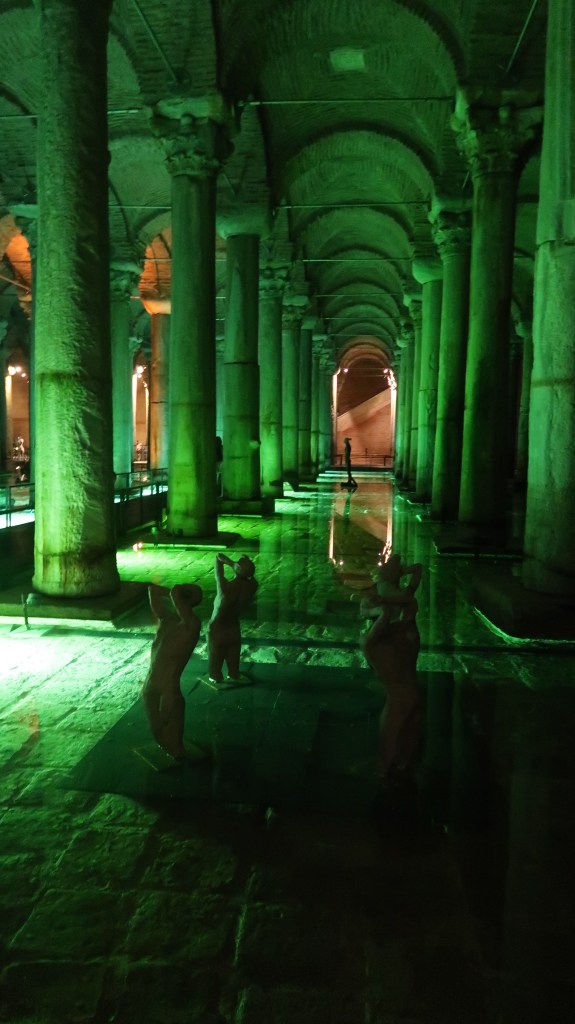
The Basilica Cistern was constructed during the 6th century and supplied water to the Great Palace and the surrounding buildings. It was 138 long, 65 metres wide and was capable of storing around 100,000 tons of water. 7000 slaves were responsible for erecting the 336 columns which are each 9 metres high.
Later, during the Ottoman rule it also supplied water to the Topkapi Palace and the Imperial Harem. However, with the Empire’s disintegration, it fell into disuse until a Dutch traveler restored the facility and placed lights to illuminate the columns and interiors. It was opened to the public in 1987.
Once inside, we had to descend a large staircase into the old cistern where there are rows of columns, arches and modern statues, all dimly lit with different coloured lighting and reflecting on the water, making it feel very mysterious.

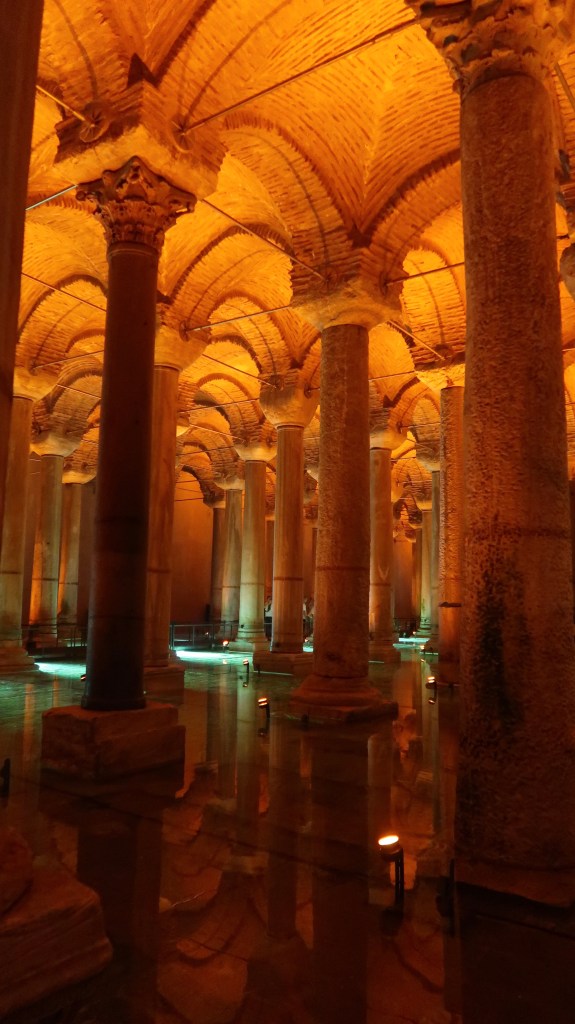
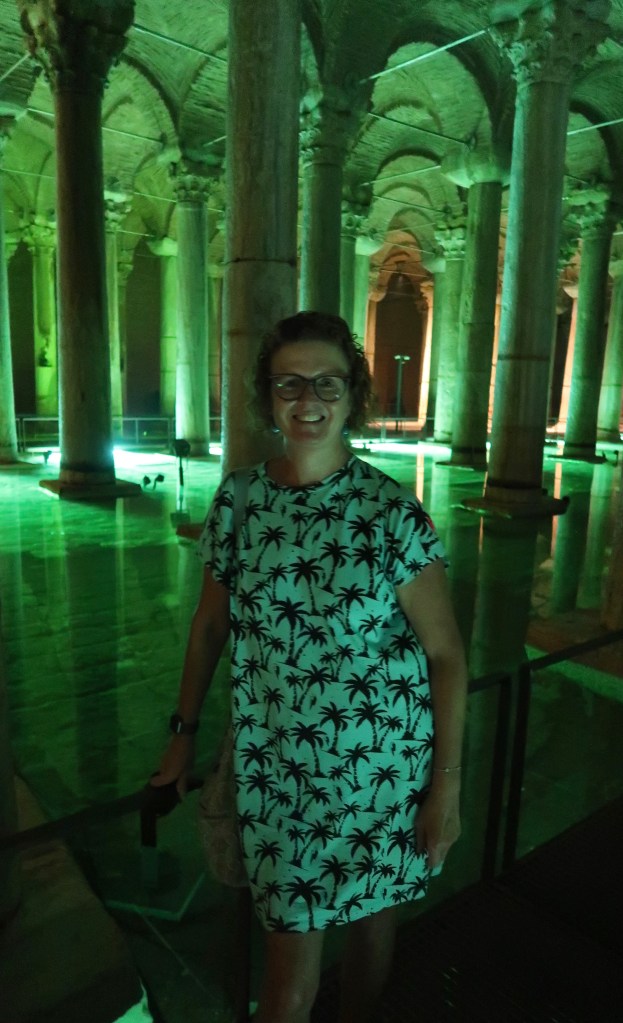
One of the columns has carvings of trees, branches, and peacocks eyes (I think you have to use your imagination) in memory of the many slaves who lost their lives during its construction period of almost 38 years. The column is called the ‘Weeping Column’ as it resembles falling tears.

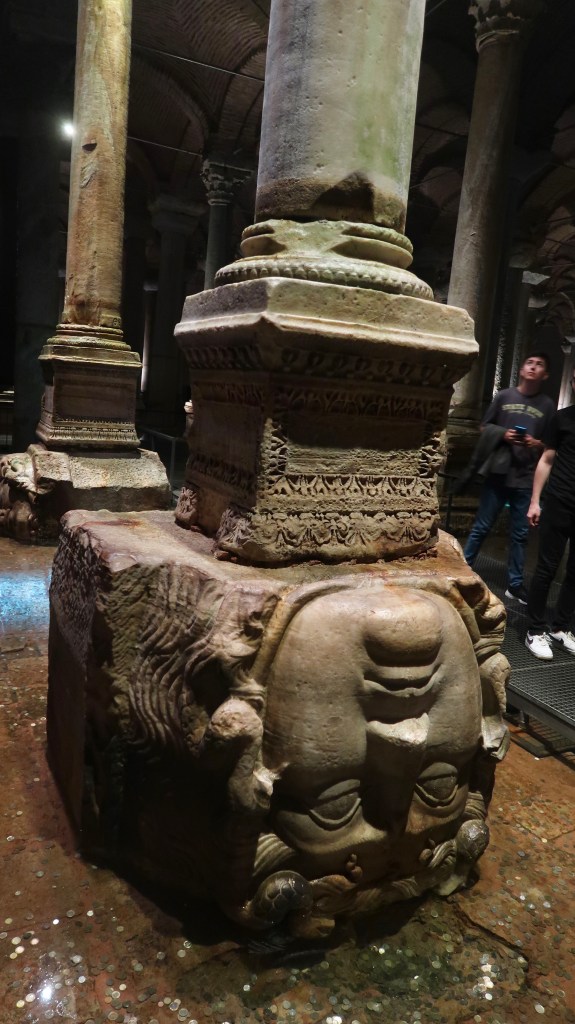
After the cavern water receded, two Medusa’s heads emerged from the base of two of the columns. It was believed that Medusa, one of the Gorgon monsters, would guard the Basilica and protect the water reserve. These heads are believed to have been added during the Byzantine era and were likely recycled from an ancient Roman building. It is not known why they are positioned upside down and sideways, however, it all adds to the eerie atmosphere.

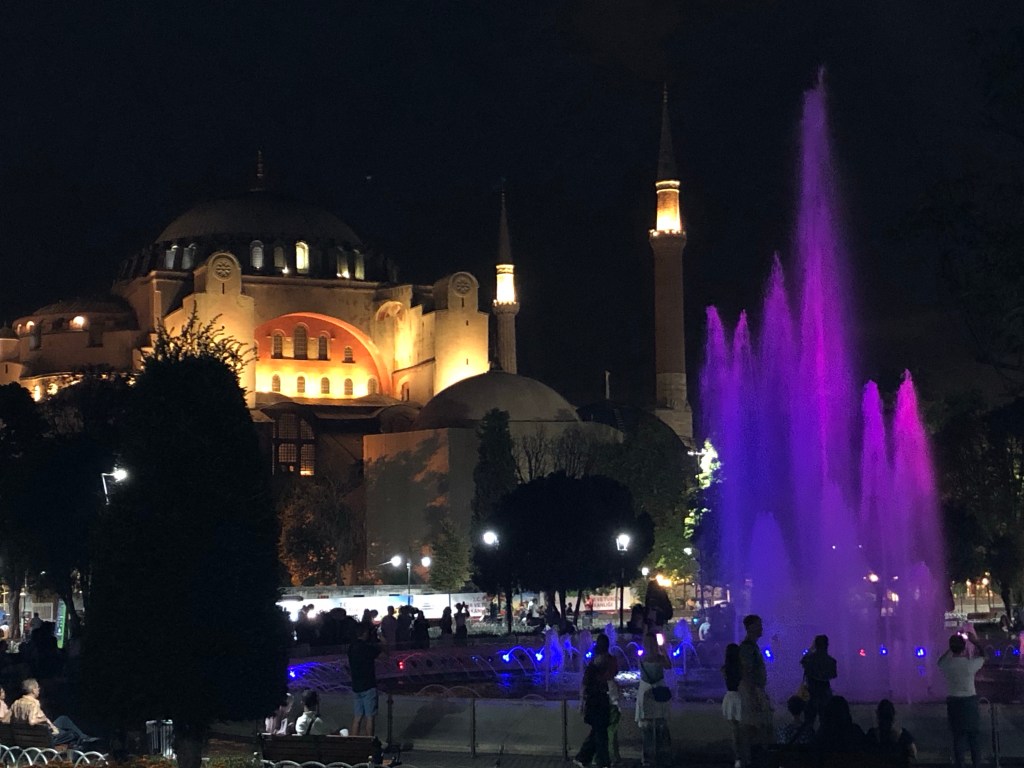
By the time we had finished here, it was getting late, we walked back through the town, everywhere seemed much quieter now. The mosques and fountain looked very pretty all lit up.


We managed to find a bar for a quick drink before returning to our hotel….To be continued.
 Sailing ZigZag
3 replies on “Heading to the Bright Lights”
The photos are lovely. I love the lights in the mosque and how the cistern is lit up. You need to find out why the Medusa’s heads are upside down – that is your mission if you choose to accept it! X
LikeLiked by 1 person
Th
LikeLike
What great photos – not easy to capture such grandeur or scale, and lovely to see a pic of Sue, but missing Paul this week 🙂
The Blue mosque has inspired me to start thinking about my next build project…
The two Medusa’s heads are really lovely and look so out of place under a column at the same time. Can’t imagine how they retro fitted those.
I guess your post next week will continue your adventures on land, but if you do find yourself all at sea, be safe.
LikeLiked by 1 person