After a restful few days in Talianaki, the Meltemi winds finally passed and we lifted the anchor as the sun was rising behind the mountains.
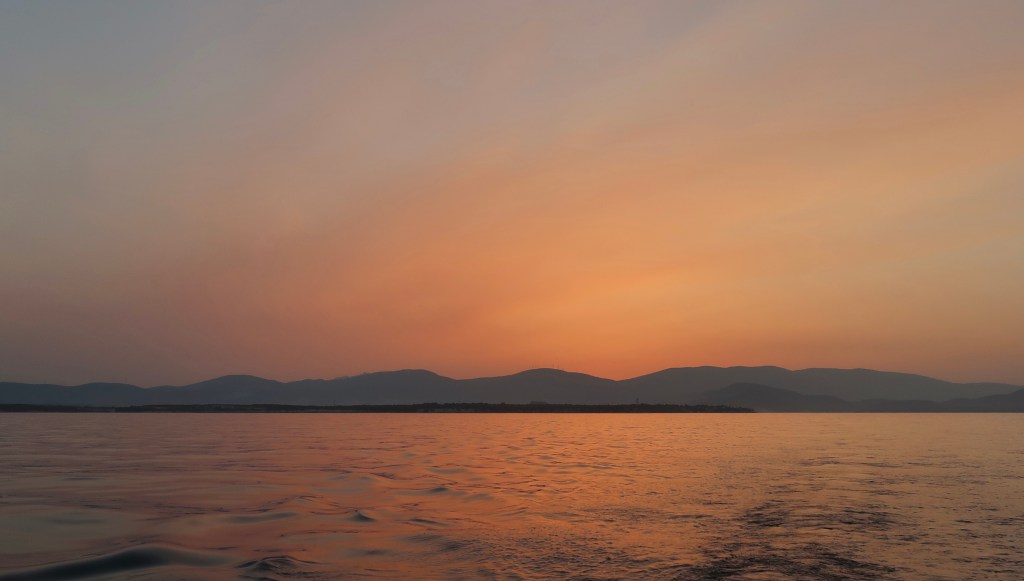
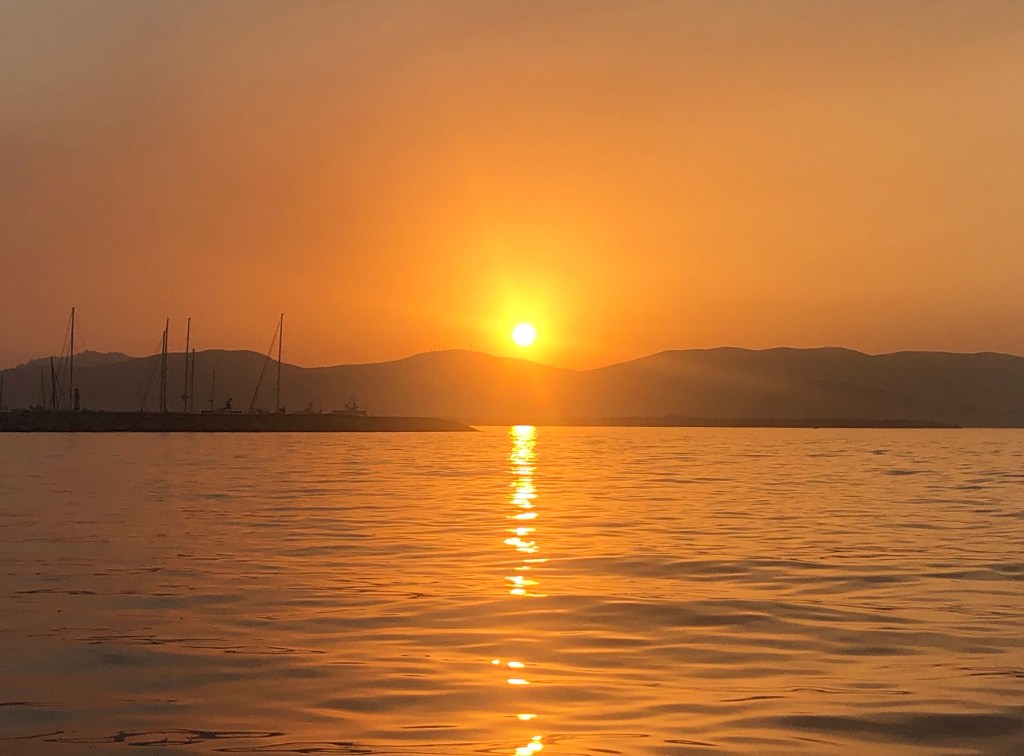
The sea was dead flat calm with no wind as we left the anchorage. This seems to be typical here, you often get too much wind or not enough and we ended up having to motor, at least with our smooth bottom, we were able to do 6-7 kts and by lunchtime, we had travelled 51 nm arriving at our destination of Kuşadasi. The journey was very uneventful, the highlight being a brief encounter with a couple of dolphins swimming along with us.
Kuşadasi is a beach resort town, with a seafront promenade lined with hotels and restaurants. It is a popular stop for cruise ships, as we approached there was a family of four, moored in the harbour.


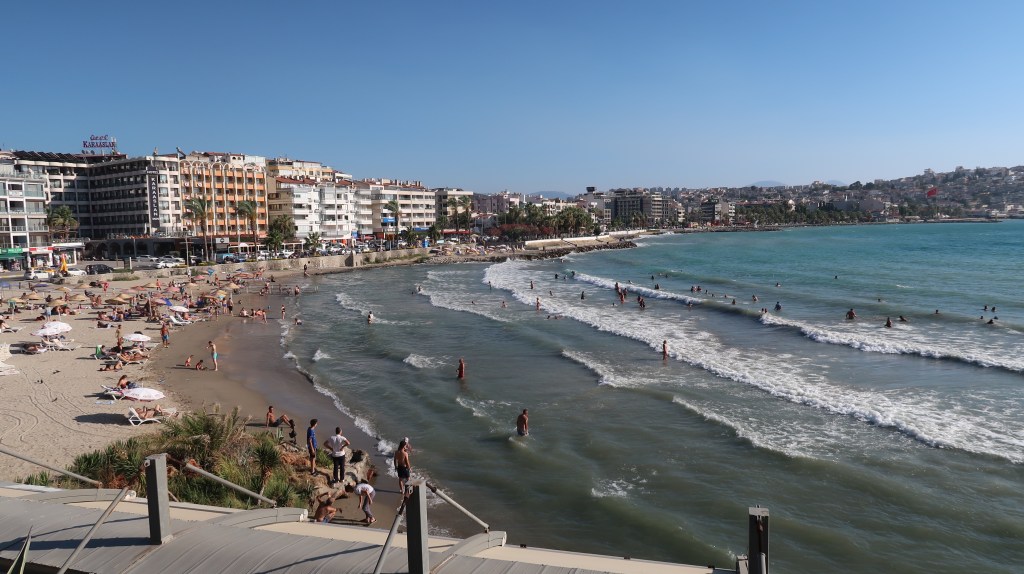
Just offshore on Pigeon Island is an Ottoman castle that once guarded the town, it is connected by a man made causeway to the mainland.

The marina here belongs to the same group as Finike and as part of our winter contract we can stay for free. We have been in Turkey for a while now and although we have visited a few ancient sites along the way, we have not yet visited any of the major historical places. Ephesus is just a short drive from Kuşadasi, so with ZigZag safe in the marina, we hired a car and set off.
We left early so that we would arrive at the opening time to hopefully beat the crowds. We were first at the gate and had read about a museum card, available to residents, which can be bought for 60tl (approximately £2) and gives access into most historic sites in Turkey. This not only gave us a massive saving, it also allows us to jump the queues and walk straight in.

Ephesus is said to be the best preserved ancient city in the eastern Mediterranean and the largest open air museum in Turkey. It contains more than 30 buildings and structures linked together by streets that still have the grooves of ancient chariot wheels.
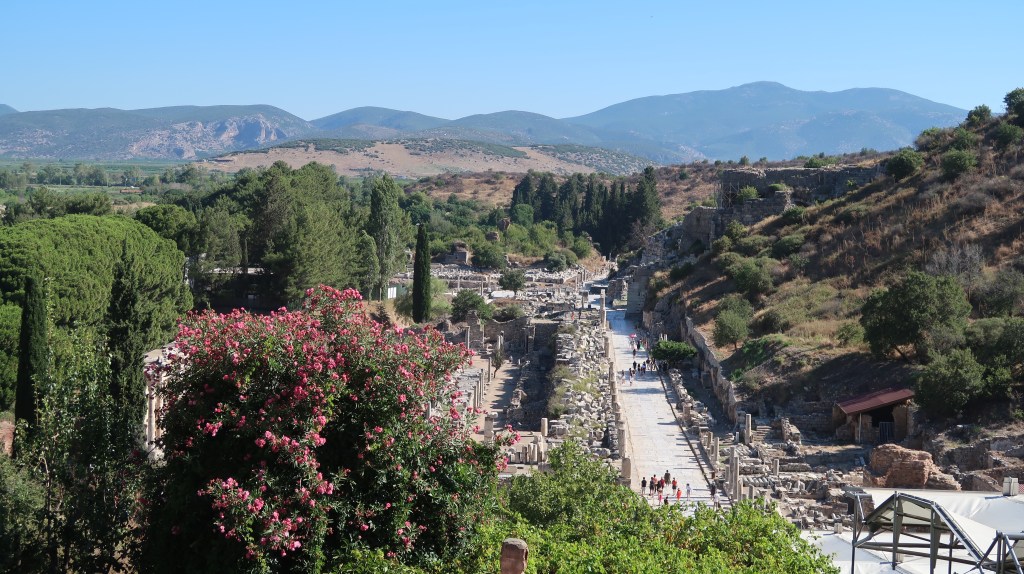
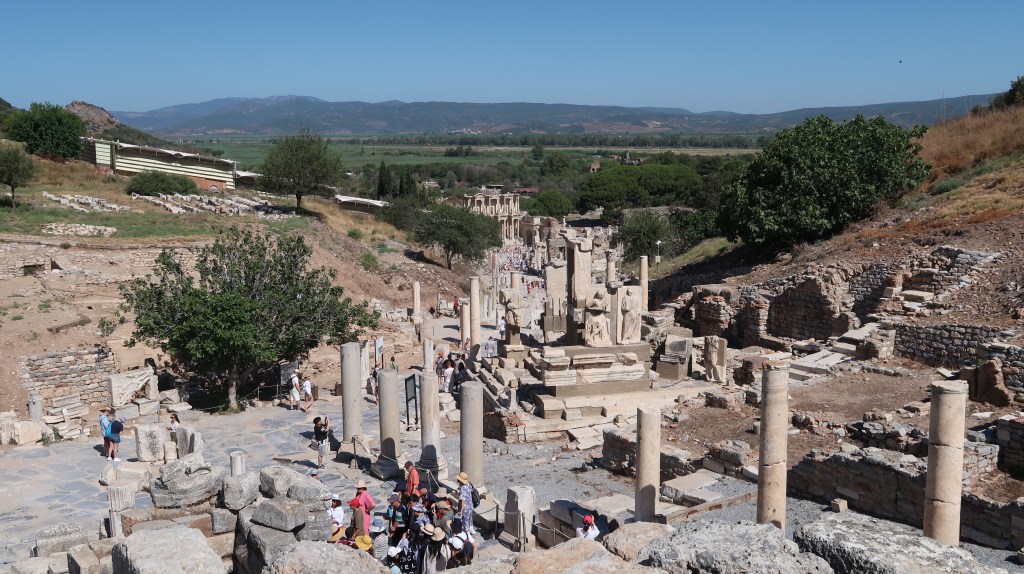
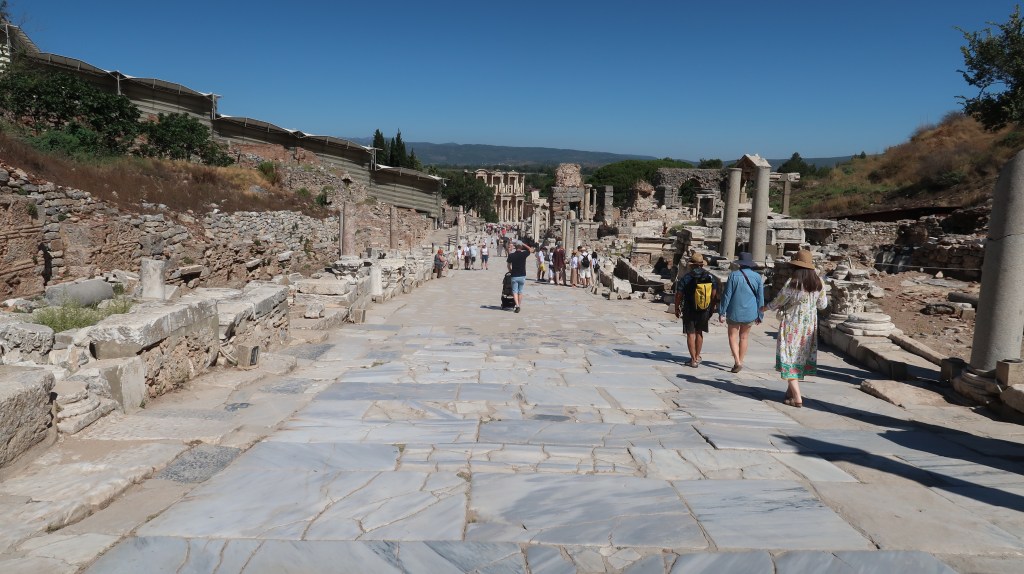
Ephesus has been a city since neolithic times, according to legend, the Ionian prince Androclos founded Ephesus in the 11th century BC. He was searching for a new Greek settlement and turned to the Delphi oracles for guidance. The oracles told him a boar and a fish would show him the new location. One day, he was frying fish over an open fire, a fish flopped out of the frying pan and landed in the nearby bushes. A spark ignited the bushes and a wild boar ran out. Recalling the oracles’ wisdom, Androclos built his new settlement where the bushes stood and called it Ephesus. Another legend (my favourite) says Ephesus was founded by the Amazons, a tribe of female warriors, and that the city was named after their queen, Ephesia.
In the 7th century BC, Ephesus fell under the rule of the Lydian Kings and became a thriving city where men and women enjoyed equal opportunities. The Lydian King Croesus, was most famous for funding the rebuilding of the Temple of Artemis after it was damaged in a flood. Artemis was the goddess of the hunt, chastity, childbirth, wild animals and the wilderness. Later in 356 BC, the temple was burnt down by an arsonist and rebuilt even bigger with over 100 marble pillars each 56’ high and contained many sculptures including the multi breasted cult statues of the goddess ‘Lady of Ephesus’. It took 120 years to build and was estimated to be four times larger than the Parthenon and became known as one of the Seven Wonders of the Ancient World. The temple was later destroyed and never rebuilt. Unfortunately, little remains of it today, although we did find a model in the museum.


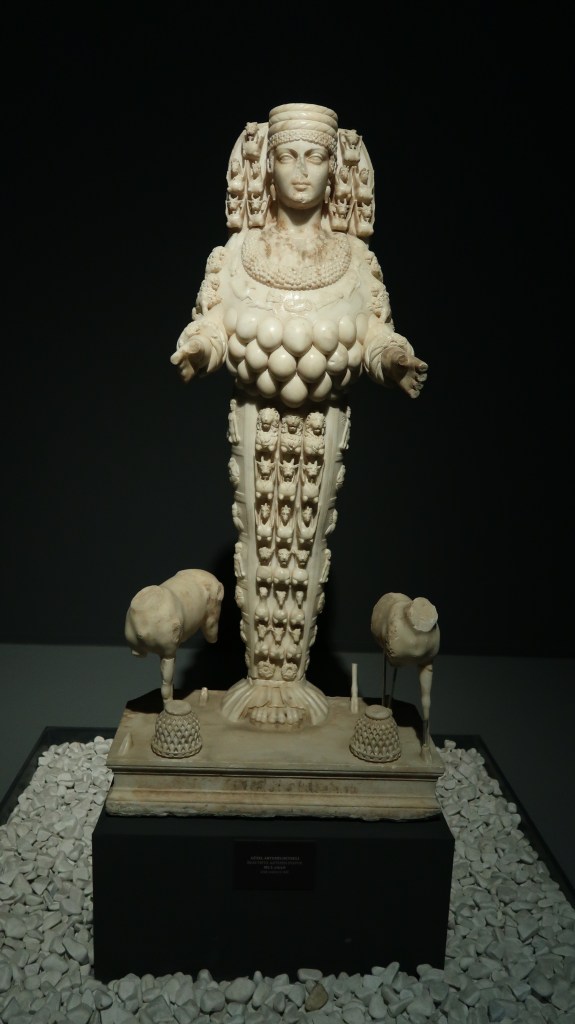
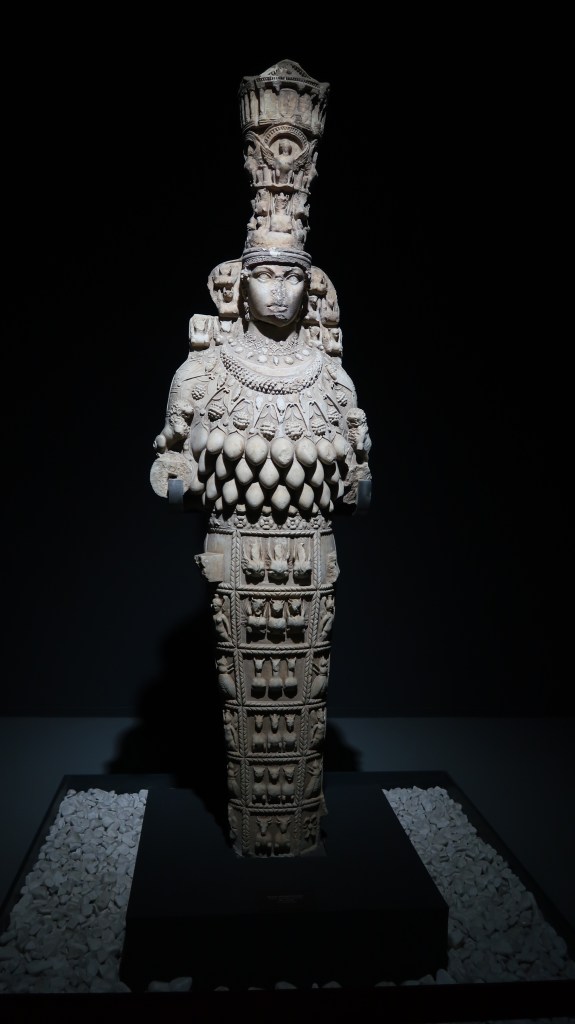
Ephesus survived multiple attacks and changed hands many times between conquerors. After ups and downs in the city’s fortunes over the years, it came under Roman rule in 133 BC and the Capital of Asia Minor in 27 BC. The city flourished as a port city and came to its full prominence under the Roman Empire when it grew and prospered. A business district was opened to service the massive amounts of goods arriving or departing from the man made harbour. Its population was largely educated and wealthy and its buildings were richly decorated showing the good fortune of its inhabitants. In Biblical terms, the meaning of the name Ephesus is ‘Desirable’.
We walked along the tree lined path into the old city, it brought us to Harbour Street, 500 meters long and 11 meters wide, an important connection between the harbour and the great theatre.


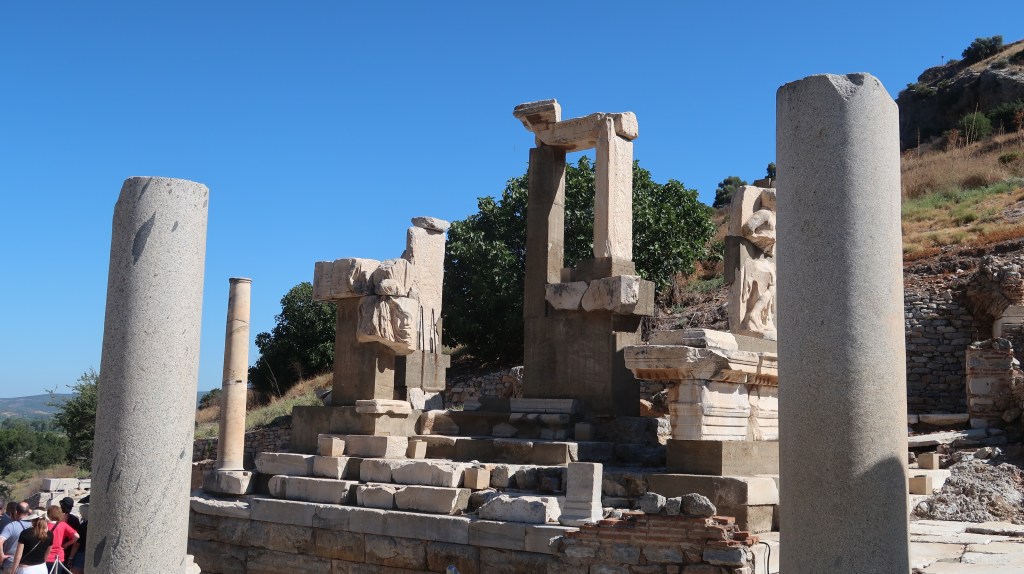
All the buildings seem to be on top of one another in various states of repair making some difficult to imagine but many are still visible giving an idea of the city’s original splendour.
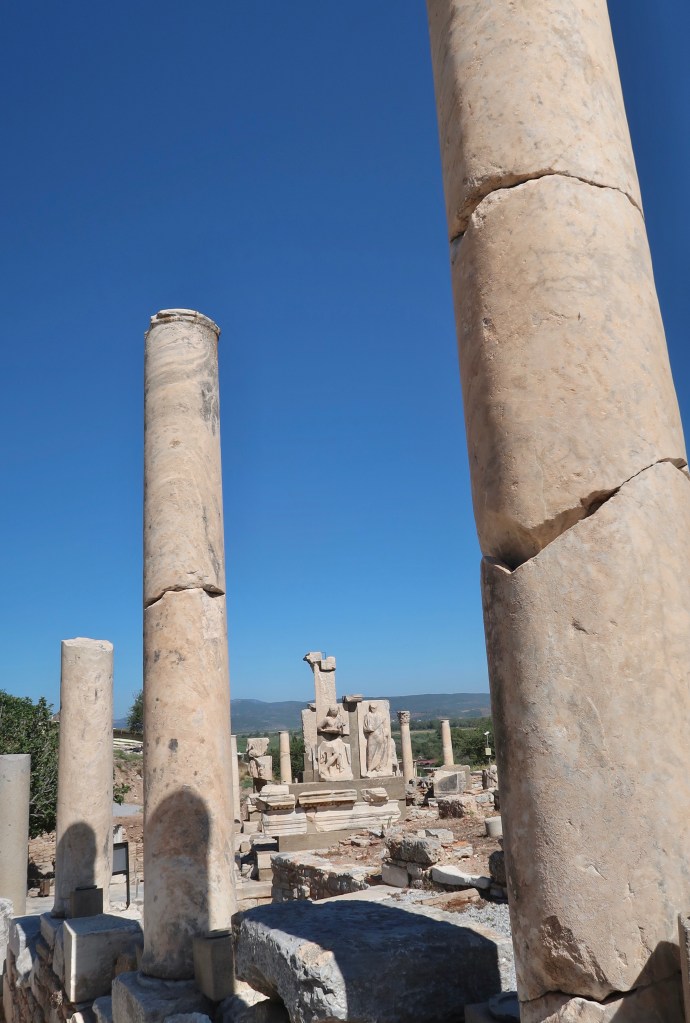
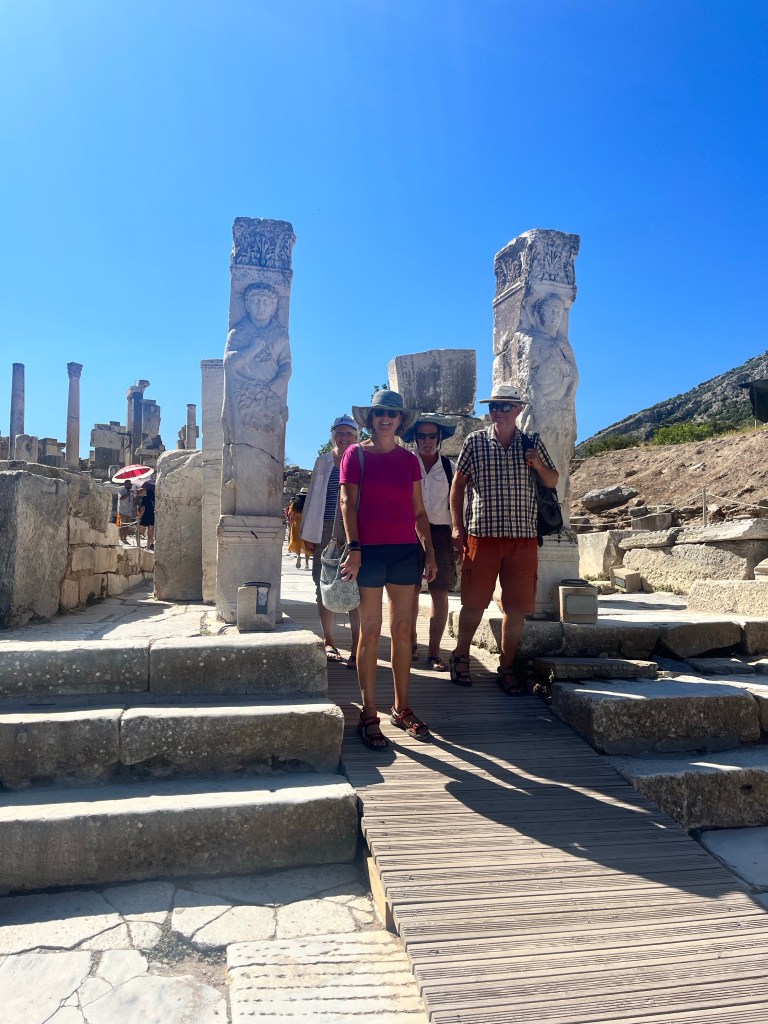

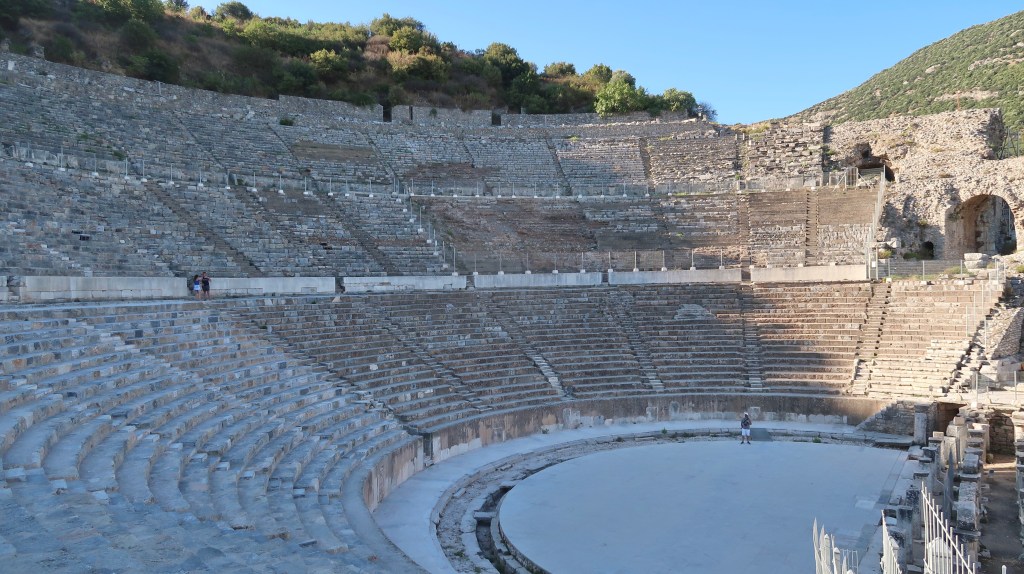
The impressive amphitheatre had a capacity of 25,000, it is believed to be the largest in the ancient world. It was initially used for theatrical performances, and later for gladiatorial combat.
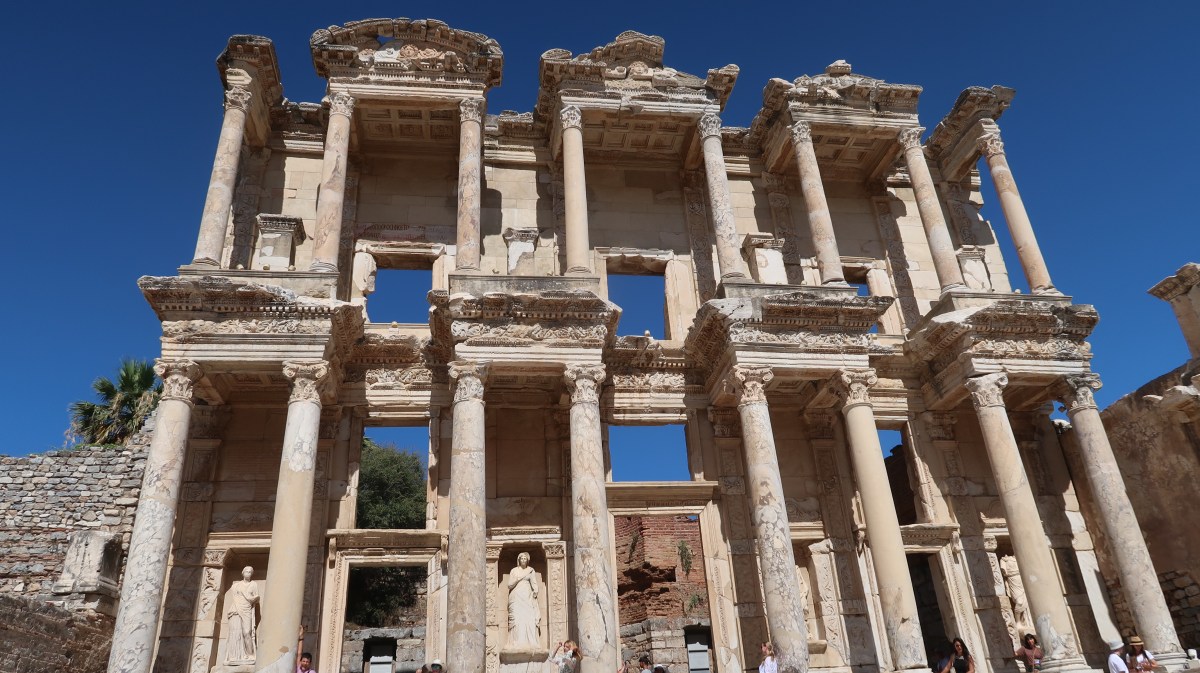
The Library of Celsus was originally built between 115-125 AD, in honour of Celsius, a Greek native of Ephesus, who had served as a consul, the highest elected office in Imperial Rome, he is buried in a sarcophagus beneath it. The library once held nearly 12,000 scrolls. It was designed with an elaborate entrance to enhance its perceived size as in reality it had to be squeezed between other larger buildings. The facade has been carefully reconstructed during the 1970’s using materials found on site.


Nearby, a row of six residential houses over three terraces have been restored, a full enclosure has been erected to protect them. They were built during the early Roman period and show how the wealthy lived, the living space was built around an open air courtyard to provide some natural light to the all rooms.
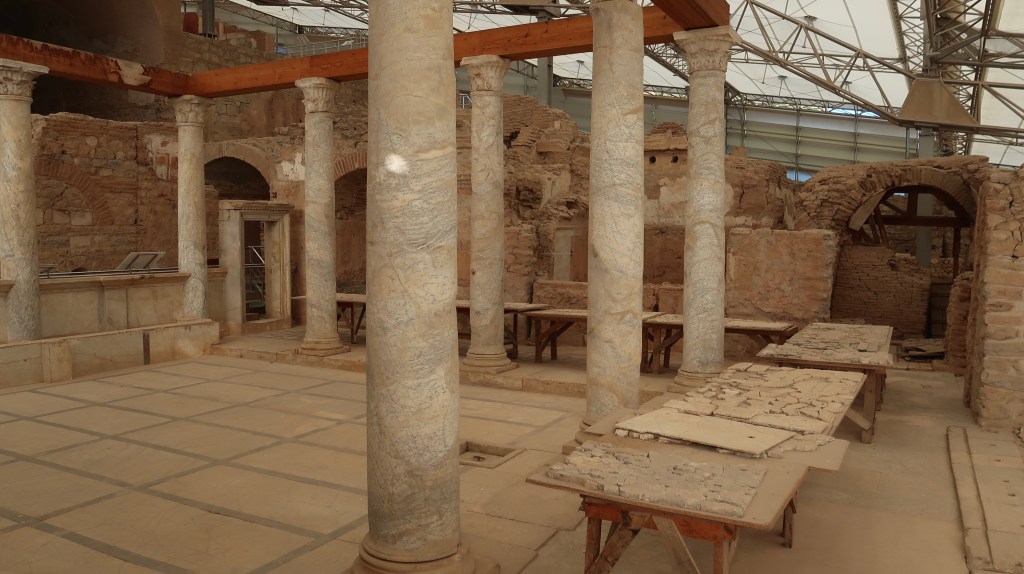
Each dwelling was unique and had its own entrance, they were richly decorated with marble, paintings, some had grand rooms for receptions, banquets and even a small chapel.
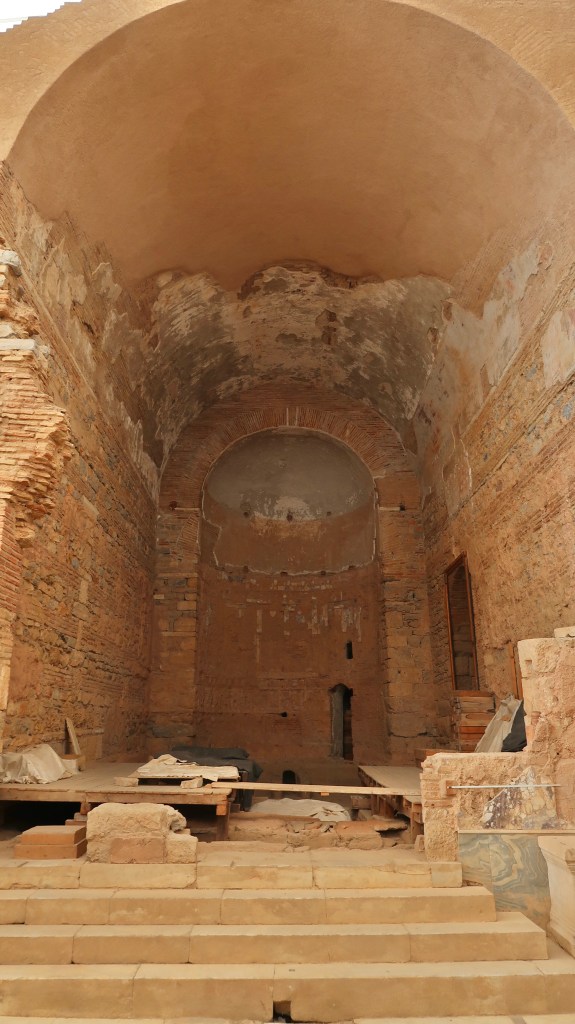

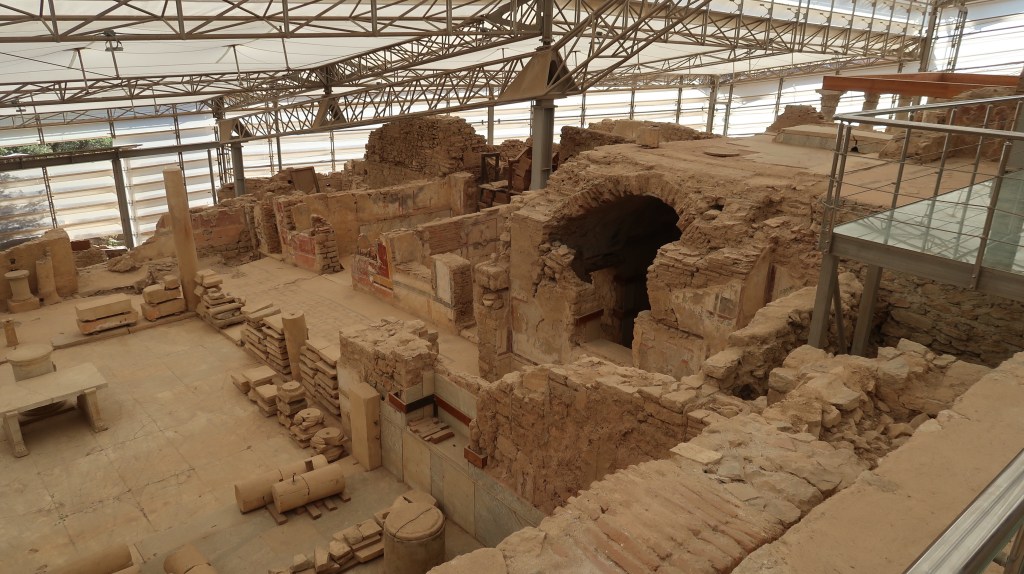
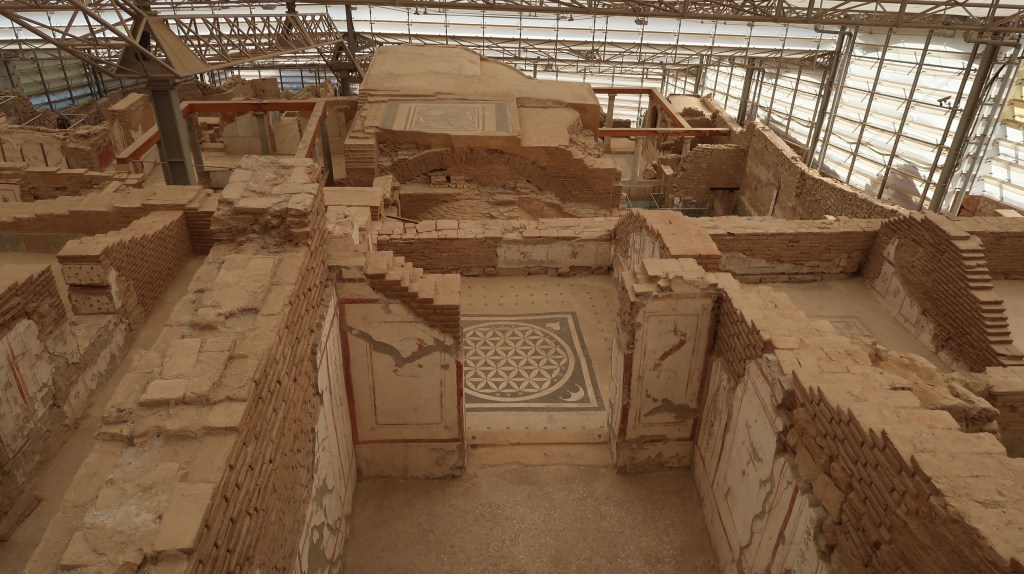
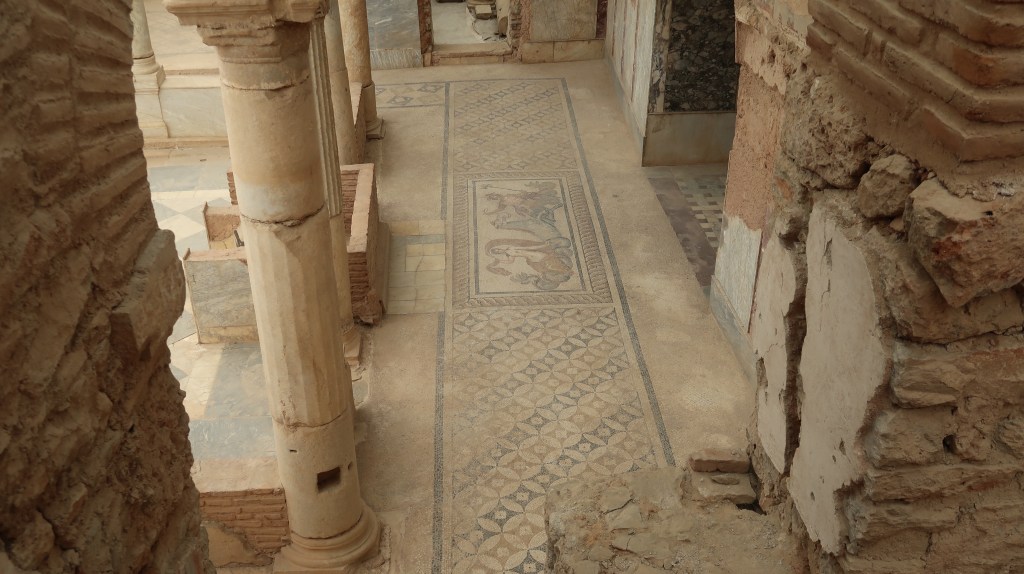
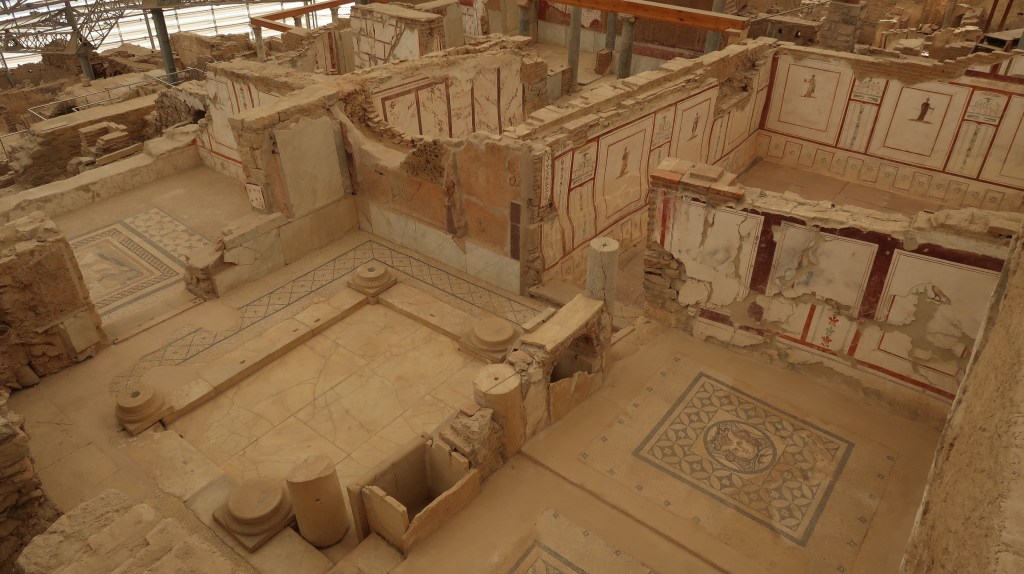
There was a lot of work in progress trying to piece together all of the marble floor and wall coverings. Perhaps the worlds most complicated jigsaw puzzle.


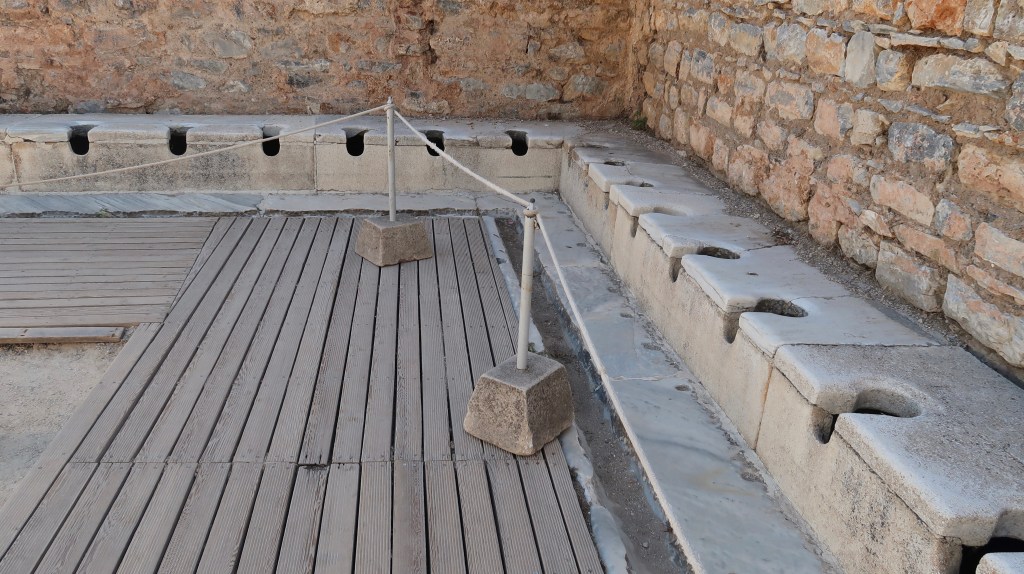
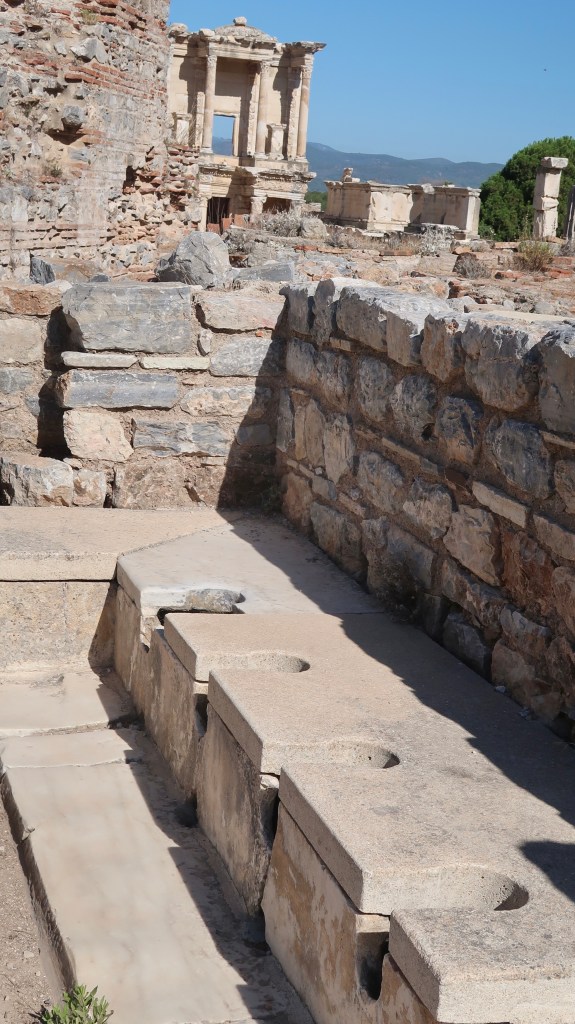
Having taken in some the city’s main highlights we continued to walk around the site and found some interesting public toilets, the seats were arranged around three sides of the open courtyard, fresh water flowed through the channel in front of the seats for cleaning. I’m glad they were roped off just in case anyone felt the urge!
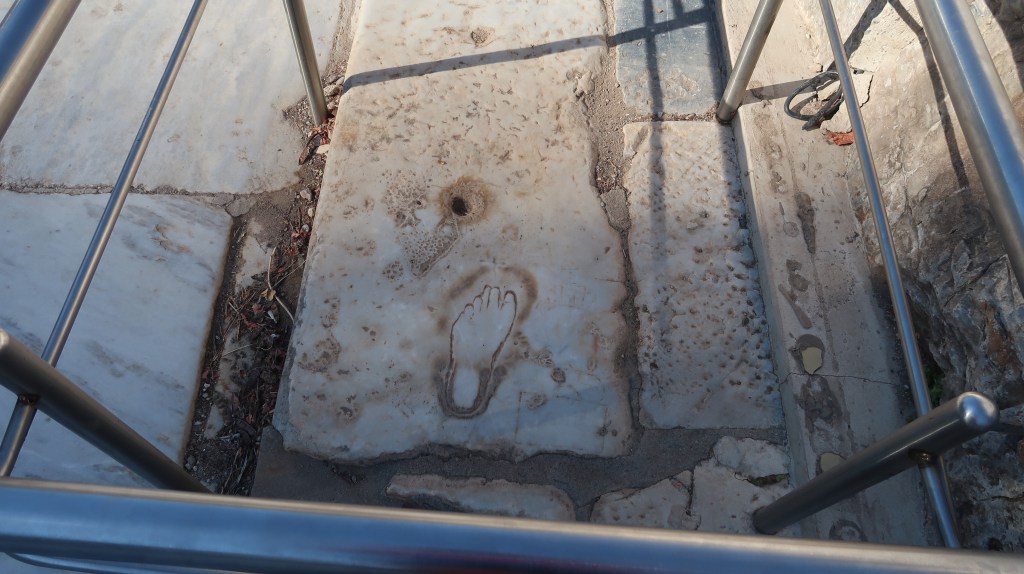
These footprint in the marble path were apparently the sign to lead you to the nearest brothel, not vey discreet.
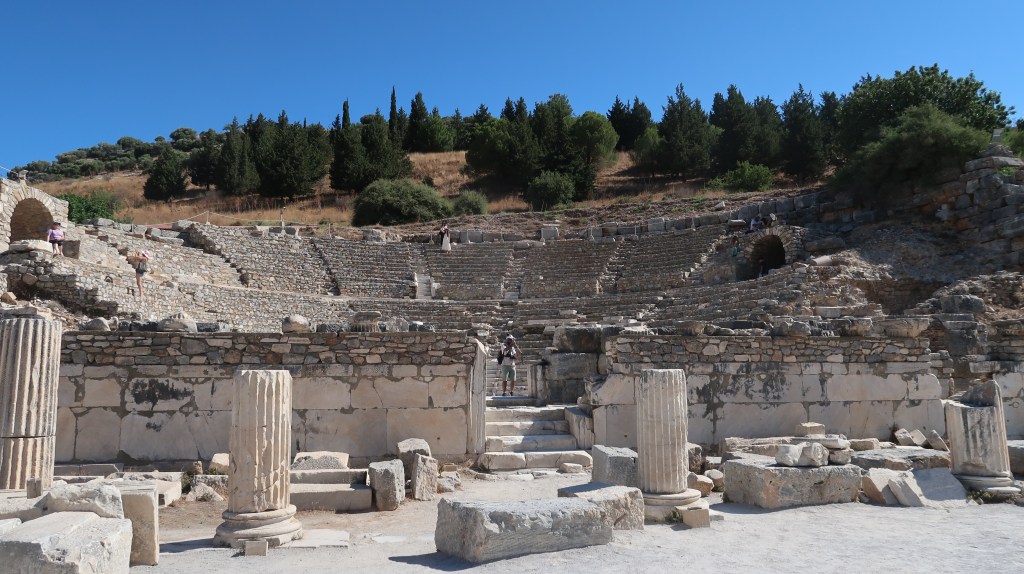
Many other structures and columns still stand along with a smaller indoor theatre, temples and agoras.


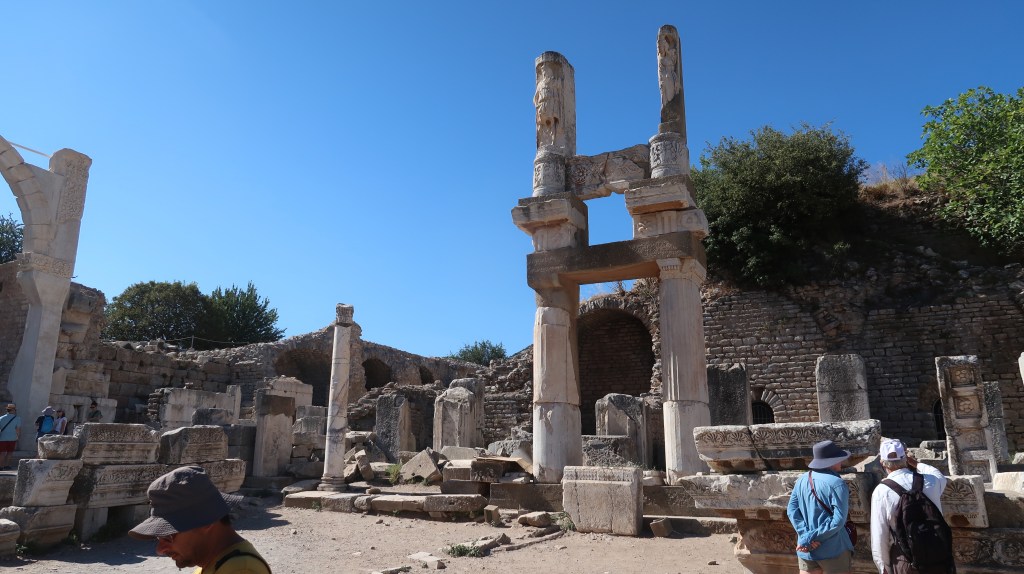

Ephesus played a vital role in the spread of Christianity. Starting in the first century AD, notable Christians such as Saint Paul and Saint John visited and rebuked the cults of Artemis, converting many to Christian beliefs in the process. Mary, the mother of Jesus, is thought to have spent her last years in Ephesus with Saint John.
In 262 AD, the Goths destroyed Ephesus, including the Temple of Artemis. The city was already facing decline due to accumulating silt in its harbour, restoration of the city took place over the following years but it never regained its splendor. By the 7th century AD a massive earthquake had struck and the harbour’s continuing decline (it is now 5 kilometres inland) left Ephesus a shell of the city it used to be. Eventually people started leaving the lowland of the city for safety in the surrounding hills. The ruins of the temples were used as building blocks for new homes. Marble sculptures were ground to powder to make lime for plaster.
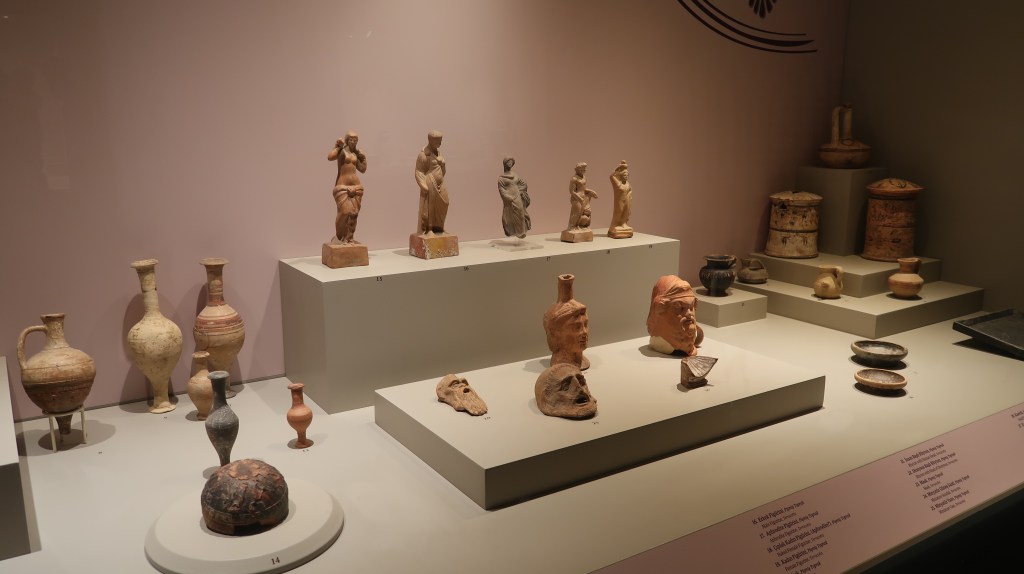
After looking around the site we visited the museum which held many of the findings from the excavations including statues (many with spooky eyes), friezes from the buildings, coins, pots and jewels.
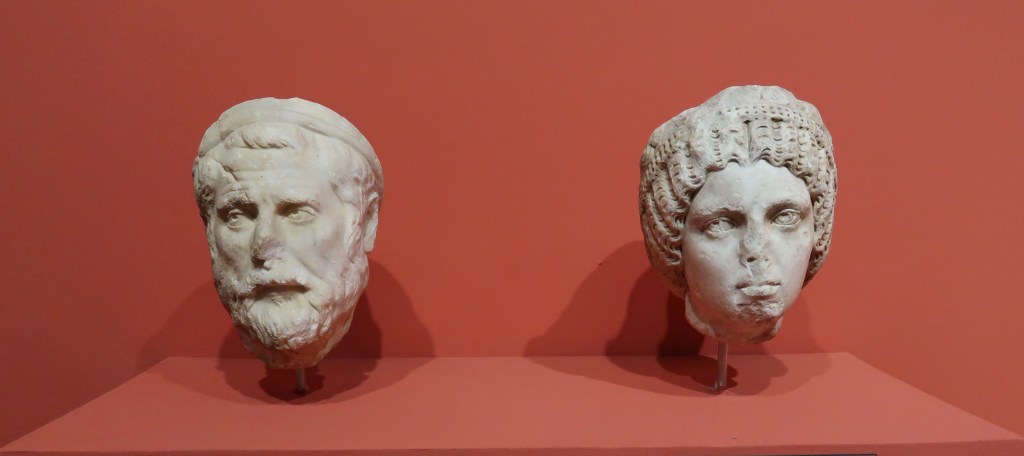


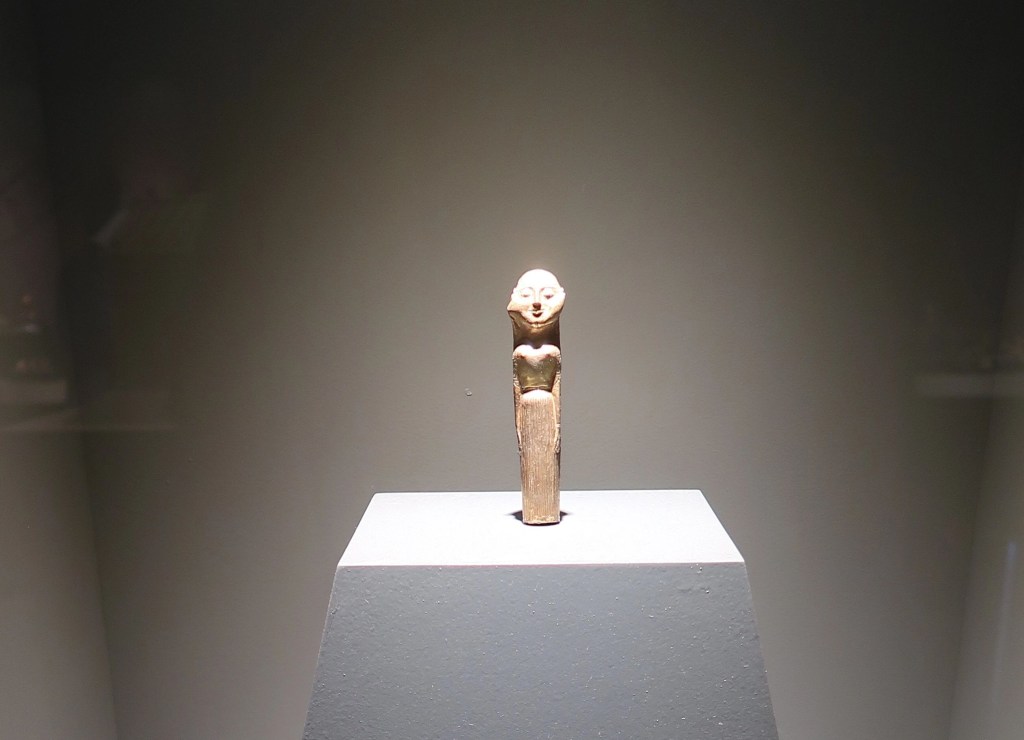
I’ve saved my favourite until last which was a miniature gold statue of a ‘beautiful’ goddess dating back to 580 BC.
 Sailing ZigZag
3 replies on “Walking in Ancient Footsteps”
Still enjoying my weekly history lesson – thank you!
LikeLiked by 1 person
Paul, Sue, Real educational tour de force this week, backed up by spectacular photos, as always! Dan
LikeLiked by 1 person
This is your best history blog, and a picture of you two – what’s not to love.
It makes you realise just how much history is out there to be discovered.
Safe onward sailing
LikeLiked by 1 person