
As our journey continued north we headed towards the the long narrow Datça peninsula. There are many small bays and coves along the peninsula, the main town Datça, lies on the southern shore which was our next stop.
The heat is now a stifling 40°C but whilst out on the water we had a nice cool breeze. However, a couple of miles offshore this suddenly changed and we could feel the meltemi wind blowing hot air from the land, it felt like having a hair dryer constantly aimed at you.
We dropped our anchor in the large bay among several large Gulets, in front Datça town which looked very pretty full of white buildings and colourful bougainvillea giving it a Greek feel.
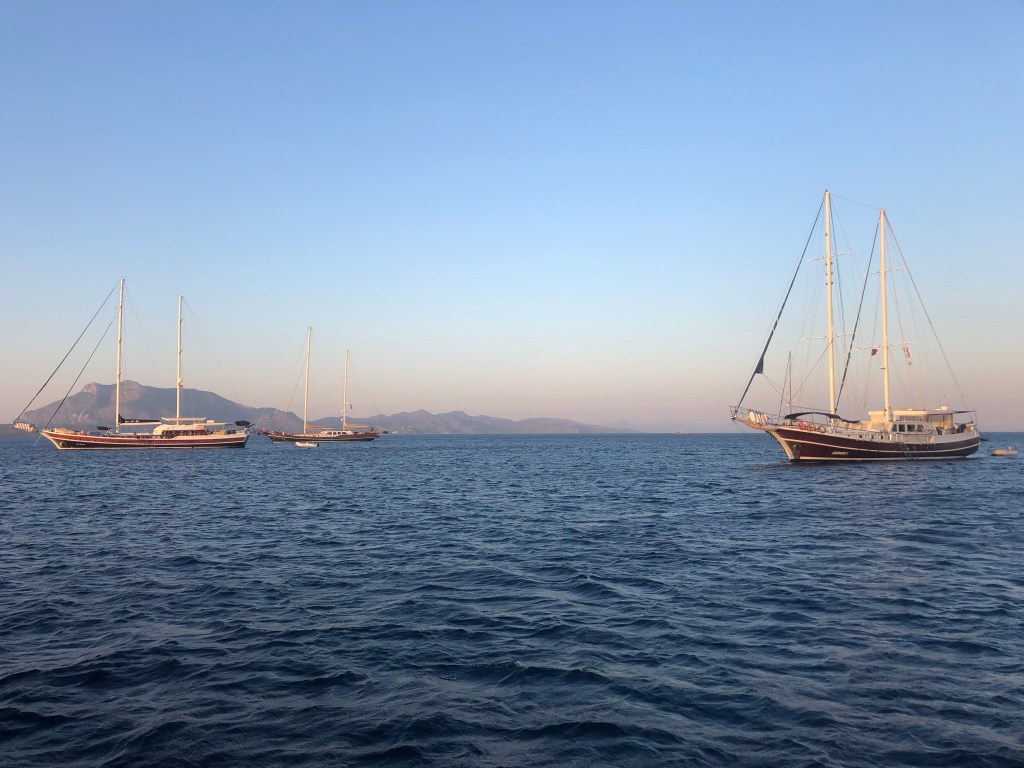


The old town of Datça is set further up the hill as were most villages in this area, the location was always chosen on the slopes of a hill and away from the coastline due to a fear of pirates. Piracy remained a serious security problem until the beginning of the 20th century. However, we know that it still exists in Turkey as we have experienced it many times, they just come direct to your bank account!
The waterfront is now aimed at tourists, the beaches are all laid out with sun beds, and there are many decorated cafes and restaurants along the promenade spilling onto the beach, all trying to entice you in as you pass.
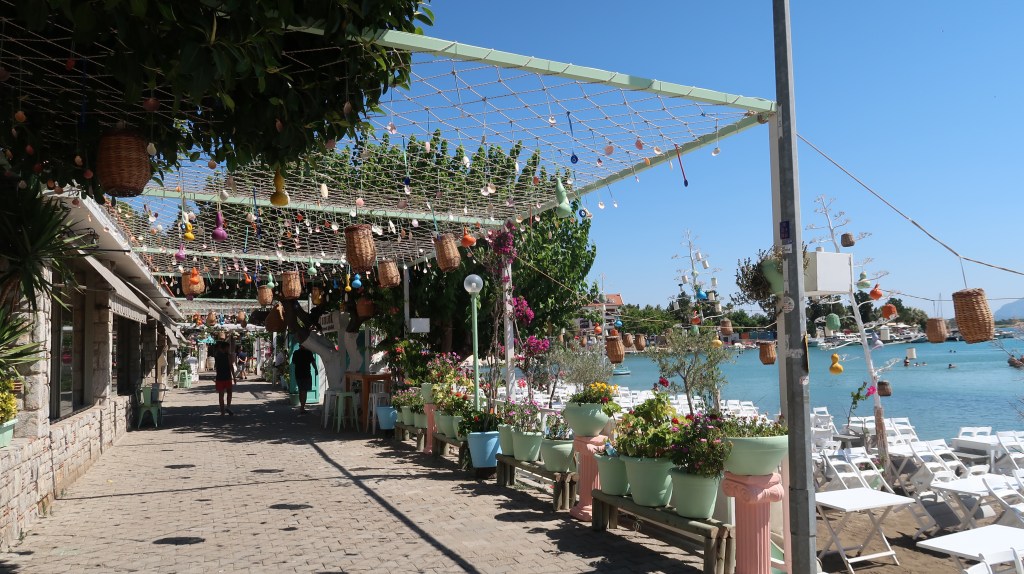
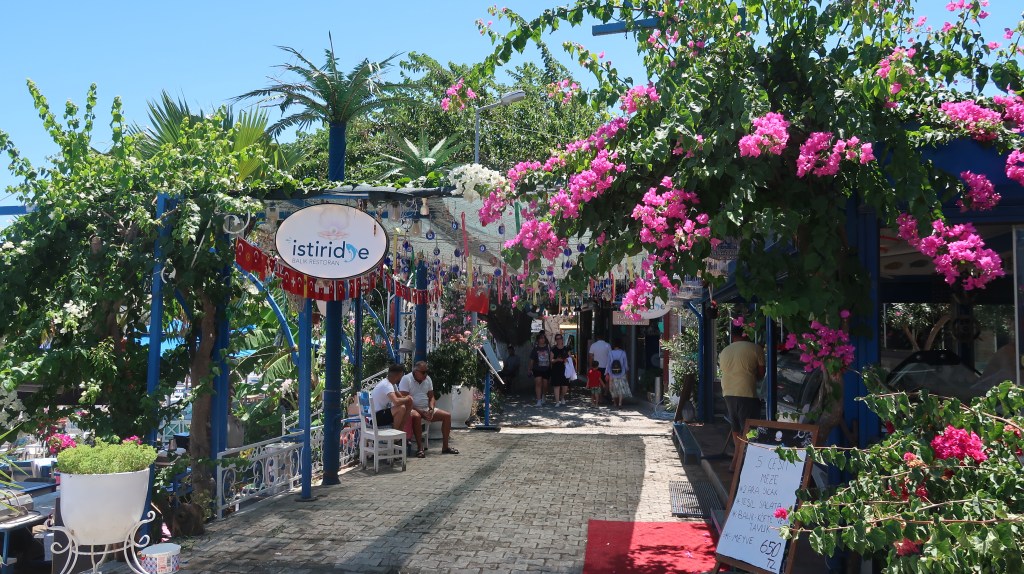
We walked through the town with many seaside statues, along the beach where the sun beds were waiting to be filled and around the small harbour, before succumbing to the lure of one of the restaurants. It was a Sunday morning and the tradition is for families to indulge in a full Turkish breakfast, so we sat down to join them.


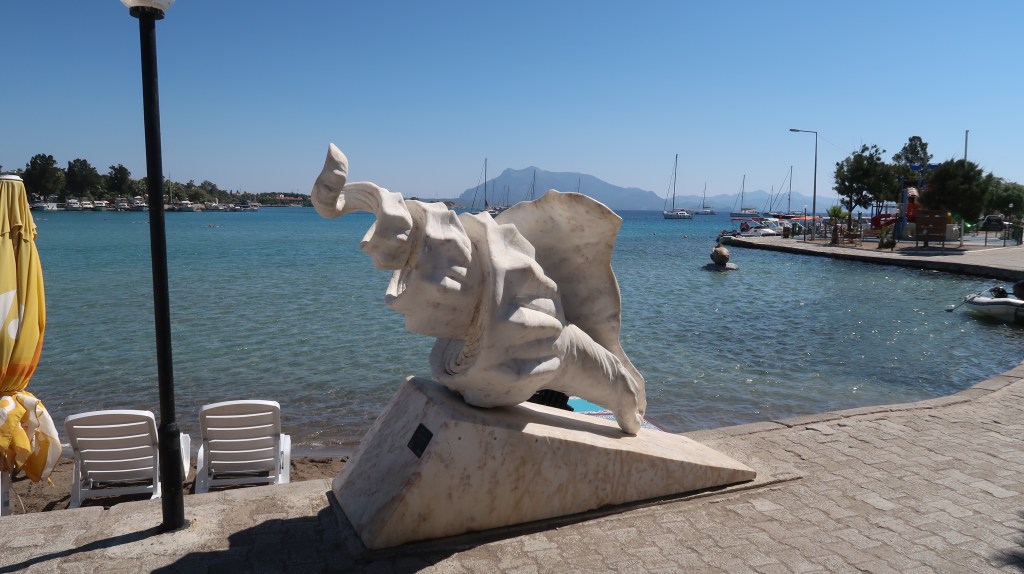

The following day we lifted the anchor and continued west along the peninsula. The ancient Greeks believed the Datça peninsula to have been created personally by Zeus and that ‘God sent his beloved creatures to Datça for them to live longer’. It was seen to be so gorgeous with its fertile hills, rocky outcrops and aquamarine waters.
The sea was flat calm and there was a light northerly breeze so we had a gentle sail 20 nm to Knidos on the tip of the peninsula.
This ancient ruined harbour and city of Knidos was a busy trading hub from the 4th century BC during the Roman and Byzantine times. It was famous for a statue of the naked Aphrodite of Knidos, who looked out to sea over the ancient port. It was the first known life-size nude female classical statue and was initially offered to Kos who refused it due to her nudity. She had a cult following drawing crowds to the city as many people came just to admire her. The town later fell into ruins through earthquakes, conquests and looting, and Aphrodite disappeared entirely more than 1,000 years ago.
We anchored in the small harbour, the seabed is sand and weed but the water was so clear it was easy to target a nice sandy patch to drop the anchor with a great view of the remains of the ancient city spread out on terraces over the hillside.
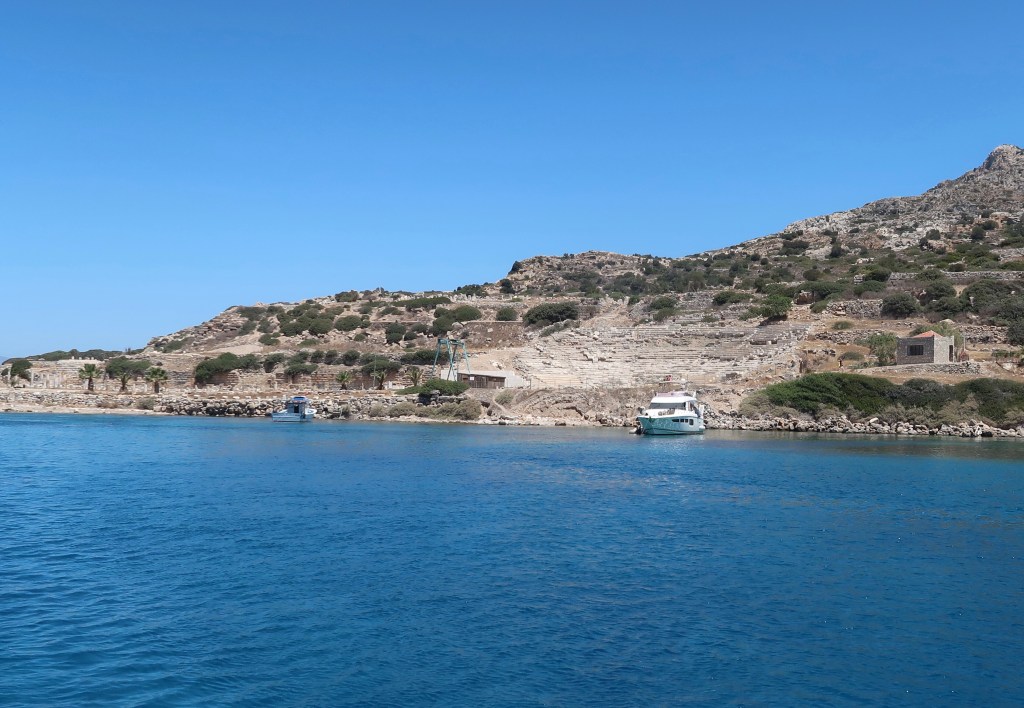
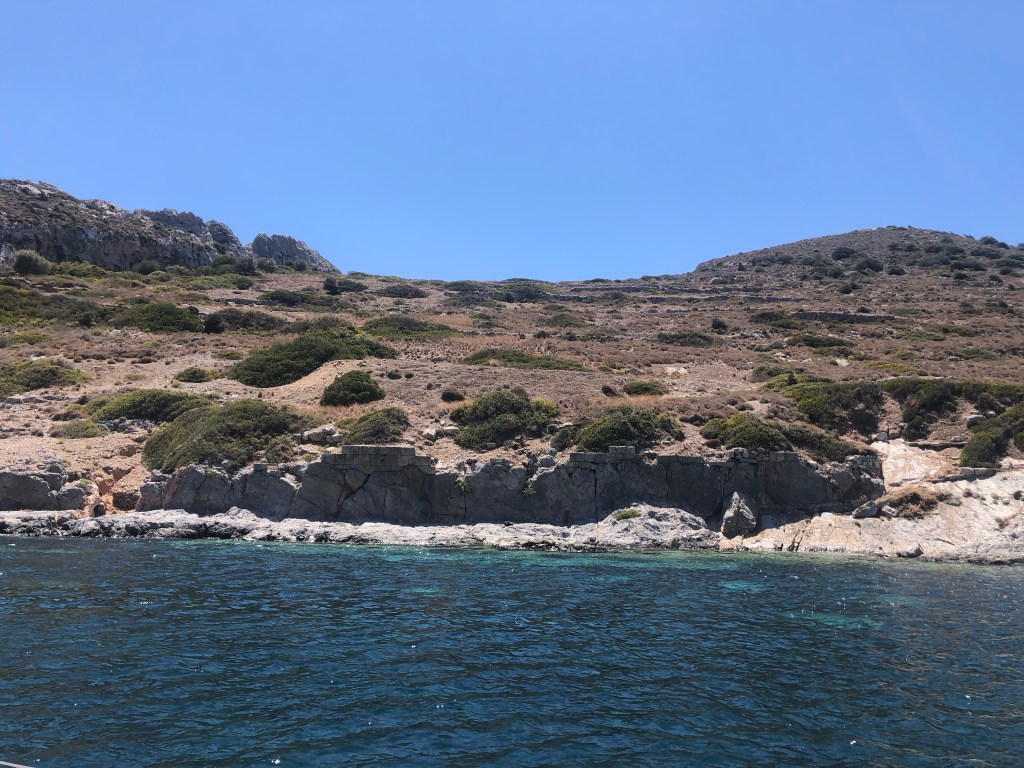
As the sun went down, the wind picked up unexpectedly and many boats were dragging. It was a little worrying as the wind had turned and was blowing us towards the rocky shore which was quite close to us, thankfully our little patch of sand held us firm.
In the evening we saw a Starlink train travelling through the sky, it was interesting to recognise how things have changed whilst sitting in this ancient trading hub with the future trading hub flying over us.

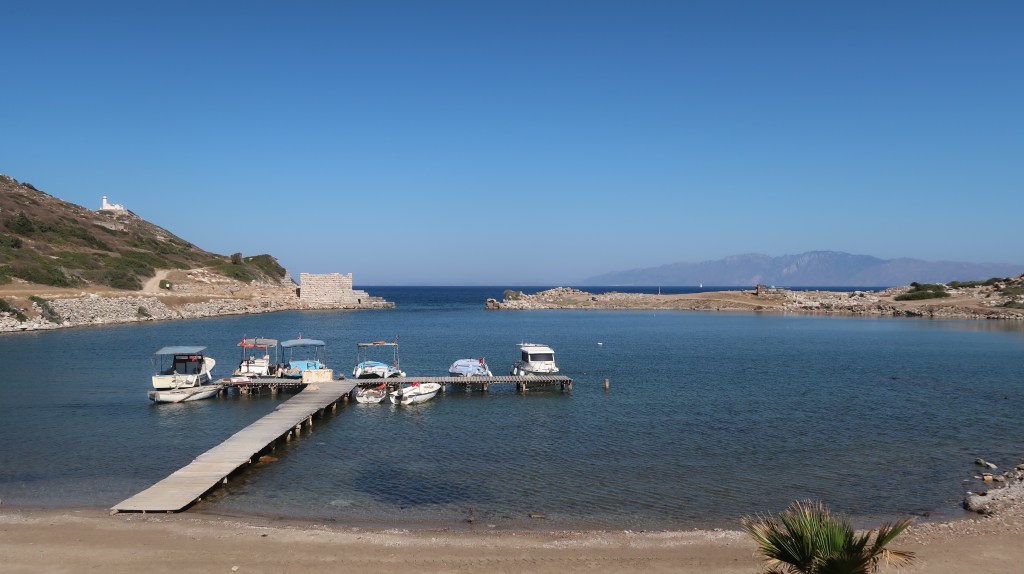
All was calm by the morning and we went ashore early to explore the ruins. We arrived as the site opened and followed the path around the old city which is situated between two harbours. The second military harbour was smaller with a smart lighthouse on the headland at the entrance.
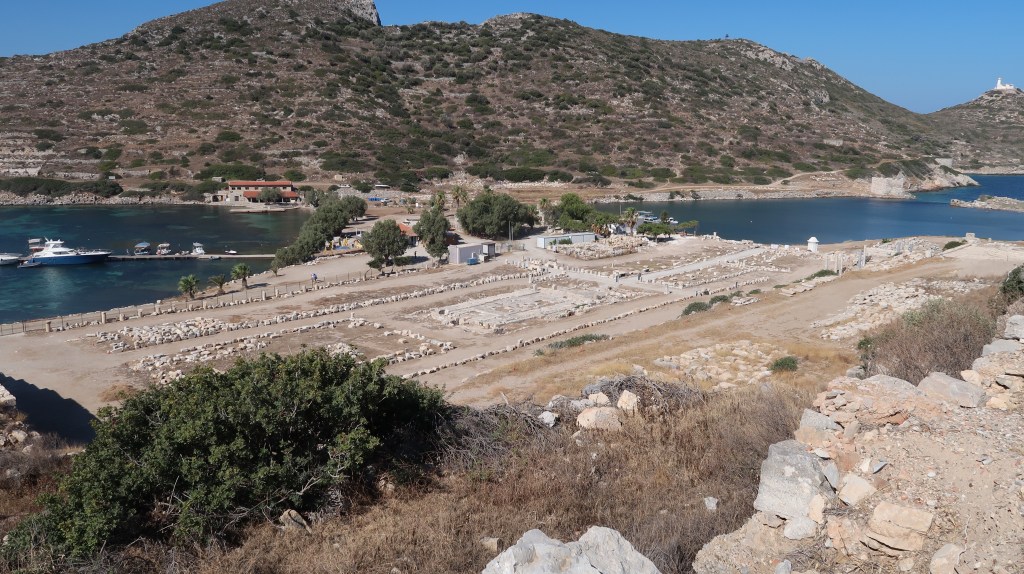
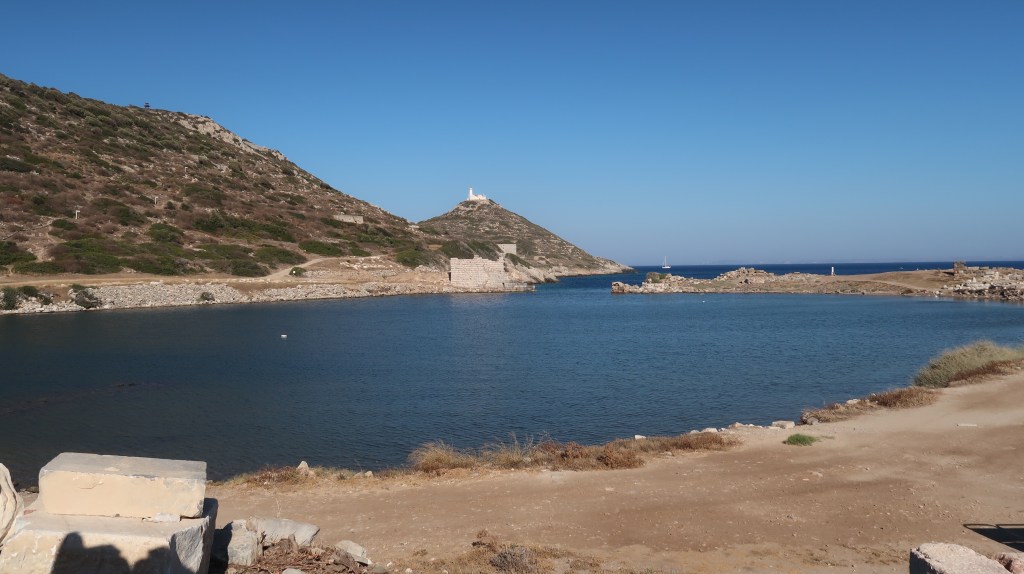
The path first took us through remains of the agora, the main town square where business is done, and around some Byzantine churches. There were remnants of a Doric stoa with a cross-stone balancing precariously on top.

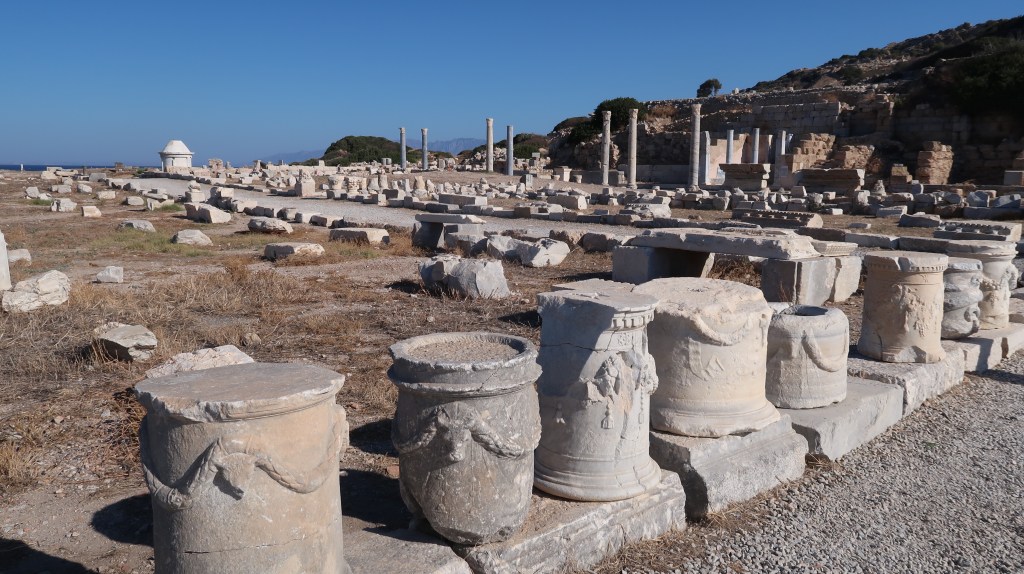

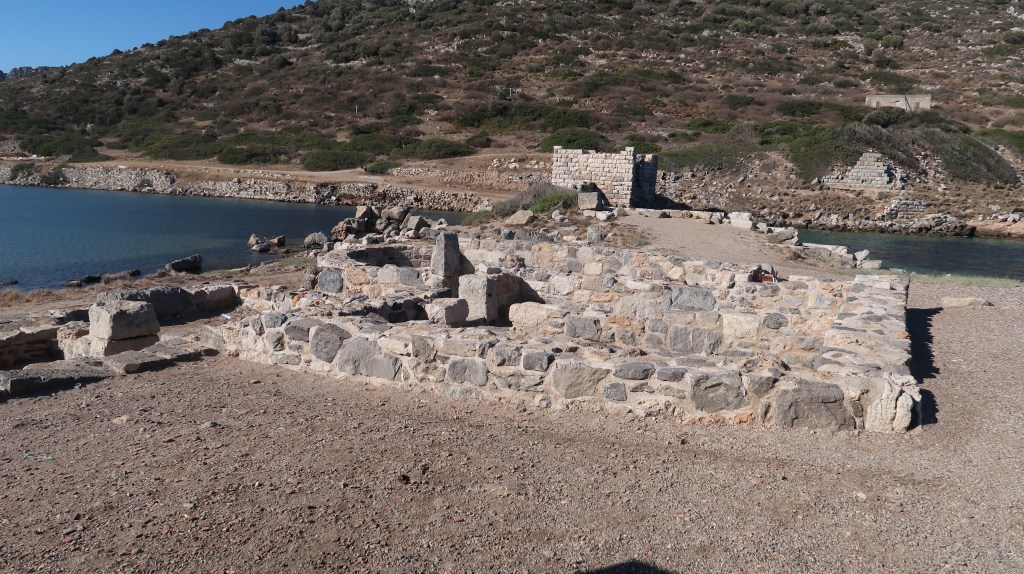

Although some of the buildings are difficult to make out, the streets are still quite clear. The main streets run across the hill with the connecting stepped streets running up the hill. A large marble fountain stands at the bottom of harbour street.
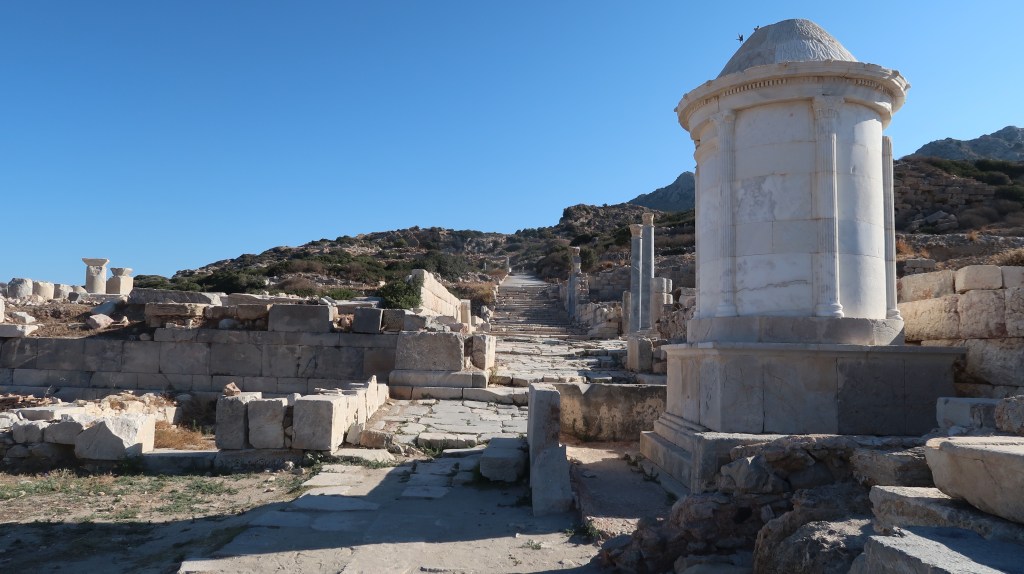
Continuing around the site we found the remains of temples to Apollo, Dionysus and Aphrodite.
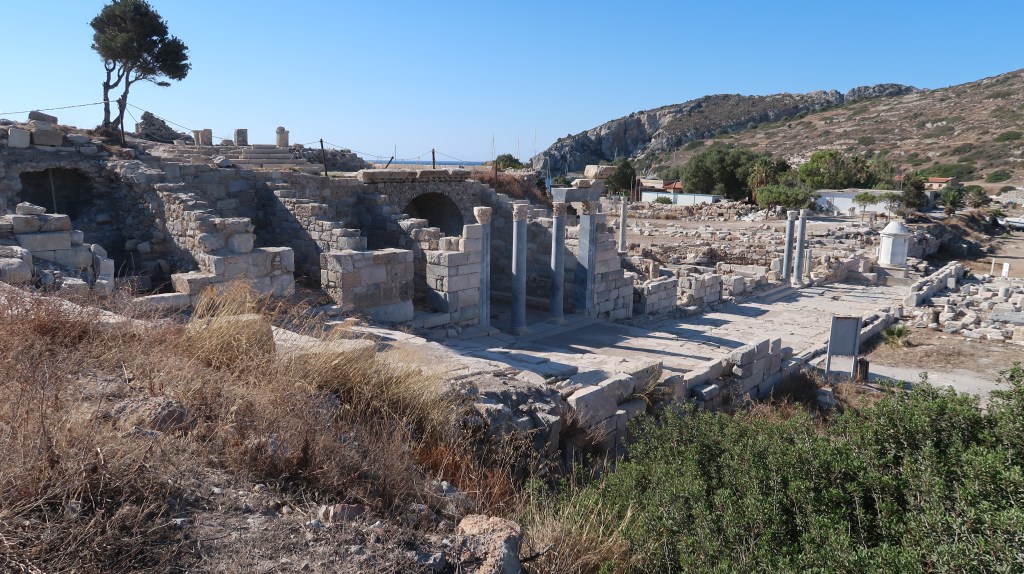
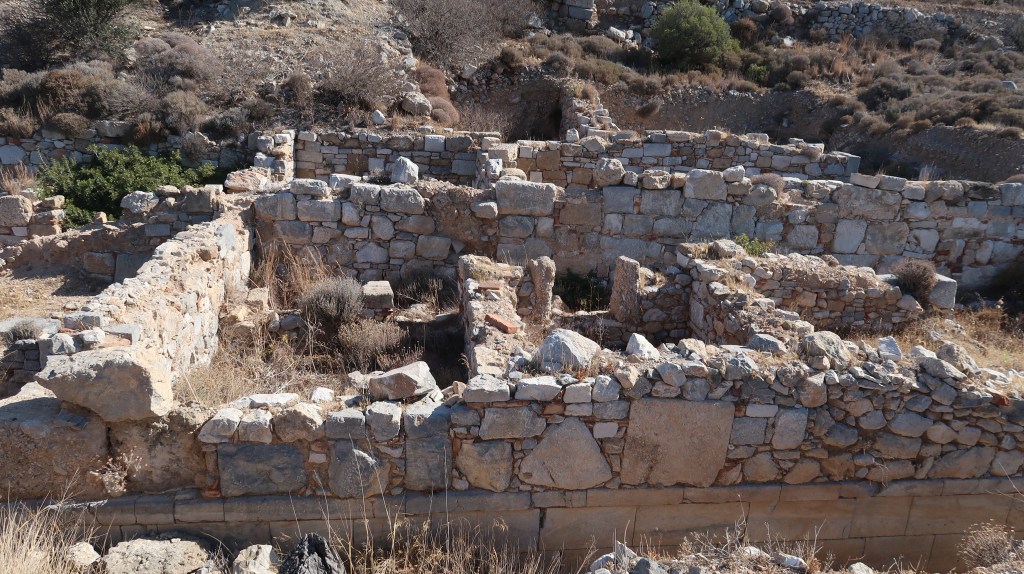
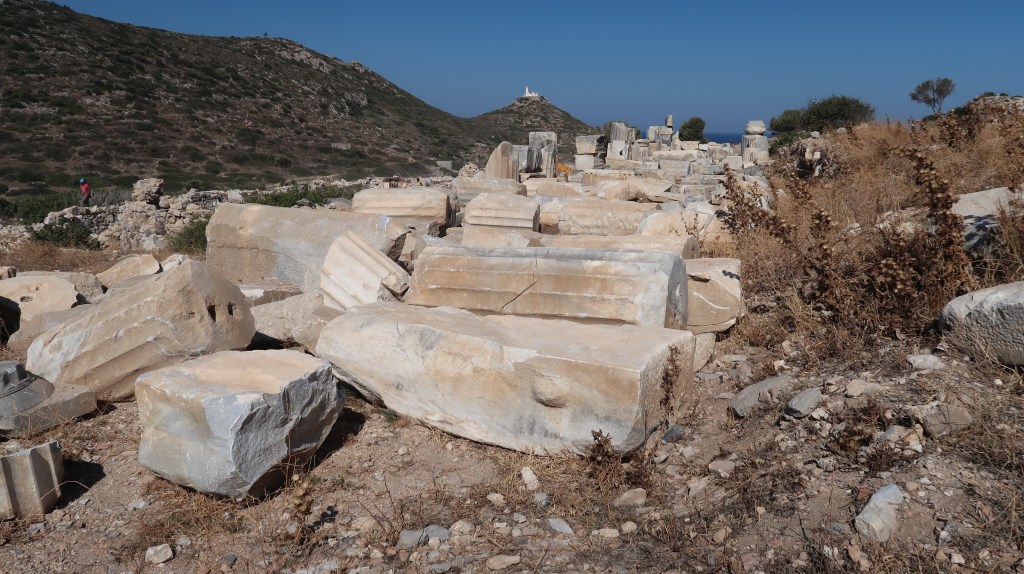
There was still work being done at the site to reconstruct the many stones found here.
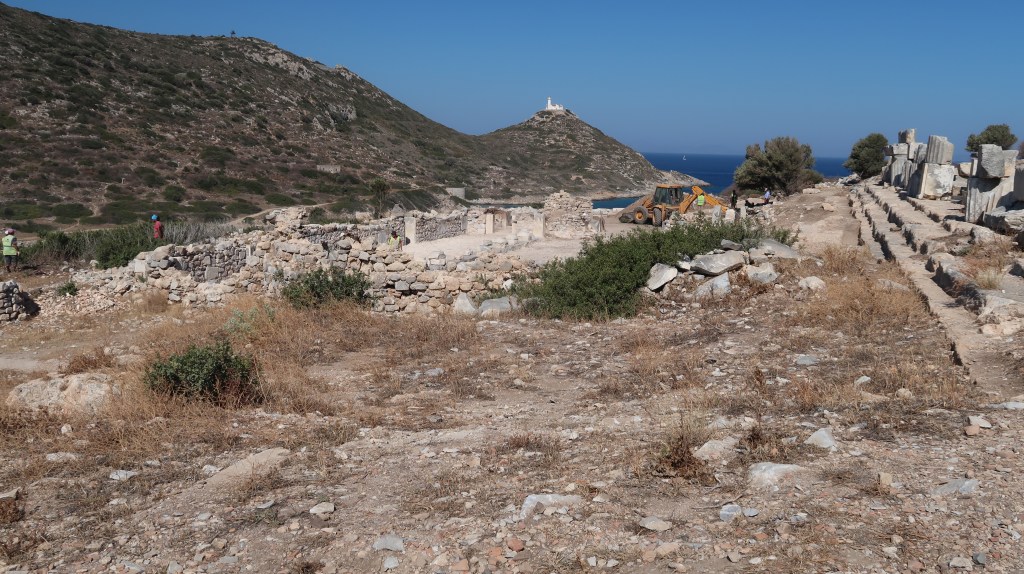


The site also includes an impressive 8000 seat amphitheater which overlooks the harbour.


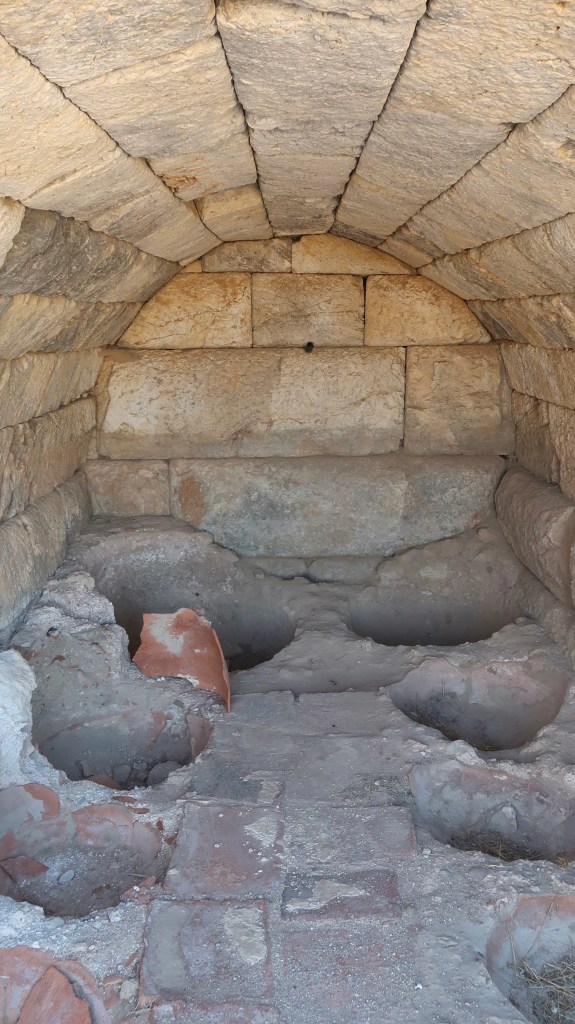
We found the wine cellar under the theatre, unfortunately it seemed that someone had beaten us to it.
A large staircase takes you up to the top of the hill where you get fantastic panoramic views of the harbours and out to sea.


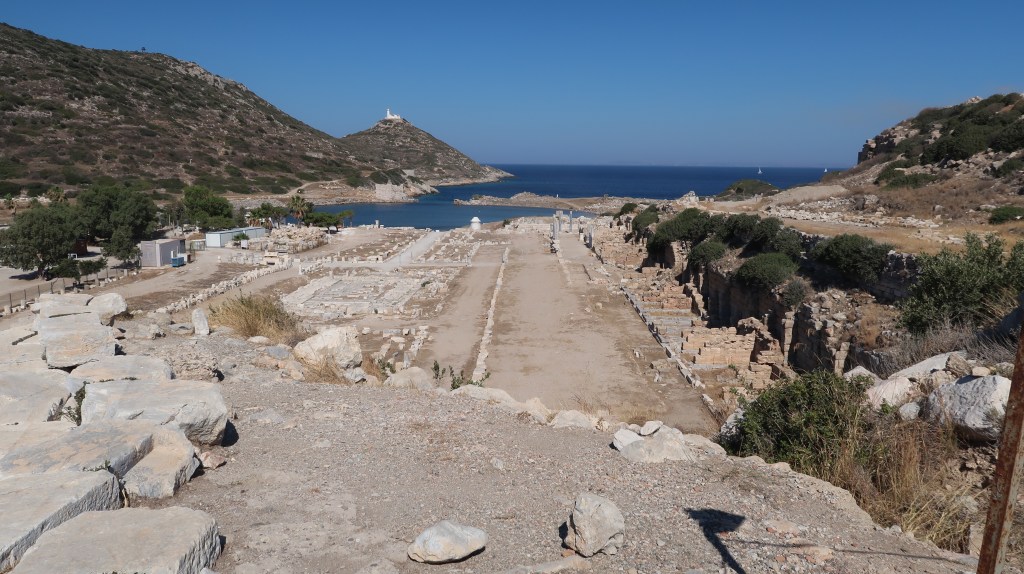

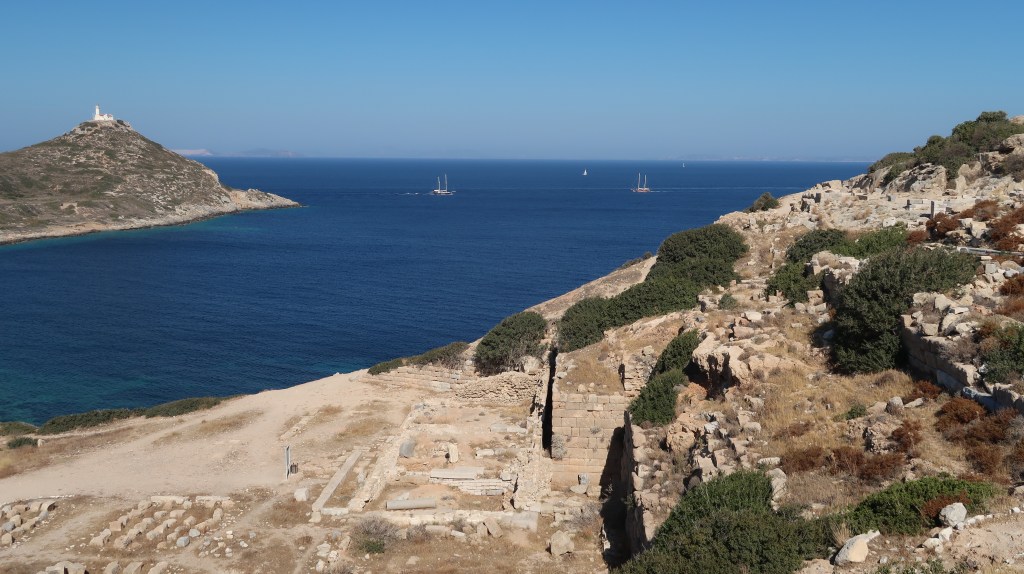

In its heyday, it must have been fantastic, a marble city with terraces descending to the sea, full of temples, and home to 70,000 people.
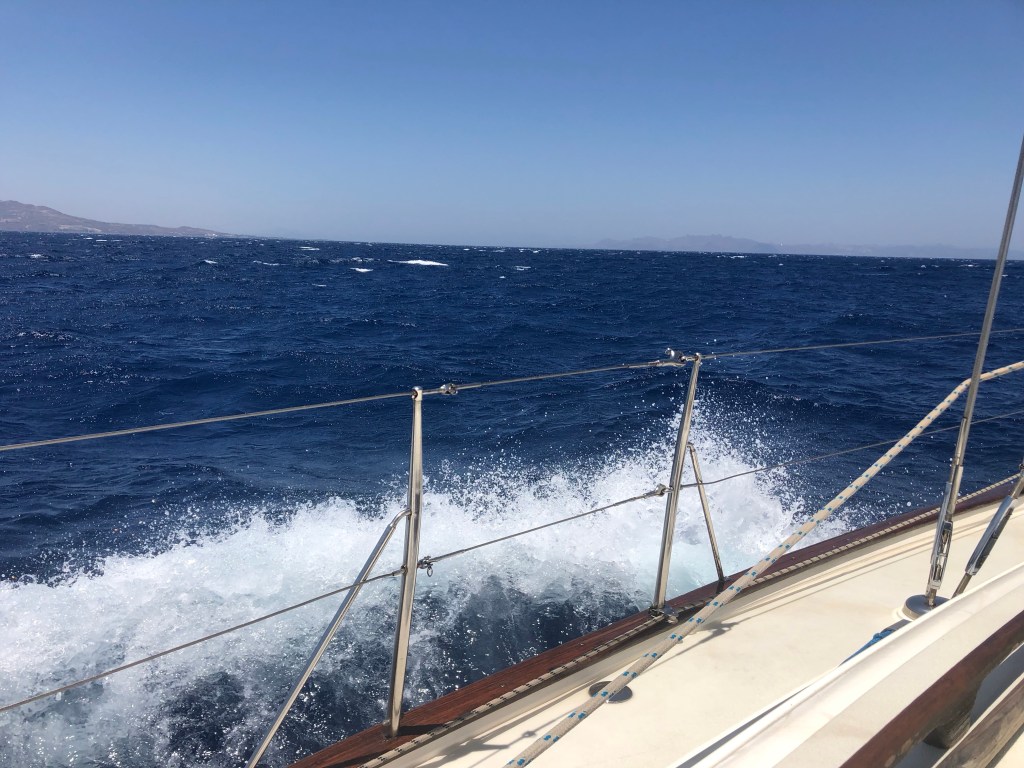
By early afternoon the wind picked up again and after our previous windy night we decided to leave to head 23 nm north towards Bodrum. As soon as we were out of the bay in the open water there was a lot of swell. The wind was only blowing 20 kts but from the north, the swell was increasing and pushing us back, the most speed we could manage was 4 kts, it was going to be a long journey!

After a couple of hours bashing into the wind and ducking from the waves breaking over the decks, we considered turning back but decided that Ziggy was handling it well and as we approached the headland in another hour or two, we would get some shelter. Paul was on the helm so he put his waterproof on to shield from the constant salty shower (even though the temperature was 40°) and we battled on. Don’t worry, I was fine sheltering under the spray hood cheering Paul on each time he got slapped in the face by a breaking wave.

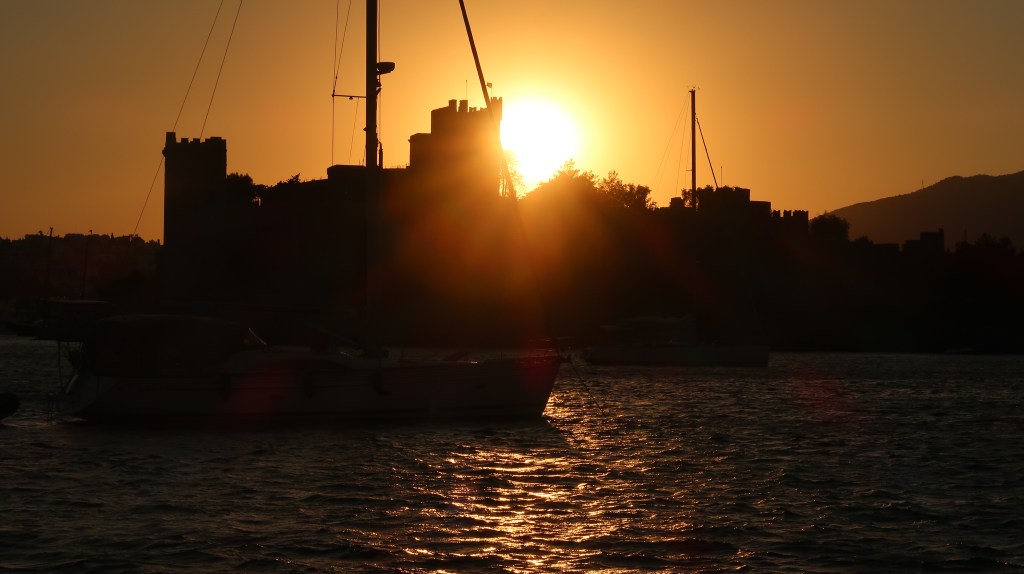
Eventually the swell did reduce and for the last hour of the journey our speed picked up and we arrived at Bodrum where we anchored in the main bay beside the castle.
After 5 hours travelling, Paul and the boat were very salty, the heat had dried the water leaving a crust of salt everywhere, luckily we had plenty of water in our tanks to give everything a good wash down before we opened the bar for a well needed sundowner.
 Sailing ZigZag
4 replies on “Something Old, Something New”
Great to read that you are ‘sailing’ again and visiting new places, all of which look beautiful. Also as usual your weather is so much better than ours 🙂
Breakfast looked impressive.
Safe onward sailing.
LikeLiked by 1 person
Great descriptions of your travels as always, sorry to hear someone had beaten you to the wine cellar! We had the hairdryer experience here in Skiathos as well although cooled down a bit now.
Sue and Chris
LikeLiked by 1 person
Love reading your blog and checking out the map – what a wonderful place Knidos must have been with its open air theatre.
LikeLiked by 1 person
Datça looks beautiful. Is a Turkish breakfast similar to an English one? 😃
Love the dress you are wearing in the photo of the ruins! Everywhere sounds a bit windy. I have visions of blown up unicorns and paddle boards flying through the air 💨🌬️🤣 xx
LikeLiked by 1 person